
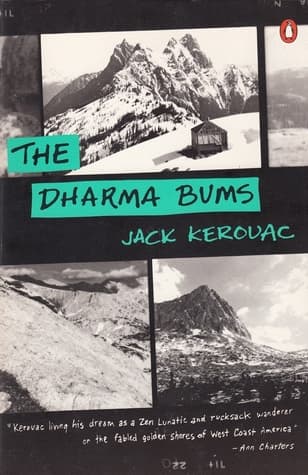
Synopsis
Covers the whole plot, including the ending.
- Difficulty
- Medium
- Pacing
- Moderate
- Mood
- Philosophical, spiritual, adventurous, reflective, bohemian, free-spirited
- Read it if
- you're interested in Beat Generation literature, a blend of spirituality and counter-culture, nature writing, or philosophical explorations of freedom and enlightenment.
- Skip it if
- you prefer strong plot-driven narratives, dislike stream-of-consciousness writing, or are put off by themes of hedonism and unconventional lifestyles.
The Dharma Bums Plot Summary
Covers the whole plot, including the ending.
Raimy's Arrival and Japhy's Introduction
Ray Smith, a poet and writer tired of city life, moves to Berkeley, California, looking for spiritual meaning. He quickly joins a group of bohemian intellectuals and poets, especially Japhy Ryder. Japhy is charismatic, intelligent, and energetic. He combines Zen Buddhism, mountaineering, and a free-spirited, anti-establishment lifestyle. He introduces Ray to 'Dharma Bums' – people who seek enlightenment through nature, poetry, and rejecting materialism. Ray is immediately drawn to Japhy's wisdom and enthusiasm, seeing him as a guide for his own spiritual journey. Their first talks are intense discussions about philosophy, literature, and truth.
Zen Lunatics and Mountain Climbing
Ray becomes a regular in Japhy's group, attending parties and philosophical gatherings in Berkeley and San Francisco. These events include heavy drinking, impromptu poetry readings, and debates on Zen, nature, and society. Japhy, an experienced mountaineer, inspires Ray to use physical challenges in nature for spiritual insight. He introduces Ray to 'yabyum' (a tantric sexual practice, often presented playfully in the book), and they go on demanding hikes in the hills around Berkeley, preparing for bigger mountain trips. Ray starts to let go of his old inhibitions and embraces a more natural, unburdened life with Japhy's guidance.
First Climb: Matterhorn Peak
Japhy and Ray go on their first major mountaineering trip: climbing Matterhorn Peak in the Sierra Nevada. This trip tests their friendship and Ray's spiritual growth. The journey is hard, with physical challenges and moments of natural beauty. Japhy shows his skill and endurance, while Ray struggles physically but finds peace and a connection to the wilderness. During the climb, they have deep philosophical talks, share their poetic goals, and face their personal limits. The experience strengthens Ray's commitment to the 'Dharma Bum' life and his admiration for Japhy's mix of physical ability and spiritual insight.
San Francisco Bohemia and Poetry Readings
After returning from the mountains, Ray and Japhy dive into the growing Beat scene of San Francisco. They go to coffeehouses, poetry readings, and lively discussions with other writers, artists, and thinkers. Ray, inspired by his mountain experiences and Japhy, starts to develop his own poetic voice. This part of the story shows the creative energy and intellectual excitement of the time, contrasting the raw beauty of the Sierras with the lively, sometimes chaotic, urban artistic scene. Despite distractions, Ray stays focused on his spiritual search, seeing the city as another place to explore the 'Dharma Bum' philosophy.
A Zen Retreat in the Woods
Seeking more solitude and spiritual insight, Ray decides to go on a solo retreat in the woods, trying to live off the land and practice Zen meditation. This time includes moments of deep peace and intense loneliness. He struggles with survival and meditation discipline, often finding his mind wandering. Despite the difficulties, Ray grows to appreciate nature's simplicity and better understands himself. This retreat is a significant step in his journey, allowing him to absorb many lessons from Japhy and test his own commitment to the 'Dharma Bum' ideals.
The Enlightenment Party
After his solo retreat, Ray rejoins Japhy, and they decide to host an 'Enlightenment Party' in the woods, inviting their Beat friends. The party is a joyful and chaotic event, filled with poetry, music, drinking, and philosophical talks. It celebrates their shared ideals and the community they built. The event symbolizes their spiritual goals blending with their bohemian life, showing that enlightenment can be found in shared experiences and friendship, not just solitude. The party reinforces that spiritual seeking does not always mean strict self-denial but can be part of an engaged life.
Farewell to Japhy
Japhy reveals he plans to travel to Japan to continue his Zen studies, a decision that affects Ray deeply. Their parting is bittersweet, as Ray recognizes Japhy's influence on his life and fears losing his spiritual guide. Japhy, always a free spirit, encourages Ray to continue his own path, stressing individual discovery. This moment marks a shift in Ray's journey from a follower to a more independent seeker. He understands that while Japhy provided the initial spark, his own spiritual path must ultimately be walked alone, even if their friendship remains a guiding light.
Working as a Fire Lookout
Inspired by Japhy and wanting ultimate solitude for meditation and writing, Ray takes a job as a fire lookout on Desolation Peak in Washington State. This isolated post is his final attempt to find enlightenment through complete separation from society. The job is physically demanding but offers many chances for contemplation amidst the wilderness's raw beauty. He spends his days observing the vast landscape, writing poetry, and practicing Zen meditation. This period tests his mental and spiritual strength as he deals with loneliness, nature's immensity, and his own internal struggles, hoping to find deep truth in his solitude.
Visions and Inner Turmoil on Desolation Peak
On Desolation Peak, Ray's solitude grows, leading to moments of deep clarity and periods of inner struggle. He experiences vivid visions and dreams, often blurring reality and his subconscious. The vast, empty landscape forces him to confront his innermost thoughts and fears. He grapples with the meaning of his spiritual quest, Japhy's absence, and the nature of existence. Despite the challenges, he finds a deep connection to the natural world, feeling a sense of oneness with the mountains and the sky. This period is a peak in his journey, bringing him closer to a personal understanding of enlightenment, though it remains complex and often hard to grasp.
The End of the Season and a Vow
As the fire lookout season ends, Ray prepares to descend Desolation Peak. He has not found a sudden, definitive enlightenment, but he has found deep peace, self-awareness, and a stronger connection to the 'Dharma Bum' philosophy. He reflects on his journey, his friendship with Japhy, and the lessons learned in both urban bohemia and isolated wilderness. Descending the mountain, he carries a renewed sense of purpose and a commitment to continue his spiritual path, vowing silently to live simply, write poetry, and embrace the truth he has discovered. He understands that enlightenment is an ongoing journey, not a final stop.
The Dharma Bums Characters
Ray Smith
Protagonist
A young writer seeking spiritual enlightenment through nature and Zen.
Ray Smith, a thinly veiled self-portrait of Jack Kerouac, is a wandering poet and writer who arrives in Berkeley disillusioned with conventional society. He is deeply introspective, sensitive, and prone to philosophical musings, often struggling with loneliness and the search for meaning. He is initially a spiritual novice, looking for guidance, and finds it in Japhy Ryder. Ray embodies the 'Dharma Bum' ideal of seeking truth outside of materialism, embracing both the raucous bohemian life and the stark solitude of nature. His journey is one of self-discovery, testing the limits of his physical and spiritual endurance.
Relationships: Japhy Ryder (Mentor and close friend); Rosie (Brief romantic interest); Alvah Goldbook (Friend and fellow poet)
Japhy Ryder
Supporting
A charismatic, intelligent, and unconventional Zen Buddhist and mountaineer.
Japhy Ryder (based on Gary Snyder) is the vibrant, energetic, and highly intelligent catalyst for Ray's spiritual journey. He is a master of Zen Buddhism, a skilled mountaineer, a poet, and a free spirit who rejects societal norms. Japhy lives simply, embraces nature, and encourages others to find truth through direct experience, whether it's climbing a mountain or engaging in deep philosophical discussion. He is fiercely independent, knowledgeable about Eastern philosophies, and possesses an infectious zest for life. He serves as Ray's primary mentor, introducing him to the 'Dharma Bum' lifestyle and challenging his preconceived notions.
Relationships: Ray Smith (Mentee and close friend); Princess (Romantic partner); Alvah Goldbook (Friend)
Alvah Goldbook
Supporting
A fellow writer and intellectual in the Beat scene.
Alvah Goldbook (based on Allen Ginsberg) is a prominent figure in the Berkeley/San Francisco bohemian scene, a poet and intellectual who shares Ray and Japhy's anti-establishment sentiments. He is often present at the parties and poetry readings, engaging in lively discussions and contributing to the intellectual ferment of the group. While not as central to Ray's personal spiritual journey as Japhy, Alvah represents the broader community of artists and thinkers who are also seeking truth and challenging societal norms. He provides a backdrop of camaraderie and shared artistic endeavor.
Relationships: Ray Smith (Friend and fellow poet); Japhy Ryder (Friend)
Rosie
Supporting
A free-spirited woman with whom Ray has a brief romantic encounter.
Rosie is a free-spirited woman Ray meets early in his time in Berkeley. She is part of the bohemian scene, open to new experiences, and shares a brief, passionate, and somewhat unconventional romantic connection with Ray. Her character represents the sexual liberation and casual relationships that were part of the Beat lifestyle. While their connection is fleeting, it provides Ray with a taste of intimate human connection amidst his spiritual quest, highlighting the complexities of integrating personal desires with a pursuit of enlightenment. She is a symbol of the urban, sensual side of the 'Dharma Bum' experience.
Relationships: Ray Smith (Brief romantic interest)
Princess
Supporting
Japhy's girlfriend, who shares his unconventional lifestyle.
Princess is Japhy Ryder's girlfriend, a woman who embodies the same free-spirited and unconventional attitude as Japhy. She is often present at their gatherings and accompanies Japhy on some of his adventures, though her role is less defined than Japhy's. Princess represents the kind of partner who can thrive within the 'Dharma Bum' lifestyle, embracing simplicity, nature, and a rejection of materialism. Her presence reinforces Japhy's character as someone who lives his philosophy fully, including his relationships.
Relationships: Japhy Ryder (Romantic partner)
Henry Morley
Supporting
A fellow poet and friend of Ray and Japhy.
Henry Morley is another poet and friend within the Beat circle, based on Philip Whalen. He is often present at the gatherings and poetry readings, contributing to the intellectual and creative atmosphere. Morley, like Alvah Goldbook, represents the broader community of artists and thinkers that Ray and Japhy interact with. His presence helps to flesh out the vibrant bohemian scene and provides additional voices and perspectives on the spiritual and artistic discussions that permeate the narrative.
Relationships: Ray Smith (Friend); Japhy Ryder (Friend)
Warren Coughlin
Supporting
A quiet, contemplative friend of Japhy and Ray.
Warren Coughlin (based on Lew Welch) is depicted as a more reserved and contemplative member of the group, contrasting with Japhy's exuberance. He is a poet and intellectual who shares an appreciation for Zen and nature, often participating in the philosophical discussions with Ray and Japhy. While less outwardly energetic than Japhy, Warren's quiet wisdom and presence contribute to the depth of the intellectual community, showing different facets of the 'Dharma Bum' archetype. He provides a quieter, more reflective counterpoint to the more boisterous personalities.
Relationships: Ray Smith (Friend); Japhy Ryder (Friend)
The Dharma Bums Themes
The Search for Spiritual Enlightenment
The novel's main theme is the characters' search for spiritual truth, mostly through Zen Buddhism. Ray and Japhy explore different ways to enlightenment, from intense meditation and solitude in nature to communal experiences, poetry, and even pleasure-seeking. The book suggests that enlightenment is not a single, fixed point but an ongoing journey, found in deep connections with nature, self-awareness, and rejecting material things. It questions traditional religious practices, favoring a more experiential and personal approach to spirituality.
“Ho ho, the Dharma Bums! I said. Now that's what I'm going to be, a Dharma Bum. What's a Dharma Bum? I said. A Dharma Bum is a bum who's got the Dharma!”
Nature as a Path to Truth
Nature is central to the characters' spiritual journeys. Mountains, forests, and remote wilderness are shown as sacred places where one can shed societal norms and connect with a deeper reality. Japhy Ryder, especially, promotes mountaineering and living off the land as essential for spiritual growth. Ray's experiences on Matterhorn Peak and Desolation Peak show how nature's raw beauty and tough challenges can lead to self-discovery, humility, and a strong sense of connection. Nature appears as a teacher, a healer, and a source of ultimate truth.
“No matter what you do it's bound to be a waste of time in the end so you might as well go out and have a good time.”
Rejection of Materialism and Conformity
The 'Dharma Bums' openly reject the materialistic and conformist values of post-war American society. They live a simple, often self-denying lifestyle, finding joy in nature, poetry, and spiritual pursuits instead of consumerism. This rejection includes societal expectations for careers, relationships, and conventional success. Their bohemian life, marked by communal living, spontaneous adventures, and ignoring social norms, is a direct counter-cultural statement. The novel celebrates individualism and the freedom to pursue one's own truth, even if it means being an outsider.
“I was an old-fashioned Dharma Bum and a Zen Lunatic and a mountain climber and a poet, and I was going to find my own way.”
The Role of Friendship and Mentorship
The friendship between Ray Smith and Japhy Ryder is a core part of the story. Japhy mentors Ray, introducing him to Zen, mountaineering, and a new way of living. Their bond involves intellectual stimulation, shared adventures, and mutual respect. The novel explores how friendship can drive personal growth and spiritual discovery, offering support, challenge, and inspiration. Even when apart, Japhy's influence continues to guide Ray, showing how meaningful relationships leave a lasting mark on one's life path.
“The only people for me are the mad ones, the ones who are mad to live, mad to talk, mad to be saved, desirous of everything at the same time, the ones who never yawn or say a commonplace thing, but burn, burn, burn like fabulous yellow roman candles exploding like spiders across the stars.”
Poetry and Artistic Expression
Poetry is not just a hobby but part of the 'Dharma Bum' philosophy and a way to express spirituality. Both Ray and Japhy are poets, and their gatherings often include impromptu poetry readings and discussions. Writing and sharing poetry is presented as a way to capture beautiful moments, express deep insights, and connect with others. Artistic expression, especially poetry, is seen as a direct link to truth and a vital part of a full spiritual life, blending creativity with the search for enlightenment.
“Ah, what a life, what a life, to be a Dharma Bum, to be a Zen Lunatic, to be a mountain climber and a poet, and to find your own way.”
Plot Devices & Literary Techniques
The Mentor Figure
Japhy Ryder guides Ray Smith on his spiritual quest.
Japhy Ryder functions as the archetypal mentor figure for Ray Smith. He is wise, experienced, and possesses unique knowledge (Zen, mountaineering) that Ray lacks. Japhy introduces Ray to the 'Dharma Bum' lifestyle, challenges his assumptions, and provides both practical guidance and philosophical insight. His role is crucial in initiating Ray's transformation and pushing him out of his comfort zone. Japhy's character embodies the ideals Ray aspires to, making him a compelling and inspiring guide throughout the narrative, even when they are physically apart.
The Journey as Metaphor
Physical journeys symbolize spiritual and internal exploration.
The numerous physical journeys undertaken by Ray and Japhy—from their hikes in the Berkeley hills to the ascent of Matterhorn Peak and Ray's solitary vigil on Desolation Peak—serve as powerful metaphors for their internal spiritual quests. Each climb, each trek into the wilderness, represents a step further into self-discovery and a deeper engagement with the 'Dharma Bum' philosophy. The challenges of the physical landscape mirror the internal struggles and revelations experienced by the protagonists, reinforcing the idea that true enlightenment often requires arduous effort and a departure from the familiar.
Symbolism of the Mountain
Mountains represent spiritual aspiration, solitude, and ultimate truth.
Mountains, particularly Matterhorn Peak and Desolation Peak, are potent symbols throughout the novel. They represent aspiration, the pursuit of higher truth, and the challenges inherent in achieving spiritual enlightenment. The act of climbing a mountain signifies overcoming obstacles, reaching new perspectives, and finding clarity in solitude. The peaks are presented as places of profound natural beauty and spiritual power, where the veil between the mundane and the divine is thin. Ray's ultimate solitude on Desolation Peak is the culmination of his journey, seeking the ultimate truth at the highest point.
Bohemian Setting
The Beat Generation's cultural scene as a backdrop for spiritual and artistic exploration.
The vibrant bohemian settings of Berkeley and San Francisco during the Beat Generation era serve as a crucial plot device. This environment provides the social and intellectual context for Ray and Japhy's ideas, allowing them to interact with like-minded artists, poets, and thinkers. The parties, poetry readings, and philosophical discussions within this setting highlight the counter-cultural spirit and the collective search for meaning outside mainstream society. It contrasts with the solitude of the mountains, showing that the 'Dharma Bum' philosophy can exist in both communal and isolated contexts, emphasizing the diverse paths to truth.
The Dharma Bums Quotes
“There was no way I could feel sorry for myself. Not with the sun on my face.”
“The only truth is that you are the truth.”
“I had come to the mountains to find myself, and I had found it.”
“The three most important things in life are: first, be like the Buddha; second, be like the Buddha; third, be like the Buddha.”
“Everything is a dream, and when you die, you wake up.”
“We were young punks, you know, and we were looking for kicks.”
“The answer is to find the joy in the world, and the only way to do that is to love.”
“The whole world is a monastery, and every man is a monk.”
“We were on the road, and the road was in us.”
“The only real freedom is the freedom to be yourself.”
“The universe is a vast and mysterious place, and we are but tiny sparks in its immensity.”
“I wanted to be a poet, and I wanted to be a saint, and I wanted to be a bum.”
“The greatest wisdom is to know that you know nothing.”
“And so I learned to love the simple things, the quiet moments, the beauty of a single leaf.”
Quiz
10 questions on the plot and the characters. Each answer comes with a short explanation.
Question 1
What is the primary theme explored by the two main characters in 'The Dharma Bums'?
- Financial success and corporate ambition
- The search for Truth the Zen way
- Exploring historical landmarks across Europe
- Developing advanced scientific theories
Show answer
B. The search for Truth the Zen way The book explicitly states that the characters are searching for Truth the Zen way.
Question 2
Which of the following activities are mentioned as part of the characters' experiences in San Francisco's Bohemia?
- Attending formal opera performances and art galas
- Volunteering at local hospitals and soup kitchens
- Marathon wine-drinking bouts and poetry jam sessions
- Participating in political protests and rallies
Show answer
C. Marathon wine-drinking bouts and poetry jam sessions The summary mentions 'marathon wine-drinking bouts, poetry jam sessions, and "yabyum" in San Francisco's Bohemia'.
Question 3
Where does one of the significant solitary experiences of the characters take place?
- A bustling metropolis in Japan
- The high Sierras and atop Desolation Peak
- A quiet village in the Swiss Alps
- A remote island in the Caribbean
Show answer
B. The high Sierras and atop Desolation Peak The description highlights their solitude in 'the high Sierras and a vigil atop Desolation Peak in Washington State'.
Question 4
What literary movement is Jack Kerouac associated with, and which was popularized by 'On the Road'?
- The Lost Generation
- The Harlem Renaissance
- The Beat Generation
- The Transcendentalist Movement
Show answer
C. The Beat Generation The summary states that 'On the Road put the Beat Generation on the map', and 'The Dharma Bums' was published shortly after.
Question 5
The phrase 'yabyum' is mentioned in the context of San Francisco's Bohemia. While not explicitly defined, what does it likely refer to in the context of Zen and spiritual exploration, especially considering the era?
- A type of traditional Japanese tea ceremony
- A form of ritualistic sexual union often associated with Tantric practices
- A specific Buddhist meditation technique
- A communal chanting ritual
Show answer
B. A form of ritualistic sexual union often associated with Tantric practices In the context of Zen, spirituality, and the Beat Generation's exploration of Eastern philosophies, 'yabyum' often refers to the Tantric practice of the union of wisdom and compassion, symbolized by male and female deities in embrace.
Question 6
Which of the following best describes the overall tone or spirit of 'The Dharma Bums' as suggested by the provided text?
- Melancholy and introspective
- Expansive, humorous, and zestful
- Cynical and detached
- Formal and academic
Show answer
B. Expansive, humorous, and zestful The text describes Kerouac's 'expansiveness, humor, and a contagious zest for life' which reflects the book's spirit.
Question 7
The 'vigil atop Desolation Peak' suggests a period of intense personal experience. What kind of experience is implied by the term 'vigil' in a spiritual or philosophical context?
- A period of active social engagement and debate
- A prolonged period of watchfulness, often religious or spiritual
- A celebratory feast and communal gathering
- A scientific observation and data collection mission
Show answer
B. A prolonged period of watchfulness, often religious or spiritual A 'vigil' typically implies a period of watchful waiting, often associated with prayer, meditation, or intense contemplation, fitting the spiritual quest described.
Question 8
Considering the description of the characters' activities ('marathon wine-drinking bouts,' 'poetry jam sessions,' 'yabyum'), what overarching cultural or philosophical movement are they most likely engaging with, beyond just Zen?
- The Victorian era's emphasis on propriety and tradition
- The counterculture movement of the 1960s, with its exploration of alternative lifestyles and spirituality
- The Enlightenment's focus on reason and empirical evidence
- The Romantic era's idealization of nature and emotion
Show answer
B. The counterculture movement of the 1960s, with its exploration of alternative lifestyles and spirituality The combination of alternative spirituality (Zen), bohemian lifestyle, and rejection of conventional norms strongly aligns with the counterculture movement that was emerging and heavily influenced by the Beat Generation.
Question 9
The book was published 'just a year after On the Road put the Beat Generation on the map.' What does this timing suggest about the context and potential reception of 'The Dharma Bums'?
- It was likely overshadowed by the success of 'On the Road' and received little attention.
- It benefited from the established interest in the Beat Generation and Kerouac's writing, potentially appealing to a similar audience seeking similar themes.
- It was seen as a radical departure from Kerouac's previous work, alienating his existing readership.
- Its publication was delayed significantly due to censorship concerns related to its themes.
Show answer
B. It benefited from the established interest in the Beat Generation and Kerouac's writing, potentially appealing to a similar audience seeking similar themes. Publishing shortly after a groundbreaking and popular work ('On the Road') that defined a literary movement ('Beat Generation') would naturally capitalize on the existing buzz and audience interest, making it likely to be received within that context.
Question 10
The description mentions the characters seeking 'Truth the Zen way' through a combination of intense experiences ('marathon wine-drinking bouts') and solitude ('vigil atop Desolation Peak'). This duality suggests a philosophical approach that might reconcile seemingly opposing elements. What concept is often central to Zen Buddhism that could encompass this approach?
- Absolute asceticism and complete withdrawal from the world.
- The pursuit of material wealth and worldly pleasures.
- The integration of the sacred and the profane, or the finding of enlightenment within everyday life and experience.
- Strict adherence to ritualistic dogma and unquestioning faith.
Show answer
C. The integration of the sacred and the profane, or the finding of enlightenment within everyday life and experience. Zen often emphasizes finding enlightenment not by escaping the world or its experiences (even the challenging or unconventional ones), but by engaging with them fully and with mindful awareness. This integration of intense lived experience and solitary contemplation is a hallmark of seeking the 'Zen way'.
The Dharma Bums FAQ
What is The Dharma Bums about?
The Dharma Bums follows two young men, Ray Smith (Kerouac) and Japhy Ryder (Gary Snyder), on their quest for spiritual enlightenment through Zen Buddhism. Their journey involves a mix of bohemian life in San Francisco, including poetry and parties, and solitary experiences in nature, notably a vigil on Desolation Peak.
Who are the main characters in The Dharma Bums?
The main characters are Ray Smith, a semi-autobiographical figure representing Jack Kerouac, and Japhy Ryder, a character based on the poet and Zen practitioner Gary Snyder. Their dynamic drives the narrative as they explore spirituality and life.
What is the significance of Zen Buddhism in The Dharma Bums?
Zen Buddhism is central to the novel's exploration of finding truth and meaning. The characters attempt to live according to Zen principles, seeking enlightenment through meditation, detachment, and understanding the impermanence of life, often contrasting it with Western materialism.
What is the connection between The Dharma Bums and the Beat Generation?
The Dharma Bums is a key novel of the Beat Generation, published shortly after Kerouac's breakout novel 'On the Road.' It embodies the Beat ethos of counterculture, spiritual seeking, and a rejection of conventional societal norms, often through unconventional lifestyles and artistic expression.
What kind of lifestyle is depicted in The Dharma Bums?
The book depicts a bohemian and countercultural lifestyle characterized by a rejection of material possessions and conventional careers. It includes elements of communal living, artistic pursuits like poetry, and a search for spiritual experiences outside of established institutions.
What is the role of nature in The Dharma Bums?
Nature plays a crucial role as a setting for spiritual reflection and growth. The characters seek solitude and clarity in natural environments like the high Sierras and Desolation Peak, seeing it as a place to connect with fundamental truths and escape the distractions of urban life.
Is The Dharma Bums a spiritual guide?
While The Dharma Bums explores Zen Buddhist philosophy and spiritual seeking, it's primarily a narrative novel rather than a direct spiritual guide. It offers insights into the characters' personal journeys and their interpretation of Zen principles within a bohemian context.
How does The Dharma Bums compare to Jack Kerouac's other works like 'On the Road'?
Like 'On the Road,' 'The Dharma Bums' features Kerouac's signature spontaneous prose and themes of road trips and spiritual searching. However, 'The Dharma Bums' has a more focused exploration of Zen Buddhism and a deeper dive into the contemplative aspects of seeking truth, often in solitude rather than constant motion.
What does 'Dharma Bum' mean?
The term 'Dharma Bum' refers to someone who follows the teachings of Buddhism (the Dharma) but does so in a non-traditional, often unconventional or 'bum-like' manner. It signifies a dedication to spiritual practice outside of mainstream societal expectations.
What are some practical takeaways from reading The Dharma Bums?
Readers might find inspiration in the book's emphasis on seeking meaning, embracing experience, and finding value in both intense social interaction and quiet solitude. It encourages a questioning of conventional life paths and a personal pursuit of truth and happiness.
About the author
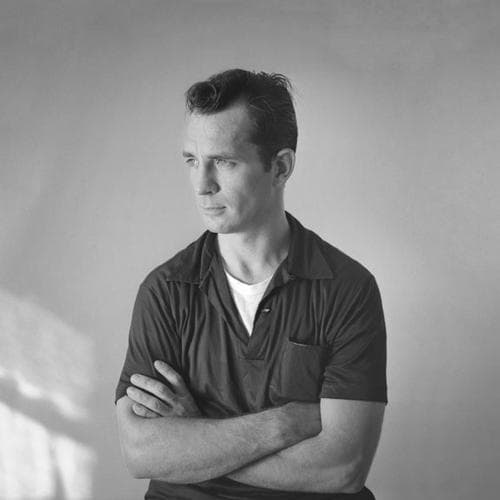
Jean-Louis Lebris de Kérouac, known as Jack Kerouac, was an American novelist and poet who, alongside William S. Burroughs and Allen Ginsberg, was a pioneer of the Beat Generation.
Similar books
- On The Road
Jack Kerouac
3.6 (349k) average on GoodreadsLifestyleExplores themes of wanderlust, freedom, and the search for meaning within the Beat Generation.
- Zen and the Art of Motorcycle Maintenance: An Inquiry Into Values
Robert M. Pirsig
3.8 (200k) average on GoodreadsPsychologyCombines a journey with deep philosophical and spiritual contemplation.
- Walden
Henry David Thoreau
3.8 (158k) average on GoodreadsBiographyFocuses on a retreat to nature for self-sufficiency and spiritual insight.
- Eat, Pray, Love
Elizabeth Gilbert
3.6 (1.5M) average on GoodreadsLifestyleA heartbroken writer leaves her conventional life for a year-long global search for pleasure in Italy, spiritual devotion in India, and unexpected love and balance in Bali.
- Wild: From Lost to Found on the Pacific Crest Trail
Cheryl Strayed
4.0 (615k) average on GoodreadsLifestyleAfter losing her mother and her marriage, a young woman impulsively hikes over a thousand miles of the Pacific Crest Trail alone, finding strength and healing in the unforgiving wilderness.
- Into Thin Air: A Personal Account of the Mount Everest Disaster
Jon Krakauer
4.2 (395k) average on GoodreadsLifestyleOn May 10, 1996, ambition and a sudden, violent storm turned Mount Everest into a deadly trap, leaving Jon Krakauer to tell the harrowing story of a disaster that took lives and shattered climbers' dreams.






Enjoyed the summary?
A summary gives you the shape of the book. The book itself has the detail, the examples and the voice.
Find The Dharma Bums on AmazonAs an Amazon Associate, BookBrief earns from qualifying purchases. How we're funded