
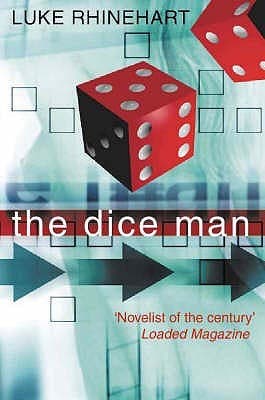
Synopsis
Covers the whole plot, including the ending.
- Difficulty
- Medium
- Read it if
- You are fascinated by radical psychological experiments, philosophical thrillers, or explorations of identity, free will, and the ethical implications of absolute freedom. You enjoy books that challenge conventional morality and societal norms.
- Skip it if
- You prefer straightforward narratives, are uncomfortable with morally ambiguous protagonists, or find the idea of surrendering all decisions to chance deeply unsettling. You might also want to skip if you're looking for practical self-help or clear-cut answers.
The Dice Man Quotes
“I am the Dice Man. I am the man who has given up control of his life to the dice.”
“The dice giveth and the dice taketh away.”
“If you can't decide, let the dice decide.”
“The only way to deal with an unfree world is to become so absolutely free that your very existence is an act of rebellion.”
“I am not a man; I am a dice.”
“The dice have taught me that there is no such thing as a wrong decision.”
“Life is a game, and the dice are the only honest players.”
“To be free, one must first surrender to chaos.”
“The dice do not judge; they only decide.”
“I have become the ultimate existentialist: I act, therefore I am.”
“In randomness, I found my true self.”
“The world fears the dice because it fears the truth of its own randomness.”
“Every throw is a leap into the unknown, and that is where life begins.”
“I am not responsible for what the dice command; I am only responsible for obeying.”
Quiz
10 questions on the plot and the characters. Each answer comes with a short explanation.
Question 1
What is the central premise that psychiatrist Luke Rhinehart adopts to transform his life in 'The Dice Man'?
- Following a strict daily schedule based on psychological principles
- Making all decisions by rolling dice to introduce randomness and chance
- Practicing meditation and mindfulness to achieve inner peace
- Adopting a hedonistic lifestyle focused solely on pleasure
Show answer
B. Making all decisions by rolling dice to introduce randomness and chance In the book, Rhinehart becomes bored with his conventional life and starts making decisions based on dice rolls, believing this randomness will free him from societal constraints and personal biases. This 'dice philosophy' drives the plot and themes of the novel.
Question 2
What profession does the protagonist Luke Rhinehart practice before adopting the dice philosophy?
- A lawyer
- A psychiatrist
- A university professor
- A writer
Show answer
B. A psychiatrist Luke Rhinehart is a psychiatrist who becomes disillusioned with his predictable life and career, which leads him to experiment with dice-based decision-making as a way to break free from routine.
Question 3
How does the dice philosophy initially impact Rhinehart's personal relationships in the book?
- It strengthens his marriage and family bonds through shared adventures
- It causes chaos and conflict as he engages in unpredictable, often shocking behavior
- It has no significant effect, as he keeps his dice experiments secret
- It leads to his immediate isolation from all friends and family
Show answer
B. It causes chaos and conflict as he engages in unpredictable, often shocking behavior Rhinehart's dice-driven actions, such as committing crimes or engaging in sexual escapades, create turmoil in his relationships, particularly with his wife and colleagues, highlighting the disruptive nature of his new philosophy.
Question 4
What broader philosophical concept does 'The Dice Man' explore through its narrative?
- The inevitability of fate and predestination
- The conflict between free will and determinism in human behavior
- The superiority of rational thought over emotional impulses
- The importance of tradition and cultural norms in shaping identity
Show answer
B. The conflict between free will and determinism in human behavior The book delves into whether humans have true free will or if their actions are determined by external forces, using the dice as a metaphor for chance and the illusion of control in decision-making.
Question 5
In the context of the book, what is a practical application of the dice philosophy that Rhinehart promotes?
- Using dice to make minor daily choices, like what to eat or wear
- Creating a dice-based therapy method for his psychiatric patients
- Encouraging others to adopt dice decision-making to challenge societal norms
- Developing a board game based on random chance for entertainment
Show answer
C. Encouraging others to adopt dice decision-making to challenge societal norms Rhinehart extends his philosophy beyond personal use by advocating for it as a tool to subvert conventional expectations and explore new possibilities, influencing a cult-like following in the story.
Question 6
Which of the following best describes the tone of 'The Dice Man' as highlighted in its description?
- Solemn and philosophical, focusing on deep existential questions
- A mix of humorous, shocking, and subversive elements
- Lighthearted and comedic throughout, with no serious themes
- Dark and horror-filled, emphasizing psychological terror
Show answer
B. A mix of humorous, shocking, and subversive elements The book is noted for its entertaining and varied tone, blending humor with shocking events and subversive ideas to critique society and explore psychological concepts.
Question 7
What role does the concept of 'chance' play in the arguments presented in 'The Dice Man'?
- It is portrayed as a destructive force that leads to inevitable ruin
- It serves as a tool for liberation from personal and societal constraints
- It is dismissed as irrelevant to meaningful human experience
- It is used primarily for comedic effect without deeper implications
Show answer
B. It serves as a tool for liberation from personal and societal constraints Rhinehart argues that embracing chance through dice rolls can free individuals from predictable patterns and societal expectations, allowing for authentic self-discovery and rebellion against norms.
Question 8
How does 'The Dice Man' challenge traditional notions of identity and self-control?
- By suggesting that identity is fixed and unchangeable, regardless of actions
- By proposing that self-control is an illusion and identity can be fluid through random acts
- By advocating for strict self-discipline as the key to personal growth
- By emphasizing the importance of social roles in defining one's self
Show answer
B. By proposing that self-control is an illusion and identity can be fluid through random acts The book posits that what we consider 'self-control' is often just adherence to societal scripts, and by letting dice decide, one can explore multiple facets of identity beyond conventional limits.
Question 9
In what way does the narrative structure of 'The Dice Man' reflect its philosophical themes?
- It follows a linear, predictable plot to mirror the stability of traditional life
- It incorporates metafictional elements and unreliable narration to question reality and authorship
- It uses a series of flashbacks to emphasize the importance of past experiences
- It is written in poetic verse to evoke emotional responses from readers
Show answer
B. It incorporates metafictional elements and unreliable narration to question reality and authorship The book often blurs the line between fiction and reality, with Rhinehart as both character and author, enhancing themes of chance and the constructed nature of identity and narrative.
Question 10
What critical societal aspect does 'The Dice Man' primarily aim to subvert through its story?
- Economic systems and class structures
- The medical and psychiatric establishment
- Conventional morality and the illusion of rational choice
- Political ideologies and governance models
Show answer
C. Conventional morality and the illusion of rational choice The novel critiques how society enforces moral codes and the belief in rational decision-making, using the dice philosophy to expose these as arbitrary constraints on human freedom and creativity.
The Dice Man FAQ
What is 'The Dice Man' about?
'The Dice Man' is a cult classic novel about psychiatrist Luke Rhinehart, who, feeling bored and constrained by his life, decides to make all his decisions based on the roll of a dice. This philosophy leads to unpredictable, often shocking consequences as he abandons control and embraces chaos.
Is 'The Dice Man' based on a true story?
No, 'The Dice Man' is a work of fiction, though it is presented in a pseudo-autobiographical style. The author, Luke Rhinehart (a pen name for George Cockcroft), uses this narrative to explore philosophical and psychological themes rather than recount real events.
What is the main philosophy in 'The Dice Man'?
The main philosophy is radical freedom through chance, where the protagonist uses dice rolls to make decisions, breaking free from societal norms and personal habits. It explores themes of existentialism, determinism vs. free will, and the liberation (or destruction) that comes from surrendering control.
Does the dice philosophy actually work in real life?
While the dice philosophy in the book is a fictional extreme, it serves as a metaphor for embracing spontaneity and challenging rigid routines. In real life, incorporating elements of chance can encourage creativity and reduce decision fatigue, but it's not a practical guide for major life choices due to potential risks.
How is 'The Dice Man' different from other psychological thrillers?
'The Dice Man' stands out by blending psychological thriller elements with deep philosophical inquiry and dark humor. Unlike typical thrillers focused on external threats, it delves into internal chaos and existential questions, making it both entertaining and thought-provoking.
What are the key themes in 'The Dice Man'?
Key themes include free will vs. determinism, the nature of identity, the rebellion against societal constraints, and the psychological impact of embracing randomness. The book uses these themes to critique conventional life and explore human potential and madness.
Is 'The Dice Man' suitable for all readers?
No, 'The Dice Man' contains mature content, including violence, sexual themes, and psychological intensity, which may be disturbing. It's best suited for adult readers interested in philosophy, psychology, or unconventional narratives, and those comfortable with provocative material.
How does 'The Dice Man' compare to books like 'Fight Club'?
Both 'The Dice Man' and 'Fight Club' explore themes of male disillusionment and rebellion against societal norms, but 'The Dice Man' focuses more on philosophical chance and internal chaos, while 'Fight Club' emphasizes physical violence and anti-consumerism. Both are cult classics with subversive messages.
Can reading 'The Dice Man' change your life?
Reading 'The Dice Man' can be life-changing in a philosophical sense, as it challenges readers to question their own decision-making and societal roles. However, it's a work of fiction meant to provoke thought rather than a practical self-help guide, so its impact depends on individual interpretation.
What is the cultural impact of 'The Dice Man'?
'The Dice Man' has had a lasting cultural impact as a cult classic, inspiring discussions on freedom and chance in art, psychology, and pop culture. It has influenced other works and spawned real-life 'dice living' experiments, though it remains controversial for its radical ideas.
About the author

Luke Rhinehart is an American author best known for his novel "The Dice Man," which explores themes of chance and decision-making through a unique narrative style. His works primarily focus on fiction, often delving into psychological and philosophical concepts. Rhinehart's writing has garnered a cult following since its publication in the 1970s.
Similar books
- Fight Club
Chuck Palahniuk
4.2 (499k) average on GoodreadsThrillerExplores themes of identity dissolution, societal rebellion, and the allure of radical, destructive philosophies.
- A Clockwork Orange
Anthony Burgess
4.0 (601k) average on GoodreadsThrillerExamines free will, moral choice, and the societal implications of attempting to control human behavior.
- The Stranger
Albert Camus
4.1 (3k) average on GoodreadsFantasyDelves into existentialism, the absurd, and a protagonist who operates outside conventional societal expectations and emotions.
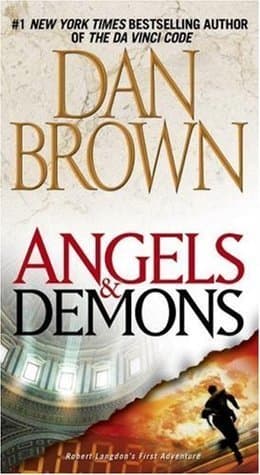
- Angels & Demons
Dan Brown
3.9 (2.7M) average on GoodreadsThrillerA Harvard symbologist races through Rome's ancient sites, deciphering cryptic clues to unmask the Illuminati and stop a vengeful plot to destroy the Vatican with a stolen antimatter weapon.
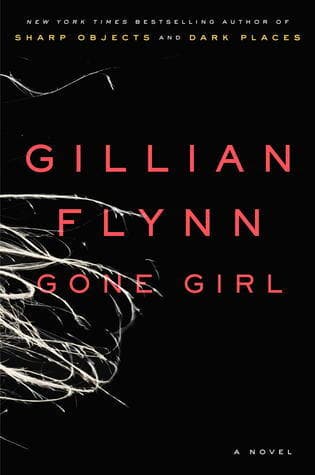
- Gone Girl
Gillian Flynn
4.1 (2.3M) average on GoodreadsThrillerA wife's sudden disappearance on her fifth anniversary reveals a web of lies and psychological warfare, exposing the secrets within a seemingly perfect marriage.
- The Girl on the Train
Paula Hawkins
3.9 (2.1M) average on GoodreadsThrillerA woman’s fascination with a seemingly perfect couple she watches from her daily train commute leads her into a dark investigation when she witnesses something that shatters their idyllic image.

Enjoyed the summary?
A summary gives you the shape of the book. The book itself has the detail, the examples and the voice.
Find The Dice Man on AmazonAs an Amazon Associate, BookBrief earns from qualifying purchases. How we're funded