
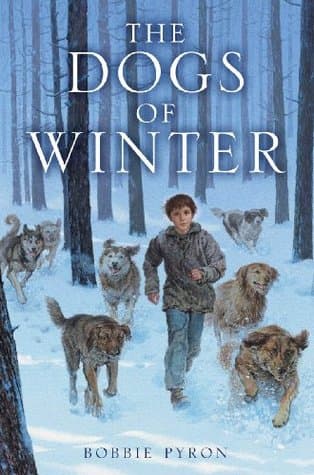
Synopsis
Covers the whole plot, including the ending.
- Difficulty
- Easy
- Pacing
- Moderate
- Mood
- Hopeful, Gritty, Moving, Resilient
- Read it if
- You enjoy heartwarming stories about the bond between humans and animals, survival tales, or historical fiction set in unique urban environments.
- Skip it if
- You prefer fantasy or sci-fi, or are sensitive to stories involving animal peril and the struggles of homelessness.
The Dogs of Winter Plot Summary
Covers the whole plot, including the ending.
Abandoned in Moscow
Nine-year-old Ivan is left alone in a Moscow apartment after his mother, a single parent, disappears. He waits for her, growing hungry and desperate. When the landlord threatens eviction, Ivan, fearing orphanages, flees to the cold streets of Moscow. He quickly learns the harshness of homelessness, struggling to find food and shelter among indifferent passersby. His first attempts to beg for food are met with suspicion or rejection, showing his vulnerability and the city's unforgiving nature.
First Encounters and Survival
Ivan spends his first nights on the street in fear and hunger. He learns to scavenge, searching dumpsters and market stalls for food. One evening, trying to steal a sausage, he meets a large, scary stray dog named Sasha, the pack leader. Sasha's presence is at first threatening, but Ivan, desperate, stands his ground, surprising himself and the dog. This meeting starts an uneasy truce and the first step toward an unusual partnership.
Joining the Pack
After several careful meetings, Sasha, seeing Ivan's resilience, lets him join her pack. The pack includes Sasha, the leader; a playful, smaller dog named Little One; and a larger, protective male dog. Ivan quickly learns their ways, communicating with barks, growls, and body language. He shares their small finds, sleeps huddled with them for warmth, and begins to feel a sense of belonging he hadn't known since his mother left. The dogs become his family, offering protection and company.
Life on the Streets with Dogs
Life with the dog pack is a constant fight for survival. Ivan learns to beg for coins, sometimes using the dogs to get sympathy, other times relying on his small size. They create routines for finding food, often raiding market stalls or waiting for scraps. They move through Moscow's complex streets, finding shelters in abandoned buildings, under bridges, and in forgotten city corners. Ivan finds that the dogs are intelligent and resourceful, using their senses and teamwork to survive the harsh Russian winter.
The Threat of Dog Catchers
A constant danger for Ivan and his new family are the Moscow dog catchers. These men patrol the city, rounding up stray dogs, often brutally. Ivan quickly learns to recognize their vehicles and signs of their approach, warning the pack. He and Sasha develop ways to escape them, using their knowledge of the city's alleys and hidden paths. These close calls emphasize the fragile nature of their freedom and the constant danger they face, strengthening their bond as they rely on each other to survive.
The Old Woman's Kindness
During one begging trip, Ivan meets an elderly woman who shows him a rare kindness. Instead of ignoring him, she offers him food and a warm place to rest for a short time. She speaks gently to him, and for the first time in a long time, Ivan gets a break from his hard street life. This meeting is a reminder of the human connection he lost and the potential for good in the world, even as he knows he must return to his pack.
A Difficult Winter
The Moscow winter gets worse, bringing extreme cold and less food. The pack struggles to find enough to eat, and the winds make finding warm shelter vital. Ivan, despite his growing strength, feels the strain of the cold and hunger. He worries about his dog family, especially Little One, who is more vulnerable. This time tests their bond and resourcefulness, forcing them to take bigger risks for food and warmth, making them even more dependent on each other.
The Park Incident
While scavenging in a park, Ivan and the dogs are involved in an event. They might save someone or cause a small disturbance, drawing attention from authorities or citizens. This event, though not necessarily bad, highlights Ivan's unusual living situation and makes him more visible. The incident is a turning point, showing that their hidden life cannot last forever and that Ivan's unique bond with the dogs is becoming harder to hide.
The Offer of Help
After the park incident, a social worker or kind person becomes interested in Ivan's well-being. They approach him, offering him a chance at a safer, more normal life – a warm bed, regular meals, and school. This offer creates a deep problem for Ivan. While comfort is tempting, it means leaving Sasha, Little One, and his pack, who have become his true family. He struggles with the conflict between the safety of a human world and the strong loyalty he feels for his dog companions.
A Painful Choice
Ivan struggles with his choice, torn between two very different lives. He reflects on his journey, the harshness of the streets, and his dog family's loyalty. He knows that staying with the dogs means a life of constant danger and uncertainty, but leaving them feels like betrayal. Finally, with a heavy heart, Ivan chooses to accept human help, understanding it is for his long-term good, even if it means a painful separation from Sasha and the pack. This decision marks his reluctant return to the human world.
Adjusting to a New Life
Ivan enters a children's home or foster care, starting the slow and often hard process of adjusting to a normal life. He experiences the comforts he lacked on the streets – regular food, a warm bed, clean clothes, and school. However, memories of his time with Sasha and the pack are strong. He misses their company, their silent talks, and the freedom of their wild life. His change is marked by longing and a deep thankfulness for the family that saved him.
The Lingering Connection
Despite his new life, Ivan never forgets his dog family. He finds ways to stay connected, perhaps visiting their old roaming areas, or looking for signs of them. He carries the lessons of survival, loyalty, and strength learned from Sasha. The story ends with Ivan in a stable environment, but his time with the dogs remains a defining part of him. He is forever shaped by their love and the extraordinary bond they shared, which shows the power of an unusual family.
The Dogs of Winter Characters
Ivan
Protagonist
A young boy abandoned on the streets of Moscow, who finds family among stray dogs.
Ivan is a nine-year-old boy, initially naive and vulnerable, who is thrust into the harsh reality of homelessness after his mother's disappearance. He is intelligent, observant, and possesses an innate resilience that allows him to adapt to the brutal street life. He loves fairytales, a detail that highlights his lost innocence and his capacity for wonder even in dire circumstances. His primary drive is survival and finding belonging, which he ultimately achieves with the dog pack. He is fiercely loyal once he forms a bond.
Relationships: Sasha (Leader of his dog pack, surrogate mother figure, protector.); Little One (Playful dog in the pack, like a younger sibling.); His Mother (Absent parent whose disappearance triggers his abandonment.)
Sasha
Supporting
The wise, formidable leader of the stray dog pack that adopts Ivan.
Sasha is a large, intelligent, and experienced stray dog, the undisputed leader of her pack. She is initially wary of Ivan but recognizes his resilience and eventually accepts him, becoming his primary protector and a surrogate mother figure. Sasha possesses a deep understanding of the city's dangers and resources, guiding her pack with instinct and cunning. Her loyalty to her pack, including Ivan, is unwavering, and she makes decisions based on the collective survival of her family.
Relationships: Ivan (Adopted human pack member, protected and guided by Sasha.); Little One (Pack member, likely a younger or less experienced dog under Sasha's care.)
Little One
Supporting
A smaller, playful dog in Sasha's pack, who forms a close bond with Ivan.
Little One is a smaller, more playful member of Sasha's dog pack. She is less cautious than Sasha but equally loyal to her pack members. Little One often acts as a source of comfort and lightheartedness for Ivan, engaging in playful interactions that remind him of a semblance of normalcy. She is more vulnerable than the other dogs due to her size, increasing Ivan's protective instincts. Her presence reinforces the family dynamic within the pack.
Relationships: Ivan (Close companion and playmate, like a younger sibling.); Sasha (Leader and protector within the pack.)
The Social Worker/Kind Woman
Supporting
An individual who attempts to bring Ivan back into the human world.
This character represents the compassionate side of human society, offering Ivan a chance at a different life. Whether an official social worker or a concerned citizen, their role is to provide a pathway out of homelessness. They are persistent and empathetic, understanding the unique challenges Ivan faces, including his bond with the dogs. This character acts as a catalyst for Ivan's eventual decision to leave the streets, representing hope and a future beyond survival.
Relationships: Ivan (Potential guardian or rescuer, offering him a new life.)
Ivan's Mother
Mentioned
Ivan's absent mother whose disappearance sets the story in motion.
Ivan's mother is a largely unseen character, but her disappearance is the catalyst for Ivan's journey. She is a single parent, and her sudden absence leaves Ivan vulnerable and alone. Her character represents the loss and abandonment Ivan experiences at the story's outset. Although not physically present, the memory of her and the hope of her return initially drive Ivan, before his focus shifts to immediate survival and his new family.
Relationships: Ivan (Biological mother, whose abandonment shapes his early struggles.)
The Dog Catchers
Antagonist
The ever-present threat to the stray dogs and Ivan's pack.
The dog catchers are the primary human antagonists, representing the dangers of the human world to the stray dogs. They are depicted as relentless and often brutal in their pursuit of the strays, posing a constant threat to Sasha's pack and, by extension, to Ivan's safety. They embody the indifference or hostility of society towards the homeless and the feral, forcing Ivan and the dogs to constantly be on guard and use their wits to evade capture.
Relationships: Ivan (Threat to his safety and the safety of his dog family.); Sasha's Pack (Hunters and captors of stray dogs.)
The Dogs of Winter Themes
Family and Belonging
The main theme is the unusual family Ivan forms with the stray dogs. After his mother abandons him, Ivan finds unconditional love, protection, and belonging with Sasha's pack. Their loyalty, sharing food, and huddling for warmth show that family is not just blood, but shared experiences, care, and support. This is clear when Ivan struggles to decide whether to leave the dogs for a human home, as they have become his real family.
“They were his pack, his family, the only ones who truly understood the language of the street.”
Survival and Resilience
The harsh realities of Moscow street life, especially in winter, highlight the great resilience of both Ivan and the dogs. They learn to find food, shelter, and avoid dangers like dog catchers. Ivan changes from a vulnerable child to a resourceful survivor, adapting to the dogs' ways. This shows the human spirit's ability to endure and thrive against great odds. Each day is a display of their cleverness, teamwork, and will to live, even in the hardest conditions.
“Hunger was a constant companion, but so was the fierce determination to outwit the city.”
The Nature of Humanity
The book explores what makes us human through Ivan's interactions with people and animals. While many humans are uncaring or cruel, the dogs show Ivan the most kindness, loyalty, and empathy. On the other hand, the kind acts from the old woman or social worker offer glimpses of human compassion. The story asks readers to consider if 'humanity' is about species or qualities like love, protection, and connection, which Ivan finds more readily in his dog companions.
“Sometimes, he thought, the dogs understood more than any person ever could.”
Loss of Innocence and Growth
Ivan's journey involves a quick and brutal loss of childhood innocence. He must leave behind his fairytales and face the grim truth of homelessness. However, this loss brings significant personal growth. He gains street smarts, courage, and a deep understanding of nature and animal behavior. His experiences, though hard, make him a stronger, more empathetic person, capable of making difficult, adult choices for his future. He gains a valuable view on life that most children never encounter.
“The streets had taught him lessons no book ever could, lessons etched not in ink, but in the bite of winter and the bark of a friend.”
Plot Devices & Literary Techniques
Anthropomorphism
Attributing human characteristics and emotions to the stray dogs.
The author frequently employs anthropomorphism to deepen the connection between Ivan and the dogs, and for the reader to empathize with the animals. Sasha's wisdom, Little One's playfulness, and the pack's cooperative strategies are often described in terms that suggest human-like intelligence, loyalty, and emotional depth. This device allows the dogs to function as fully realized characters, making their bond with Ivan more believable and emotionally resonant, and blurring the lines between human and animal family.
Symbolism of Winter
Winter represents the harshness of life, isolation, and the struggle for survival.
The Moscow winter serves as a powerful symbolic force throughout the narrative. It represents not only the literal physical hardship and danger Ivan and the dogs face but also the emotional coldness and indifference of the city towards its most vulnerable inhabitants. The relentless cold, scarcity of food, and need for shelter underscore the constant struggle for survival and amplify the themes of resilience and the preciousness of warmth and companionship. As winter eventually gives way, it symbolizes the potential for new beginnings and hope.
Foreshadowing (of help/rescue)
Subtle hints that Ivan's situation might eventually change.
While Ivan's life on the streets is precarious, there are subtle instances of foreshadowing that suggest his situation might not be permanent. These could include brief, compassionate glances from passersby, the mention of social services, or Ivan's own lingering memories of a different life. This device provides a glimmer of hope amidst the harsh realities, preparing the reader for the eventual offer of help and the difficult choice Ivan will face, without diminishing the immediate challenges of his survival.
The Dogs of Winter Quotes
“The wind was a living thing, always there, always biting.”
“Hope was a small, warm stone in a pocket of ice.”
“A dog's loyalty isn't earned with food alone, but with trust.”
“The world was vast and indifferent, but in our small circle, we were everything to each other.”
“Sometimes, the coldest places hold the warmest hearts.”
“Every step was a prayer, every breath a testament.”
“Silence could be a comfort, or a terror, depending on what it hid.”
“Memory is a strange companion; it can warm you or haunt you.”
“Even in the darkest night, the stars still shine.”
“We were not just surviving; we were living, fiercely and defiantly.”
“A true friend is a light in the longest winter.”
“The stories we tell ourselves are often the strongest shields.”
“To be truly free, one must first be truly brave.”
Quiz
10 questions on the plot and the characters. Each answer comes with a short explanation.
Question 1
What city is Ivan abandoned in at the beginning of the story?
- St. Petersburg
- Kyiv
- Moscow
- Vladivostok
Show answer
C. Moscow The story explicitly states that Ivan is abandoned on the streets of Moscow.
Question 2
What specific group of animals adopts Ivan and becomes his family?
- A flock of pigeons
- A pack of wolves
- A pack of stray dogs
- A group of street cats
Show answer
C. A pack of stray dogs Ivan is adopted by a pack of dogs, who become his street companions and family.
Question 3
What kind of stories did Ivan used to love reading before his mother disappeared?
- Mystery novels
- Fairytales
- Science fiction
- Historical non-fiction
Show answer
B. Fairytales The synopsis mentions that Ivan, who used to love reading fairytales, is practically living in one.
Question 4
What is the primary challenge Ivan and his dog pack face daily while living on the streets?
- Avoiding capture by animal control
- Finding food and shelter
- Navigating the city's public transport system
- Protecting their territory from other human gangs
Show answer
B. Finding food and shelter The text states they 'roam the city and countryside, using their wits to find food and shelter, dodging danger, begging for coins.'
Question 5
The book is based on a true story. What does this categorization imply about the narrative?
- All characters and events are entirely fictional.
- It is a fantasy story with magical elements.
- It draws inspiration from real-life events or individuals.
- It is a documentary film script.
Show answer
C. It draws inspiration from real-life events or individuals. Being 'based on a true story' means the narrative takes inspiration from real-life occurrences, even if fictionalized for the story.
Question 6
What central theme is explored when Ivan is offered help and must decide whether to accept it?
- The importance of urban development.
- The conflict between loyalty to a chosen family and the pull of the human world.
- The benefits of a solitary existence.
- The challenges of learning a new language.
Show answer
B. The conflict between loyalty to a chosen family and the pull of the human world. The core conflict presented is whether Ivan 'will be able to accept it? Will he even want to?' after finding a family with the dogs, highlighting the theme of belonging and loyalty.
Question 7
Besides 'finding food and shelter,' what other constant threat do Ivan and his pack face?
- Avoiding the city's harsh winter weather.
- Dodging danger.
- Competing in underground dog fights.
- Escaping from a local zoo.
Show answer
B. Dodging danger. The text mentions 'dodging danger' as one of their daily activities, alongside finding food and shelter.
Question 8
The synopsis uses the phrase 'practically living in one' in reference to fairytales. What does this suggest about Ivan's new life with the dogs?
- His life has become simple and uneventful.
- His experiences are extraordinary, challenging, and perhaps magical in their survival and bond, mirroring fairytale adventures.
- He has forgotten all about fairytales since his mother disappeared.
- He now believes he is a prince with magical powers.
Show answer
B. His experiences are extraordinary, challenging, and perhaps magical in their survival and bond, mirroring fairytale adventures. Comparing his life to a fairytale suggests his experiences are extraordinary, filled with adventure, danger, and unlikely companionship, much like the fantastical elements of fairytales.
Question 9
What deeper question about humanity does the book aim to explore, according to the synopsis?
- What are the limits of human endurance?
- What makes us human?
- How do societies deal with stray animals?
- The history of Moscow's architecture.
Show answer
B. What makes us human? The last line of the synopsis explicitly states it's 'a moving look at what makes us human.'
Question 10
Considering the setting and Ivan's initial predicament, what is the significance of the title 'The Dogs of Winter'?
- It refers to a specific breed of dog that only appears in winter.
- It highlights the crucial role the dogs play in Ivan's survival during the harsh winter conditions.
- It suggests the dogs are a metaphor for the cold, unforgiving nature of the city itself.
- It's a poetic reference to ancient Russian mythology about winter deities.
Show answer
B. It highlights the crucial role the dogs play in Ivan's survival during the harsh winter conditions. The title directly links the dogs to the 'harsh winter' that Ivan would not survive without them, emphasizing their role as saviors and companions during a critical time.
The Dogs of Winter FAQ
What is the central premise of 'The Dogs of Winter'?
The book follows Ivan, a young boy abandoned on the streets of Moscow after his mother disappears. To survive the brutal winter, he forms an unlikely bond with a pack of stray dogs, who become his surrogate family and teach him to navigate the harsh urban landscape.
Who are the key canine characters in Ivan's pack?
Ivan's pack includes several distinct dogs, most notably the wise and protective leader, Misha; the gentle and maternal Lyudmila; and the playful, energetic Petya. Each dog contributes uniquely to the pack's survival and to Ivan's emotional well-being.
What kind of challenges do Ivan and the dogs face while living on the streets?
They constantly struggle with finding food, shelter from the severe Moscow winter, and evading dangerous city officials who round up strays. They also encounter hostile adults and other street children vying for resources, making daily survival a perilous endeavor.
How does Ivan's love for fairytales manifest in his new life with the dogs?
Ivan often relates his experiences with the dogs to the fairytales he used to read, finding parallels between their struggles and triumphs and the heroic quests in his stories. This connection helps him frame his harsh reality and find meaning in their daily adventures.
What eventually prompts Ivan to consider leaving his life with the dog pack?
Ivan is eventually discovered by caring adults who offer him a chance at a more stable life, including education and a warm home. This opportunity forces him to confront the difficult choice between his loyalty to his dog family and the prospect of rejoining human society.
Are there any subtle hints about Ivan's mother's fate or reasons for her disappearance?
The book subtly suggests that Ivan's mother might have been struggling with poverty or personal issues, rather than intentionally abandoning him. Her absence is a recurring ache for Ivan, and the narrative implies the broader societal challenges that led to her disappearance, though it doesn't explicitly reveal her ultimate fate.
How do the dogs communicate with Ivan, and what specific behaviors demonstrate their understanding?
The dogs communicate primarily through body language, barks, growls, and nudges. Misha, the leader, often uses specific gazes or postures to direct Ivan, while Lyudmila's gentle licks convey comfort, showing a deep, non-verbal understanding of his emotional state and needs.
Are there any historical or cultural details about Moscow in the post-Soviet era that are subtly woven into the background?
The story subtly reflects the economic hardship and social dislocation in post-Soviet Moscow, with references to widespread poverty, abandoned buildings, and the general struggle for survival. These details, though not always explicit, paint a picture of a city in flux and its impact on vulnerable populations.
How does Ivan's bond with the dogs help him cope with the trauma of abandonment?
The dogs provide Ivan with unconditional love, a sense of belonging, and a purpose, which are crucial for healing from abandonment. Their presence mitigates his loneliness and fear, giving him the emotional support system he desperately needs to survive and thrive.
In what ways does Ivan's character evolve from a vulnerable child to a resilient survivor?
Ivan transforms from a scared, dependent child into a resourceful and street-smart individual. He learns to observe, adapt, hunt for food, and navigate complex social dynamics, both human and canine. This journey forges his resilience and self-reliance.
How does the author portray the psychological impact of choosing between two 'families' (the dogs vs. human society) on Ivan?
The author vividly depicts Ivan's internal conflict and emotional turmoil when faced with this choice. He grapples with guilt and loyalty towards his dog family, feeling torn between the comfort and security of a human home and the deep, primal bond he shares with his canine companions.
What psychological needs do the dogs fulfill for Ivan that humans might not have been able to?
The dogs fulfill Ivan's fundamental needs for unconditional acceptance, non-judgmental companionship, and a primal sense of belonging without the complexities or expectations of human relationships. They offer a simpler, more instinctual form of love and protection that is crucial for his survival and emotional well-being.
Is the ending of the book optimistic, tragic, or bittersweet, and why?
The ending is generally considered bittersweet. While Ivan finds a path to a more stable human life, it comes with the profound sorrow of leaving his dog family. It offers hope for his future but acknowledges the deep loss and sacrifice involved in his transition.
What is the primary message or theme the author conveys through Ivan's journey?
The author primarily conveys themes of resilience, the unconventional forms of family, and the definition of humanity. It explores how love and loyalty can transcend species, and that true family is forged through shared experience and mutual support, not just blood.
How does the book challenge or uphold traditional notions of 'family'?
The book profoundly challenges traditional notions of 'family' by showcasing a boy's deep, life-sustaining bond with a pack of stray dogs. It argues that family is defined by love, protection, and belonging, regardless of species or conventional structures, rather than by biological ties alone.
Why might the author have chosen Moscow as the setting for this story?
Moscow, with its vast urban landscape, harsh winters, and history of social upheaval, provides a stark and challenging backdrop that amplifies Ivan's struggle for survival and highlights the resilience required. The city's specific atmosphere enhances the sense of isolation and the contrast between human indifference and canine loyalty.
What is the significance of Ivan relating his experiences to fairytales?
Ivan's connection to fairytales is significant because it provides him with a framework for understanding his chaotic reality, infusing his harsh life with a sense of purpose and wonder. It also reflects his enduring childhood innocence and his ability to find magic and meaning even in dire circumstances.
Could Ivan's story be interpreted as an allegory for societal neglect or the plight of vulnerable populations?
Yes, Ivan's story can certainly be interpreted allegorically. His abandonment and subsequent survival with the dogs highlight the vulnerability of children and other marginalized groups in society, especially during times of economic or social instability, when human support systems fail them.
Similar books
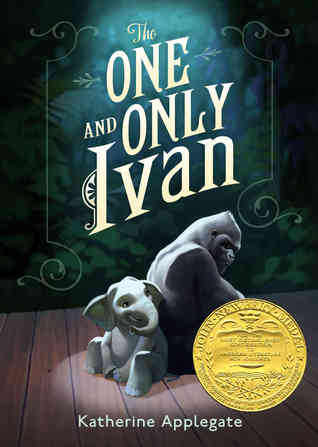
- The One and Only Ivan
Katherine Applegate
4.3 (141k) average on GoodreadsFantasyA poignant story told from an animal's perspective, highlighting themes of friendship and finding a home.
- Harry Potter and the Sorcerer's Stone
J.K. Rowling
4.5 (7M) average on GoodreadsFantasyRescued from a miserable life under the stairs, an orphaned boy discovers he's a wizard destined for a magical school, where he uncovers a dangerous secret tied to the dark wizard who murdered his parents.
- The Hobbit, or There and Back Again
J.R.R. Tolkien
4.3 (2.9M) average on GoodreadsFantasyA comfort-loving hobbit named Bilbo Baggins is whisked away by a mischievous wizard and a band of dwarves on an unexpected journey to reclaim stolen treasure from a fearsome dragon, discovering courage and a magical ring along the way.
- Harry Potter and the Goblet of Fire
J.K. Rowling
4.6 (2.6M) average on GoodreadsFantasyA bewildered Harry Potter, underage and thrust into a deadly Triwizard Tournament, must brave dragons, mermaids, and a resurgent dark magic to survive a year that will forever alter the wizarding world.
- Harry Potter and the Order of the Phoenix
J.K. Rowling
4.5 (2.5M) average on GoodreadsFantasyIn a year of oppressive secrets and the threat of Voldemort, Harry Potter and Dumbledore's Army secretly train for war, shown through Jim Kay and Neil Packer's dark illustrations.
- The Lightning Thief
Rick Riordan
4.3 (2M) average on GoodreadsFantasyThrust into a world of mythological monsters and divine treachery, an ordinary boy discovers he's the son of Poseidon and must embark on a perilous quest across modern America to prevent an Olympian war.





Enjoyed the summary?
A summary gives you the shape of the book. The book itself has the detail, the examples and the voice.
Find The Dogs of Winter on AmazonAs an Amazon Associate, BookBrief earns from qualifying purchases. How we're funded