
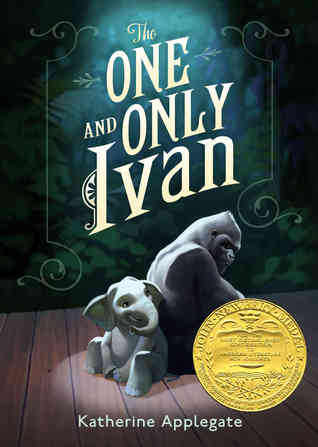
Synopsis
Covers the whole plot, including the ending.
- Difficulty
- Easy
- Pacing
- Moderate
- Mood
- Heartwarming, Hopeful, Poignant, Thought-provoking
- Read it if
- You enjoy heartwarming stories about friendship, art, and finding your voice, especially if you appreciate animal perspectives and themes of empathy and justice.
- Skip it if
- You prefer fast-paced action or stories without a strong emotional core focused on animal welfare.
The One and Only Ivan Plot Summary
Covers the whole plot, including the ending.
Life at the Exit 8 Big Top Mall
Ivan, a silverback gorilla, has lived for 27 years in a space at the Exit 8 Big Top Mall and Video Arcade, a small roadside attraction. He has a television and art supplies. His best friends are Stella, an elderly elephant with a bad leg, and Bob, a stray dog who often sleeps in Ivan's space. Ivan describes his daily life: watching people through the glass, drawing, and talking with his friends. He is mostly happy, with few memories of the jungle where he was born. He sees himself as human in many ways, having been raised by people after being caught as a baby.
Stella's Wisdom and Declining Health
Stella, the wise elephant, often tells Ivan and Bob stories of her life in the circus and the wild. She talks about the jungle's beauty and the pain of being separated from her family. Ivan, however, finds these stories distant, as his own memories of the wild are unclear. Stella's leg, hurt during her circus days, becomes more painful, and her health clearly declines. Mack, the mall owner, struggles to pay for her vet care, often giving her only aspirin. Stella says she wants a better life, especially for any young elephants in the future.
The Arrival of Ruby
Because fewer people are visiting and Stella is sick, Mack decides to buy a baby elephant to bring in more visitors. This new arrival is Ruby, a scared young elephant who was separated from her family after poachers killed them. Ruby's arrival first stresses Stella, who is already weak. But Stella quickly helps Ruby, comforting her and showing her how things work at the mall. Ivan feels protective of Ruby, seeing how vulnerable she is and how hard her new home is.
Stella's Last Wish
Stella's condition gets much worse. She tells Ivan her fears for Ruby's future. She makes Ivan promise that he will find a way to get Ruby out of the mall and to a place where she can be with other elephants and live a natural life. Ivan, very sad about his friend's suffering, agrees, though he does not know how he will keep such a big promise. Soon after, Stella dies, leaving Ivan, Bob, and Ruby heartbroken. This makes Ivan think about what home and freedom really mean.
Ivan's Artistic Awakening
Stella's death affects Ivan deeply. He feels the weight of his promise to her and sees Ruby getting sadder and more scared. He realizes his art, once just a hobby, could help make a change. He starts to draw with new focus, trying to show what Ruby needs: a sanctuary. He sketches pictures of elephants in a green place, hoping to tell people that Ruby deserves more than the mall's small, concrete space.
Julia's Help and Mack's Frustration
Julia, George the janitor's daughter, keeps visiting Ivan, bringing him art supplies and encouraging his drawing. She is the first person to truly understand Ivan's art. Ivan uses the paint and paper she gives him to make bigger, more detailed drawings of elephants. Meanwhile, Mack gets more stressed as the mall's business keeps dropping, even with Ruby there. He is often short-tempered and struggles to manage the animals, especially Ruby, who is still a baby and likes to cause trouble.
The Billboard Project
Knowing his small drawings are not enough, Ivan plans a big artwork that people cannot ignore. He gathers all the art supplies Julia provides, carefully planning his piece. He wants to draw a picture of Ruby, with other elephants, in a beautiful, natural place, hoping people will understand his request for a better life for Ruby. He works secretly, often at night, with Bob watching, arranging his canvases.
The Unveiling of the Message
One morning, Ivan finishes his large drawing, carefully putting the panels together to form a picture of elephants in a green setting, with the word 'HOME' clearly written. Julia and George are the first to see it, and Julia immediately understands its message. She helps put the panels on Ivan's front window, so everyone passing the mall can see it. The drawing quickly gets attention from news reporters and animal rights groups.
Public Outcry and Intervention
Ivan's artwork becomes famous. News channels show his story, and people gather outside the mall, holding signs and protesting the animals' living conditions. Animal rights groups get involved, starting an investigation into the Exit 8 Big Top Mall. Mack, overwhelmed by the bad publicity and money problems, tries to downplay the situation but cannot stop the public outcry. The future of Ivan, Ruby, and the other animals is uncertain.
A New Home: The Sanctuary
Eventually, public pressure and animal welfare groups make Mack agree to move Ivan, Ruby, and the other animals. A team of experts comes to the mall to prepare them for transport. Ivan and Ruby go to a large wildlife sanctuary, a vast, natural place where they can live freely with other elephants and gorillas. Ivan feels the joy of grass under his feet and sees other gorillas, finally understanding what 'home' means and keeping his promise to Stella.
The One and Only Ivan Characters
Ivan
Protagonist
A silverback gorilla who uses art to advocate for his friends.
Ivan is an easygoing, introspective silverback gorilla who has lived in captivity for 27 years at the Exit 8 Big Top Mall and Video Arcade. He has a unique perspective, often seeing the world through human eyes, having been raised by them after being captured as a baby. He enjoys drawing and watching TV. Initially content with his routine, Ivan undergoes a significant transformation after Stella's death and Ruby's arrival. He is driven by a strong sense of loyalty and a growing awareness of injustice, using his art as a powerful tool for change.
Relationships: Stella (Best friend and mentor); Bob (Best friend and confidant); Ruby (Protege and source of inspiration); Julia (Human friend and artistic enabler); Mack (Owner and caretaker (complex, often strained))
Stella
Supporting
An elderly, wise elephant who inspires Ivan's promise.
Stella is an old, gentle elephant with a chronic leg injury, a relic from her circus days. She is wise, patient, and possesses a deep understanding of the world, both wild and captive. She shares stories of the jungle and the pain of separation from her family, providing Ivan with a glimpse of a life he barely remembers. Stella's declining health and her final wish for Ruby's freedom serve as the primary catalyst for Ivan's transformation and the central conflict of the story. Her wisdom guides Ivan even after her death.
Relationships: Ivan (Close friend and confidant); Bob (Friend); Ruby (Protector and mentor)
Ruby
Supporting
A young, traumatized baby elephant whose plight ignites Ivan's mission.
Ruby is a baby elephant, brought to the mall after being separated from her family, who were killed by poachers. She is initially scared, vulnerable, and deeply traumatized by her past. Her innocent questions and her longing for her family highlight the cruelty of her captivity. Ruby's presence and her obvious suffering awaken Ivan's protective instincts and reinforce Stella's dying wish, making her the central figure for whom Ivan fights. She represents the pure innocence and potential that captivity can stifle.
Relationships: Ivan (Protector and friend); Stella (Mentor and maternal figure); Mack (Owner and caretaker)
Bob
Supporting
A street-smart stray dog and Ivan's loyal companion.
Bob is a cynical, street-smart stray dog who often sleeps on Ivan's belly. He is fiercely loyal to Ivan and Stella, offering sarcastic commentary and practical advice. Despite his tough exterior, Bob deeply cares for his friends and provides emotional support, especially after Stella's death. He embodies resilience and adaptability, having survived on his own, but he also values the companionship he finds with Ivan and the others. Bob's presence offers comic relief and a grounded perspective.
Relationships: Ivan (Best friend and confidant); Stella (Friend)
Julia
Supporting
The compassionate daughter of the janitor, who encourages Ivan's art.
Julia is George's daughter, a kind and artistic young girl who visits the mall regularly. She is one of the few humans who sees Ivan not just as an animal, but as an individual with thoughts and feelings. She provides Ivan with art supplies and genuinely appreciates his drawings. Julia plays a crucial role in the plot by enabling Ivan's artistic expression and ultimately being the first human to understand the message in his large-scale artwork, helping to bring it to public attention.
Relationships: Ivan (Human friend and artistic collaborator); George (Father)
Mack
Antagonist/Supporting
The owner of the Exit 8 Big Top Mall, struggling to keep his business afloat.
Mack is the owner and manager of the Exit 8 Big Top Mall and Video Arcade. He is responsible for the animals' care, though his financial struggles often lead to compromises in their welfare. He is not overtly malicious but is driven by a desperate desire to keep his failing business alive, which blinds him to the animals' needs. Mack embodies the human tendency to prioritize profit over welfare, but he also shows moments of genuine, albeit misguided, affection for the animals, particularly Ivan, whom he raised.
Relationships: Ivan (Owner/caretaker (complex, parental in early life)); Stella (Owner/caretaker); Ruby (Owner/caretaker); George (Employee)
George
Supporting
The janitor of the mall and Julia's father.
George is the janitor at the Exit 8 Big Top Mall and Julia's father. He is a hardworking and generally kind man who cares for the animals, though he is resigned to their captivity. He often brings Julia to the mall, fostering her connection with Ivan. While he is initially hesitant to challenge Mack, he supports Julia's efforts to help Ivan and ultimately plays a role in making Ivan's message visible to the public. He represents the everyday person who comes to realize the ethical implications of animal captivity.
Relationships: Julia (Daughter); Mack (Employer); Ivan (Acquaintance/caretaker)
Thelma
Mentioned
A poodle who performs in the mall's 'circus'.
Thelma is a poodle who performs tricks in the daily shows at the Exit 8 Big Top Mall. She is part of the small collection of animals that Mack uses to attract visitors. While not a central character, she represents another animal living in captivity, highlighting the broader issue of animal entertainment and welfare within the mall environment.
Relationships: Mack (Owner/trainer)
The One and Only Ivan Themes
Identity and Self-Discovery
Ivan's journey is about finding his identity as a gorilla and an artist. At first, he feels more human, having been raised by people, and has unclear memories of his wild past. Stella's stories and Ruby's arrival make him face his heritage and the unnaturalness of his captivity. His art, initially a hobby, becomes a strong way to show his gorilla nature and his desire for freedom. This leads him to accept who he is and his purpose. He realizes he is not just 'Ivan, the TV-watching gorilla,' but a silverback with a duty to his kind.
“I am a gorilla. It's not as easy as it looks.”
The Power of Art and Communication
Art is shown as a key way to communicate and a reason for change. Ivan, unable to speak human words, uses drawing to show his deepest wishes and keep his promise to Stella. His artistic skill changes from simple sketches to a strong, clear message that crosses language barriers. Julia's ability to understand his art is important, bridging the gap between animals and humans. The billboard-sized drawing eventually changes public opinion and leads to the animals' rescue, showing art's power to inspire empathy and action.
“I draw what I see, not what I wish were true.”
Friendship and Loyalty
The strong friendships among Ivan, Stella, and Bob are central to the story. Their companionship gives them comfort and support in their confined lives. Ivan's loyalty to Stella makes him promise to protect Ruby, and his commitment to that promise drives his art. Bob's constant presence, despite his cynical nature, shows how important companionship is. These friendships show that even in hard situations, connection and care can provide strength and purpose.
“A good friend is a sturdy branch.”
Freedom vs. Captivity
The main conflict is the clear difference between the natural freedom animals should have and the limits of their captivity. Ivan's space, the mall, and the animals' restricted lives represent this idea. Stella's memories of the wild and Ruby's trauma from being caught show how cruel it is to take animals from their natural homes. Ivan's main goal is freedom for Ruby and himself, not just physical release but also the freedom to live as they should, which happens when they move to a sanctuary.
“Humans. They think they can own anything.”
Memory and the Past
Memory plays a big part in shaping characters and driving actions. Ivan at first has only vague, broken memories of his jungle past, which makes him adapt to his human-focused life. Stella, however, has clear and painful memories of her wild life and family. She shares these with Ivan, slowly bringing back his own forgotten memories. Ruby's recent traumatic memories of her family's death show how much the past affects the present. The trip to the sanctuary is not just about a future home, but a return to a life that honors their shared past and natural heritage.
“Memories are precious things. You can't ever know when you'll need them.”
Plot Devices & Literary Techniques
First-Person Animal Narration
The story is told from Ivan the gorilla's perspective.
The entire novel is narrated by Ivan, a silverback gorilla. This device allows readers to experience the world through an animal's eyes, offering unique insights into their thoughts, feelings, and perceptions of human behavior and captivity. Ivan's voice is gentle, observant, and often humorous, yet also deeply poignant. This perspective fosters empathy and makes the ethical questions about animal welfare more immediate and personal, as readers directly connect with the protagonist's inner world and his struggle for freedom.
Art as a Catalyst
Ivan's drawings serve as the primary means of communication and plot advancement.
Ivan's artistic talent is initially a simple pastime, but it evolves into the central plot device for his mission. His drawings are not just aesthetic expressions; they become his voice. The progression from small, abstract sketches to the large, detailed billboard message is what ultimately attracts human attention, raises awareness, and forces action. Art functions as a bridge between the animal and human worlds, allowing Ivan to convey complex ideas and emotions that transcend verbal language, directly driving the resolution of the story.
Symbolism of the 'Home' Drawing
Ivan's final artwork symbolizes freedom, family, and a natural habitat.
Ivan's masterpiece, a large drawing of elephants in a lush, green sanctuary with the word 'HOME,' is a powerful symbol. It represents not just a physical place, but the emotional and natural environment where animals truly belong. It symbolizes the longing for freedom, family, and a life lived according to one's true nature, contrasting sharply with the concrete and glass of the mall. This drawing becomes the focal point of the public's understanding and activism, encapsulating the entire theme of the book in a single, compelling image.
The Promise
Stella's dying wish to Ivan serves as the core motivation for the plot.
Stella's dying wish, where she makes Ivan promise to ensure Ruby finds a better life outside the mall, is the fundamental driving force of the narrative. This promise creates a powerful internal conflict for Ivan and provides a clear, urgent goal for his actions. It elevates his personal journey into a quest with profound moral implications, transforming him from a passive observer into an active agent of change. The fulfillment of this promise represents the book's resolution and the triumph of hope and responsibility.
The One and Only Ivan Quotes
“I am Ivan. I am a gorilla. It's not as easy as it looks.”
“Humans waste words. They toss them like banana peels and leave them to rot.”
“Memories are precious... they help me remember who I am and where I come from.”
“The jungle is a green dream, a place where gorillas can be gorillas.”
“Sometimes I think humans are the loneliest animals of all.”
“A good zoo is how humans make amends.”
“Stella says there is no such thing as a good cage.”
“I used to be a wild gorilla, and I still am, deep inside.”
“Hope is a powerful thing. It can keep you going when nothing else will.”
“Art is a way of telling the truth without using words.”
“Ruby is like a little piece of the jungle, a reminder of what we've lost.”
“The world is a better place with elephants in it.”
“Sometimes you have to be brave even when you don't feel brave.”
“A true home is more than four walls and a roof.”
Quiz
10 questions on the plot and the characters. Each answer comes with a short explanation.
Question 1
What is the name of the mall where Ivan lives at the beginning of the book?
- Exit 8 Big Top Mall and Video Arcade
- Circus World Shopping Center
- Jungle Adventure Arcade
- The Big Top Emporium
Show answer
A. Exit 8 Big Top Mall and Video Arcade The book opens with Ivan living at the Exit 8 Big Top Mall and Video Arcade, which is described as his domain with glass walls where humans watch him.
Question 2
Who are Ivan's two main friends before Ruby arrives?
- Stella the elephant and Bob the dog
- Mack the owner and Julia the girl
- Ruby the elephant and George the janitor
- A parrot and a chimpanzee
Show answer
A. Stella the elephant and Bob the dog Ivan's closest companions are Stella, an elderly elephant, and Bob, a stray dog, who provide him friendship and comfort in the mall.
Question 3
What does Ivan spend most of his time thinking about?
- Art and how to capture experiences with color and lines
- Escaping back to the jungle
- Watching TV shows all day
- Playing with other animals
Show answer
A. Art and how to capture experiences with color and lines Ivan is deeply passionate about art, often contemplating how to express sensations like the taste of a mango or sound of leaves through his drawings.
Question 4
How does Ruby's arrival change Ivan's perspective?
- She makes him see their home and his art in a new way, inspiring him to seek a better life for them
- She teaches him to forget about his past and focus only on the present
- She convinces him to stop making art and instead plan an escape
- She makes him jealous because she gets more attention from visitors
Show answer
A. She makes him see their home and his art in a new way, inspiring him to seek a better life for them Ruby, a baby elephant taken from her family, opens Ivan's eyes to the inadequacy of their mall life and motivates him to use his art to advocate for change.
Question 5
What is Ivan's primary motivation for creating art after Ruby arrives?
- To communicate a message and bring about positive change for Ruby and the other animals
- To sell his paintings for money to buy better food
- To impress the mall visitors and become famous
- To decorate his enclosure and make it more like the jungle
Show answer
A. To communicate a message and bring about positive change for Ruby and the other animals Ivan's art transforms from a personal hobby into a tool for activism, as he aims to secure a better future for Ruby and himself.
Question 6
Which character helps Ivan by providing him with art supplies and encouragement?
- Julia, the janitor's daughter
- Mack, the mall owner
- Bob, the stray dog
- Stella, the elderly elephant
Show answer
A. Julia, the janitor's daughter Julia, the daughter of the mall's janitor, supports Ivan's artistic endeavors by giving him crayons and paper, and she plays a key role in sharing his message.
Question 7
What major theme is highlighted by Ivan's journey from complacency to activism?
- The power of hope and friendship to inspire change
- The importance of economic success in animal captivity
- The superiority of human intelligence over animals
- The inevitability of accepting one's fate
Show answer
A. The power of hope and friendship to inspire change Ivan's story emphasizes how friendship with Ruby and hope for a better life drive him to take action, showcasing themes of resilience and compassion.
Question 8
Why does Ivan rarely think about his life in the jungle?
- He has grown accustomed to his life at the mall and focuses on his current experiences
- He was taken from the jungle as a baby and has no memories of it
- He believes the jungle is a dangerous place and prefers captivity
- Other animals at the mall have told him to forget about it
Show answer
A. He has grown accustomed to his life at the mall and focuses on his current experiences Ivan has adapted to his environment at the mall, so he seldom reflects on his past in the jungle, instead engaging with his art and friends.
Question 9
How does the book's first-person narration affect the reader's understanding of Ivan?
- It provides deep insight into Ivan's thoughts, emotions, and artistic perspective, making him relatable and sympathetic
- It limits the story to only Ivan's point of view, omitting key events involving other characters
- It makes the plot confusing by jumping between past and present without clear transitions
- It focuses solely on action and dialogue, with little emotional depth
Show answer
A. It provides deep insight into Ivan's thoughts, emotions, and artistic perspective, making him relatable and sympathetic Katherine Applegate uses Ivan's first-person narration to vividly convey his inner world, including his humor, poignancy, and growth, enhancing the themes of friendship and hope.
Question 10
What is the significance of Ivan's art in the context of the book's resolution?
- It serves as a catalyst for public awareness and leads to the animals being moved to a better environment
- It becomes a popular attraction at the mall, increasing profits for the owner
- It helps Ivan remember his jungle past in detail, causing him to become depressed
- It is used to teach Ruby how to paint, but has no impact on their situation
Show answer
A. It serves as a catalyst for public awareness and leads to the animals being moved to a better environment Ivan's artwork, particularly his drawings that communicate the animals' plight, draws public attention and ultimately results in their relocation to a sanctuary, fulfilling his goal for change.
The One and Only Ivan FAQ
What is 'The One and Only Ivan' about?
The story follows Ivan, a silverback gorilla living in captivity at the Exit 8 Big Top Mall and Video Arcade, who spends his days creating art and bonding with his friends Stella the elephant and Bob the stray dog. When a baby elephant named Ruby arrives, Ivan's perspective shifts, leading him to use his artistic talents to secure a better future for all the animals at the mall.
Why should I read 'The One and Only Ivan'?
This book offers a powerful, heartwarming exploration of friendship, empathy, and resilience through Ivan's unique first-person narration. It addresses themes of animal welfare and captivity with sensitivity while celebrating the transformative power of art and hope, making it both emotionally engaging and thought-provoking for readers of all ages.
What is the background/setting of 'The One and Only Ivan'?
The story is set primarily at the Exit 8 Big Top Mall and Video Arcade, a run-down shopping center where Ivan lives in a glass enclosure. The setting reflects the animals' confinement and isolation, with occasional flashbacks to Ivan's early life in the jungle before he was captured and brought to the mall as an attraction.
What are the most memorable quotes from 'The One and Only Ivan'?
Notable quotes include Ivan's reflection, 'I am Ivan. I am a gorilla. It's not as easy as it looks,' and Stella's poignant advice to Ivan, 'A good zoo is how humans make amends.' Another impactful line is Ivan's realization, 'Memories are precious... they help tell us who we are,' which underscores the book's themes of identity and memory.
What writing style does Katherine Applegate use in 'The One and Only Ivan'?
Applegate employs a sparse, poetic first-person narration from Ivan's perspective, using short sentences and chapters that mirror his straightforward yet insightful observations. This style blends humor with poignant moments, making complex themes accessible while emphasizing Ivan's emotional depth and artistic sensibility.
What minor details add significant meaning to 'The One and Only Ivan'?
Small details like Ivan's collection of crayons and paper scraps, which symbolize his limited resources and creativity, and Bob's habit of sleeping on Ivan's belly, representing their deep bond, enrich the narrative. The recurring image of the 'domain' glass walls subtly highlights the animals' captivity and Ivan's growing awareness of it.
What are some subtle foreshadowing moments in 'The One and Only Ivan'?
Early mentions of Ivan's art being 'just for me' foreshadow his later use of it to advocate for Ruby's freedom. Stella's declining health and her stories about better zooms hint at her eventual death and its impact on Ivan's resolve. Ruby's arrival and her curiosity about the outside world subtly predict the plot's shift toward liberation.
What unexpected character connections exist in 'The One and Only Ivan'?
Unexpected connections include Julia, the mall cleaner's daughter, who shares Ivan's love for art and becomes a key ally in his plan, and Mack, the mall owner, whose initial neglect contrasts with his later ambiguous role in the animals' fate. Bob's stray status and loyalty to Ivan also create a cross-species friendship that deepens the theme of found family.
What are unspoken character motivations in 'The One and Only Ivan'?
Ivan's unspoken motivation is his guilt over his passive acceptance of captivity, which drives him to protect Ruby from a similar fate. Mack's desire for profit and fear of failure underlie his harsh treatment of the animals, while Julia's quiet empathy stems from her own artistic struggles and connection to Ivan's creativity.
What psychological complexities do characters exhibit in 'The One and Only Ivan'?
Ivan exhibits complexity through his initial apathy toward his captivity, which masks deep-seated memories of freedom and a growing sense of responsibility. Stella shows resilience and wisdom despite her suffering, while Ruby's innocence and trauma from separation reveal the psychological impact of captivity on young animals. Bob's loyalty contrasts with his independent stray nature.
What are the major emotional turning points in 'The One and Only Ivan'?
Key turning points include Ruby's arrival, which awakens Ivan's protective instincts; Stella's death, which fuels his determination to change their circumstances; and Ivan's decision to create the 'HOME' artwork, marking his shift from passive observer to active advocate. The climax occurs when his art gains public attention, leading to the animals' relocation to a zoo.
How do relationship dynamics evolve in 'The One and Only Ivan'?
Ivan's relationship with Ruby evolves from distant curiosity to a fatherly bond, motivating his activism. His friendship with Stella deepens through shared memories and her mentorship, while his bond with Bob remains steadfast, providing emotional support. The dynamic with humans, particularly Julia, shifts from observation to collaboration as they work together for the animals' freedom.
Which parts of 'The One and Only Ivan' remain ambiguous or open-ended?
The fate of Mack after the mall closes is left ambiguous, as is the long-term adjustment of the animals to zoo life. Ivan's inner thoughts about fully regaining his wild instincts are not fully resolved, leaving room for interpretation about whether he finds true freedom or simply a better captivity. The extent of Julia's ongoing involvement with Ivan is also open-ended.
What are controversial scenes or decisions in 'The One and Only Ivan'?
Controversial elements include Mack's treatment of the animals, such as withholding medical care for Stella, which sparks debate about animal cruelty. Ivan's initial inaction and later risky decision to use art for activism raise questions about responsibility and sacrifice. The ending's relocation to a zoo, rather than the wild, is debated as a compromise versus a true solution.
'The One and Only Ivan' ending explained: how it ends & what it means
The book ends with Ivan, Ruby, and Bob moving to a zoo after Ivan's artwork draws public outrage over their captivity. This symbolizes a bittersweet victory: they gain a safer, more natural environment, but not complete freedom. It highlights themes of hope and compromise, suggesting that change is incremental and that art and empathy can drive meaningful progress.
How does Ivan's art serve as a metaphor in 'The One and Only Ivan'?
Ivan's art evolves from a personal escape to a tool for communication and change, symbolizing the power of creativity to transcend captivity and advocate for justice. His attempts to capture abstract concepts like 'home' reflect his growing awareness and desire for a better life, making art a central metaphor for expression, memory, and activism in the story.
What role does memory play in 'The One and Only Ivan'?
Memory is crucial as Ivan's fading recollections of the jungle contrast with his vivid present experiences, shaping his identity and motivations. Stella's stories preserve her past and inspire Ivan, while Ruby's lack of wild memories highlights the impact of captivity. The theme underscores how memories connect characters to their origins and fuel their hopes for the future.
How does the book address themes of captivity vs. freedom?
The book explores captivity through the animals' confined lives at the mall, contrasted with fleeting memories of freedom. Ivan's journey from acceptance to activism illustrates a nuanced view: freedom is not just physical but also emotional and creative. The ending's move to a zoo suggests a middle ground, questioning what true freedom means for captive animals.
About the author

Katherine Applegate is an American author known for her children's and young adult fiction. Her notable works include "The One and Only Ivan," which won the Newbery Medal, as well as "The One and Only Bob," "Wishtree," "Crenshaw," and "Home of the Brave." Applegate's stories often explore themes of friendship, compassion, and the natural world.
Similar books
- The Tale of Despereaux
Kate DiCamillo
4.0 (162k) average on GoodreadsFantasyA whimsical story about an unconventional hero, facing adversity and bringing hope, with a focus on compassion.
- Watership Down
Richard Adams
4.1 (434k) average on GoodreadsFantasyAdams's novel operates on a grander, epic, and allegorical scale with a larger cast and more complex societal structures among rabbits, demanding a higher reading level. While both evoke empathy and deal with animal welfare, Ivan's story is more intimate, focused on individual agency and moral awakening in a direct advocacy context, whereas 'Watership Down' is more about survival, mythology, and political allegory.
- Harry Potter and the Sorcerer's Stone
J.K. Rowling
4.5 (7M) average on GoodreadsFantasyRescued from a miserable life under the stairs, an orphaned boy discovers he's a wizard destined for a magical school, where he uncovers a dangerous secret tied to the dark wizard who murdered his parents.
- The Hunger Games
Suzanne Collins
4.3 (6.4M) average on GoodreadsFantasyIn a future where children fight to the death on live television, Katniss Everdeen volunteers for the arena, turning a death sentence into a fight for survival and a spark of rebellion.
- 1984
George Orwell
4.2 (3.1M) average on GoodreadsPoliticsIn a future where surveillance and thought control are absolute, a man's search for truth clashes with the Party, showing that hope can be a form of rebellion.
- Divergent
Veronica Roth
4.2 (2.9M) average on GoodreadsFantasyIn a society divided by virtues, a sixteen-year-old's difference from the norm starts a rebellion that threatens her world.




Enjoyed the summary?
A summary gives you the shape of the book. The book itself has the detail, the examples and the voice.
Find The One and Only Ivan on AmazonAs an Amazon Associate, BookBrief earns from qualifying purchases. How we're funded