
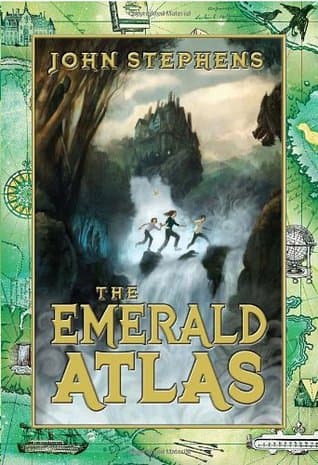
Synopsis
Covers the whole plot, including the ending.
- Difficulty
- Easy
- Pacing
- Moderate
- Mood
- Whimsical, Adventurous, Hopeful, Magical
- Read it if
- You enjoy classic portal fantasy adventures with talking animals, magical books, and brave young protagonists.
- Skip it if
- You prefer gritty, dark fantasy or stories without clear good vs. evil narratives.
The Emerald Atlas Plot Summary
Covers the whole plot, including the ending.
The Arrival at the Cambridge Institute
Ten years after being separated from their parents, Kate, Michael, and Emma, now thirteen, twelve, and eleven, arrive at the Cambridge Institute for Children and Youth, their tenth orphanage. Dr. Pym runs this institution, which is an enormous, old mansion that seems empty except for him and a few strange servants. The siblings soon find that the house holds many secrets, including a large, dusty library. Their first hope for a stable home is overshadowed by an unsettling feeling and the mystery of their parents' disappearance, a topic Dr. Pym avoids.
Discovery of the Emerald Atlas
During hide-and-seek, Emma finds a hidden room in Dr. Pym's library. Inside, she sees a strange, green leather-bound book with no title, decorated with an emerald on its cover. When she opens it, a bright green light fills the room, and the siblings are instantly moved from the library to a snowy, moonlit forest. They are confused and cold, realizing they have traveled through time and space. This sudden, magical event confirms their suspicions that the Cambridge Institute and Dr. Pym are more than they seem, and their ordinary lives have changed.
Meeting the Dwarves and the Countess
Lost in the snow, the children are found and saved by a group of dwarves, led by the gruff but kind Stanton. The dwarves take them to their underground home, where they are warmed and fed. Stanton explains that they are in the land of the Scerne, trapped in endless winter by the evil Countess. He reveals that the book Emma found is the Emerald Atlas, one of three 'Books of Beginning,' which are old magical items. The dwarves believe the children are the 'Children of the Atlas' who will help them defeat the Countess and bring summer back to their land. The children are at first unsure about this task.
The Quest for the Book of Time
Stanton tells the children that to defeat the Countess, they need to find the other Books of Beginning. The Emerald Atlas, a book of time travel, is powerful, but not enough by itself. Their immediate goal is to find the Book of Time. Stanton, with some dwarves, guides Kate, Michael, and Emma through dangerous snowy areas, encountering magical creatures and avoiding the Countess's monsters, the Screechers. This journey tests their courage and makes them rely on each other as they begin to understand their new power and responsibility.
Infiltration of the Countess's Fortress
The Book of Time is inside the Countess's heavily guarded fortress, a dark castle carved into an ice mountain. Kate, using her new ability to change time with the Emerald Atlas, pretends to be a servant to get into the fortress. She discovers that the Countess is kidnapping children from local villages, forcing them to mine for magical stones. While inside, Kate meets a wise old man named Dr. Stanislaus Pym, who she realizes is a younger version of the Dr. Pym from the orphanage. He helps her find the Book of Time and escape with some of the captive children.
Michael's Courage and the Book of Death
After getting the Book of Time, Michael, who often feels ignored, finds his own connection to the Books. He learns to use the Book of Time to change the past and future, showing his bravery and intelligence. The children also learn that there is a third, more dangerous Book of Beginning – the Book of Death. This book is said to control life and death and is the Countess's main goal. She wants to become immortal and all-powerful. The discovery of this third book raises the stakes and shows the full extent of the Countess's ambition.
Confrontation with the Countess
With the Emerald Atlas and the Book of Time, the siblings, along with Stanton and the dwarves, attack the Countess's fortress. A fierce battle starts, with the children using their unique abilities: Kate changing time, Michael seeing the past and future, and Emma's natural connection to the magical books. The Countess shows her true, frightening power, which comes from the despair of the captive children. She is a strong enemy, and the siblings struggle to defeat her dark magic, realizing they must combine their strengths to have a chance.
The Countess's True Identity and Dr. Pym's Role
During the final battle, it is revealed that the Countess is the children's mother, corrupted by the Book of Death. Dr. Pym, who has been watching and guiding them, steps forward. He explains that he is a 'Cartographer,' a guardian of the Books of Beginning, and that he planned their journey to this time and place to fulfill a prophecy. He had been protecting them from their mother's corrupting influence for years. This news shocks the children, who now understand the personal stakes in their fight and the sacrifices their parents made.
The Sacrifice and the Return of Summer
To defeat their mother and save the land, a hard choice must be made. Dr. Pym reveals that the only way to break the Countess's control is to use the Books of Beginning in a specific, powerful ritual. This involves a sacrifice, which Dr. Pym makes, disappearing into a shimmering light. The children, sad but determined, finish the ritual. The endless winter that held the Scerne finally ends, replaced by the warmth of summer. The captive children are freed, and peace returns to the land, though the siblings are left with deep emotional wounds.
The Aftermath and New Purpose
After the battle, the children, now aware of their heritage as 'Cartographers' and guardians of the Books of Beginning, decide to return to their own time. They use the Emerald Atlas to go back to the Cambridge Institute, finding it exactly as they left it, but now with new meaning. They understand that their journey was a test and an introduction to a larger, magical world. They accept their new roles, knowing that the fight against evil is not over, and they must now search for the Book of Death to prevent others from misusing it.
Principal Figures
Kate
Protagonist
The responsible and cautious eldest sibling, burdened by a sense of duty.
Kate, at thirteen, is the eldest of the three siblings. She carries the weight of responsibility for her younger brother and sister, often acting as their protector and moral compass. Initially skeptical and practical, she struggles with the sudden immersion into a magical world, but her inherent courage and loyalty drive her to overcome her fears. She is observant and intelligent, quickly adapting to new challenges, and her primary motivation is to keep her family safe and, eventually, to reunite with her parents.
Relationships: Michael (Protective older sister, sometimes bossy but deeply caring.); Emma (Maternal figure, fiercely protective.); Dr. Pym (Initially distrustful, later a mentor and guide.); The Countess (Antagonist, later revealed to be her corrupted mother.)
Michael
Protagonist
The brave and curious middle sibling, often overshadowed but with hidden strengths.
Michael, twelve, is the middle child, often feeling overlooked in comparison to Kate's responsibility and Emma's charm. He is an avid reader of fantasy novels, which ironically prepares him for their real-life magical adventure. Michael is curious, intelligent, and possesses a strong sense of justice. He initially struggles with his own perceived lack of importance but discovers his unique talents and bravery as the journey progresses. His drive is to prove himself and contribute meaningfully to their quest.
Relationships: Kate (Younger brother, sometimes chafes under her authority but respects her.); Emma (Protective older brother, shares a close bond.); Dr. Pym (Learns from and respects his knowledge of the Books.)
Emma
Protagonist
The vivacious and instinctively magical youngest sibling, whose innocence hides great power.
Emma, eleven, is the youngest and most outwardly cheerful of the three. She possesses an innate, intuitive connection to magic, being the one who first finds and activates the Emerald Atlas. Her innocence and optimism often provide light in dark situations, but she is also fiercely brave when her siblings are in danger. Emma is observant and has a knack for understanding things others miss. Her primary motivation is to find a loving home and her lost parents, and she embraces the magical world with wonder rather than fear.
Relationships: Kate (Younger sister, looks up to her and seeks her protection.); Michael (Close sibling bond, often plays with him.); The Emerald Atlas (Has a strong, intuitive connection to the book.)
Dr. Pym
Supporting
The eccentric and enigmatic guardian of the Books of Beginning, a Cartographer.
Dr. Pym is the seemingly absent-minded and eccentric director of the Cambridge Institute. He is much older than he appears, having lived for centuries as a 'Cartographer,' a guardian of the Books of Beginning. He orchestrates the children's arrival at the institute and their subsequent journey, guiding them subtly and providing crucial information at key moments. His true identity and purpose are slowly revealed, showing him to be a wise and powerful figure dedicated to maintaining the balance of magic and protecting the world from the Books' misuse. He is burdened by past failures and driven by a desire to set things right.
Relationships: Kate, Michael, Emma (Mentor and guardian, later revealed to be their protector since birth.); The Countess (Long-standing adversary, trying to prevent her from gaining ultimate power.)
The Countess
Antagonist
The cruel sorceress who has plunged the Scerne into eternal winter, seeking ultimate power.
The Countess is the primary antagonist, a powerful and malevolent sorceress who has cursed the land of the Scerne with perpetual winter. She kidnaps children to mine for magical stones, using their despair to fuel her dark magic. She is ruthless, ambitious, and obsessed with acquiring the Books of Beginning to gain immortality and absolute power. Her true identity as the children's corrupted mother is a shocking revelation, adding a deeply personal and tragic layer to her villainy. Her power is immense, and she commands an army of monstrous creatures, the Screechers.
Relationships: Kate, Michael, Emma (Antagonist, later revealed to be their corrupted mother.); Dr. Pym (Long-standing adversary.)
Stanton
Supporting
The gruff but loyal leader of the dwarves, who aids the children on their quest.
Stanton is the leader of the dwarves who live in the Scerne. He is initially skeptical of the children, but quickly becomes their steadfast ally and protector. Gruff and pragmatic, he is deeply devoted to his people and desperate to free them from the Countess's curse. He provides valuable guidance, knowledge of the land, and fighting support to the siblings. His loyalty and bravery make him an indispensable companion on their dangerous journey, and he represents the hope and resilience of the Scerne's inhabitants.
Relationships: Kate, Michael, Emma (Guide and protector, a trusted ally.)
The Screechers
Mentioned
The monstrous, shadowy creatures serving the Countess.
The Screechers are the terrifying, shadowy creatures that serve the Countess. They are her enforcers, used to hunt down and capture children, and to patrol her frozen domain. They are described as being fast, strong, and capable of instilling fear, making them formidable adversaries for the siblings and the dwarves. Their presence underscores the constant danger faced by anyone opposing the Countess.
Relationships: The Countess (Her loyal, monstrous servants.)
Themes & Insights
The Power of Family and Sibling Bonds
The story focuses on the strong bond between Kate, Michael, and Emma. Despite their differences, their love and loyalty are their greatest strengths. Their shared experience of being separated from their parents and moved between orphanages has created a deep connection. This theme shows when Kate risks her safety for Emma, Michael finds courage to protect his sisters, and Emma's natural magic often helps her siblings' more logical approaches, showing that their combined efforts are important for their survival and success against the Countess.
“They were, after all, the only family they had left, and that, Kate knew, was a bond stronger than any magic.”
Loss and the Search for Home
The siblings' ten-year search for their parents and a stable home drives the story. Their time in many orphanages shows their deep feeling of being lost and their longing for belonging. The magical journey, while dangerous, is also a quest to understand their past and get back what was lost. The Cambridge Institute, at first another temporary stop, becomes a symbolic home as they uncover its secrets and their own destiny. In the end, the 'home' they find is not just a place, but the acceptance of who they are and their new purpose as Cartographers, even if their parents are still lost or changed.
“All their lives, they had been looking for a place to belong. And now, it seemed, they had found one, even if it was stranger than they could have ever imagined.”
Destiny vs. Choice
The children learn about a prophecy that says they will defeat the Countess and restore the Scerne. While this suggests a set path, the story emphasizes their choices. They could choose to ignore the prophecy, but they consistently choose to act, to fight, and to take responsibility. Dr. Pym's guidance highlights the importance of their free will within destiny. This theme is clear when Kate must decide whether to trust a younger Dr. Pym or when Michael takes the initiative to use the Book of Time, showing that while a path may be set, how one walks it is a personal choice.
“You are the Children of the Atlas, it is true. But what you do with that truth, that is your own choice.”
The Corrupting Influence of Power
The Countess is the main example of this theme. Her strong desire for power, especially the power over life and death from the Book of Death, has turned her into a cruel ruler and corrupted her identity. Her actions, like kidnapping children and bringing endless winter to the land, are direct results of her unchecked ambition. The story subtly warns against the appeal of absolute power, even for good intentions, suggesting that it can consume people and turn them into something monstrous. The children themselves must learn to use their growing powers responsibly.
“Power, my dears, is a hungry beast. It can devour even the noblest of intentions if not kept in check.”
Plot Devices & Literary Techniques
The Books of Beginning
Three ancient, magical tomes with immense power over time, life, and death.
The Books of Beginning are the central magical artifacts driving the plot. They consist of the Emerald Atlas (power over time and space), the Book of Time (power over past and future events), and the Book of Death (power over life and death). These books are not merely tools; they are sentient to a degree, choosing their wielders and possessing an inherent will. They serve as the MacGuffin, the source of both the children's powers and the Countess's ambition, and are the key to fulfilling the prophecy and restoring balance to the world.
Prophecy of the Children of the Atlas
An ancient prediction foretelling the arrival of three siblings who will defeat the Countess.
The prophecy serves as a classic narrative device to introduce the children's destiny and provide a framework for their quest. It explains why they are special and why Dr. Pym has been protecting them. While it sets a path, the story emphasizes that the children's choices within this prophecy are what truly matter. It creates a sense of epic scale and importance for their adventure, linking them to a long history of magical conflict and giving their actions profound significance for the Scerne and beyond.
The Perpetual Winter
A magical curse that has frozen the land of the Scerne in an unending winter.
The perpetual winter is a potent symbol of the Countess's tyrannical rule and the despair she inflicts upon the land. It functions as a constant environmental antagonist, creating harsh conditions for the heroes and emphasizing the urgency of their mission. The return of summer upon the Countess's defeat serves as a clear, visual representation of the restoration of hope and balance, making the stakes of their quest tangible and immediate. It also provides a unique, evocative setting for much of the story.
The Cambridge Institute
A mysterious orphanage that acts as a magical gateway and safe haven.
The Cambridge Institute initially appears as just another orphanage, but it quickly reveals itself to be a nexus of magic and a sanctuary for the children. Its vast library and hidden rooms conceal the Emerald Atlas and serve as the point of entry into the magical world. It is also Dr. Pym's base of operations, where he monitors and prepares the children. The institute acts as a narrative 'hub,' a place they return to, now with a new understanding of its true purpose and their own connection to it.
The Emerald Atlas Quotes
“The world is full of things you don't expect, and that's what makes it interesting.”
“Sometimes you have to be a little bit bad to do a lot of good.”
“It's not about being brave all the time. It's about being brave when it counts.”
“There are some things you just know, even if you don't know how you know them.”
“A book is a powerful thing, children. More powerful than most people realize.”
“Family is more than just blood. It's about who you choose to be with, and who chooses you.”
“The past isn't always gone. Sometimes it's just waiting to be found.”
“Even the smallest person can change the course of the future.”
“Fear is a useful thing, sometimes. It tells you what you care about.”
“True magic isn't about tricks. It's about changing the world.”
“You don't need to understand everything to believe in it.”
“Sometimes the greatest dangers are the ones you can't see.”
“Every story has a beginning, a middle, and an end. But not always in that order.”
Quiz
10 questions on the plot and the characters. Each answer comes with a short explanation.
Question 1
What is the name of the first orphanage the three siblings, Kate, Michael, and Emma, are sent to at the beginning of the book?
- St. Augustine's Home for Wayward Children
- The Cambridge Institute for Children
- The Edgar Allan Poe Home for Hopeless Orphans
- The Sisters of Perpetual Sorrow Orphanage
Show answer
C. The Edgar Allan Poe Home for Hopeless Orphans The children are sent to the Edgar Allan Poe Home for Hopeless Orphans at the very beginning of the story, where they endure strict rules before being moved.
Question 2
What magical object does Kate discover in Dr. Pym's study that transports them to the land of the Dwarves?
- A glowing silver locket
- A dusty, leather-bound book with a green cover
- An ancient, ornate grandfather clock
- A shimmering, crystal ball
Show answer
B. A dusty, leather-bound book with a green cover Kate finds 'The Emerald Atlas' itself, a green-covered book, in Dr. Pym's study, which is the magical object that initiates their adventure.
Question 3
What unique ability does Emma possess that becomes crucial in their adventures?
- She can communicate with animals.
- She can control plants and make them grow.
- She has the ability to make things disappear and reappear.
- She can turn invisible, often accidentally.
Show answer
D. She can turn invisible, often accidentally. Emma has the magical ability to turn invisible, which she often does unintentionally, especially when she's feeling upset or scared.
Question 4
Who is the main antagonist of 'The Emerald Atlas,' known for kidnapping children and draining their life force?
- The White Witch
- The Countess
- Lord Drakon
- The Shadow King
Show answer
B. The Countess The Countess is the primary villain, a powerful sorceress who uses enchanted children to maintain her youth and power.
Question 5
What is the name of the Dwarf who first helps the children and becomes a key ally?
- Gimli
- Ronson
- Rafe
- Barrow
Show answer
C. Rafe Rafe is the Dwarf who discovers the children after they arrive in the past and quickly becomes a loyal and brave companion.
Question 6
What is the significance of the 'Children of the Prophecy' in the context of the story?
- They are destined to rule the land of the Dwarves.
- They are the only ones who can activate the Emerald Atlas.
- They are foretold to defeat the Countess and restore balance to magic.
- They are the lost heirs to the throne of the Winter King.
Show answer
C. They are foretold to defeat the Countess and restore balance to magic. The prophecy foretells that three children, often interpreted as Kate, Michael, and Emma, will be instrumental in stopping the Countess and her dark magic.
Question 7
What specific type of magical creature does Michael befriend and later ride?
- A griffin
- A giant wolf
- A bear-like creature called a 'bear-dog'
- A winged horse
Show answer
C. A bear-like creature called a 'bear-dog' Michael forms a strong bond with a large, furry creature called a 'bear-dog' named Fen, whom he eventually rides into battle.
Question 8
The children's parents disappeared under mysterious circumstances. What is revealed about their parents' true identities and roles?
- They were explorers who got lost in another dimension.
- They were powerful sorcerers who created the Emerald Atlas.
- They were agents of the 'Order of the Atlas' protecting the magical books.
- They were captured by the Dwarves for trespassing.
Show answer
C. They were agents of the 'Order of the Atlas' protecting the magical books. It is revealed that their parents were part of a secret organization, the Order of the Atlas, dedicated to protecting the magical books and the balance of the world.
Question 9
What is the primary motivation behind the Countess's relentless pursuit of the children and the magical books?
- She wants to conquer the entire magical world.
- She seeks eternal youth and immense power by draining the life force of children and controlling the magical artifacts.
- She desires revenge against Dr. Pym for a past wrong.
- She aims to destroy all magic in the world.
Show answer
B. She seeks eternal youth and immense power by draining the life force of children and controlling the magical artifacts. The Countess's main goal is to sustain her immortality and augment her magical abilities by using the life force of children and harnessing the power of the magical books.
Question 10
At what point in time do Kate, Michael, and Emma travel to when they first activate the Emerald Atlas?
- A distant future where magic has vanished.
- A parallel dimension inhabited by mythical creatures.
- A past era roughly a century before their own time.
- The present day, but in a hidden magical kingdom.
Show answer
C. A past era roughly a century before their own time. Upon activating the Emerald Atlas, the children are transported approximately a century into the past, into a world where magic is more prevalent and dangerous.
The Emerald Atlas FAQ
What is the core premise of 'The Emerald Atlas'?
The Emerald Atlas follows the three siblings, Kate, Michael, and Emma, who have spent ten years in various orphanages. They discover they are not ordinary children but are being protected from a powerful evil, leading them to an enchanted world and a quest to understand their past and fulfill an ancient prophecy.
Who are the three main protagonists and what are their distinct personalities?
Kate is the responsible eldest, burdened by her parents' disappearance and protective of her siblings. Michael is the intelligent middle child, often lost in books and history. Emma is the youngest and most impulsive, frequently getting into trouble but possessing a keen intuition.
What artifact is central to the plot, and what are its powers?
The titular Emerald Atlas is a magical book that allows its user to travel through time and space. It is one of three Books of Beginning, each holding immense power, and its misuse can have devastating consequences on history.
Who is Dr. Pym, and what role does he play in the children's journey?
Dr. Pym is the eccentric but benevolent director of the Cambridge Falls orphanage, which is actually a magical haven. He is one of the few remaining 'Sentinels' tasked with protecting the Books of Beginning and guides the children in their initial understanding of their powers and destiny.
What is the primary goal the children are trying to achieve throughout the book?
The children's primary goal is to find their parents, who mysteriously vanished when they were infants. Their journey with the Emerald Atlas reveals that their parents' disappearance is deeply connected to the magical world and the prophecy.
What is the significance of the Cambridge Falls orphanage beyond being a temporary home?
Cambridge Falls is not just an orphanage; it's a hidden sanctuary for magically gifted children and a stronghold against the forces of the Dire Magnus. Its seemingly ordinary facade conceals powerful wards and ancient secrets vital to the magical world.
How do the children's parents factor into the larger prophecy?
Their parents, Abraham and Hannah, were also Sentinels and wielders of the Books of Beginning. They were attempting to hide the books and protect their children from the Dire Magnus, ultimately sacrificing themselves into a time rift to save the atlases.
What is the true nature of the Dire Magnus, and what is her ultimate ambition?
The Dire Magnus is a powerful sorceress who seeks to gather all three Books of Beginning to rewrite history and gain ultimate control over time and reality. She believes the children are key to her success and relentlessly pursues them.
Are there any clues to the other 'Books of Beginning' within this first novel?
While 'The Emerald Atlas' focuses on its namesake, there are hints about two other books. Dr. Pym mentions that there are three atlases in total, and the Dire Magnus's quest implies a larger collection, setting the stage for future installments.
How does Kate's sense of responsibility impact her decisions throughout the story?
Kate's overwhelming sense of responsibility for her younger siblings often leads her to make protective, sometimes rash, decisions. Her guilt over her parents' disappearance also fuels her determination to find them, even at great personal risk.
Discuss Michael's character arc concerning his reliance on books versus practical action.
Initially, Michael prefers to seek answers in books, relying on knowledge rather than physical bravery. As the story progresses, he learns to combine his intellectual strengths with courage, using his understanding of history to navigate dangerous situations and contribute actively to their survival.
How does Emma's impulsiveness serve as both a strength and a weakness?
Emma's impulsiveness often gets her into trouble, but it also leads to unexpected discoveries and breakthroughs. Her uninhibited nature allows her to connect with magical creatures and situations in ways her older siblings might overlook, proving her unique value to the group.
What is the psychological impact of the children's orphan experience on their attachment to each other?
Their decade in various orphanages has forged an incredibly strong, almost codependent, bond between Kate, Michael, and Emma. They are each other's only constant family, leading to fierce loyalty and a deep fear of separation, which the Dire Magnus exploits.
How does the book explore the theme of destiny versus free will?
The prophecy suggests a predetermined path for the children, but their choices and actions continually shape their journey. The book implies that while destiny might set the stage, individual courage and decisions ultimately determine the outcome, giving them agency.
In what ways does 'The Emerald Atlas' pay homage to classic fantasy literature while establishing its own identity?
It draws parallels to Narnia with its magical wardrobe-like entry to another world and the quest for lost parents, similar to 'His Dark Materials.' However, it establishes its own identity through unique time-travel mechanics, a distinct magical system, and a modern, humorous sibling dynamic.
What is the moral ambiguity, if any, in Dr. Pym's initial decision to keep the children in the dark about their past?
Dr. Pym's decision to conceal the truth was driven by a desire to protect the children from the dangers associated with the Books of Beginning and the Dire Magnus. However, it also deprived them of their heritage and agency, raising questions about whether protection justifies withholding vital information.
How does the author use humor to balance the darker elements of the story?
John Stephens injects humor through the children's witty banter, Emma's mischievous antics, and the eccentricities of characters like Dr. Pym. This lightheartedness provides relief from the perilous situations and the underlying threat of the Dire Magnus, making the adventure more engaging for a younger audience.
What societal commentary, if any, can be inferred from the depiction of the children's experience in the orphanage system?
The initial portrayal of the children being 'passed along like lost baggage' highlights the impersonal and often neglectful aspects of some orphanage systems. It underscores the importance of finding a true home and family, whether biological or chosen, and the resilience of children in adverse circumstances.
About the author

John Stephens is an author known for his work in children's and young adult fiction. He is the creator of "The Emerald Atlas," "The Fire Chronicle," and "The Black Reckoning," which form a fantasy trilogy centered around adventure and magic. His writing often explores themes of family and courage in imaginative settings.
Similar books
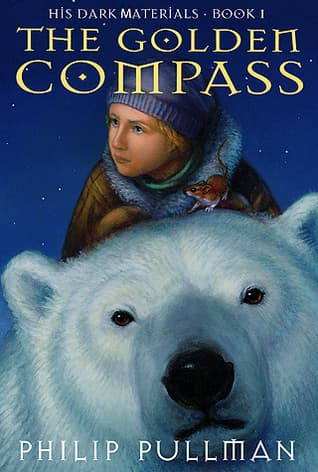
- The Golden Compass
Philip Pullman
4.0 (1.3M) average on GoodreadsFantasyYoung protagonists embark on a quest in a magical world with deep lore and powerful artifacts.
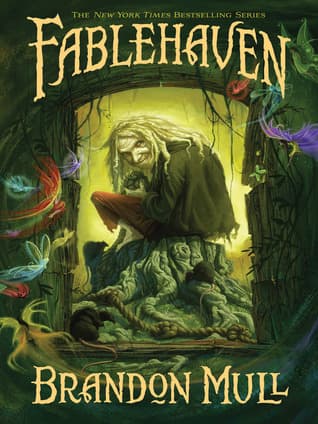
- Fablehaven
Brandon Mull
4.1 (134k) average on GoodreadsFantasySiblings uncover a hidden magical world and must protect it from dark forces.
- Harry Potter and the Sorcerer's Stone
J.K. Rowling
4.5 (7M) average on GoodreadsFantasyRescued from a miserable life under the stairs, an orphaned boy discovers he's a wizard destined for a magical school, where he uncovers a dangerous secret tied to the dark wizard who murdered his parents.
- The Hunger Games
Suzanne Collins
4.3 (6.4M) average on GoodreadsFantasyIn a future where children fight to the death on live television, Katniss Everdeen volunteers for the arena, turning a death sentence into a fight for survival and a spark of rebellion.
- 1984
George Orwell
4.2 (3.1M) average on GoodreadsPoliticsIn a future where surveillance and thought control are absolute, a man's search for truth clashes with the Party, showing that hope can be a form of rebellion.
- Divergent
Veronica Roth
4.2 (2.9M) average on GoodreadsFantasyIn a society divided by virtues, a sixteen-year-old's difference from the norm starts a rebellion that threatens her world.




Enjoyed the summary?
A summary gives you the shape of the book. The book itself has the detail, the examples and the voice.
Find The Emerald Atlas on AmazonAs an Amazon Associate, BookBrief earns from qualifying purchases. How we're funded