
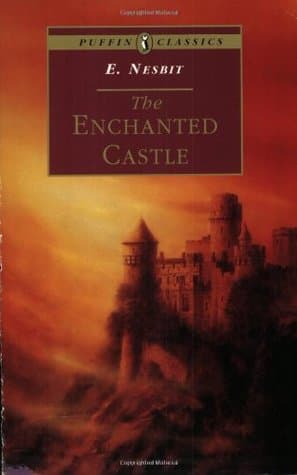
Synopsis
Covers the whole plot, including the ending.
- Difficulty
- Easy
- Pacing
- Moderate
- Mood
- Whimsical, Adventurous, Humorous, Reflective
- Read it if
- You enjoy classic children's fantasy with a blend of magic and real-world consequences, reminiscent of Narnia or similar adventure stories.
- Skip it if
- You prefer modern, fast-paced fantasy or stories without a strong sense of early 20th-century British children's literature.
The Enchanted Castle Plot Summary
Covers the whole plot, including the ending.
The Discovery of the Castle
The story begins with Jerry, Jimmy, and Cathy on holiday in the countryside. Their parents are away, and they are staying with a governess. Bored with their usual spots, they decide to explore a new part of the parklands near their temporary home. After a long walk, they discover a grand, old castle, seemingly empty. Its large size and overgrown gardens immediately spark their imaginations, hinting at adventures inside. They carefully approach, curious about the mystery surrounding the old building, which appears to be a genuine relic from the past rather than a modern house.
The Sleeping Princess and the Magic Ring
Upon entering the castle grounds, the children find a 'sleeping princess' in the garden. This girl is Mabel, the housekeeper's niece, who is simply pretending to be royalty. Mabel, happy to have an audience, gives them a tour of the castle, which she knows well. She leads them to a secret room filled with 'treasure,' a collection of old items. Among these, they discover a remarkable ring. Mabel claims it is a magic ring, and to their surprise, when they put it on, it grants their wish for her to be beautiful. The ring transforms Mabel into a lovely vision, confirming its magical properties and setting the stage for their adventures.
The Wishing Power and Its Consequences
Excited by the ring's power, the children begin to test it. Their first wish for Mabel to be beautiful works, but her beauty is so strong that she becomes almost too perfect, like a statue, unable to move or speak. They quickly wish her back to normal. Later wishes also cause problems: Wishing for a feast produces an abundance of unappetizing food, and wishing for money results in an endless shower of gold coins that bury them. These early experiences teach them that the ring's magic is literal and often has unexpected, inconvenient, or even dangerous results, requiring careful thought before making a wish.
Encountering the Ugly-Wugly
One day, while playing with the ring, the children wish to see a 'monster.' To their surprise and initial fear, a strange creature they call the 'Ugly-Wugly' appears. It is a strange, shapeless, and rather pathetic being, more funny than scary. The Ugly-Wugly is not evil; it mostly just sits there, occasionally making odd noises. The children quickly realize it is harmless and even feel a little sorry for it. This encounter further shows the ring's unpredictable nature and the literal way their wishes are interpreted, as well as their own ability to adjust to unusual situations.
The Statue People
Inspired by the castle's many classical statues, the children wish for them to come alive. The wish works, and the marble figures—including gods, goddesses, and ancient heroes—move. However, they remain made of marble, making them stiff and awkward in their movements. They speak in formal, old phrases and are largely confused by the modern world. The children find themselves in charge of these confused, stony beings, trying to explain their situation and guide them. This episode shows the difference between ancient ideals and modern reality, and the children's growing responsibility for their magic's results.
A Trip to the Moon
Driven by their adventurous spirit, the children wish to travel to the moon. The ring grants their wish, transporting them to a desolate, airless lunar landscape. They experience the bizarre feeling of weightlessness and the chilling silence of space. The moon is not the romantic place they imagined, but a barren, unwelcoming rock. This journey, while impressive, also proves a bit frightening due to the extreme conditions. They quickly realize the dangers and limits of such a wish and are relieved when they return safely to Earth, having gained a deep appreciation for their home planet.
The Prisoner in the Tower
Exploring further, the children discover a locked room in one of the castle's towers and imagine a romantic prisoner inside. They wish for the prisoner to be freed. To their surprise, the 'prisoner' turns out to be a kind, elderly gentleman named Mr. Parminter, a scholar and the castle's actual owner, who had simply locked himself in to avoid disturbance while studying. He is initially startled by the children's appearance and their tale of magic, but quickly grows fond of them. This encounter connects their magical adventures with a touch of reality, introducing a kind adult into their world.
The Ring's True Nature and the End of Summer
Mr. Parminter, a scholar of ancient stories, eventually figures out the magic ring's true nature. He explains that it is the legendary 'Ring of Amen-Ra,' an ancient Egyptian artifact that grants wishes but with a catch: the wishes must be made with sincere belief, and their effects are often temporary or literal to the point of absurdity. He helps the children understand its power and limits. As summer ends, the children realize their time at the castle is over. They think about their adventures, the lessons learned, and the unique magic they experienced, preparing to return to their regular lives.
The Unwishing and the Final Farewell
Before leaving, the children decide to make one final, selfless wish. They wish for the Ugly-Wugly to become a real, beautiful forest creature, and for the animated statues to return peacefully to their original forms, truly alive but in their own time. The ring grants these wishes, bringing a sense of closure and responsibility to their magical escapades. They say goodbye to Mr. Parminter and Mabel, promising to visit again. As they leave the Enchanted Castle, they carry with them the lasting memories of a summer filled with genuine magic, friendship, and the deep lessons learned about power and imagination.
Principal Figures
Jerry
Protagonist
The eldest and most responsible of the children, often acting as the leader.
Jerry is the eldest of the three siblings and often takes on the role of the leader. He is intelligent, imaginative, and generally cautious, trying to think through the consequences of their wishes, though his own desires can sometimes lead to trouble. He cares deeply for his younger siblings and feels a sense of responsibility for their well-being during their adventures. His leadership is not always perfect, but he strives to guide them through the magical chaos.
Relationships: Jimmy (Younger brother, often bickers but deeply cares for him.); Cathy (Younger sister, protective and guiding figure.); Mabel (Friend and co-adventurer, initially sees her as a 'princess'.)
Jimmy
Protagonist
The middle child, known for his adventurous spirit and occasional recklessness.
Jimmy is the middle child, characterized by his adventurous and often impulsive nature. He is quick to suggest bold wishes and is less concerned with potential consequences than Jerry. He possesses a vivid imagination and a strong desire for excitement and wonder. While sometimes causing trouble with his rash ideas, he is also brave and loyal, always ready to face whatever magical predicament they find themselves in. He often provides comic relief.
Relationships: Jerry (Older brother, often follows his lead but sometimes challenges him.); Cathy (Younger sister, protective and playful.); Mabel (Friend and co-adventurer, shares a sense of wonder with her.)
Cathy
Protagonist
The youngest of the siblings, often the most sensible and observant.
Cathy is the youngest of the three children, and despite her age, she often displays a surprising amount of common sense and observation. She is imaginative but also pragmatic, sometimes pointing out the flaws in her brothers' grander schemes. She is sweet-natured and observant, often noticing details that others miss. Her innocence and directness can sometimes lead to unexpected insights or wishes that have profound effects. She is a loyal and enthusiastic participant in their adventures.
Relationships: Jerry (Older brother, looks up to him and relies on his guidance.); Jimmy (Older brother, enjoys his playful nature and adventures.); Mabel (Friend and co-adventurer, shares a close bond.)
Mabel
Supporting
The housekeeper's niece, who introduces the children to the castle and the magic ring.
Mabel is the housekeeper's niece and the 'princess' the children first encounter. She is imaginative, theatrical, and initially somewhat vain, enjoying the role of royalty. However, she is also kind-hearted and quickly becomes a loyal and enthusiastic member of the group. She knows the castle intimately, having spent much of her life there, and her initial pretense of magic turns into genuine magical experiences with the ring. She is crucial in guiding the children through the castle's secrets.
Relationships: Jerry (Friend and co-adventurer.); Jimmy (Friend and co-adventurer.); Cathy (Friend and co-adventurer, shares a close bond.)
Mr. Parminter
Supporting
The scholarly owner of the castle who helps the children understand the magic ring.
Mr. Parminter is the true owner of the Enchanted Castle, an elderly scholar who is often absorbed in his studies. He is initially discovered by the children, who mistake him for a prisoner. He is kind, patient, and possesses a vast knowledge of history and ancient lore. Upon learning of the children's adventures and the magic ring, he becomes a mentor figure, helping them understand the ring's true nature and the principles of magic. He provides a grounding, rational presence amidst the fantastical events.
Relationships: Jerry (Mentor figure, provides guidance and wisdom.); Jimmy (Mentor figure, shares his knowledge.); Cathy (Mentor figure, offers gentle understanding.); Mabel (Owner and guardian, provides her with a home.)
The Ugly-Wugly
Mentioned
A grotesque but harmless creature conjured by the magic ring.
The Ugly-Wugly is a strange, shapeless, and rather pathetic creature summoned by the children's wish for a 'monster.' It is more comical than frightening, often described as a heap of fur and eyes. It is harmless and seems to possess a childlike innocence, mostly sitting and making odd noises. The children develop a strange affection for it, eventually wishing for its transformation into a beautiful forest creature. It represents the unpredictable and often literal nature of the magic ring.
Relationships: Jerry (Creator, feels responsibility for it.); Jimmy (Creator, initially terrified but later fond of it.); Cathy (Creator, feels compassion for it.)
Themes & Insights
The Power and Peril of Imagination
The novel shows the great power of childhood imagination, how it can turn the ordinary into the magical. The children's initial belief in Mabel as a princess and their later wishes bring fantastic creatures and situations to life. However, it also shows the dangers of unchecked imagination and literal interpretations of desires, as many wishes lead to unexpected and often inconvenient results (e.g., Mabel's overwhelming beauty, the unwanted feast, the Ugly-Wugly). The story suggests that while imagination is powerful, it needs wisdom and foresight.
“It is not the magic itself, but the belief in it, that makes things happen.”
The Nature of Reality and Illusion
The Enchanted Castle constantly blurs the lines between what is real and what is imagined or magically created. Mabel's initial pretend princess act smoothly transitions into real magic with the ring. The castle itself appears to be an ordinary, though grand, home, yet it holds deep enchantments. The animated statues are real in their marble form but limited by their material, challenging the children's understanding of 'life.' This theme questions how we see the world and suggests that belief and perspective play a big part in shaping our reality.
“Things are not always what they seem, especially in an enchanted castle.”
Responsibility and Consequences
A main theme is the children's development of responsibility as they use the magic ring. Each wish they make has direct, often unforeseen, results that they must then handle. From Mabel's overwhelming beauty to the troublesome gold coins and the summoning of the Ugly-Wugly, the children learn that power comes with a heavy burden. They must think carefully before wishing and often work together to undo the effects of their previous desires. This theme ends with their selfless final wish, showing their growth in understanding the moral implications of their actions.
“It is a terrible thing to have power and not to know how to use it.”
The Transition from Childhood to Adolescence
The children's adventures in the enchanted castle can represent the move from the free imagination of early childhood to the growing awareness of adolescence. They begin with pure, thoughtless wonder, but through their experiences with the ring, they meet the complexities of the adult world—responsibility, consequences, and the limits of their desires. Their growing understanding of the ring's true nature and their eventual decision to use it for selfless purposes reflect a maturing process, where innocent play gives way to a more thoughtful and empathetic engagement with the world.
“Childhood is a kingdom where nobody dies.”
Plot Devices & Literary Techniques
The Magic Ring
An ancient artifact that grants wishes, but often with literal and unpredictable results.
The magic ring is the primary plot device, serving as the catalyst for all the fantastical events in the story. It is an ancient Egyptian artifact, the 'Ring of Amen-Ra,' capable of granting wishes. However, its power is not straightforward; it interprets wishes literally and often with unexpected consequences, forcing the children to learn caution and responsibility. It drives the plot forward by creating new challenges and adventures with each wish, and its unpredictable nature is a constant source of both wonder and peril.
The Enchanted Castle
A seemingly ordinary, yet magically charged, setting that facilitates the children's adventures.
The castle itself functions as more than just a setting; it is an active plot device. Its mysterious atmosphere, secret rooms, and ancient artifacts (like the statues and the ring) are integral to the unfolding magic. The castle provides the secluded environment necessary for the magic to flourish without adult interference, and its history and grandeur fuel the children's imaginations. It acts as a crucible for their magical education, a place where the rules of the ordinary world are suspended.
The 'Ugly-Wugly' Monster
A creature conjured by a wish, representing the literal interpretation of magic and a lesson in empathy.
The Ugly-Wugly is a key plot device for teaching the children about the literal and often absurd nature of magic, as well as developing their sense of empathy. It is the direct result of a wish for a 'monster,' but instead of being terrifying, it is pathetic and harmless. Its presence forces the children to confront the consequences of their desires and eventually leads them to use the ring's power for a selfless act of transformation, highlighting their growth in responsibility.
The Enchanted Castle Quotes
“It is a most annoying thing that, just when you are on the point of finding out something that would be of interest to yourself, and perhaps to others, someone should interrupt you.”
“The great thing about adventures is that you never know what's going to happen next.”
“You can have anything you like, if you only want it hard enough.”
“It is always a good thing to have a secret, and particularly when it is a secret that you share with someone else.”
“The magic was not in the ring, but in themselves; or rather, that the ring was only a sort of key to unlock the magic that was in them.”
“Grown-ups are always telling you not to do things, and then they wonder why you don't grow up like them.”
“It is much more interesting to imagine things than to have them happen.”
“Some people have all the luck, and some people have all the sense; and some people have neither.”
“The great thing about a castle is that you can always pretend it's yours.”
“It is much more difficult to un-wish a wish than to wish it.”
“There are some things that even magic cannot mend.”
“It is a very odd thing that when you have got what you want, you very often don't want it any more.”
“The world is full of wonderful things if you only know how to look for them.”
Quiz
10 questions on the plot and the characters. Each answer comes with a short explanation.
Question 1
Which three children initially discover the Enchanted Castle?
- Robert, Anthea, and Cyril
- Jerry, Jimmy, and Cathy
- Jane, Mark, and Elizabeth
- Peter, Susan, and Lucy
Show answer
B. Jerry, Jimmy, and Cathy The story begins with the three children, Jerry, Jimmy, and Cathy, exploring the countryside and stumbling upon the castle.
Question 2
Who is the 'princess' the children first encounter in the castle garden?
- A real princess from a neighboring kingdom
- Mabel, the housekeeper's niece
- A magical statue brought to life
- Their older sister, playing a trick
Show answer
B. Mabel, the housekeeper's niece The 'princess' is revealed to be Mabel, the housekeeper's niece, who is pretending to be royalty.
Question 3
What magical item do the children discover in the secret room, which makes enchantment a reality?
- A talking sword
- A magical ring
- A flying carpet
- A crystal ball
Show answer
B. A magical ring The magical ring is the item that brings genuine enchantment into their lives, allowing them to make wishes.
Question 4
What is the first significant wish the children make with the magical ring?
- To have an endless supply of sweets
- To be invisible
- To fly around the castle
- To find more treasure
Show answer
B. To be invisible One of their early and memorable wishes is to become invisible, leading to several adventures and mishaps.
Question 5
What happens when the children wish for the statues in the garden to come alive?
- The statues dance and sing happily.
- The statues become fearsome and chase them.
- The statues turn into real people.
- Nothing happens, as the wish fails.
Show answer
B. The statues become fearsome and chase them. When they wish for the 'ugly' statues to come alive, the statues transform into terrifying figures that pursue the children, showing the unpredictable nature of magic.
Question 6
Who is Mr. Parmelee, and what is his role in the story?
- The castle's caretaker who helps the children.
- An American millionaire who wishes to buy the castle and its contents.
- A magician who tries to steal the ring.
- A friendly ghost residing in the castle.
Show answer
B. An American millionaire who wishes to buy the castle and its contents. Mr. Parmelee is an American millionaire who expresses interest in purchasing the castle, and he becomes entangled in the children's magical adventures.
Question 7
What is the primary theme explored through the children's use of the magical ring?
- The importance of wealth and status.
- The dangers of unchecked power and the consequences of wishes.
- The superiority of magic over science.
- The necessity of adult supervision for children's play.
Show answer
B. The dangers of unchecked power and the consequences of wishes. The story consistently demonstrates that wishes often have unforeseen and sometimes negative consequences, highlighting the theme of responsibility and the dangers of power without wisdom.
Question 8
What unique challenge arises when the children wish for a 'feast'?
- The food appears but is entirely inedible.
- The feast attracts wild animals to the castle.
- The food is ancient and unsuitable for modern tastes, like peacocks and boars' heads.
- The feast only serves food that one child dislikes.
Show answer
C. The food is ancient and unsuitable for modern tastes, like peacocks and boars' heads. The wish for a feast results in a medieval banquet, complete with dishes like peacocks and boars' heads, which the children find unappetizing and difficult to manage, illustrating the literal interpretation of wishes.
Question 9
How do the children accidentally create the 'Ugly-Wuglies'?
- They wish for creatures to guard the castle.
- They wish for their toys to come alive and transform horribly.
- They create them from clay figures and accidentally imbue them with life through a wish.
- They find them already existing in a hidden part of the castle.
Show answer
C. They create them from clay figures and accidentally imbue them with life through a wish. The children mold grotesque figures out of clay and then, through a series of accidental wishes involving the ring, bring these 'Ugly-Wuglies' to life, causing a great deal of trouble.
Question 10
What is the ultimate fate of the magical ring by the end of the story?
- It is stolen by a wicked sorcerer.
- It loses its magic and becomes an ordinary ring.
- It is entrusted to Mabel for safekeeping.
- The children bury it to prevent further mischief.
Show answer
B. It loses its magic and becomes an ordinary ring. After many adventures and misadventures, the ring eventually loses its magical properties and becomes an ordinary piece of jewelry, signaling the end of their overt magical escapades.
The Enchanted Castle FAQ
What is the initial premise of 'The Enchanted Castle' and who are the main characters?
The story begins with three siblings, Jerry, Jimmy, and Cathy, who are staying at a large country house during their holidays. They venture out to explore the grounds and discover an old, seemingly abandoned castle, where they find a 'princess' asleep in the garden, setting the stage for their magical adventures.
Who is the 'princess' the children first encounter, and what is her true identity?
The 'princess' is initially introduced as a sleeping beauty in the castle garden. Her true identity is Mabel, the housekeeper's niece, who is an imaginative girl and enjoys pretending to be royalty. She quickly befriends the children and becomes an integral part of their magical escapades.
What magical object do the children discover that kickstarts the true enchantments?
The children, guided by Mabel, discover a secret room within the castle filled with various treasures. Among these, they find a magical ring, which is the catalyst for many of the genuine enchantments and transformations that occur throughout their adventures.
What are some of the early magical effects of the ring, and how do the children test its powers?
The ring's early effects include making objects invisible, granting wishes, and animating inanimate objects. The children test its powers by wishing for things like food, turning their governess into a statue, and bringing ancient figures from the castle's tapestries to life, often with unexpected and humorous results.
What happens when the children attempt to wish for something truly grand, like a feast, with the ring?
When the children wish for a magnificent feast, the ring delivers, but with a twist. Instead of a modern banquet, it provides a historical, perhaps even prehistoric, feast that is largely inedible or unfamiliar to them, highlighting the unpredictable and sometimes inconvenient nature of its magic.
How does the 'Ugly-Wugly' creature come into existence, and what is its significance?
The 'Ugly-Wugly' is created when Cathy misuses the ring's power, wishing for 'something pretty' but with a vague and childish conception. It manifests as a grotesque, shapeless creature, serving as a cautionary tale about the dangers of imprecise wishes and the unpredictable outcomes of magic.
What is the true nature of the 'living statues' the children encounter in the castle?
The 'living statues' are actually ancient Greek figures that come to life through the ring's magic. They are not malevolent but represent a different era and understanding of the world, often causing confusion and wonder for the children as they try to interact with them.
What is the significance of the 'moonlight' and 'sunlight' transformations experienced by the children?
The 'moonlight' and 'sunlight' transformations are a recurring magical effect, often linked to the ring's power. They represent shifts in perspective or reality, where familiar objects or people appear different, emphasizing the transient and illusory nature of some of the enchantments.
How does the 'invisible' aspect of the ring's power create both fun and peril for the children?
The invisibility power allows the children to play pranks and explore unseen, providing much amusement. However, it also leads to perilous situations, such as getting lost or being unable to interact with the non-magical world, highlighting the double-edged sword of uncontrolled magic.
How does Mabel's initial deception as a princess reflect broader themes in the story?
Mabel's initial deception as a princess highlights the theme of imagination versus reality, a core element of the book. Her ability to create a convincing fantasy world for herself mirrors the magical ring's power to make fantasies real, blurring the lines between make-believe and genuine enchantment.
What psychological impact does the constant presence of magic have on the children, particularly their sense of reality?
The constant presence of magic challenges the children's perception of reality, forcing them to adapt to a world where anything is possible. It fosters both wonder and a degree of anxiety, as they learn to navigate the unpredictable consequences of their wishes and actions with the magical ring.
How do the children's varying personalities influence their use and understanding of the magical ring?
Jerry, the eldest, often tries to be practical and logical; Jimmy is more impulsive and adventurous; Cathy is often naive and prone to simple wishes. Mabel, with her vivid imagination, is a natural at embracing the magic. These varying personalities lead to diverse uses of the ring and different magical outcomes.
In what ways do the children's experiences with magic contribute to their moral development?
Through their magical adventures, the children learn about responsibility, consequences, and the importance of careful thought before action. The mishaps caused by misused wishes, like the Ugly-Wugly, teach them valuable lessons about the potential harm of selfishness and thoughtlessness, fostering their moral growth.
Is the magic in 'The Enchanted Castle' ultimately benevolent or neutral, and why?
The magic in 'The Enchanted Castle' can be interpreted as largely neutral, acting as a force that amplifies the children's intentions, whether good or misguided. It doesn't inherently judge, but rather reflects the purity or carelessness of their wishes, making it a tool whose outcome depends on its wielder.
What is the symbolic meaning of the castle itself in the story?
The castle symbolizes a gateway to imagination and the subconscious mind. It is a place where the ordinary rules of the world are suspended, allowing for the exploration of fantasy and the manifestation of desires, representing the boundless potential of childhood wonder.
How does the book blend elements of fantasy with a subtle critique of societal norms?
The book subtly critiques societal norms through its portrayal of adults, who are often oblivious or dismissive of the children's magical experiences. It suggests that adult rationality can sometimes stifle imagination and wonder, contrasting it with the children's uninhibited embrace of the fantastical.
What is the ultimate lesson learned by the children about the nature of wishes and power?
The ultimate lesson is that wishes and power come with significant responsibility and often unforeseen consequences. The children learn that true happiness and fulfillment don't come from simply wishing for things, but from careful thought, kindness, and sometimes, the willingness to undo their own magical mistakes.
How does E. Nesbit use humor to convey serious themes in the novel?
E. Nesbit frequently uses situational irony and the absurdity of magical mishaps, such as the impractical feast or the animated statues, to deliver deeper messages. The humor often arises from the clash between the magical world and the children's very human, often flawed, reactions, making the lessons more palatable and memorable.
About the author
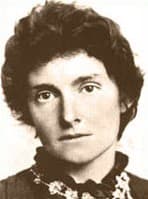
E. Nesbit was a prolific English writer and poet, best known for her classic children's fantasy novels such as 'The Story of the Amulet' and 'The Enchanted Castle.' Her innovative blend of magic and everyday life created a lasting impact on children's literature, influencing generations of authors. She was also a co-founder of the Fabian Society.
Similar books
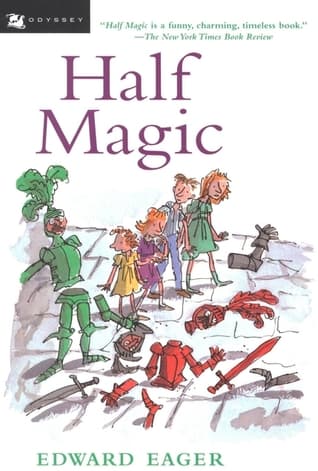
- Half Magic
Edward Eager
4.0 (35k) average on GoodreadsFantasyAnother classic children's book where siblings find a magical object that grants wishes, often with humorous and unforeseen outcomes.
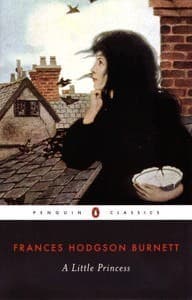
- A Little Princess
Frances Hodgson Burnett
4.2 (4k) average on GoodreadsFantasyUnlike 'A Little Princess' which primarily focuses on moral fortitude, resilience, and imaginative escapism as a coping mechanism for adversity, 'The Enchanted Castle' directly engages with the mechanics, ethics, and consequences of magic itself. Burnett's imagination is primarily internal to Sara Crewe, while Nesbit's magic is external, tangible, and directly interacts with the children's reality.
- Alice's Adventures in Wonderland
Lewis Carroll
4.0 (245k) average on GoodreadsFantasyWhile both are seminal works of children's fantasy, Carroll's 'Alice' presents a more chaotic, dreamlike, and often nonsensical magic where rules are fluid and arbitrary. Nesbit's magic, in contrast, operates with a certain internal, albeit whimsical, logic that the children strive to understand, control, and even 'unwish', offering a more structured and consequence-driven engagement with the fantastical. Alice is a passive observer, whereas Nesbit's children are active agents of magic.
- Harry Potter and the Sorcerer's Stone
J.K. Rowling
4.5 (7M) average on GoodreadsFantasyRescued from a miserable life under the stairs, an orphaned boy discovers he's a wizard destined for a magical school, where he uncovers a dangerous secret tied to the dark wizard who murdered his parents.
- The Hunger Games
Suzanne Collins
4.3 (6.4M) average on GoodreadsFantasyIn a future where children fight to the death on live television, Katniss Everdeen volunteers for the arena, turning a death sentence into a fight for survival and a spark of rebellion.
- 1984
George Orwell
4.2 (3.1M) average on GoodreadsPoliticsIn a future where surveillance and thought control are absolute, a man's search for truth clashes with the Party, showing that hope can be a form of rebellion.



Enjoyed the summary?
A summary gives you the shape of the book. The book itself has the detail, the examples and the voice.
Find The Enchanted Castle on AmazonAs an Amazon Associate, BookBrief earns from qualifying purchases. How we're funded