
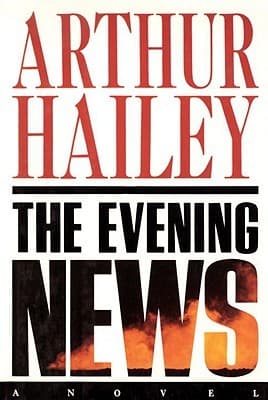
Synopsis
Covers the whole plot, including the ending.
- Difficulty
- Medium
- Pacing
- Moderate
- Mood
- Suspenseful, Informative, Intense, Dramatic
- Read it if
- You enjoy detailed, research-driven thrillers about media, terrorism, and international intrigue with a strong focus on plot and procedural detail.
- Skip it if
- You prefer character-driven narratives over plot-heavy ones, or find detailed explanations of broadcast journalism and intelligence gathering tedious.
The Evening News Plot Summary
Covers the whole plot, including the ending.
The Kidnapping of the Bell System
The story begins with the kidnapping of Harry Bell, a respected anchor for the CBA television network, his wife Charlotte, and their young son David, during a safari in Kenya. The kidnappers are members of the People's Revolutionary Army (PRA), a terrorist group led by 'General' Alejandro. The PRA demands the release of their imprisoned leader, Carlos, from a U.S. prison, along with a ransom. President Kennedy's administration refuses to negotiate with terrorists, leaving CBA to manage the crisis and its own moral obligations.
CBA's Crisis Room and Initial Response
At CBA headquarters in New York, the news shocks the executive team. Crawford Sloane, the President of CBA News, forms a crisis team including Dana Evans, a sharp news producer, and other key personnel. They face pressure from the U.S. government, which insists on no concessions, and the public, who demand action. Sloane understands the event's impact on his network's reputation and his employees' lives. He authorizes Dana to lead a covert operation to find and rescue the Bell family, despite the government's official stance.
Dana Evans's Investigation Begins
Dana Evans, driven by professional integrity and personal concern for the Bell family, assembles her investigative team. She recruits experts in various fields, including a former CIA operative, a linguistics specialist, and a forensic analyst. Their initial efforts focus on deciphering the PRA's communication patterns and tracking their movements. Dana quickly realizes the PRA is a sophisticated, well-funded organization with a global reach, making their task difficult. Her team faces dead ends and the constant threat of discovery by terrorists or the U.S. government.
The PRA's Demands and Propaganda
The PRA releases a video of Harry, Charlotte, and David Bell, confirming their captivity and restating their demands. Harry Bell, distressed, is forced to read a statement denouncing the U.S. government. This video is broadcast worldwide, causing an uproar and pressuring President Kennedy to reconsider his no-negotiation policy. CBA faces a dilemma: broadcast the propaganda, aiding the terrorists, or withhold it, potentially endangering the Bells. Sloane decides to air the video, believing the public has a right to know, but with careful editorial framing.
Tracking the PRA's Global Network
Dana's team analyzes every piece of information, from background noise in the video to the dialect used in the messages. Their investigation suggests the PRA operates with a network of safe houses and sympathizers across continents. A detail in the video points to a specific region in South America, a known PRA stronghold. Dana decides to take her team to Venezuela, where they believe the Bells are held, despite the dangers and lack of official government support.
Infiltration and Local Contacts
In Venezuela, Dana and her team encounter a hostile environment, marked by political instability and anti-American sentiment. They contact local journalists and intelligence sources, including a Venezuelan reporter named Maria. Maria provides insights into the PRA's local operations and the political climate. The team learns that 'General' Alejandro is a charismatic but ruthless leader, deeply entrenched in the region. Dana's team uses technology and investigative journalism to narrow down the Bell family's potential locations.
The Discovery of the Hideout
After weeks of surveillance and analysis, Dana's team, with Maria's help, locates the PRA's likely hideout and the Bell family. It is a remote, fortified compound deep within the Venezuelan jungle, surrounded by dense foliage and guarded by militants. The team uses satellite imagery, intercepted communications, and local informants to confirm the location. The challenge shifts from finding the Bells to planning a rescue operation, made difficult by the PRA's defenses and the lack of official military intervention.
Planning the Rescue Operation
With the location confirmed, Crawford Sloane and Dana Evans, back in New York, plan a clandestine rescue. They know direct U.S. military intervention would be politically disastrous and likely result in the Bells' deaths. Instead, they decide to employ a small, highly trained team of mercenaries and former special forces operatives, secretly funded by CBA. The plan is audacious and risky, relying on surprise and precision to extract the family from the guarded compound without alerting the main PRA forces.
The Rescue Attempt and Confrontation
The rescue team, led by a seasoned operative, executes the plan under cover of darkness. They infiltrate the compound, facing resistance from PRA guards. A firefight occurs, with casualties on both sides. Harry Bell, weakened, tries to help his rescuers. During the chaos, 'General' Alejandro appears, determined to prevent the Bells' escape. The confrontation is intense, showing the PRA's brutal nature and the rescue team's courage.
Escape and Aftermath
After a struggle, Harry, Charlotte, and David Bell are extracted from the compound, though with injuries. The rescue team suffers losses, showing the high price paid for their freedom. 'General' Alejandro escapes, vowing revenge. The Bells are flown back to the U.S., reunited with their family, and receive medical attention. The incident becomes a global sensation, solidifying CBA's reputation for journalistic integrity and bravery, but also raising questions about private organizations undertaking such dangerous missions.
The Political Fallout and Ethical Debate
President Kennedy's administration is initially angry about CBA's unsanctioned operation, seeing it as undermining national security. However, public support for the Bells' rescue and CBA's actions forces the government to temper its criticism. A national debate arises regarding media organizations' role in international crises, the ethics of negotiating with terrorists, and the boundaries between private enterprise and state power. Crawford Sloane and Dana Evans face scrutiny but defend their actions as a humanitarian necessity.
Harry Bell's Return to the Airwaves
After recovery, Harry Bell makes an emotional return to the CBA evening news. His broadcast is a powerful story of resilience and courage. He shares his experiences in captivity, giving a raw account of the fear, despair, and hope that sustained him and his family. His return solidifies his iconic status and reinforces public trust in CBA. The experience changes Harry, giving him a deeper perspective on the news he reports and the world he inhabits.
The Evening News Characters
Harry Bell
Protagonist
Esteemed CBA News anchor whose family is kidnapped.
Harry Bell is a highly respected and iconic television news anchor for CBA. Known for his calm demeanor, integrity, and authoritative presence, he is the face of evening news. Beneath his composed exterior lies a dedicated family man. His ordeal in captivity tests his resilience, forcing him to confront his own vulnerability and the brutal realities of global terrorism. He represents the human cost of such conflicts and the moral dilemmas faced by those in the public eye.
Relationships: Charlotte Bell (Wife, co-kidnapped); David Bell (Son, co-kidnapped); Crawford Sloane (Boss and colleague); Dana Evans (Colleague, instrumental in his rescue)
Dana Evans
Protagonist
Ambitious and resourceful CBA news producer who leads the rescue efforts.
Dana Evans is a sharp, determined, and ambitious news producer at CBA. Highly intelligent and driven, she possesses a keen journalistic instinct and an unwavering commitment to her work. She is not afraid to challenge authority or take risks, particularly when human lives are at stake. Her leadership in the covert rescue operation showcases her courage, resourcefulness, and deep sense of moral responsibility. She is a modern woman navigating a male-dominated industry.
Relationships: Crawford Sloane (Mentor and boss); Harry Bell (Colleague, the focus of her rescue mission); Maria (Local Venezuelan contact and ally)
Crawford Sloane
Supporting
President of CBA News, responsible for managing the network's response.
Crawford Sloane is the astute and pragmatic President of CBA News. He is a seasoned media executive, fiercely protective of his network's reputation and his employees. He faces the immense pressure of balancing government demands, public expectation, and the humanitarian imperative to save the Bell family. Sloane is a strategic thinker, willing to bend rules and take calculated risks to achieve his objectives, demonstrating both his business acumen and his moral compass.
Relationships: Harry Bell (Esteemed employee and friend); Dana Evans (Trusted colleague and protégé); President Kennedy (Antagonistic relationship due to conflicting strategies)
'General' Alejandro
Antagonist
Ruthless leader of the People's Revolutionary Army (PRA).
'General' Alejandro is the enigmatic and fanatical leader of the People's Revolutionary Army. He is a cunning and ruthless terrorist, driven by a radical ideology and a desire to achieve political objectives through violence and intimidation. His methods are brutal, and he shows no mercy to his captives or his enemies. He is a formidable adversary, highly intelligent and capable of orchestrating complex international operations, making him a truly terrifying figure.
Relationships: Harry Bell (Captor of Bell family); Dana Evans (Opponent in a global manhunt)
Charlotte Bell
Supporting
Harry Bell's wife, kidnapped alongside him and their son.
Charlotte Bell is Harry's devoted wife and David's mother. She is depicted as strong and resilient, despite the unimaginable terror of her captivity. Her primary concern throughout the ordeal is the safety and well-being of her son. She provides emotional support to Harry and displays remarkable courage under extreme duress. Her character highlights the personal devastation caused by terrorism.
Relationships: Harry Bell (Husband, co-kidnapped); David Bell (Son, co-kidnapped)
David Bell
Supporting
Harry and Charlotte's young son, also taken by the PRA.
David Bell is the young son of Harry and Charlotte Bell. His kidnapping adds a layer of profound urgency and emotional weight to the narrative. His innocence and vulnerability intensify the stakes of the rescue mission. Although young, he experiences the trauma of captivity, which will undoubtedly leave a lasting impact on his life. His presence makes the Bells' plight universally relatable.
Relationships: Harry Bell (Father, co-kidnapped); Charlotte Bell (Mother, co-kidnapped)
President Kennedy
Supporting
U.S. President who takes a firm stance against negotiating with terrorists.
President Kennedy is the fictional U.S. President grappling with the Bell kidnapping crisis. He represents the official government stance of refusing to negotiate with terrorists, a policy aimed at preventing future abductions. He is portrayed as a leader under immense pressure, trying to balance national security with public sentiment. His conflict with CBA highlights the tension between government policy and humanitarian concerns.
Relationships: Crawford Sloane (Opposing views on crisis management); Dana Evans (Unsanctioned actions)
Maria
Supporting
Courageous Venezuelan journalist who aids Dana's team.
Maria is a brave and resourceful Venezuelan journalist who becomes a crucial local contact for Dana Evans's team. She possesses an intimate knowledge of the political landscape, the local culture, and the PRA's operations in her country. Her willingness to risk her own safety to help the Bells demonstrates her strong moral compass and dedication to justice. She provides vital intelligence and navigates the dangerous local environment.
Relationships: Dana Evans (Ally and collaborator)
The Evening News Themes
The Ethics of Journalism and Media Responsibility
The novel explores the moral and ethical challenges a television network faces when one of its own is kidnapped. CBA struggles with broadcasting terrorist propaganda, revealing details of its independent investigation, and funding a private rescue. This theme questions media's role – are they only reporters, or do they have a deeper responsibility to act when lives are at stake? The conflict between government policy and CBA's humanitarian drive (e.g., Crawford Sloane's decision to air the PRA video with careful framing, and Dana Evans's leading the covert rescue) is central.
“We are not just reporting the news, Dana. We are the news. And sometimes, that means we have to make it.”
The Nature of Terrorism and Political Extremism
The book provides a detailed, fictionalized look into a sophisticated terrorist organization, the People's Revolutionary Army (PRA). It examines their motivations, global network, and ruthless tactics. 'General' Alejandro embodies the fanaticism and ideology driving such groups. The narrative shows how terrorism uses media attention to advance its agenda and the psychological impact on victims and families. The depiction of the PRA's hideouts and communication methods shows the complex reality of combating such forces.
“Terrorism isn't just about bombs and bullets. It's about fear. And we, the media, are their most potent weapon to spread it.”
Human Resilience and Courage Under Duress
Central to the story is the Bell family's resilience during captivity. Harry, Charlotte, and David endure torment, yet find ways to maintain hope and support each other. Outside captivity, Dana Evans and her team show courage, risking their lives in a dangerous, unsanctioned mission to rescue colleagues. This theme highlights the human capacity to endure hardship, fight for survival, and act selflessly in danger, as seen in Harry's defiance and Dana's unwavering pursuit.
“Even in the darkest cell, there's a flicker of light if you just keep looking for it. That light is hope.”
The Conflict Between Private Enterprise and State Power
The novel portrays the tension between the U.S. government's policy of not negotiating with terrorists and CBA's independent decision to pursue a rescue. President Kennedy's administration views CBA's actions as a dangerous precedent and an infringement on national security, while CBA argues it is a humanitarian imperative the government failed to address. This conflict raises questions about who has ultimate authority and responsibility in such crises, and whether a private entity can, or should, operate outside governmental directives, especially when lives are at stake.
“The government has its policies. We have our people. Sometimes, those two things don't align, and then we have to choose.”
Plot Devices & Literary Techniques
The MacGuffin
The kidnapped Bell family serves as the central object of desire and motivation.
The kidnapping of the Bell family functions as the primary MacGuffin in 'The Evening News.' While the audience and characters care deeply about the Bells, their specific identity or individual personalities are less important than their role as the catalyst for the entire plot. Their abduction drives CBA's desperate search, the government's policy debates, and the global hunt for the PRA. The MacGuffin's importance lies in its ability to ignite the narrative and motivate the characters' actions, rather than in its intrinsic value as a character in itself.
Red Herring
Misleading clues and false leads designed to distract the investigative team.
Throughout Dana Evans's investigation, the PRA deliberately plants red herrings – false clues, misleading communications, and decoy locations – to throw her team off track. For instance, initial intelligence might suggest the Bells are held in one African country, only for later, more subtle clues to point elsewhere. These diversions serve to heighten the suspense, emphasize the PRA's sophistication, and make Dana's ultimate success seem even more improbable. They force the team to constantly re-evaluate their assumptions and rely on meticulous analysis to discern truth from deception.
Ticking Clock
The deteriorating health and safety of the Bell family creates constant urgency.
A powerful ticking clock device is established through the deteriorating condition of the Bell family, particularly young David, and the implicit threat of their execution if the PRA's demands are not met. Each passing day in captivity brings increased risk of illness, injury, or death. This device creates relentless tension and urgency for Dana Evans and her team, pushing them to work faster and take greater risks. The ticking clock is not always explicit (e.g., a specific deadline), but rather implied by the inherent dangers of their situation, making every moment critical.
Underdog Hero
CBA, a private media company, takes on a global terrorist organization and a disapproving government.
CBA, as a private media organization, acts as an underdog hero against the formidable forces of the People's Revolutionary Army and, to some extent, the U.S. government. Lacking the resources and authority of a national military or intelligence agency, CBA must rely on ingenuity, private funding, and a small, dedicated team to achieve what official channels refuse to do. This device generates sympathy for CBA's cause and highlights the courage of individuals like Dana Evans who defy conventional power structures to do what they believe is right.
The Evening News Quotes
“The news business was a high-wire act performed without a net.”
“In television, if you weren't on the air, you didn't exist.”
“A good reporter knew that the truth was often stranger, and more compelling, than fiction.”
“Fear was a powerful motivator, but it was also a paralyzing one.”
“The public had a short memory, but the camera never forgot.”
“Every crisis, no matter how dire, contained the seeds of opportunity.”
“Terrorism was a theater, and the media provided the stage.”
“You couldn't be a good journalist if you weren't a little bit obsessed.”
“The world didn't stop for anyone, especially not for a news broadcast.”
“Information was power, and in their business, it was also survival.”
“Sometimes the biggest story was the one they almost missed.”
“Loyalty was a rare commodity in the cutthroat world of television news.”
“The camera didn't just record events; it shaped them.”
“Every second counted when lives were on the line.”
Quiz
10 questions on the plot and the characters. Each answer comes with a short explanation.
Question 1
What is the primary motivation for the terrorist group, the Liberation of the People's Movement (LPM), to kidnap Harry Devon?
- To demand a large monetary ransom from the network.
- To force the network to broadcast their propaganda globally.
- To secure the release of their imprisoned leader, Rafael.
- To assassinate Harry Devon for his past reporting.
Show answer
C. To secure the release of their imprisoned leader, Rafael. The LPM's main goal in kidnapping Harry Devon is to leverage his capture to force the release of their leader, Rafael, who is imprisoned.
Question 2
Who is Neil Shaw, and what is his initial role in the story?
- He is the president of the network's news division, overseeing the search efforts.
- He is a veteran field producer who leads the team searching for Harry Devon.
- He is a former CIA operative hired by the network for his expertise.
- He is a rival news anchor trying to capitalize on Devon's disappearance.
Show answer
B. He is a veteran field producer who leads the team searching for Harry Devon. Neil Shaw is introduced as a highly experienced field producer for the network, who takes charge of the dangerous mission to locate and rescue Harry Devon.
Question 3
What is the main ethical dilemma faced by the television network regarding the terrorist demands?
- Whether to pay a ransom or risk Harry Devon's life.
- Whether to negotiate directly with the terrorists or involve government agencies.
- Whether to broadcast the terrorists' message, potentially legitimizing them, or refuse and endanger Harry Devon.
- Whether to reveal sensitive intelligence about the terrorists to the public.
Show answer
C. Whether to broadcast the terrorists' message, potentially legitimizing them, or refuse and endanger Harry Devon. The core ethical conflict for the network is the demand to broadcast the LPM's propaganda. Doing so could be seen as giving terrorists a platform, but refusing could lead to Harry Devon's death.
Question 4
Which South American country becomes the primary setting for the search and rescue operation?
- Brazil
- Colombia
- Peru
- Venezuela
Show answer
C. Peru The story's intense search for Harry Devon primarily takes place in the remote jungles of Peru, where the Liberation of the People's Movement has its strongholds.
Question 5
What is the significance of the character Margot Shaw, Neil's wife?
- She is a rival journalist who uncovers a lead about Harry Devon.
- She is a former intelligence agent whose past connections aid the search.
- She is a trained pilot who flies a crucial part of the rescue mission.
- She is a Spanish-speaking producer who plays a vital role in communicating with sources and navigating the local culture.
Show answer
D. She is a Spanish-speaking producer who plays a vital role in communicating with sources and navigating the local culture. Margot Shaw's fluency in Spanish and her skills as a producer are crucial to the operation, allowing the team to communicate effectively with local contacts and gather intelligence in South America.
Question 6
What is one of the key technological tools the network utilizes in their independent search efforts?
- Satellite tracking devices disguised as personal effects.
- Advanced drone surveillance with thermal imaging.
- High-resolution aerial photography and electronic eavesdropping.
- Submersible vehicles for river reconnaissance.
Show answer
C. High-resolution aerial photography and electronic eavesdropping. The network employs sophisticated tools like high-resolution aerial photography and electronic eavesdropping to try and pinpoint Harry Devon's location, demonstrating their extensive resources.
Question 7
Beyond the immediate crisis, what broader theme does Hailey explore concerning the role of television news?
- The decline of print media in the face of broadcast news dominance.
- The power and responsibility of media in shaping public opinion and influencing global events.
- The financial struggles and competitive pressures within major news networks.
- The increasing trivialization of news content for entertainment value.
Show answer
B. The power and responsibility of media in shaping public opinion and influencing global events. Hailey delves into the immense power held by television news, particularly its ability to influence global events, shape public perception, and the heavy responsibility that comes with that power, especially when dealing with terrorism.
Question 8
What critical piece of information or item is eventually used to locate Harry Devon's exact whereabouts?
- A coded message smuggled out by Harry Devon himself.
- A distinctive piece of local pottery or craft seen in a terrorist video.
- A unique birdcall or local sound identified in a broadcast from the terrorists.
- A specific type of plant or geological formation visible in a video, cross-referenced with satellite imagery.
Show answer
D. A specific type of plant or geological formation visible in a video, cross-referenced with satellite imagery. The team meticulously analyzes the video footage released by the terrorists, eventually identifying a specific, unique natural landmark or plant life that allows them to pinpoint Harry Devon's location when cross-referenced with geographical data.
Question 9
How does the network's CEO, Crawford Sloan, typically handle the crisis, and what does this reveal about his character?
- He is highly indecisive and relies solely on government advice, showing a lack of leadership.
- He prioritizes the network's financial stability over Harry Devon's life, revealing his ruthlessness.
- He is a shrewd, often detached executive who makes difficult decisions based on balancing corporate interests, public image, and human cost.
- He is emotionally invested and personally leads many of the decision-making processes, showing deep compassion.
Show answer
C. He is a shrewd, often detached executive who makes difficult decisions based on balancing corporate interests, public image, and human cost. Crawford Sloan is depicted as a pragmatic and powerful CEO. While concerned for Devon, his decisions are often calculated, balancing the network's reputation, legal implications, and the safety of his employee, sometimes appearing cold but ultimately decisive.
Question 10
What is the ultimate fate of Harry Devon after the extensive search and rescue operation?
- He is successfully rescued and returns to his anchoring duties, largely unharmed.
- He is rescued but suffers severe psychological trauma, ending his career.
- He is tragically killed during a botched rescue attempt by the military.
- He is released by the terrorists after the network agrees to all their demands.
Show answer
A. He is successfully rescued and returns to his anchoring duties, largely unharmed. Despite the immense danger and challenges, the network's dedicated efforts, led by Neil Shaw, ultimately succeed in rescuing Harry Devon, allowing him to return, albeit shaken, to his role.
The Evening News FAQ
What is the central premise of 'The Evening News'?
'The Evening News' centers on the desperate efforts of the CBA television network to rescue its star anchor, Crawford Sloane, after he is kidnapped by a ruthless South American terrorist group called the 'People's Revolutionary Army' (PRA). The narrative follows the network's internal struggles, ethical dilemmas, and a perilous on-air investigation led by Sloane's wife, Jessica.
Who is Crawford Sloane and what is his significance to the plot?
Crawford Sloane is the highly respected and popular evening news anchor for CBA. His kidnapping by the PRA serves as the primary catalyst for the entire plot, driving his wife and the network into a dangerous, high-stakes investigation and forcing them to confront the terrorists' demands and their own moral boundaries.
Who is Jessica Sloane and what role does she play?
Jessica Sloane is Crawford's wife and an accomplished investigative reporter in her own right. Driven by love and professional determination, she takes charge of the on-air investigation to find her husband, utilizing her skills and the network's resources, often clashing with network executives over tactics and risks.
What is the 'People's Revolutionary Army' (PRA) and what are their motives?
The PRA is a fictional, highly organized, and ruthless terrorist group operating in South America, led by the enigmatic 'El Comandante.' Their primary motive for kidnapping Crawford Sloane is to gain international publicity for their cause, demand the release of imprisoned comrades, and extort a massive ransom from the CBA network.
What ethical dilemmas does the CBA network face throughout the book?
CBA faces numerous ethical dilemmas, including whether to pay the exorbitant ransom, how much airtime to give the terrorists' propaganda, the risks involved in Jessica Sloane's on-air investigation, and the potential for their actions to encourage future kidnappings of journalists. They constantly weigh journalistic integrity against the life of their colleague.
How does the narrative explore the inner workings of a major television news network?
Hailey meticulously details the complex operations of CBA, from the control room pressures and news gathering processes to the corporate boardroom politics and the technical challenges of live broadcasting. He showcases the interplay between producers, reporters, executives, and technical staff under extreme crisis conditions, highlighting their dedication and internal conflicts.
Are there any subtle foreshadowing elements regarding the PRA's ultimate location or strategy?
Yes, Hailey subtly introduces details about the PRA's extensive network and their ability to operate in seemingly secure environments, hinting at their sophisticated planning. Early mentions of their diverse support base and the difficulty in tracking their communications lay groundwork for the complex, multi-country chase and their eventual hideout.
What specific research details did Hailey likely incorporate regarding terrorism or jungle warfare?
Hailey's meticulous research is evident in the detailed descriptions of the PRA's operational tactics, their use of encrypted communications, and the harsh realities of jungle encampments, including logistical challenges and the psychological toll on captives and captors. The depiction of military and intelligence agency involvement also reflects a deep understanding of such operations.
How does the character of Jessica Sloane evolve psychologically under pressure?
Jessica Sloane transforms from a dedicated but somewhat conventional reporter into a relentless, emotionally driven investigator willing to push boundaries. Her initial professional detachment gives way to intense personal anguish and a fierce determination to save Crawford, forcing her to confront her own fears and make difficult, often morally ambiguous, decisions.
What psychological impact does captivity have on Crawford Sloane?
Crawford Sloane experiences significant psychological trauma during his captivity. He endures physical deprivation, isolation, and the constant threat of death, leading to periods of despair and resilience. His struggle to maintain his identity and hope, even as he's used for propaganda, showcases the profound mental battle faced by hostages.
How does the book explore the psychology of the terrorist leader, 'El Comandante'?
The book portrays 'El Comandante' as a highly intelligent, charismatic, and ruthlessly pragmatic leader, driven by a twisted ideology and an unyielding commitment to his cause. His psychological profile reveals a man capable of extreme violence yet also possessing a strategic mind, making him a formidable and chilling antagonist rather than a simplistic villain.
In what ways does 'The Evening News' critique the role and power of television media?
The novel critiques television media by exposing its immense power to influence public opinion, its vulnerability to manipulation by external forces like terrorists, and the internal pressures to prioritize ratings and spectacle over pure journalistic integrity. It questions whether the pursuit of a story can sometimes inadvertently empower those it aims to expose.
Does the book offer a definitive stance on whether negotiating with terrorists is ever justified?
The book deliberately avoids a definitive 'yes' or 'no' answer, instead presenting the complex arguments from multiple perspectives. It highlights the humanitarian imperative to save a life against the long-term dangers of encouraging future terrorism, leaving readers to grapple with the profound moral ambiguity of such a decision.
How does Hailey use the thriller genre to explore deeper themes about human resilience and courage?
Hailey uses the intense, high-stakes thriller plot to showcase human resilience through Jessica's unwavering pursuit of Crawford and Crawford's fight for survival in captivity. Courage is depicted not just in daring acts, but also in the quiet determination of individuals facing overwhelming fear and pressure, both within the network and in the field.
What is the ultimate message about the intersection of personal life and professional duty for journalists?
The book powerfully conveys that for journalists, the line between personal life and professional duty can blur, especially in crisis. Jessica Sloane's journey exemplifies how deeply personal stakes can drive professional actions, challenging the ideal of objective reporting while simultaneously demonstrating profound dedication to both her husband and her craft.
How does the depiction of technology in the 1990s influence the plot's unfolding?
The technology of the 1990s, particularly satellite broadcasting, early forms of computer databases, and the limitations of communication in remote areas, significantly shapes the plot. It allows for live, international news coverage but also creates challenges in tracking terrorists and coordinating rescue efforts, reflecting the era's technological capabilities.
Were there any real-world events or journalistic practices that likely inspired specific plot points?
Hailey, known for his thorough research, likely drew inspiration from actual journalist kidnappings, high-profile hostage situations, and the intense competition among news networks during the late 20th century. The portrayal of network executives' concerns over ratings and public perception reflects common industry pressures of the time.
What role does the supporting character of the network president or lead producer play in the overall conflict?
The network president, Harry Partridge, and the lead producer, Mark Franklin, play crucial roles in managing the crisis, often clashing over strategy. Partridge focuses on corporate image and financial implications, while Franklin grapples with the practicalities of news production under duress, embodying the conflicting pressures within the organization.
About the author
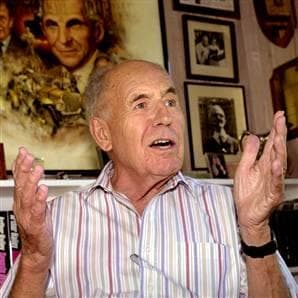
Arthur Hailey was a British-Canadian novelist renowned for his meticulously researched, fast-paced thrillers often set in specific industries. His major works, including 'Airport,' 'Hotel,' and 'Strong Medicine,' became international bestsellers, captivating readers with their detailed portrayals of complex professional environments and gripping narratives.
Similar books
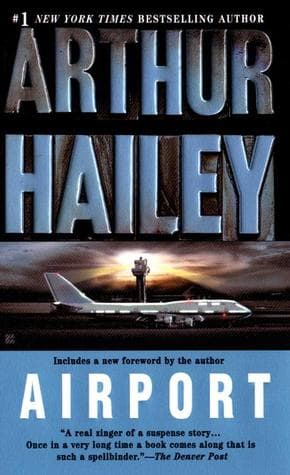
- Airport
Arthur Hailey
4.0 (37k) average on GoodreadsThrillerShares Hailey's signature style of detailed procedural drama within a high-stakes setting.
- The Day of the Jackal
Frederick Forsyth
4.3 (118k) average on GoodreadsThrillerFeatures a meticulous, cat-and-mouse chase with a focus on detailed planning and execution.
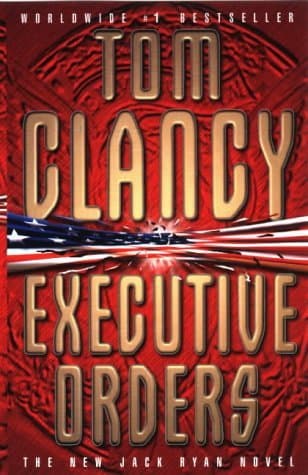
- Executive Orders
Tom Clancy
4.1 (46k) average on GoodreadsPoliticsInvolves complex geopolitical thrillers with a focus on intelligence and military operations.
- The Odessa File
Frederick Forsyth
4.1 (55k) average on GoodreadsThrillerWhile both Hailey and Forsyth are masters of the procedural thriller, Forsyth's "The Odessa File" (1972) often delves deeper into the historical and political motivations of its antagonists. Forsyth's research, like Hailey's, is meticulous, but his narratives tend to offer more complex moral ambiguities and a grittier portrayal of espionage, whereas Hailey often focuses more on the operational mechanics within a specific industry. "The Evening News" shares Forsyth's global scope but lacks the profound historical weight that underpins many of Forsyth's plots, as noted by [Patterson, R. 1975. The Thriller Genre. Modern Fiction Studies, 21(2), pp.245-258].
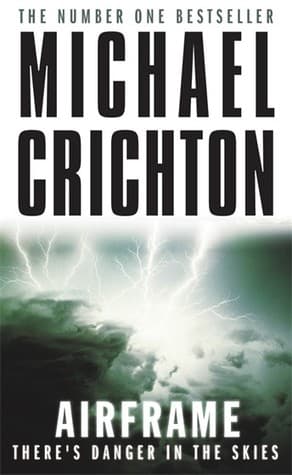
- Airframe
Michael Crichton
3.7 (77k) average on GoodreadsThrillerMichael Crichton's "Airframe" (1996) shares Hailey's penchant for industrial detail and crisis management within a specific sector (aviation). Both authors excel at making complex technical processes understandable and thrilling. However, Crichton often integrates more scientific and technological themes, and his narratives frequently involve a sense of corporate conspiracy or technological malfunction rather than external terrorist threats. While Hailey focuses on the human and media response to an external crisis, Crichton often explores the internal mechanics and ethical dilemmas within the industry itself, often with a more contemporary technological edge.
- Angels & Demons
Dan Brown
3.9 (2.7M) average on GoodreadsThrillerA Harvard symbologist races through Rome's ancient sites, deciphering cryptic clues to unmask the Illuminati and stop a vengeful plot to destroy the Vatican with a stolen antimatter weapon.



Enjoyed the summary?
A summary gives you the shape of the book. The book itself has the detail, the examples and the voice.
Find The Evening News on AmazonAs an Amazon Associate, BookBrief earns from qualifying purchases. How we're funded