
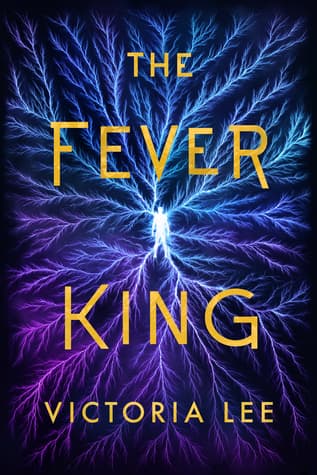
Synopsis
Covers the whole plot, including the ending.
- Difficulty
- Medium
- Pacing
- Moderate
- Mood
- Dark, Suspenseful, Political, Romantic
- Read it if
- You enjoy morally complex characters, political intrigue, and a slow-burn enemies-to-lovers romance in a dystopian fantasy setting.
- Skip it if
- You prefer lighthearted stories or straightforward heroes and villains.
The Fever King Plot Summary
Covers the whole plot, including the ending.
The Outbreak and Noam's Awakening
Sixteen-year-old Noam Álvaro lives in Carolinia, a nation formed from the remains of the United States after a magical plague. He is a refugee rights activist, speaking up for those displaced by outbreaks. One day, a viral magic outbreak sweeps through his district, killing his entire family and leaving him as the only survivor. When he wakes in the hospital, he finds he has become a technopath, able to control technology with his mind. This rare and powerful ability immediately draws the attention of Minister Lehrer, the mysterious and influential head of Carolinia's magical defense, who sees Noam as a valuable asset to the government.
A Deal with the Minister
Minister Lehrer offers Noam a place at the Carolinian magical academy, an elite school where he can learn to master his new technopathic abilities. Lehrer promises Noam a chance to make a difference from inside the system. Despite his deep distrust of the government, which regularly deports refugees and maintains a strict social hierarchy, Noam accepts the offer. His real goal, however, is to infiltrate the government, gather information, and ultimately use his new power and knowledge to dismantle the oppressive regime and create a better world for refugees.
Life at the Academy and Meeting Dara
At the academy, Noam struggles to adapt to the rich, privileged world of the magical elite, a sharp contrast to his humble upbringing. He meets Dara Shirazi, Minister Lehrer's son, a powerful and mysterious necromancer known for his cruelty and rebellious nature. Despite their initial dislike and different beliefs, a complex and strong attraction begins to form between them. Dara is both a tormentor and a protector, pushing Noam's limits while also showing moments of vulnerability that confuse Noam's view of him.
Unraveling Government Secrets
As Noam gets deeper into his studies and uses his technopathy to subtly hack into government systems, he starts to uncover unsettling information. He learns that the magical outbreaks are not random natural events but are orchestrated or at least manipulated by the Carolinian government. The outbreaks are a tool to control the population, justify the deportation of refugees, and maintain the existing power structure. This discovery strengthens Noam's resolve to expose the truth and bring down the regime.
The Growing Connection with Dara
Noam and Dara's relationship becomes increasingly intense and close. They share secret moments, late-night conversations, and a growing understanding of each other's vulnerabilities and past traumas. Dara reveals his own complicated feelings about his father and the government, hinting at his own desire for change, though his methods and reasons remain unclear. This emotional connection affects Noam deeply, making him question his initial black-and-white view of the world and the morality of his mission, especially as it involves betraying Dara's father.
The Refugee Uprising
Using his growing network and technopathic abilities, Noam begins to actively support a developing refugee uprising. He uses his skills to disrupt government surveillance, communication, and infrastructure, giving an advantage to the resistance movement. His actions directly challenge Lehrer's authority and are a significant step towards his goal of destabilizing the government. However, these actions also put him and those he cares about in increasing danger, as Lehrer's forces fight back with brutal efficiency.
Lehrer's Plans and Dara's Betrayal
Noam finally uncovers the full extent of Minister Lehrer's plan: he intends to create a new, controlled type of magic that would solidify his power and reshape society, using the outbreaks as an excuse. The most devastating revelation comes when Noam realizes that Dara has known about his father's true intentions all along and has been actively, though reluctantly, involved in his schemes. This betrayal shatters Noam, as he deals with the pain of Dara's deception and the realization that his trust was misplaced.
Confrontation and Capture
Armed with the truth, Noam confronts Minister Lehrer, trying to expose his crimes and gather support against him. However, Lehrer is always one step ahead. During the confrontation, Noam's attempts to use his powers are blocked, and he is ultimately overcome. He is captured by Lehrer's forces, his mission seemingly failed, and his future uncertain. The capture is a crushing blow, leaving Noam feeling helpless and betrayed, especially by Dara's continued silence and apparent loyalty to his father.
Imprisonment and a New Ally
Noam is imprisoned in a secure government facility, subjected to harsh conditions and interrogations. Despite his despair, he refuses to break. While imprisoned, he meets an unexpected ally: Crux, a powerful and ancient witch who has also been imprisoned by Lehrer for her knowledge and resistance. Crux recognizes Noam's potential and the truth of his cause, offering him guidance and a new perspective on magic and power, hinting at ways to escape and continue his fight.
Escape and the Cliffhanger
With Crux's help and his own renewed determination, Noam manages a daring escape from the government facility. The escape is chaotic and dangerous, showing the full extent of Lehrer's control and the perils of their world. As they flee, Noam is more determined than ever to expose Lehrer's tyranny and fight for justice, even if it means confronting Dara again. The novel ends with Noam and Crux on the run, ready to join the resistance, leaving the ultimate fate of Carolinia and the nature of magic uncertain.
Principal Figures
Noam Álvaro
Protagonist
A technopathic refugee activist fighting an oppressive government.
Noam is a sixteen-year-old son of undocumented immigrants, a passionate and idealistic refugee rights activist. After surviving a magical outbreak that kills his family, he develops technopathy, the ability to control technology. Driven by a fierce sense of justice and a desire to dismantle Carolinia's oppressive government, he accepts Minister Lehrer's offer to train at the academy, secretly planning to use his position to expose and destroy the regime. He is intelligent, resourceful, and deeply empathetic, but also naive and vulnerable to emotional manipulation.
Relationships: Minister Lehrer (mentor-antagonist; Noam distrusts him but feigns loyalty); Dara Shirazi (love interest; complex, tumultuous, and ultimately betrayed by Dara); Crux (mentor and ally in his escape)
Dara Shirazi
Love Interest/Antagonist
Minister Lehrer's enigmatic necromancer son, entangled with Noam.
Dara is Minister Lehrer's son, a powerful necromancer known for his aloofness, sharp wit, and rebellious nature. He is deeply conflicted, caught between his loyalty to his father and his growing feelings for Noam. Dara is intelligent, manipulative, and possesses a dark charm, often using sarcasm and cruelty as a defense mechanism. His past is shrouded in trauma, which influences his complicated actions and allegiances. He ultimately betrays Noam, though his motivations are complex and not entirely malicious.
Relationships: Noam Álvaro (love interest; complex, passionate, and ultimately a source of profound betrayal); Minister Lehrer (father; complicated and strained relationship, but ultimately loyal to his father's plans)
Minister Lehrer
Antagonist
The powerful and manipulative head of Carolinia's magical defense.
Minister Lehrer is the calculating and charismatic head of Carolinia's magical defense, a man of immense power and influence. He is a master strategist, seemingly benevolent but secretly ruthless, willing to sacrifice countless lives to achieve his vision of a 'stable' society. Lehrer sees magic as a tool for control and believes in a hierarchical order. He is a formidable opponent, always a step ahead, and manipulates Noam for his own purposes, seeing him as a valuable asset rather than an individual.
Relationships: Noam Álvaro (sees Noam as a tool to be exploited); Dara Shirazi (father; uses Dara as part of his plans, though he shows a degree of paternal affection)
Crux
Supporting
An ancient, imprisoned witch who becomes Noam's mentor.
Crux is an ancient witch, powerful and knowledgeable, who has been imprisoned by Minister Lehrer for her defiance and her understanding of true magic. She is wise, cynical, and fiercely independent, with a deep understanding of Carolinia's history and the true nature of magic. She becomes an unexpected mentor to Noam during his imprisonment, offering him guidance, hope, and a path to escape. Crux represents an older, freer form of magic, contrasting with Lehrer's controlled, scientific approach.
Relationships: Noam Álvaro (mentor and ally; helps Noam escape and continue his fight)
Lila
Supporting
Noam's childhood friend and fellow refugee activist.
Lila is Noam's childhood friend and a fellow refugee rights activist. She shares Noam's passion for justice and his anger at the government's treatment of refugees. Lila is pragmatic, brave, and deeply loyal, serving as Noam's connection to the resistance movement outside the academy. She is skeptical of Noam's plan to work within the government but supports him nonetheless, providing a moral compass and a reminder of his original purpose. She represents the grassroots resistance.
Relationships: Noam Álvaro (close friend and fellow activist)
Abel
Supporting
A fellow student at the academy and Noam's initial roommate.
Abel is one of Noam's first acquaintances and roommates at the magical academy. He is a kind and somewhat naive student, initially representing the privileged but not inherently malicious side of the magical elite. He is a talented student and generally well-meaning, providing Noam with a glimpse into the lives of those within the system who are not actively malicious, but rather products of their environment. He is often a source of information about the academy's social dynamics.
Relationships: Noam Álvaro (acquaintance and roommate)
Jude
Supporting
A student at the academy and friend to Dara.
Jude is a student at the academy and a friend of Dara Shirazi. He is often seen in Dara's orbit, sometimes participating in his cruel games or simply observing. Jude represents the followers of the powerful, those who align themselves with dominant figures to maintain their own status. While not as outwardly malicious as Dara can be, he is complicit through his inaction and association, further highlighting the moral ambiguities of the academy environment.
Relationships: Dara Shirazi (friend/associate)
Themes & Insights
Justice vs. Pragmatism
The novel explores the tension between pursuing pure justice and making practical, often morally difficult, decisions for a greater good. Noam first believes in a clear fight against an evil government, but his involvement with Lehrer and his feelings for Dara force him to face the complexities of his mission. He struggles with betraying those he cares about for the 'greater good' and questions if his methods are becoming as ruthless as the regime he fights. This is clear in his decision to work with Lehrer despite his distrust, and his inner conflict over his relationship with Dara, who is involved in his father's schemes.
“How much of yourself do you sacrifice to save others? How much do you give up before you're just another villain, twisting the world to your own will?”
The Nature of Power and Control
The book looks at different forms of power: magical, political, and emotional. Minister Lehrer shows the corrupting influence of absolute power, using magical outbreaks and scientific control to manipulate society and maintain his authority. Noam, as a technopath, gains a new form of power, and the story explores how he chooses to use it – for liberation or for revenge. The theme also touches on power dynamics in relationships, particularly the manipulative control Lehrer has over Dara and the emotional power Dara holds over Noam, blurring the lines between love and manipulation.
“Power wasn't just about control; it was about the stories you told, the fears you fed, the hopes you crushed.”
Identity and Belonging
Noam's identity as a refugee and the son of undocumented immigrants is central to his motivation. He struggles to belong in the elite magical academy, feeling like an outsider and a spy. His magical abilities further isolate him, putting him in a unique position between worlds. The novel also touches on Dara's struggle with his identity as Lehrer's son, burdened by his father's legacy and expectations. Both characters deal with who they are, where they belong, and whether they can create their own paths outside of predetermined roles.
“He was a ghost in this world, a refugee in a land that didn't want him, even as it tried to claim his power.”
Love and Betrayal
The complex romantic relationship between Noam and Dara is a main element, showing how love can grow in unexpected places but also lead to betrayal. Their connection is passionate and deeply emotional, yet it is always shadowed by their conflicting loyalties and the secrets they keep. Dara's involvement in his father's plans, despite his clear affection for Noam, highlights the devastating impact of betrayal and forces Noam to face the painful reality that love doesn't always conquer all, especially in the face of political schemes.
“Love was a weapon, too, sharp and double-edged, cutting both ways.”
Plot Devices & Literary Techniques
Viral Magic Outbreaks
The catalyst for Noam's powers and a tool for government control.
The magical outbreaks are a central plot device. They are presented as random, devastating events that kill thousands and create new magic-users (witchings). However, it's revealed that these outbreaks are either engineered or manipulated by Minister Lehrer's government to control the population, justify refugee deportations, and test new magical theories. For Noam, an outbreak is both a personal tragedy (losing his family) and the source of his technopathic abilities, thrusting him into the world he seeks to dismantle. The outbreaks drive the narrative, creating conflict and revealing the true nature of the Carolinian regime.
Technopathy
Noam's unique magical ability to control technology.
Technopathy is Noam's specific magical ability, allowing him to interface with and control technology with his mind. This power is crucial to the plot as it enables Noam to hack into government systems, gather intelligence, and disrupt infrastructure to aid the resistance. It also positions him as a unique and valuable asset for Minister Lehrer, creating the initial leverage for his infiltration. The nature of technopathy, blending magic with modern technology, highlights the novel's blend of fantasy and sci-fi elements and provides a distinct advantage in a technologically advanced authoritarian state.
The Magical Academy
A prestigious institution serving as both a training ground and a gilded cage.
The magical academy serves as a primary setting and a significant plot device. It is where Noam trains, learns about magic, and connects with other powerful witchings, including Dara. The academy acts as a microcosm of Carolinian society, exposing Noam to the elite's privileges and prejudices. It's simultaneously a place of learning and a sophisticated prison, allowing Lehrer to monitor and control potential threats while grooming them for his purposes. The academy facilitates Noam's infiltration while also creating the emotional entanglements that complicate his mission.
The 'Fever King' Prophecy/Legend
A shadowy legend hinting at a powerful, world-changing magic.
The 'Fever King' is a legendary figure or prophecy hinted at throughout the narrative, suggesting an individual with immense, world-altering magical power, potentially linked to the origins of the outbreaks. This device adds a layer of mystery and dread, implying a larger, ancient magical force at play beyond Lehrer's schemes. It foreshadows a greater magical destiny or danger, possibly for Noam himself, and raises the stakes of the conflict, suggesting that the fight is not just political but also about the fundamental nature of magic in their world.
The Fever King Quotes
“There is no such thing as a small betrayal.”
“Power is not given. Power is taken.”
“The truth was a weapon, and like any weapon, it could be used to wound or to protect.”
“Fear was a powerful motivator, but hope was stronger.”
“Sometimes, the only way to save something is to break it first.”
“Love, even in its most twisted forms, was still a kind of tether.”
“History belonged to the victors, but memory belonged to the people.”
“You cannot fight a war without getting your hands dirty.”
“The greatest lies are always wrapped in a kernel of truth.”
“Every choice had a ripple effect, spreading out and touching lives you never intended.”
“To truly understand a person, you had to understand their fears.”
“Magic was a gift, but it was also a burden, a responsibility that could crush you.”
“Sometimes, the most dangerous people were the ones who believed they were doing good.”
“The world didn't care about your intentions; it only cared about your actions.”
Quiz
10 questions on the plot and the characters. Each answer comes with a short explanation.
Question 1
What unique magical ability does Noam Álvaro develop after surviving the viral magic outbreak?
- Pyrokinesis (control over fire)
- Technopathy (control over technology)
- Telekinesis (moving objects with mind)
- Healing (accelerated recovery)
Show answer
B. Technopathy (control over technology) Noam becomes a technopath, gaining the ability to control technology, which is the direct result of the viral magic he survived.
Question 2
What is Noam's primary motivation for accepting the Minister of Defense's offer to teach him about magic?
- To gain fame and power within Carolinia's magical elite.
- To escape his past as the son of undocumented immigrants.
- To secretly use the knowledge against the government and help refugees.
- To develop a cure for the viral magic that killed his family.
Show answer
C. To secretly use the knowledge against the government and help refugees. Noam accepts the offer with the secret intention of using the knowledge he gains to fight against the government's harsh policies towards refugees.
Question 3
Before gaining his powers, what was Noam's background regarding his family and their status in Carolinia?
- He was from a long line of Carolinian aristocrats.
- He was the son of high-ranking government officials.
- He was the son of undocumented immigrants.
- He was an orphan raised in a government facility.
Show answer
C. He was the son of undocumented immigrants. Noam is explicitly described as the son of undocumented immigrants, a key detail that fuels his empathy for refugees.
Question 4
What complicates Noam's initial plan to use his position against the government?
- He discovers his powers are not strong enough to make a difference.
- He falls in love with the Minister of Defense's son.
- He is constantly monitored and cannot act freely.
- He realizes the government's policies are actually justified.
Show answer
B. He falls in love with the Minister of Defense's son. His developing relationship and feelings for the Minister's son, who is described as 'cruel, dangerous, and achingly beautiful,' makes his path forward less clear.
Question 5
What is the name of the nation where the story primarily takes place, formerly part of the United States?
- Veridia
- Carolinia
- Atlantica
- Caspia
Show answer
B. Carolinia The story is set in the nation of Carolinia, which was formerly part of the United States.
Question 6
What is the prevailing attitude of the Carolinian government towards refugees fleeing magical outbreaks?
- They are welcomed and integrated into society.
- They are quarantined and provided extensive medical care.
- They are routinely deported with vicious efficiency.
- They are offered citizenship in exchange for military service.
Show answer
C. They are routinely deported with vicious efficiency. The synopsis explicitly states that Carolinia 'routinely deports [refugees] with vicious efficiency,' highlighting the government's harsh stance.
Question 7
What is the central internal conflict Noam faces throughout the story?
- His desire for personal revenge versus his duty to his new magical peers.
- His loyalty to his family's memory versus his new opulent lifestyle.
- His political purpose to fight the government versus his developing feelings for the Minister's son.
- His struggle to master his technopathy versus the expectations of his instructors.
Show answer
C. His political purpose to fight the government versus his developing feelings for the Minister's son. The synopsis highlights his internal struggle: 'Caught between his purpose and his heart, Noam must decide who he can trust and how far he’s willing to go in pursuit of the greater good.'
Question 8
What specific type of 'magic' is present in the world of 'The Fever King'?
- Elemental magic tied to ancient spirits.
- Magic derived from advanced alien technology.
- Viral magic that grants abilities and is studied scientifically.
- Magic inherited through bloodlines and ancient rituals.
Show answer
C. Viral magic that grants abilities and is studied scientifically. The synopsis describes 'viral magic' which is studied as a 'science behind his magic,' indicating a blend of fantasy and science fiction elements.
Question 9
The story is set in the 'former United States.' What does this detail suggest about the world's history?
- The United States peacefully transitioned into new nations.
- A significant, possibly catastrophic, event led to the dissolution of the US.
- The US government relocated to a different continent.
- The United States was absorbed by a larger global empire.
Show answer
B. A significant, possibly catastrophic, event led to the dissolution of the US. The phrase 'former United States' strongly implies a major historical upheaval or collapse that led to the formation of new nations like Carolinia, rather than a peaceful transition or relocation.
Question 10
What is the overarching theme that Noam's journey explores regarding his choices?
- The pursuit of personal happiness above all else.
- The importance of family loyalty regardless of moral implications.
- The ethical dilemmas of achieving a 'greater good' and the sacrifices involved.
- The inevitability of corruption within powerful political systems.
Show answer
C. The ethical dilemmas of achieving a 'greater good' and the sacrifices involved. The synopsis concludes with Noam having to decide 'how far he’s willing to go in pursuit of the greater good,' emphasizing the ethical challenges and sacrifices inherent in his mission.
The Fever King FAQ
What is the core premise of 'The Fever King' and Noam's initial motivation?
Sixteen-year-old Noam Álvaro, a technopath and the sole survivor of a magical plague, is thrust into Carolinia's magical elite. He accepts Minister Lehrer's offer to study his powers, secretly intending to use this knowledge to dismantle the oppressive government that persecutes refugees, including his own family.
Who is Dara and what is his initial relationship with Noam?
Dara is Minister Lehrer's son, a powerful and enigmatic arcanist. He initially acts as Noam's reluctant mentor and rival during their training, displaying a cruel demeanor that masks deeper vulnerabilities, establishing a complex and antagonistic dynamic between them.
What is the significance of the magical outbreaks and the 'fever' in the world of the book?
Magical outbreaks, often referred to as the 'fever,' are devastating viral events that kill most victims but imbue survivors with magical abilities. These outbreaks drive the refugee crisis, as those fleeing the affected zones are often persecuted and deported by governments like Carolinia, creating the central conflict for Noam.
What kind of magic does Noam possess and how does it manifest?
Noam is a technopath, meaning he can control and manipulate technology with his mind. This ability manifests in various ways, from disabling security systems and controlling drones to manipulating complex computer networks, making him a unique and valuable asset in a technologically advanced society.
What is the political climate of Carolinia and how does it affect Noam's goals?
Carolinia is an authoritarian nation ruled by a magical elite, characterized by its strict control over its citizens and harsh treatment of refugees. Noam, as the son of undocumented immigrants, aims to dismantle this oppressive system, but his position within the elite forces him to navigate complex political machinations and betrayals.
What is the true nature of Minister Lehrer's interest in Noam, beyond just his powers?
Minister Lehrer is not merely interested in Noam's technopathy; he sees Noam as a potential pawn in his larger political schemes to consolidate power and manipulate the magical world. Lehrer's mentorship is a calculated move to control and weaponize Noam's abilities and influence for his own agenda, rather than a genuine desire to help him.
What is the significance of the 'fever king' title mentioned in the book's title?
The 'fever king' refers to the individual who can control or initiate the magical outbreaks, a figure of immense power and fear. The title hints at the deeper conspiracy surrounding the origin and manipulation of the fever, suggesting a deliberate hand behind the outbreaks rather than mere natural occurrences.
How does the history of the former United States influence the current nations like Carolinia?
The collapse of the United States due to the initial magical outbreaks led to the formation of new, magic-centric nations like Carolinia. This history fuels the fear and prejudice against those touched by magic, as well as the desire for control over these powerful abilities, shaping the political landscape and societal norms.
What is the deeper emotional conflict Dara faces that contributes to his harsh exterior?
Dara carries immense guilt and trauma from his past, particularly related to his mother's death and his father's manipulative influence. His harsh exterior is a defense mechanism, a way to cope with his emotional pain and the burden of his family's legacy, making him appear cruel when he is deeply wounded.
How does Noam's identity as an immigrant shape his moral compass and decisions?
Noam's background as the son of undocumented immigrants profoundly shapes his moral compass, instilling in him a strong sense of justice for the marginalized and a deep-seated hatred for oppression. This identity fuels his desire to dismantle the system, even when it forces him to make difficult and morally ambiguous choices.
In what ways does Noam's idealism clash with the harsh realities of political maneuvering?
Noam's initial idealism, driven by his desire for justice, frequently clashes with the pragmatic and often ruthless realities of political maneuvering. He struggles with the necessity of deception, betrayal, and making morally compromising choices to achieve his larger goals, leading to significant internal conflict and disillusionment.
How does the power dynamic between Noam and Dara evolve throughout their relationship?
Initially, Dara holds a clear power advantage as Noam's mentor and the Minister's son. However, as Noam's powers grow and he gains political understanding, their dynamic shifts. Their relationship becomes more balanced, marked by mutual reliance, emotional vulnerability, and a shared understanding of their respective burdens, blurring the lines of mentor and student.
To what extent is Minister Lehrer a purely evil antagonist versus a complex character with his own motivations?
Minister Lehrer is primarily portrayed as a calculating and manipulative antagonist, driven by a lust for power and control. While his motivations might stem from a desire for order or a twisted form of patriotism, his actions are consistently self-serving and harmful, making him largely an embodiment of the oppressive system Noam fights against.
Is Noam's pursuit of the 'greater good' always justifiable given the methods he employs?
Noam's pursuit of the 'greater good' is a central ethical dilemma. While his intentions are noble, his methods often involve deception, manipulation, and aligning with morally questionable figures. The book invites readers to debate whether the ends truly justify the means, especially when innocent lives are potentially at stake or ideals are compromised.
What is the thematic significance of the 'fever' being both a source of power and destruction?
The 'fever' symbolizes the duality of power itself: it is a force of immense destruction, causing death and societal upheaval, yet it also bestows extraordinary abilities. This duality reflects the complex nature of magic and human ambition, suggesting that even the most destructive forces can be harnessed or become a catalyst for change, for better or worse.
How does the book challenge traditional notions of heroism through Noam's character arc?
The book challenges traditional heroism by presenting Noam as a flawed protagonist who makes morally ambiguous choices and struggles with the weight of his actions. He is not a flawless hero, but one who is forced to compromise his ideals and align with his enemies to achieve his goals, blurring the lines between hero and anti-hero.
What is the ultimate role of love and romance in the story amidst the political intrigue?
Love and romance, particularly between Noam and Dara, serve as both a source of personal conflict and a powerful motivator amidst the political intrigue. Their evolving relationship provides emotional stakes, influences Noam's decisions, and offers moments of vulnerability and connection that contrast with the harsh political landscape, ultimately complicating his mission.
About the author

Victoria Lee is an author known for her contributions to the young adult fiction genre. Her notable work, "The Fever King," explores themes of power and identity in a dystopian setting. Lee's writing often incorporates elements of fantasy and LGBTQ+ representation.
Similar books
- An Ember in the Ashes
Sabaa Tahir
4.3 (182k) average on GoodreadsFantasyExplores oppressive regimes, morally gray characters, and a forbidden romance.
- The Cruel Prince
Holly Black
4.1 (216k) average on GoodreadsFantasyFocuses on political maneuvering, dangerous love interests, and a protagonist navigating a hostile elite society.
- The Hunger Games
Suzanne Collins
4.3 (6.4M) average on GoodreadsFantasyThe Fever King shares The Hunger Games' critique of authoritarian governments and social stratification, as well as the concept of a protagonist from a marginalized group gaining power through extraordinary circumstances. However, Lee's work distinguishes itself with its more explicit science fiction elements (a viral outbreak granting powers) and a focus on political espionage rather than gladiatorial combat. While both explore rebellion, The Fever King delves deeper into the moral ambiguities of leadership and the corrupting nature of power from within the system, rather than solely from an external uprising.
- Harry Potter and the Sorcerer's Stone
J.K. Rowling
4.5 (7M) average on GoodreadsFantasyRescued from a miserable life under the stairs, an orphaned boy discovers he's a wizard destined for a magical school, where he uncovers a dangerous secret tied to the dark wizard who murdered his parents.
- 1984
George Orwell
4.2 (3.1M) average on GoodreadsPoliticsIn a future where surveillance and thought control are absolute, a man's search for truth clashes with the Party, showing that hope can be a form of rebellion.
- Divergent
Veronica Roth
4.2 (2.9M) average on GoodreadsFantasyIn a society divided by virtues, a sixteen-year-old's difference from the norm starts a rebellion that threatens her world.




Enjoyed the summary?
A summary gives you the shape of the book. The book itself has the detail, the examples and the voice.
Find The Fever King on AmazonAs an Amazon Associate, BookBrief earns from qualifying purchases. How we're funded