

Synopsis
Covers the whole plot, including the ending.
- Difficulty
- Medium
- Read it if
- You are willing to deeply confront the uncomfortable truths of privilege, global inequality, and your own complicity within systemic injustice, and appreciate a philosophical monologue that blurs the lines between theatre and prose.
- Skip it if
- You prefer clear-cut solutions to complex moral problems, are uncomfortable with self-interrogation regarding your own position in the world, or are looking for a straightforward narrative.
The Fever Quotes
“The world is a terrible place, and we are all terrible people.”
“I think that the only thing that matters is power. And I think that the only thing that power is, is the ability to make other people do what you want.”
“We are all living in a kind of fever, a delirium of our own making.”
“The rich have always been afraid of the poor, and the poor have always been afraid of the rich.”
“There is no such thing as a good person. There are only people who are less bad than others.”
“We pretend to care about justice, but what we really care about is our own comfort.”
“The truth is that we are all animals, and we will do whatever it takes to survive.”
“Politics is just the art of convincing people that your interests are their interests.”
“We are trapped in a system that we created, and now we cannot escape it.”
“The only thing that separates us from the beasts is our ability to lie to ourselves.”
“In the end, we are all alone with our own thoughts, and that is the most terrifying thing of all.”
“The powerful will always find a way to justify their power, and the powerless will always find a way to resist it.”
“We live in a world of illusions, and we are the ones who create them.”
“The fever of our times is the belief that we can have everything without paying any price.”
Quiz
10 questions on the plot and the characters. Each answer comes with a short explanation.
Question 1
What event triggers the narrator's crisis of conscience in 'The Fever'?
- Reading a philosophical text about ethics
- Witnessing political persecution from a hotel window in a poor country
- Losing personal wealth in an economic downturn
- A conversation with a revolutionary leader
Show answer
B. Witnessing political persecution from a hotel window in a poor country The narrator's ethical awakening begins when they observe political persecution occurring just outside their hotel window while visiting a poverty-stricken country, forcing them to confront the connection between their privileged life and others' suffering.
Question 2
What is the primary form of 'The Fever'?
- A dialogue between two characters
- A series of letters
- A coruscating monologue
- A collection of essays
Show answer
C. A coruscating monologue The book is structured as a monologue, described as 'coruscating' (meaning brilliantly or strikingly harsh), where the unnamed narrator delivers a continuous, introspective speech examining their privileged life and its ethical implications.
Question 3
What award did 'The Fever' win in 1991?
- Pulitzer Prize for Drama
- Tony Award for Best Play
- Obie Award for Best Play
- National Book Award
Show answer
C. Obie Award for Best Play The book description specifies that 'The Fever' won the 1991 Obie Award for Best Play, recognizing its excellence in off-Broadway theater.
Question 4
According to the narrator, what paradoxical realization do they grapple with regarding pleasure and suffering?
- That suffering is necessary for true pleasure to exist
- That poverty and oppression are natural and unavoidable
- That their pleasurable life directly causes others' poverty and oppression
- That pleasure distracts from ethical responsibilities
Show answer
C. That their pleasurable life directly causes others' poverty and oppression The narrator's central conflict involves realizing that the poverty and oppression they witness are a 'direct consequence' of their own comfortable, privileged life, making it difficult to celebrate beauty and life without guilt.
Question 5
What does the narrator often say to friends to express a positive outlook on life?
- "Life is a gift to be cherished"
- "We should be glad to be alive. We should celebrate life. We should understand that life is wonderful."
- "Happiness is a choice we must make daily"
- "Beauty exists to uplift the human spirit"
Show answer
B. "We should be glad to be alive. We should celebrate life. We should understand that life is wonderful." The book description quotes the narrator directly: "I always say to my friends, We should be glad to be alive. We should celebrate life. We should understand that life is wonderful." This statement contrasts with their later ethical doubts.
Question 6
How does 'The Fever' primarily explore its philosophical questions?
- Through abstract theoretical arguments
- Via a narrative of political activism
- Through the narrator's personal introspection and lived experience
- By comparing different ethical systems
Show answer
C. Through the narrator's personal introspection and lived experience The book is described as a 'harrowing journey into the dark night of the soul,' focusing on the narrator's introspective monologue as they examine their own life of privilege and its consequences, rather than through detached philosophy or action.
Question 7
What is the central ethical question posed by 'The Fever'?
- Whether revolution is justified to end oppression
- Whether it is possible to live ethically in relation to others in an unequal world
- How to balance personal happiness with social duty
- What political systems best prevent poverty
Show answer
B. Whether it is possible to live ethically in relation to others in an unequal world The book description concludes that 'The Fever' is 'most of all an eloquent meditation on whether it is possible to live in an ethical relationship with others in the world,' directly addressing the narrator's struggle with privilege and global inequality.
Question 8
In what way does the setting of the narrator's crisis enhance the book's themes?
- It provides a historical context for political analysis
- It contrasts the narrator's insulated privilege with immediate, visible suffering
- It symbolizes the inevitability of human conflict
- It offers a solution through cultural immersion
Show answer
B. It contrasts the narrator's insulated privilege with immediate, visible suffering The narrator witnesses persecution from a hotel window in a poor country, creating a stark physical and metaphorical divide between their comfortable, privileged space and the suffering outside, highlighting the disconnect and complicity in global inequality.
Question 9
What practical implication does the narrator's realization have for celebrating life and beauty?
- It requires abandoning pleasure entirely to focus on activism
- It makes celebration impossible without hypocrisy, leading to despair
- It forces a re-evaluation of how pleasure relates to ethical responsibility in daily life
- It suggests that beauty is an illusion masking suffering
Show answer
C. It forces a re-evaluation of how pleasure relates to ethical responsibility in daily life The narrator grapples with how to 'celebrate life' and 'take pleasure in beauty' while aware that their comfort contributes to others' oppression, implying a need to critically reassess the ethics of everyday enjoyment and privilege, rather than rejecting it outright.
Question 10
Why is the narrator left unnamed in 'The Fever'?
- To emphasize their role as a universal representation of privileged individuals
- Because the story is autobiographical and the author wishes anonymity
- To create mystery and suspense in the narrative
- As a literary device to focus on dialogue over character
Show answer
A. To emphasize their role as a universal representation of privileged individuals The unnamed narrator serves as an everyman figure, allowing readers to project themselves into the ethical dilemma and reflect on their own privilege and complicity in global inequality, enhancing the book's meditative and universal appeal.
The Fever FAQ
What is 'The Fever' by Wallace Shawn about?
'The Fever' is a political and philosophical monologue play where an unnamed narrator, while visiting a poverty-stricken country, grapples with the ethical conflict between their privileged life and the suffering of others. It examines how personal comfort and pleasure may be linked to systemic oppression and poverty.
Does 'The Fever' work as a book and a play?
Yes, 'The Fever' works effectively both as a written text and a theatrical performance. It won the 1991 Obie Award for Best Play and has been praised for its searing impact on page and stage, with a film adaptation starring Vanessa Redgrave in development.
How is 'The Fever' different from other political plays?
'The Fever' differs from many political plays by focusing intensely on an internal, philosophical monologue rather than external action or dialogue. It delves into personal guilt and ethical introspection in a stark, harrowing way, contrasting with more narrative-driven or activist-oriented works.
What is the main theme of 'The Fever'?
The main theme is the ethical dilemma of living a privileged life while being aware that one's comfort may contribute to the poverty and oppression of others. It explores whether it's possible to maintain an ethical relationship with the world amidst such inequality.
Is 'The Fever' based on a true story?
No, 'The Fever' is not based on a specific true story but is a fictional monologue that reflects real-world issues of privilege, politics, and social injustice. It uses a hypothetical scenario to provoke deep philosophical reflection on global inequalities.
What is the narrator's realization in 'The Fever'?
The narrator realizes that their pleasurable life and celebration of beauty might be directly connected to the suffering of others in impoverished countries. This leads to a crisis of conscience about the ethics of privilege and personal responsibility.
How does 'The Fever' compare to Wallace Shawn's other works?
Compared to Wallace Shawn's other works, such as 'Aunt Dan and Lemon' or his acting roles, 'The Fever' is more introspective and philosophical, focusing on a single character's moral awakening rather than broader social satire or comedy.
What is the significance of the hotel setting in 'The Fever'?
The hotel setting symbolizes the narrator's insulated, privileged world, contrasting sharply with the poverty and political persecution outside. It highlights the physical and psychological barriers between comfort and suffering, emphasizing the theme of ethical disconnect.
Does 'The Fever' offer solutions to ethical dilemmas?
'The Fever' does not provide clear solutions but instead poses challenging questions about ethics and privilege. It encourages readers to reflect on their own lives and the global implications of their actions, leaving the resolution open to interpretation.
Why is 'The Fever' considered a harrowing journey?
It's considered harrowing because it takes readers on an intense, emotional exploration of guilt, privilege, and moral crisis. The narrator's stark self-examination reveals uncomfortable truths about complicity in suffering, making it a psychologically demanding experience.
About the author

Wallace Shawn is an American playwright, actor, and essayist known for his thought-provoking works. His book "The Fever" explores themes of morality and privilege through a personal narrative. Shawn's contributions to theater and literature have garnered attention for their intellectual depth and social commentary.
Similar books
- Disgrace
J. M. Coetzee
3.8 (87k) average on GoodreadsLiterary FictionExplores the moral decay and uncomfortable truths of privilege and post-colonial guilt through a personal narrative.
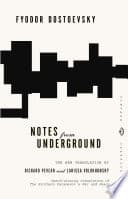
- Notes from Underground
Fyodor Dostoevsky
4.2 (84k) average on GoodreadsPsychologyFeatures an isolated, self-aware narrator grappling with societal contradictions and his own moral standing.
- A People's History of the United States
Howard Zinn
4.1 (192k) average on GoodreadsPoliticsProvides a counter-narrative of history, highlighting the suffering caused by systems from which others benefit.
- 1984
George Orwell
4.2 (3.1M) average on GoodreadsPoliticsIn a future where surveillance and thought control are absolute, a man's search for truth clashes with the Party, showing that hope can be a form of rebellion.
- Animal Farm
George Orwell
4.0 (2.7M) average on GoodreadsPoliticsA farm animals' rebellion against humans turns into a pig-led dictatorship, showing how power corrupts and revolutionary ideals are betrayed.
- Freakonomics: A Rogue Economist Explores the Hidden Side of Everything
Steven D. Levitt
4.0 (709k) average on GoodreadsBusinessThis book uses economic principles to reveal the surprising incentives behind everything from drug dealing and real estate to cheating teachers and the decline of crime.





Enjoyed the summary?
A summary gives you the shape of the book. The book itself has the detail, the examples and the voice.
Find The Fever on AmazonAs an Amazon Associate, BookBrief earns from qualifying purchases. How we're funded