
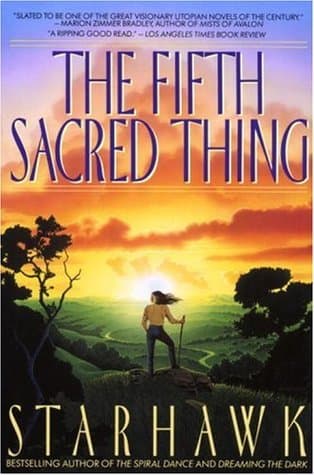
Synopsis
Covers the whole plot, including the ending.
- Difficulty
- Medium
- Pacing
- Variable
- Mood
- Uplifting, Spiritual, Hopeful, Intense, Thought-provoking
- Read it if
- You enjoy epic tales of resistance, spiritual awakening, and the clash of utopian and dystopian societies, with strong themes of environmentalism and social justice.
- Skip it if
- You prefer fast-paced action over philosophical exploration, or are put off by overt spiritual/pagan themes and a strong political message.
The Fifth Sacred Thing Plot Summary
Covers the whole plot, including the ending.
The City Divided
The story begins with Madrona, a young healer and gardener, living in the Free State of San Francisco. This city is peaceful and sustainable, built on principles of ecological harmony and the four sacred things: Earth, Air, Fire, and Water. It contrasts sharply with the technologically advanced, repressive Stewards of the South, who control the rest of California with strict social order and resource exploitation. Madrona, despite the city's peace, feels a coming threat. Her grandmother, Maya, a respected elder and seer, often speaks of the 'Fifth Sacred Thing' – the Spirit – and warns against complacency. Madrona prepares for a trip into the wild to gather herbs, a journey that shows their precarious existence.
The Stewards' Advance
The Free State's peaceful life ends when Steward scouts, heavily armed, appear on their borders. Their presence violates a long-standing truce, causing fear and determination in the city. Bird, a young warrior and Madrona's lover, is among the first to see the Stewards. The Free State, having removed most of its weapons and focused on defense, faces a moral problem: how to protect their way of life without betraying their non-violence. Debates happen in city councils, with some wanting defensive preparations and others a full commitment to peace, even with an invasion.
Jehanne's Mission
Jehanne, a skilled spy, goes on a dangerous mission into Steward territory to get information. She navigates the sterile, hierarchical society of the South, seeing the brutal enforcement of their laws, the genetic engineering of their elite, and the oppression of workers. Jehanne finds out the Stewards' plan: to destroy the Free State, which they see as a threat. She also uncovers a growing resistance among some disillusioned Stewards and enslaved workers, offering a bit of hope for an internal uprising. Her reports to San Francisco confirm their dire situation.
The Siege Begins
The Stewards launch their full invasion, their advanced weapons overwhelming the Free State's initial defenses. The city, unprepared for such an assault, suffers many losses. The Stewards use sonic weapons, chemical agents, and engineered soldiers, creating a terrifying battleground. Madrona, Maya, Bird, and others adapt quickly, using their knowledge of the land, healing skills, and collective spirit to resist. The invasion tests their peaceful society, forcing them to face war and its difficult choices. San Francisco's streets become a war zone, with every building and alley a potential battleground.
Resistance and Resilience
Despite the Stewards' technology, the Free State puts up a strong and unusual resistance. They use their knowledge of the city's layout, their tunnel network, and their connection to the land to create traps and diversions. Healers like Madrona work constantly, tending to the wounded and keeping morale high. The city's spiritual practices become a source of strength, with rituals reinforcing their collective will and belief in the Fifth Sacred Thing. Defenders, including warriors like Bird, use creative tactics, often avoiding direct fights for subtle resistance, such as disabling Steward technology or disrupting supply lines. Their love for home fuels their resilience.
Internal Conflict and Moral Dilemmas
The long siege brings internal conflicts to the surface. Some, like the more practical warriors, argue for aggressive tactics to repel invaders, challenging the city's pacifist ideals. Others, led by elders like Maya, insist on non-violence and compassion, even for enemies. Madrona is caught between these extremes, struggling with her desire for revenge and her commitment to healing. The debates are passionate, forcing the community to re-examine their society's core beliefs and how far they will go to protect it. The line between defense and aggression blurs.
The Fifth Sacred Thing Awakens
As the war grows, the concept of the Fifth Sacred Thing – the Spirit, or collective will – becomes more powerful. San Francisco's people engage in communal rituals, meditations, and acts of compassion, even for captured Steward soldiers. This collective spiritual energy, with their commitment, shifts the atmosphere. Stories of healings and kindness spread, inspiring defenders and some Steward soldiers, who question their mission. This spiritual awakening becomes a potent, unseen weapon against the Stewards' cold, rational ideology.
Seeds of Rebellion in the South
Meanwhile, Jehanne, back in Steward territories, works to start a rebellion. She connects with disillusioned scientists, engineers, and enslaved workers, sharing information about the Free State's resilience and the Stewards' cruelties. Her efforts, combined with growing unease among some Steward officers who see the siege's futility, begin to succeed. Small acts of sabotage and defiance grow into a coordinated uprising within Steward ranks and cities. This internal disruption weakens the Stewards' war effort and diverts resources, creating a turning point.
The Turning Point
The combination of the Free State's spiritual resistance and the growing rebellion within Steward territories begins to break the Stewards' will. Key Steward leaders are killed or defect, and their supply lines are cut. The Steward army's morale drops as they see the San Franciscans' spirit and dissent in their own ranks. The siege, once daunting, starts to fail. The Free State, though hurt, finds new strength in its unity and the power of the Fifth Sacred Thing, pushing back against the invaders.
Aftermath and Reconstruction
The Stewards are forced to retreat, their invasion a failure. San Francisco is victorious but at a great cost. The city is damaged, and many lives are lost. The aftermath involves intense healing and rebuilding. Madrona and other healers work to mend physical and spiritual wounds. The war transforms survivors, deepening their commitment to principles while making them face darker human nature. The novel ends with the Free State beginning to rebuild, offering reconciliation to disillusioned people of the South, and facing the challenge of creating a sustainable and peaceful future.
Principal Figures
Madrona
Protagonist
A young healer and gardener guided by the Four Sacred Things.
Madrona is a central figure in the Free State of San Francisco, deeply connected to the earth and the healing arts. She embodies the principles of sustainability and compassion that define her community. Initially, she is somewhat naive about the extent of theards' threat, but the war forces her to confront brutal realities. Her journey is one of growth, as she learns to integrate her healing abilities with the necessity of defense, all while upholding the spiritual values of her people. She is driven by a profound love for her city and its inhabitants, and a desire to preserve their way of life.
Relationships: Maya (Granddaughter and apprentice to Maya, deeply respecting her wisdom.); Bird (Lover and partner, sharing a deep bond despite their differing approaches to conflict.)
Maya
Supporting
Madrona's grandmother, a revered elder, seer, and keeper of ancient wisdom.
Maya is the spiritual heart of the Free State, an elder whose wisdom and foresight guide the community. She is a powerful seer, often predicting future events and offering profound spiritual insights, particularly regarding the 'Fifth Sacred Thing.' Maya is a staunch advocate for non-violence and compassion, even in the face of extreme aggression, constantly reminding her people of their core values. Her presence provides a moral compass for the city, influencing decisions and inspiring hope during the darkest times. She represents the deep connection to ancestral knowledge and spiritual power.
Relationships: Madrona (Grandmother and mentor to Madrona, teaching her healing and spiritual ways.)
Bird
Supporting
A passionate warrior and Madrona's lover, embodying the city's defense.
Bird is a spirited and courageous warrior of the Free State, deeply committed to protecting his home and loved ones. He is more pragmatic and action-oriented than Madrona, often advocating for direct defense and strategic resistance against the Stewards. While he believes in the Free State's principles, he struggles with the pacifist ideals when faced with the brutality of war, sometimes clashing with the elders. His love for Madrona is a grounding force, but his passion for justice and freedom drives him to the front lines. He represents the necessary physical defense of the community.
Relationships: Madrona (Lover and partner, sharing a deep bond despite their differing approaches to conflict.)
Jehanne
Supporting
A master spy and strategist who infiltrates the Steward territories.
Jehanne is a brilliant and resourceful spy, capable of seamlessly blending into various societies and gathering crucial intelligence. She is courageous, cunning, and fiercely independent, willing to undertake the most dangerous missions for the Free State. Her experiences in the Steward territories expose her to the depths of their cruelty and the potential for rebellion within their ranks. Jehanne is a pragmatist, focusing on effective action and strategic advantage, and plays a vital role in weakening the Stewards from within. She represents the active, outward-looking aspect of the Free State's defense.
Relationships: Free State Council (Trusted agent and informant for the Free State leadership.)
Jaguar
Antagonist
A high-ranking and ruthless Steward commander leading the invasion.
Jaguar is one of the primary antagonists, a high-ranking Steward commander responsible for orchestrating the invasion of San Francisco. He embodies the Stewards' ideology of control, genetic purity, and technological superiority. Jaguar is cold, calculating, and utterly ruthless, viewing the Free State as an irrational, chaotic threat that must be eliminated. He believes in the Stewards' divine right to rule and their mission to bring 'order' to the world. His character highlights the stark contrast between the two societies and the dangers of unchecked power and rigid ideology. He represents the oppressive force against which the Free State struggles.
Relationships: Other Stewards (Commander, exerting authority over his subordinates.)
General Hawk
Antagonist
Another key Steward military leader, often in command of specific battlefronts.
General Hawk is another significant Steward military leader, often working in tandem with Jaguar or commanding specific divisions during the siege. He shares Jaguar's dedication to the Steward cause but might exhibit slightly different tactical approaches. Hawk represents the organized, militaristic might of the Steward empire, enforcing their will through superior firepower and disciplined troops. His character helps to flesh out the oppressive nature of the Steward regime and the challenges the Free State faces on the battlefield. He is a symbol of the external threat.
Relationships: Jaguar (Colleague and fellow commander in the Steward military hierarchy.)
River
Supporting
A wise and respected elder from the Free State, often participating in council meetings.
River is one of the revered elders of the Free State, a calm and thoughtful voice in the city's councils. She represents the collective wisdom and democratic principles of San Francisco. River often helps to mediate disputes and ensures that decisions are made with the long-term well-being of the community in mind. Her presence underscores the importance of communal governance and the value placed on experience and insight within the Free State. She is a steadying influence during times of crisis.
Relationships: Maya (Fellow elder and council member, sharing a deep commitment to the Free State's values.); Madrona (Respected elder whom Madrona often consults.)
Star
Supporting
A young warrior and friend to Bird, representing the younger generation of defenders.
Star is a younger warrior and a close friend of Bird, representing the next generation of defenders in the Free State. She is brave and eager to protect her home, embodying the city's readiness to defend itself while still adhering to its core values. Star's experiences in the war force her to mature quickly, confronting the harsh realities of combat and loss. Her character allows the reader to see the war's impact on younger citizens and their developing understanding of their society's principles. She is a symbol of hope for the future.
Relationships: Bird (Close friend and fellow warrior.)
Themes & Insights
The Power of Community and Non-Violence
The novel explores the strength of a community that values cooperation, shared resources, and collective well-being over individual gain. The Free State of San Francisco, built on these ideas, faces a technologically stronger enemy but wins through unity, resilience, and non-violent resistance. Scenes of communal healing, shared meals, and democratic councils (like those Madrona attends) highlight this. The 'Fifth Sacred Thing' – the Spirit – shows that collective consciousness and compassion can be a strong force against oppression, as the city's unified spiritual energy affects Steward soldiers.
“What is the Fifth Sacred Thing? It is Spirit, it is life, it is the web of connection between all living things. It is the power that makes us human, and it is the power that will save us.”
Ecological Sustainability vs. Industrial Exploitation
A main theme is the contrast between two ways of living with Earth. The Free State of San Francisco practices radical ecological sustainability, living in harmony with nature, growing permaculture gardens, and reusing resources. Madrona's role as gardener and healer shows this connection. The Stewards of the South represent unchecked industrial exploitation, genetic manipulation, and a hierarchical society that sees nature as something to control for profit. Their sterile cities and disregard for the environment (e.g., destructive weapons) show the bad results of such an approach. The war itself becomes a battle for the planet's soul, between those who value it and those who want to control it.
“We are the Earth, and the Earth is us. When we hurt the Earth, we hurt ourselves. When we heal the Earth, we heal ourselves.”
Freedom vs. Control
The entire story centers on the conflict between radical freedom and absolute control. The Free State of San Francisco champions individual autonomy, diverse spiritual practices, and democratic self-governance, allowing citizens to live authentically. This freedom is clear in the city's art, music, and social structures. The Stewards, in contrast, impose a rigid, totalitarian regime, controlling every part of citizens' lives, from genetics to thoughts. Their society is built on fear, conformity, and surveillance, with harsh penalties for dissent. The war is not just for land but for the definition of human existence – whether it will be defined by liberation or by enforced order. Jehanne's infiltration into the South clearly shows the suffocating nature of Steward control.
“Freedom is not given; it is taken. And once taken, it must be defended with all your heart.”
The Nature of Spirituality and Power
The novel examines different forms of spirituality and how they become power. The Free State's spirituality is deeply connected to Earth, Air, Fire, Water, and the 'Fifth Sacred Thing' (Spirit/collective consciousness). Their rituals, healing practices, and communal bond are sources of inner and collective strength, allowing them to resist a powerful enemy. Maya's prophecies and Madrona's healing abilities are spiritual powers. The Stewards, while not religious, have a devotion to their scientific and genetic 'purity' and their hierarchical order, seeing themselves as chosen to rule. Their power is external, technological, and forceful. The conflict explores which form of power lasts longer and changes more.
“The greatest power is not the power to destroy, but the power to create, to heal, to love.”
Plot Devices & Literary Techniques
The Four Sacred Things and the Fifth Sacred Thing
A core spiritual and philosophical framework guiding the Free State.
These concepts are the ideological backbone of the Free State. The Four Sacred Things (Earth, Air, Fire, Water) represent the fundamental elements of life and ecological balance, informing their sustainable practices and respect for nature. The Fifth Sacred Thing (Spirit, or the web of interconnectedness, love, and collective will) emerges as the ultimate source of their power and resilience, especially during the war. It's a device that provides both moral guidance and, ultimately, a form of spiritual 'weaponry' against the Stewards' material and technological might, manifesting as collective consciousness and compassion that can disarm and even convert enemies.
The Oracle/Seer (Maya)
A character with prophetic abilities who guides the community.
Maya, Madrona's grandmother, serves as the community's oracle or seer. Her prophetic visions and deep spiritual insights provide crucial warnings and guidance to the Free State. This device allows for foreshadowing of impending threats and reinforces the spiritual dimension of the story. Maya's pronouncements often frame the moral and existential dilemmas faced by the characters, reminding them of their core values and the deeper implications of their actions. Her wisdom is a non-material resource that the Free State possesses, contrasting with the Stewards' reliance on data and technology.
The Divided California
A clear geographical and ideological split that defines the conflict.
The physical division of California into the Free State of San Francisco and the Steward-controlled South is a crucial plot device. It visually and ideologically separates the two opposing worldviews, making their conflict tangible and immediate. This division creates a clear 'us vs. them' dynamic, heightening the stakes of the war. It also allows for distinct narrative arcs in each territory (e.g., Madrona's story in the Free State, Jehanne's infiltration of the South), showcasing the contrasting realities of life under each system and demonstrating that the conflict is not just external but also deeply internal for the people living within or between these zones.
Internal Uprising/Defection
The presence of dissent and rebellion within the antagonist's ranks.
The existence of a nascent resistance movement and the potential for defection among the Steward population and even within their military is a vital plot device. This prevents the Stewards from being a monolithic, unbeatable evil, adding complexity to the conflict. Jehanne's mission specifically aims to exploit and amplify this dissent. It suggests that even in the most repressive regimes, the human spirit for freedom can endure, and it provides a crucial strategic advantage for the Free State by weakening the Stewards from within. This device underscores the theme that true change often comes from within, not just from external force.
The Fifth Sacred Thing Quotes
“The Earth is our mother, and we are her children. We must care for her, for she cares for us.”
“There are four sacred things: the Earth, Air, Fire, and Water. The Fifth Sacred Thing is the spirit that moves among them, and binds them together.”
“We are the ones we have been waiting for.”
“Power is not domination. Power is the ability to create, to transform, to make things happen.”
“The greatest magic is the magic of community, of people working together for a common good.”
“Fear is a powerful weapon, but love is more powerful still.”
“Justice is not about punishment, but about healing and restoration.”
“Every act of kindness, every gesture of compassion, sends ripples through the universe.”
“To be truly free is to be connected to all things, to feel the pulse of life within and around you.”
“The past is not a prison, but a wellspring of wisdom if we choose to drink from it.”
“There is no 'other.' We are all part of the same great web of life.”
“The seeds of the future are always present in the now. What we plant today determines tomorrow's harvest.”
“Even in the darkest times, the light of hope can always be found, if you know where to look.”
“The greatest revolution begins within, in the transformation of our own hearts and minds.”
Quiz
10 questions on the plot and the characters. Each answer comes with a short explanation.
Question 1
What is the primary spiritual principle that guides the Free State of San Francisco?
- The Four Elements: Earth, Air, Fire, Water
- The Five Sacred Things: Earth, Air, Fire, Water, and Spirit
- The Seven Sacred Directions
- The Triple Goddess: Maiden, Mother, Crone
Show answer
B. The Five Sacred Things: Earth, Air, Fire, Water, and Spirit The Free State of San Francisco is founded upon the principles of the Five Sacred Things, which include Earth, Air, Fire, Water, and the Fifth Sacred Thing, Spirit, representing interconnectedness and life.
Question 2
What is the name of the protagonist who travels from the Free State of San Francisco to the Southern Cities?
- Madron
- Bird
- Jaguar
- Zoe
Show answer
A. Madron Madron is the main protagonist who undertakes the dangerous journey from San Francisco to the Southern Cities to rescue her twin sister, Maya.
Question 3
What is the primary form of governance and societal structure in the Southern Cities (the Stewards' territories)?
- A direct democracy with communal ownership
- A matriarchal council of elders
- A patriarchal, hierarchical theocracy controlled by the Stewards
- A libertarian meritocracy
Show answer
C. A patriarchal, hierarchical theocracy controlled by the Stewards The Southern Cities are ruled by the Stewards, who enforce a rigid, patriarchal theocracy where women have few rights and society is strictly controlled.
Question 4
Which character is Madron's twin sister, who lives in the Southern Cities under the Stewards' rule?
- Zoe
- Bird
- Maya
- Rio
Show answer
C. Maya Maya is Madron's twin sister, separated from her at a young age, and living a repressed life in the Southern Cities.
Question 5
What is the primary method the people of the Free State of San Francisco use to defend themselves against the invading Stewards, beyond conventional warfare?
- Advanced technological weaponry
- Psychic attacks and illusions
- Non-violent resistance, community building, and spiritual resilience
- Guerrilla warfare tactics in the surrounding wilderness
Show answer
C. Non-violent resistance, community building, and spiritual resilience While they do prepare for physical defense, a core aspect of San Francisco's defense strategy involves non-violent resistance, maintaining their communal values, and spiritual strength to undermine the Stewards' ideology.
Question 6
What significant role does the character Bird play in the narrative, particularly in relation to the Stewards?
- She is a spy who infiltrates the Stewards' high command.
- She is a former Steward who defects and provides critical intelligence.
- She leads a military uprising against the Stewards in the Southern Cities.
- She is a healer who cures a plague afflicting the Stewards' army.
Show answer
B. She is a former Steward who defects and provides critical intelligence. Bird is a former Steward who, disillusioned with their regime, defects and brings valuable knowledge and insight about the Stewards' operations and vulnerabilities to San Francisco.
Question 7
What is the 'Gift' that the people of San Francisco offer to the invading Steward soldiers when they first encounter them?
- Advanced medical supplies to treat their wounded.
- Food, water, and an invitation to share their way of life.
- A powerful magical artifact for negotiation.
- A declaration of war and a challenge to single combat.
Show answer
B. Food, water, and an invitation to share their way of life. In a display of their core values, the people of San Francisco offer food, water, and hospitality to the initial Steward forces, demonstrating their commitment to the Fifth Sacred Thing and peaceful coexistence.
Question 8
How does the 'plague' that afflicts the Steward army in the novel primarily spread, and what is its symbolic significance?
- It's a biological weapon developed by San Francisco, symbolizing their scientific superiority.
- It's a magical curse cast by the witches of San Francisco, symbolizing their ancient power.
- It's a disease caused by environmental degradation and poor hygiene, symbolizing the Stewards' disconnect from nature and life.
- It's a psychosomatic illness induced by fear, symbolizing the psychological warfare waged by San Francisco.
Show answer
C. It's a disease caused by environmental degradation and poor hygiene, symbolizing the Stewards' disconnect from nature and life. The plague among the Stewards is depicted as a consequence of their unsanitary conditions, lack of connection to the land, and repressive lifestyle, symbolically contrasting with San Francisco's holistic approach to health and environment.
Question 9
What is the ultimate fate of the Stewards' invasion of San Francisco, and what factor is most crucial in its outcome?
- San Francisco is completely overrun, but a resistance movement eventually reclaims it.
- The Stewards achieve a decisive military victory, forcing San Francisco to surrender.
- The invasion collapses from within due to internal dissent, the plague, and the transformative influence of San Francisco's values on individual soldiers.
- An external military force intervenes and drives the Stewards back.
Show answer
C. The invasion collapses from within due to internal dissent, the plague, and the transformative influence of San Francisco's values on individual soldiers. The Stewards' invasion ultimately fails not primarily due to direct military defeat, but because their rigid system is unable to withstand the internal erosion caused by the plague, the defection of disillusioned soldiers, and the profound impact of San Francisco's compassionate and free way of life.
Question 10
What is the 'seed' that Madron plants in the Southern Cities, symbolizing hope for change and rebellion?
- A literal magical seed that grows into a protective forest.
- The idea of freedom, self-governance, and the Five Sacred Things, spread through subversive acts and personal connections.
- A hidden cache of weapons to arm a future rebellion.
- A new strain of disease designed to weaken the Stewards.
Show answer
B. The idea of freedom, self-governance, and the Five Sacred Things, spread through subversive acts and personal connections. Madron's journey and actions in the Southern Cities are about planting the 'seed' of radical ideas – freedom, respect for the Five Sacred Things, and the possibility of a different way of life – which inspires resistance and change among the oppressed populace.
The Fifth Sacred Thing FAQ
What is the core conflict driving the plot of 'The Fifth Sacred Thing'?
The central conflict pits the free, ecologically-minded, and spiritually open city of San Francisco, which lives by the principles of the Four Sacred Things (Earth, Air, Fire, Water), against the repressive, fundamentalist, and technologically advanced 'Stewards' who rule the Southland and seek to conquer and 'cleanse' San Francisco. This clash represents a struggle between two vastly different visions for humanity's future.
Who is Madrone and what is her role in the story?
Madrone is a healer and midwife from San Francisco, deeply connected to the natural world and the city's spiritual practices. She volunteers to travel south into Steward territory as a spy and a healer, aiming to understand their weaknesses and sow seeds of resistance, putting herself in extreme danger to protect her home.
Who is Bird and what challenges does he face?
Bird is Madrone's grandson, a young man torn between his love for his family and his desire to prove himself in the face of the impending war. He initially struggles with fear and his pacifist upbringing, but eventually finds his courage and leadership skills, playing a crucial role in defending San Francisco.
What are the 'Four Sacred Things' and what is implied by the 'Fifth Sacred Thing'?
The Four Sacred Things—Earth, Air, Fire, Water—represent fundamental elements of life and are the basis of San Francisco's spiritual and ecological philosophy, emphasizing balance and interconnectedness. The 'Fifth Sacred Thing' is never explicitly named but is strongly implied to be Spirit, Love, Freedom, or the Human Heart itself, representing the intangible essence that binds the others and makes life meaningful.
How does the novel portray the Stewards' society and their motivations?
The Stewards are depicted as a highly authoritarian, patriarchal, and technologically advanced society driven by rigid religious fundamentalism and a fear of chaos. They believe they are divinely ordained to 'cleanse' the world of sin and impose order, seeing San Francisco's freedom as an abomination to be eradicated.
What is the significance of the character of Glin and his internal conflict?
Glin is a Steward officer who becomes Madrone's captor and, unexpectedly, her reluctant protector and eventual ally. His internal conflict arises from his indoctrination into Steward ideology clashing with his growing respect for Madrone's strength and the inherent goodness he perceives in her, leading him to question his beliefs and ultimately choose a different path.
Are there any subtle allusions to real-world historical or spiritual movements in the book?
Yes, the book draws heavily from real-world ecofeminist, pagan, and New Age spiritual traditions, particularly the Goddess movement, in its portrayal of San Francisco's culture. The Stewards, with their rigid hierarchy and fundamentalism, can be seen as an allegory for various historical and contemporary oppressive regimes and religious extremisms.
How does the concept of 'dreaming' or 'visioning' function within the San Francisco society and the plot?
Dreaming and visioning are central to San Francisco's decision-making and spiritual practices, allowing individuals and groups to tap into collective wisdom and intuition. These practices guide strategic choices, such as Madrone's mission, and help maintain community cohesion, suggesting a non-linear way of understanding and influencing reality.
What is the role of the 'Witches' or wise women in San Francisco, and how do they differ from the Stewards' perception of them?
The 'Witches' are the elders and healers in San Francisco, often women like Madrone, who possess deep knowledge of herbal medicine, spiritual practices, and community wisdom. They are respected leaders, whereas the Stewards demonize them as practitioners of forbidden magic and agents of evil, reflecting the patriarchal fear of female power.
How does the novel explore the psychology of fear and courage in its characters?
The novel deeply explores how characters like Bird confront their innate fears of violence and death, ultimately finding courage not in aggression, but in their commitment to their community and values. Madrone, too, faces immense fear but pushes through it with a clear sense of purpose, showing courage as a choice rather than an absence of fear.
What psychological impact does living under the Steward regime have on its citizens, particularly those who defect or question it?
Living under the Stewards creates a pervasive atmosphere of fear, conformity, and suppression of individuality, leading to psychological trauma and a deep sense of powerlessness. Characters like Glin experience intense cognitive dissonance and emotional turmoil when their indoctrinated beliefs are challenged, highlighting the difficulty of breaking free from cult-like control.
How does the book address the psychological need for community and belonging in both societies?
San Francisco fulfills this need through genuine connection, shared purpose, and mutual support, fostering a strong sense of chosen family and belonging. The Stewards attempt to fulfill it through forced conformity and a hierarchical structure, which provides a sense of order but often at the cost of authentic human connection and individual autonomy, leading to a brittle form of belonging.
Discuss the psychological journey of Madrone during her time in the Southland.
Madrone's journey is one of immense psychological resilience. She endures torture, isolation, and constant threat, yet maintains her sense of self, her purpose, and her connection to her spiritual beliefs. Her ability to empathize even with her captors, like Glin, and find ways to heal within a hostile environment showcases profound inner strength and moral fortitude.
Is the ending of 'The Fifth Sacred Thing' truly a victory, or is it more ambiguous?
While San Francisco successfully defends itself and inspires rebellion, the ending is not a simple, clear-cut victory. The struggle is ongoing, and the book suggests that the fight for freedom and a just world is a continuous process. The future remains uncertain, emphasizing that constant vigilance and dedication are required to maintain peace and freedom.
How does the novel's blend of fantasy, spirituality, and science fiction contribute to its unique message?
The blend allows the novel to explore profound philosophical and social questions without being constrained by strict realism. The spiritual elements provide a framework for San Francisco's ethics, the fantasy elements allow for a heightened sense of possibility and myth, and the science fiction aspects ground the conflict in plausible future societal developments, creating a rich tapestry for its message of hope and resistance.
Does the book present a truly viable utopian alternative in San Francisco, or are there inherent flaws or challenges within its society?
San Francisco is presented as an aspirational society, but not without its challenges. Its pacifist ideals are tested by external threats, and internal debates about defense strategy reveal the complexities of maintaining peace in a violent world. The novel acknowledges that even ideal societies face difficult choices and require continuous effort to uphold their values, suggesting a 'process' utopia rather than a static one.
What is the novel's overarching message about the relationship between nature, spirituality, and human society?
The novel argues that a healthy human society is inextricably linked to a respectful, reciprocal relationship with nature and a deep spiritual connection to the Earth. It posits that neglecting either leads to imbalance, repression, and destruction, as exemplified by the Stewards, while embracing them fosters freedom, healing, and true abundance, as seen in San Francisco.
How does the book portray the role of gender in the two societies?
San Francisco is depicted as an egalitarian society where gender roles are fluid, and women often hold positions of power and spiritual leadership, celebrating diverse expressions of masculinity and femininity. In stark contrast, the Stewards enforce a rigid, patriarchal system where women are subjugated, their bodies controlled, and their roles severely limited, highlighting a key ideological divide.
About the author
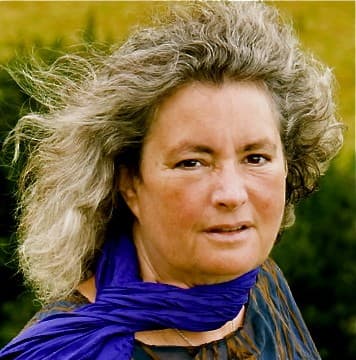
Starhawk is an American author and activist known for her work in the fields of ecofeminism and paganism. She is best known for her novel "The Fifth Sacred Thing," which explores themes of community, spirituality, and environmentalism in a dystopian future. Her writing often blends elements of fiction with her interests in social justice and earth-based spirituality.
Similar books
- The Mists of Avalon
Marion Zimmer Bradley
4.1 (192k) average on GoodreadsFantasyExplores pagan spirituality, strong female characters, and societal conflict through a mythological lens.
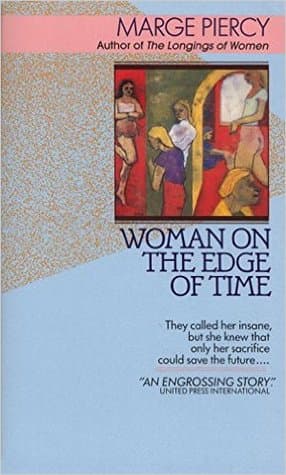
- Woman on the Edge of Time
Marge Piercy
4.0 (14k) average on GoodreadsFantasyFeatures a utopian future society contrasting with a dystopian present, with themes of social justice and gender roles.
- The Dispossessed
Ursula K. Le Guin
4.2 (88k) average on GoodreadsPoliticsBoth novels explore utopian/dystopian societies and alternative social structures. Le Guin's 'The Dispossessed' offers a more nuanced critique of anarchism, examining its internal paradoxes and challenges, whereas Starhawk's 'The Fifth Sacred Thing' presents a more idealized, albeit challenged, vision of an eco-spiritual commune. Le Guin's work often delves deeper into the philosophical underpinnings and psychological costs of such societies, while Starhawk focuses more on the practical application and spiritual grounding of her ideal.
- Harry Potter and the Sorcerer's Stone
J.K. Rowling
4.5 (7M) average on GoodreadsFantasyRescued from a miserable life under the stairs, an orphaned boy discovers he's a wizard destined for a magical school, where he uncovers a dangerous secret tied to the dark wizard who murdered his parents.
- The Hunger Games
Suzanne Collins
4.3 (6.4M) average on GoodreadsFantasyIn a future where children fight to the death on live television, Katniss Everdeen volunteers for the arena, turning a death sentence into a fight for survival and a spark of rebellion.
- 1984
George Orwell
4.2 (3.1M) average on GoodreadsPoliticsIn a future where surveillance and thought control are absolute, a man's search for truth clashes with the Party, showing that hope can be a form of rebellion.




Enjoyed the summary?
A summary gives you the shape of the book. The book itself has the detail, the examples and the voice.
Find The Fifth Sacred Thing on AmazonAs an Amazon Associate, BookBrief earns from qualifying purchases. How we're funded