

Synopsis
Covers the whole plot, including the ending.
- Difficulty
- Medium
- Pacing
- Variable
- Mood
- Dark, Cynical, Gritty, Brutal, Suspenseful
- Read it if
- You enjoy grimdark fantasy with morally gray characters, brutal combat, and a cynical take on heroism and power. Perfect for those who appreciate character-driven narratives with significant plot twists and a focus on realism over traditional fantasy tropes.
- Skip it if
- You prefer traditional high fantasy with clear heroes and villains, optimistic endings, or lighthearted narratives. This series is dark, violent, and often bleak, with no easy answers or comforting resolutions.
The First Law Trilogy Plot Summary
Covers the whole plot, including the ending.
Logen Ninefingers' Desperate Escape and Bayaz's Arrival
Logen Ninefingers, a known Northman warrior, is on the run after his group is ambushed and seemingly killed by Shanka. He barely survives a fall down a waterfall and begins a long, hard trip south. He is haunted by his violent past and the 'Bloody-Nine' part of him. Meanwhile, in Adua, the Union capital, the mysterious First of the Magi, Bayaz, makes a dramatic entrance. He disrupts the comfortable life of the pampered Inquisitor Glokta and the self-absorbed Captain Jezal dan Luthar. Bayaz, a powerful and old sorcerer, immediately takes charge and starts to manipulate events. He senses a coming war with the Gurkish Empire and an older threat.
Jezal's Training and Glokta's Interrogations
Bayaz, with his apprentice Malacus Quai and the former mercenary Dogman, makes Jezal train hard with a sword under the famous Master Swordsman, Varuz. Jezal, at first angry and focused on winning the upcoming Contest, slowly gets better, though he stays self-centered. At the same time, Sand dan Glokta, a crippled former war hero who became a torturer for the Inquisition, must investigate a plot in the Union's banking system. His brutal interrogations of bankers and nobles show deep corruption and a network of traitors. He also deals with constant pain from his shattered body and bitter memories of being captured and tortured by the Gurkish.
The Quest for the Seed
Bayaz says his real goal is to find the legendary Seed, a powerful object from the 'Old Time' that he believes is needed to beat the Prophet Khalul and the Gurkish Empire. He puts together a reluctant group: Logen Ninefingers, who he found after Logen escaped; Jezal dan Luthar, who he forces; Ferro Maljinn, a vengeful former slave who wants to kill Khalul; and Malacus Quai. Their journey is full of danger. They go through desolate lands, old ruins, and meet monstrous creatures and hostile locals. This tests their endurance and makes them face their biases and fears.
The Northern War and West's Rise
While Bayaz's group travels, the Union gets ready for war in the North against Bethod, the King of the Northmen. Colonel Collem West, an officer from a common family, is put in command. He struggles to earn the respect of the noble officers and manage the volatile Prince Ladisla. He becomes close with Ardee West, Jezal's sister, who is stuck in Adua's strict social circles. West's leadership is tested in brutal battles against the Northmen, leading to heavy losses and hard choices. He sees the horrors of war and the political tricks that hurt the Union's efforts. He also deals with his own ambition and temper.
The Journey to the Edge of the World
Bayaz's group continues their hard journey. They reach the old city of Shab-wish, where they find clues about the Seed's real location. During their travels, tensions grow, especially between Ferro and Jezal. Logen struggles to control his violent side. They face attacks from shadowy figures loyal to Khalul and a devastating betrayal by Malacus Quai, who is a servant of Khalul. Quai steals the map to the Seed and escapes, forcing Bayaz to change his plan. The group keeps going, determined to reach the 'Edge of the World' where the Seed is said to be hidden.
Retrieving the Seed and the Gurkish Invasion
After a difficult trip to the ruins of an old city at the 'Edge of the World,' Bayaz, Logen, Jezal, and Ferro find the Seed. It is not one object but a group of powerful magical objects. Bayaz tells more about the 'Old Time's' history and the real nature of his fight with Khalul, both apprentices of the first Magi, Juvens. They get some of the Seed, but their success does not last long. When they return, they find the Union in chaos. The Gurkish Empire, led by the fanatical Prophet Khalul, has started a huge invasion, overwhelming the Union's defenses and going deep into their land.
The Siege of Dagoska and Glokta's Desperate Defense
Sand dan Glokta, now promoted and in command, is sent to defend Dagoska, a city important for its location, against the many Gurkish soldiers. He uses his usual ruthlessness and practical cynicism, doing whatever is needed to hold the city. He manipulates local groups, executes suspected traitors, and makes impossible tactical decisions. All this happens while he fights his own physical pain and despair. The siege is brutal and bloody, with many deaths on both sides. Glokta's defense works, but at a terrible cost, leaving him tougher and more disillusioned, yet strangely effective.
The Battle of the High Places and the North's Fate
In the North, the Union army, now under the more capable command of Field Marshal Burr and Colonel West, fights Bethod's Northmen in a series of brutal battles. The climax is at the Battle of the High Places, where West shows his strategic skill and courage. He leads the Union to a hard-won victory. During the battle, Logen Ninefingers, who returned to the North with Bayaz, confronts his old rival, the Fenris Wolf. He then faces Bethod himself. Logen's 'Bloody-Nine' side comes out again, leading to a violent and decisive end to Bethod's rule. But it also reminds Logen of his own destructive nature.
The Union's Retreat and Jezal's Ascension
Despite Glokta's success in Dagoska and West's victory in the North, the Gurkish invasion continues to threaten the Union's center. The Union army loses many soldiers and must retreat, leaving much land. Meanwhile, Bayaz, back in Adua, starts his long-term plan for the Union's leadership. He manipulates the dying King Guslav and the Open Council to make sure Jezal dan Luthar, now a war hero despite little combat experience, is named the new king. Jezal, still naive and largely a puppet, is put on the throne, unprepared for being king.
Bayaz's True Power and the Final Confrontation
With Jezal as king, Bayaz shows how powerful and influential he truly is. He reveals the Seed's real purpose: not as a direct weapon against Khalul's magic, but as a way to control the Union and gather his own power. He manipulates the economy and politics, ruling through Jezal. Bayaz then goes to the Gurkish capital with Ferro for a final, magical fight with Khalul. Using the Seed, Bayaz unleashes devastating magical power, destroying Khalul's stronghold and showing his terrifying abilities. The fight between the two old Magi is not fully resolved, but Bayaz shows he is in charge.
Aftermath and Unsettled Futures
The war officially ends. The Union is very weak but still whole, and the Gurkish forces retreat. However, the victory feels empty. Jezal is king in name only, a prisoner of Bayaz's influence and trapped in a loveless marriage for political reasons. Glokta, now a Lord Inquisitor, continues his work, forever scarred and accepting his role as Bayaz's enforcer. Logen, unable to escape his violent nature, eventually returns to the North; his future is unclear. Ferro, disappointed by Bayaz's real nature, leaves to continue her personal fight against Khalul. West, despite his military success, is left with a broken spirit and a troubled future. This shows the grim and often unheroic results of the war and the powerful people's manipulations.
Principal Figures
Logen Ninefingers
Protagonist
Feared Northman warrior haunted by his violent past
Logen is a Northman warrior with a bloody reputation, known as 'The Bloody-Nine' when consumed by berserker rage. He attempts to escape his violent past and live a peaceful life but is constantly drawn back into conflict. He is pragmatic, resourceful, and possesses a dark sense of humor, yet struggles deeply with the monster he fears he truly is. His journey south brings him into contact with Bayaz and the Union, forcing him to confront both external enemies and his inner demons. He values loyalty and friendship but is capable of extreme brutality when pushed.
Relationships: Bayaz (reluctant ally and manipulated tool); Dogman (loyal friend and former crew member); Ferro Maljinn (brief, volatile romantic interest); Bethod (former king and bitter enemy)
Jezal dan Luthar
Protagonist
Vain, self-centered nobleman turned reluctant king
Jezal is a handsome, privileged, and incredibly self-absorbed Union nobleman, more concerned with his appearance, fencing, and women than with duty or responsibility. Initially a champion fencer with aspirations of winning the 'Contest,' he is forcibly drawn into Bayaz's schemes. His journey with Bayaz's party is a harsh reality check, exposing him to hardship and danger for the first time. He is fundamentally weak-willed and easily manipulated, making him an ideal puppet king for Bayaz, though he slowly gains a sense of responsibility and empathy through his trials.
Relationships: Bayaz (manipulative mentor and controller); Ardee West (brief romantic interest); Collem West (brother-in-law, initially a rival); King Guslav (predecessor, manipulated into naming Jezal heir)
Sand dan Glokta
Protagonist
Crippled former hero turned cynical, sadistic torturer
Glokta is a former fencing champion and war hero, captured and horribly tortured by the Gurkish, leaving him a broken, pain-ridden shell. He now serves as a Lord Inquisitor for the Union, a role that allows him to inflict the same pain he experienced upon others, though he often muses on the futility and hypocrisy of his actions. He is intelligent, observant, and deeply cynical, seeing through the pretenses of power and morality. Despite his cruelty, he possesses a grim sense of duty and a surprising effectiveness in his investigations and commands, driven by a desire to survive and understand the corrupt world around him.
Relationships: Bayaz (manipulative master and enforcer); Sult (superior and rival within the Inquisition); Ardee West (reluctant marriage partner); Practical Frost (loyal, silent assistant)
Bayaz
Antagonist/Supporting
The ancient, manipulative First of the Magi
Bayaz is an ancient and immensely powerful sorcerer, the First of the Magi, and a central figure in the politics of the Union. He is cunning, ruthless, and possesses a vast knowledge of history and magic, having lived for centuries. He manipulates kings, councils, and individuals to achieve his long-term goals, which often involve maintaining the Union's power and countering the influence of his ancient rival, Khalul. While he presents himself as a benevolent protector, he is ultimately self-serving and willing to sacrifice anyone for his objectives, blurring the lines between good and evil.
Relationships: Khalul (ancient rival and fellow apprentice of Juvens); Logen Ninefingers (tool and protector); Jezal dan Luthar (puppet king); Malacus Quai (former apprentice, later a betrayer)
Ferro Maljinn
Supporting
Vengeful Gurkish former slave seeking to kill the Prophet Khalul
Ferro is a fiercely independent and perpetually angry former slave from the Gurkish Empire, driven by an unwavering desire for revenge against the Prophet Khalul, who enslaved her and her people. She is a skilled fighter with an almost supernatural speed and strength, making her a formidable warrior. Her trust issues and volatile temper make her difficult to work with, but her determination and hatred are powerful motivating forces. She joins Bayaz's quest solely to get closer to Khalul, constantly pushing back against attempts to control her.
Relationships: Bayaz (temporary ally of convenience); Logen Ninefingers (brief, complicated romantic interest); Jezal dan Luthar (initial antagonism, later grudging respect)
Collem West
Supporting
Common-born Union officer struggling with ambition and temper
Collem West is a talented and ambitious Union officer from a common background, constantly striving to prove himself in a society dominated by nobles. He is a capable military leader, but struggles with a volatile temper and a tendency to lash out, particularly at his sister Ardee. He rises through the ranks during the Northern War, demonstrating tactical brilliance and courage, but the horrors of war and the political machinations take a heavy toll on him, leaving him increasingly disillusioned and broken. He genuinely cares for his soldiers and seeks to do right, despite his personal flaws.
Relationships: Ardee West (sister, with a complicated and sometimes abusive relationship); Jezal dan Luthar (initially a rival, later brother-in-law); Prince Ladisla (inept superior, source of frustration); Field Marshal Burr (respectable superior officer)
Ardee West
Supporting
Sharp-witted noblewoman trapped by societal expectations
Ardee West is the intelligent, sharp-tongued sister of Collem West. Frustrated by the limited opportunities for women in Union society, she chafes against societal expectations and often acts impulsively. She is initially drawn to Jezal, but their relationship is ultimately superficial. She has a complex and often strained relationship with her brother, Collem, marked by both affection and his controlling nature. Later, she is forced into a marriage with Glokta, a cruel twist of fate that further highlights her lack of agency and the harsh realities of her world, yet she maintains a cynical resilience.
Relationships: Collem West (brother, with a strained and occasionally abusive dynamic); Jezal dan Luthar (brief romantic interest); Sand dan Glokta (unwilling husband)
Dogman
Supporting
Loyal Northman scout and Logen's closest friend
Dogman is a pragmatic and loyal Northman, one of Logen Ninefingers' oldest and most trusted companions. He is a skilled tracker and scout, known for his cautious nature and common sense. He often serves as Logen's moral compass, trying to temper Logen's violent impulses and reminding him of their shared humanity. After Logen's disappearance, Dogman reluctantly steps up as a leader among the surviving Northmen, demonstrating unexpected leadership qualities and a deep sense of responsibility for his men. He represents the more honorable side of the Northman warrior culture.
Relationships: Logen Ninefingers (closest friend and loyal follower); Black Dow (rival and sometime ally among the Northmen); Shivers (younger Northman he mentors)
Khalul
Antagonist
The fanatical Prophet and ancient rival of Bayaz
Khalul is the Prophet of the Gurkish Empire, an ancient and powerful sorcerer who, like Bayaz, was an apprentice of Juvens. He leads the Gurkish in a holy war against the Union, fueled by a fervent religious ideology and a deep-seated rivalry with Bayaz. He is depicted as a shadowy, almost mythical figure, rarely seen directly but whose influence and power are immense. He commands an army of fanatical followers and employs dark magic, including the Eaters, to achieve his goals. His conflict with Bayaz is millennia old, rooted in differing interpretations of Juvens' teachings and a struggle for ultimate magical supremacy.
Relationships: Bayaz (ancient, bitter rival and fellow apprentice)
Black Dow
Supporting
Brutal and treacherous Northman, Logen's rival
Black Dow is a feared and notoriously cruel Northman, a member of Logen's original crew. He is a skilled fighter but utterly ruthless, pragmatic to a fault, and deeply untrustworthy. He constantly challenges Logen's authority and often acts solely out of self-interest, viewing loyalty as a weakness. Despite his villainous tendencies, he is a survivor and a formidable presence in the Northern conflicts. His relationship with Logen is a complex mix of grudging respect and simmering resentment, often leading to violent confrontations.
Relationships: Logen Ninefingers (rival, sometimes ally, ultimately enemy); Dogman (competitor for leadership among the Northmen)
Themes & Insights
The Brutality and Futility of War
Abercrombie shows war as horrific, messy, and often pointless. Characters like Collem West and Logen Ninefingers experience the physical and mental toll of battle. They see terrible acts, get bad injuries, and make hard moral choices. The big strategic conflicts often become desperate, bloody fights, showing the human cost over any perceived glory. The outcome often feels empty, with no real winners, only survivors scarred by the experience.
“War is a wound, and it can be healed. But a scar remains.”
The Nature of Power and Corruption
The trilogy explores how power corrupts, whether held by old Magi, clever Inquisitors, or ambitious generals. Bayaz manipulates everyone around him, from kings to commoners, for his own goals. This shows that power often costs morality. Glokta's role as an Inquisitor shows the cruelty and corruption built into the Union system. Even those who try to do good, like Collem West, make morally compromising decisions to survive and get ahead. This suggests that real power is rarely kind.
“You can never have too much power. If you are weak, you will be eaten. Just as you are eating the weak.”
Identity and Self-Acceptance
Many characters struggle with who they are and the choices that define them. Logen Ninefingers constantly fights his 'Bloody-Nine' side, wondering if he can ever escape his violent nature. Jezal tries to find meaning beyond his superficial life. Glokta is defined by his past torture and his current role as an Inquisitor, always thinking about who he has become. The story suggests that while people may try to change, basic parts of their character often stay the same. Real growth comes from accepting, not denying, one's true self, no matter how dark.
“Once you've been a monster, you are always a monster.”
The Grey Morality of Heroes and Villains
Abercrombie intentionally blurs the lines between good and evil. Characters usually seen as 'heroes' often do terrible things, while 'villains' sometimes show unexpected humanity or serve a needed purpose. Bayaz, the supposed protector of the Union, is a ruthless manipulator. Glokta, a torturer, can be surprisingly effective and even sympathetic. Logen, a 'good' person, is also a mass murderer. This theme challenges common fantasy ideas. It makes readers face the messy, complex reality of human nature, where few are purely good or evil.
“There are no good men. There are only good decisions.”
The Weight of the Past
The past greatly affects the present for almost every character and the world itself. Bayaz and Khalul's old feud drives much of the plot. Logen is always haunted by his past actions and the reputation of 'The Bloody-Nine.' Glokta's past torture defines his current life and worldview. The remains of the 'Old Time' and its magic dictate the present conflicts. This theme shows that history is not easily escaped or forgotten. Its echoes last through generations, shaping destinies and conflicts.
“The past is a wound, and the future is a scar.”
Plot Devices & Literary Techniques
Multiple Perspective Narrative
Alternating viewpoints to provide a broad, nuanced understanding of events
The trilogy employs a rotating third-person limited perspective, shifting between the viewpoints of several main characters (Logen, Jezal, Glokta, West, Ferro, and occasionally others). This device allows Abercrombie to present a multi-faceted view of the unfolding events, revealing character motivations, internal struggles, and the often contradictory nature of truth. It prevents any single character from being a sole 'hero' and immerses the reader in the distinct voice and worldview of each individual, often highlighting the disconnect between their perceptions and objective reality.
The Bloody-Nine
Logen's berserker alter ego, representing his violent past
The 'Bloody-Nine' is Logen Ninefingers' terrifying, uncontrollable berserker persona. It manifests during moments of extreme stress or combat, transforming Logen into a brutal, almost inhuman killing machine. This device serves as a physical manifestation of Logen's violent past and his internal struggle with his own nature. It highlights the theme of identity and the inescapable pull of one's darker self, as Logen desperately tries to suppress it but ultimately cannot. The Bloody-Nine is both a curse and a terrifyingly effective weapon, blurring the lines of Logen's morality.
The Seed
Ancient magical artifacts, a MacGuffin driving Bayaz's quest
The Seed refers to a collection of powerful magical artifacts from the 'Old Time,' created by the ancient Magi. It functions primarily as a MacGuffin, driving Bayaz's quest throughout the second book. Its true nature and purpose are gradually revealed, not as a single weapon to defeat Khalul's magic, but as a source of immense power that Bayaz ultimately uses to solidify his control over the Union and confront his rival. The quest for the Seed brings together the disparate protagonists and serves as a catalyst for their individual journeys and the larger geopolitical conflict.
The Inquisition
A state-sanctioned organization for torture and political control
The Inquisition is a powerful and feared institution within the Union, responsible for rooting out traitors, dissidents, and anyone deemed a threat to the closed council. Headed by the Arch Lector Sult and featuring figures like Sand dan Glokta, it uses torture, surveillance, and political manipulation as its primary tools. This device serves to highlight the darker, more authoritarian aspects of the Union government and the pervasive corruption within its highest echelons. It provides a stark contrast to the idealized notions of justice and showcases the cynical reality of power.
The First Law Trilogy Quotes
“You have to be realistic about these things.”
“Better to do it than live with the fear of it.”
“Once you've got a task to do, it's better to do it than to live with the fear of it.”
“A man lost in the desert must take such water as he is offered, no matter who it comes from.”
“The blade itself incites to deeds of violence.”
“You can never have too many knives.”
“It's better to be a coward for a minute than dead for the rest of your life.”
“The only thing worse than a battle lost is a battle won.”
“Life is a series of disappointments, as far as I can tell.”
“Evil turned out not to be a grand thing. Not sneering emperors with their world-conquering designs. Not cackling demons plotting in the darkness beyond the world. It was small men with their small acts and their small reasons. It was selfishness and carelessness and waste.”
“You have to learn to love the small things in life, like a hot bath or a glass of good wine.”
“It's not about being the best. It's about being the one left standing.”
“The world is built on violence. Every throne is a bloody one.”
“Sometimes men change for the better. Sometimes men change for the worse. And often, very often, given time and opportunity, they change back.”
Quiz
10 questions on the plot and the characters. Each answer comes with a short explanation.
Question 1
In 'The Blade Itself,' what is the primary reason Logen Ninefingers is forced to flee the North?
- He is betrayed by his lover and framed for murder
- He is hunted by Bethod's forces after refusing to serve as his champion
- He accidentally kills a chieftain during a drunken brawl
- He is exiled for stealing a magical artifact from the Shanka
Show answer
B. He is hunted by Bethod's forces after refusing to serve as his champion Logen Ninefingers, once a feared warrior for Bethod, is hunted by Bethod's forces after refusing to continue serving as his champion, leading to his flight southward. This sets up his journey and eventual alliance with Bayaz.
Question 2
What is the name of the magical artifact that Bayaz seeks throughout the trilogy, which is central to the plot?
- The Seed
- The Heart of Stone
- The Blade of Euz
- The Crown of the Union
Show answer
A. The Seed The Seed is a powerful magical artifact from the Old Time that Bayaz seeks to control, as it can unleash devastating power. Its pursuit drives much of the action in 'Before They Are Hanged' and 'The Last Argument of Kings.'
Question 3
Which character is known for his cynical, self-serving nature and the catchphrase 'You have to be realistic'?
- Jezal dan Luthar
- Sand dan Glokta
- Collem West
- Logen Ninefingers
Show answer
D. Logen Ninefingers Logen Ninefingers often uses the phrase 'You have to be realistic' to justify his pragmatic and sometimes brutal actions, reflecting his survivalist mindset in the harsh world of the North.
Question 4
In 'Before They Are Hanged,' what is the main goal of the journey that Bayaz, Logen, Jezal, and Ferro undertake to the edge of the World?
- To find a legendary healer to cure Bayaz's illness
- To retrieve the Seed from the ruins of the Old Empire
- To forge an alliance with the Gurkish Empire
- To rescue a kidnapped noble from the Shanka
Show answer
B. To retrieve the Seed from the ruins of the Old Empire Bayaz leads the group to the edge of the World to find the Seed, a powerful artifact he believes is key to countering the threat of the Gurkish and securing his own power.
Question 5
What role does Sand dan Glokta serve in the Union's government by the end of 'The Last Argument of Kings'?
- He becomes the new King of the Union
- He is appointed as the head of the Inquisition
- He retires to a quiet life in the country
- He is executed for treason against Bayaz
Show answer
B. He is appointed as the head of the Inquisition After the events of the trilogy, Glokta is appointed as the head of the Inquisition by Bayaz, using his skills in interrogation and manipulation to maintain control over the Union.
Question 6
Which theme is most prominently explored through the character arcs of Jezal dan Luthar and Logen Ninefingers?
- The corrupting influence of absolute power
- The illusion of change and the persistence of one's nature
- The importance of loyalty and friendship in adversity
- The conflict between magic and technology
Show answer
B. The illusion of change and the persistence of one's nature Jezal appears to change from a vain noble to a more responsible leader, but ultimately reverts to being a puppet under Bayaz. Similarly, Logen tries to leave violence behind but is drawn back into it, showing how core natures persist despite efforts to change.
Question 7
What is the significance of the phrase 'The First Law' in the context of the trilogy's magic system?
- It forbids the use of magic in times of peace
- It prohibits eating the flesh of thinking beings
- It mandates that all magicians serve the Union
- It requires magical artifacts to be destroyed after use
Show answer
B. It prohibits eating the flesh of thinking beings The First Law, established by Euz, is a fundamental rule that forbids eating the flesh of thinking beings, as violating it leads to becoming an Eater and gaining dark powers, as seen with characters like Tolomei.
Question 8
How does Bayaz ultimately secure his power over the Union by the end of 'The Last Argument of Kings'?
- By marrying into the royal family and becoming king consort
- By using the Seed to destroy all his political enemies
- By manipulating Jezal into becoming a puppet king and controlling the banks
- By revealing himself as the true heir to the throne
Show answer
C. By manipulating Jezal into becoming a puppet king and controlling the banks Bayaz engineers Jezal's rise to the throne and then controls him as a figurehead, while also taking over the Union's banks to wield economic power, demonstrating his mastery of manipulation over brute force.
Question 9
Which character's backstory reveals that they were once a promising Union officer before being tortured and crippled during the Gurkish War?
- Collem West
- Jezal dan Luthar
- Sand dan Glokta
- Bayaz
Show answer
C. Sand dan Glokta Sand dan Glokta was a handsome and skilled officer before being captured and tortured by the Gurkish, which left him physically broken and cynical, shaping his role as an inquisitor.
Question 10
What is the ultimate fate of Ferro Maljinn by the end of the trilogy?
- She becomes the queen of the Gurkish Empire
- She returns to the South to lead a rebellion against the Gurkish
- She settles down with Logen Ninefingers in the North
- She is killed by Bayaz for betraying him
Show answer
B. She returns to the South to lead a rebellion against the Gurkish Ferro, driven by her desire for revenge against the Gurkish who enslaved her, leaves the Union and returns to the South to fight against them, embracing her violent nature rather than finding peace.
The First Law Trilogy FAQ
What is 'The First Law Trilogy' about?
The trilogy follows a cast of morally grey characters in a gritty, low-magic fantasy world. Central plots include the barbarian Logen Ninefingers seeking redemption in the Union, the crippled torturer Sand dan Glokta investigating conspiracies, and the arrogant noble Jezal dan Luthar being manipulated into a hero. Their stories intertwine with a looming war against the Northmen and the mysterious machinations of the wizard Bayaz.
Why should I read 'The First Law Trilogy'?
It subverts classic fantasy tropes with its deeply flawed characters, dark humor, and brutal realism. The series excels in character development, especially for figures like Glokta, whose internal monologues reveal surprising depth. Its unpredictable plot twists and cynical take on power and heroism make it a standout in the genre.
What is the background/setting of 'The First Law Trilogy'?
Set in a world reminiscent of early modern Europe, it focuses on the Union, a corrupt empire, and its conflicts with the North (a harsh, tribal land) and the Gurkish Empire to the south. Magic is rare and dangerous, largely controlled by ancient wizards like Bayaz, who manipulate events from behind the scenes.
What are the most memorable quotes?
Key quotes include Logen's mantra 'You have to be realistic' (reflecting his pragmatic survivalism), Glokta's cynical 'Why do I do this?' (highlighting his self-loathing), and Bayaz's ominous 'The First Law is that magic cannot be used to harm others' (which is repeatedly broken). These capture the series' themes of futility and moral ambiguity.
What writing style does the author use?
Joe Abercrombie employs a fast-paced, visceral style with sharp dialogue and dark humor. He uses multiple third-person perspectives, diving deep into characters' thoughts, particularly Glokta's sarcastic internal monologues. The prose is gritty and unflinching, emphasizing action and psychological realism over elaborate world-building.
What minor details add significant meaning?
Small details like Glokta's constant pain from his torture scars symbolize the lasting impact of violence, while Logen's ability to speak to spirits hints at a deeper magical connection often overlooked. The repeated references to 'the seed'—a powerful magical artifact—subtly drive the plot toward the trilogy's climax.
What are some subtle foreshadowing moments?
Early mentions of Bayaz's age and his rivalry with other wizards foreshadow his true nature as a manipulative ancient being. Logen's violent outbursts as 'the Bloody-Nine' are hinted at through others' fearful stories before his full transformation is revealed. Jezal's vanity and naivety subtly predict his eventual role as a puppet king.
What unexpected character connections exist?
Bayaz is revealed to have orchestrated much of the plot, including manipulating Logen, Glokta, and Jezal for his own ends. Ferro Maljinn, a vengeful slave, shares a hidden link to ancient magic that ties her to Bayaz's schemes. Glokta's past as a handsome duelist contrasts sharply with his present, connecting him to Jezal's arrogant youth.
What are unspoken character motivations?
Glokta's relentless investigations stem from a desire to regain control after his torture, not just duty. Logen's quest for peace masks a deep-seated addiction to violence as the Bloody-Nine. Bayaz's actions are driven by a millennia-old hunger for power, disguised as guidance for the Union.
What psychological complexities do characters exhibit?
Logen grapples with dissociative identity, switching between a remorseful man and the savage Bloody-Nine. Glokta exhibits a mix of self-hatred and cunning, using his intellect to compensate for physical weakness. Jezal's journey from vanity to reluctant leadership shows a struggle with impostor syndrome and manipulation.
What are the major emotional turning points?
Logen's acceptance of his violent nature during the battle in the High Places is a key moment. Glokta's decision to ally with Bayaz, betraying his own ideals for survival, marks a cynical shift. Jezal's realization that he is a pawn after being crowned king shatters his illusions of heroism.
How do relationship dynamics evolve?
Logen and Ferro's bond grows from mutual distrust to a fragile romance, only to fracture due to their personal demons. Glokta and Ardee West's relationship evolves from manipulation to a twisted dependency. Jezal and Bayaz's dynamic shifts from mentorship to overt control, highlighting themes of betrayal.
Which parts remain ambiguous or open-ended?
The fate of Logen after the final battle is left uncertain, with hints he may have survived. The true extent of Bayaz's power and his long-term plans for the Union are not fully revealed. Ferro's quest for vengeance against the Gurkish is unresolved, leaving her future open to interpretation.
What are controversial scenes or decisions?
Bayaz's brutal takeover of the Union, including murdering rivals and installing Jezal as a puppet king, sparks debate over his morality. Logen's actions as the Bloody-Nine, such as killing friends in a rage, challenge readers' sympathy. Glokta's torture methods, though pragmatic, raise ethical questions about his character.
'The First Law Trilogy' ending explained: how it ends & what it means
The trilogy ends with Bayaz seizing control of the Union through manipulation and force, Jezal becoming a powerless king, Glokta serving as his enforcer, and Logen presumed dead after a final battle. It signifies that power corrupts absolutely, with cynicism and realism triumphing over traditional fantasy heroism, leaving characters trapped in cycles of violence and control.
About the author

Joe Abercrombie is a British author known for his works in the fantasy genre. His notable books include "The Blade Itself," "Before They Are Hanged," and "Last Argument of Kings," which comprise "The First Law Trilogy," as well as "Best Served Cold." Abercrombie's writing is characterized by its complex characters and gritty narratives.
Similar books
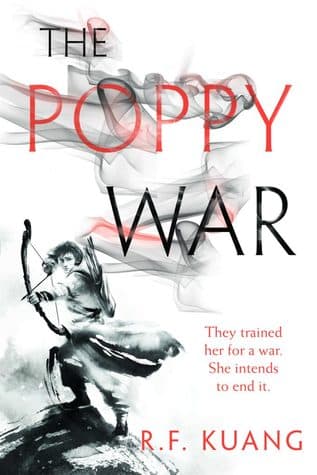
- The Poppy War
R.F. Kuang
4.0 (46k) average on GoodreadsFantasyFeatures a dark, violent world with complex characters and a focus on the harsh realities of war and power.
- Harry Potter and the Sorcerer's Stone
J.K. Rowling
4.5 (7M) average on GoodreadsFantasyRescued from a miserable life under the stairs, an orphaned boy discovers he's a wizard destined for a magical school, where he uncovers a dangerous secret tied to the dark wizard who murdered his parents.
- The Hunger Games
Suzanne Collins
4.3 (6.4M) average on GoodreadsFantasyIn a future where children fight to the death on live television, Katniss Everdeen volunteers for the arena, turning a death sentence into a fight for survival and a spark of rebellion.
- 1984
George Orwell
4.2 (3.1M) average on GoodreadsPoliticsIn a future where surveillance and thought control are absolute, a man's search for truth clashes with the Party, showing that hope can be a form of rebellion.
- Divergent
Veronica Roth
4.2 (2.9M) average on GoodreadsFantasyIn a society divided by virtues, a sixteen-year-old's difference from the norm starts a rebellion that threatens her world.
- The Hobbit, or There and Back Again
J.R.R. Tolkien
4.3 (2.9M) average on GoodreadsFantasyA comfort-loving hobbit named Bilbo Baggins is whisked away by a mischievous wizard and a band of dwarves on an unexpected journey to reclaim stolen treasure from a fearsome dragon, discovering courage and a magical ring along the way.





Enjoyed the summary?
A summary gives you the shape of the book. The book itself has the detail, the examples and the voice.
Find The First Law Trilogy on AmazonAs an Amazon Associate, BookBrief earns from qualifying purchases. How we're funded