
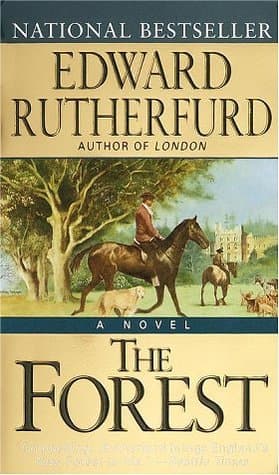
Synopsis
Covers the whole plot, including the ending.
- Difficulty
- Medium
- Pacing
- Slow
- Mood
- Epic, Historical, Expansive, Reflective
- Read it if
- You love sprawling historical epics that cover centuries, enjoy detailed world-building centered around a specific geographical location, and are fascinated by English history from the Norman Conquest to the present day.
- Skip it if
- You prefer fast-paced plots, character-driven narratives over historical scope, or find detailed descriptions of historical events and societal changes overwhelming.
The Forest Plot Summary
Covers the whole plot, including the ending.
The Norman Conquest and the Forest's Birth
The story begins after the Norman Conquest in 1066, when William the Conqueror creates the 'Nova Foresta' – the New Forest. This means Saxon villagers are brutally forced from their homes and livelihoods to make way for a royal hunting ground. Families like the Matravers and Tottons appear, their lives forever changed by the Norman rule. The immediate tension between new Norman lords, such as Richard de Vesey, and displaced Saxons, like Elfa and her family, sets up the main theme of ongoing conflict over land and rights. The strict forest laws are quickly enforced, hinting at the long struggle between commoners and the Crown.
The Death of William Rufus
In 1100, King William Rufus, William the Conqueror's son, dies mysteriously in the New Forest. While officially a hunting accident, the story suggests darker reasons, perhaps a stray arrow from Walter Tyrrell or even deliberate plots. The event is full of superstition and many see it as divine punishment for the Forest's violent creation. Characters like the monk Brother Egbert watch the events, recording rumors and suspicions. This incident confirms the Forest's reputation as a place of both royal power and dangerous secrets, affecting local families who see the aftermath and the swift departure of the King's group.
Medieval Monks and Forest Exploitation
Centuries later, Cistercian monks arrive and build Beaulieu Abbey within the Forest. This creates a new power dynamic, as the monks, led by abbots like Brother Gregory, become major landowners and use the Forest's resources, especially timber and iron, for their own wealth. Their presence brings both economic activity and more conflict with local commoners, who still rely on the Forest for survival. Poaching becomes a constant problem, with families like the Tottons and Paddons often clashing with the abbey's foresters. The Abbey's influence grows, but so does resentment among those whose traditional rights are steadily lost.
The Black Death and Social Upheaval
The mid-14th century brings the Black Death, which spreads through the New Forest, killing many people and changing the social structure. The plague's effects are shown through the suffering of various families, including the Matravers and Tottons, who lose loved ones. This population drop leads to labor shortages and weaker feudal ties, giving commoners more power and chances to get land or better terms. The economic and social changes force a re-evaluation of traditional relationships between lords, commoners, and the Church, allowing for gradual shifts in power and land ownership within the Forest.
Tudor Times: Smuggling and Witchcraft
The Tudor period brings new problems and illegal activities to the New Forest. Smuggling becomes common, with goods brought ashore and hidden deep in the woods. Families like the Tottons are involved in these secret operations, facing dangers from customs officers and rival groups. At the same time, the era's superstitions lead to accusations of witchcraft. Young Elspeth Totton, a healer who understands the Forest's old ways, is targeted by fearful villagers and a strict local magistrate, Master Finch. Her trial and the community's reaction show the conflict between old beliefs and new legal systems.
Civil War and Royalist Resistance
The English Civil War in the 17th century affects the New Forest. Families are split in their loyalties; some, like the Matravers, support the Royalists, while others, often commoners or those with differing religious views, side with Parliament. The Forest becomes a hiding place for Royalist fugitives and a source of timber for both sides. Skirmishes and acts of resistance happen, with local figures like Captain John Totton leading a small group against Parliamentarian forces. The war disrupts daily life, causing hardship and forcing people to make tough choices that shape their family's future in the Forest community.
Georgian Poaching and Justice
The 18th century sees harsh forest laws return and a growing gap between wealthy landowners and poor commoners. Poaching, often for survival, becomes a risky activity. The story follows families like the Paddons, who must poach deer to eat, and the severe justice dealt by the Forest Keepers. A tragic event involves young Thomas Paddon, who is caught and brutally punished, leading to a desperate act of revenge by his family. This period highlights the ongoing fight for common rights against the power of the gentry and the Crown's officials.
Regency Scandal in Bath
The story moves to the early 19th century, focusing on Bath's refined society, like in Jane Austen's novels. Here, the lives of characters like Lady Annabel Matravers and the wealthy merchant, Mr. Finch, connect with a dark secret from the New Forest. A murder or scandal with deep ties to generations of Forest families comes out, threatening to ruin reputations and expose hidden truths. The effects of this crime, rooted in old feuds and illegal dealings from the Forest, spread through the drawing-rooms and ballrooms, showing the hypocrisy and weaknesses of the upper classes.
Victorian Railways and Forest Preservation
The Victorian era introduces the railway age, with plans to build lines through the New Forest. This sparks intense debates between supporters of progress and industrialization, such as ambitious engineers and business owners like Robert Finch, and those who want to protect the Forest's natural beauty and old character. Local families, including descendants of the Tottons and Paddons, are on both sides, some seeking jobs and chances, others fighting to keep their traditional way of life and unique ecosystem. The arrival of railways permanently changes the Forest's landscape and access.
Modern Ecologists and Ancient Rights
The story ends in the present, with the New Forest recognized as a national park and protected area. Modern ecologists and conservationists, like Dr. Eleanor Finch, work to preserve its unique plant and animal life. However, the old commoning rights, held by families like the Tottons and Paddons, continue, creating a delicate balance between tradition and modern conservation. The story explores how these long-standing families navigate 21st-century challenges, trying to keep their heritage while adapting to new environmental concerns and tourism. The lasting spirit of the Forest and its people continues, shaped by thousands of years of history.
Principal Figures
William the Conqueror
Antagonist/Historical Figure
The Norman king who created the New Forest, initiating centuries of conflict.
William the Conqueror is depicted as a powerful, ruthless, and visionary monarch who established the New Forest as a royal hunting ground. His decree, driven by a desire for power and resources, is the catalyst for the entire narrative, displacing Saxon communities and imposing harsh forest laws. He is a distant but ever-present force, his actions shaping the lives of generations of characters and the very landscape of the Forest. His legacy is one of both conquest and the enduring struggle against his imposed will.
Elfa
Supporting
A Saxon woman displaced by the Forest's creation, symbolizing early resistance.
Elfa is one of the earliest Saxon characters, representing the indigenous population displaced by William the Conqueror's creation of the New Forest. She embodies the initial shock and resentment of those who lost their homes and livelihoods. Her struggle for survival and her deep connection to the land she was forced to abandon highlight the immediate human cost of the Norman imposition. She is a symbol of the enduring spirit of the common people and their ancestral ties to the Forest.
Relationships: Saxon villagers (community member, shared plight)
Richard de Vesey
Supporting
A Norman lord representing the new ruling class and enforcing forest laws.
Richard de Vesey is an early Norman lord, a loyal servant of William the Conqueror, tasked with administering and enforcing the new forest laws. He represents the conquering power and the authority that displaced the Saxons. His character embodies the strictness and often brutality of the Norman regime, clashing directly with the commoners over land and rights. He is a figure of power and control, instrumental in establishing the initial hierarchy and tension within the Forest.
Relationships: William the Conqueror (loyal vassal); Elfa (antagonistic, enforcer of laws)
Brother Egbert
Supporting
A Cistercian monk who observes and chronicles events within the Forest.
Brother Egbert is a Cistercian monk from Beaulieu Abbey, appearing in the medieval sections of the book. He serves as an observer and chronicler of events, often providing an ecclesiastical perspective on the unfolding history of the Forest. He is educated and pious, but also pragmatic, witnessing the exploitation of the Forest by his order and the struggles of the commoners. He represents the Church's influence and its complex role in both preserving knowledge and asserting power over the land and its people.
Relationships: Abbot Gregory (fellow monk, subordinate)
Elspeth Totton
Supporting
A Tudor-era healer accused of witchcraft, highlighting superstition and injustice.
Elspeth Totton is a young woman in the Tudor period, a descendant of the long-standing Totton family. She possesses a deep, intuitive knowledge of herbs and healing, often seen as a 'wise woman' by her community. This knowledge, however, makes her vulnerable to accusations of witchcraft in an age of superstition and religious zealotry. Her character embodies the persecution of those who lived closely with nature and held ancient beliefs, facing the harsh judgment of the emerging legal and religious authorities.
Relationships: Master Finch (antagonistic, accuser)
Captain John Totton
Supporting
A Civil War-era Royalist who leads resistance in the Forest.
Captain John Totton is a descendant of the Totton family during the English Civil War. A staunch Royalist, he leads a small, defiant band of men, using his intimate knowledge of the New Forest to conduct guerrilla warfare against Parliamentarian forces. He embodies loyalty, courage, and the enduring spirit of resistance against external powers. His character highlights how the Forest provided refuge and a strategic advantage for those fighting for their beliefs, even against overwhelming odds.
Relationships: Royalist sympathizers (leader of a loyalist band)
Thomas Paddon
Supporting
A Georgian poacher who suffers harsh justice, igniting family revenge.
Thomas Paddon is a young man from the Paddon family in the Georgian era, driven to poaching by poverty and the harsh realities of survival in the Forest. His character represents the plight of the commoner struggling against oppressive forest laws and the wealthy landowners. His capture and brutal punishment by the Forest Keepers serve as a tragic focal point, sparking a desperate act of revenge by his family and illustrating the severe consequences of defying authority during this period.
Relationships: Paddon family (son, victim of injustice)
Lady Annabel Matravers
Supporting
A Regency-era noblewoman caught in a scandal with Forest roots.
Lady Annabel Matravers is a character from the Regency period, representing the aristocratic society of Bath. She is refined, elegant, and seemingly decorous, embodying the social graces of her era. However, her life becomes entangled in a scandal or crime that has deep, historical roots in the New Forest, connecting her genteel world to the wilder, more illicit past of her ancestors. Her character explores the hidden vulnerabilities and hypocrisies within the upper classes, and how the past can dramatically impact the present.
Relationships: Mr. Finch (acquaintance, potential romantic interest, entangled in scandal)
Robert Finch
Supporting
A Victorian railway builder, symbolizing industrial progress and its impact.
Robert Finch is a Victorian entrepreneur and railway engineer, representing the forces of industrialization and progress. He is ambitious and driven, advocating for the expansion of railways through the New Forest, believing it will bring prosperity and modernity. His character highlights the clash between technological advancement and the preservation of natural landscapes and traditional ways of life. He embodies the Victorian spirit of enterprise and the transformative power of industry on the English countryside.
Relationships: Local commoners (developer, often in conflict over land use)
Dr. Eleanor Finch
Supporting
A modern ecologist dedicated to the Forest's conservation.
Dr. Eleanor Finch is a contemporary character, an ecologist dedicated to the scientific study and preservation of the New Forest. She represents modern environmental consciousness and the challenges of balancing conservation with human activity and traditional commoning rights. Her character brings the narrative into the present day, exploring the complexities of managing a unique ecosystem while respecting its deep historical and cultural significance. She is driven by a passion for nature and a scientific understanding of its delicate balance.
Relationships: Commoners (collaborator/negotiator on conservation efforts)
Themes & Insights
The Enduring Conflict Over Land and Rights
From William the Conqueror's initial taking of land to create the New Forest, to medieval monks' use of resources, Georgian poaching, and modern conservation debates, the struggle over who owns, uses, and benefits from the Forest is constant. This theme explores the ongoing tension between royal power, aristocratic ownership, Church authority, and the old commoning rights of local people. It shows how generations have fought to keep their livelihoods and traditions against outside forces trying to control or use the land.
“The Forest remembers, even when men forget, the blood spilled for its keeping and the tears shed for its loss.”
The Interconnectedness of History and Landscape
The book shows how the New Forest is not just a setting but an active part of history. Every major event, from royal deaths to smuggling and railway building, leaves a mark on the landscape and is, in turn, shaped by the Forest itself. The old trees, hidden paths, and coastal inlets are key to the plot, influencing battles, providing shelter, and enabling illegal trade. This theme emphasizes that the land holds memory and shapes the future of its residents.
“The roots of the oaks ran as deep as the family lines, intertwining in the very soil of the Forest.”
Tradition vs. Progress
This theme explores the continuous conflict between established traditions, old customs, and the steady march of progress and modern ways. Early examples include Norman laws replacing Saxon customs. Later, Cistercian monks introduce new farming methods, and Victorian railways bring industrialization, directly challenging commoners' traditional lives and the Forest's natural state. In the modern era, the balance between old commoning rights and current ecological conservation further illustrates this ongoing tension, showing how hard it is to preserve heritage in a changing world.
“Every new road, every felling of a venerable tree, was a wound upon the old ways, yet some wounds healed, and others brought forth new growth.”
Justice, Injustice, and Revenge
The story is full of perceived unfairness and the resulting desire for revenge or payback. From the initial displacement of Saxons by William the Conqueror to harsh punishments for poaching in the Georgian era, the idea of justice is often skewed by power. Characters like Thomas Paddon suffer great wrongs, leading to desperate acts of revenge by their families. This theme examines how different eras define justice, the lasting human response to perceived wrongs, and how cycles of vengeance can continue conflict across generations.
“The King’s justice was one thing, but the Forest had its own, a slower, wilder reckoning.”
The Cycles of Human Nature
Through the multi-generational story, the book shows that while technology and societies change, basic human traits—greed, loyalty, love, fear, ambition, and resilience—remain. The same conflicts over resources, power, and identity appear in different forms over centuries. Characters from various eras face similar moral choices and show similar strengths and weaknesses. This theme highlights history's cyclical nature and human experience, suggesting that while the setting changes, humanity's core motivations and struggles endure.
“Though the names changed, and the clothes, the hearts beating within were much the same, bound by the same desires and fears that had driven their ancestors.”
Plot Devices & Literary Techniques
Generational Saga
Traces the intertwined destinies of several families across centuries.
The novel employs a generational saga structure, following the descendants of a few key families (e.g., Matravers, Totton, Paddon, Finch) from the 11th century to the present day. This device allows Rutherfurd to explore the long-term impacts of historical events, the evolution of social structures, and the enduring traits and conflicts within these lineages. It provides a panoramic view of history through intimate family stories, showing how individual lives are shaped by, and in turn shape, the larger historical narrative of the New Forest.
The Forest as a Character
The New Forest itself acts as a dynamic, living entity influencing the plot and characters.
Beyond being a setting, the New Forest is imbued with agency and personality, almost functioning as a character itself. Its ancient trees, wild creatures, and hidden depths witness and influence events. It provides refuge, conceals secrets, offers resources, and imposes challenges. The Forest's unchanging nature contrasts with the transient human lives, and its resilience mirrors that of the commoners. This device emphasizes the deep, symbiotic relationship between the land and its inhabitants, suggesting the Forest has its own memory and spirit.
Historical Interludes/Context
Brief, informative passages that provide broader historical context for each era.
Throughout the narrative, Rutherfurd intersperses the fictional plot with concise, informative passages that explain the historical context of each period. These interludes cover major events like the Norman Conquest, the Black Death, the English Civil War, and the rise of industrialism, providing readers with a grounding in the factual history surrounding the fictional stories. This device enhances the historical fiction aspect, ensuring accuracy and depth, and helps to bridge the generational gaps in the narrative, allowing the reader to understand the broader forces at play.
Foreshadowing and Echoes
Events and themes from earlier periods subtly predict or mirror later ones.
The novel frequently uses foreshadowing and echoes, where events, character traits, or conflicts from one era subtly predict or mirror those in later centuries. For instance, the initial displacement of Saxons by William the Conqueror echoes later struggles over commoning rights. A secret kept in one generation might unravel generations later. This device reinforces the cyclical nature of history and human behavior, creating a sense of destiny and the long-lasting impact of past actions, while also providing narrative cohesion across vast stretches of time.
The Forest Quotes
“The forest was not just trees and animals; it was a living, breathing entity, a sanctuary, and a challenge.”
“Every generation must fight its own battles, but the land remembers what we forget.”
“A king's decree might change the law, but it could not change the hearts of those who lived by the old ways.”
“Love, like the forest, could be wild and untamed, beautiful and dangerous all at once.”
“The past is not dead; it is merely sleeping, waiting for someone to wake it up.”
“To truly know a place, you must know its people, and to know its people, you must know their stories.”
“Change comes slowly to the forest, but inevitably. Like the oak, we must bend or break.”
“There are some things that even money cannot buy, and freedom in the forest is one of them.”
“Every tree has a story, if only you know how to listen.”
“The whispers of ancestors are carried on the wind through the ancient trees.”
“Even in the darkest times, the forest finds a way to renew itself, to bloom again.”
“The boundaries men draw on maps mean little to the deer, or to the wind, or to the spirit of the land.”
“To be truly free, one must sometimes choose the path less trodden, the path through the wild wood.”
“The forest was not merely a backdrop to their lives, but an active participant, shaping destinies.”
Quiz
10 questions on the plot and the characters. Each answer comes with a short explanation.
Question 1
Which historical event is NOT directly featured as a significant plot point or setting in 'The Forest'?
- The mysterious killing of King William Rufus
- The English Civil War
- The Norman Conquest
- The rise of Victorian railways
Show answer
C. The Norman Conquest While the book covers a vast span of history in and around the New Forest, it begins after the Norman Conquest, with the killing of William Rufus being an early pivotal event, not the Conquest itself.
Question 2
What kind of religious order plays a role in the early history of the Forest, as depicted in the book?
- Benedictine monks
- Franciscan friars
- Cistercian monks
- Dominican friars
Show answer
C. Cistercian monks The synopsis specifically mentions 'Cistercian monks' as part of the diverse cast of characters whose lives intertwine with the Forest's history.
Question 3
What common illegal activities are mentioned as running through the epic tale in 'The Forest'?
- Highway robbery and counterfeiting
- Smuggling and poaching
- Piracy and slave trading
- Arson and forgery
Show answer
B. Smuggling and poaching The synopsis explicitly states that 'smuggling and poaching run through this epic tale,' highlighting these as recurring themes of defiance and survival within the Forest.
Question 4
The ramifications of a crime that shatters society in Jane Austen's Bath continue into what later period?
- The Elizabethan era
- The age of the Victorian railway builders
- The Georgian period before Austen
- The early 20th century World Wars
Show answer
B. The age of the Victorian railway builders The synopsis states that the ramifications of the crime 'continue through the age of the Victorian railway builders to the ecologists of the present day,' indicating a long-lasting impact.
Question 5
Which of the following character types is NOT explicitly mentioned in the synopsis as being part of the story's diverse cast?
- Lowly woodsmen
- Sailors and merchants
- Well-born ladies
- Roman centurions
Show answer
D. Roman centurions The synopsis lists 'well-born ladies, lowly woodsmen, sailors, merchants and Cistercian monks' as character types, but makes no mention of Roman centurions, indicating the book's historical scope starts later.
Question 6
What is a central overarching theme that ties together the generations of characters in 'The Forest'?
- The quest for global exploration and discovery
- The impact of industrialization on urban centers
- Feuds, wars, loyalties, and passions within the Forest's heritage
- The development of modern political ideologies
Show answer
C. Feuds, wars, loyalties, and passions within the Forest's heritage The synopsis explicitly states, 'The feuds, wars, loyalties and passions of generations reach their climax...' indicating these strong human emotions and conflicts are central to the long-running narrative.
Question 7
The 'mysterious killing of King William Rufus' is presented as an early significant event. Which monarch was William Rufus?
- Son of King Henry I
- Brother of King Richard I
- Son of William the Conqueror
- Nephew of King Edward the Confessor
Show answer
C. Son of William the Conqueror William II, known as William Rufus, was the third son of William the Conqueror. His death in the New Forest is a well-known historical mystery and a key early plot point in the book.
Question 8
The book connects historical events to present-day concerns. Which modern group is mentioned as being affected by the story's long-term ramifications?
- Urban developers
- Modern politicians
- Ecologists
- Financial analysts
Show answer
C. Ecologists The synopsis concludes by stating the ramifications continue 'to the ecologists of the present day,' highlighting the enduring environmental and historical legacy of the Forest.
Question 9
What specific type of treachery is mentioned alongside witchcraft as a recurring element in the narrative?
- Political espionage
- Court intrigue
- Betrayal within families or communities
- International conspiracy
Show answer
C. Betrayal within families or communities The synopsis uses the general term 'treachery' alongside 'witchcraft,' implying a broad range of deceit and betrayal that would typically occur within the close-knit communities and power struggles depicted in historical fiction, rather than specific, large-scale political or international acts.
Question 10
How does the 'New Forest' itself function within the narrative structure of Edward Rutherfurd's book?
- It serves primarily as a backdrop for unrelated individual stories.
- It acts as a static, unchanging setting against which history unfolds.
- It is a central character and unifying element, weaving its history and legends into the compelling fiction.
- It represents a metaphorical journey for a single protagonist.
Show answer
C. It is a central character and unifying element, weaving its history and legends into the compelling fiction. The opening sentence states, 'Few places lie closer to the heart of the nation's heritage than the New Forest. Now, Edward Rutherfurd, weaves its history and legends into compelling fiction,' indicating the Forest itself is a central, active element, almost a character, that unifies the multi-generational narrative.
The Forest FAQ
What is the overarching premise of 'The Forest' by Edward Rutherfurd?
'The Forest' by Edward Rutherfurd is a sweeping historical saga that traces the history and legends of England's New Forest across a millennium. It follows the interwoven lives of various families and characters, from kings and monks to woodsmen and ladies, as their stories unfold against the backdrop of significant historical events and the enduring landscape of the forest itself.
Which major historical event marks an early significant plot point in the book?
An early and pivotal historical event in the book is the mysterious death of King William Rufus in the New Forest. This event, shrouded in legend and speculation, sets a tone of intrigue and foreshadows the themes of power, treachery, and the forest's role in shaping destiny that resonate throughout the narrative.
How does the book connect different historical eras, such as the medieval period and the Victorian age?
The book connects different historical eras by following the descendants of key families and the ongoing impact of historical events and legends. It shows how ancient feuds, loyalties, and even specific items or locations from the medieval period, like the legacy of Cistercian monks or the practice of smuggling, continue to influence characters and plotlines through the age of Jane Austen's Bath and into the Victorian railway builders' era.
What kind of characters populate the diverse world of 'The Forest'?
'The Forest' features a rich tapestry of characters from all strata of society. These include well-born ladies navigating societal expectations, lowly woodsmen deeply connected to the land, seafaring sailors, astute merchants, and devout Cistercian monks, all of whom contribute to the complex social and economic fabric of the New Forest region.
What is the 'crime that shatters the decorous society of Jane Austen's Bath' and how does it relate to the New Forest?
The specific crime is a murder that occurs in Bath, but its roots and ramifications are deeply connected to the long-standing feuds, secrets, and characters originating from the New Forest. This event serves as a critical turning point, highlighting how the wilder, ancient customs and hidden histories of the forest can violently intrude upon more 'civilized' society.
Are there specific recurring symbols or items that link different generations or plotlines?
Yes, the book likely uses the forest itself as a primary recurring symbol, embodying ancient power and hidden knowledge. Specific items, such as ancient artifacts, family heirlooms, or even particular trees or landmarks within the New Forest, could serve as tangible links, carrying historical weight and connecting the fates of various characters across centuries.
How does the theme of 'witchcraft' manifest throughout the narrative, beyond simple superstition?
The theme of 'witchcraft' in 'The Forest' likely represents not just literal magic, but also ancient folk beliefs, knowledge of herbal remedies, and a deep, intuitive connection to the natural world possessed by certain characters. It might also symbolize the clash between pagan traditions and Christian doctrines, or be used as an accusation to suppress independent women or those who defy societal norms, reflecting the historical persecution of alleged witches.
What is the significance of 'smuggling and poaching' as recurring motifs?
Smuggling and poaching are significant as they represent the ongoing tension between the common people's traditional rights and the laws imposed by landowners or the crown. These activities highlight themes of survival, defiance against authority, and the deep-seated connection of the forest dwellers to their resources, often leading to conflict and secret societies that persist through generations.
How do the 'feuds, wars, loyalties, and passions of generations' specifically intertwine and lead to the climax?
The feuds, wars, loyalties, and passions intertwine through the continuous interaction and inherited conflicts between specific families, often stemming from land disputes, ancient grievances, or romantic entanglements. These long-simmering tensions build over centuries, with each generation adding another layer, until they inevitably erupt in the climactic crime in Bath, revealing the deep historical roots of contemporary conflicts.
How does the New Forest itself act as a 'character' in the book?
The New Forest acts as a powerful 'character' by influencing the lives, livelihoods, and psychological states of the human characters. It provides shelter, resources, and mystery, but also poses dangers and demands respect. Its enduring presence and ancient history shape the destinies of generations, reflecting their resilience, secrets, and connection to the land.
How do characters' loyalties to family or community conflict with loyalty to the Crown or broader society?
Characters' loyalties frequently clash when their immediate needs or ancestral ties to family and community, often rooted in the New Forest's traditions, conflict with the demands of the Crown or the evolving laws of broader society. This creates internal and external struggles, forcing individuals to choose between personal allegiances and the perceived greater good, leading to acts of rebellion, sacrifice, or silent defiance.
What psychological impact does living in a place with such a deep and sometimes violent history have on the characters?
Living in a place like the New Forest, steeped in centuries of violence, treachery, and ancient legends, instills in its inhabitants a deep sense of history and a certain resilience. It can foster both a profound connection to the past and a fatalistic acceptance of life's harsh realities, potentially leading to generational trauma or, conversely, a strong sense of identity and belonging tied to the land.
How do 'well-born ladies' navigate their agency and desires within the restrictive social structures of various eras?
Well-born ladies navigate restrictive social structures by employing subtle forms of agency, such as strategic marriages, managing household affairs, or influencing male relatives. Their desires often clash with societal expectations, leading to secret romances, forbidden alliances, or quiet rebellions that, while not always overt, significantly impact the plot and the fates of their families, sometimes through the use of their wit and intelligence.
What is the author's stance on the balance between human progress (e.g., Victorian railways) and natural preservation (ecologists)?
The author likely explores the tension between human progress, symbolized by Victorian railway builders, and natural preservation, represented by modern ecologists, without necessarily taking an explicit side. Instead, the narrative probably demonstrates the long-term consequences of both exploitation and conservation, inviting readers to consider the complex, evolving relationship between humanity and the environment, and the trade-offs involved in societal development.
How does the novel challenge or affirm traditional notions of justice and law throughout different historical periods?
The novel likely challenges traditional notions of justice by showcasing how laws and their application change drastically across centuries, often favoring the powerful and punishing the vulnerable (e.g., laws against poaching). It may affirm a more intrinsic, perhaps 'forest law' sense of justice, where actions are judged by their immediate impact on community and survival, rather than strict legal codes, highlighting the evolving and often arbitrary nature of legal systems.
Is the 'mysterious killing of King William Rufus' presented as a historical fact or is there room for debate and alternative theories within the narrative?
Given the 'mysterious' nature described, the novel likely presents the killing of King William Rufus with a degree of ambiguity, allowing for debate and alternative theories to be explored within the narrative. It might delve into various historical accounts and popular legends, perhaps even suggesting a fictional resolution or maintaining the mystery, thereby emphasizing the enduring power of myth and the elusive nature of historical truth.
How does the concept of 'heritage' evolve throughout the book, from ancient legends to modern ecological concerns?
The concept of 'heritage' evolves from being rooted in ancient legends, family bloodlines, and traditional land use to encompassing environmental stewardship and the preservation of natural landscapes. Initially, heritage might be about ancestral rights and stories, but by the modern era, it broadens to include the collective responsibility to protect the New Forest's unique ecosystem, reflecting a shift in societal values and understanding of legacy.
What is the ultimate message regarding the relationship between humanity and nature, as conveyed by the enduring presence of the New Forest?
The ultimate message regarding humanity and nature, conveyed by the New Forest, is likely one of enduring interdependence and the humbling power of the natural world. Despite human endeavors, conflicts, and progress, the forest persists, silently observing and influencing generations. It suggests that while humanity may shape parts of the world, nature ultimately holds a timeless, resilient power that demands respect and ultimately outlives human endeavors, subtly guiding their fates.
About the author
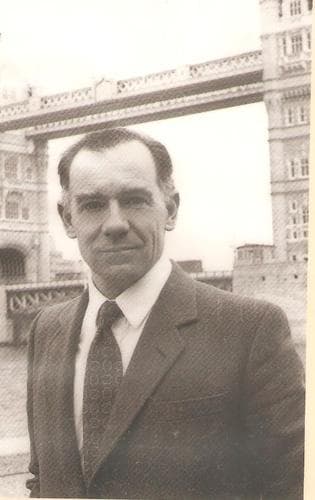
Edward Rutherfurd is a British author known for his historical fiction that explores the rich tapestry of cities and landscapes. His notable works include "New York," which chronicles the history of the city through interconnected stories, "Paris," which delves into the life of the French capital, and "The Forest," set in the ancient woodlands of England.
Similar books
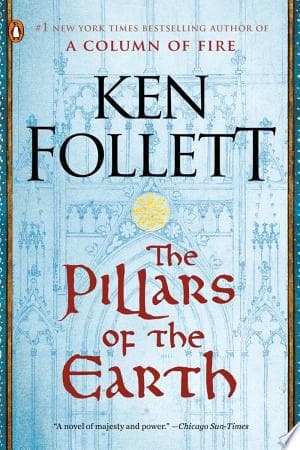
- The Pillars of the Earth
Ken Follett
4.3 (649k) average on GoodreadsFantasyA lengthy historical novel with a large cast, spanning generations and focusing on the construction of a cathedral in medieval England.
- Wolf Hall
Hilary Mantel
3.9 (166k) average on GoodreadsLiterary FictionMantel's 'Wolf Hall' offers a much narrower historical focus (Tudor England) and provides an incredibly intricate, psychological portrait of a single character (Thomas Cromwell). This allows for profound exploration of individual motivation and complex moral dilemmas, a depth that Rutherfurd's multi-century saga cannot achieve.
- To Kill a Mockingbird
Harper Lee
4.3 (4.5M) average on GoodreadsHistorical FictionIn the 1930s Jim Crow South, Harper Lee writes about racial injustice, moral growth, and the quiet courage of a lawyer father, Atticus Finch, as seen through his young daughter's eyes.
- The Great Gatsby
F. Scott Fitzgerald
3.9 (3.8M) average on GoodreadsHistorical FictionIn the opulent Roaring Twenties, a mysterious millionaire's lavish parties hide his desperate, tragic pursuit of a lost love, exposing the emptiness within the American Dream.
- Pride and Prejudice
Jane Austen
4.3 (3M) average on GoodreadsHistorical FictionIn a society focused on status and money, Elizabeth Bennet navigates love and pride, challenging Mr. Darcy and social expectations to find true affection.
- Angels & Demons
Dan Brown
3.9 (2.7M) average on GoodreadsThrillerA Harvard symbologist races through Rome's ancient sites, deciphering cryptic clues to unmask the Illuminati and stop a vengeful plot to destroy the Vatican with a stolen antimatter weapon.





Enjoyed the summary?
A summary gives you the shape of the book. The book itself has the detail, the examples and the voice.
Find The Forest on AmazonAs an Amazon Associate, BookBrief earns from qualifying purchases. How we're funded