
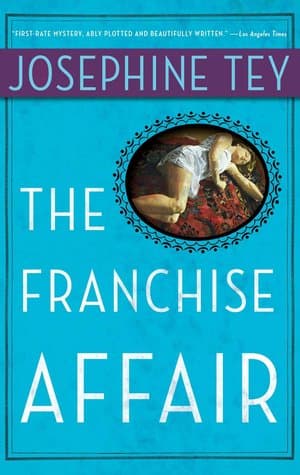
Synopsis
Covers the whole plot, including the ending.
- Difficulty
- Medium
- Pacing
- Moderate
- Mood
- Intriguing, Suspenseful, Thought-provoking, Classic
- Read it if
- You enjoy classic British mysteries with a strong legal procedural element and a focus on character and intricate plotting.
- Skip it if
- You prefer fast-paced thrillers or stories with graphic violence.
The Franchise Affair Plot Summary
Covers the whole plot, including the ending.
The Accusation
Robert Blair, a solicitor in Milford, receives a call from Marion Sharpe, who lives with her elderly mother at their isolated country house, The Franchise. Marion tells him she and her mother are accused of kidnapping a young girl, Betty Kane. Blair, surprised due to the Sharpes' quiet reputation, agrees to meet them. He learns the police, led by Inspector Alan Grant from Scotland Yard, are taking the accusation seriously. Betty Kane described her alleged prison—an attic room, a kitchen, and old trunks—which matches The Franchise. The Sharpes strongly deny ever seeing Betty Kane or holding her captive.
Betty Kane's Story
Betty Kane, appearing innocent, tells her story to the police and public. She claims she was taken from a bus stop, driven to The Franchise, and held for a month in an attic room. She describes abuse, poor food, and living in fear from the two women. Her story is convincing and gains public sympathy, turning opinion against Marion Sharpe and her mother. Despite no clear motive, Betty's detailed descriptions of the house, especially the attic room and its cracked window, convince many, making the Sharpes' denials seem less believable.
The Initial Investigation
Inspector Alan Grant, though initially careful, begins to believe Betty Kane's story because of the details she provides about The Franchise. He searches the house and finds some items that seem to support Betty's claims, like the attic room matching her description. Robert Blair, however, remains unconvinced by Betty's performance and the lack of a clear motive for the Sharpes to commit such a crime. He starts his own investigation, feeling a strong sense of injustice and believing the Sharpes are innocent, despite growing evidence and public anger against them. The legal and public pressure on the Sharpes increases.
Public Outcry and Media Frenzy
Local and national newspapers pick up Betty Kane's story, publishing vivid details and portraying Marion Sharpe and her mother as cruel kidnappers. Headlines declare a 'Franchise Horror,' and the public, fueled by anger and Betty's seemingly helpless demeanor, quickly condemns the two women. The Sharpes become outcasts in their community, facing hate mail and vandalism. Robert Blair struggles against public opinion, realizing that the media's portrayal makes it very hard to defend his clients fairly, regardless of the evidence. The pressure on him to drop the case is immense.
Blair's Doubts and Early Leads
As Robert Blair investigates further, he notices inconsistencies in Betty Kane's testimony and actions. He questions her perfect recall of some details while others are vague. Blair begins interviewing witnesses, including bus drivers and locals who might have seen Betty or the Sharpes around the time of the alleged abduction. He finds no one who can place Betty at The Franchise or confirm her initial abduction story. He also learns about Betty's past, which starts to show a different person than the innocent victim presented. These early findings strengthen Blair's belief that Betty Kane is not telling the full truth.
The Search for the Truth
Blair carefully reconstructs the Sharpes' daily routines and confirms their alibis for the time Betty Kane claimed to be held captive. He interviews tradesmen, neighbors, and anyone who had contact with The Franchise during that month, finding no one who saw Betty Kane or anything unusual. He also looks more closely into Betty Kane's background, searching for any reasons she might have to invent such a story. Blair's careful method differs from the police's initial acceptance of Betty's story, causing some disagreement with Inspector Grant, who is held back by Betty's seemingly strong testimony and public feeling.
The Trial Commences
The trial begins, and the prosecution presents a strong case, relying heavily on Betty Kane's convincing testimony and the circumstantial evidence found at The Franchise. The public gallery is full, mostly hostile towards the Sharpes. Betty Kane, under oath, repeats her difficult story, deeply affecting the jury. Robert Blair, facing a tough fight, works to find flaws in Betty's story and to present the Sharpes as innocent victims of a cruel lie. He points out the lack of a clear motive and the inconsistencies he has found, but the emotional impact of Betty's testimony is hard to overcome. The Sharpes remain calm but clearly distressed.
Blair's Breakthrough
Following a hunch, Robert Blair focuses on a detail Betty Kane mentioned: a man she saw at a fair. He tracks down fairground workers and identifies the man as a traveling showman named Kevin Macandrew. At the same time, Blair discovers Betty Kane had a secret life, having run away from home before and been involved in other deceptions. He pieces together that Betty was not kidnapped by the Sharpes, but ran away with Macandrew. Her abduction story was a desperate attempt to cover her elopement and later abandonment, fearing her strict family's reaction to her behavior.
The Truth Revealed
With clear evidence, including statements from Kevin Macandrew and others who saw Betty Kane with him, Robert Blair confronts Betty Kane with the truth. Faced with proof of her deception, Betty breaks down and admits she made up the entire story. She confesses she ran away with Macandrew, spent time with him, and only invented the kidnapping to avoid her father's anger and keep her 'innocent' image. This dramatic confession destroys the prosecution's case. The judge immediately dismisses the charges, and Marion Sharpe and her mother are cleared, though the experience leaves them deeply affected by the public's judgment.
Aftermath and Reflection
With their names cleared, Marion Sharpe and her mother return to The Franchise, changed by the experience. The community, initially hostile, slowly begins to rebuild its relationship with them, though some doubt remains. Robert Blair, seen as a hero, reflects on how easily public opinion can be swayed by a compelling story, even without truth. Inspector Grant recognizes Blair's better detective work, seeing the limits of his own initial acceptance of Betty Kane's story. The case reminds everyone of the dangers of quick judgment and the importance of careful investigation over emotional appeals.
The Franchise Affair Characters
Robert Blair
Protagonist
A diligent solicitor who champions the Sharpes' innocence.
Robert Blair is a respectable, somewhat unassuming solicitor in the town of Milford. He is characterized by his strong sense of justice, his methodical approach to investigation, and his unwavering belief in the Sharpes' innocence, even when faced with overwhelming public and circumstantial pressure. He is not a professional detective but possesses a keen intellect and a meticulous nature, which allows him to uncover the truth where others fail. His commitment to his clients goes beyond professional duty, driven by a personal conviction that a grave injustice is being perpetrated.
Relationships: Marion Sharpe (Client, whom he staunchly defends and believes in.); Inspector Alan Grant (Professional acquaintance, initially at odds over the case but eventually respectful of Blair's acumen.)
Marion Sharpe
Accused Protagonist
The quiet, dignified woman wrongly accused of kidnapping.
Marion Sharpe is a reserved and dignified woman who lives a reclusive life with her elderly mother at The Franchise. She is proud, independent, and fiercely protective of her mother. The accusation of kidnapping devastates her, not just for its legal implications but for the irreparable damage to her and her mother's reputation. Despite the intense public scrutiny and hostility, she maintains her innocence with quiet strength, refusing to be broken by the ordeal. Her character embodies resilience and the quiet suffering of being unjustly condemned.
Relationships: Mrs. Sharpe (Mother) (Devoted daughter and primary caregiver.); Robert Blair (Her solicitor and the only person who truly believes in her innocence.)
Mrs. Sharpe
Accused Supporting
Marion's elderly, frail mother, also implicated in the alleged crime.
Mrs. Sharpe is Marion's elderly and somewhat frail mother, who lives with her at The Franchise. She is a woman of fading health and memory, making her particularly vulnerable to the accusations. Her quiet presence and Marion's protectiveness highlight the cruelty of the false charges. She largely relies on Marion for support and understanding, and the ordeal takes a severe toll on her, emphasizing the emotional weight of the accusations on innocent parties. Her dignified suffering garners sympathy from Robert Blair.
Relationships: Marion Sharpe (Dependent mother, fiercely protected by her daughter.)
Betty Kane
Antagonist
The young woman whose false accusations drive the plot.
Betty Kane is initially presented as a sweet, demure, and innocent victim of a horrific kidnapping. She is highly convincing in her performance, eliciting widespread public sympathy and outrage against the Sharpes. However, she is revealed to be manipulative, cunning, and a pathological liar who fabricates the entire story to cover up her own scandalous elopement and abandonment. Her seemingly fragile exterior masks a calculating mind, making her a formidable adversary for the Sharpes and a master of deception. Her motive is self-preservation and fear of her strict father's reaction.
Relationships: Kevin Macandrew (Her secret lover and companion during her 'captivity'.); Her Father (The strict figure whose wrath she fears, motivating her deception.)
Inspector Alan Grant
Supporting
The Scotland Yard detective initially convinced by Betty Kane's story.
Inspector Alan Grant is a seasoned detective from Scotland Yard. While initially skeptical, he is swayed by Betty Kane's detailed account and the circumstantial evidence, leading him to believe in the Sharpes' guilt. He represents the established law enforcement perspective, bound by evidence and public perception. Though professional, he initially overlooks inconsistencies that Blair later uncovers, highlighting the limitations of official investigations when faced with a compelling, but false, narrative. He eventually acknowledges Blair's superior insight and detective work.
Relationships: Robert Blair (Professional colleague, initially at odds, later respectful of Blair's methods.)
Kevin Macandrew
Supporting
The traveling showman who reveals Betty Kane's true whereabouts.
Kevin Macandrew is a traveling showman, a charming but somewhat unreliable character with whom Betty Kane secretly elopes. He is crucial to uncovering Betty's deception, as his testimony proves that Betty was with him during the entire period she claimed to be held captive at The Franchise. He is initially reluctant to come forward, fearing his own involvement in a scandal, but his eventual cooperation provides the irrefutable evidence needed to clear the Sharpes' names. He represents the hidden truth that Blair meticulously uncovers.
Relationships: Betty Kane (Her secret lover and companion.)
Mr. Kane
Mentioned
Betty Kane's strict and overbearing father.
Mr. Kane is Betty Kane's father, a strict and puritanical man whose severe disapproval and potential wrath motivate Betty's elaborate deception. He is not a physical presence in the main narrative but his influence is profound, shaping Betty's fear of exposure and her desperate need to maintain an image of innocence. His character represents the societal pressures and familial expectations that can drive individuals to extreme measures.
Relationships: Betty Kane (Strict and disapproving father, whose fear drives Betty's actions.)
The Franchise Affair Themes
The Power of Public Opinion and Media Hysteria
The novel shows how easily public opinion can be swayed by a compelling story, even without truth. Betty Kane's act as a victim, amplified by sensational media, quickly turns the community against the Sharpes, leading to their rejection and conviction in public opinion before any legal judgment. Scenes of hate mail and vandalism at The Franchise show the destructive power of unchecked public feeling and media frenzy. Robert Blair constantly fights this tide, seeing that the emotional appeal of Betty's story overpowers rational thought and evidence.
“It was not a trial of facts, but a trial of emotions, and the emotions were all on Betty Kane's side.”
The Fragility of Justice and Truth
The story explores how easily justice can be sidetracked by lies and how hard it can be to find the truth when a convincing lie is told. Inspector Grant, an experienced professional, at first accepts Betty Kane's story because of its detail and emotional impact, showing how even skilled investigators can be misled. The Sharpes' fight to prove their innocence against much circumstantial evidence and public condemnation shows how vulnerable innocent people are when faced with a determined liar. Robert Blair's careful work demonstrates the effort needed to uncover truth and restore justice.
“Truth was a fragile thing, easily obscured by a well-told lie.”
Appearance vs. Reality
A main theme is the sharp difference between how people and situations appear and their true reality. Betty Kane seems like an innocent victim, but she is actually a manipulative liar. The Sharpes appear reclusive and possibly strange, leading to easy blame, but they are, in fact, dignified and innocent. The run-down look of The Franchise itself, which Betty uses to her advantage, also hides the quiet, respectable lives lived inside. The novel constantly asks the reader to look past first impressions and question what is truly beneath the surface.
“She had the face of an angel and the heart of a serpent.”
The Strength of Integrity and Conviction
Robert Blair's strong belief in the Sharpes' innocence, against all odds, shows the power of integrity and conviction. Despite skepticism from the police, public hostility, and great pressure, Blair never wavers in his commitment to finding the truth. His moral compass guides his investigation, pushing him to carefully gather evidence and challenge accepted stories. Similarly, Marion Sharpe's quiet dignity and refusal to break under pressure show her strong personal integrity, even when her reputation is ruined. Their resilience highlights the strength of sticking to one's principles.
“He knew, with a certainty that went beyond mere professional duty, that these women were innocent.”
Plot Devices & Literary Techniques
The Unreliable Narrator/Witness (Betty Kane)
Betty Kane's detailed, yet fabricated, testimony misleads everyone.
Betty Kane serves as a classic example of an unreliable witness, whose entire testimony forms the basis of the false accusation. Her detailed descriptions of The Franchise, including the attic room and its cracked window, are convincing enough to sway the police, the public, and even the jury. The device is used to create suspense and misdirection, making the reader, like the characters, initially believe her story. The eventual revelation of her deception is a powerful twist, highlighting how easily a compelling, but false, narrative can be constructed and believed.
Circumstantial Evidence
Physical details of The Franchise align with Betty's story, creating a strong but misleading case.
The novel heavily relies on circumstantial evidence to build the case against the Sharpes. Betty Kane's descriptions of the house, which accurately match The Franchise, are taken as proof of her captivity. The presence of certain items or arrangements in the house that could be interpreted as consistent with her story further strengthens the prosecution's case. This device effectively creates a sense of plausibility for the false accusation, demonstrating how seemingly corroborating details can be entirely coincidental or misinterpreted, making it very difficult for the Sharpes to prove a negative.
The Amateur Detective
Robert Blair, a solicitor, outmaneuvers professional police to solve the mystery.
Robert Blair, a solicitor, functions as the amateur detective in the story. Unlike Inspector Grant, who is bound by official procedures and initial evidence, Blair is free to pursue hunches and investigate outside conventional police channels. His personal investment in the Sharpes' innocence drives his meticulous, often unconventional, methods. This device allows for a different perspective on the investigation, highlighting the power of individual intuition and perseverance in uncovering truths that professional systems might overlook or misinterpret, ultimately proving more effective than the established authorities.
Red Herring (The Sharpes' Seclusion)
The Sharpes' reclusive lifestyle inadvertently makes them easy targets for suspicion.
The Sharpes' reclusive and somewhat eccentric lifestyle at The Franchise acts as a red herring, subtly directing suspicion towards them. Their isolation and lack of close social ties make it easier for the public and police to believe they could be capable of such a heinous crime, as they are not well-known or integrated into the community. This societal prejudice, combined with the mysterious nature of their old house, makes them convenient villains in the public imagination, distracting from the true perpetrator and delaying the discovery of Betty Kane's fabrication.
The Franchise Affair Quotes
“The truth is a thing of many facets, and each person sees but one.”
“It is not the crime that matters, but the reaction to it.”
“There are no ordinary people, only people you do not know well enough.”
“Suspicion, like a small seed, can grow into a formidable tree if watered by rumour.”
“The past is never dead. It's not even past.”
“It’s a peculiar thing, the human mind. It can convince itself of almost anything, given enough encouragement.”
“The most dangerous lies are the ones we tell ourselves.”
“Justice, in the end, is a very human affair, and therefore fallible.”
“Silence can be as eloquent as speech, and often more revealing.”
“It’s not what people say, but what they don’t say, that often holds the key.”
“Reputation is a fragile thing, easily shattered by a breath of gossip.”
“The greatest mysteries are often found not in grand schemes, but in the small, everyday details.”
“To be innocent is not always to be believed.”
“The past, like a shadow, follows us, sometimes long and distorted.”
Quiz
10 questions on the plot and the characters. Each answer comes with a short explanation.
Question 1
Who is the main protagonist and solicitor who takes on Marion Sharpe's case?
- Inspector Alan Grant
- Robert Blair
- Betty Kane
- Mr. Gooch
Show answer
B. Robert Blair Robert Blair is the solicitor who receives the call from Marion Sharpe and decides to represent her, becoming the amateur detective in the story.
Question 2
What is the name of the house where Marion Sharpe and her mother live and where Betty Kane claims to have been held captive?
- The Grange
- The Manor
- The Franchise
- Sharpe House
Show answer
C. The Franchise Marion Sharpe lives with her mother at their decrepit country house, which is named The Franchise.
Question 3
What is the primary accusation made against Marion Sharpe and her mother?
- Theft and fraud
- Assault and battery
- Brutal kidnapping of a young woman
- Illegal possession of firearms
Show answer
C. Brutal kidnapping of a young woman Betty Kane accuses Marion Sharpe and her mother of brutally kidnapping her and holding her captive.
Question 4
What specific detail about her 'prison' convinces Inspector Grant that Betty Kane's story might be true?
- The unusual pattern of the wallpaper in the bedroom.
- The description of the attic room with its cracked window, the kitchen, and old trunks.
- The unique scent of the cleaning products used in the house.
- The type of food she was served during her captivity.
Show answer
B. The description of the attic room with its cracked window, the kitchen, and old trunks. Betty Kane's detailed description of the attic room with its cracked window, the kitchen, and old trunks sounds remarkably like The Franchise, lending credibility to her claims for Inspector Grant.
Question 5
How long does Betty Kane claim she was held captive at The Franchise?
- A few days
- An entire week
- An entire month
- Several months
Show answer
C. An entire month Betty Kane claims she was held captive for an entire month, which is a significant period of time.
Question 6
What is Marion Sharpe's initial reaction to Betty Kane's accusations?
- She confesses immediately, feeling remorseful.
- She denies the claims vehemently, stating Betty Kane had never been there.
- She attempts to flee the country with her mother.
- She offers a bribe to Betty Kane to drop the charges.
Show answer
B. She denies the claims vehemently, stating Betty Kane had never been there. Marion Sharpe firmly claims that Betty Kane had never been to The Franchise, let alone been held captive there.
Question 7
What role does Inspector Alan Grant of Scotland Yard play in the initial investigation?
- He immediately arrests Marion Sharpe and her mother.
- He is skeptical of Betty Kane's story until specific details are provided.
- He works closely with Robert Blair from the very beginning.
- He believes Marion Sharpe's innocence without question.
Show answer
B. He is skeptical of Betty Kane's story until specific details are provided. Inspector Grant initially finds Betty Kane's claims highly unlikely, but is swayed when she describes details of her 'prison' that match The Franchise.
Question 8
What is implied about Robert Blair's role in solving the mystery?
- He relies solely on Inspector Grant's findings.
- He conducts a 'dazzling feat of amateur detective work' to solve the case.
- He accidentally stumbles upon the truth.
- He manipulates evidence to prove Marion Sharpe's innocence.
Show answer
B. He conducts a 'dazzling feat of amateur detective work' to solve the case. The text states that Robert Blair, in a 'dazzling feat of amateur detective work,' solves the mystery that even stumped Inspector Grant.
Question 9
What is the central theme explored by the conflicting accounts of Betty Kane and Marion Sharpe?
- The power of social class in legal proceedings.
- The unreliability of eyewitness testimony and the nature of truth.
- The importance of familial loyalty above all else.
- The corruptibility of the legal system.
Show answer
B. The unreliability of eyewitness testimony and the nature of truth. The core of the mystery lies in the conflicting stories of Betty Kane and Marion Sharpe, forcing the reader and characters to question whose account is true and highlighting the difficulty in discerning truth from falsehood.
Question 10
How does the author characterize The Franchise house itself?
- As a grand and opulent estate.
- As a modern, well-maintained residence.
- As a decrepit country house.
- As a bustling, lively family home.
Show answer
C. As a decrepit country house. The text explicitly describes The Franchise as a 'decrepit country house,' suggesting its age and possibly a sense of neglect or isolation, which contributes to its mysterious atmosphere.
The Franchise Affair FAQ
What is the central mystery Robert Blair investigates in 'The Franchise Affair'?
Robert Blair investigates the accusation against Marion Sharpe and her mother of kidnapping a young woman named Betty Kane. Kane claims she was held captive for a month in the attic of their old country house, The Franchise, a claim the Sharpes vehemently deny, setting up a seemingly impossible conflict of testimony.
Who are Marion Sharpe and her mother, and what is their general disposition in the community?
Marion Sharpe and her mother are reclusive, quiet women who live at The Franchise, a decaying country house. They are known for their reserved nature and have little interaction with the local community, making them somewhat isolated figures even before the kidnapping allegations surface.
How does Betty Kane's description of her captivity strengthen her case against the Sharpes initially?
Betty Kane's detailed description of her prison, including an attic room with a cracked window, the kitchen, and old trunks, remarkably matches key features of The Franchise. This specific and accurate recounting makes her story seem highly credible to the police and the public, despite the Sharpes' denials.
What role does Inspector Alan Grant play in the initial stages of the investigation?
Inspector Alan Grant of Scotland Yard is brought in to investigate the kidnapping claims. While initially skeptical of Betty Kane's story, he is swayed by the corroborating details of her description of The Franchise and struggles to reconcile her account with the Sharpes' staunch denial, finding himself genuinely stumped.
Why does Robert Blair decide to take on the Sharpes' case, despite the seemingly strong evidence against them?
Robert Blair is skeptical of Betty Kane's story from the outset, finding it difficult to believe that the quiet Marion Sharpe and her mother could commit such a brutal act. His disbelief in Kane's claims and a sense of justice compel him to represent the Sharpes, even when others are convinced of their guilt.
How does Robert Blair use seemingly minor details about The Franchise to challenge Betty Kane's story?
Blair meticulously examines the physical details of The Franchise and Betty Kane's account. He might question the precise location of certain objects, the accessibility of rooms, or the practicalities of her alleged confinement, looking for discrepancies that undermine her seemingly perfect description.
What is the significance of the 'cracked window' in the attic room to the overall mystery?
The 'cracked window' is a crucial detail Betty Kane uses to describe her prison, making her story seem authentic. However, Blair might later use the specific nature of this crack, its age, or its view to either confirm or refute her presence, turning a seemingly corroborating detail into a potential point of weakness for her testimony.
Are there any subtle clues about Betty Kane's true character or motivations that emerge early on?
While initially presented as a 'demure young woman,' subtle inconsistencies in Betty Kane's demeanor, her responses to questions, or her reactions when confronted with challenges to her story might hint at a deeper, more manipulative personality. These early clues might be overlooked by others but noticed by Blair.
How does the isolation of The Franchise contribute to both the crime's possibility and its eventual unraveling?
The isolation of The Franchise makes it a plausible location for a hidden captivity, as there are few witnesses. However, this very isolation also means that any small detail observed by neighbors or visitors, or any lack of evidence of activity, becomes highly significant in proving or disproving the Sharpes' involvement.
How does the narrative explore the psychological impact of public accusation and scrutiny on Marion Sharpe and her mother?
The narrative vividly portrays the immense psychological distress, fear, and social ostracization experienced by Marion Sharpe and her mother. They are subjected to intense public judgment, suspicion, and hostility, highlighting the devastating effects of an unproven accusation on individuals' mental well-being and reputation.
What psychological factors might explain Betty Kane's elaborate fabrication, if her story is indeed false?
If Betty Kane's story is false, psychological factors like a desperate need for attention, a desire for revenge, a fantasy-prone personality, or even a form of Munchausen syndrome could explain her elaborate fabrication. Her motivation likely stems from a deep-seated personal issue rather than a simple desire for material gain.
How does Robert Blair's psychological understanding of human nature aid his investigation?
Blair's keen understanding of human behavior, motivations, and the subtleties of truth and deception allows him to see beyond the surface claims. He doesn't just look for facts, but for the underlying psychological drivers of the characters involved, which helps him discern inconsistencies in Betty Kane's story and believe in the Sharpes' innocence.
In what ways does 'The Franchise Affair' critique the power of public opinion and media sensationalism?
'The Franchise Affair' strongly critiques how quickly public opinion can condemn individuals based on sensational claims, often fueled by media coverage. It demonstrates how easily a community can turn against its own, highlighting the fragility of justice when swayed by emotion rather than evidence.
What broader societal themes about justice and truth does the book explore through the case?
The book explores themes of circumstantial evidence versus truth, the fallibility of eyewitness testimony, and the difficulty of proving innocence when accused. It questions the nature of justice when public sentiment and sensationalism overshadow logical investigation, emphasizing the importance of objective legal process.
How does the ending challenge traditional notions of 'guilt' and 'innocence' in mystery novels?
The ending challenges traditional notions by revealing a complex truth that isn't a straightforward 'whodunit.' Instead, it delves into the motivations behind the deception, making the reader reconsider what constitutes guilt and innocence, particularly when mental state and personal history play a significant role.
Is Betty Kane a purely villainous character, or is there room for a more nuanced interpretation of her actions?
While her actions cause significant harm, there is room for a nuanced interpretation of Betty Kane. Her motivations might stem from a place of deep-seated psychological distress, a need for attention, or a desperate attempt to escape her own circumstances, rather than pure malice, making her a more complex figure than a simple villain.
How does the 'amateur detective work' of Robert Blair compare to Inspector Grant's professional approach?
Blair's 'amateur' approach is characterized by his personal investment, intuition, and ability to connect with people on a human level, allowing him to uncover details that elude the more procedural Inspector Grant. Grant, while professional, is initially constrained by the official narrative and standard investigative methods, highlighting the value of an outsider's perspective.
What is the lasting impact of the case on Marion Sharpe and the community's perception of her?
Even after being cleared, the lasting impact on Marion Sharpe is significant; her reputation is tarnished, and the community's trust is fractured. While legally innocent, the shadow of the accusation likely lingers, affecting her social standing and reinforcing her reclusive nature.
About the author
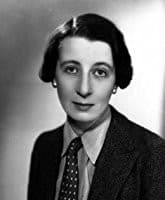
Josephine Tey was a British author known for her contributions to the mystery genre in the early to mid-20th century. Her notable works include "The Man in the Queue," a detective novel that introduces her recurring character, and "The Franchise Affair," which explores themes of justice and reputation. Tey's writing is characterized by its psychological depth and intricate plotting.
Similar books
- Gaudy Night
Dorothy L. Sayers
4.2 (23k) average on GoodreadsHistorical FictionExplores themes of reputation and the unraveling of a seemingly simple accusation.
- Crooked House
Agatha Christie
4.0 (43k) average on GoodreadsThrillerWhile both deal with family secrets and psychological manipulation, Tey's 'The Franchise Affair' offers a broader societal critique on media sensationalism and public opinion, whereas Christie focuses more on internal family dynamics.
- To Kill a Mockingbird
Harper Lee
4.3 (4.5M) average on GoodreadsHistorical FictionIn the 1930s Jim Crow South, Harper Lee writes about racial injustice, moral growth, and the quiet courage of a lawyer father, Atticus Finch, as seen through his young daughter's eyes.
- The Great Gatsby
F. Scott Fitzgerald
3.9 (3.8M) average on GoodreadsHistorical FictionIn the opulent Roaring Twenties, a mysterious millionaire's lavish parties hide his desperate, tragic pursuit of a lost love, exposing the emptiness within the American Dream.
- Pride and Prejudice
Jane Austen
4.3 (3M) average on GoodreadsHistorical FictionIn a society focused on status and money, Elizabeth Bennet navigates love and pride, challenging Mr. Darcy and social expectations to find true affection.
- Angels & Demons
Dan Brown
3.9 (2.7M) average on GoodreadsThrillerA Harvard symbologist races through Rome's ancient sites, deciphering cryptic clues to unmask the Illuminati and stop a vengeful plot to destroy the Vatican with a stolen antimatter weapon.




Enjoyed the summary?
A summary gives you the shape of the book. The book itself has the detail, the examples and the voice.
Find The Franchise Affair on AmazonAs an Amazon Associate, BookBrief earns from qualifying purchases. How we're funded