
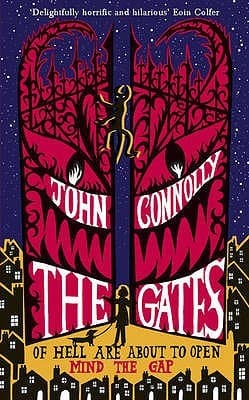
Synopsis
Covers the whole plot, including the ending.
- Difficulty
- Easy
- Pacing
- Moderate
- Mood
- Whimsical, Suspenseful, Humorous, Adventurous
- Read it if
- You enjoy quirky, imaginative stories where science and the supernatural collide, featuring a clever young protagonist and a unique blend of humor and suspense.
- Skip it if
- You prefer hard science fiction without fantasy elements, or if you dislike stories featuring young protagonists facing large-scale supernatural threats.
The Gates Plot Summary
Covers the whole plot, including the ending.
An Early Trick-or-Treat and a Peculiar House
Ten-year-old Samuel Johnson, a brilliant and eccentric boy with an advanced understanding of physics, decides to go trick-or-treating three days early with his dachshund, Boswell. Their search for candy leads them to 666 Crowley Road, the home of the Abernathys. Samuel sees strange lights and sounds from the house, and through a window, he watches the Abernathys, a well-meaning but naive couple, try a séance. Without knowing it, their amateur occult dabbling accidentally opens a small portal, showing a glimpse of monstrous, red-skinned figures and the faint outline of gigantic gates. This first encounter immediately sparks Samuel's scientific curiosity and his unease.
The First Glimpse of Hell's Gates
During their failed séance, the Abernathys, trying to contact dead relatives, instead open a rift in reality at 666 Crowley Road. This rift is not just spiritual; it appears as a swirling vortex in their living room. Samuel and Boswell later see terrifying creatures through it and, most importantly, the colossal, ancient, and impossibly huge Gates of Hell. These gates are made of an unknown, dark material, stretching beyond human understanding. Seeing them confirms Samuel's growing suspicion that something truly extraordinary and dangerous has been unleashed, mixing his scientific understanding with a terrifying new reality.
The Arrival of Nurd, the Lesser Demon
After the Abernathys' ritual, a small, clumsy demon named Nurd is accidentally pulled through the portal. Nurd, a 'Lesser Demon of the Eighteenth Order of the Former Empire,' cares more about paperwork and small complaints than grand evil. He is first annoyed by his unplanned arrival on Earth but soon finds himself trapped. Samuel, watching Nurd's comical attempts to go home, realizes the demon is more of a bother than a threat. Nurd, unable to return to Hell without Samuel's help, becomes an unwilling informant and, eventually, a reluctant ally to Samuel, giving important, though often sarcastic, information about the infernal hierarchy.
The Expanding Breach and the Rise of the Great Malevolence
The small breach at 666 Crowley Road begins to grow, not just in size but in its ability to let more significant entities pass through. Samuel notices a change in the atmosphere around the house, and Nurd confirms that the initial summoning was a serious mistake, attracting the attention of much more powerful beings. The 'Great Malevolence,' or Satan himself, now knows about the opening and is actively working to widen it for his full entry into the human world. This escalation makes Samuel understand the true seriousness of the situation and the immediate threat to Earth, moving beyond simple curiosity to a sense of responsibility.
Samuel's Scientific Approach to the Supernatural
With his great intelligence and deep understanding of theoretical physics, Samuel approaches the demonic invasion with an almost academic curiosity, not fear. He tries to measure the 'dark energy' coming from the gates, researches scientific theories that might explain interdimensional travel, and even tries to calculate the path of hellfire. His scientific method, while unusual for fighting demons, gives him unique insights and a sense of control over a seemingly uncontrollable situation. He believes the gates work on principles like quantum mechanics, making his scientific knowledge his main weapon.
The Gathering of Unusual Allies
As the threat grows, Samuel's allies expand beyond Boswell and Nurd. He is joined by Mrs. Abernathy, who, despite her initial naivety, has a hidden strength and a surprising talent for organization; her husband, who helps in his own clumsy way; and eventually, the local vicar, Reverend O'Connell, who offers spiritual guidance and common sense. Even some of the lesser demons, like Nurd's rival, unintentionally help Samuel due to their own bureaucratic disagreements. This diverse group, each with their quirks and strengths, forms an effective resistance against the growing infernal forces.
The Escalation of Demonic Activity
As the Gates of Hell get closer to fully opening, the demonic activity around Crowley Road increases sharply. Lesser demons, imps, and other infernal creatures begin to spill into the human world more often and with more evil, causing chaos and fear in the local community. These appearances are no longer only in the Abernathys' house but start affecting the surrounding area, creating a sense of coming doom. Samuel and his allies must confront these creatures directly, using a mix of scientific skill, divine help, and bravery to protect the innocent and contain the spreading evil.
The Plan to Close the Gates
Using his advanced understanding of physics, combined with Nurd's reluctant insights into infernal mechanics, Samuel plans to close the Gates of Hell. His strategy involves using a theoretical weakness in the fabric of reality that the gates are exploiting, essentially creating a 'reverse' effect to seal them. This plan requires precise timing, the manipulation of ambient energy, and the cooperation of his diverse group of allies. It is a complex, multi-faceted operation that blends scientific principles with elements of faith and human will, showing Samuel's unique genius.
The Confrontation with the Great Malevolence
The story's climax sees Samuel and his allies directly confronting the Great Malevolence, Satan himself, as he makes his final push to fully appear on Earth. This is not a direct physical battle, but a clash of wills, intellect, and spiritual power. Satan tries to overwhelm Samuel with fear and doubt, tempting him with knowledge and power. Samuel, however, remains firm, using his scientific understanding and the strength from his friends and his own spirit to resist the infernal lord's influence and carry out his plan to close the gates, preventing the complete invasion.
Closing the Gates and Restoring Balance
Through Samuel's scientific brilliance, the coordinated efforts of his allies, and perhaps some unexpected divine help, the Gates of Hell are successfully sealed. The massive portal at 666 Crowley Road collapses, the demonic appearances recede, and reality is restored. The world is saved from infernal invasion, and the Abernathys' house returns to normal, though with a few lingering oddities. Samuel, though tired, feels a deep sense of accomplishment, having used his unique gifts to protect humanity. The experience changes him, but his scientific curiosity remains strong.
Principal Figures
Samuel Johnson
Protagonist
A precocious, scientifically-minded ten-year-old boy.
Samuel is an exceptionally intelligent and logical ten-year-old boy with an encyclopedic knowledge of physics and a penchant for scientific inquiry. He is quirky, socially awkward, and prefers the company of his dachshund, Boswell, to most humans. His defining trait is his insatiable curiosity and his tendency to approach even supernatural phenomena with a scientific, analytical mind. He is driven by a desire to understand the universe and fix problems, viewing the demonic invasion as a complex, albeit dangerous, scientific puzzle.
Relationships: Boswell (Loyal pet and constant companion.); Nurd (Reluctant informant and comedic foil.); Mrs. Abernathy (Initially a source of frustration, later a trusted ally.); Reverend O'Connell (Spiritual guide and source of wisdom.)
Boswell
Supporting
Samuel's loyal and brave dachshund.
Boswell is Samuel's faithful dachshund and constant companion. He possesses an uncanny understanding of Samuel's moods and intentions, often reacting to supernatural events with more instinctual awareness than the humans. Despite being a small dog, Boswell exhibits immense courage, fearlessly accompanying Samuel into dangerous situations and even confronting minor demons. He acts as Samuel's emotional anchor and a symbol of unwavering loyalty and simple, uncomplicated love amidst the chaos.
Relationships: Samuel Johnson (Owner and best friend.)
Nurd
Supporting
A bumbling, bureaucratic Lesser Demon of the Eighteenth Order.
Nurd is a minor demon accidentally summoned by the Abernathys. He is far from menacing, characterized by his inefficiency, his love for paperwork, and his constant complaints about infernal bureaucracy. Nurd is more concerned with his status and the rules of Hell than with spreading evil. He becomes Samuel's unwilling informant and reluctant ally, providing crucial, albeit often sarcastic and self-serving, details about the infernal hierarchy and the Gates of Hell. His comedic relief often underscores the absurdity of the situation.
Relationships: Samuel Johnson (Captor/informant, later an uneasy ally.); Mrs. Abernathy (Occasional source of exasperation.); The Great Malevolence (Feared superior.)
Mrs. Abernathy
Supporting
A well-meaning but naive woman who accidentally opens the Gates of Hell.
Mrs. Abernathy is one half of the couple whose amateur séance inadvertently opens the Gates of Hell. She is initially portrayed as somewhat ditzy and overly enthusiastic about New Age spirituality. However, as the crisis unfolds, she reveals a surprising resilience, a practical nature, and a fierce determination to protect her home and, by extension, the world. She becomes a key member of Samuel's team, contributing with her organizational skills and an unexpected bravery, proving that even the most ordinary people can rise to extraordinary challenges.
Relationships: Mr. Abernathy (Husband.); Samuel Johnson (Initially a child she tolerates, later a respected leader.)
Mr. Abernathy
Supporting
Mrs. Abernathy's equally naive but supportive husband.
Mr. Abernathy is Mrs. Abernathy's husband, equally innocent and well-meaning in their initial dabblings with the occult. He is generally quieter and more reserved than his wife, often following her lead. While not as overtly proactive as Mrs. Abernathy, he provides steadfast support and a grounding presence. His contributions are often subtle, but his willingness to believe in the unbelievable and his quiet courage make him an integral part of the team, demonstrating that heroism comes in many forms.
Relationships: Mrs. Abernathy (Wife.); Samuel Johnson (Respects Samuel's intelligence.)
Reverend O'Connell
Supporting
The local vicar who provides spiritual guidance and common sense.
Reverend O'Connell is the local vicar, a man of strong faith and practical wisdom. Initially skeptical of Samuel's fantastical claims, he quickly comes to terms with the reality of the demonic invasion through direct observation and the sheer impossibility of denying it. He provides a crucial spiritual perspective to Samuel's scientific approach, offering prayers, blessings, and moral support. He represents the power of faith and the importance of traditional beliefs in combating evil, balancing Samuel's purely rational worldview.
Relationships: Samuel Johnson (Initially skeptical, later a respected spiritual advisor.); Mrs. Abernathy (Parishioner, fellow ally.)
The Great Malevolence (Satan)
Antagonist
The ultimate evil entity attempting to breach the Gates of Hell.
The Great Malevolence is the overarching antagonist, the supreme lord of Hell, referred to as Satan. He is not fully seen in his true form for much of the book, existing as an immense, unseen force that manipulates events and exerts a terrifying influence. His goal is to fully open the Gates of Hell and invade Earth. He represents absolute evil, cunning, and immense power, constantly tempting and threatening Samuel and his allies. His presence is felt through the escalating demonic activity and the growing sense of dread.
Relationships: Nurd (Feared master.); Samuel Johnson (Primary target and adversary.)
The Elder Demons
Mentioned
Powerful, ancient demons residing within Hell's hierarchy.
The Elder Demons are powerful, ancient entities within the infernal hierarchy, often mentioned by Nurd with a mix of fear and reverence. They are implied to be far more dangerous and intelligent than the lesser demons, acting as lieutenants or powerful figures within Satan's domain. While not directly interacting with Samuel in a personal way, their presence within Hell and their potential to cross into the human world contribute to the escalating threat and the sense of overwhelming odds that Samuel faces.
Relationships: Nurd (Superiors, often the subject of Nurd's complaints.)
Themes & Insights
Science vs. Faith
The novel explores science and spiritual belief when facing the unknown. Samuel, with his advanced physics knowledge, tries to rationalize and quantify the demonic invasion, treating it as a scientific problem. In contrast, Reverend O'Connell represents traditional faith, offering prayers and spiritual guidance. The story suggests that neither approach alone is enough; a blend of both — Samuel's ingenuity and his allies' collective belief and courage — is needed to overcome the infernal threat. This is clear when Samuel uses physics to understand the gates, while O'Connell's prayers offer protection.
“For every action, there is an equal and opposite reaction. Even in the case of Hell, Samuel suspected, the laws of physics applied.”
The Nature of Good and Evil
The book looks at the complex nature of good and evil, often surprising the reader. The Abernathys, despite good intentions, accidentally unleash evil. Conversely, Nurd, a demon, is more of a clumsy bureaucrat than an evil force, and his self-interest ironically helps Samuel. This theme shows that evil is not always grand and terrifying, and good can come from unexpected places. It shows that intentions matter, but actions have consequences, and that even 'good' people can make big mistakes, while 'evil' beings can have human-like flaws.
“Evil, Samuel had learned, was often less about grand pronouncements and more about simple, thoughtless acts.”
Childhood Innocence and Wisdom
The novel suggests that children, especially those with unique views like Samuel, have a wisdom and resilience often underestimated by adults. Samuel's innocence allows him to approach the terrifying reality of Hell's Gates with a detached, analytical curiosity rather than paralyzing fear. His ability to see beyond normal boundaries and apply his scientific knowledge to the supernatural shows the creative power of a child's mind. This theme is strengthened by the fact that a ten-year-old ultimately plans to save the world, while adults initially dismiss or misunderstand the threat.
“Sometimes, Samuel thought, the things adults believed were far more fantastical than anything he could imagine.”
The Power of Unexpected Alliances
A central theme is the strength found when different people come together for a shared goal. Samuel, a solitary and intellectual boy, must learn to rely on a diverse group of allies: his loyal dog, a clumsy demon, a ditzy couple, and a skeptical vicar. Each character brings unique skills and perspectives, showing that the group is stronger together. This theme highlights the importance of community and cooperation, suggesting that even the biggest threats can be overcome when diverse individuals put aside their differences and work together, as seen in the final plan to close the gates.
“He learned that sometimes, the most unlikely people were the ones who truly understood.”
Plot Devices & Literary Techniques
The Gates of Hell
A physical manifestation of the boundary between Earth and Hell.
The Gates of Hell serve as the central plot device, a literal and metaphorical barrier between worlds. Initially glimpsed as a terrifying vision, they become increasingly solid and present as the portal widens. They represent the ultimate threat and the direct conduit for the infernal invasion. Their physical nature allows Samuel to apply his scientific theories to their operation, making them a tangible problem to solve, rather than just an abstract evil. The gates are the focal point of the entire conflict, dictating the urgency and scale of the threat.
Nurd's Bureaucratic Nature
A demon's obsession with rules and paperwork provides crucial exposition and comic relief.
Nurd's bureaucratic personality is a significant plot device. His constant complaints about infernal regulations, paperwork, and hierarchical structures provide Samuel and the reader with invaluable information about the inner workings of Hell, its inhabitants, and the specific mechanics of the Gates. This not only serves to humanize (or demonize) the infernal realm but also provides much-needed comic relief amidst the escalating tension, preventing the story from becoming overly dark. His detailed, albeit grudging, explanations are key to Samuel's understanding of the problem.
Samuel's Scientific Genius
The protagonist's advanced understanding of physics as a tool for problem-solving.
Samuel's extraordinary scientific intellect is the primary plot device driving the resolution of the conflict. His ability to apply complex theories of particle physics, quantum mechanics, and dark energy to the supernatural phenomenon of the Gates of Hell allows him to understand their function and devise a method for their closure. This device elevates the story beyond a simple good-versus-evil narrative, grounding the fantastical elements in a pseudo-scientific framework and providing a unique, intellectual approach to combating demonic forces. It's his mind, not brute strength, that saves the day.
The Abernathys' Séance
The catalyst for the entire plot, an act of naive occult dabbling.
The Abernathys' ill-advised séance is the inciting incident and a crucial plot device. Their well-meaning but ignorant attempt to contact the deceased inadvertently creates the breach between worlds, setting the entire story in motion. This device highlights the dangers of dabbling in the unknown without proper understanding and serves as a cautionary tale. It also establishes the core conflict and provides the initial reason for Samuel's involvement, as he is an accidental witness to their catastrophic mistake, leading him to investigate the peculiar house at 666 Crowley Road.
The Gates Quotes
“The universe is a big place, and it gets bigger every day. There are things out there that would make your hair stand on end, and things that would make you weep with joy. And sometimes, just sometimes, the two are the same.”
“It's a good thing to be afraid, sometimes. It means you're still alive.”
“Evil isn't born. It's made. It's the choices people make, the things they do, the way they treat each other.”
“The problem with the universe is that it's full of people, and people are always doing stupid things.”
“Sometimes, the smallest things can make the biggest difference. A kind word, a helping hand, a little bit of courage.”
“There are more things in heaven and earth, Horatio, than are dreamt of in your philosophy.”
“The end of the world is always happening somewhere, to someone. We just don't always notice.”
“Don't underestimate the power of a good cup of tea. It can solve almost anything, or at least make you feel better while you're trying to solve it.”
“Even in the darkest times, there is always hope. You just have to look for it, sometimes with a torch.”
“The universe doesn't care about your plans. It has its own.”
“What is the point of being a demon if you can't have a little fun?”
“Sometimes, the best way to fight a monster is to become one yourself. Just for a little while.”
“Laughter is a powerful thing. It can scare away the dark, even if only for a moment.”
“The world is full of wonders, Samuel. You just have to be brave enough to see them, even the scary ones.”
Quiz
10 questions on the plot and the characters. Each answer comes with a short explanation.
Question 1
What is the primary reason Samuel Johnson and Boswell are at 666 Crowley Road three days before Halloween?
- They were invited to a pre-Halloween party.
- They were trick-or-treating early to show initiative.
- They were investigating strange noises reported by neighbors.
- Boswell had run away and led Samuel to the house.
Show answer
B. They were trick-or-treating early to show initiative. Samuel and Boswell were trick-or-treating early, three days before Halloween, as a display of initiative.
Question 2
Which specific family unknowingly calls forth Satan at 666 Crowley Road?
- The Johnsons
- The Abernathys
- The Crowleys
- The Boswells
Show answer
B. The Abernathys The Abernathys are the family who, through their dabbling with the underworld, accidentally summon Satan.
Question 3
What is the name of Samuel Johnson's pet dachshund?
- Sherlock
- Watson
- Boswell
- Pippin
Show answer
C. Boswell Samuel's loyal dachshund companion is named Boswell.
Question 4
What is the immediate consequence of the Abernathys' summoning of Satan, as witnessed by Samuel?
- A sudden earthquake shakes the neighborhood.
- A gap in the universe appears, revealing the gates to Hell.
- All the lights in the town go out simultaneously.
- The Abernathys' house immediately catches fire.
Show answer
B. A gap in the universe appears, revealing the gates to Hell. The summoning creates a 'gap in the universe' through which 'a pair of enormous gates' (to Hell) become visible.
Question 5
The novel emphasizes the pull between which two main opposing forces?
- Day and night
- Youth and old age
- Good and evil, physics and fantasy
- Tradition and modernity
Show answer
C. Good and evil, physics and fantasy The book description explicitly states it is 'about the pull between good and evil, physics and fantasy'.
Question 6
What unique characteristic is attributed to Samuel Johnson's personality?
- He is shy and reclusive.
- He is overtly aggressive and rebellious.
- He is quirky and eccentric.
- He is overly practical and unimaginative.
Show answer
C. He is quirky and eccentric. The description characterizes Samuel as a 'quirky and eccentric boy who is impossible not to love'.
Question 7
Beyond just defeating evil, what three specific concepts does Samuel need to harness to save the world?
- Strength, courage, and wisdom
- Magic, bravery, and friendship
- Science, faith, and love
- Logic, intuition, and empathy
Show answer
C. Science, faith, and love The summary asks if Samuel can 'harness the power of science, faith, and love to save the world'.
Question 8
What is the significance of '666 Crowley Road' in the story's initial events?
- It's the location of Samuel's school.
- It's a historical landmark where the gates to Hell are traditionally believed to be.
- It's the Abernathys' residence where the summoning ritual takes place and the gates become visible.
- It's a secret government facility researching interdimensional portals.
Show answer
C. It's the Abernathys' residence where the summoning ritual takes place and the gates become visible. 666 Crowley Road is the specific address where Samuel and Boswell witness the Abernathys' ritual and the subsequent appearance of the gates to Hell.
Question 9
The novel suggests that those who thought they knew everything about particle physics and the universe should 'think again'. What does this imply about the book's approach to science?
- It strictly adheres to current scientific understanding without deviation.
- It aims to debunk established scientific theories.
- It integrates fantasy elements in a way that makes 'anything seem possible' within a scientific framework.
- It completely dismisses science in favor of pure magical solutions.
Show answer
C. It integrates fantasy elements in a way that makes 'anything seem possible' within a scientific framework. The text states, 'This novel makes anything seem possible,' implying a creative, imaginative integration of physics with fantasy, pushing the boundaries of what is considered possible.
Question 10
What kind of beings are described as being 'just itching to get out' once the gates to Hell are visible?
- Lost souls seeking redemption.
- Angelic entities coming to assist Samuel.
- Pretty terrifying beings, presumably demonic.
- Otherworldly tourists curious about Earth.
Show answer
C. Pretty terrifying beings, presumably demonic. The summary explicitly states, 'And there are some pretty terrifying beings just itching to get out,' referring to the entities from Hell.
The Gates FAQ
What is the central premise of 'The Gates'?
The central premise revolves around young Samuel Johnson and his dachshund Boswell inadvertently stumbling upon an occult ritual at 666 Crowley Road. This ritual, performed by the well-meaning but misguided Abernathys, accidentally summons Satan and creates a rift in reality, revealing the Gates of Hell and threatening to unleash demonic entities upon the world.
Who are the Abernathys and what is their role in the plot?
The Abernathys are an eccentric family living at 666 Crowley Road. They are dabblers in the occult, attempting to open a 'small door' to the underworld out of curiosity and a desire for minor supernatural interactions, but they unknowingly summon Satan and trigger the main conflict of the story by creating the universe-threatening gap.
What significant event occurs when Samuel visits 666 Crowley Road before Halloween?
Samuel and Boswell witness the Abernathys' ritual inadvertently summoning Satan. This event creates a visible gap in the universe, revealing the enormous Gates to Hell, and sets in motion the entire sequence of events that Samuel must confront to save the world.
How does Samuel Johnson, a young boy, become involved in battling demonic forces?
Samuel's involvement is accidental; he witnesses the summoning and the opening of the Gates. Due to his unique perspective, intelligence, and the unexpected allies he gathers, he becomes the unlikely protagonist destined to confront the impending demonic invasion and close the rift.
What role does Boswell, Samuel's dachshund, play in the story?
Boswell is Samuel's loyal companion and often his first line of defense or detection. His canine instincts provide early warnings of supernatural presences, and his unwavering loyalty offers Samuel emotional support and a grounding presence amidst the chaos.
How does the book connect particle physics with fantasy elements?
The book ingeniously blends scientific concepts like particle physics and quantum mechanics with traditional fantasy elements. Samuel often uses his understanding of scientific principles to comprehend or even manipulate the supernatural phenomena, suggesting that magic might simply be an ununderstood aspect of physics.
Are there any subtle allusions to classic literature or mythology in the character names or plot points?
Yes, Samuel Johnson shares his name with the famous English writer, hinting at his intellectual and observant nature. His dog, Boswell, is named after Johnson's biographer, reinforcing their close, analytical bond. The address 666 Crowley Road is a clear nod to occult figures (Aleister Crowley) and biblical numerology, subtly weaving in layers of meaning.
What is the significance of Samuel's 'initiative' in trick-or-treating early?
Samuel's early trick-or-treating is the catalyst for the entire plot. His desire to show initiative by being three days early places him at 666 Crowley Road at the precise moment the Abernathys inadvertently open the Gates, making his seemingly mundane act incredibly significant.
How does Samuel's intelligence and quirky nature aid him in his quest?
Samuel's intelligence allows him to grasp complex scientific and supernatural concepts, often seeing connections others miss. His quirky nature makes him resilient, unafraid to ask unusual questions, and open to unconventional solutions, which are crucial when dealing with demonic threats.
What psychological journey does Samuel undergo throughout the narrative?
Samuel transforms from an observant, somewhat isolated boy into a courageous, proactive hero. He confronts his fears, learns to trust unlikely allies, and takes on immense responsibility, demonstrating growth in self-belief and understanding of his place in the world.
How does the book explore the themes of good versus evil from a psychological perspective?
The book explores good and evil not just as external forces, but also as internal struggles. It questions the nature of 'evil' through characters like the Abernathys, who are well-intentioned but unleash destruction, and shows how even a young boy can embody immense 'good' through courage and intellect.
What role do Samuel's parents play in shaping his character and abilities?
While not always central to the supernatural action, Samuel's parents foster his intellectual curiosity and independent thinking. Their loving but somewhat hands-off approach allows Samuel the freedom to explore and develop his unique perspective, which proves vital in his fight against evil.
Is the ending of 'The Gates' conclusive, or does it leave room for further adventures?
The ending of 'The Gates' provides a satisfying resolution to the immediate threat of the Gates of Hell. However, given the vastness of the universe and the lingering presence of supernatural elements, it subtly leaves room for Samuel's further adventures, suggesting that his journey as a protector is far from over.
How does the novel balance its humor and lightheartedness with the genuinely scary elements?
The novel masterfully balances humor, often stemming from Samuel's eccentric observations and the quirky characters, with genuine moments of terror. This juxtaposition enhances both aspects, making the scary parts more impactful by contrast and the humor a welcome release from tension, creating a rich reading experience.
What message about science, faith, and love does the book ultimately convey?
The book conveys that science, faith, and love are not mutually exclusive but rather interconnected forces. Samuel uses his scientific understanding, finds strength in the 'faith' of his allies, and is driven by love for his world and those in it, suggesting that a holistic approach is necessary to overcome ultimate evil.
Could the events at 666 Crowley Road be interpreted as a metaphor for humanity's accidental dabbling with dangerous forces?
Yes, the Abernathys' unwitting summoning of Satan can be seen as a metaphor for humanity's tendency to experiment with powerful forces (like certain scientific or technological advancements) without fully understanding the potential catastrophic consequences. Their good intentions pave the way to a hellish outcome.
How does the book challenge conventional notions of good and evil?
The book challenges conventional notions by presenting the Abernathys, who are not malicious but cause immense harm, and by showing that 'evil' can manifest through ignorance or misguided curiosity. Conversely, a young boy, through intellect and courage, can embody profound 'good,' blurring traditional lines.
About the author
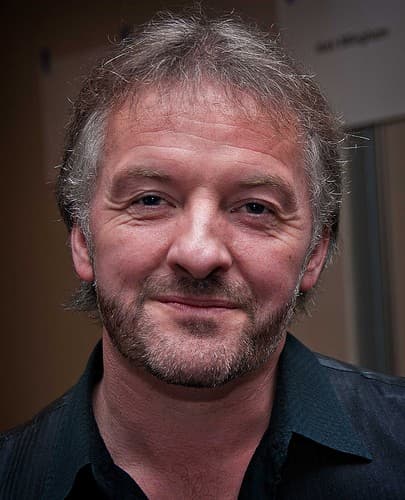
John Connolly is an Irish author known for his work in fiction. He is recognized for his novels such as "The Book of Lost Things," which blends fantasy and coming-of-age themes, and "The Gates," a darkly humorous tale involving the supernatural. Connolly's writing often explores the intersection of reality and the fantastical.
Similar books
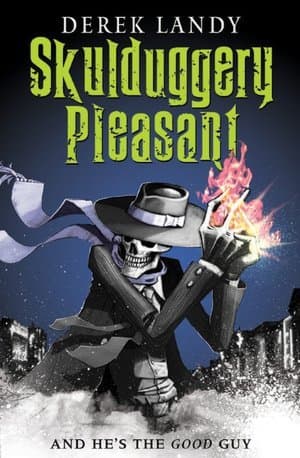
- Skulduggery Pleasant
Derek Landy
4.1 (55k) average on GoodreadsFantasyCombines magic, humor, and a young hero fighting supernatural evil.
- Coraline
Neil Gaiman
4.0 (23k) average on GoodreadsFantasyBoth 'The Gates' and 'Coraline' feature a child protagonist encountering a sinister, otherworldly threat within a domestic setting. However, 'Coraline' leans more into psychological horror and surrealism, maintaining a consistently eerie atmosphere. 'The Gates,' in contrast, balances its horror with a significant dose of comedic relief and a more explicit, action-oriented confrontation with its demonic antagonists, making it less purely unsettling than Gaiman's work.
- Harry Potter and the Sorcerer's Stone
J.K. Rowling
4.5 (7M) average on GoodreadsFantasyRescued from a miserable life under the stairs, an orphaned boy discovers he's a wizard destined for a magical school, where he uncovers a dangerous secret tied to the dark wizard who murdered his parents.
- The Hunger Games
Suzanne Collins
4.3 (6.4M) average on GoodreadsFantasyIn a future where children fight to the death on live television, Katniss Everdeen volunteers for the arena, turning a death sentence into a fight for survival and a spark of rebellion.
- 1984
George Orwell
4.2 (3.1M) average on GoodreadsPoliticsIn a future where surveillance and thought control are absolute, a man's search for truth clashes with the Party, showing that hope can be a form of rebellion.
- Divergent
Veronica Roth
4.2 (2.9M) average on GoodreadsFantasyIn a society divided by virtues, a sixteen-year-old's difference from the norm starts a rebellion that threatens her world.





Enjoyed the summary?
A summary gives you the shape of the book. The book itself has the detail, the examples and the voice.
Find The Gates on AmazonAs an Amazon Associate, BookBrief earns from qualifying purchases. How we're funded