
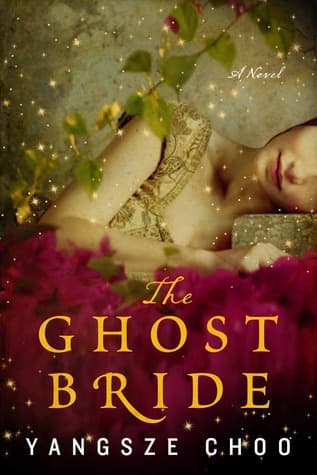
Synopsis
Covers the whole plot, including the ending.
- Difficulty
- Medium
- Pacing
- Moderate
- Mood
- Atmospheric, Mystical, Romantic, Suspenseful
- Read it if
- You enjoy historical fantasy with a strong romantic element, rich cultural details, and a journey into a unique afterlife.
- Skip it if
- You prefer fast-paced thrillers or dislike supernatural elements and historical settings.
The Ghost Bride Plot Summary
Covers the whole plot, including the ending.
A Proposal from the Lim Family
In 1890s colonial Malacca, Li Lan, a young woman from a once-wealthy but now struggling family, receives an unusual offer from her father. The powerful Lim family, whose only son, Lim Tian Ching, recently died, wants Li Lan to become his ghost bride. This old custom is meant to appease a restless spirit and would give Li Lan's family a comfortable future, though it means she would never marry a living man. Li Lan is initially put off by the idea, especially after a chilling visit to the Lim mansion where she feels an unsettling presence and hears about Tian Ching's reputation for being unpleasant. Her father, however, sees it as their only option.
Haunted Dreams and the Spirit World
Soon after the proposal, Li Lan starts having vivid, unsettling dreams. Lim Tian Ching, the deceased Lim son, appears to her, demanding her hand in marriage and acting possessive and childish. These dreams are more than just imagination; Li Lan finds herself physically transported to the Chinese afterlife, a world with spirits, monstrous officials, and ghost cities that mirror the living world. She experiences the horrifying results of unappeased spirits and sees the complex, often chaotic, workings of the underworld. Her nightly trips into this spirit world become more dangerous and harder to escape.
The Enigmatic Er Lang
During her dangerous journeys into the spirit world, Li Lan meets Er Lang, a charming, powerful, and mysterious guardian spirit. Er Lang often appears in disguise, sometimes as a human, sometimes as a celestial being, and offers cryptic advice and occasional help. He seems interested in Li Lan's situation, though his reasons are unclear. He warns her about the dangers of the underworld and the true nature of Lim Tian Ching, encouraging her to find out the truth behind Tian Ching's death before she is permanently tied to him through the ghost marriage.
A Budding Affection for Tian Bai
Amidst her supernatural ordeal, Li Lan feels drawn to Lim Tian Bai, Tian Ching's handsome and kind living cousin, who has recently returned from his studies abroad. Tian Bai is the new heir to the Lim family fortune, and Li Lan finds herself developing forbidden feelings for him. Their interactions are brief but important, offering Li Lan a glimpse of a potential future in the living world that would be denied to her if she accepts the ghost marriage. This growing affection makes her already difficult situation more complicated, increasing her desire to escape Tian Ching's hold.
Unraveling Tian Ching's Death
Driven by a desperate need to avoid the ghost marriage and uncover the truth, Li Lan begins to investigate the circumstances of Lim Tian Ching's death. She gathers clues from both the living and spirit worlds, putting together pieces of information from conversations, observations, and her own spirit encounters. She learns that Tian Ching was widely disliked, known for his cruelty and bad behavior. Many believed he died from an illness, but Li Lan suspects there is more to the story, especially as Tian Ching's hauntings become more aggressive and his demands more insistent.
The Lim Family's Secrets
As Li Lan looks deeper, she uncovers the dark secrets of the Lim family. She learns about Tian Ching's abusive nature, especially towards his concubine, Yan Hong, and the maid, Amah. The family, especially Mrs. Lim, was desperate to keep up appearances and protect their reputation, often ignoring Tian Ching's wrongdoings. Li Lan realizes that the family's outward prosperity hides a web of deceit and suffering, and that Tian Ching's death may not have been as simple as first presented. The secrets of the living world connect with the mysteries of the dead.
Yan Hong's Confession
Li Lan eventually confronts Yan Hong, Tian Ching's concubine, who is now living in poverty. Yan Hong, at first hesitant, eventually tells the full truth. She reveals that she, in a desperate act to save herself after years of abuse and fearing for her life, poisoned Tian Ching. Her confession is a key moment, confirming Li Lan's suspicions and providing the evidence needed to challenge the ghost marriage. Yan Hong's story shows the oppressive conditions faced by women in that era and the extreme actions they might take to find freedom.
Journey to the Underworld Courts
Armed with Yan Hong's confession, Li Lan, guided by Er Lang, makes a dangerous journey to the underworld courts. She plans to present the evidence of Tian Ching's murder, hoping to prove he is not a worthy suitor for a ghost marriage and that his spirit should be punished, not appeased. The underworld bureaucracy is vast and intimidating, filled with stern judges and endless paperwork. Li Lan must navigate this complex system, facing challenges and obstacles from vengeful spirits, including Tian Ching's own persistent attempts to claim her.
Tian Ching's Judgment and Li Lan's Choice
In the underworld court, Li Lan successfully presents her case, proving Tian Ching was murdered and is therefore a 'hungry ghost' not deserving of a ghost bride. Tian Ching is condemned to a harsh fate, facing cycles of reincarnation and suffering. With Tian Ching's claim gone, Li Lan is finally free from the ghost marriage. However, her long time in the spirit world has changed her. She realizes she cannot simply return to her old life as if nothing happened. She makes the choice to remain in the spirit world, not as a trapped ghost, but as an assistant to Er Lang, using her unique abilities to help other spirits.
A New Path with Er Lang
Li Lan chooses to stay in the spirit world, working alongside Er Lang. Her decision is not just about duty; it is also a recognition of her growing feelings for Er Lang, whose true nature as a powerful deity has been revealed. Their relationship grows from mentor and student to something deeper, a partnership built on mutual respect and affection. While she leaves behind her mortal life and the possibility of a future with Tian Bai, Li Lan finds purpose, belonging, and love in this new, unexpected existence, forever connecting the living and the dead.
The Ghost Bride Characters
Li Lan
Protagonist
A young woman from a declining family forced to consider a ghost marriage.
Li Lan is the observant and intelligent daughter of a once-prosperous, now bankrupt, family. Initially somewhat sheltered and passive, she possesses a strong sense of moral justice and a burgeoning spirit of independence. She is thrust into extraordinary circumstances, navigating both the expectations of colonial Malayan society and the terrifying realities of the Chinese afterlife. Her drive stems from a desire for agency and to protect her family's honor, evolving into a quest for truth and self-discovery.
Relationships: Father (Loving but financially desperate; pushes her towards the ghost marriage.); Amah (Her loyal, protective childhood nurse and confidante.); Lim Tian Ching (Her deceased, possessive, and abusive would-be ghost husband.); Lim Tian Bai (Tian Ching's kind, handsome cousin and Li Lan's romantic interest in the living world.); Er Lang (Her mysterious, powerful guardian and eventual romantic partner in the spirit world.)
Er Lang
Supporting/Love Interest
A powerful, enigmatic guardian spirit who guides Li Lan.
Er Lang is a celestial being, a guardian spirit with immense power and a deep understanding of the spirit world. He is often disguised, appearing as a charming human or a more ethereal entity. He is ancient, wise, and initially somewhat detached, but he possesses a dry wit and a strong sense of justice. His motivations are complex, but he seems drawn to Li Lan's courage and purity of spirit, offering her guidance and protection while allowing her to discover truths for herself.
Relationships: Li Lan (Her guide, protector, and eventual romantic partner in the spirit world.)
Lim Tian Ching
Antagonist
The deceased, petulant, and abusive son of the wealthy Lim family.
Lim Tian Ching is the central antagonist, a spoiled, cruel, and debauched young man who died under mysterious circumstances. In life, he was known for his abusive behavior, particularly towards women. In death, he is a restless, possessive spirit who haunts Li Lan, demanding she become his ghost bride. He represents the oppressive patriarchal forces and the consequences of unchecked privilege, even beyond the grave. His actions drive much of the plot's supernatural conflict.
Relationships: Li Lan (Her unwanted, ghostly suitor.); Yan Hong (His concubine, whom he abused.); Amah (A maid in the Lim household, also a victim of his cruelty.)
Lim Tian Bai
Supporting/Love Interest
Tian Ching's kind, living cousin and the new heir to the Lim fortune.
Lim Tian Bai is the younger, educated cousin of Tian Ching and the new heir to the Lim family. He is portrayed as kind, gentle, and modern, having studied abroad. He represents a potential, desirable future for Li Lan in the living world, free from the supernatural entanglements. His interactions with Li Lan are brief but significant, sparking a mutual attraction that highlights what Li Lan stands to lose if she accepts the ghost marriage. He is unaware of the full extent of the supernatural events surrounding Li Lan.
Relationships: Li Lan (A potential romantic interest.); Lim Tian Ching (His deceased cousin.)
Amah
Supporting
Li Lan's loyal and protective childhood nurse.
Amah is Li Lan's devoted childhood nurse and a mother figure. She is practical, superstitious, and deeply protective of Li Lan. She provides emotional support, advice, and a grounding presence amidst the supernatural chaos. Amah's loyalty extends to helping Li Lan with her investigation, even when it means confronting the wealthy Lim family. She also has a personal connection to the Lim family's past, having previously worked there, which aids Li Lan in uncovering secrets.
Relationships: Li Lan (Her devoted nurse and confidante.); Lim Tian Ching (A victim of his cruelty during her time working for the Lim family.)
Yan Hong
Supporting
Tian Ching's concubine, who holds a vital secret about his death.
Yan Hong was Lim Tian Ching's concubine, a woman of humble origins who endured significant abuse and suffering at his hands. She is initially fearful and withdrawn, living in poverty after Tian Ching's death. Her story is a tragic example of the vulnerability of women in that era. She holds the crucial secret of Tian Ching's demise, and her eventual confession is pivotal to Li Lan's quest for justice, demonstrating the extreme measures people take to survive oppression.
Relationships: Lim Tian Ching (His abused concubine.); Li Lan (The recipient of her crucial confession.)
Li Lan's Father
Supporting
A once-respected scholar, now bankrupt and desperate to secure his daughter's future.
Li Lan's father is a kind but ultimately weak-willed man, a former scholar whose family has fallen into financial ruin. He loves Li Lan deeply but is driven by desperation to accept the ghost marriage proposal, seeing it as the only way to secure her future and maintain a semblance of his family's lost prestige. He struggles with the moral implications of his decision but feels trapped by societal pressures and financial constraints.
Relationships: Li Lan (Her loving but desperate father.)
Mrs. Lim
Supporting
The matriarch of the Lim family, desperate to uphold appearances.
Mrs. Lim is the formidable and proud matriarch of the wealthy Lim family. She is fiercely protective of her family's reputation and status, even at the expense of ignoring or covering up her son Tian Ching's egregious behavior. Her primary concern is maintaining appearances and ensuring the family's prosperity, which leads her to pursue the ghost marriage for her deceased son. She embodies the rigid social conventions and hypocrisies of the wealthy elite.
Relationships: Lim Tian Ching (Her deceased son, whose reputation she fiercely protects.)
The Ghost Bride Themes
The Intertwined Worlds of Life and Death
The novel clearly shows the Chinese belief that the spirit world is not separate but a parallel, bureaucratic, and often chaotic mirror of the living world. Li Lan's nightly journeys blend the lines between reality and dream, showing how the past (and the dead) continue to affect the present (and the living). The customs of ghost marriages, ancestral worship, and funeral offerings have real impacts on both realms, affecting characters' choices and futures. The afterlife is not a static heaven or hell, but a dynamic place with its own politics, dangers, and even chances, as seen when Li Lan ultimately chooses to live there.
“The gates of the underworld, it turned out, were not so different from any other gates, just old and heavy and made of dark wood.”
The Search for Agency and Freedom
Li Lan's main struggle is her fight for control in a society that offers women few choices. She is initially a pawn in her family's financial struggles, almost forced into a ghost marriage. Her journey is about gaining more self-control, as she actively investigates Tian Ching's death and eventually makes a big choice about her own future, breaking free from both earthly and spiritual limits. This theme also shows in Yan Hong's desperate act of defiance against her abuser, highlighting the limited options available to women and the extreme actions taken to regain freedom.
“I had always thought that my life was a path laid out by my parents, but now I saw that it was a path I had to forge for myself.”
Justice and Truth vs. Reputation and Deception
The novel explores the conflict between seeking truth and justice, and society's focus on keeping up appearances and reputation. The Lim family, especially Mrs. Lim, goes to great lengths to hide Tian Ching's true character and the details of his death to protect their standing. Li Lan's search for truth exposes the hypocrisy and corruption that lie beneath the surface of wealth and tradition. Her successful appeal in the underworld courts ultimately brings justice to Tian Ching, showing that even in death, one cannot escape the results of one's actions, and that truth will eventually win.
“Sometimes, the darkest secrets are kept in the wealthiest homes.”
Love and Sacrifice Across Worlds
The story features different forms of love and the sacrifices made for them. Li Lan's initial problem involves sacrificing her life for her family's financial security through the ghost marriage. Her growing affection for Tian Bai represents a more conventional, earthly love she must ultimately give up. However, the most deep exploration is of her changing relationship with Er Lang. Their connection goes beyond the boundaries of life and death, requiring Li Lan to sacrifice her mortal existence for a deeper, more meaningful partnership in the spirit world. This shows that love can be found in unexpected places and forms, requiring deep commitment.
“Perhaps love was not about finding the perfect person, but about finding someone who made you feel perfectly yourself, flaws and all, even if that self resided in the land of the dead.”
Plot Devices & Literary Techniques
Ghost Marriage
A traditional, rarely practiced Chinese custom to appease a restless spirit by marrying it to a living person.
The ghost marriage serves as the central inciting incident and conflict. It is a traditional custom that drives the entire plot, forcing Li Lan into the spirit world and initiating her quest. It acts as a ticking clock, as Li Lan must solve the mystery of Tian Ching's death before she is irrevocably bound to him. The concept also allows for a deep exploration of cultural beliefs surrounding death, family honor, and the role of women in society.
Dream Travel / Astral Projection
Li Lan's ability to physically journey into the spirit world while asleep.
This supernatural ability is the primary mechanism through which Li Lan interacts with the afterlife. It allows her to gather clues, meet characters like Er Lang, and experience the dangers and wonders of the spirit world firsthand. It blurs the lines between dreams and reality, making her predicament more urgent and terrifying. The physical toll of these nightly journeys emphasizes the real danger she faces, even while 'asleep'.
The Spirit World Bureaucracy
The afterlife is depicted as a complex, often absurd, administrative system.
The portrayal of the spirit world as a bureaucratic entity, complete with courts, judges, and paperwork, adds a unique and often darkly humorous layer to the fantasy elements. It grounds the supernatural in a relatable, if exaggerated, human construct. This bureaucracy creates obstacles for Li Lan's quest for justice, highlighting the difficulties of navigating official systems, even in death. It also serves as a critical setting for the novel's climax, where Tian Ching's fate is decided.
Supernatural Mentorship
Er Lang's guidance and protection of Li Lan in the spirit world.
Er Lang acts as a classic supernatural mentor figure, providing Li Lan with crucial information, protection, and enigmatic advice as she navigates the dangerous afterlife. His presence allows Li Lan to survive her encounters and learn the rules of the spirit world. This device not only facilitates plot progression but also develops their unique relationship, which evolves from student-teacher to romantic partners, adding depth to the narrative's emotional core.
The Ghost Bride Quotes
“The living and the dead have their own places, and it is best not to cross the boundaries.”
“A girl's beauty is her only fortune, and it must be carefully guarded.”
“The past is never truly gone, it merely waits for us to remember it.”
“Even in the land of the dead, there are rules, and those who break them pay a price.”
“Love, it seemed, was a disease that could afflict both the living and the dead.”
“Sometimes, the only way to find your own path is to get lost first.”
“The dead can be very tenacious, especially when they have unfinished business.”
“There are many kinds of hunger, and not all of them can be satisfied with food.”
“A promise made to the dead is a sacred thing, not easily broken.”
“The most beautiful things often hide the greatest dangers.”
“Fear is a powerful master, but hope can be even stronger.”
Quiz
10 questions on the plot and the characters. Each answer comes with a short explanation.
Question 1
What is the initial proposal Li Lan receives from the wealthy Lim family?
- To become a governess for their younger children.
- To marry their living son, Tian Bai.
- To become a ghost bride for their recently deceased son.
- To manage their family's financial accounts.
Show answer
C. To become a ghost bride for their recently deceased son. Li Lan's father asks her if she would like to become a ghost bride for the Lim family's deceased son, Lim Tian Ching.
Question 2
What is the name of the Lim family's recently deceased son, for whom Li Lan is proposed to be a ghost bride?
- Lim Tian Bai
- Lim Kai
- Lim Tian Ching
- Lim Yao
Show answer
C. Lim Tian Ching The deceased son for whom Li Lan is to be a ghost bride is Lim Tian Ching. Tian Bai is his living cousin.
Question 3
Which specific location in colonial Malaya is the primary setting for the story?
- Penang
- Kuala Lumpur
- Malacca
- Singapore
Show answer
C. Malacca The story is set in the 'sleepy port town of Malacca' as stated in the book description.
Question 4
Who is Er Lang in the afterlife, and what is his initial role concerning Li Lan?
- He is a vengeful spirit trying to trap Li Lan.
- He is the Lim family's ancestor, offering guidance.
- He is a charming but unpredictable guardian spirit who helps Li Lan navigate the afterlife.
- He is the administrator of the Ghost Cities, preventing Li Lan from leaving.
Show answer
C. He is a charming but unpredictable guardian spirit who helps Li Lan navigate the afterlife. Er Lang is introduced as a mysterious, charming, and unpredictable guardian spirit who assists Li Lan in the parallel world of the Chinese afterlife.
Question 5
What is Li Lan's primary motivation for trying to uncover the truth about the Lim family's secrets and her own family's past?
- To gain control of the Lim family's wealth.
- To escape being trapped in the ghostly world forever.
- To impress Tian Bai and win his affection.
- To become a powerful spirit in the afterlife.
Show answer
B. To escape being trapped in the ghostly world forever. The description explicitly states Li Lan 'must uncover the Lim family's darkest secrets—and the truth about her own family—before she is trapped in this ghostly world forever,' indicating her freedom is at stake.
Question 6
What is the nature of the 'terrible price' Li Lan would pay if she accepts the ghost marriage?
- She would have to give up her family name.
- She would be bound to a restless spirit and potentially trapped in the afterlife.
- She would be forced to move to a different country.
- She would lose her inheritance from her own family.
Show answer
B. She would be bound to a restless spirit and potentially trapped in the afterlife. A ghost marriage would guarantee her a home, 'but at a terrible price,' implying the danger of being bound to the deceased and potentially trapped in the ghostly realm, which becomes a central conflict.
Question 7
Li Lan's family is described as 'genteel but bankrupt.' How does this financial status directly influence her situation regarding the Lim family's proposal?
- It makes her an undesirable candidate for the ghost marriage.
- It provides her with numerous other prospects, making the ghost marriage less appealing.
- It limits her marriage prospects, making the Lim family's offer, despite its nature, one of her few options.
- It forces her to seek work as a servant for the Lim family, independent of marriage.
Show answer
C. It limits her marriage prospects, making the Lim family's offer, despite its nature, one of her few options. Her family's bankruptcy means Li Lan 'has few prospects,' which makes the Lim family's unusual proposal a significant, albeit grim, opportunity for stability.
Question 8
What is the primary characteristic of the Chinese afterlife as experienced by Li Lan?
- It is a peaceful, serene garden where spirits find eternal rest.
- It is a shadowy parallel world with ghost cities, paper offerings, vengeful spirits, and monstrous bureaucracy.
- It is a chaotic battlefield where spirits constantly fight for dominance.
- It is a place of endless reincarnation, with no fixed form.
Show answer
B. It is a shadowy parallel world with ghost cities, paper offerings, vengeful spirits, and monstrous bureaucracy. The description details the afterlife as 'the shadowy parallel world of the Chinese afterlife, with its ghost cities, paper funeral offerings, vengeful spirits and monstrous bureaucracy.'
Question 9
What specific element mentioned in the description highlights the blend of historical context and supernatural elements in the novel?
- The mention of 'British overlords' alongside 'ancient customs' and 'ghosts and superstitions'.
- The focus solely on the Lim family's wealth and power.
- Li Lan's personal desire for Tian Bai.
- The description of Malacca as a 'sleepy port town'.
Show answer
A. The mention of 'British overlords' alongside 'ancient customs' and 'ghosts and superstitions'. The phrase 'Though ruled by British overlords, the Chinese of colonial Malaya still cling to ancient customs. And in the sleepy port town of Malacca, ghosts and superstitions abound' explicitly intertwines the historical setting with the supernatural themes.
Question 10
Beyond the ghost marriage, what other significant emotional conflict does Li Lan experience?
- Her struggle to accept her family's bankruptcy.
- Her desire for the Lim's handsome new heir, Tian Bai.
- Her fear of the British colonial authorities.
- Her ambition to become a powerful merchant.
Show answer
B. Her desire for the Lim's handsome new heir, Tian Bai. The description notes she is 'haunted not only by her ghostly would-be suitor, but also by her desire for the Lim's handsome new heir, Tian Bai,' highlighting a romantic entanglement.
The Ghost Bride FAQ
What is a ghost marriage and why is Li Lan considered for one?
A ghost marriage is an ancient Chinese custom where a living person marries a deceased individual to appease their restless spirit or to ensure lineage. Li Lan, from a genteel but bankrupt family, is considered for a ghost marriage to the recently deceased Lim Tian Ching to secure her family's financial stability and provide a 'home for the rest of her days,' despite the unsettling nature of the union.
Who is Lim Tian Ching and what are the initial mysteries surrounding his death?
Lim Tian Ching is the deceased son of the wealthy Lim family, for whom Li Lan is proposed as a ghost bride. He died under mysterious circumstances, with initial suggestions of illness, but Li Lan quickly suspects there's more to his demise as she is haunted by his increasingly aggressive spirit.
Describe the parallel world Li Lan enters and its key features.
Li Lan enters the Chinese afterlife, a shadowy parallel world structured like the living world, complete with ghost cities, bureaucratic courts, and paper funeral offerings. This realm is inhabited by spirits, both benevolent and malevolent, and governed by a complex system, reflecting the earthly bureaucracy but with a supernatural twist.
Who is Er Lang and what is his initial role in Li Lan's journey?
Er Lang is a charming, powerful, and mysterious guardian spirit Li Lan encounters in the afterlife. Initially, he appears as an enigmatic guide, offering cryptic advice and sometimes assistance, though his true motives and identity are slowly revealed to be far more significant than a mere helper.
What is the central conflict Li Lan faces between the living and spirit worlds?
Li Lan's central conflict is being torn between the living world, where she desires Lim Tian Bai and seeks to uncover the truth about Tian Ching's death, and the spirit world, where she is relentlessly pursued by Tian Ching and risks being trapped forever. She must navigate both realms to secure her freedom and future.
How does the 'paper offerings' tradition play a significant role in Li Lan's interactions with the afterlife?
The 'paper offerings' tradition allows living relatives to send material goods, like houses, money, and servants, into the afterlife by burning paper replicas. This directly impacts Li Lan's experiences as she sees these offerings manifest as real structures and resources within the spirit world, highlighting the strong connection between the two realms.
What is the true identity of Er Lang and how does it connect to Chinese mythology?
Er Lang is revealed to be the immortal guardian spirit Erlang Shen, a prominent deity in Chinese mythology, particularly known for his third eye and loyalty. His true identity explains his immense power, ancient knowledge, and ability to traverse realms, making him far more than a simple ghost.
What is the significance of the 'ten courts of hell' and how do they function in the narrative?
The 'ten courts of hell' are the bureaucratic system of judgment and punishment in the Chinese afterlife, presided over by various Yama Kings. They function as a complex legal and administrative body that Li Lan must navigate, revealing the structured nature of the spirit world and the consequences for sins committed in life.
How does Tian Ching's illness in life connect to his aggressive nature as a ghost?
Tian Ching suffered from a debilitating and disfiguring illness, likely smallpox, which isolated him and fostered a deep resentment and sense of entitlement. This suffering and lack of control in life manifest as extreme possessiveness and vengeful aggression in his ghostly form, as he seeks to exert power he lacked while alive.
Analyze Li Lan's psychological journey from passive daughter to active protagonist.
Li Lan begins as a passive daughter, constrained by societal expectations and family debt, accepting her fate. Her encounters in the afterlife force her to develop courage, cunning, and agency, transforming her into an active protagonist who challenges authority, makes her own choices, and fights for her freedom and desires, both living and supernatural.
How does the novel explore themes of control and agency through Li Lan's experiences?
The novel explores themes of control and agency by initially depicting Li Lan as having little control over her life due to her gender, family status, and the ghost marriage proposal. Her journey in the afterlife, however, forces her to seize agency, making choices that defy expectations and ultimately determine her own destiny, contrasting her initial powerlessness.
What role does memory play in the stability of the afterlife and the identity of spirits?
Memory is crucial in the afterlife, as it shapes the identity and stability of spirits. Forgetting one's past can lead to dissipation, while strong memories can anchor a spirit. This is evident in how Tian Ching's vivid, vengeful memories fuel his persistence, and how Li Lan's retention of her living memories is vital to her survival and ability to return.
Is the ending truly a 'happy ever after' for Li Lan, considering her eventual fate?
The ending presents a complex 'happy ever after.' While Li Lan escapes the ghost marriage and finds love with Er Lang, her fate is to become an immortal guardian, forever entwined with the spirit world. This grants her power and companionship but also separates her from a conventional human life, suggesting a bittersweet fulfillment.
How does the novel use the supernatural elements to critique colonial Malayan society?
The novel uses supernatural elements to critique colonial Malayan society by highlighting the persistence of ancient Chinese customs and beliefs despite British rule. The rigid social structures, gender inequality, and the desperation of families like Li Lan's are amplified by the ghost marriage, showing how traditional pressures continued to shape lives under colonial influence.
Discuss the significance of Li Lan's father's secret and its impact on the narrative.
Li Lan's father's secret, his past affair and the existence of a half-sister, is significant as it provides crucial insight into the Lim family's motives and the true reason for Tian Ching's death. This hidden history reveals a deeper, more human tragedy behind the supernatural conflict, connecting family honor and betrayal across generations.
Why does Li Lan ultimately choose Er Lang over Tian Bai, despite her initial affection for Tian Bai?
Li Lan chooses Er Lang over Tian Bai because Er Lang offers her true partnership, understanding, and the ability to embrace her unique connection to the spirit world. While she felt affection for Tian Bai, he represented a conventional life that ultimately couldn't accommodate her extraordinary experiences. Er Lang sees her for who she truly is and offers a destiny that aligns with her transformed self.
What is the symbolic meaning of the 'vine' that Li Lan often encounters or references?
The 'vine' Li Lan often encounters or references symbolizes entanglement, being trapped, and the pervasive influence of the spirit world. It represents the way she is being pulled into the afterlife, the difficulty of escaping the ghost marriage, and the deep, often suffocating, connections between the living and the dead.
How does the novel challenge or uphold traditional notions of marriage and family?
The novel challenges traditional notions of marriage by portraying the ghost marriage as a terrifying, coercive arrangement rather than a loving union. It upholds the importance of family honor and lineage, but simultaneously critiques the sacrifices individuals are forced to make for these ideals, ultimately advocating for personal choice and love over duty.
Similar books
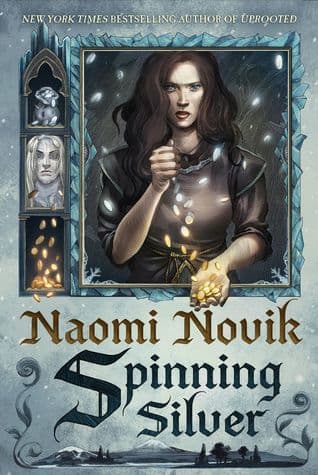
- Spinning Silver
Naomi Novik
4.2 (75k) average on GoodreadsFantasyFeatures a young woman navigating a magical, dangerous world with folklore elements and a touch of romance.
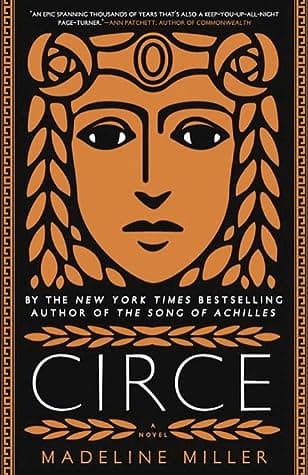
- Circe
Madeline Miller
4.3 (343k) average on GoodreadsFantasyMythological retelling with a strong female protagonist finding her power and navigating complex relationships.
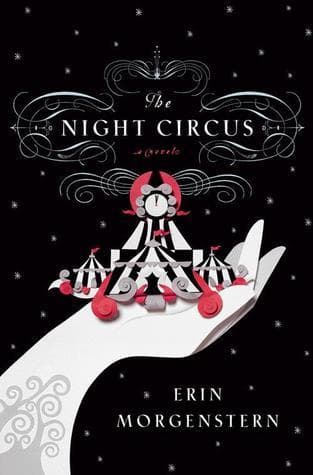
- The Night Circus
Erin Morgenstern
4.0 (685k) average on GoodreadsFantasyWhile both excel in magical realism and intricate world-building, "The Ghost Bride" distinguishes itself with its grounding in specific Chinese folklore and a more direct engagement with the afterlife, as opposed to Morgenstern's more ethereal and abstract magical system.
- Jonathan Strange & Mr Norrell
Susanna Clarke
3.8 (198k) average on GoodreadsFantasyClarke's novel offers a sprawling historical fantasy with complex magical systems and societal critique. "The Ghost Bride" provides a more intimate, character-driven exploration of supernatural encounters within a distinct cultural context, focusing on personal destiny rather than a broad reintroduction of magic to a nation.
- Harry Potter and the Sorcerer's Stone
J.K. Rowling
4.5 (7M) average on GoodreadsFantasyRescued from a miserable life under the stairs, an orphaned boy discovers he's a wizard destined for a magical school, where he uncovers a dangerous secret tied to the dark wizard who murdered his parents.
- The Hunger Games
Suzanne Collins
4.3 (6.4M) average on GoodreadsFantasyIn a future where children fight to the death on live television, Katniss Everdeen volunteers for the arena, turning a death sentence into a fight for survival and a spark of rebellion.



Enjoyed the summary?
A summary gives you the shape of the book. The book itself has the detail, the examples and the voice.
Find The Ghost Bride on AmazonAs an Amazon Associate, BookBrief earns from qualifying purchases. How we're funded