
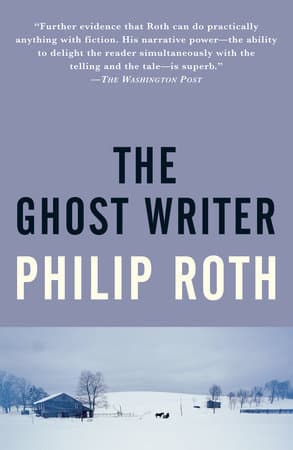
Synopsis
Covers the whole plot, including the ending.
- Difficulty
- Medium
- Pacing
- Slow
- Mood
- Introspective, Subtle, Intellectual, Speculative
- Read it if
- You enjoy introspective literary fiction, explorations of artistic ambition, and psychological mysteries.
- Skip it if
- You prefer fast-paced plots, clear-cut resolutions, or straightforward historical narratives.
The Ghost Writer Plot Summary
Covers the whole plot, including the ending.
A Pilgrimage to the Master
In the winter of 1956, Nathan Zuckerman, a twenty-three-year-old Jewish writer, visits the New England home of his literary hero, E. I. Lonoff. Nathan has recently published short stories and seeks Lonoff's guidance, especially after his parents strongly disapproved of a story they called anti-Semitic. Lonoff, a reclusive and respected Jewish author, lives in a modest house with his wife, Hope. Nathan, full of awe and anxiety, carefully observes Lonoff's every gesture and word, hoping to learn from the master. Their initial conversations are awkward, as Nathan struggles to express his ambitions and Lonoff remains reserved.
The Enigmatic Amy Bellette
During his visit, Nathan glimpses a young woman through a closing door – dark-haired, elegant, and beautiful. He learns her name is Amy Bellette, a former student of Lonoff's from Radcliffe, now living in their home. Her presence immediately interests Nathan, who tries to understand her role in the Lonoff household. Is she a secretary, a protégé, or something more personal? The mystery around Amy, combined with Lonoff's distant attitude towards her, fuels Nathan's imagination, leading him to create scenarios about her identity and relationship with the older writer. Her quiet presence contrasts with the ordinary life of the Lonoff home.
Dinner and Disclosures
The evening dinner shows the strained dynamics within the Lonoff household. Hope Lonoff, seemingly unwell, speaks little, often deferring to her husband or making subtle, almost passive-aggressive remarks. Amy Bellette, though present, remains mostly silent, appearing melancholic and reserved. Nathan, highly observant, notices the subtle glances, unspoken tensions, and carefully chosen words, trying to piece together the unspoken story. He learns bits of Amy's background – her European origins, her family's tragic fate during the Holocaust – which deepens her mystique and fuels Nathan's romantic and literary fantasies about her. Lonoff himself remains somewhat detached, discussing literature and his writing process.
The Anne Frank Fantasy
Overwhelmed by Amy's beauty, her European Jewish background, and her secretive manner, Nathan's imagination creates an extraordinary fantasy: Amy Bellette is Anne Frank. He develops an intricate backstory for this imagined reality, where Anne, having miraculously survived Bergen-Belsen, chose to live anonymously to escape the burden of her famous diary and public expectations. He envisions her seeking refuge with a revered Jewish writer like Lonoff, who, in this fantasy, would be protecting her identity. This elaborate fabrication becomes a desperate attempt for Nathan to give Amy deep significance, connect her to a larger historical tragedy, and elevate his own narrative aspirations by association.
Lonoff's Story of Sacrifice
Later in the evening, Lonoff tells a story about a moment in his own life, a moment of artistic sacrifice and moral compromise. He describes an instance where he chose not to intervene in a potentially scandalous situation involving a student, prioritizing his writing and privacy over direct involvement. This anecdote, delivered with Lonoff's understated seriousness, is a cautionary tale about the isolating demands of a literary life. Nathan listens intently, seeing parallels to his own struggles with family disapproval and the need for artistic independence. Lonoff's story highlights the cost of dedication to art and the choices writers make, influencing Nathan's understanding of his own path.
Hope's Confession
While Lonoff is briefly out of the room, Hope Lonoff, in a moment of vulnerability, confides in Nathan about her husband's past affair with a young woman. This revelation shatters Nathan's idealized image of Lonoff as a saintly, purely intellectual figure. The domestic discord and human frailty exposed by Hope's confession force Nathan to confront the reality that even his literary hero is flawed. The affair, though long past, still wounds Hope, and her sharing of this secret further complicates Nathan's perception of the Lonoff household, adding another layer of human messiness beneath the literary sanctity.
The Morning After: Amy's Departure
The next morning, Nathan wakes to find that Amy Bellette has left during the night. Her sudden, unexplained absence only confirms her enigmatic status in Nathan's mind. He searches for clues, but there are none, leaving him to grapple with questions about her true identity and purpose. Her departure feels like a confirmation of her transient nature, further feeding his Anne Frank fantasy. The Lonoffs offer no real explanation, maintaining their reserve. Amy's silent exit leaves a void in the house and in Nathan's imagination, ensuring her continued presence in his thoughts long after he leaves.
Nathan's Defense and Lonoff's Advice
Before his departure, Nathan defends his controversial story, 'Higher Education,' to Lonoff, explaining his artistic intentions and the pressure from his parents. Lonoff listens patiently and then advises Nathan to be 'pitiless' in his writing, to pursue his artistic vision without bowing to external pressures, especially from family. He tells Nathan that a writer must be willing to sacrifice personal comfort and even familial approval for the sake of truth and art. This counsel, coming from his revered master, deeply affects Nathan, affirming his belief in the necessity of artistic courage and independence, even if it means alienating those closest to him.
Leaving Lonoff's World
Nathan leaves Lonoff's New England home, his mind full of the past twenty-four hours. The experience has been an unsettling initiation into the complexities of the literary life. He carries with him Lonoff's advice, the haunting image of Amy Bellette, and the shattered pieces of his idealized hero. The visit has deepened his understanding of the sacrifices required for art and exposed the human frailties even among esteemed figures. Nathan leaves with a renewed, though more complicated, sense of his own artistic path and the challenges ahead, forever changed by his encounter with the reclusive master and his enigmatic muse.
The Weight of Expectation
As Nathan travels home, he continues to think about his 'Anne Frank' fantasy, recognizing both its appeal and its absurdity. He understands that this elaborate construction shows his own anxieties about his Jewish identity, his artistic ambition, and his desire for deep connection. He grapples with the ethical implications of using historical tragedy for his own creative purposes. The encounter with Lonoff and the mystery of Amy have pushed him to confront the complexities of truth, fiction, and the responsibilities of a writer. He acknowledges the immense pressure to live up to his own potential, and the loneliness that often comes with pursuing art, leaving him to ponder the next steps in his literary journey.
The Ghost Writer Characters
Nathan Zuckerman
Protagonist
A young, ambitious Jewish writer seeking validation and artistic truth.
Nathan Zuckerman is a twenty-three-year-old aspiring writer, earnest and intensely observant, who idolizes E. I. Lonoff. He is grappling with his Jewish identity and the disapproval of his parents regarding his published short stories, particularly 'Higher Education,' which they deem anti-Semitic. Nathan is highly impressionable, prone to elaborate fantasies, and deeply analytical, constantly interpreting the world around him through a literary lens. His visit to Lonoff is a quest for mentorship and a deeper understanding of what it means to be a serious artist. He is driven by a desire to write truthfully, even if it causes personal discomfort or familial alienation.
Relationships: E. I. Lonoff (mentor/idol figure, later revealed as a flawed human); Amy Bellette (object of romantic and literary fantasy); Hope Lonoff (confidante, reveals Lonoff's human flaws); Zuckerman's Parents (source of familial pressure and disapproval)
E. I. Lonoff
Supporting
A reclusive, esteemed Jewish American author, Nathan's literary idol.
E. I. Lonoff is a revered but reclusive Jewish American writer, known for his austere prose and moral seriousness. He embodies the ideal of the dedicated artist, living a spartan life devoted to his craft. Lonoff is reserved, almost stoic, offering advice through carefully chosen anecdotes rather than direct pronouncements. He is a man of quiet integrity, but also one who has made sacrifices for his art, including personal relationships. His wisdom is hard-won, and he represents a generation of writers who valued artistic integrity above all else, even if it meant a life of solitude and quiet suffering. He is a figure of immense authority in Nathan's eyes, a standard against which Nathan measures himself.
Relationships: Nathan Zuckerman (mentee/aspirant); Hope Lonoff (long-suffering wife, reveals his past affair); Amy Bellette (former student, object of ambiguous care/patronage)
Amy Bellette
Supporting
A mysterious young woman in Lonoff's household, who becomes Nathan's muse.
Amy Bellette is a beautiful, enigmatic young woman living in the Lonoff household. She is a former Radcliffe student of Lonoff's, of European Jewish descent, with a tragic family history related to the Holocaust. Amy is quiet, reserved, and almost ethereal in her presence, speaking little but exuding a profound sense of melancholy and mystery. Her ambiguous role in the Lonoff's lives – student, assistant, ward, or something more – fuels Nathan's imaginative projections. She serves as a blank canvas onto which Nathan projects his deepest literary and romantic fantasies, most notably his elaborate 'Anne Frank' theory. Her ultimate departure only reinforces her spectral, elusive nature.
Relationships: Nathan Zuckerman (object of his intense fascination and romantic/literary projection); E. I. Lonoff (former student, ambiguous ward/protégée); Hope Lonoff (live-in guest, subject of Hope's quiet resentment)
Hope Lonoff
Supporting
E. I. Lonoff's frail and quietly resentful wife.
Hope Lonoff is E. I. Lonoff's wife, a seemingly frail and unwell woman who carries the burden of her husband's artistic dedication and past infidelities. She is quiet and often withdrawn, but beneath her placid exterior lies a deep well of resentment and unexpressed emotion. Her few direct interactions with Nathan are marked by subtle bitterness, particularly when she confides in him about her husband's past affair. Hope represents the domestic cost of artistic genius, the personal sacrifices made by those who live in the shadow of a great artist. She provides a grounded, humanizing counterpoint to Nathan's idealized view of Lonoff.
Relationships: E. I. Lonoff (husband, subject of her quiet resentment and past betrayal); Nathan Zuckerman (confidante, recipient of her revelations about Lonoff); Amy Bellette (live-in guest, object of her subtle disapproval)
Zuckerman's Parents
Mentioned
Traditional Jewish parents who disapprove of Nathan's writing.
Nathan's parents are unseen but powerful figures in his life, representing the traditional Jewish community's expectations and anxieties. They are deeply concerned with their son's reputation and the perception of their family within their community. Their strong disapproval of Nathan's story 'Higher Education,' which they interpret as anti-Semitic, creates a central conflict for Nathan, forcing him to choose between familial loyalty and artistic integrity. They embody the external pressures and societal judgments that a young artist must confront and potentially defy to find his own voice.
Relationships: Nathan Zuckerman (parents, source of pressure and disapproval)
The Ghost Writer Themes
The Price of Art and Artistic Integrity
The novel explores the sacrifices required to pursue a life devoted to art. Lonoff's reclusive existence and his story of choosing not to intervene in a student's scandal highlight the dedication and detachment necessary for a writer. Nathan deals with this theme as he faces his parents' disapproval of his story, 'Higher Education,' and receives Lonoff's advice to be 'pitiless' in his writing. This suggests that true artistic integrity often demands a solitary path, possibly alienating family and personal connections for the sake of truth and creative vision.
“The professional hazard of the writer, Nathan, is that he is born to look and not to be. He has to be a witness, not a participant.”
Identity and Self-Invention
Nathan Zuckerman's journey is about forging his own identity as a writer, separate from family and societal expectations. His fantasy about Amy Bellette being Anne Frank is a manifestation of this theme. By projecting such a historical identity onto Amy, Nathan tries to elevate his own narrative and connect his personal struggles to a larger, more significant Jewish history. The novel questions the line between authentic selfhood and the constructed identities we create for ourselves and others, especially within artistic creation.
“To be a Jewish writer, it seems, is to be condemned to a perpetual defense of one’s right to be a Jewish writer.”
The Burden of History and Memory
The Holocaust influences the narrative, especially through Amy Bellette's European Jewish background and Nathan's 'Anne Frank' fantasy. This theme explores how historical trauma and collective memory shape individual identities and artistic expression. Nathan's imaginative leap to connect Amy with Anne Frank is a way for him to engage with the weight of Jewish history and find personal meaning within it. The novel suggests that for Jewish writers, confronting and interpreting this history is an unavoidable, though often difficult, part of their creative process.
“I had made her into a character. I had made her into a story. And the story was this: Anne Frank, still alive, having somehow survived the camps, chose to live in anonymity.”
The Nature of Idolatry and Disillusionment
Nathan's initial admiration of E. I. Lonoff is a central driving force. He approaches Lonoff with reverence, seeking a pure, unblemished literary hero. However, as the visit progresses, Lonoff is revealed to be a flawed human being, with a past affair and a life of quiet compromises, especially through Hope's confession. This gradual disillusionment forces Nathan to confront the reality that even his heroes are imperfect, challenging his romanticized view of artistic greatness and pushing him towards a more mature understanding of human complexity.
“He was not God. He was not even a saint. He was a man. A man who wrote books.”
Plot Devices & Literary Techniques
The Unreliable Narrator
Nathan Zuckerman's subjective and highly imaginative perspective shapes the entire narrative.
Nathan Zuckerman serves as an unreliable narrator, constantly filtering events through his own literary ambitions, anxieties, and fantasies. His detailed observations are often intertwined with his internal monologues, elaborate speculations, and creative projections, most notably his conviction that Amy Bellette is Anne Frank. This device highlights the subjective nature of perception and the way a writer's mind constructs narratives, even in real-time. It compels the reader to question the 'truth' of the events, emphasizing the power of imagination over objective reality and blurring the lines between fact and fiction within Nathan's experience.
The Doppelgänger/Alter Ego
Amy Bellette serves as a projected alter ego for Nathan's literary and historical anxieties.
Amy Bellette, particularly in Nathan's 'Anne Frank' fantasy, functions as a form of doppelgänger or alter ego. Nathan projects onto her his anxieties about Jewish identity, artistic responsibility, and the burden of history. By imagining her as Anne Frank, he attempts to give his own nascent writing a profound historical weight and moral urgency. She becomes a vessel for his literary aspirations and a mirror for his own internal struggles, embodying the silenced voices of history that he, as a writer, feels compelled to articulate, even if through a fabricated connection.
Frame Narrative (Implied)
The entire story is presented as a recollection or early experience of the established writer, Nathan Zuckerman.
While not explicitly a frame narrative within *The Ghost Writer* itself, the novel functions as an origin story for the character of Nathan Zuckerman, who becomes a recurring alter ego for Philip Roth in later novels. This device implies that the events of this story are being recounted or reflected upon by an older, more established Nathan. It imbues the youthful Nathan's experiences with a sense of retrospective significance, suggesting that this pilgrimage to Lonoff and the encounter with Amy Bellette were foundational moments in his development as the prominent, often controversial, writer he would become.
The Mentor Figure
E. I. Lonoff serves as the archetypal wise, reclusive mentor for the aspiring artist.
E. I. Lonoff embodies the classic mentor figure in the narrative. He is the established, revered master whom the young protagonist, Nathan Zuckerman, seeks out for guidance and validation. Lonoff's reclusiveness, his austere lifestyle, and his carefully dispensed wisdom position him as an authority figure whose words carry immense weight for Nathan. He provides both inspiration and a cautionary tale about the sacrifices of an artistic life, ultimately pushing Nathan towards a more independent and 'pitiless' approach to his craft. His presence is crucial for Nathan's artistic and personal awakening.
The Ghost Writer Quotes
“Art is not a contest.”
“The very thing you're trying to escape is what defines you.”
“Imagination, not memory, is the mother of the muse.”
“You can't be a serious writer and be loved by your family.”
“To be a writer, you must be a spy in your own house.”
“All great literature is a kind of gossip.”
“The greatest danger for a writer is to be loved too much.”
“What is the difference between a life lived and a life imagined?”
“One writes not to be understood, but to understand.”
“The moral burden of the artist is to invent truth.”
“To be an artist is to be an outsider.”
“Every writer is a ghost writer, of a sort.”
“The past is a foreign country; they do things differently there.”
“The greatest freedom is to be unknown.”
Quiz
10 questions on the plot and the characters. Each answer comes with a short explanation.
Question 1
What is the primary reason Nathan Zuckerman makes his pilgrimage to E.I. Lonoff's home?
- To interview Lonoff for a literary magazine.
- To seek Lonoff's mentorship and approval for his writing.
- To investigate a rumor about Lonoff's past.
- To deliver a manuscript from another publisher.
Show answer
B. To seek Lonoff's mentorship and approval for his writing. Nathan, a young and aspiring writer, travels to Lonoff's home specifically to meet his literary hero and gain his insight and validation for his own work.
Question 2
What is Nathan's initial impression of Amy Bellette when he first sees her?
- He is unimpressed and finds her ordinary.
- He is intrigued and captivated by her mysterious appearance.
- He recognizes her from a previous encounter.
- He feels a sense of immediate distrust towards her.
Show answer
B. He is intrigued and captivated by her mysterious appearance. The description states that a glimpse of Amy 'leaves him reeling,' indicating his immediate intrigue and fascination with her.
Question 3
What is the main ambiguity surrounding Amy Bellette's role in the Lonoff household from Nathan's perspective?
- Whether she is Lonoff's assistant or a distant relative.
- Whether she is Lonoff's student or his mistress.
- Whether she is a temporary guest or a permanent resident.
- Whether she is a published author or an aspiring writer.
Show answer
B. Whether she is Lonoff's student or his mistress. The text explicitly states that 'her position in the Lonoff household - student? mistress? - remains tantalisingly unclear,' highlighting Nathan's uncertainty about her relationship with Lonoff.
Question 4
What specific detail about Amy Bellette's background does Nathan begin to glean during dinner?
- Her aspirations to become a famous actress.
- Her connection to a prominent political family.
- Her haunting Jewish background.
- Her previous career as a journalist.
Show answer
C. Her haunting Jewish background. The description states that 'Nathan gleans snippets of Amy's haunting Jewish background' during the dinner.
Question 5
How does Nathan Zuckerman generally perceive E.I. Lonoff at the beginning of the story?
- As a rival writer to be surpassed.
- As a reclusive master and literary hero.
- As a distant acquaintance he needs to impress.
- As a potential editor for his next novel.
Show answer
B. As a reclusive master and literary hero. Nathan's journey is described as a 'pilgrimage to sit at the feet of his hero, the reclusive master of American Literature,' clearly establishing his high regard for Lonoff.
Question 6
What is the nature of the conversation between Nathan and Lonoff initially?
- Lively and engaging, filled with mutual admiration.
- Breathlessly awkward, indicating Nathan's nervousness.
- A heated debate about literary theory.
- A formal interview with prepared questions.
Show answer
B. Breathlessly awkward, indicating Nathan's nervousness. The text describes Nathan sitting in 'breathlessly awkward conversation' with his idol, suggesting his shyness and reverence.
Question 7
What does Nathan's reaction to Amy Bellette and his subsequent 'fantastical conclusions' reveal about his character?
- He is pragmatic and grounded in reality.
- He has a vivid imagination and a tendency to romanticize.
- He is a cynical and suspicious individual.
- He is primarily interested in uncovering facts.
Show answer
B. He has a vivid imagination and a tendency to romanticize. The phrase 'begins to draw his own fantastical conclusions' directly indicates Nathan's imaginative and perhaps overly dramatic interpretation of events, which is a key aspect of his character as a writer.
Question 8
The description of Lonoff's 'domestic life, with all its complexity, artifice and drive for artistic truth' suggests what about the novel's themes?
- The simple and straightforward nature of a writer's existence.
- The hidden struggles and fabricated personas behind artistic creation.
- The conflict between artistic ambition and financial success.
- The importance of separating personal life from professional work.
Show answer
B. The hidden struggles and fabricated personas behind artistic creation. The words 'complexity,' 'artifice,' and 'drive for artistic truth' collectively point to the idea that a writer's personal life is not always as it seems, and that there can be a tension between reality and the crafted image, which is a central theme in the novel.
Question 9
How does the 'disturbed and confusing dinner' contribute to Nathan's narrative process?
- It provides him with clear, factual information to base his stories on.
- It fuels his imagination with ambiguity and incomplete information, leading to speculation.
- It discourages him from pursuing his writing career due to the chaos.
- It clarifies the relationships within the Lonoff household for him.
Show answer
B. It fuels his imagination with ambiguity and incomplete information, leading to speculation. The 'disturbed and confusing dinner' provides 'snippets' and leaves things 'tantalisingly unclear,' which, for a writer like Nathan, would be fertile ground for his imagination and 'fantastical conclusions,' rather than providing clear answers.
Question 10
The title 'The Ghost Writer' hints at what overarching concept explored in the novel?
- The supernatural elements within the Lonoff household.
- The idea of one writer influencing or embodying another's voice and legacy.
- A literal ghost haunting Lonoff's house.
- The anonymous publication of Lonoff's early works.
Show answer
B. The idea of one writer influencing or embodying another's voice and legacy. The term 'ghost writer' refers to someone who writes for another without credit. In the context of the novel, it alludes to Nathan's imaginative appropriation of Amy's story and his desire to embody or interpret the lives of others, particularly those of his literary heroes, and the blurring of identities and authorship.
The Ghost Writer FAQ
What is the central premise of 'The Ghost Writer'?
The novel centers on Nathan Zuckerman, a young aspiring writer, who visits his literary hero, the celebrated but reclusive author E. I. Lonoff. During his stay, Nathan becomes entangled in the mysteries of Lonoff's domestic life, particularly concerning the enigmatic young woman, Amy Bellette, whose presence sparks Nathan's vivid imagination and internal narratives.
Who is E. I. Lonoff and what is his significance to Nathan Zuckerman?
E. I. Lonoff is an older, revered Jewish-American author, known for his austere and morally serious body of work. To Nathan Zuckerman, Lonoff represents an ideal of literary integrity and artistic dedication, a figure Nathan aspires to emulate and whose approval he desperately seeks for his own budding writing career.
Describe Amy Bellette's initial appearance and how she intrigues Nathan.
Amy Bellette first appears to Nathan as a fleeting glimpse through a closing doorway – a dark-haired beauty that immediately captivates him. Her ambiguous role in the Lonoff household, coupled with her mysterious demeanor and hints of a traumatic past, ignites Nathan's imagination, leading him to construct elaborate theories about her identity.
What is the primary conflict Nathan faces regarding his own writing at the beginning of the novel?
Nathan is grappling with the disapproval of his own father and the Jewish community over his first published story, 'Higher Education,' which they deem potentially scandalous and damaging to the image of Jewish people. This familial and communal pressure deeply affects Nathan and fuels his desire for Lonoff's validation.
How does Lonoff's wife, Hope, contribute to the atmosphere of the household?
Hope Lonoff is depicted as a long-suffering and somewhat bitter woman, deeply devoted to her husband but also burdened by his artistic temperament and the sacrifices she has made. Her quiet resentment and occasional barbed comments hint at the complexities and underlying tensions within the Lonoff marriage, which Nathan keenly observes.
What is the famous 'Anne Frank' fantasy Nathan constructs about Amy Bellette?
Nathan, fueled by Amy's Jewish background, her youthful appearance, and the vague details of her past, concocts a elaborate fantasy that Amy Bellette is actually Anne Frank, who survived the Holocaust and is now living anonymously in America. He imagines her having chosen to remain hidden to preserve the symbolic power of her diary.
Are there any subtle clues that hint at the true nature of Amy Bellette's relationship with Lonoff?
While never explicitly stated, there are subtle hints, such as the intense, almost protective way Lonoff speaks of Amy, her constant presence in their isolated home, and Hope's palpable, though often unspoken, jealousy. These details suggest a deeper, possibly romantic or intensely paternal, bond beyond that of a mere student or assistant.
How does the setting of Lonoff's secluded New England home contribute to the novel's themes?
The isolated, rural New England setting emphasizes Lonoff's reclusiveness and his dedication to his art, creating an almost monastic atmosphere. It also intensifies Nathan's experience, making him feel completely immersed in Lonoff's world and isolated from his own, thus amplifying his imaginative projections onto Amy Bellette and the Lonoff's domestic drama.
What is the significance of the story 'Higher Education' in understanding Nathan's character?
'Higher Education' is significant because it is Nathan's first published work that incurs the wrath of his family and community, particularly his father. This conflict reveals Nathan's struggle between artistic freedom and familial obligation, and his burgeoning awareness of the power and potential controversy of his own writing.
How does Nathan's vivid imagination impact his perception of reality throughout the novel?
Nathan's imagination constantly blurs the lines between reality and fantasy. He doesn't just observe; he actively constructs elaborate narratives and identities for the people around him, most notably with Amy Bellette. This reveals his inherent nature as a storyteller, but also his youthful tendency to project his own desires and literary ideals onto others.
Discuss the psychological motivations behind Nathan's 'Anne Frank' fantasy.
Nathan's 'Anne Frank' fantasy is driven by a complex mix of literary ambition, Jewish identity, and youthful romanticism. He yearns to discover a profound, hidden truth, and by imagining Amy as Anne Frank, he elevates her, and by extension himself, into a narrative of historical significance and heroic survival, while also grappling with the weight of the Holocaust.
What does Nathan's admiration for Lonoff reveal about his own artistic aspirations?
Nathan's admiration for Lonoff reveals his desire for artistic legitimacy and moral seriousness in his own work. He sees Lonoff as a writer who has achieved a profound integrity and dedication to his craft, and Nathan hopes to absorb some of that wisdom and discipline, while also seeking validation for his own, potentially more controversial, literary voice.
Is 'The Ghost Writer' primarily a coming-of-age story for Nathan Zuckerman?
Yes, 'The Ghost Writer' can be seen as a crucial coming-of-age story for Nathan. During his visit to Lonoff, he confronts issues of artistic integrity, the burden of ethnic identity, the complexities of human relationships, and the power of his own imagination, all of which shape his development as a writer and as a man.
How does the novel explore the theme of the writer's responsibility?
The novel explores the writer's responsibility through Nathan's struggle with his family's reaction to 'Higher Education,' and Lonoff's own quiet, almost burdened dedication to his craft. It questions whether a writer owes allegiance to their community, their family, or solely to their artistic truth, and the potential consequences of each choice.
What is the significance of the title 'The Ghost Writer'?
The title 'The Ghost Writer' is multi-layered. It refers to Nathan's act of imaginatively 'writing' Amy Bellette's past as Anne Frank, effectively ghostwriting a new history for her. It also suggests Lonoff's reclusive, almost spectral presence in the literary world, and perhaps the idea of writers being haunted by their subjects or by the ghosts of literary predecessors.
Does the novel offer a definitive answer to Amy Bellette's true identity or past?
No, the novel deliberately leaves Amy Bellette's true identity and past ambiguous. The narrative emphasizes Nathan's subjective experience and imaginative projections rather than providing factual answers. Her mystery serves as a catalyst for Nathan's artistic awakening and exploration of deeper themes, leaving her true story open to the reader's own interpretation.
How does the novel comment on the nature of literary heroism?
The novel comments on literary heroism by presenting Lonoff as both an admirable figure of integrity and a flawed, somewhat melancholic man burdened by his own genius and choices. It suggests that while literary heroes inspire, their private lives are often complex and far from the idealized images their admirers construct, challenging Nathan's romanticized view.
What role does Judaism and Jewish identity play in the narrative?
Judaism and Jewish identity are central to the narrative, particularly through Nathan's struggle with his family's disapproval of his writing, which they perceive as potentially anti-Semitic. His 'Anne Frank' fantasy also directly engages with the trauma of the Holocaust and the enduring power of Jewish stories, highlighting the complex relationship between art, identity, and communal responsibility.
About the author
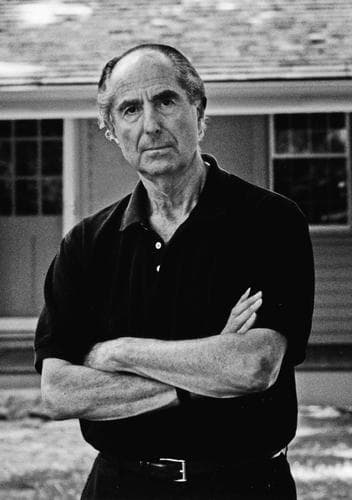
Philip Milton Roth was an American novelist and short story writer. Roth's fiction—often set in his birthplace of Newark, New Jersey—is known for its intensely autobiographical character, for philosophically and formally blurring the distinction between reality and fiction, for its "sensual, ingenious style" and for its provocative explorations of American identity. He first gained attention with the 1959 short story collection Goodbye, Columbus, which won the U.S. National Book Award for Fiction. Ten years later, he published the bestseller Portnoy's Complaint. Nathan Zuckerman, Roth's literary alter ego, narrates several of his books. A fictionalized Philip Roth narrates some of his others, such as the alternate history The Plot Against America.
Similar books
- A Portrait of the Artist as a Young Man
James Joyce
3.6 (128k) average on GoodreadsLiterary FictionBoth The Ghost Writer and Joyce's A Portrait of the Artist as a Young Man are Künstlerroman, tracing the intellectual and artistic development of a young man. While Joyce's Stephen Dedalus grapples with religious and national identity, Roth's Nathan Zuckerman contends with Jewish heritage, literary legacy, and the moral complexities of his art. Roth's novel is more overtly meta-fictional, directly addressing the act of writing and the author's relationship to his characters, whereas Joyce's narrative, while experimental, maintains a more traditional (though highly stylized) third-person perspective on Stephen's journey. Both explore the tension between the artist and society, but Roth introduces a more direct engagement with the 'anxiety of influence' through the figure of Lonoff.
- Herzog
Saul Bellow
3.8 (19k) average on GoodreadsLiterary FictionSaul Bellow's Herzog also features an intellectual protagonist wrestling with personal and philosophical dilemmas through intense internal monologue and letter writing, much like Zuckerman's internal monologues and imaginative scenarios in The Ghost Writer. Both novels explore Jewish identity, intellectual life, and the complexities of personal relationships. However, Herzog is broader in its scope, encompassing Herzog's family life, academic career, and a wider array of social interactions, even as his mind is the primary setting. Roth's novel is more confined to a specific period and location (Lonoff's home) and focuses more acutely on the formation of the artist and the ethics of narrative, making it a more concentrated examination of literary ambition than Bellow's more expansive, albeit equally introspective, work.
- To Kill a Mockingbird
Harper Lee
4.3 (4.5M) average on GoodreadsHistorical FictionIn the 1930s Jim Crow South, Harper Lee writes about racial injustice, moral growth, and the quiet courage of a lawyer father, Atticus Finch, as seen through his young daughter's eyes.
- The Great Gatsby
F. Scott Fitzgerald
3.9 (3.8M) average on GoodreadsHistorical FictionIn the opulent Roaring Twenties, a mysterious millionaire's lavish parties hide his desperate, tragic pursuit of a lost love, exposing the emptiness within the American Dream.
- Pride and Prejudice
Jane Austen
4.3 (3M) average on GoodreadsHistorical FictionIn a society focused on status and money, Elizabeth Bennet navigates love and pride, challenging Mr. Darcy and social expectations to find true affection.
- Angels & Demons
Dan Brown
3.9 (2.7M) average on GoodreadsThrillerA Harvard symbologist races through Rome's ancient sites, deciphering cryptic clues to unmask the Illuminati and stop a vengeful plot to destroy the Vatican with a stolen antimatter weapon.




Enjoyed the summary?
A summary gives you the shape of the book. The book itself has the detail, the examples and the voice.
Find The Ghost Writer on AmazonAs an Amazon Associate, BookBrief earns from qualifying purchases. How we're funded