
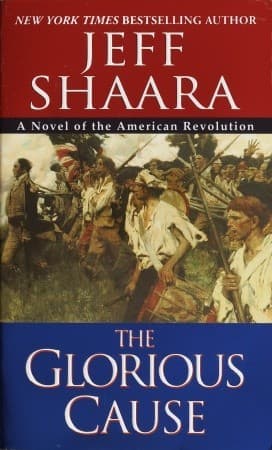
Synopsis
Covers the whole plot, including the ending.
- Difficulty
- Medium
- Pacing
- Moderate
- Mood
- Epic, Patriotic, Gritty, Historical, Inspiring
- Read it if
- You enjoy detailed, character-driven historical accounts of military campaigns and the American Revolutionary War, especially if you appreciate multiple perspectives of key figures.
- Skip it if
- You prefer fast-paced thrillers or are not interested in military history and detailed battle descriptions.
The Glorious Cause Plot Summary
Covers the whole plot, including the ending.
The Retreat from Long Island
In August 1776, General George Washington and his Continental Army are on Long Island, expecting a British attack. General William Howe, leading a stronger British force, outmaneuvers Washington, flanking his positions and causing many casualties. Washington, seeing his army almost destroyed, decides to evacuate. Under fog and darkness, his entire army and supplies are ferried across the East River to Manhattan, barely escaping Howe's forces. This early defeat tests the morale of the American troops and their commander, showing the difference in training and resources between the two armies.
Loss of Fort Washington and the March Through New Jersey
After the retreat from Long Island, the Continental Army faces more problems in battles for Manhattan. The worst is the loss of Fort Washington in November 1776, where thousands of American soldiers are captured. General Washington is forced into a long retreat across New Jersey, pursued by General Charles Cornwallis and his British and Hessian troops. The American army shrinks due to desertions, expiring enlistments, and disease. Morale is very low, and the fight for independence seems about to end, with many questioning Washington's leadership and the Revolution's future.
Crossing the Delaware and Battle of Trenton
Facing severe problems and the imminent collapse of the Continental Army, General Washington plans a surprise attack on the Hessian garrison at Trenton, New Jersey, on Christmas night, 1776. Despite bad weather, including a snowstorm and icy river, Washington's forces cross the Delaware River. The Hessians, surprised after their holiday celebrations, are overwhelmed. The Battle of Trenton results in an American victory, with hundreds of Hessians captured and almost no American casualties. This triumph greatly boosts American morale and secures crucial re-enlistments, giving new life to the Revolution.
Battle of Princeton and Morristown Encampment
After Trenton, General Cornwallis quickly moves his British forces to confront Washington, trapping the Americans at Assunpink Creek. However, Washington, showing clever tactics, plans another daring move. Leaving a small group to keep campfires burning and deceive Cornwallis, he secretly marches his main army around the British flank during the night. The Continental Army then attacks the British rear guard at Princeton, winning another unexpected victory in January 1777. Washington then leads his tired but victorious troops to winter quarters at Morristown, New Jersey, ending the British campaign in the north for the season and solidifying the American comeback.
Philadelphia Falls and Brandywine Creek
In 1777, General William Howe focuses on capturing Philadelphia, the American capital. Washington tries to stop Howe's advance at the Battle of Brandywine Creek in September. Despite a strong defense, the Americans are again outflanked by Howe's forces, led by General Cornwallis. The Continental Army suffers another defeat, and Philadelphia falls to the British. Though a strategic loss, the American army largely escapes destruction, keeping its fighting capability. The fall of the capital is a blow to American prestige but does not cripple the Revolution, as the Continental Congress simply moves.
Winter at Valley Forge
After losing Philadelphia, the Continental Army settles into winter quarters at Valley Forge, Pennsylvania, from December 1777 to June 1778. The winter is very harsh, with severe cold, little food, poor clothing, and widespread disease. Thousands of soldiers die or desert. Morale drops, and the army's existence is uncertain. However, under Baron von Steuben, a Prussian drillmaster, the surviving troops train hard, changing from a loose militia into a disciplined, professional fighting force. Valley Forge helps build the American army's resilience and skill.
Alliance with France and Monmouth Courthouse
The American victory at Saratoga (not detailed here but important) convinces France to formally recognize American independence and form an alliance in early 1778. This brings much-needed financial aid, supplies, and naval support. With French help and the newly trained army from Valley Forge, Washington's forces confront the British at the Battle of Monmouth Courthouse in June 1778. The battle is a tactical draw, but it shows the improved fighting ability of the Continental Army and the leadership of figures like General Charles Lee, though his actions are debated. The British retreat to New York, and the war's focus shifts.
The War in the South and Greene's Command
As the war stalls in the North, the British change their strategy, believing loyalist support is stronger in the Southern colonies. General Cornwallis leads a successful campaign, capturing Charleston, South Carolina, and defeating American forces, especially at Camden. In response, General Washington appoints Nathanael Greene, a former Quaker with no prior military experience, to command the Southern Department. Greene, known for his logistics and strategic thinking, uses Fabian tactics, avoiding direct fights with Cornwallis's stronger forces while harassing British supply lines and wearing down their army through skirmishes and retreats.
Guilford Courthouse and the Race to Virginia
General Greene's strategy culminates in the Battle of Guilford Courthouse in March 1781. Though a tactical victory for the British, Cornwallis's army suffers heavy casualties, more than the Americans'. Greene uses the terrain to his advantage, making Cornwallis pay a high price for his victory. Tired and weakened, Cornwallis decides to leave the Carolinas and march his army north into Virginia, hoping to join other British forces and resupply. This decision is a turning point, placing his army in a vulnerable spot that Washington and the French will soon use.
The Road to Yorktown
Upon learning of Cornwallis's move into Virginia and his encampment at Yorktown, General Washington, with French General Rochambeau and the French fleet under Admiral de Grasse, sees an opportunity. Washington makes a feint towards New York to trick General Henry Clinton, then quickly marches his combined American and French armies south from New York to Virginia. At the same time, the French fleet blocks the Chesapeake Bay, trapping Cornwallis's army at Yorktown and cutting off any escape or reinforcement by sea. The stage is set for the war's decisive engagement.
Siege of Yorktown and British Surrender
In September and October 1781, the combined American and French forces besiege Yorktown. The allied artillery bombards the British defenses, and joint American-French assaults capture key positions. With no hope of relief by sea or land, and his position unsustainable, General Charles Cornwallis is forced to negotiate surrender. On October 19, 1781, the British army marches out to formally surrender to the allied forces, ending the major fighting of the American Revolutionary War. The surrender at Yorktown is a monumental victory for the Americans and their French allies, securing American independence.
Aftermath and Treaty of Paris
After the surrender at Yorktown, peace talks begin. Although minor skirmishes continue for a time, the British Parliament, tired of the costly war, votes to stop offensive operations. Benjamin Franklin, John Adams, and John Jay negotiate the Treaty of Paris, signed in September 1783. This treaty formally recognizes the United States of America as an independent nation, gives vast territories to the new republic, and establishes boundaries. General Washington, after an emotional farewell to his officers, resigns his commission, showing his commitment to civilian rule and setting a strong example for American democracy.
Principal Figures
George Washington
Protagonist
Commander-in-Chief of the Continental Army and leader of the American Revolution.
Washington is depicted as a resilient, often stoic, and deeply committed leader. He carries the immense burden of command, facing constant challenges from a superior enemy, a poorly supplied army, and a divided Congress. His personal courage, strategic mind, and unwavering determination to hold his army together, even in the darkest hours like Valley Forge, are central to the American cause. He is a man of honor and quiet strength, inspiring loyalty despite frequent setbacks.
Relationships: Nathanael Greene (trusted subordinate and gifted tactician); Marquis de Lafayette (devoted protégé and invaluable French ally); Charles Lee (problematic and insubordinate general); Benjamin Franklin (distant but crucial political and diplomatic ally)
Charles Cornwallis
Antagonist
Gifted British General, often the primary battlefield opponent of Washington.
Cornwallis is portrayed as a competent and aggressive British general, often outmaneuvering his American counterparts early in the war. He is professional, disciplined, and genuinely believes in the British cause, but also capable of compassion. His ambition sometimes leads him to make bold, risky decisions, particularly in the Southern campaign, which ultimately contribute to his downfall. He respects Washington as an adversary, but initially underestimates the resilience of the Continental Army.
Relationships: George Washington (primary military adversary); William Howe (superior officer, sometimes at odds tactically); Henry Clinton (superior officer, often with conflicting strategies)
Nathanael Greene
Supporting
Self-taught American general, Washington's most trusted and effective subordinate.
Greene rises from humble Quaker origins and a lack of formal military training to become one of the war's most brilliant strategists and logisticians. He is intelligent, resourceful, and possesses a keen understanding of terrain and supply. His ability to adapt to adverse circumstances, particularly in the Southern campaign, and employ Fabian tactics to wear down Cornwallis's forces, proves instrumental in turning the tide of the war. He is loyal to Washington and dedicated to the cause.
Relationships: George Washington (trusted friend and subordinate); Charles Cornwallis (primary military adversary in the South)
Marquis de Lafayette
Supporting
Young French nobleman and general, a devoted ally and friend to Washington.
Lafayette is a passionate and idealistic young French aristocrat who volunteers his service to the American cause. He brings not only his personal wealth and influence but also a genuine belief in liberty. He quickly earns Washington's trust and affection, becoming a valuable field commander known for his bravery and tactical skill. His presence symbolizes the crucial French alliance and provides a much-needed morale boost to the struggling American forces.
Relationships: George Washington (devoted protégé and surrogate son); French King Louis XVI (influential subject and advocate for American aid)
Benjamin Franklin
Supporting
American statesman, diplomat, and inventor, serving as ambassador to France.
Franklin is portrayed primarily as the shrewd and influential American diplomat in France, working tirelessly to secure the crucial French alliance. He uses his wit, charm, and reputation as a man of science and enlightenment to navigate the intricate world of European politics. His efforts are vital in securing the financial aid, military support, and eventually, the naval power that proves decisive at Yorktown. Though geographically distant from the battlefield, his contributions are monumental.
Relationships: George Washington (political and diplomatic ally); King Louis XVI (diplomatic counterpart in securing the French alliance)
William Howe
Supporting
Commander-in-Chief of the British forces in America for much of the early war.
General Howe is a skilled military commander, but often criticized for his cautious approach and missed opportunities. He achieves significant victories, such as the capture of New York and Philadelphia, but fails to decisively crush Washington's army. His reluctance to pursue the Continental Army aggressively after early defeats, and his decision to focus on cities rather than the American army, prove to be strategic errors that prolong the war and allow the American cause to endure.
Relationships: George Washington (primary military adversary); Charles Cornwallis (subordinate general); Henry Clinton (subordinate general, later his successor)
Henry Clinton
Supporting
British General, succeeding Howe as Commander-in-Chief.
Clinton is a more aggressive and proactive British general than Howe, but also struggles with strategic challenges. He inherits a difficult war and faces the new reality of the French alliance. He is often at odds with Cornwallis over strategy, particularly regarding the Southern campaign. His efforts to relieve Cornwallis at Yorktown are ultimately too little, too late, sealing the fate of the British army there. He is a competent but ultimately unsuccessful commander.
Relationships: Charles Cornwallis (subordinate general, with strategic disagreements); William Howe (predecessor and colleague)
Baron von Steuben
Supporting
Prussian military officer who trained the Continental Army at Valley Forge.
Baron von Steuben is a colorful and demanding Prussian drillmaster who arrives at Valley Forge and transforms the raw, undisciplined American recruits into a professional fighting force. Despite speaking little English, his passion for military discipline and his systematic approach to training, including bayonet drills and standardized maneuvers, dramatically improve the Continental Army's effectiveness. He instills a sense of pride and competence that is crucial for future battles.
Relationships: George Washington (respected colleague and trainer of his army)
Benedict Arnold
Mentioned
Brilliant but ultimately treacherous American general.
Arnold is acknowledged for his early bravery and military successes, particularly at Saratoga (though that battle is more detailed in *Rise to Rebellion*). However, his growing resentment over perceived slights and lack of recognition, combined with financial difficulties, leads him down a path of betrayal. His eventual defection to the British side is a shocking blow to American morale, illustrating the personal costs and complexities of the war.
Relationships: George Washington (initially a trusted general, later a despised traitor)
Themes & Insights
Leadership and Resilience
The novel explores leadership, especially George Washington's steady resolve. Facing great odds, constant defeats, and a collapsing army, Washington's ability to keep morale up, make daring decisions (like Trenton), and endure immense personal pressure is central. The resilience of American soldiers at Valley Forge, becoming a disciplined force despite starvation and disease, shows this theme. The book illustrates how effective leadership and the endurance of ordinary men are vital for survival and victory.
“'If we are to have a future, it will be because we refuse to give up, no matter the cost.'”
The Brutality and Cost of War
Shaara shows the harsh realities of 18th-century warfare. The narrative describes the suffering of soldiers from hunger, disease, and poor supplies, especially during the winter at Valley Forge. The high casualty counts, the desperate retreats, and the personal toll on both American and British combatants highlight the human cost. The psychological impact of long conflict, fear, and the constant threat of death are always present, reminding readers that war is not glorious.
“'The cold, the hunger, the constant threat of the redcoats... it changes a man. It takes something from him.'”
The Idealism vs. Reality of Revolution
The book contrasts the ideals of liberty and independence that started the Revolution with the difficult realities of fighting for it. While figures like Washington and Lafayette are driven by these ideals, the daily struggle involves logistical problems, political infighting, and the hard grind of war. The disillusionment of soldiers, the constant struggle for supplies, and the slow pace of diplomatic efforts (Franklin in France) show the gap between the dream of a new nation and the bloody, long effort needed to achieve it. It shows the power of those ideals that they last through such hardship.
“'We fight for an idea, but we bleed in the mud. The idea is worth it, but the mud is real.'”
Strategic Ingenuity and Adaptation
A repeating theme is the need for both sides, especially the Americans, to always adapt their strategies. Washington's daring moves at Trenton and Princeton, Greene's Fabian tactics in the South, and the overall shift from traditional battles to harassing tactics show remarkable strategic flexibility. The British, initially relying on more numbers and training, also adapt, but often too slowly or with misjudgments. The novel emphasizes that victory often comes not just from strength, but from outthinking and outmaneuvering the enemy through innovative and sometimes desperate means.
“'To beat them, we must not play their game. We must play our own, and surprise them at every turn.'”
Plot Devices & Literary Techniques
Multiple Perspectives
The narrative shifts between the viewpoints of key historical figures.
Shaara employs a multiple-perspective narrative, primarily focusing on the internal thoughts and experiences of George Washington, Charles Cornwallis, Nathanael Greene, Marquis de Lafayette, and Benjamin Franklin. This device allows readers to gain a comprehensive understanding of the strategic considerations, personal dilemmas, and emotional tolls on both sides of the conflict. It humanizes historical figures and provides insight into the motivations and challenges faced by different leaders, from the battlefield to the diplomatic stage, creating a rich tapestry of the war.
Dramatic Irony
The reader knows the ultimate outcome, while characters face uncertainty.
As a historical fiction novel, *The Glorious Cause* inherently uses dramatic irony. Readers know the American Revolution will succeed, but the characters within the story frequently face moments of profound doubt, despair, and near defeat (e.g., Valley Forge, the retreat through New Jersey). This creates tension and highlights the immense challenges the historical figures overcame, making their struggles and triumphs more poignant and emphasizing the precariousness of their situation without the benefit of hindsight.
The Crucible of Valley Forge
A specific historical event used as a transformative turning point for the American army.
Valley Forge functions as a powerful plot device, serving as the ultimate test and transformation point for the Continental Army. It is depicted as a period of immense suffering and near collapse, but also as the forge where the army's discipline, resilience, and professional identity are hardened under Baron von Steuben's training. This allows for a dramatic contrast between the ragtag force that enters the winter and the more capable army that emerges, ready to face the British on more equal terms, directly impacting subsequent battles like Monmouth.
The French Alliance as a Catalyst
A crucial external intervention that shifts the balance of power.
The French Alliance, primarily secured through Benjamin Franklin's diplomatic efforts, acts as a pivotal plot device. It introduces a decisive external factor into the narrative, shifting the balance of power in favor of the Americans. The arrival of French financial aid, military supplies, troops, and crucially, naval support (as seen at Yorktown), transforms the war from a desperate struggle for survival into a viable path to victory. This alliance provides the resources and strategic advantage necessary to trap Cornwallis and secure independence.
The Glorious Cause Quotes
“These are the times that try men's souls. The summer soldier and the sunshine patriot will, in this crisis, shrink from the service of their country; but he that stands by it now, deserves the love and thanks of man and woman.”
“Victory or Death!”
“I have not yet begun to fight!”
“I only regret that I have but one life to lose for my country.”
“The fate of unborn millions will now depend, under God, on the courage and conduct of this army. Our cruel and unrelenting enemy leaves us no choice but a brave resistance, or the most abject submission. We have, therefore, to resolve to conquer or to die.”
“It is not the size of the dog in the fight, it's the size of the fight in the dog.”
“We must all hang together, or assuredly we shall all hang separately.”
“The people cannot be all, and always, well informed. The part which is by them generally the least understood is the conduct of foreign affairs.”
“To be prepared for war is one of the most effective means of preserving peace.”
“The harder the conflict, the more glorious the triumph.”
“There is a dignity in danger, and a glory in suffering.”
“It is not in the power of any man to command success; but you have done more, you have deserved it.”
“The tree of liberty must be refreshed from time to time with the blood of patriots and tyrants.”
“We have no choice left but to fight for our freedom, or become slaves forever.”
Quiz
10 questions on the plot and the characters. Each answer comes with a short explanation.
Question 1
Which of the following battles saw General George Washington's troops 'trounced' and forced to retreat towards Pennsylvania, as described in the book's synopsis?
- Battle of Trenton
- Battle of Yorktown
- Battles of Brooklyn and Manhattan
- Battle of Brandywine
Show answer
C. Battles of Brooklyn and Manhattan The synopsis explicitly states, 'General George Washington found his troops trounced in the battles of Brooklyn and Manhattan and retreated toward Pennsylvania.'
Question 2
Which pivotal decision did Washington make after the defeats in Brooklyn and Manhattan, leading to a 'stunning victory' that began a saga of success?
- To fortify Valley Forge for the winter
- To request more aid from France
- To cross the Delaware River and attack the enemy
- To engage in direct negotiations with General Howe
Show answer
C. To cross the Delaware River and attack the enemy The synopsis highlights Washington's 'most fateful decision: to cross the Delaware River and attack the enemy,' which resulted in the 'stunning victory at Trenton.'
Question 3
Which British general is described as 'no-nonsense' and 'more than a match for his colonial counterpart' in the book?
- William Howe
- Charles Cornwallis
- John Burgoyne
- Thomas Gage
Show answer
B. Charles Cornwallis The synopsis introduces Charles Cornwallis as 'the no-nonsense British general, more than a match for his colonial counterpart.'
Question 4
Nathaniel Greene is characterized as having risen from obscurity to become what role in Washington's army?
- Chief of Artillery
- Finest battlefield commander
- Head of Intelligence
- Quartermaster General
Show answer
B. Finest battlefield commander The synopsis states that Nathaniel Greene 'rose from obscurity to become the finest battlefield commander in Washington’s army.'
Question 5
Besides being a brilliant man of science and philosophy, Benjamin Franklin is noted for becoming what in his day?
- The most influential inventor
- The finest statesman
- The wealthiest merchant
- The leading military strategist
Show answer
B. The finest statesman The synopsis describes Benjamin Franklin as 'a brilliant man of science and philosophy who became the finest statesman of his day.'
Question 6
The book's narrative covers the conflict from 'kingdom and courtroom' to what other specific setting?
- Colonial assemblies and town halls
- Bold and bloody battlefields of war
- Naval engagements and sea routes
- Native American territories and frontier settlements
Show answer
B. Bold and bloody battlefields of war The synopsis mentions the book 'taking the conflict from kingdom and courtroom to the bold and bloody battlefields of war.'
Question 7
The British surrender at which location marked the conclusion of the saga of victory and defeat, changing world history?
- Saratoga
- Philadelphia
- Charleston
- Yorktown
Show answer
D. Yorktown The synopsis explicitly states the saga 'concluded with the British surrender at Yorktown, a moment that changed the history of the world.'
Question 8
In what specific way does the synopsis describe the Marquis de Lafayette's contribution to America?
- He brought significant financial backing to the cause.
- He brought a soldier's passion to America.
- He offered crucial diplomatic ties with other European powers.
- He provided advanced military tactics from European academies.
Show answer
B. He brought a soldier's passion to America. The synopsis characterizes the Marquis de Lafayette as 'the young Frenchman who brought a soldier’s passion to America.'
Question 9
Beyond being a story of the six-year struggle, what deeper tribute does 'The Glorious Cause' offer, according to the synopsis?
- A tribute to the endurance of the colonial economy.
- A tribute to the diverse ethnic groups that formed the nation.
- A tribute to an amazing people who turned ideas into action and fought to declare themselves free.
- A tribute to the innovative military technologies developed during the war.
Show answer
C. A tribute to an amazing people who turned ideas into action and fought to declare themselves free. The synopsis concludes by stating, 'Yet, The Glorious Cause is more than just a story of the legendary six-year struggle. It is a tribute to an amazing people who turned ideas into action and fought to declare themselves free.'
Question 10
The synopsis mentions the American Revolution's 'most immortal characters and poignant moments' being brought to life. Which two specific locations are listed as examples of these moments?
- Lexington and Concord
- Trenton and Valley Forge
- Bunker Hill and Saratoga
- Fort Ticonderoga and King's Mountain
Show answer
B. Trenton and Valley Forge The synopsis lists several key locations, specifically stating, 'From Trenton and Valley Forge, Brandywine and Yorktown, the American Revolution’s most immortal characters and poignant moments are brought to life.'
The Glorious Cause FAQ
What pivotal event marks the turning point for General Washington and his army after their initial defeats in Brooklyn and Manhattan?
Following significant losses in New York, General Washington makes the desperate yet strategic decision to cross the Delaware River and launch a surprise attack on the Hessian forces at Trenton. This bold move, executed during the harsh winter, yields a crucial victory that reinvigorates the morale of the Continental Army and the struggling Patriot cause.
Which key battles, beyond Trenton, are highlighted as significant moments in the narrative leading up to the British surrender?
The book covers a series of critical engagements including the initial defeats in Brooklyn and Manhattan, the morale-boosting victories at Trenton and Princeton, the hardships endured at Valley Forge, and the climactic siege and British surrender at Yorktown. These battles illustrate the ebb and flow of the war and the perseverance of the Continental Army.
Who are the primary point-of-view characters through whom the story of the American Revolution is told?
The narrative is primarily experienced through the perspectives of General George Washington, the steadfast leader of the Continental Army; Charles Cornwallis, the pragmatic British general; Nathaniel Greene, who rises to become a key American commander; the passionate young Marquis de Lafayette; and the sagacious statesman Benjamin Franklin.
What is the overarching theme or 'glorious cause' that the book explores beyond just military engagements?
Beyond the military struggles, the book explores the transformation of philosophical ideas about liberty and self-governance into tangible action. It emphasizes the profound commitment of the American people to declare themselves free and establish a new nation, showcasing their resilience and the ideals they fought for.
How does the book portray the challenges faced by General Washington in maintaining his army's cohesion?
The novel vividly depicts Washington's struggles with dwindling enlistments, lack of supplies, and devastating defeats that threatened to dissolve his army. His leadership is shown as crucial in instilling discipline, inspiring loyalty, and making difficult decisions, such as the Trenton crossing, to keep the revolutionary spirit alive despite immense hardship, particularly during the winter at Valley Forge.
Are there any subtle foreshadowings of Benedict Arnold's eventual betrayal within his early characterization or actions?
While the synopsis doesn't explicitly detail Arnold's arc, Shaara often weaves in character nuances. The book might hint at Arnold's ambition, his sense of being overlooked, or his frustrations with the Continental Congress, which could subtly foreshadow his later disillusionment and turncoat actions, making his eventual betrayal feel earned rather than sudden.
How does Shaara differentiate the military strategies and philosophies of George Washington and Charles Cornwallis?
Washington is often depicted as a leader who relies on audacious maneuvers like Trenton and strategic retreats, prioritizing the survival of his army and the cause over direct confrontation when outnumbered. Cornwallis, in contrast, is portrayed as a more conventional, no-nonsense British general, often seeking decisive battles and relying on superior training and resources, though he eventually adapts to the American irregular warfare.
What specific details or anecdotes illuminate the character of Benjamin Franklin beyond his political role?
Beyond his statesmanship, the book likely includes glimpses of Franklin's scientific curiosity, his philosophical insights, and his diplomatic charm. It might feature his wit in conversations, his innovative ideas, or his personal reflections on the future of the new nation, showcasing his intellectual depth and influence beyond treaty negotiations.
Does the narrative explore the internal conflicts or doubts experienced by the Marquis de Lafayette as a young foreign officer?
Lafayette's youthful passion for the American cause is highlighted, but Shaara often delves deeper. The book might show his initial struggles with language or cultural differences, his eagerness to prove himself in battle, or moments of doubt about the war's prospects, humanizing his iconic image and showcasing his growth as a leader.
How does the author delve into the psychological toll of the war on the common soldier, particularly during harsh periods like Valley Forge?
Through the perspectives of various characters, the book likely depicts the extreme physical suffering, hunger, disease, and despair endured by the common soldiers at Valley Forge. It would explore their wavering morale, the struggle to maintain discipline, and the resilience or breaking point of individual soldiers facing seemingly insurmountable odds, highlighting the psychological burden of prolonged conflict.
What is the psychological impact of the early defeats in Brooklyn and Manhattan on Washington's leadership and the army's morale?
These early defeats were psychologically devastating, leading to significant desertions and a sense of hopelessness within the Continental Army. Washington's leadership was severely tested, forcing him to confront deep self-doubt while simultaneously projecting an image of unwavering resolve to prevent total collapse, setting the stage for his desperate gamble at Trenton.
How does the book portray Nathaniel Greene's development from an obscure figure to a skilled battlefield commander, psychologically?
Greene's journey is likely shown as a process of learning and adaptation under pressure. Initially lacking extensive military experience, he would face self-doubt and challenges, but through observation, strategic thinking, and a willingness to learn from mistakes, he develops the confidence and tactical acumen that make him indispensable to Washington.
In what ways does Shaara's portrayal of 'The Glorious Cause' challenge or reaffirm traditional historical narratives of the American Revolution?
Shaara often humanizes historical figures, revealing their doubts, fears, and personal struggles alongside their triumphs, which can challenge simplistic heroic narratives. By focusing on the brutal realities of war and the near-failures, he reaffirms the immense difficulty and improbability of the American victory, making it feel more earned and less inevitable.
How does the book balance the perspectives of the American Patriots with those of the British, particularly Charles Cornwallis and William Howe?
The book strives for balance by providing deep insights into the British perspective through characters like Cornwallis and Howe. It shows their strategic dilemmas, their frustrations with colonial resistance, and their own sense of duty, portraying them not as caricatures but as complex military leaders facing a formidable and unconventional enemy.
What is the significance of including figures like Nathan Hale and 'Light Horse' Harry Lee, beyond their direct involvement in major battles?
These figures serve to broaden the scope of the 'glorious cause.' Nathan Hale's sacrifice exemplifies the ultimate dedication to the Patriot ideals, while 'Light Horse' Harry Lee represents the daring and resourcefulness of the cavalry and irregular forces, highlighting the diverse contributions and sacrifices made across different aspects of the war.
Does the narrative suggest that the outcome of the war was ever truly in doubt, or does it lean towards an inevitable American victory?
The book strongly emphasizes that the outcome was 'never a war in which the outcome was obvious,' portraying moments when the Patriot cause was at its 'lowest ebb.' By detailing the British military superiority and the Continental Army's struggles, it consistently underscores the precariousness of the American position and makes the eventual victory feel like an astonishing, hard-won achievement rather than an inevitability.
How does the book's title, 'The Glorious Cause,' reflect the various interpretations of the war's purpose among different characters?
For Washington and many Patriots, 'The Glorious Cause' represents liberty and self-determination. For Lafayette, it's an ideal of freedom and a chance for military glory. For British characters like Cornwallis, it might be seen as a misguided rebellion against a rightful crown. The title encapsulates the profound and often conflicting motivations that fueled the conflict, making it glorious in the eyes of some and tragic in the eyes of others.
What message does the book convey about the nature of leadership during times of extreme crisis, particularly through George Washington's journey?
The book portrays Washington's leadership as a testament to perseverance, moral courage, and the ability to inspire hope against overwhelming odds. It suggests that true leadership during crisis involves making difficult, unpopular decisions, enduring personal doubt, and maintaining an unwavering vision for the future, even when faced with repeated setbacks and a seemingly impossible task.
How does the portrayal of the six-year struggle impact the reader's understanding of the 'tribute to an amazing people' mentioned in the synopsis?
By meticulously detailing the prolonged suffering, the numerous defeats, and the sheer endurance required over six years, the book deepens the appreciation for the American people's commitment. It transforms the abstract idea of 'amazing people' into a concrete understanding of their resilience, resourcefulness, and collective will to transform ideals into a sovereign nation, despite incredible hardships.
About the author

Jeff Shaara is an American author known for his historical fiction, particularly focusing on the American Civil War and the Revolutionary War. His notable works include The Last Full Measure, Rise to Rebellion, The Glorious Cause, The Steel Wave, and No Less Than Victory, which explore significant events and figures in American history through engaging narratives.
Similar books
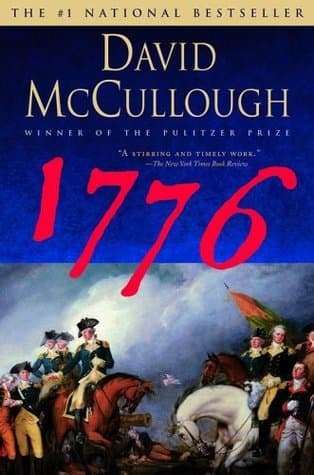
- 1776
David McCullough
4.1 (186k) average on GoodreadsPoliticsA non-fiction account covering a similar period of the Revolutionary War, focusing on Washington's leadership.
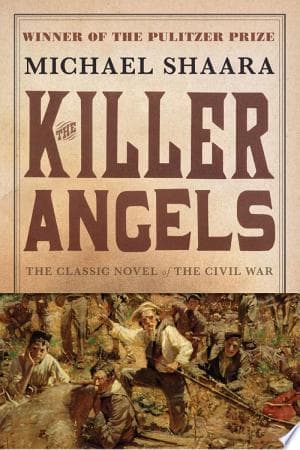
- The Killer Angels
Michael Shaara
4.3 (75k) average on GoodreadsHistorical FictionA classic historical novel of the Civil War, known for its character depth and multi-perspective approach to battle.
- To Kill a Mockingbird
Harper Lee
4.3 (4.5M) average on GoodreadsHistorical FictionIn the 1930s Jim Crow South, Harper Lee writes about racial injustice, moral growth, and the quiet courage of a lawyer father, Atticus Finch, as seen through his young daughter's eyes.
- The Great Gatsby
F. Scott Fitzgerald
3.9 (3.8M) average on GoodreadsHistorical FictionIn the opulent Roaring Twenties, a mysterious millionaire's lavish parties hide his desperate, tragic pursuit of a lost love, exposing the emptiness within the American Dream.
- Pride and Prejudice
Jane Austen
4.3 (3M) average on GoodreadsHistorical FictionIn a society focused on status and money, Elizabeth Bennet navigates love and pride, challenging Mr. Darcy and social expectations to find true affection.
- Angels & Demons
Dan Brown
3.9 (2.7M) average on GoodreadsThrillerA Harvard symbologist races through Rome's ancient sites, deciphering cryptic clues to unmask the Illuminati and stop a vengeful plot to destroy the Vatican with a stolen antimatter weapon.




Enjoyed the summary?
A summary gives you the shape of the book. The book itself has the detail, the examples and the voice.
Find The Glorious Cause on AmazonAs an Amazon Associate, BookBrief earns from qualifying purchases. How we're funded