
Synopsis
Covers the whole plot, including the ending.
- Difficulty
- Easy
- Pacing
- Fast
- Mood
- Adventurous, Thrilling, Exotic, Heroic
- Read it if
- You enjoy classic pulp sci-fi adventures with sword fights, daring escapes, and exotic alien worlds.
- Skip it if
- You prefer modern, character-driven narratives with deep philosophical themes and realistic science.
The Gods of Mars Plot Summary
Covers the whole plot, including the ending.
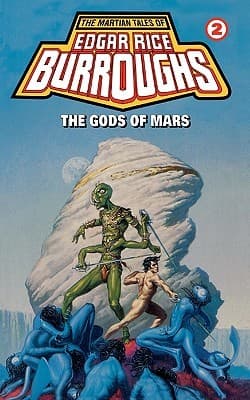
Return to Barsoom
After ten years on Earth, John Carter is suddenly sent back to Barsoom (Mars) by an unknown force. He appears in the Valley Dor, a feared region known as the 'Lost Sea of Korus,' said to be the resting place of Martian dead and guarded by plant-men. Carter immediately faces these creatures and a large white ape, barely surviving. He discovers a system of waterways leading to a large underground river, the River Iss, believed to carry Martian souls to their final reward. Carter, always an adventurer, follows this river, hoping it will lead him to civilization and Dejah Thoris.
The Temple of Issus
Following the River Iss, John Carter reaches the Temple of Issus, a huge, rich building within a hidden city. He learns the city's inhabitants are the Therns, white-skinned, blonde-haired humanoids who run a large religious fraud. They prey on Martians who pilgrimage to the Valley Dor, believing it is a spiritual journey to the 'heaven' of Issus. The Therns capture these pilgrims, enslaving some and sacrificing others to the plant-men and white apes they control. Carter sees these cruelties and, driven by his sense of justice and hope of finding Dejah Thoris, decides to expose their deception and rescue the captives.
Son of Two Worlds
While imprisoned by the Therns, John Carter makes a discovery: his son, Carthoris, the Jed (prince) of Helium, is also a captive. Carthoris, having followed Dejah Thoris and Thuvia (princess of Ptarth) into the Valley Dor, was also caught by the Therns. Their reunion is both happy and sad, as they are in trouble. Together, they escape their captors and plan to free themselves and expose the Thern plot to Barsoom. Their combined strength and fighting skills are strong against the Therns, who have become overconfident in their long deception. They also find Thuvia, which further complicates their escape.
Escape and New Alliances
John Carter, Carthoris, and Thuvia escape the Therns, moving through dangerous underground passages. They soon meet the Black Pirates of Barsoom, also called the First Born, black-skinned Martians who also live underground. At first, the Pirates are hostile, but Carter, by showing strength and diplomacy, forms an uneasy alliance with their leader, Xodar. Xodar, a disappointed Jeddak (king) of the First Born, reveals his people are also victims of Thern deceit, often forced into service. This alliance gives Carter needed military support and a way to navigate the underworld's complex politics.
The Goddess and the Prisoner
As the alliance with the Black Pirates grows, John Carter learns the truth about Dejah Thoris. She is alive but held by the Therns, meant to be sacrificed to their 'goddess,' Issus. Carter discovers Issus is not a god but an old, weak Thern queen, kept alive artificially and worshipped by her people as an immortal deity. This news increases Carter's anger and determination. He realizes the full extent of the Therns' manipulative power and their disrespect, as they use Barsoom's most sacred beliefs for their own evil plans. His mission is clear: rescue Dejah Thoris and destroy the cult of Issus.
Battle for the Temple
John Carter, leading his new allies – Carthoris, Thuvia, and the Black Pirates under Xodar – attacks the Temple of Issus. The battle is fierce, as the Therns, despite their overconfidence, defend their city with fanaticism. Carter's strategic mind and fighting skill are clear as he leads the charge, fighting through Thern warriors and their monsters. The Black Pirates, seeking revenge for generations of deceit, fight with equal ferocity. The temple, once a symbol of divine power, becomes a battleground, its rich halls stained with the blood of both deceivers and avengers. The goal is clear: reach Issus and free Dejah Thoris.
Confrontation with Issus
After a brutal fight, John Carter and his forces break into the inner sanctum of the Temple of Issus. Carter confronts Issus, a withered, old woman far from the god she pretends to be. She is surrounded by her guards and a few fanatical priests. Xodar, the Jeddak of the Black Pirates, reveals his secret: he is the true Jeddak of the First Born, and his people have been enslaved by the Therns for thousands of years. He uses this chance to get revenge, personally ensuring Issus's death. Her death breaks the Therns' spiritual power and sends their society into chaos. Dejah Thoris is found, but the victory is short-lived.
The Green Martian Threat
With Issus dead and the Therns in chaos, John Carter believes his mission is done. However, the chaos allows a new, immediate threat to appear. The Green Martians, led by the ruthless Jeddak Matai Shang, who was a high priest among the Therns, take control. They had secretly allied with the Therns, benefiting from pilgrims who wandered into their land. Matai Shang, clever and cruel, now seeks to gain power in the Valley Dor, taking Dejah Thoris and Thuvia captive again, along with other high-ranking Therns he now controls. Carter realizes the battle is not over, and a new, more dangerous enemy has emerged.
Captivity and the Plant-Men
John Carter, trying to rescue Dejah Thoris and Thuvia from Matai Shang, is captured. He is thrown into a gladiatorial arena, a cruel show run by the Green Martians and their new Thern allies. His opponents are the fierce plant-men of the Valley Dor, powerful creatures now controlled by Matai Shang. Carter, despite his strength and skill, faces overwhelming odds. This trial shows his resilience and fighting spirit, as he battles for survival for himself and for the hope of freeing his loved ones. The arena symbolizes the brutality still present in parts of Barsoom.
The Jeddak of Jeddaks
While John Carter is held captive, his son, Carthoris, takes a leadership role. With Xodar and the Black Pirates, Carthoris rallies the remaining allied forces, including disappointed Therns and other freed captives. He shows his strategic brilliance and courage, stepping out of his father's shadow to lead a counter-attack against Matai Shang and his Green Martian allies. Carthoris's leadership is important for keeping morale up and coordinating different groups. He becomes the Jeddak of Jeddaks, uniting various Martian races to fight for freedom and justice, proving himself a worthy successor to his father.
The Rescue and the Trap
Carthoris, leading the combined forces, manages to rescue Dejah Thoris and Thuvia. However, the victory is brief. Matai Shang, expecting their move, sets a trap. He seals off the fortress where Dejah Thoris and Thuvia were held, trapping John Carter, Carthoris, Dejah Thoris, Thuvia, and their closest allies inside. The fortress is designed to be impenetrable from outside and inescapable from within, with little air and food. This situation creates a race against time, as the heroes must find a way to escape before they starve or suffocate. The ending leaves them in a dangerous cliffhanger, their fate unknown.
Principal Figures
John Carter
Protagonist
The Warlord of Mars, a Virginian gentleman, and a formidable warrior.
John Carter is a former Confederate soldier from Virginia, inexplicably transported to Mars (Barsoom). He possesses superhuman strength and agility due to Mars's lower gravity. He is courageous, honorable, and fiercely loyal, especially to his wife, Dejah Thoris. His tactical brilliance and combat skills are unmatched, making him a revered figure across Barsoom. He is driven by a deep sense of justice and a relentless desire to protect his loved ones and the innocent.
Relationships: Dejah Thoris (Wife, his primary motivation and love interest); Carthoris (Son, whom he discovers and fights alongside); Xodar (Ally and eventual friend, Jeddak of the Black Pirates); Thuvia (Ally and friend, Princess of Ptarth)
Dejah Thoris
Supporting
Princess of Helium and John Carter's beloved wife.
Dejah Thoris is the beautiful and intelligent Princess of Helium, and John Carter's wife. She is a symbol of beauty, grace, and courage, often serving as the primary motivation for Carter's actions. Though frequently a captive, she is not a damsel in distress; she possesses her own strength of character, resilience, and a deep love for her family and people. Her capture by the Therns and later Matai Shang propels much of the narrative, highlighting the stakes of Carter's quest.
Relationships: John Carter (Husband, her savior and love); Carthoris (Son, a source of hope and pride)
Carthoris
Supporting
Son of John Carter and Dejah Thoris, Jed (prince) of Helium.
Carthoris is the son of John Carter and Dejah Thoris, a brave and skilled warrior in his own right. He shares his father's courage and strategic mind, and his mother's noble bearing. He is initially captured while searching for his mother and Thuvia, but quickly proves his worth in battle alongside his father. Carthoris demonstrates leadership qualities, eventually rallying forces and taking command when his father is incapacitated. He is a symbol of the next generation of Martian heroes.
Relationships: John Carter (Father, whom he admires and fights alongside); Dejah Thoris (Mother, whom he seeks to rescue); Thuvia (Love interest and fellow captive)
Thuvia
Supporting
Princess of Ptarth, captured alongside Dejah Thoris.
Thuvia is the beautiful Princess of Ptarth, a powerful Martian city-state. She is a friend and companion to Dejah Thoris and becomes a love interest for Carthoris. Like Dejah Thoris, she is brave and resilient in captivity, enduring the horrors of the Therns and Matai Shang with dignity. Her presence adds a romantic subplot and another layer of motivation for Carthoris, as he is equally determined to ensure her safety and freedom. She represents another victim of the Therns' deception and a symbol of the alliances forged against them.
Relationships: Carthoris (Love interest); Dejah Thoris (Friend and fellow captive)
Matai Shang
Antagonist
A cunning and cruel Thern priest who seizes power.
Matai Shang is a high-ranking Thern priest who, upon the collapse of Issus's rule, quickly seizes power and becomes the primary antagonist. He is characterized by his cunning, cruelty, and ambition. Unlike the more complacent Therns, Matai Shang is a proactive and dangerous enemy, forming alliances with the Green Martians and employing ruthless tactics to maintain control. He represents the continued threat of deception and tyranny, even after the initial 'gods' have fallen, showcasing that evil can adapt and resurface.
Relationships: John Carter (Arch-enemy, directly opposes Carter's goals); Issus (Former subordinate, now usurps her power)
Xodar
Supporting
Jeddak of the Black Pirates (First Born) and ally to John Carter.
Xodar is a Jeddak of the Black Pirates (First Born), a race of black-skinned Martians who dwell in the subterranean regions. He is initially an antagonist but quickly becomes a crucial ally to John Carter. Xodar is a proud and honorable warrior, deeply resentful of the Therns' long-standing deception and the servitude they have imposed on his people. He is instrumental in providing military support and navigating the complex underworld. His personal vendetta against Issus and his people's desire for freedom drive his alliance with Carter.
Relationships: John Carter (Ally and friend, forms a crucial alliance); Issus (Personal enemy, responsible for his people's oppression)
Issus
Antagonist
The false goddess worshipped by the Therns, an ancient and decrepit queen.
Issus is the supposed goddess of the Therns, revered by all Martians who undertake the pilgrimage to the Valley Dor. In reality, she is an incredibly ancient, decrepit Thern queen, kept alive through artificial means and used as the figurehead for a massive religious fraud. She is cruel, manipulative, and demands constant tribute and sacrifice. Her existence is the core of the Thern deception, and her downfall is a pivotal moment in the story, revealing the true nature of their false religion.
Relationships: John Carter (Antagonist, her reign is challenged and ended by him); Matai Shang (One of her priests, who later usurps her power)
The Therns
Antagonist
A race of white-skinned Martians who perpetuate a religious fraud.
The Therns are a secretive race of white-skinned, blonde-haired Martians who inhabit the Valley Dor. They have created an elaborate religious deception, convincing the rest of Barsoom that the Valley is a sacred journey to the afterlife, where Issus awaits. In truth, they capture, enslave, and sacrifice pilgrims to maintain their power and control. They are arrogant, complacent, and deeply entrenched in their lies, making them formidable yet ultimately vulnerable antagonists. Their entire society is built on a foundation of falsehood and exploitation.
Relationships: John Carter (Their primary enemy, who exposes their fraud); Issus (Their false goddess and figurehead)
The Plant-Men
Mentioned
Grotesque creatures serving the Therns and later the Green Martians.
The Plant-Men are terrifying, grotesque creatures that inhabit the Valley Dor. They are carnivorous, with long, tentacled limbs and horrific visages. They are initially presented as wild beasts, but it is later revealed that they are controlled by the Therns, serving as guards, executioners, and gladiatorial opponents. They are a constant threat in the Valley Dor, embodying the savage dangers of this forbidden land. Their presence underscores the barbarity of the Thern system and the perilous environment John Carter finds himself in.
Relationships: The Therns (Their masters and controllers); Matai Shang (New master after the Therns' fall)
Themes & Insights
Deception and False Religion
A main theme is the large religious fraud carried out by the Therns. They use Martians' beliefs about the River Iss and the journey to Issus, creating a false paradise that is actually a death trap. This deception lasts for generations, enslaving and sacrificing many pilgrims. John Carter's quest is to expose this lie and free Barsoom from its spiritual bonds. The revelation that Issus is a mortal, old queen (Scene 7) shatters this false religion, showing how powerful groups can use faith for their own evil purposes.
“For ages they have preyed upon the honest superstitions of a planet, and grown fat and powerful upon the murder of countless millions of innocents.”
Heroism and Redemption
John Carter is a hero, driven by courage, honor, and a desire to protect the innocent and his loved ones. His journey is full of danger, but he never gives up. This theme is also seen in characters like Xodar, who seeks to make up for his people's long service under the Therns by allying with Carter and fighting for freedom. Carthoris also rises to the occasion, showing his own heroism by leading forces when his father is unable. The heroes fight not just for themselves, but for the freedom and truth of a planet.
“I was John Carter, Warlord of Mars, and I was going to carve a path to my love through the hearts of a million foes if need be.”
The Cycle of Power and Tyranny
Even after the Therns and the false goddess Issus are defeated, a new enemy, Matai Shang, quickly appears, taking power and continuing the cycle of tyranny in a different form. This shows that while specific evils can be overcome, the desire for power and control can quickly return. The fight against oppression is never truly over, as one tyrant often replaces another. The ending, with the heroes trapped by Matai Shang, highlights this repeating nature, suggesting the fight for freedom is ongoing, even if the oppressors change.
“One tyrant falls, and another rises to take his place. It is ever the way of Barsoom.”
Family and Loyalty
Family and loyalty are strong motivators throughout the story. John Carter's main goal is to find and rescue his wife, Dejah Thoris, and later, his son, Carthoris. The reunion between father and son (Scene 3) is a strong moment, showing the importance of family. Carthoris, in turn, is driven by his loyalty to his mother and his growing love for Thuvia. These personal connections raise the stakes of the larger conflict, making the fight against the Therns and Matai Shang not just a battle for justice, but a personal quest to protect family.
“For Dejah Thoris, for our son, and for the freedom of Barsoom!”
Plot Devices & Literary Techniques
Deus ex machina (Teleportation)
John Carter's inexplicable return to Mars.
John Carter's sudden and unexplained return to Barsoom after ten years on Earth serves as a classic *deus ex machina*. This device immediately thrusts him back into the narrative, bypassing any need for a detailed explanation of his transport or the intervening years. It allows the story to begin *in medias res* with Carter already on Mars, ready to face new challenges. While convenient, it is a hallmark of Burroughs's style, prioritizing adventure and immediate action over scientific plausibility for the sake of pacing and plot progression.
The MacGuffin (Dejah Thoris)
The primary object of desire that drives the plot.
Dejah Thoris serves as a classic MacGuffin, especially in the early parts of the novel. Her disappearance and subsequent captivity are the primary drivers of John Carter's actions and the overarching quest. While she is a developed character, her role as the 'object to be rescued' is central to propelling Carter through the dangerous Valley Dor and into conflict with the Therns. Her constant imperilment ensures continuous motivation and raises the stakes for the protagonist, even as she herself contributes to the narrative's emotional depth.
The Prophecy/Myth
The widespread belief in the River Iss and the goddess Issus.
The legend of the River Iss leading to the divine Issus is a powerful plot device. It is a widely held belief across Barsoom, driving countless pilgrims to their doom and providing the Therns with their means of control. This prophecy creates the entire setting and conflict of the Valley Dor. The eventual subversion of this prophecy, revealing Issus as a mortal fraud, is a major turning point, dismantling a societal pillar and exposing the true nature of the antagonists' power. It sets up the grand deception that Carter must uncover.
The Cliffhanger Ending
The protagonists trapped in an inescapable fortress.
The novel concludes with a dramatic cliffhanger: John Carter, Dejah Thoris, Carthoris, Thuvia, and their allies are trapped in a sealed fortress by Matai Shang, facing certain death by asphyxiation or starvation. This device is used to build suspense and ensure reader engagement for the next installment in the series. It leaves the protagonists in a seemingly insurmountable predicament, highlighting the ongoing nature of their struggle and promising further adventures and resolutions in the subsequent books. It's a classic pulp fiction technique to compel continued readership.
The Gods of Mars Quotes
“I am a very old man, and the only thing I have learned in life is that it is a fool's game to try to understand the ways of the gods.”
“For countless ages the Therns have ruled Mars, and for countless ages they have been a blight upon its face.”
“There are no gods but those of our own making.”
“To die for love is a glorious thing; but to live for love, that is the greatest glory of all.”
“It is not the size of the body that counts, but the size of the heart.”
“Fear is the greatest enemy of all, for it robs a man of his reason and leaves him a helpless prey to his own imaginings.”
“The greatest battles are not fought with swords and spears, but within the hearts of men.”
“Even in the face of certain death, hope is a weapon that can turn the tide of battle.”
“There is no evil so great that it cannot be overcome by the will of a righteous man.”
“The truth, like water, will always find its way to the surface, no matter how deeply it is buried.”
“To die fighting for what you believe in is a far greater honor than to live a slave to a lie.”
“A man's worth is not measured by the power he wields, but by the justice he serves.”
“The universe is filled with wonders far beyond the grasp of mortal understanding, and it is in seeking these wonders that we truly live.”
“Sometimes the greatest strength lies in knowing when to surrender to a higher power, or a greater love.”
Quiz
10 questions on the plot and the characters. Each answer comes with a short explanation.
Question 1
Upon his return to Mars, where does John Carter initially find himself trapped?
- The Valley Dor
- Greater Helium
- The City of Okar
- The Gorges of Barsoom
Show answer
A. The Valley Dor After his return to Mars, John Carter materializes in the Valley Dor, a legendary place from which none are supposed to escape alive.
Question 2
Who is the 'Goddess' that rules over the Therns in the Valley Dor?
- Thuvia
- Issus
- Phascom
- Dejah Thoris
Show answer
B. Issus Issus is the supreme 'Goddess' worshipped by the Therns, who reside in the Valley Dor.
Question 3
What is the primary food source for the Therns and their captives in the Valley Dor?
- Synthesized algae
- Fruits from the Gardens of Issus
- Jeddak-fruit
- The flesh of the white apes and their own kind
Show answer
D. The flesh of the white apes and their own kind The Therns sustain themselves and their captives, including the Holy Therns, by consuming the flesh of white apes, and ultimately, each other, in a twisted hierarchy.
Question 4
Which character serves as John Carter's loyal companion and fellow warrior throughout much of his journey in 'The Gods of Mars'?
- Tars Tarkas
- Kantos Kan
- Xodar
- Thurk
Show answer
D. Thurk Thurk, a Thern who rebels against his own kind, becomes a steadfast ally to John Carter, fighting alongside him against the Therns and other enemies.
Question 5
What is the true nature of the 'River Iss' that flows through the Valley Dor?
- A sacred stream of pure water
- A river of liquid oxygen
- A subterranean waterway leading to the Sea of Korus
- A river of blood from sacrificial victims
Show answer
C. A subterranean waterway leading to the Sea of Korus The River Iss is not a mythical 'river of death' but a subterranean waterway that eventually leads to the Sea of Korus, where the Black Pirates reside.
Question 6
What is the name of the Black Pirate Jeddak who captures Dejah Thoris and later battles John Carter?
- Salensus Oll
- Matai Shang
- Astok
- Aram
Show answer
D. Aram Aram is the Jeddak of the Black Pirates (First Born) who holds Dejah Thoris captive and is a significant antagonist to John Carter.
Question 7
What is the ultimate fate of Issus, the false goddess, at the climax of the novel?
- She is killed by John Carter in single combat.
- She escapes deeper into the Martian interior, swearing revenge.
- She is devoured by the Plant Men after being overthrown by her own followers.
- She commits suicide rather than face capture.
Show answer
C. She is devoured by the Plant Men after being overthrown by her own followers. After her true nature is revealed and her power crumbles, Issus is ultimately devoured by the Plant Men, a fitting end for the false deity.
Question 8
What is the significance of the 'Temple of the Sun' in the narrative?
- It is where the Therns perform their most sacred rituals to Issus.
- It is the ancient burial ground of Martian Jeddaks.
- It is the location where Dejah Thoris, Thuvia, and Phaidor are imprisoned, with a rotating wall that will eventually expose one to a slow death.
- It houses the last remaining air-generating plant on Mars.
Show answer
C. It is the location where Dejah Thoris, Thuvia, and Phaidor are imprisoned, with a rotating wall that will eventually expose one to a slow death. The Temple of the Sun is a cruel prison where Dejah Thoris, Thuvia, and Phaidor are placed in cells that rotate, exposing one to the Martian elements and certain death over a year's cycle.
Question 9
Which character is revealed to be John Carter's son, separated from him since birth?
- Tars Tarkas
- Carthoris
- Dor
- Ras Thavas
Show answer
. This question is a trick! While John Carter does have a son named Carthoris, he is not revealed in 'The Gods of Mars'. This novel focuses on his quest to find Dejah Thoris and uncover the secrets of Issus and the Therns. Carthoris's adventures and his reunion with John Carter are more prominent in later books. This question tests knowledge of the specific book's content vs. the broader series.
Question 10
What is the underlying theme regarding religious belief and deception explored through the Therns and Issus?
- The power of faith to unite diverse cultures.
- The inherent goodness of all religious leaders.
- The danger of blind obedience and the manipulation of belief for power and control.
- The spiritual enlightenment found through pilgrimage to sacred sites.
Show answer
C. The danger of blind obedience and the manipulation of belief for power and control. The Therns' and Issus's entire system is built on a grand deception, preying on the beliefs of others to maintain their power and control, highlighting the dangers of unquestioning faith.
The Gods of Mars FAQ
What is the primary goal of John Carter upon his return to Barsoom?
Upon his miraculous return to Barsoom, John Carter's overriding objective is to find and rescue his beloved wife, Dejah Thoris, who has mysteriously vanished during his ten-year absence. His search quickly leads him into the perilous Valley Dor and the legendary River Iss, where he believes she may be held captive.
How does John Carter manage to return to Mars after his long exile on Earth?
John Carter returns to Mars through a mysterious astral projection, similar to his first journey, but this time it is facilitated by a psychic connection he maintains with the red planet. He finds himself re-materialized in a different location, near the Valley Dor, rather than directly back in Helium, which complicates his immediate reunion with his family.
Who are the Therns, and what role do they play in the initial plot?
The Therns are a white-skinned, supposedly divine race inhabiting the Valley Dor, who perpetuate a grand religious deception upon the Barsoomian populace. They are responsible for capturing pilgrims who journey down the River Iss, enslaving them or sacrificing them to the plant men, and they become John Carter's first major antagonists upon his return.
What is the significance of the Valley Dor and the River Iss in Barsoomian religion?
The Valley Dor and the River Iss are central to Barsoomian religion, believed to be the sacred path to the 'heaven' of Issus and a place of eternal bliss for those who embark on the final pilgrimage. In reality, it is a deadly trap orchestrated by the Therns and their masters, leading pilgrims to slavery or death, not paradise.
Who is Thuvia, and how does she aid John Carter?
Thuvia is a beautiful Martian princess of Ptarth, whom John Carter rescues from the Therns' captivity in the Valley Dor. She becomes a loyal companion, offering crucial information about the Therns' operations and the geography of the forbidden lands, and her unwavering devotion provides emotional support to Carter during his arduous quest.
What is the true identity of the goddess Issus, and what does this reveal about Barsoomian society?
The true identity of the goddess Issus is a decrepit, ancient black Martian woman who is the supreme leader of the Therns and the First Born, perpetuating the grand religious hoax. This revelation exposes the deep-seated corruption and manipulation at the heart of Barsoomian religious beliefs, showing how an entire civilization can be controlled through engineered faith.
How does Carter's reunion with Tars Tarkas differ from his expectations, and what does it reveal about the passage of time?
Carter's reunion with Tars Tarkas is initially delayed and then complicated by the fact that Tars Tarkas has risen to the rank of Jeddak of Thark during Carter's absence. This highlights the significant passage of time on Barsoom and the changes that have occurred, underscoring Carter's personal loss of time with his loved ones and his world.
What is the nature of the 'plant men' encountered in the Valley Dor, and what is their purpose?
The 'plant men' (or Manatorian plants) are monstrous, grotesque creatures with tentacled limbs and ravenous appetites, serving as a terrifying natural defense and executioner within the Valley Dor. They are used by the Therns to dispose of pilgrims who fail to meet their standards or to instill fear, reinforcing the false sanctity and danger of the region.
What is the significance of the First Born (black Martians) in the hierarchy of the Valley Dor?
The First Born are the black Martians, who are the true masters of the Therns and the ultimate orchestrators of the Barsoomian religious deception, with Issus as their empress. They represent the apex of the parasitic social structure in the Valley Dor, living off the tribute and sacrifices of the deceived Barsoomian races.
How does John Carter's experience in the Valley Dor challenge his understanding of Barsoomian culture and beliefs?
John Carter's journey through the Valley Dor fundamentally shatters his previous understanding of Barsoomian religion, revealing it as a cruel hoax designed for exploitation. He witnesses the systematic deception and suffering inflicted upon pilgrims, forcing him to confront the dark underbelly of a culture he once admired and fought for.
Discuss the psychological impact of Dejah Thoris's disappearance on John Carter.
Dejah Thoris's disappearance plunges John Carter into a state of profound distress and relentless determination, fueling his every action. Her absence represents not only a personal loss but also a challenge to his very identity and purpose, driving him through seemingly insurmountable obstacles with a single-minded focus that borders on obsession.
How does Carter's leadership style evolve or remain consistent as he gathers allies in this new adventure?
John Carter's leadership remains consistent in its core principles of courage, selflessness, and strategic thinking, but it evolves by adapting to the unfamiliar alliances he forges. He demonstrates an ability to inspire loyalty and respect across diverse Martian races, including the Therns' former slaves and the First Born's captives, by proving his integrity and fighting prowess.
What psychological factors contribute to the Barsoomian populace's blind faith in the pilgrimage to the Valley Dor?
The Barsoomian populace's blind faith is maintained by centuries of ingrained tradition, the fear of divine retribution for questioning the pilgrimage, and the powerful allure of an promised afterlife. The Therns skillfully exploit humanity's inherent desire for meaning and eternal peace, using fear and hope to perpetuate their elaborate deception.
Is the ending of 'The Gods of Mars' a satisfying resolution, or does it primarily serve as a cliffhanger?
The ending of 'The Gods of Mars' is undeniably a cliffhanger, leaving Dejah Thoris, Thuvia, and Phaidor trapped in a sealed temple with John Carter uncertain of their fate. While Carter achieves a significant victory against the Therns and First Born, the immediate peril of his loved ones ensures that the reader is left with unresolved tension and a strong desire for the next installment.
What themes of deception and revelation are central to the narrative of 'The Gods of Mars'?
Deception and revelation are core themes, with the entire Barsoomian religion being exposed as an elaborate hoax by the Therns and First Born. The narrative systematically strips away layers of false piety and sacred myths, revealing the cruel, exploitative truth behind the Valley Dor and the goddess Issus, forcing characters and readers to question established beliefs.
How does the introduction of the First Born (black Martians) complicate the existing racial dynamics on Barsoom?
The introduction of the First Born adds a new, darker layer to Barsoom's racial dynamics by revealing a previously unknown, dominant race that has secretly controlled the religious fate of all others. They complicate the existing red, green, and white Martian interactions by demonstrating a hidden hierarchy of power and manipulation that underpins the entire planet's societal structure.
Discuss the moral ambiguity of some characters, particularly Phaidor, and her role in the story.
Phaidor, a Thern priestess, embodies significant moral ambiguity; initially a captor and antagonist, she later develops a complex affection for John Carter and ultimately sacrifices herself. Her actions are driven by a mix of duty, unrequited love, and despair, making her a tragic figure whose final act serves as a pivotal, if morally conflicted, turning point for Carter's loved ones.
What is the ultimate message or critique of organized religion presented in the book?
The book presents a scathing critique of organized religion, portraying it as a tool for manipulation, control, and exploitation by a powerful elite. The Barsoomian pilgrimage to Issus is revealed as a grand deceit, demonstrating how faith can be weaponized to maintain power and perpetuate suffering, rather than offering genuine spiritual solace or guidance.
About the author
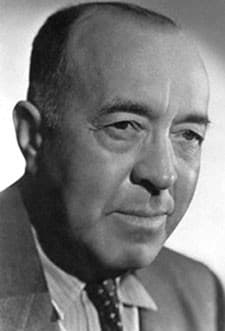
Edgar Rice Burroughs was an American writer, best known for his prolific output in the adventure, science fiction, and fantasy genres. Best-known for creating the characters Tarzan and John Carter, he also wrote the Pellucidar series, the Amtor series, and the Caspak trilogy.
Similar books
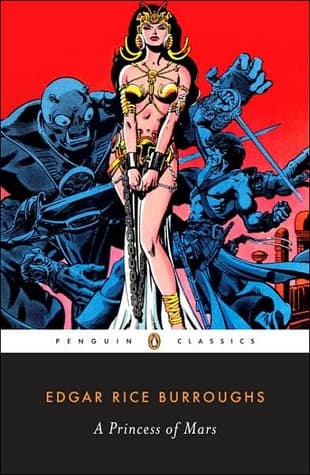
- A Princess of Mars
Edgar Rice Burroughs
3.8 (51k) average on GoodreadsFantasyThe first book in the Barsoom series, establishing John Carter's initial adventures.
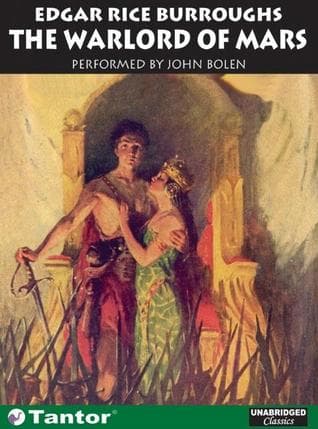
- The Warlord of Mars
Edgar Rice Burroughs
3.9 (13k) average on GoodreadsFantasyThe direct sequel, continuing John Carter's saga on Barsoom.
- The War of the Worlds
H.G. Wells
3.8 (245k) average on GoodreadsFantasyBoth 'The Gods of Mars' and 'The War of the Worlds' (1898) are foundational works of early science fiction involving interplanetary conflict, but their approaches differ significantly. Wells' novel is a more philosophical and allegorical work, using the Martian invasion to critique imperialism and explore the fragility of human civilization. Its tone is often bleak and existential, focusing on humanity's struggle for survival against an utterly alien and superior force. Burroughs, in contrast, prioritizes swashbuckling adventure and heroic individualism. While 'Gods' has thematic elements of challenging dogma, it doesn't aim for the same level of socio-political commentary or scientific realism as Wells. Burroughs' Barsoom is a romanticized, fantastical Mars, whereas Wells' Mars is a dark reflection of Earth's imperialistic tendencies.
- Harry Potter and the Sorcerer's Stone
J.K. Rowling
4.5 (7M) average on GoodreadsFantasyRescued from a miserable life under the stairs, an orphaned boy discovers he's a wizard destined for a magical school, where he uncovers a dangerous secret tied to the dark wizard who murdered his parents.
- The Hunger Games
Suzanne Collins
4.3 (6.4M) average on GoodreadsFantasyIn a future where children fight to the death on live television, Katniss Everdeen volunteers for the arena, turning a death sentence into a fight for survival and a spark of rebellion.
- 1984
George Orwell
4.2 (3.1M) average on GoodreadsPoliticsIn a future where surveillance and thought control are absolute, a man's search for truth clashes with the Party, showing that hope can be a form of rebellion.




Enjoyed the summary?
A summary gives you the shape of the book. The book itself has the detail, the examples and the voice.
Find The Gods of Mars on AmazonAs an Amazon Associate, BookBrief earns from qualifying purchases. How we're funded