
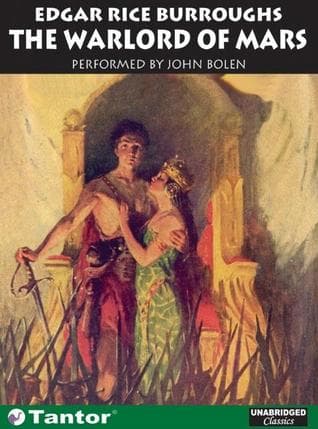
Synopsis
Covers the whole plot, including the ending.
- Difficulty
- Easy
- Pacing
- Fast
- Mood
- Adventurous, Thrilling, Heroic, Exotic
- Read it if
- You love classic pulp sci-fi adventures with sword fights, daring rescues, and exotic alien worlds.
- Skip it if
- You prefer modern prose, complex character development, or less episodic plot structures.
The Warlord of Mars Plot Summary
Covers the whole plot, including the ending.
Trapped and Separated
After the events of *The Gods of Mars*, John Carter is in a difficult situation. He is on a giant Martian airship, the *Phatos*, which the Therns, a race of deceptive priests, have remotely flown. His wife, Dejah Thoris, and his friend, Thuvia of Ptarth, are on a separate, broken vessel, the *Silas*, which has drifted away. Carter is trapped on the *Phatos* with Phaidor, a Thern priestess who is obsessed with him and tries to kill Dejah Thoris out of jealousy. The *Phatos* is heading for a crash into the Valley Dor, a sacred but deadly place, while the *Silas* drifts toward an unknown fate.
Escape from the Valley Dor
John Carter overpowers Phaidor and escapes the *Phatos* as it crashes into the Valley Dor. He is now in the sacred land of the Therns, a place no outsider has ever left alive. Carter navigates the difficult land and confronts several Therns, including the Holy Thern, Matai Shang, who reveals that Dejah Thoris and Thuvia were not killed but were captured and taken to the realm of the Black Pirates of Barsoom (the First Born). Carter, determined to rescue his wife, decides to infiltrate this new enemy's territory.
The Black Pirates of Barsoom
Disguising himself as a First Born warrior, John Carter enters their underground city of Kadabra, located beneath the Martian sea. He learns that the First Born are an advanced, black-skinned race who prey on other Martians, especially those who go into the Valley Dor. They are ruthless and technologically superior, with powerful airships and weapons. Carter discovers that Dejah Thoris and Thuvia are prisoners in Kadabra, held by the commander, Thurid, and his son, Astok. He also learns that the First Born worship Issus, the false goddess of the Therns.
Rescue and Revelation
John Carter plans a daring rescue of Dejah Thoris and Thuvia from Kadabra. With help from Xodar, a First Born who dislikes his people's ways, Carter frees them. However, their escape is brief. During their flight, a fleet of Warhoons, a fierce green Martian tribe, attacks them. In the confusion, Dejah Thoris is again separated from Carter, captured by the Warhoons, while Thuvia and Carter escape, though badly wounded. This new separation strengthens Carter's resolve to continue his pursuit.
Alliance with the Green Martians
John Carter, along with Thuvia, eventually reaches the green Martian city of Thark, where he reunites with his old friend, Tars Tarkas, the Jeddak of Thark. Carter tells his story and about Dejah Thoris's repeated abductions. Tars Tarkas, a loyal and strong warrior, promises his full support for Carter's quest. Together, they gather a large army of green Martians and begin a campaign to find and rescue Dejah Thoris from the Warhoons, who are known for their nomadic and unpredictable movements across Barsoom.
Pursuit Across Barsoom
John Carter, leading the Thark horde with Tars Tarkas, pursues the Warhoons across large parts of Barsoom. Their journey takes them through dangerous deserts, ancient ruins, and various Martian lands. They fight several battles with different tribes and creatures, gathering information and narrowing down Dejah Thoris's possible locations. Despite their efforts, the Warhoons are hard to find, constantly moving and using clever tactics to avoid their pursuers, testing Carter's patience.
The Frozen North
The pursuit of the Warhoons eventually leads John Carter and his green Martian army to the far northern regions of Barsoom, a mysterious and largely unexplored place. Here, the land becomes a frozen wasteland, a contrast to the red deserts they are used to. They discover a hidden, technologically advanced civilization living under the ice, a race of yellow Martians known as the Orovars. These Orovars have perfected how to live in their cold environment and have powerful weapons and advanced airships.
The Orovars and Imprisonment
When they meet the Orovars, John Carter and his companions are quickly overcome by their superior technology and numbers. They are captured and imprisoned in the Orovars' hidden city under the ice. Carter learns that the Orovars have also captured the Warhoons, including Dejah Thoris, who is held by the Orovar Jeddak, Salensus Oll. Salensus Oll, a cruel ruler, wants Dejah Thoris for himself and sees Carter as a threat. Carter must now find a way to escape and rescue Dejah Thoris from this new, powerful enemy.
A Daring Escape and Final Confrontation
With the help of an Orovar princess, John Carter escapes. He quickly gathers his green Martian allies and plans a full attack on the Orovar city. A large battle begins, pitting the green Martians against the advanced Orovars. During the chaos, Carter confronts Salensus Oll in a fierce fight, ending in the Orovar Jeddak's death. At the same time, Tars Tarkas and the green Martians secure the city, ensuring the safety of Dejah Thoris and the other captives.
Reunion and Resolution
After Salensus Oll's defeat, John Carter is finally reunited with Dejah Thoris. The various Martian groups, including the Therns, First Born, Warhoons, and Orovars, are brought to reason and justice. The false religion of Issus is exposed, and peace is gradually established across Barsoom. Carter, now a hero across the planet, secures his place as the Warlord of Mars, ensuring Helium's safety and his princess's well-being. The planet enters a new era of stability under his influence.
Principal Figures
John Carter
Protagonist
A Virginian gentleman and former Confederate officer, now a powerful warrior on Mars.
John Carter is a man of unwavering courage, loyalty, and strength. He is driven by an intense love for Dejah Thoris and an unshakeable sense of duty. Despite being an outsider to Barsoom, he has risen to become a respected and feared warrior, capable of inspiring loyalty in diverse Martian races. His resourcefulness, fighting prowess, and strategic mind are key to his survival and success. He is also compassionate, often showing mercy to those who aid him, even his enemies.
Relationships: Dejah Thoris (Husband, deeply in love and fiercely protective.); Tars Tarkas (Loyal friend and military ally.); Thuvia (Loyal friend and companion.); Matai Shang (Arch-enemy, source of many of his troubles.); Phaidor (Obsessed admirer and momentary captor.)
Dejah Thoris
Supporting
The beautiful Princess of Helium and John Carter's beloved wife.
Dejah Thoris is the epitome of Martian beauty and grace, but she is also intelligent, brave, and possesses a strong will. Despite her frequent abductions, she never loses hope or dignity. She is a symbol of everything John Carter fights for and represents the ideals of Helium. Her resilience and unwavering love for Carter are a constant source of inspiration for him. She is a figure of immense importance, her safety often dictating the course of major conflicts on Barsoom.
Relationships: John Carter (Wife, deeply in love and devoted.); Matai Shang (Captor and tormentor.); Thurid (Captor, desires her for himself.); Salensus Oll (Captor, desires her for himself.)
Tars Tarkas
Supporting
The Jeddak of Thark, a powerful and honorable green Martian warrior.
Tars Tarkas is a formidable green Martian warrior, known for his immense strength and fighting prowess. He is one of John Carter's most loyal and trusted friends and allies. Despite the brutal customs of his race, Tars Tarkas possesses a deep sense of honor and loyalty, particularly towards Carter. He is a shrewd leader and a fearless combatant, always ready to stand by Carter's side in battle. His presence provides significant military might to Carter's quest.
Relationships: John Carter (Loyal friend and military ally.); Sola (Daughter (mentioned, from previous books).)
Thuvia of Ptarth
Supporting
A loyal princess of Ptarth, devoted to John Carter.
Thuvia is a beautiful and brave red Martian princess, deeply devoted to John Carter. She was rescued by Carter in a previous adventure and has since become a loyal companion. Her unwavering loyalty and affection for Carter are evident throughout the narrative, though she understands his love for Dejah Thoris. She provides emotional support and acts as a capable assistant in several critical moments, often sharing in Carter's dangers and escapes. Her presence highlights Carter's ability to inspire devotion.
Relationships: John Carter (Loyal friend and companion, unrequited love.); Dejah Thoris (Fellow captive and companion.)
Matai Shang
Antagonist
The Holy Thern, a deceptive and powerful priest.
Matai Shang is a cunning and ruthless Holy Thern, one of the primary architects of the false religion of Issus. He is a master manipulator, using deception and fear to maintain his power and control over vast populations. He holds a deep-seated hatred for John Carter, who continually disrupts his plans and exposes the lies of the Therns. Shang is driven by a desire to maintain his status and avenge the perceived slights against his order. He represents the entrenched religious and political corruption on Barsoom.
Relationships: John Carter (Arch-enemy and rival.); Dejah Thoris (Captor.); Phaidor (His daughter, whom he uses as a pawn.)
Phaidor
Supporting
A Thern priestess, infatuated with John Carter.
Phaidor is a Thern priestess and the daughter of Matai Shang. She is a complex character, torn between her duty to the Thern religion and her powerful, unrequited love for John Carter. Her jealousy and passion lead her to both attempt to harm Dejah Thoris and, at times, to aid Carter. She is impulsive and driven by strong emotions, making her an unpredictable element in Carter's early journey. Her actions often inadvertently propel the plot forward, despite her conflicted intentions.
Relationships: John Carter (Obsessed admirer.); Matai Shang (Father and manipulator.); Dejah Thoris (Rival for Carter's affection.)
Thurid
Antagonist
A ruthless commander of the First Born (Black Pirates).
Thurid is a cruel and ambitious commander of the First Born, the Black Pirates of Barsoom. He is a ruthless warrior who takes pleasure in his power and the suffering of his captives. He desires Dejah Thoris for himself, adding a personal dimension to his antagonism towards John Carter. Thurid represents the barbaric and predatory nature of the First Born, and his defeat is crucial for the safety of Carter's wife. He is a direct obstacle in Carter's quest during the segment involving the First Born.
Relationships: John Carter (Enemy, rival for Dejah Thoris.); Dejah Thoris (Captor, desires her.); Astok (Son.)
Astok
Supporting
Son of Thurid, also a First Born warrior.
Astok is the son of Thurid, sharing some of his father's ambition and ruthlessness. He is a capable warrior within the First Born hierarchy. While not as prominent an antagonist as his father, he contributes to the challenges Carter faces during his time among the Black Pirates. He is driven by a desire to impress his father and advance his own standing within their society. His actions often reflect the broader predatory nature of the First Born.
Relationships: Thurid (Father.); John Carter (Enemy.)
Xodar
Supporting
A disillusioned First Born warrior who aids John Carter.
Xodar is a First Born warrior who has grown disillusioned with the cruel and deceptive ways of his people. He secretly yearns for justice and truth, making him a surprising ally for John Carter. His assistance is crucial in Carter's infiltration of Kadabra and the initial rescue of Dejah Thoris and Thuvia. Xodar represents the possibility of redemption and change even within the most hardened societies, demonstrating that not all individuals conform to their culture's negative traits. He is a testament to Carter's ability to inspire good.
Relationships: John Carter (Ally, helps Carter escape.); Thurid (Superior, whom he betrays.)
Salensus Oll
Antagonist
The tyrannical Jeddak of the Orovars, the yellow Martians of the north.
Salensus Oll is the despotic ruler of the Orovars, a technologically advanced yellow Martian race living in the frozen north. He is arrogant, cruel, and fiercely protective of his hidden kingdom. Like Thurid, he desires Dejah Thoris for himself and views John Carter as a personal rival and threat. Salensus Oll represents the final, most formidable obstacle in Carter's quest, possessing advanced weaponry and a large, disciplined army. His defeat is essential to ensure the lasting peace of Barsoom and Dejah Thoris's freedom.
Relationships: John Carter (Final major enemy, rival for Dejah Thoris.); Dejah Thoris (Captor, desires her.)
Themes & Insights
Unwavering Love and Loyalty
The main theme is John Carter's endless love for Dejah Thoris, which drives his pursuit across Barsoom. Despite repeated separations, difficult odds, and encounters with powerful enemies, Carter never stops trying to rescue his wife. This theme is also seen in the loyalty of characters like Tars Tarkas and Thuvia, who risk their lives to help Carter. For example, Tars Tarkas mobilizes an entire green Martian horde to help Carter search, showing a strong bond of friendship.
“For Dejah Thoris, I would conquer the universe, or die in the attempt.”
The Perils of Deception and False Religion
The novel criticizes deception, especially through organized religion. The Therns, led by Matai Shang, keep their power by maintaining the false religion of Issus, which promises paradise but brings only death. This theme is clear when Carter exposes the Therns' lies and reveals the true nature of the First Born, who also worship Issus. The entire Valley Dor shows how manipulation and fear can control whole populations, highlighting the danger of blindly following unverified beliefs.
“The greatest evil is that which masquerades as good.”
Heroism and Leadership
John Carter's journey shows true heroism and good leadership. He not only displays great personal bravery and fighting skill but also unites different and often hostile Martian races for a common goal. From forming alliances with green Martians like Tars Tarkas to inspiring loyalty in disillusioned First Born like Xodar, Carter's charisma and moral compass help him overcome racial barriers. His final triumph as the 'Warlord of Mars' shows his role as a unifying and good leader.
“He fought not for glory, but for justice; not for conquest, but for the freedom of those he loved.”
Exploration and Discovery
The book is a grand adventure of exploration, revealing new parts of Barsoom. Carter's quest takes him from the familiar red deserts to the hidden underground cities of the Black Pirates and finally to the mysterious, frozen northern pole and the advanced civilization of the Orovars. Each new place introduces unique cultures, technologies, and challenges, expanding the reader's understanding of the diverse Martian world. This constant discovery keeps the story fresh and exciting, emphasizing the planet's vastness and mystery.
“Beyond the known horizons lay worlds undreamed of, and dangers unimagined.”
Plot Devices & Literary Techniques
The MacGuffin (Dejah Thoris's Captivity)
Dejah Thoris's repeated abductions drive the entire plot.
Dejah Thoris's repeated capture by various antagonists (Therns, First Born, Warhoons, Orovars) serves as the primary MacGuffin throughout the novel. Her safety and rescue are the sole motivations for John Carter's actions, propelling him from one dangerous encounter to the next. Each abduction introduces a new faction and location, allowing for the exploration of different parts of Barsoom and the introduction of new characters and challenges. Without her captivity, Carter's epic journey would lack its central driving force.
Deus Ex Machina (Timely Alliances/Interventions)
Unexpected allies or coincidences aid Carter in dire situations.
While Carter is undeniably resourceful, the plot often relies on timely interventions or the sudden appearance of unexpected allies. Examples include Xodar, the disillusioned First Born, who aids Carter's escape from Kadabra, and the unexpected alliance with Tars Tarkas and the green Martians, providing a much-needed army. These elements, while sometimes stretching credulity, serve to advance the plot and prevent Carter from being completely overwhelmed, ensuring the narrative's forward momentum and his ultimate success against seemingly impossible odds.
Disguise and Infiltration
John Carter frequently uses disguises to penetrate enemy strongholds.
John Carter's ability to successfully disguise himself and infiltrate enemy strongholds is a recurring plot device. His most notable use of this is when he poses as a First Born warrior to enter Kadabra and rescue Dejah Thoris and Thuvia. This device allows Carter to gather crucial intelligence, surprise his enemies, and access areas that would otherwise be impenetrable through direct combat. It highlights his cunning and adaptability, adding a layer of espionage to his otherwise action-heavy quest.
The Chasm/Separation
Physical or situational barriers constantly separate characters.
The narrative frequently employs 'the chasm' device, both literally and figuratively, to separate John Carter from Dejah Thoris and other allies. This includes the initial separation of their airships, the subsequent capture of Dejah Thoris by various factions, and the vast geographical distances Carter must traverse. This constant separation creates suspense, reinforces Carter's motivation, and allows for episodic adventures as he bridges these chasms, whether through daring escapes, arduous journeys, or strategic alliances.
The Warlord of Mars Quotes
“I had found my princess, and she was more beautiful than any dream.”
“For the love of a woman, a man will dare all.”
“It is not the numbers, but the spirit of the men, that wins battles.”
“The greatest danger lies not in the unknown, but in the refusal to face it.”
“To conquer others is to have power, but to conquer oneself is to have wisdom.”
“Even on Mars, the heart of a father beats with the same fierce love.”
“There are no impossibilities, only impossibilities as yet unachieved.”
“The most terrible weapon is not the sword, but the lie.”
“He who hesitates is lost, especially when facing a Thern.”
“To die for love is a glorious thing; to live for it, even more so.”
“The true measure of a man is not where he stands in moments of comfort and convenience, but where he stands at times of challenge and controversy.”
“Across the vast gulf of space, my heart found its way back to her.”
“Courage is not the absence of fear, but rather the judgment that something else is more important than fear.”
“Never underestimate the power of a determined spirit, even in the face of overwhelming odds.”
Quiz
10 questions on the plot and the characters. Each answer comes with a short explanation.
Question 1
At the beginning of 'The Warlord of Mars', where is John Carter when he learns of Dejah Thoris's abduction?
- In the city of Zodanga
- In the city of Helium
- In the Valley Dor
- Aboard a Martian flier
Show answer
B. In the city of Helium John Carter is in Helium, having just returned from his adventures in 'The Gods of Mars', when he discovers Dejah Thoris has been abducted.
Question 2
Which race of Martians is primarily responsible for Dejah Thoris's initial abduction in 'The Warlord of Mars'?
- The Black Pirates of Barsoom
- The Therns
- The Yellow Martians (Okarians)
- The Green Martians
Show answer
C. The Yellow Martians (Okarians) Dejah Thoris is initially taken by the Yellow Martians, or Okarians, who inhabit the northern regions of Barsoom.
Question 3
What title does John Carter ultimately earn by the end of 'The Warlord of Mars'?
- Jeddak of Helium
- Warlord of Mars
- Prince of Thark
- Lord of the South Pole
Show answer
B. Warlord of Mars After uniting various Martian races against a common foe and demonstrating his leadership, John Carter is proclaimed 'Warlord of Mars'.
Question 4
What is the name of the Yellow Martian jeddak who holds Dejah Thoris captive in the city of Kadabra?
- Matai Shang
- Thurid
- Phaidor
- Issus
Show answer
D. Issus Issus is the goddess-figure worshipped by the Therns and is also the leader of the Yellow Martians in Kadabra, where Dejah Thoris is taken.
Question 5
Which of John Carter's loyal companions, a Green Martian, accompanies him on much of his quest in 'The Warlord of Mars'?
- Tars Tarkas
- Woola
- Kantos Kan
- Sarkoja
Show answer
A. Tars Tarkas Tars Tarkas, the Jeddak of Thark, remains a steadfast ally and accompanies John Carter on many of his adventures, including the search for Dejah Thoris.
Question 6
What unique environmental feature characterizes the domain of the Yellow Martians in the far North of Barsoom?
- A vast, toxic desert
- A perpetually dark, underground city
- A region covered by ice and snow, with warm, subterranean cities
- Floating islands in the Martian atmosphere
Show answer
C. A region covered by ice and snow, with warm, subterranean cities The Yellow Martians reside in a frigid northern region, but their cities are subterranean and heated, allowing them to thrive beneath the ice.
Question 7
What is the primary motivation behind the actions of the Therns and their alliance with the Yellow Martians in this book?
- To establish a new global empire on Barsoom
- To maintain their religious deception and control over the Barsoomian populace
- To exploit Barsoom's dwindling natural resources
- To eliminate all other Martian races
Show answer
B. To maintain their religious deception and control over the Barsoomian populace The Therns' power relies on the false religion of Issus, and their alliance with the Yellow Martians helps them maintain this elaborate deception and control.
Question 8
Which character, initially an antagonist, eventually aids John Carter in his quest to rescue Dejah Thoris, driven by personal betrayal?
- Matai Shang
- Xodar
- Sarkoja
- Salensus Oll
Show answer
A. Matai Shang Matai Shang, Father of Therns, becomes an unwilling ally to John Carter after being betrayed and imprisoned by Issus and Thurid.
Question 9
What major Barsoomian landmark is revealed to be a mere illusion maintained by advanced technology in 'The Warlord of Mars'?
- The Valley Dor
- The River Iss
- The Sea of Korus
- The South Pole's 'heavenly' illusion
Show answer
D. The South Pole's 'heavenly' illusion The book exposes the 'heavenly' illusion of the South Pole, which is a manufactured paradise used to lure pilgrims to their doom, controlled by the Therns.
Question 10
What is the ultimate fate of Issus, the false goddess of Barsoom, at the end of 'The Warlord of Mars'?
- She escapes to another planet
- She is killed by John Carter
- She is devoured by the White Apes of Barsoom
- She is imprisoned in Helium
Show answer
C. She is devoured by the White Apes of Barsoom In a climactic scene, Issus is ultimately devoured by the White Apes that she had kept in her chambers, a fitting end to her reign of deception.
The Warlord of Mars FAQ
What is the central conflict driving John Carter's actions in 'The Warlord of Mars'?
John Carter's primary motivation throughout the novel is the urgent quest to rescue his beloved wife, Princess Dejah Thoris, who has been abducted by his various enemies. This singular goal propels him across the Martian landscape, leading him into numerous battles and perilous situations as he relentlessly pursues her captors.
Who are the primary antagonists John Carter faces in his quest to rescue Dejah Thoris?
John Carter battles a series of adversaries, including the treacherous Thurid and the ruthless Matai Shang, who are key figures in the conspiracies against Helium. He also contends with the mysterious and formidable Black Pirates of Barsoom, who play a significant role in Dejah Thoris's prolonged captivity.
Where does John Carter's quest ultimately lead him on Barsoom?
John Carter's relentless pursuit of Dejah Thoris takes him across much of Barsoom, culminating in the mysterious and dangerous northern pole of the planet. Here, he discovers a hidden civilization, the Therns, and later the Black Pirates, both submerged in icy environments, adding a new layer of peril to his journey.
What significant title does John Carter achieve by the end of this novel?
By the conclusion of 'The Warlord of Mars,' John Carter earns the esteemed title of Warlord of Mars, a recognition of his unparalleled martial prowess, strategic genius, and leadership across various Martian races. This title solidifies his position as a unifying figure and protector of Barsoom.
How does the role of the Therns evolve from 'The Gods of Mars' to 'The Warlord of Mars'?
In 'The Gods of Mars,' the Therns are revealed as the false gods of Barsoom, maintaining a cruel religious deception. In 'The Warlord of Mars,' their true nature as a decadent and manipulative race is further exposed, as John Carter directly confronts their leaders, Matai Shang and Thurid, and dismantles their power structure, particularly in their icy domain.
What is the significance of the Barsoomian North Pole in this story?
The Barsoomian North Pole is not merely a geographic location but a crucial plot device, housing the hidden, advanced civilizations of the Therns and later the Black Pirates, who utilize its icy seclusion. It represents the ultimate hidden stronghold of John Carter's enemies and the climax of his pursuit, where many mysteries are unveiled.
How do the Black Pirates of Barsoom contribute to Dejah Thoris's plight?
The Black Pirates of Barsoom, a distinct and formidable race, become key players in Dejah Thoris's prolonged captivity after she is taken from the Therns. They represent another layer of complexity and danger in John Carter's rescue mission, forcing him to confront yet another powerful, technologically advanced, and elusive enemy.
Are there any deeper connections between the various Martian races John Carter encounters?
Yes, 'The Warlord of Mars' subtly reveals the interconnectedness of various Martian societies, demonstrating how the Therns manipulated several races, including the Zodangan and often the Green Martians, for their own ends. The novel also highlights the eventual alliances John Carter forges, uniting disparate peoples against common oppressors.
How does John Carter's relentless pursuit of Dejah Thoris reflect his psychological state?
John Carter's unwavering pursuit of Dejah Thoris reveals a profound psychological resilience and an almost obsessive devotion, bordering on a single-mindedness that allows him to overcome insurmountable odds. His internal monologue often conveys a deep sense of despair when separated from her, yet he consistently channels this into fierce determination and strategic action.
What psychological impact does constant warfare and loss have on John Carter?
Despite his heroic stoicism, John Carter frequently experiences deep personal anguish and frustration due to the constant warfare and the repeated near-misses in rescuing Dejah Thoris. He often grapples with feelings of inadequacy or despair, particularly when his efforts seem to fail, though his resolve always triumphs over these internal struggles.
How does Dejah Thoris's recurring abduction impact her character's psychological development?
Dejah Thoris's repeated abductions, while positioning her as a damsel in distress, also showcase her remarkable resilience and intelligence. Despite her precarious situations, she often attempts to escape or gather information, demonstrating her mental fortitude rather than mere passivity, even under extreme psychological duress.
What is the psychological undercurrent of the Therns' religious deception?
The Therns' religious deception preys on the psychological need for belief and order among the Barsoomian populace, exploiting their fear of the unknown and promise of an afterlife. Their system creates a profound sense of control and manipulation, fostering widespread fatalism and preventing resistance through deeply ingrained spiritual terror.
Is John Carter's heroism in 'The Warlord of Mars' purely altruistic, or are there self-serving motivations?
While John Carter's primary motivation is the selfless rescue of Dejah Thoris, his actions also stem from a desire to protect his adopted home, Helium, and uphold his personal honor. His leadership often involves consolidating power and influence, which, while beneficial for Barsoom, also serves to solidify his own position and protect his loved ones.
How does the novel comment on the nature of leadership and governance on Barsoom?
'The Warlord of Mars' explores various forms of leadership, from the tyrannical Therns to the honorable Heliumites and the pragmatic Green Martians. John Carter's journey highlights the necessity of unifying disparate peoples under a benevolent and just leader to overcome systemic corruption and achieve peace, contrasting with the destructive rule of his adversaries.
What larger philosophical themes might 'The Warlord of Mars' be exploring regarding civilization and progress?
The novel subtly critiques societal stagnation and the dangers of blind adherence to tradition through the Therns' decaying, yet powerful, civilization. It suggests that true progress lies in embracing new ideas, fostering unity among diverse cultures, and challenging established, corrupt systems, rather than succumbing to fatalism or maintaining deceptive hierarchies.
Does the repetitive nature of Dejah Thoris's abduction diminish her agency or the story's impact?
While Dejah Thoris's repeated abductions can be seen as a narrative device to drive the plot, the novel often imbues her with agency through her resilience, attempts at escape, and unwavering faith in John Carter. Rather than diminishing her, her enduring spirit in the face of constant peril often highlights her strength and the profound connection she shares with John Carter, intensifying the emotional stakes.
How does the ending of 'The Warlord of Mars' set up future installments in the Martian series?
The ending of 'The Warlord of Mars' solidifies John Carter's position as the Warlord of Mars, granting him immense authority and respect, which will be crucial for future conflicts and diplomatic endeavors. It establishes a more unified Barsoom under his influence, while also hinting at new threats and further explorations of the planet's diverse cultures, ensuring continued adventures.
About the author
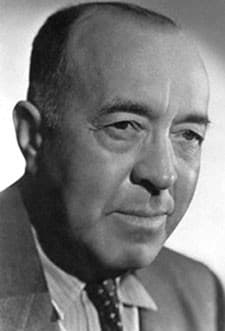
Edgar Rice Burroughs was an American writer, best known for his prolific output in the adventure, science fiction, and fantasy genres. Best-known for creating the characters Tarzan and John Carter, he also wrote the Pellucidar series, the Amtor series, and the Caspak trilogy.
Similar books
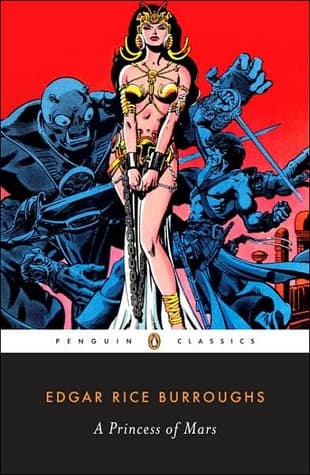
- A Princess of Mars
Edgar Rice Burroughs
3.8 (51k) average on GoodreadsFantasyThe first book in the same series, establishing the world and characters.
- Harry Potter and the Sorcerer's Stone
J.K. Rowling
4.5 (7M) average on GoodreadsFantasyRescued from a miserable life under the stairs, an orphaned boy discovers he's a wizard destined for a magical school, where he uncovers a dangerous secret tied to the dark wizard who murdered his parents.
- The Hunger Games
Suzanne Collins
4.3 (6.4M) average on GoodreadsFantasyIn a future where children fight to the death on live television, Katniss Everdeen volunteers for the arena, turning a death sentence into a fight for survival and a spark of rebellion.
- 1984
George Orwell
4.2 (3.1M) average on GoodreadsPoliticsIn a future where surveillance and thought control are absolute, a man's search for truth clashes with the Party, showing that hope can be a form of rebellion.
- Divergent
Veronica Roth
4.2 (2.9M) average on GoodreadsFantasyIn a society divided by virtues, a sixteen-year-old's difference from the norm starts a rebellion that threatens her world.
- The Hobbit, or There and Back Again
J.R.R. Tolkien
4.3 (2.9M) average on GoodreadsFantasyA comfort-loving hobbit named Bilbo Baggins is whisked away by a mischievous wizard and a band of dwarves on an unexpected journey to reclaim stolen treasure from a fearsome dragon, discovering courage and a magical ring along the way.





Enjoyed the summary?
A summary gives you the shape of the book. The book itself has the detail, the examples and the voice.
Find The Warlord of Mars on AmazonAs an Amazon Associate, BookBrief earns from qualifying purchases. How we're funded