
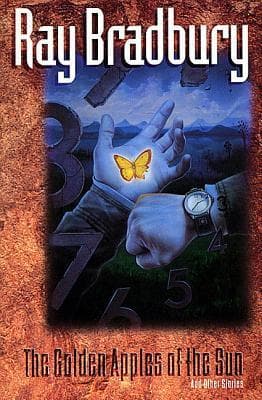
Synopsis
Covers the whole plot, including the ending.
- Difficulty
- Easy
- Pacing
- Variable
- Mood
- Atmospheric, Poetic, Thought-provoking, Whimsical, Melancholy, Suspenseful
- Read it if
- You love classic speculative fiction, enjoy short stories that blend fantasy and sci-fi with poignant human drama, or want to experience Bradbury's distinctive poetic prose and imaginative world-building.
- Skip it if
- You prefer long-form narratives, dislike short story collections, or are looking for hard science fiction with rigorous scientific explanations.
The Golden Apples of the Sun Plot Summary
Covers the whole plot, including the ending.
The Fog Horn
McClure and Johnny, two lighthouse keepers, work a remote fog horn on a desolate coast. For years, the horn's sound has echoed across the sea. One night, a giant sea creature, the last of its kind, comes from the deep. It is drawn by the familiar, but misleading, sound of the fog horn. It thinks the sound is another of its species. The creature, a huge dinosaur, circles the lighthouse, its ancient loneliness clear. When the fog horn stops, the creature realizes its mistake. Feeling deep isolation, it lets out a sad roar that shakes the lighthouse before going back into the ocean. The men are disturbed by its situation.
The Pedestrian
Leonard Mead is a writer in a future city in 2053. Every evening, he walks alone through the empty streets. This habit is very unusual in a society where everyone stays inside, watching television. One night, a robotic police car, the only one working in the city, stops Mead. The car questions him, finding his job (writer) and activity (walking) old-fashioned and pointless. Mead cannot give a good reason for his walks. He is then called a regression and a threat to society. He is taken to the 'Psychiatric Center for Research on Regressive Tendencies.' His simple act of walking is an act of rebellion in a sterile, conformist world.
The April Witch
Cecy, a young witch, can live inside animals, plants, and even objects. But she wants the warmth and complexity of human life. Her aunts warn her not to interact with mortals, fearing she will lose her powers. Despite their warnings, Cecy is drawn to the human world. One spring night, she watches a young girl, Ann Leary, getting ready for a dance. Cecy feels a strong desire to experience love and human connection. Using her magic, Cecy enters Ann's body. She goes to the dance and experiences the joy of dancing with a boy named Tom. She feels love for the first time, but her time is short. She must eventually return to her own form, leaving Ann with a bittersweet memory of a strange, magical night.
A Sound of Thunder
Eckels, a rich hunter, pays for a time-travel safari to the prehistoric past to hunt a Tyrannosaurus Rex. Travis, the guide, carefully warns the hunters about the 'Path' – a floating track meant to prevent any contact with the past. He emphasizes that even a small change could have huge effects on the future. During the hunt, Eckels panics and steps off the Path. He accidentally crushes a small butterfly. When they return to the present, they find small, but unsettling, changes: the air smells different, the sign for Time Safari, Inc. is misspelled, and politics have changed greatly. Travis, angry, realizes the damage Eckels has done. The story ends with Travis raising his rifle, a sound of thunder echoing, suggesting Eckels's death.
The Golden Apples of the Sun
Captain Cross and his crew begin a mission on the 'Apollo,' a rocket designed to go into the sun's corona. Their goal is to 'dip' into the sun and collect a sample of its fire, a mythical 'golden apple,' to bring back to Earth. The journey is dangerous, both physically and mentally. The extreme heat, radiation, and the huge task test the crew's sanity and endurance. As they near the sun, the ship is damaged, and the men feel great awe and terror. They manage to reach their goal, briefly going into the solar flames to get a sample. The story ends with their successful, but deeply changed, return. They have faced the ultimate unknown and brought back a piece of the cosmos.
The Flying Machine
In ancient China, Emperor Yuan receives a new invention: a man who has built a machine that lets him fly. The inventor shows his creation, flying gracefully through the sky. The Emperor is at first amazed by the machine's beauty and cleverness. However, his amazement quickly turns to fear. He imagines a future where such inventions could lead to spying, social chaos, and the fall of his organized empire. Despite the inventor's plea that his creation is only for beauty, Emperor Yuan prioritizes his kingdom's stability over individual brilliance. He orders the flying machine and its inventor destroyed, ensuring such a disruptive innovation will never threaten his realm.
The Murderer
Albert Brock is driven to madness by the constant noise and demands of modern technology. Radios, televisions, telephones, and other electronic gadgets control every part of life, always disturbing his peace and privacy. He starts destroying every electronic device he finds, beginning with his own wrist radio. His actions lead to his arrest and a mental evaluation. During questioning, Brock calmly explains why he did it. He calls the devices 'murderers' of quiet, thought, and real human connection. He argues he is defending his sanity and the importance of silence in a world overwhelmed by technology, asserting his right to be undisturbed.
Invisible Boy
Timothy, a young boy, feels always invisible and ignored by his busy, self-absorbed parents. He spends his days in an old house, creating an imaginary friend named John. John, however, is not an ordinary imaginary companion; he is a sign of Timothy's deep loneliness and desire for friendship. As Timothy's longing grows, John becomes more real, visible and interactive. The parents, who first thought John was a child's fantasy, eventually face his unsettling reality. John, representing Timothy's neglected inner world, is a sad symbol of the emotional emptiness in the boy's life. This shows the results of parents not paying attention and the power of a child's imagination.
Sun and Shadow
Pablos, a humble Mexican man, lives a simple, happy life, finding joy in the sun's warmth and his village's daily rhythms. His peaceful life is disrupted by an American film crew, who want to film 'authentic' Mexican life for a movie. The director, Mr. Braling, and his crew are arrogant and demanding. They treat the villagers as props and ignore their culture and dignity. They try to force Pablos to stand in a specific spot, under a harsh, artificial light, for a scene. Pablos values his freedom and the sun's natural warmth more than their demands. He stubbornly refuses, preferring to stay in the shadow. His quiet defiance shows the conflict between cultural values and the exploitative nature of outsiders.
Hail and Farewell
Willie, a boy who looks ten years old, is cursed or blessed with eternal youth; he never ages. To avoid suspicion and questions about his unchanging appearance, he and his parents must move every few years. They leave behind towns and friends. Each move is a heartbreaking goodbye for Willie. He makes new friends, only to leave them as they grow older and he stays the same. The story focuses on one such departure, as Willie says goodbye to his current friends, knowing he will never see them again. It is a sad look at loneliness, the bittersweet nature of short connections, and the burden of immortality, seen through a child who never grows up.
The Great Fire
Two elderly men, Bill and Sam, sit on a porch, recalling a big event from their youth: 'The Great Fire.' This is not a real fire that burned a town, but a symbolic fire of passion, energy, and destructive fun that defined their generation. They remember days of wildness, of boys running free, setting off fireworks, and doing harmless mischief. In their nostalgic story, these things become epic. The 'fire' represents a time when life felt more alive, less restricted, and full of raw, untamed energy. Their talk is a sadness for a past era, a celebration of young energy, and a subtle comment on how time and society tame the human spirit.
The Garbage Collector
In a dark, future world, a garbage collector does his daily routine, collecting the trash of a society that seems to have fallen into apathy and despair. The job is not just about physical waste; it is about collecting the thrown-away pieces of human hope and dignity. The collector sees the dirt, the people's indifference, and the sheer amount of useless junk in their lives. He struggles with his work's meaning, wondering if he is just cleaning up a dying civilization's mess or if his actions have a deeper meaning. The story is a somber thought on societal decay, environmental neglect, and the quiet despair of those who see humanity's decline.
The Meadow
John and Mary live a simple, happy life in a beautiful, hidden meadow. They seem untouched by the outside world. Their life is peaceful, filled with nature's sounds and the quiet joy of their company. The meadow itself feels magical, a living thing that supports them. However, their peace is broken by the sounds of machines and the distant sight of construction. This signals civilization's unavoidable expansion. They realize their safe place is temporary, and they must soon leave. The story is a sad song for lost innocence and natural beauty, exploring the conflict between humanity's desire for progress and the preservation of wild places, as the couple prepares to leave their paradise.
Embroidery
Three elderly women sit on a porch, carefully embroidering, as the world faces coming destruction. They know the end is near, a global disaster, but they face it with calm, almost detached acceptance. Their conversation is quiet, filled with observations about humanity's foolishness and their unavoidable fate. They discuss the beauty of the world they are about to lose and the pointlessness of human ambition. The act of embroidery becomes a symbol of their quiet dignity and their attempt to create beauty and order in chaos. The story is a quiet, thoughtful reflection on death, the end of civilization, and the lasting human spirit even in ultimate despair.
I See You Never
Mr. Ramirez and his family, who have lived in the United States for years, are suddenly gathered by immigration officials and face immediate deportation to Mexico. The story is from the perspective of their young son, who struggles to understand the sudden change. His biggest worry is his friend, Tommy, an American boy he played with daily. As the family is driven away, the boy tries hard to see Tommy one last time, pressing his face against the window. The final image is of the boy's hand waving, a sad and useless goodbye. The story shows the human cost of immigration policies, the pain of forced separation, and a child's innocence caught in adult decisions.
Principal Figures
Captain Cross
Protagonist
The determined leader of the mission to the sun.
Captain Cross is a seasoned space explorer, stoic and driven by an almost mythical ambition. He commands the 'Apollo' on its perilous journey to collect a piece of the sun. His leadership is firm, but beneath his resolute exterior lies a deep understanding of the immense, almost spiritual, significance of their quest. He is a man who pushes boundaries, not just for scientific discovery, but for the sheer audacity of confronting the universe's most powerful forces. His drive to achieve the impossible defines him.
Relationships: His Crew (Commander and mentor, leading them through extreme danger.)
Leonard Mead
Protagonist
The last pedestrian in a conformist future.
Leonard Mead is an anachronism in a future society that has abandoned the outdoors and human interaction for passive entertainment. He is a writer, though his profession is deemed useless, and his only passion is walking the deserted streets at night. Mead is a quiet rebel, finding joy and meaning in simple acts that others have forgotten. He represents individuality, the importance of observation, and the refusal to conform to a technologically-driven, dehumanizing world. His quiet defiance is his most powerful trait.
Relationships: The Robotic Police Car (Antagonistic, representing the oppressive conformity of society.)
Cecy
Protagonist
A young witch yearning for human experience.
Cecy is a young witch with the ability to possess various forms, but she feels an intense longing for the warmth, emotion, and physical sensations of human life. She is curious, adventurous, and rebellious against the traditional isolation of her kind. Her desire to experience love, dancing, and the simple joys of being human drives her actions, even against the warnings of her elders. She embodies innocence, curiosity, and the universal yearning for connection, transcending the boundaries of her magical existence.
Relationships: Her Aunts (Mentors and guardians, trying to protect her from the human world.); Ann Leary (Her temporary vessel for human experience.)
Eckels
Protagonist/Antagonist
A careless hunter whose actions alter history.
Eckels is a wealthy, arrogant big-game hunter who seeks the thrill of hunting dinosaurs in the past. He is characterized by his impulsiveness, lack of discipline, and a profound underestimation of the delicate balance of time. His fear and disregard for the rules set by Travis lead him to make a catastrophic mistake. Eckels represents human hubris, the danger of tampering with forces beyond comprehension, and the devastating consequences of even seemingly minor actions. His character serves as a cautionary tale against carelessness.
Relationships: Travis (His guide and eventual executioner, representing the strict adherence to the rules of time travel.)
Pablos
Protagonist
A proud Mexican man resisting foreign intrusion.
Pablos is a simple, dignified Mexican man who finds profound joy and contentment in the natural world, particularly the warmth of the sun. He is deeply connected to his culture and his land, valuing freedom and personal peace above external pressures. When an American film crew attempts to exploit his image and dictate his actions, Pablos quietly but firmly resists, embodying resilience, cultural pride, and the strength of individual will against insensitive external forces. He represents the beauty of an uncorrupted life.
Relationships: Mr. Braling (Antagonistic, representing the insensitive and exploitative nature of the film crew.)
Willie
Protagonist
A boy cursed with eternal youth and endless goodbyes.
Willie is a boy frozen in time, eternally ten years old. His unchanging appearance forces him and his family into a nomadic existence, constantly moving to avoid suspicion. Willie is sensitive, kind, and deeply longs for lasting friendships, but is perpetually forced to say goodbye to those he grows to love. He embodies the bittersweet tragedy of immortality, experiencing the profound loneliness of being an unchanging observer in a world that constantly moves on. His character evokes sympathy and highlights the pain of unfulfilled connection.
Relationships: His Parents (Protective, but also share the burden of his condition.); His Friends (Fleeting, cherished companions he must inevitably leave behind.)
Mr. Ramirez's Son
Protagonist
A young boy facing deportation and separation from his friend.
The young son of Mr. Ramirez is an innocent, impressionable boy whose world is abruptly shattered by the forced deportation of his family. He understands little of the political or legal complexities, focusing instead on the immediate pain of leaving his friend, Tommy. His perspective highlights the human impact of immigration policies, particularly on children who are caught in circumstances beyond their control. He represents the vulnerability of the young and the profound sense of loss that accompanies forced migration, clinging to the last glimpse of his familiar world.
Relationships: Tommy (His best friend, a symbol of the life he is forced to leave behind.)
The Sea Monster
Supporting
The last of its kind, drawn by the lonely sound of the fog horn.
The sea monster is a colossal, ancient creature, described as the last living dinosaur, dwelling in the ocean's depths. It is profoundly lonely, having existed in isolation for millennia. Its attraction to the fog horn is born of a desperate yearning for connection, mistaking the sound for another of its kind. The creature embodies primeval loneliness and the tragedy of extinction, a majestic relic in a changed world. Its sorrowful roar upon realizing its mistake is a powerful expression of its profound isolation and the universal need for companionship.
Relationships: McClure and Johnny (Unwitting providers of a false sense of companionship through the fog horn.)
Themes & Insights
The Dangers of Technological Progress and Conformity
Many stories look at the possible negative sides of uncontrolled technology and societal pressure to fit in. In 'The Pedestrian,' Leonard Mead is arrested for simply walking. This shows a future where technology and passive consumption suppress individuality. 'The Murderer' takes this further, with Albert Brock fighting against the constant noise of electronic devices, arguing they 'murder' quiet and thought. These stories warn against a future where human connection and personal freedom are lost for convenience and sameness, leading to feeling distant and losing important human experiences.
“What are you doing out?”
Loneliness and the Search for Connection
A common theme is deep loneliness and the strong human (and non-human) desire for connection. 'The Fog Horn' has a giant sea creature, the last of its kind, drawn to a fog horn, thinking its sound is a companion. 'Invisible Boy' shows Timothy's deep neglect, creating an imaginary friend who becomes real from pure loneliness. 'Hail and Farewell' sadly shows Willie's eternal youth as a curse, forcing him to constantly leave new friends, living a life of endless goodbyes. These stories highlight the basic human need for belonging and the pain of being alone.
“One day you will be alone, alone in the world. And it is the most terrible thing of all.”
The Fragility of Time and the Ripple Effect of Actions
The idea that even small actions can have huge, unexpected results is clearly shown, especially in 'A Sound of Thunder.' Eckels's seemingly small act of stepping off the path and crushing a butterfly in the past greatly changes the present. This shows the delicate balance of time and cause and effect. This theme stresses the responsibility that comes with power and the possibility of lasting damage when one interferes with natural order. It is a warning about human arrogance and how everything is connected across time.
“A tiny thing, a butterfly, but it changed a world.”
The Conflict Between Nature/Tradition and Progress/Modernity
Many stories show the conflict between nature or old ways of life and the constant advance of technology or society. 'The Flying Machine' shows Emperor Yuan destroying a beautiful invention because he fears it will disrupt his ordered society. 'Sun and Shadow' pits the simple, sun-loving Pablos against an intrusive American film crew, showing cultural clashes and the exploitation of tradition. 'The Meadow' mourns the loss of a perfect natural sanctuary to expanding civilization. This theme explores the cost of progress, often at the expense of beauty, peace, and cultural identity.
“There are times when we must sacrifice beauty for the sake of peace.”
The Power of Imagination and Illusion
Bradbury often highlights how imagination affects things, sometimes blurring the lines between what is real and what is not. In 'The April Witch,' Cecy's desire lets her briefly live in a human body and experience life. This shows the power of will and longing to go beyond physical limits. 'Invisible Boy' shows Timothy's neglected imagination creating a friend so real that he becomes tangible. These stories suggest that inner worlds and desires can appear in strong ways, shaping how we see things and sometimes even reality itself. Imagination is both a refuge and a changing force.
“If you wish hard enough, you can be anything.”
Plot Devices & Literary Techniques
Frame Story/Vignette Collection
The book itself is a collection of diverse, self-contained short stories.
The entire book 'The Golden Apples of the Sun' is a collection of previously published short stories. While each story is independent, they collectively explore recurring themes and stylistic elements characteristic of Bradbury's work. This structure allows for a wide range of settings, characters, and speculative concepts to be presented without the need for a single overarching narrative, offering readers a varied tapestry of human experience and imagination. It showcases Bradbury's versatility across different subgenres of fantasy and science fiction.
Foreshadowing/Precognition
Hints of future events or consequences are subtly woven into the narrative.
In 'A Sound of Thunder,' Travis's meticulous warnings about the 'Path' and the potential for catastrophic changes to the timeline heavily foreshadow Eckels's disastrous mistake. The increasing dread and subtle environmental shifts upon their return to the present further build tension before the full realization of the altered future. Similarly, in 'The Fog Horn,' the gradual descriptions of the creature's immense size and ancient loneliness build anticipation for its appearance and the poignant realization of its plight, creating a sense of inevitability and tragedy.
Symbolism of Nature and Elements
Natural elements like the sun, fog, and animals carry deeper thematic meanings.
Bradbury frequently employs natural elements as powerful symbols. The 'golden apples of the sun' themselves symbolize ultimate knowledge, power, and the mythical quest. In 'The Fog Horn,' the fog and the horn represent loneliness and a desperate, deceptive call for connection. The butterfly in 'A Sound of Thunder' symbolizes the delicate balance of life and the immense impact of even the smallest alteration. The sun in 'Sun and Shadow' represents freedom, natural beauty, and cultural identity, contrasting with artificial light and foreign intrusion.
Juxtaposition
Contrasting elements are placed side-by-side to highlight differences and themes.
Bradbury frequently uses juxtaposition to emphasize thematic conflicts. In 'The Pedestrian,' the vibrant, imaginative mind of Leonard Mead is sharply contrasted with the sterile, automated, and conformist society he inhabits. 'Sun and Shadow' places the simple, dignified life of Pablos directly against the arrogant, artificial demands of the film crew. This device effectively highlights disparities in values, lifestyles, and the clash between individuality and conformity, or nature and artificiality, making the thematic messages more impactful.
The Golden Apples of the Sun Quotes
“And the rockets went up, and they came down, and they went up again. And the world was new again.”
“We are a bridge across forever, a rainbow of light, a promise of things to come.”
“The wind was a warm, sweet, lazy hand on his cheek. It smelled of fields and faraway towns and the sea.”
“It was a good morning, with a good wind blowing. It was a day to be alive and to feel the sun warm on your face.”
“There was a smell of autumn in the air, a smell of smoke and burning leaves and the faint, sweet scent of rotting apples.”
“He knew that he would go on, because there was nothing else to do. He would go on because he was alive, and the only way to be alive was to go on.”
“The past is a graveyard, the present a nightmare, the future a horror.”
“We've got to get away from Earth. We've got to get away from the atomic bomb and the wars and the madness.”
“Some nights, in the middle of the night, you can hear the whole world dreaming.”
“He wanted to go home, but he had no home. He wanted to run, but there was nowhere to run.”
“It was a dark, stormy night, and the wind blew like a hungry beast, rattling the windows and moaning down the chimney.”
“Space is a sea without a shore, a sky without a limit, a mirror of all our dreams and nightmares.”
“The children were screaming. The lions were roaring. The nursery was alive.”
“And the sun was a great, golden apple, warm and ripe and ready to be plucked.”
Quiz
10 questions on the plot and the characters. Each answer comes with a short explanation.
Question 1
In 'The Fog Horn,' what kind of creature is drawn to the sound of the fog horn?
- A giant squid
- A prehistoric sea monster
- A pod of whales
- A lost submarine
Show answer
B. A prehistoric sea monster In 'The Fog Horn,' the sound of the fog horn awakens and attracts a lonely prehistoric sea monster from the deep ocean.
Question 2
What is the primary crime committed by Leonard Mead in 'The Pedestrian' that leads to his arrest?
- Vandalism
- Disrupting the peace
- Walking outside at night
- Refusing to watch television
Show answer
C. Walking outside at night Leonard Mead is arrested by an automated police car for the 'crime' of simply walking alone at night in a future society where everyone stays indoors watching television.
Question 3
In 'A Sound of Thunder,' what is the name of the company that offers time travel safaris?
- Epoch Expeditions
- Time Safari, Inc.
- Dinosaur Hunters LLC
- Past Ventures
Show answer
B. Time Safari, Inc. The company organizing the time travel hunts for dinosaurs in 'A Sound of Thunder' is called Time Safari, Inc.
Question 4
What is the central theme explored in 'The Golden Apples of the Sun,' the collection's title story?
- The futility of space exploration
- Humanity's quest for immortality and tapping the sun's energy
- The dangers of artificial intelligence
- The beauty of extraterrestrial life
Show answer
B. Humanity's quest for immortality and tapping the sun's energy The title story, 'The Golden Apples of the Sun,' focuses on a crew's perilous journey to the sun to collect a piece of its fire, symbolizing humanity's ambition to harness immense power and potentially achieve a form of immortality.
Question 5
In 'The April Witch,' what is the unique ability of Cecy, the main character?
- She can control the weather
- She can possess the bodies of others
- She can communicate with animals
- She can turn invisible at will
Show answer
B. She can possess the bodies of others Cecy, the April Witch, has the magical ability to leave her own body and temporarily inhabit the bodies of other creatures or people, which she uses to experience love.
Question 6
What is the primary motivation for the characters in 'The Wilderness' to travel to Mars?
- To escape a war on Earth
- To establish a new colony for women
- To reunite with their husbands, who are already there
- To mine rare Martian minerals
Show answer
C. To reunite with their husbands, who are already there 'The Wilderness' depicts women making the arduous journey to Mars, driven by the desire to join their husbands who have already established a presence there.
Question 7
In 'The Flying Machine,' what is the Emperor's reaction to the inventor's successful flying machine?
- He commissions a fleet of flying machines
- He rewards the inventor with great riches
- He orders the machine destroyed and the inventor executed to preserve societal order
- He attempts to learn how to fly it himself
Show answer
C. He orders the machine destroyed and the inventor executed to preserve societal order The Emperor, fearing that such an invention could disrupt the natural order and lead to chaos or war, orders the flying machine destroyed and the inventor executed to maintain peace and stability.
Question 8
The story 'Invisible Boy' centers on a boy who claims to be invisible. What is the true nature of his 'invisibility'?
- He possesses actual magical invisibility
- He is a ghost haunting the house
- He is so neglected and overlooked that he feels invisible
- He is a figment of a lonely woman's imagination
Show answer
C. He is so neglected and overlooked that he feels invisible In 'Invisible Boy,' the boy's 'invisibility' is a metaphor for his profound loneliness and neglect, as he is ignored by his aunt and others around him, making him feel as though he doesn't exist.
Question 9
In 'The Murderer,' what is the protagonist's primary motivation for destroying all forms of electronic communication?
- He believes electronics are being used for government surveillance
- He is driven insane by the constant noise and demands of modern technology
- He is part of an anti-technology cult
- He wants to force people to communicate face-to-face
Show answer
B. He is driven insane by the constant noise and demands of modern technology The protagonist in 'The Murderer' is overwhelmed and driven to madness by the incessant ringing, demands, and intrusions of electronic devices like phones, radios, and televisions, leading him to destroy them in a bid for peace.
Question 10
What is the symbolic significance of the 'golden kite' and 'silver wind' in the story of the same name?
- They represent the competing desires for wealth and freedom
- They symbolize the clash between tradition and progress, or two rival towns
- They are ancient magical artifacts with great power
- They are the names of two legendary warriors
Show answer
B. They symbolize the clash between tradition and progress, or two rival towns In 'The Golden Kite, the Silver Wind,' the golden kite and silver wind symbolize the rivalry between two towns, each trying to outdo the other with their city's shape, ultimately leading to a realization about the futility of such competition and the value of cooperation.
The Golden Apples of the Sun FAQ
What is the central premise of the title story, 'The Golden Apples of the Sun'?
The title story follows Captain Jonathan and his crew aboard the 'Apollo' as they embark on a perilous mission to 'scoop' a piece of the sun. Their goal is to bring a fiery fragment back to Earth, hoping to reignite the dying sun and save humanity from an impending ice age, driven by a desperate need for warmth and light.
In 'The Fog Horn,' what entity is drawn to the sound, and what is its significance?
A massive, ancient sea monster, the last of its kind, is drawn from the deep by the melancholic sound of the fog horn. It mistakes the horn's mournful call for the cry of another creature like itself, symbolizing profound loneliness and the tragic obsolescence of primeval beings in a modern world.
What dystopian societal critique is presented in 'The Pedestrian'?
In 'The Pedestrian,' Leonard Mead is arrested and taken to a psychiatric center for the 'crime' of walking outdoors at night. The story critiques a future society where technology (television) has rendered human interaction and simple pleasures obsolete, enforcing conformity and punishing individuality.
What is the primary conflict in 'A Sound of Thunder'?
Eckels, a wealthy hunter, travels with a time-safari company to hunt a Tyrannosaurus Rex in the prehistoric past. His reckless deviation from the designated path, stepping off a hover-path to kill a butterfly, irrevocably alters the future, demonstrating the immense fragility of the space-time continuum.
How does 'The April Witch' explore themes of love and transformation?
Cecy, an ethereal 'April Witch,' longs for human experience and falls in love with a young man named Tom. She possesses his sweetheart, Ann, to experience human emotions and connection, ultimately choosing to let Ann live and find love, showcasing a poignant desire for belonging and the bittersweet nature of magic.
What subtle detail in 'The Pedestrian' hints at the extent of societal control beyond Mead's arrest?
The police car in 'The Pedestrian' is described as automated and driverless, speaking to Mead with a metallic voice. This detail suggests that the surveillance and enforcement of conformity are not just human-driven but deeply embedded in the technological infrastructure, operating autonomously.
In 'The Golden Apples of the Sun,' what specific visual detail underscores the sun's overwhelming power as the crew approaches it?
As the 'Apollo' approaches the sun, the crew sees the sun not as a distant star, but as a vast, churning ocean of fire, with 'waves' and 'currents' of flame. This imagery emphasizes its immense, active, and almost living power, making their task seem even more audacious.
What is the implied consequence for the protagonist of 'The Murderer' after his actions?
The protagonist, Albert Brock, systematically destroys all forms of modern communication and entertainment technology, finding them oppressive. His final act is to smash his own watch, and the story implies he will be institutionalized or punished, but he achieves a fleeting sense of liberation before that inevitable consequence.
How does 'The Flying Machine' subtly critique the resistance to innovation and progress?
The Emperor in 'The Flying Machine' orders the beautiful flying machine and its inventor destroyed, not out of malice, but fear that it would disrupt the 'natural order' and be misused. This highlights a conservative fear of progress, even when it offers beauty and advancement, prioritizing stability over innovation.
Analyze the psychological state of the two lighthouse keepers in 'The Fog Horn' during the monster's visit.
McDunn and Johnny experience a mix of awe, terror, and profound empathy. McDunn, the older keeper, understands the monster's loneliness and identifies with its ancient sorrow, while Johnny is primarily gripped by primal fear, highlighting humanity's varied emotional responses to the unknown and the sublime.
What psychological impact does the 'butterfly effect' have on Eckels in 'A Sound of Thunder'?
Eckels initially dismisses the butterfly, but its death leads to a profound psychological breakdown as he witnesses the altered reality. He becomes disoriented, terrified, and ultimately paralyzed by the overwhelming guilt and horror of his singular, irreversible action, demonstrating the weight of responsibility.
Discuss the psychological motivations behind the Captain's unwavering determination in 'The Golden Apples of the Sun'.
The Captain's determination is driven by a profound sense of duty and a desperate hope for humanity's survival, bordering on obsession. He feels the immense weight of the mission, pushing himself and his crew beyond limits, fueled by a deep-seated desire to be a savior and conquer the ultimate frontier.
How does 'The Fruit at the Bottom of the Bowl' delve into the psychology of paranoia and guilt?
The story follows a man who believes he has committed murder and obsessively tries to wash his hands clean of the imagined bloodstains. His escalating paranoia, fueled by guilt, makes him see evidence of his crime everywhere, even when no actual crime has occurred, showcasing the destructive power of a disturbed mind.
Is the ending of 'The Golden Apples of the Sun' truly triumphant, or does it carry a note of melancholic sacrifice?
While the crew successfully retrieves a piece of the sun, the triumph is tinged with profound sacrifice and potential future costs. The mission is incredibly destructive to the ship and crew, and the very act of 'stealing' from the sun might imply a hubris that could have unforeseen consequences, suggesting a bittersweet victory.
What is the deeper philosophical statement Bradbury makes about humanity's relationship with nature in 'The Fog Horn'?
Bradbury suggests that humanity, through its technological advancements, has isolated itself from the ancient, natural world. The monster's loneliness mirrors a human disconnect, implying that our progress often comes at the cost of losing touch with primal beauty and the profound, shared melancholy of existence.
In 'The Pedestrian,' is Leonard Mead a hero or a tragic figure?
Leonard Mead can be seen as both. He is a hero for his quiet, defiant act of individuality against a conformist society, embodying human spirit. However, he is also tragic because his resistance is ultimately futile; he is easily subdued and removed, highlighting the difficulty of challenging an entrenched, oppressive system.
How does 'A Sound of Thunder' serve as a cautionary tale beyond just the butterfly effect?
'A Sound of Thunder' is a profound warning about human arrogance and the illusion of control over powerful forces. It cautions against underestimating the interconnectedness of all things and the potentially catastrophic ripple effects of even the smallest human actions, especially when tampering with nature or time itself.
What is the significance of the changing language and political climate in the altered future of 'A Sound of Thunder'?
The subtle change in language ('e' instead of 'ee' in 'President') and the rise of a dictatorial, anti-intellectual leader in the altered future are crucial. They signify that even minor historical alterations can profoundly shift societal values, cultural norms, and political structures, leading to a darker, more oppressive reality.
Does 'The April Witch' present magic as inherently good or dangerous?
'The April Witch' portrays magic as a powerful, neutral force that can be used for both connection and potential manipulation. Cecy's magic allows her to experience love, but also involves temporarily displacing Ann. The story suggests magic's morality lies in the intent and consequences of its user, rather than the power itself.
About the author
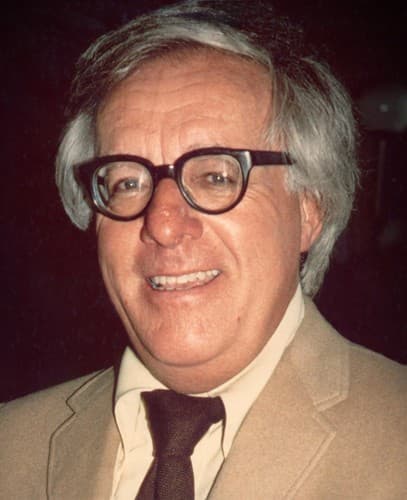
Ray Douglas Bradbury was an American author and screenwriter. One of the most celebrated 20th-century American writers, he worked in a variety of modes, including fantasy, science fiction, horror, mystery, and realistic fiction.
Similar books
- The Illustrated Man
Ray Bradbury
4.1 (79k) average on GoodreadsFantasyAnother classic collection of Bradbury's speculative short stories, exploring similar themes and style.
- Stories of Your Life and Others
Ted Chiang
4.2 (66k) average on GoodreadsFantasyA modern collection of thought-provoking science fiction short stories that delve into philosophical and humanistic themes.
- Childhood's End
Arthur C. Clarke
4.1 (130k) average on GoodreadsFantasyClarke's novel presents grand, sweeping narratives of humanity's evolution and encounters with vastly superior alien intelligences on a cosmic scale. Bradbury's collection, in contrast, often focuses on the intimate, personal scale, finding wonder and terror in the everyday and the slightly askew, making the fantastic feel intimately human.
- Harry Potter and the Sorcerer's Stone
J.K. Rowling
4.5 (7M) average on GoodreadsFantasyRescued from a miserable life under the stairs, an orphaned boy discovers he's a wizard destined for a magical school, where he uncovers a dangerous secret tied to the dark wizard who murdered his parents.
- The Hunger Games
Suzanne Collins
4.3 (6.4M) average on GoodreadsFantasyIn a future where children fight to the death on live television, Katniss Everdeen volunteers for the arena, turning a death sentence into a fight for survival and a spark of rebellion.
- 1984
George Orwell
4.2 (3.1M) average on GoodreadsPoliticsIn a future where surveillance and thought control are absolute, a man's search for truth clashes with the Party, showing that hope can be a form of rebellion.




Enjoyed the summary?
A summary gives you the shape of the book. The book itself has the detail, the examples and the voice.
Find The Golden Apples of the Sun on AmazonAs an Amazon Associate, BookBrief earns from qualifying purchases. How we're funded