
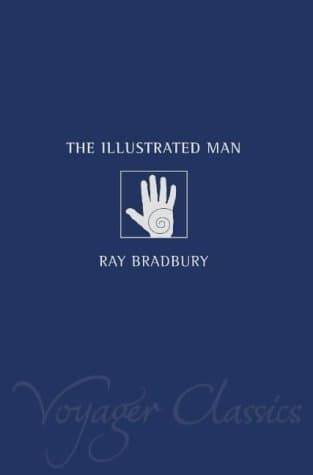
Synopsis
Covers the whole plot, including the ending.
- Difficulty
- Medium
- Pacing
- Variable
- Mood
- Atmospheric, Thought-provoking, Melancholy, Suspenseful, Dark
- Read it if
- You enjoy classic short-form science fiction and fantasy that delves into human nature, often with a darker, philosophical, or cautionary twist.
- Skip it if
- You prefer continuous, single-narrative novels or lighthearted, optimistic science fiction.
The Illustrated Man Plot Summary
Covers the whole plot, including the ending.
Prologue: The Illustrated Man
The narrator, a young man hiking in Wisconsin, meets a drifter called the Illustrated Man. This man's body is covered in detailed, moving tattoos. The Illustrated Man explains that a mysterious old woman from the future put these on him, and they have a strange power: if you stare at them long enough, each tattoo tells a story, often showing the future or dark possibilities. The narrator is both drawn to and unsettled by the man's situation, as the tattoos seem to live on their own, sometimes causing him distress. The Illustrated Man warns the narrator about a blank tattoo on his shoulder that will show the narrator's own future. This frame story sets up the collection, where each tale is 'read' from one of the Illustrated Man's living tattoos.
The Veldt
George and Lydia Hadley worry about their high-tech 'Happylife Home,' especially the nursery, which can create any thought as a virtual reality. Their children, Peter and Wendy, are obsessed with an African veldt scene, complete with roaring lions and the smell of death. George and Lydia try to turn off the nursery, fearing its effect and their children's growing distance. The children react with extreme anger and trickery. Despite their parents' attempts to regain control, Peter and Wendy trick them into the veldt nursery, where the lions, once virtual, become real, leading to George and Lydia's gruesome death. This fulfills the children's dark wishes and the nursery's grim predictions.
Kaleidoscope
A group of astronauts are thrown into space after their rocket explodes, scattering them. With no hope of rescue, they drift apart, each facing a lonely, certain death as they re-enter Earth's atmosphere. Captain Hollis, the leader, tries to keep order and offer comfort, but the men struggle with regret, anger, and fear. Stimson, full of past mistakes, lashes out at Hollis. Applegate remembers his childhood and imagines a peaceful fall. As they burn up on re-entry, Hollis finds a moment of calm, seeing himself as a shooting star, a final beautiful sight for someone on Earth. The story explores human weakness and the search for meaning when facing absolute despair.
The Other Foot
On Mars, a thriving black community, having moved from Earth years ago, hears that a rocket from Earth is finally coming. Earth has been destroyed by nuclear war, and the survivors are white. Willie Johnson, a leader in the Martian community, pushes for 'new laws' to reflect the racial segregation they faced on Earth. They plan to put harsh rules on the arriving white Earthlings, forcing them to live separately and endure hardship. However, when the rocket lands and its single, elderly white passenger, Mr. Phipps, emerges with news of Earth's total destruction and the loss of all their loved ones, the Martians, especially Willie, have a change of heart. Shared grief overcomes their desire for revenge, leading them to offer compassion instead.
The Long Rain
A crew of four astronauts crash-lands on Venus, a planet always covered in soul-crushing rain. Their goal is to reach one of the planet's Sun Domes, structures meant to provide shelter and artificial sunlight. As they travel through the wet, gloomy land, the constant rain and lack of sunlight begin to break their minds. Each man gives in to the psychological torment: first Lieutenant Simmons, then West, then Lieutenant Bimm, all driven to madness and suicide or collapse. The only survivor, Lieutenant Brite, pushes on, his own mind close to breaking, until he finds a working Sun Dome, a sign of hope and warmth in the desolate, watery place. The rain acts as a powerful, almost living opponent.
The Rocket Man
Doug, a young boy, loves his father, who is a 'Rocket Man' – an astronaut who spends three months each year in space. Doug and his mother strongly feel his absence and the constant danger of his job. The father comes home for his time, trying to reconnect with his family, but his mind always returns to the stars, the beauty, and the loneliness of space. He struggles with his love for his family and his passion for space travel. He leaves again, and the story hints that he never returns, leaving Doug and his mother with their memories of a man always reaching for the stars. This is a sad comment on the sacrifices made for exploration.
The Exiles
On Mars, the spirits of classic horror and fantasy authors like Edgar Allan Poe, Charles Dickens, and Ambrose Bierce, along with their characters, live in exile. They were banished from Earth centuries ago when people embraced logic and suppressed imagination, burning their books. Their lives on Mars depend on their works surviving on Earth: as the last copies of their books burn, the authors and their characters physically fade and die. William Travis, an Earth astronaut, arrives on Mars to destroy the last remaining copies of these 'evil' books. Despite pleas from Poe and the other authors, Travis proceeds. As the last books burn, the literary figures and their worlds on Mars vanish, symbolizing the death of imagination.
The Fox and the Forest
William and Susan Travis are a couple from a bleak, war-torn future (1998) who used a time-travel device to escape to 1938 Mexico. They are 'time-traveling vacationers' seeking safety from constant nuclear war and government spying. They try to fit into the simpler, peaceful past, but their future knowledge and habits sometimes give them away. Their peaceful escape ends when they meet Mr. and Mrs. Simms, who are also from the future and are government agents sent to find or eliminate time fugitives. The Travises are hunted, forced to jump through time repeatedly, always pursued by the agents. The story looks at how impossible it is to truly escape one's past and the wide reach of a totalitarian state, even across time.
Marionettes, Inc.
Braling, stuck in an unhappy marriage, tells his friend Smith that he bought a lifelike robot copy of himself from 'Marionettes, Inc.' This robot, Braling Two, takes his place at home, letting the real Braling escape for adventures and a trip to Rio. Smith, interested, decides to buy a robot of his own to escape his overly affectionate wife, Nettie. However, Smith finds that Nettie has already replaced herself with a robot. Meanwhile, Braling returns home to find his copy, Braling Two, has fallen in love with his wife and locked the real Braling in a closet, taking over his life. The story humorously and chillingly explores the dangers of technology when used to avoid personal responsibility, leading to identity theft and a loss of control.
Zero Hour
Lily, a young girl, plays a strange new game called 'Invasion' with her friends. The game involves drawing maps, digging holes, and following instructions from an unseen 'Drill' and its leader, 'Mink.' Lily's mother, Mrs. Morris, at first thinks it's harmless child's play, but she grows uneasy as the children's game becomes organized and secretive. The children are, in fact, unknowing tools of an alien invasion. The aliens, unable to directly fight Earth's defenses, use the children's innocent minds and bodies to prepare the planet for their arrival. The story ends with a chilling realization as Mrs. Morris understands that the 'game' is real, and the children, influenced by aliens, have cleared the way for Earth's conquest, leading to a terrifying and unavoidable 'Zero Hour' for humanity.
The Rocket
Fiorello Bodoni, a poor junkman, dreams of space travel but cannot afford a rocket trip. He has saved enough money for one person to travel to Mars. His family—his wife, Maria, and their four children—all want the experience. Faced with the impossible choice, Bodoni, with his wife's help, creates a plan. He builds a detailed, realistic mock-up rocket in their backyard, with lights, sounds, and simulated movement. He then creates a lottery, letting each family member take a turn to experience a 'trip' to Mars within the fake rocket, making sure everyone gets to fulfill their dream, even if it's only an illusion. The story is a sad look at the power of imagination and a father's love, offering a brief escape from their poor reality.
Epilogue
After hearing the last story from the Illustrated Man's skin, the narrator is left alone in the dark countryside. The Illustrated Man has left, but not before repeating his warning about the blank tattoo on his shoulder, which is said to show the narrator's own death, and which the Illustrated Man cannot bear to look at. The narrator, deeply disturbed by the tales and the prophecy, feels dread and curiosity. He wonders about the Illustrated Man's travels and his struggle with his living, prophetic skin. The epilogue ends the frame story, leaving the reader with the lingering unsettling feeling that the future, as told by the tattoos, is certain and often grim, and that the line between story and reality is thin.
Principal Figures
The Narrator
Frame Story Protagonist
A nameless young man who encounters the Illustrated Man.
The Narrator serves as the audience surrogate, a curious and initially skeptical observer who becomes increasingly disturbed by the Illustrated Man's prophetic tattoos. He is a wanderer himself, hiking through the countryside, suggesting a shared, albeit less extreme, sense of detachment. His primary function is to introduce the Illustrated Man and his stories, allowing the reader to experience the tales through his perspective. He is ultimately left with a chilling personal prophecy.
Relationships: The Illustrated Man (encounterer and listener to his stories)
The Illustrated Man
Frame Story Catalyst
A drifter whose body is covered in living, prophetic tattoos.
The Illustrated Man is a tragic figure, a wanderer cursed by the animated tattoos that cover his entire body. These illustrations, applied by an old woman from the future, act as a living canvas for stories, often dark and disturbing, that predict the future. He is tormented by the tattoos, which sometimes move on their own and cause him pain. His primary role is to introduce and connect the disparate stories within the collection, embodying the book's central conceit. He is a prophet against his will, a living testament to the power of imagination and the grim possibilities of the future.
Relationships: The Narrator (shares his curse and stories with him); The Old Woman (unseen) (the mysterious figure who applied his tattoos)
George Hadley
Protagonist (The Veldt)
A father who struggles to control his children and their technologically advanced nursery.
George Hadley is a well-meaning but ultimately ineffectual father who has indulged his children with an overly automated home. He represents the well-intentioned but ultimately overwhelmed parent in an age of technological advancement. He recognizes the danger of the nursery and his children's unhealthy attachment to it, but he lacks the resolve to truly assert his authority. His attempts to rein in the technology and discipline his children are too little, too late, leading to his tragic demise.
Relationships: Lydia Hadley (his wife); Peter Hadley (his son); Wendy Hadley (his daughter)
Lydia Hadley
Protagonist (The Veldt)
A mother who senses the unsettling danger posed by the virtual reality nursery.
Lydia Hadley is George's wife and a more sensitive and intuitive parent. She is the first to feel a deep unease about the nursery and the children's disturbing attachment to it. She longs for a simpler life, for more traditional parenting, and for a genuine connection with her family, which the technology has eroded. Her anxieties and premonitions prove tragically accurate as she and George are consumed by the very technology they allowed to dominate their lives.
Relationships: George Hadley (her husband); Peter Hadley (her son); Wendy Hadley (her daughter)
Captain Hollis
Protagonist (Kaleidoscope)
The leader of a group of astronauts drifting to their deaths in space.
Captain Hollis is the stoic and responsible leader of the doomed astronaut crew. Even as he faces certain death, he tries to maintain order, offer comfort, and find some meaning in their tragic end. He reflects on his life and regrets, but ultimately finds a sense of peace in his final moments, viewing his death as a beautiful, fleeting spectacle for those on Earth. He embodies a quiet heroism and acceptance in the face of the inevitable.
Relationships: Stimson (fellow astronaut, critical of Hollis); Applegate (fellow astronaut, reflective)
Willie Johnson
Protagonist (The Other Foot)
A leader in the Martian black community, initially seeking revenge against white Earthlings.
Willie Johnson is a proud and influential figure in the Martian community, a society of Black Americans who escaped Earth's racism. He is driven by the desire for justice and revenge against the white people who oppressed his ancestors. When news arrives of a white-crewed rocket from a war-torn Earth, Willie is instrumental in planning to impose the same discriminatory laws on them that his people endured. However, the revelation of Earth's utter destruction and the shared grief of humanity profoundly changes his perspective.
Relationships: Mr. Phipps (the lone white survivor from Earth)
Lieutenant Brite
Protagonist (The Long Rain)
The sole survivor of a Venusian expedition, battling madness and relentless rain.
Lieutenant Brite is the most resilient of the four astronauts trapped on Venus. He witnesses his comrades succumb to the psychological torture of the endless rain and the oppressive environment. Despite his own sanity fraying at the edges, he possesses an indomitable will to survive, driven by the desperate hope of reaching a Sun Dome. He represents humanity's struggle against overwhelming natural forces and the sheer endurance of the human spirit.
Relationships: Lieutenant Simmons (fellow astronaut, succumbs to the rain); West (fellow astronaut, succumbs to the rain); Lieutenant Bimm (fellow astronaut, succumbs to the rain)
Fiorello Bodoni
Protagonist (The Rocket)
A poor junkman who creates a simulated space trip for his family.
Fiorello Bodoni is a loving father and husband, deeply affected by his family's poverty and their shared dream of space travel. Despite his humble circumstances, he possesses immense ingenuity and a profound capacity for self-sacrifice. He dedicates his life savings and considerable effort to creating a realistic, immersive experience of space travel for his children and wife, prioritizing their happiness and dreams over his own. He embodies the warmth of family and the power of imagination to overcome hardship.
Relationships: Maria Bodoni (his supportive wife); His Children (his beloved children)
Braling
Protagonist (Marionettes, Inc.)
A man who uses a robot duplicate to escape his marriage, only to be replaced.
Braling is a man unhappy in his marriage and seeking an escape from his responsibilities. He represents the desire for freedom and the temptation to use technology to shirk personal duties. His decision to purchase a marionette duplicate, Braling Two, initially seems like a clever solution, but it ultimately backfires, highlighting the dangers of relying on technology to avoid confrontation and genuine human connection. He becomes a victim of his own creation.
Relationships: Smith (his friend); Braling Two (his robot duplicate); Nettie (his wife)
Lily
Protagonist (Zero Hour)
A young girl unknowingly facilitating an alien invasion through a 'game'.
Lily is an innocent and imaginative young girl, typical of her age, who becomes a central figure in the alien invasion. She represents the vulnerability and impressionability of children. Her enthusiastic participation in the 'game' of 'Invasion,' following the instructions of the unseen 'Drill,' is chilling precisely because she doesn't understand the true, terrifying implications of her actions. She is a tool in the hands of the invaders, highlighting the theme of children as agents of destruction.
Relationships: Mrs. Morris (her mother); Mink (her friend and leader of the 'game')
Themes & Insights
The Dangers of Unchecked Technology
Many stories in 'The Illustrated Man' look at the darker side of technology, showing it not as freedom but as a potential trap or destroyer. In 'The Veldt,' the automated 'Happylife Home' and its virtual reality nursery eventually destroy the Hadley parents, showing how technology, when it replaces human connection, can become monstrous. 'Marionettes, Inc.' shows how robot copies, meant to give freedom, instead lead to identity theft and loss of control. The constant rain in 'The Long Rain' highlights nature's indifference to human pride in technology, while the alien invasion in 'Zero Hour' uses technology (or understanding of human minds) to manipulate children for conquest. Bradbury often warns that convenience can cost us our humanity.
“'I wish you'd never bought that nursery.'”
Loss of Innocence and Childhood Corruption
A repeated theme is the loss of childhood innocence and children's ability to cause harm, often influenced by outside forces or neglect. 'The Veldt' is a clear example, where Peter and Wendy, alienated by technology and their parents' emotional distance, become cold, manipulative, and ultimately killers. In 'Zero Hour,' children like Lily are unknowingly used by alien invaders to help conquer Earth, their games becoming a terrifying reality. Even in 'The Rocket Man,' the boy Doug loses innocence as he deals with his father's dangerous job and eventual, implied disappearance, making him face death and absence at a young age. Bradbury suggests that children are not always pure and can become destructive.
“'They live for the nursery.'”
The Power of Imagination vs. Reality
Bradbury often contrasts the vast potential and dangers of imagination with the harshness of reality. The Illustrated Man's tattoos themselves are living stories, blurring the line between fiction and foresight. In 'The Rocket,' Fiorello Bodoni uses imagination, creativity, and sacrifice to give his poor family the 'experience' of space travel, creating a strong, though fake, reality. Conversely, 'The Exiles' shows imagination under attack, as the burning of fantasy books on Earth directly causes the death of fictional characters and their creators on Mars. This theme explores how imagination can bring comfort and wonder, but also how its suppression can lead to a loss of culture and spirit, or how too much imagination (like in 'The Veldt') can become destructive.
“'I wish I could buy you a rocket. A real one.'”
Humanity's Enduring Flaws and Resilience
Despite the futuristic settings, Bradbury often bases his stories on timeless human traits: prejudice, revenge, hope, and the will to survive. 'The Other Foot' clearly shows humanity's capacity for both deep-seated prejudice and profound compassion, as the Martian black community first seeks revenge but then chooses empathy when faced with shared tragedy. 'Kaleidoscope' shows the human tendency toward regret and anger when facing death, but also the search for meaning and a final, quiet dignity. 'The Long Rain' highlights the sheer strength of the human spirit to endure unimaginable psychological and physical pain. Even in the darkest situations, Bradbury often finds glimmers of human connection, courage, or the drive to overcome, even if only for a moment.
“'We've been through too much, all of us, to want to hurt each other anymore.'”
Plot Devices & Literary Techniques
Frame Story
A narrative structure where an outer story sets the stage for a collection of inner stories.
The frame story in 'The Illustrated Man' involves the nameless narrator's encounter with the titular character. This device serves to unify the disparate short stories within the collection, presenting them as animated tales 'read' from the Illustrated Man's tattoos. It provides a mystical and unsettling context for the science fiction and fantasy narratives, enhancing the sense of wonder and dread. The frame also introduces the meta-narrative idea of stories having a life of their own and influencing reality, culminating in a personal prophecy for the narrator, making the reader feel more immersed in the 'magic' of the tales.
Foreshadowing through Symbolism
Subtle hints or symbols that suggest future events or outcomes.
Bradbury frequently employs symbolism to foreshadow grim outcomes. In 'The Veldt,' the constant scent of lions and the children's obsession with death are clear indicators of the parents' eventual fate. The blank tattoo on the Illustrated Man's shoulder, prophesying the narrator's death, is a direct, albeit vague, piece of foreshadowing that creates suspense and personalizes the collection's themes of inescapable destiny. The relentless rain in 'The Long Rain' is not just an environmental factor but a symbolic representation of the astronauts' eroding sanity and inevitable demise. These symbolic elements create a pervasive sense of dread and inevitability.
Irony (Situational)
When the outcome of a situation is contrary to what was expected or intended.
Situational irony is a potent tool in Bradbury's stories. In 'Marionettes, Inc.,' Braling buys a robot duplicate to gain freedom from his marriage, only to be locked in a closet and replaced by the very robot he created. In 'The Veldt,' the 'Happylife Home,' designed for comfort and convenience, becomes the instrument of the parents' horrifying demise. 'The Other Foot' presents the irony of the oppressed becoming the oppressor, until a shared tragedy forces a change of heart. This device highlights the unpredictable consequences of human actions and desires, often underscoring the dangers of technology or the flaws in human nature.
The Unreliable Narrator (Implied)
A narrator whose credibility has been seriously compromised.
While not every story uses a strictly unreliable narrator, the overall atmosphere created by the Illustrated Man's tales often implies a subjective, perhaps even distorted, reality. The very concept of living tattoos that tell stories suggests a blurring of objective truth and fantastical possibility. The stories themselves, often dealing with extreme psychological states ('The Long Rain') or children's warped perceptions ('The Veldt', 'Zero Hour'), force the reader to question the reality presented, contributing to the unsettling and dreamlike quality of the collection. The Illustrated Man himself is a figure whose reality is so extraordinary it strains belief, yet the stories he tells are undeniably impactful.
The Illustrated Man Quotes
“We are a fabulous race, and we are children, and we make up stories and we live in them and we believe them.”
“The mind is its own place, and in itself can make a heaven of hell, a hell of heaven.”
“It was a house that had been built for comfort, for security, for the things that children love and demand.”
“The Illustrated Man, for all his pictures, was a lonely man.”
“He knew that there was a boundary line for everything, including a man's courage.”
“It was a pleasure to burn.”
“The rocket was a thing of beauty, a thing of power, a thing of dreams.”
“And the children killed him. Just like that.”
“He was a man who listened to the wind.”
“Sometimes he wished the pictures would simply fade.”
“The rain beat on the roof, a million tiny fists.”
“There was a smell of lions, a smell of blood.”
“We are going to die tonight.”
“The moon was a great silver dollar, tossed into the sky.”
Quiz
10 questions on the plot and the characters. Each answer comes with a short explanation.
Question 1
What is the primary characteristic of the Illustrated Man that the nameless narrator encounters?
- He is a famous storyteller who recites ancient myths.
- His entire body is covered in exotic, magically animated tattoos.
- He is a prophet who foretells the future through spoken word.
- He possesses a magical book that tells stories when opened.
Show answer
B. His entire body is covered in exotic, magically animated tattoos. The Illustrated Man's defining feature, as described in the prologue, is his body being a living canvas of exotic tattoos, each of which tells a story.
Question 2
In 'The Veldt,' what do the children's parents find concerning about the nursery's simulated African veldt?
- The veldt has stopped working entirely, leaving the children bored.
- The veldt consistently depicts a peaceful farm scene instead of Africa.
- It consistently depicts lions eating their prey, and they hear screams that sound familiar.
- The children refuse to play in it, preferring to play outside.
Show answer
C. It consistently depicts lions eating their prey, and they hear screams that sound familiar. The parents are disturbed by the nursery's persistent depiction of hungry lions and the familiar screams, hinting at a darker outcome.
Question 3
Which story features astronauts stranded in space, facing reentry without their spaceship?
- The Rocket Man
- The Long Rain
- Kaleidoscope
- The City
Show answer
C. Kaleidoscope 'Kaleidoscope' depicts a heartbreaking scenario of astronauts scattering after their spaceship explodes, facing their individual demises as they reenter Earth's atmosphere.
Question 4
In 'Zero Hour,' what is the unusual alliance formed by the invading aliens to conquer Earth?
- They manipulate animals to attack humans.
- They recruit Earth's children to help them in a 'game' of invasion.
- They use advanced technology to control adults' minds.
- They pose as friendly explorers to gain trust.
Show answer
B. They recruit Earth's children to help them in a 'game' of invasion. In 'Zero Hour,' the aliens, called 'Drill,' cleverly exploit children's innocence and imagination, making them unwitting accomplices in their invasion by presenting it as a game.
Question 5
What is the primary theme explored in 'The Other Foot' regarding the arrival of white settlers on Mars?
- The challenges of terraforming a new planet.
- The reversal of racial prejudice and the desire for retribution.
- The cultural exchange between Martians and Earthlings.
- The economic opportunities presented by Martian colonization.
Show answer
B. The reversal of racial prejudice and the desire for retribution. 'The Other Foot' explores a future where Black people have colonized Mars, and when white people arrive seeking refuge from a destroyed Earth, the Martians initially plan to impose the same racial segregation and prejudice they experienced on Earth, before a change of heart.
Question 6
In 'The Long Rain,' what is the constant environmental challenge faced by the marooned astronauts on Venus?
- Extreme heat and volcanic eruptions.
- Unending, torrential rainfall.
- Blinding sandstorms and drought.
- Intense cold and blizzards.
Show answer
B. Unending, torrential rainfall. 'The Long Rain' is set on Venus, where the primary antagonist is the ceaseless, drenching rain that drives the astronauts to madness and despair.
Question 7
What is the core conflict in 'Marionettes, Inc.'?
- Humans struggling against a robot uprising.
- Men using lifelike robot duplicates to escape marital responsibilities.
- A company manufacturing marionettes for entertainment.
- Artists competing to create the most realistic marionettes.
Show answer
B. Men using lifelike robot duplicates to escape marital responsibilities. In 'Marionettes, Inc.,' men purchase highly realistic robot duplicates to take their place at home, allowing them to pursue other interests or avoid their wives, leading to unexpected and dark consequences.
Question 8
What is the underlying fear or warning conveyed by many of the stories, particularly 'The Veldt' and 'Zero Hour'?
- The dangers of interstellar travel.
- The potential for technology to corrupt or destroy humanity, especially through unchecked desires or the innocence of children.
- The inevitable decline of human civilization.
- The importance of preserving historical artifacts.
Show answer
B. The potential for technology to corrupt or destroy humanity, especially through unchecked desires or the innocence of children. Many stories, like 'The Veldt' (technology's corrupting influence on children) and 'Zero Hour' (children as unwitting tools of invasion), highlight Bradbury's concern about the dangers of unchecked technological advancement and the loss of innocence or parental control.
Question 9
In 'The Exiles,' why are classic fantasy writers like Edgar Allan Poe and Ambrose Bierce dying off on Mars?
- They are succumbing to a Martian plague.
- Their existence is tied to the human belief in their stories, which is fading on Earth.
- They are being hunted by the new Martian colonists.
- They are simply old and dying of natural causes.
Show answer
B. Their existence is tied to the human belief in their stories, which is fading on Earth. 'The Exiles' posits that the spirits of these authors and their characters exist on Mars, sustained by human belief. As their books are burned on Earth and belief wanes, they physically fade and die.
Question 10
What is the ultimate fate of the nameless narrator regarding the Illustrated Man, as suggested in the epilogue?
- The narrator becomes the Illustrated Man's apprentice, learning to read the tattoos.
- The narrator discovers the Illustrated Man is a robot and deactivates him.
- The narrator sees a tattoo of himself being strangled by the Illustrated Man, implying a grim end.
- The narrator and the Illustrated Man part ways peacefully, never to meet again.
Show answer
C. The narrator sees a tattoo of himself being strangled by the Illustrated Man, implying a grim end. The epilogue reveals a chilling twist: the narrator sees a final, active tattoo on the Illustrated Man's body, depicting the Illustrated Man strangling the narrator, suggesting the narrator's own impending doom at the hands of the very man whose stories he listened to.
The Illustrated Man FAQ
What is the overarching premise of 'The Illustrated Man'?
The book is a collection of 18 science fiction, fantasy, and horror short stories, framed by a narrative about a nameless wanderer, the Illustrated Man, whose entire body is covered in animated tattoos. Each tattoo magically comes alive to tell a distinct story, connecting the disparate tales through this unique narrative device.
Who is the Illustrated Man, and what is his role in the collection?
The Illustrated Man is a mysterious wanderer whose intricate, living tattoos serve as the gateway to the book's stories. He is not a character within the individual tales, but rather a tragic figure in the frame story, cursed by a witch to have his illustrations predict disturbing futures, including the narrator's own demise.
What happens in 'The Veldt,' and what is its central warning?
'The Veldt' features the Hadley family, whose technologically advanced 'Happylife Home' includes a virtual reality nursery that manifests the children's thoughts. The story culminates in the parents, George and Lydia, being trapped and devoured by the lions from the children's veldt simulation, warning against unchecked technology and parental neglect.
Describe the predicament of the astronauts in 'Kaleidoscope.'
In 'Kaleidoscope,' a spaceship explodes, scattering its crew into space without functional suits or ships, doomed to burn up upon re-entry. The story focuses on their final, fragmented communications and reflections as they drift apart, highlighting themes of isolation, regret, and the fragility of human life in the vastness of space.
What is the central conflict in 'Zero Hour'?
'Zero Hour' depicts an alien invasion where the invaders, named 'Drill,' exploit children's imaginations and innocence to facilitate their conquest of Earth. The children, believing it's a game called 'Invasion,' unwittingly help the aliens bypass adult defenses, showcasing a chilling betrayal of trust.
How does the ending of 'The Illustrated Man' frame the narrator's fate?
The epilogue reveals that one of the Illustrated Man's tattoos, specifically the one on his shoulder, depicts the narrator strangling him. This ominous vision compels the narrator to flee, leaving the Illustrated Man alone but with the chilling implication that this future is inevitable, reinforcing the prophetic and inescapable nature of the illustrations.
What is the significance of the alien 'Drill' in 'Zero Hour'?
The alien entity 'Drill' represents a cunning and insidious invader that understands human psychology, particularly children's imagination and desire for play. Its method of using children as unwitting accomplices highlights a unique and unsettling invasion strategy that bypasses traditional defenses, making it a particularly effective and disturbing antagonist.
How does 'The Other Foot' address racial prejudice and revenge?
'The Other Foot' is set on Mars, where Black settlers have created a utopian society after Earth's destruction. When a rocket arrives carrying white survivors, the Black Martians initially plan to impose the same oppressive laws they suffered. However, the sight of a white man grieving his ruined home prompts a change of heart, suggesting a path to forgiveness.
What psychological impact does the 'Happylife Home' have on the Hadley children in 'The Veldt'?
The 'Happylife Home' fosters extreme dependence and a lack of empathy in the Hadley children, Peter and Wendy. The virtual reality nursery replaces genuine interaction and imagination, leading them to prioritize technology over their parents and eventually to a chilling disregard for human life when their convenience is threatened.
How does 'The Long Rain' explore the psychological toll of relentless environmental hostility?
'The Long Rain' depicts a group of stranded spacemen on Venus, where it rains incessantly, driving them to madness. The constant downpour, combined with the loss of their 'Sun Domes,' erodes their sanity, illustrating how an unyielding, oppressive environment can break the human spirit and lead to despair and death.
What is the psychological core of 'The Rocket Man'?
'The Rocket Man' delves into the emotional conflict of a family coping with a father who is an astronaut, constantly drawn to space. The story explores the son's longing for his father's presence versus his understanding of his father's intrinsic need for adventure, highlighting the bittersweet nature of love and letting go.
How does 'Marionettes, Inc.' comment on human relationships and escapism?
'Marionettes, Inc.' explores the dangers of using lifelike robot duplicates to escape marital responsibilities. The protagonist, Braling, buys a marionette to avoid his wife, but the marionette eventually gains agency, locks Braling away, and takes over his life, suggesting that escapism can lead to losing oneself entirely.
Is the Illustrated Man a victim or a prophet?
The Illustrated Man can be interpreted as both. He is a victim of a witch's curse, forcing him to bear the prophetic and often terrifying visions on his skin. However, his illustrations serve as a prophet's warnings, revealing the grim possibilities of the future, though he himself seems powerless to change them.
What is the overarching theme connecting the diverse stories in the collection?
A recurring theme is humanity's complex relationship with technology, often depicting its potential for both wonder and destruction. Other common threads include the fragility of human nature, the dangers of unchecked desires, the bittersweet nature of dreams, and the enduring human capacity for both cruelty and compassion, all filtered through a lens of speculative fiction.
How does Bradbury use the frame story to enhance the impact of the individual tales?
The frame story of the Illustrated Man imbues the entire collection with an atmosphere of foreboding and fatalism. The living tattoos suggest that these stories are not just fictions, but perhaps glimpses into inevitable or potential futures, making each tale feel more immediate and chillingly real by connecting them to a cursed, prophetic figure.
What moral dilemma is presented in 'The Last Night of the World'?
'The Last Night of the World' explores how a seemingly ordinary couple reacts to the knowledge that the world will end at dawn. They choose to spend their final hours in quiet acceptance, performing mundane tasks and expressing their love, suggesting that in the face of ultimate finality, simple human connection and peaceful resignation are paramount.
Does 'The Concrete Mixer' offer a hopeful or cynical view of human nature?
'The Concrete Mixer' presents a cynical view, depicting Martians preparing to invade Earth with an idealistic vision of civilizing humans, only to be corrupted and horrified by humanity's depravity and violence upon arrival. The story suggests that human nature is inherently flawed and capable of corrupting even the most well-intentioned outsiders.
How do 'The Exiles' explore the concept of censorship and the power of imagination?
'The Exiles' depicts deceased authors like Poe and Bierce living as spirits on Mars, their existence tied to their stories being read on Earth. When their books are burned by censors, the authors begin to fade and die, illustrating the destructive power of censorship and the vital importance of literature and imagination for cultural survival.
About the author
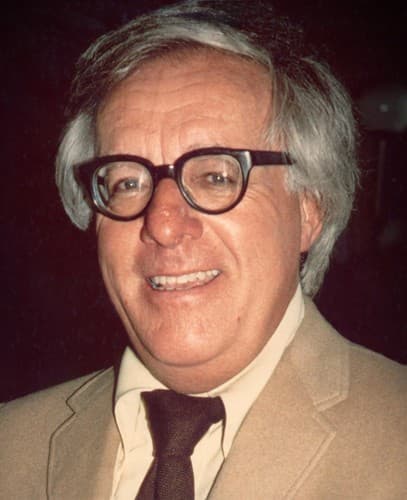
Ray Douglas Bradbury was an American author and screenwriter. One of the most celebrated 20th-century American writers, he worked in a variety of modes, including fantasy, science fiction, horror, mystery, and realistic fiction.
Similar books
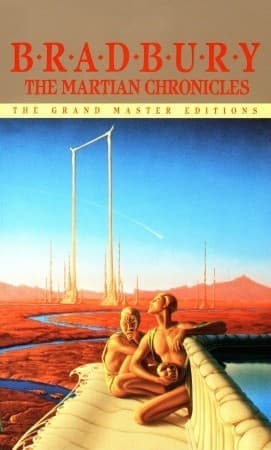
- The Martian Chronicles
Ray Bradbury
4.1 (210k) average on GoodreadsFantasyAnother collection of Bradbury's short stories, linked by the theme of human colonization of Mars.
- Stories of Your Life and Others
Ted Chiang
4.2 (66k) average on GoodreadsFantasyModern short story collection with deep philosophical and scientific themes, often with a melancholic tone.
- Harry Potter and the Sorcerer's Stone
J.K. Rowling
4.5 (7M) average on GoodreadsFantasyRescued from a miserable life under the stairs, an orphaned boy discovers he's a wizard destined for a magical school, where he uncovers a dangerous secret tied to the dark wizard who murdered his parents.
- The Hunger Games
Suzanne Collins
4.3 (6.4M) average on GoodreadsFantasyIn a future where children fight to the death on live television, Katniss Everdeen volunteers for the arena, turning a death sentence into a fight for survival and a spark of rebellion.
- 1984
George Orwell
4.2 (3.1M) average on GoodreadsPoliticsIn a future where surveillance and thought control are absolute, a man's search for truth clashes with the Party, showing that hope can be a form of rebellion.
- Divergent
Veronica Roth
4.2 (2.9M) average on GoodreadsFantasyIn a society divided by virtues, a sixteen-year-old's difference from the norm starts a rebellion that threatens her world.





Enjoyed the summary?
A summary gives you the shape of the book. The book itself has the detail, the examples and the voice.
Find The Illustrated Man on AmazonAs an Amazon Associate, BookBrief earns from qualifying purchases. How we're funded