

Synopsis
Covers the whole plot, including the ending.
- Difficulty
- Medium
- Pacing
- Moderate
- Mood
- Atmospheric, Mysterious, Gothically Spooky, Adventurous
- Read it if
- You enjoy gothic historical fiction with a young protagonist, mystery, and a touch of the macabre.
- Skip it if
- You prefer fast-paced action over atmospheric storytelling and character-driven mystery, or are sensitive to themes of grave robbing and deception.
The Good Thief Plot Summary
Covers the whole plot, including the ending.
The Arrival of Benjamin Nab
Twelve-year-old Ren, an orphan at Saint Anthony's, has always wondered about his missing left hand and his parents' identity. His life changes when a charismatic young man named Benjamin Nab arrives, claiming to be his long-lost brother. Benjamin tells a compelling, though unbelievable, story about Ren losing his hand to a bear trap set by their father, convincing the monks to release Ren into his care. Ren, wanting family and answers, eagerly leaves the orphanage, hoping for a new life and to finally understand his past. However, he quickly realizes that Benjamin's world is far from ordinary, involving a group of grave robbers and con artists.
Introduction to the 'Family Business'
Benjamin takes Ren to a rundown house where a strange group lives: Tom, a giant with a gentle nature; Dolly, a woman skilled in preparing bodies for burial; and Mrs. Sands, a stern but motherly figure who runs the house. Ren quickly learns their 'family business' involves grave robbing, specifically 'resurrection men' who supply bodies to Dr. Couper, a local anatomist. Benjamin, the leader, plans these nighttime trips. Ren is initially disturbed but also fascinated by their unusual skills and the friendship among them, feeling a sense of belonging he never had at the orphanage.
First Grave Robbery and Moral Dilemmas
Benjamin and his crew go on a grave robbing trip, with Ren watching their careful process. They dig up a recently buried body, avoiding detection. Ren is torn between his sense of right and wrong, taught by the monks, and his desire to fit in with his new 'family.' He sees the practical side of their work for Dr. Couper's medical studies, which lessens his moral concerns. This experience solidifies Ren's entry into their world, forcing him to adapt to a life very different from the orphanage's rules.
Dr. Couper and the Anatomy Lessons
Ren begins helping Dr. Couper during his anatomy lessons, assisting with dissections and observing the students. He quickly develops an interest in human anatomy, showing a natural talent for it despite his lack of formal education. Dr. Couper, impressed by Ren's intelligence and steady hand, allows him to take a more active role. This exposure to medical science gives Ren a different understanding of the bodies they get, seeing them not just as stolen goods but as tools for learning. He also learns about the balance between life and death, and the societal demand for bodies.
The Ghost of the Cemetery
Stories of a 'ghost' haunting the local cemetery begin to spread, disrupting the grave robbers' work. Ren, with Benjamin on a nighttime trip, encounters the spectral figure. It turns out to be a young woman named Miss Pimpkins, who has been sleeping in her deceased mother's grave, driven by grief. Her presence makes their work difficult, as they cannot dig up her mother's coffin while she is there. This encounter shows the human element behind their illegal trade and forces Benjamin's crew to think of other plans, showing a surprising amount of empathy for the girl.
The Search for Ren's Past Intensifies
Ren continues to ask Benjamin for more details about his past and the true story of his missing hand. Benjamin's initial tale of the bear trap begins to fall apart under Ren's questions. Through fragmented memories and overheard talks, Ren starts to piece together a more troubling truth, suspecting that Benjamin's involvement in his abandonment and injury is more direct than he let on. He finds an old locket and a unique button, which he believes are linked to his birth parents. These clues strengthen his resolve to uncover the full truth, even if it means facing uncomfortable realities about Benjamin.
The Deception Unveiled
Ren's suspicions about Benjamin peak. He confronts Benjamin, who, under pressure, finally reveals the truth: he is not Ren's brother. Instead, Benjamin was part of a group of thieves who kidnapped Ren as an infant. During the struggle, Ren's hand was accidentally cut off by a falling window sash. Benjamin, feeling guilty and seeing an opportunity, abandoned Ren at the orphanage. This revelation shatters Ren's trust and his idealized image of Benjamin, leaving him feeling betrayed and lost. The 'family' he had come to rely on is shown to be built on lies.
The Pursuit of Justice
Devastated but determined, Ren decides he must find his real parents and expose Benjamin's deception. He uses the few clues he has — the locket, the button, and vague memories — to follow leads. He realizes that the people who originally kidnapped him might also know his parents' identities. Ren's journey becomes one of self-discovery and a search for truth, even if it means cutting ties with the only 'family' he has ever known. He faces the moral complexities of his life, realizing he must make his own path based on honesty and justice, rather than continuing to live a lie.
The Confrontation and Resolution
Ren finally confronts Benjamin, not with anger, but with quiet determination. He reveals his knowledge of the past and demands accountability. Benjamin, seeing Ren's maturity and strength, is forced to admit his wrongdoing. The climax involves a tense discussion and a difficult choice for Ren: whether to completely abandon Benjamin and his crew, or to find a way to manage their complicated relationship. Ren ultimately chooses a path that allows him to pursue his own truth while acknowledging the complex bonds that have formed, showing his capacity for forgiveness and his understanding of human error.
A New Beginning
Having faced his past and made peace with Benjamin (to some extent), Ren begins to build his own identity. He continues his studies with Dr. Couper, finding purpose in medicine. While the mystery of his biological parents remains partly unsolved, Ren no longer defines himself only by this missing piece. He has found a different kind of family in the odd group of people around him, including Mrs. Sands and Tom. Ren's journey ends with a sense of self-acceptance and a hopeful outlook, showing that family can be found in unexpected places and that one's future is not controlled by a traumatic past.
The Good Thief Characters
Ren
Protagonist
A one-handed orphan searching for his identity and past.
Ren is a twelve-year-old boy, abandoned at Saint Anthony's Orphanage, missing his left hand. He is intelligent, observant, and possesses a strong moral compass, often questioning the illicit activities of Benjamin's crew. Despite his physical disability and traumatic past, he is resilient and determined, driven by an insatiable curiosity about his origins. He develops a keen interest in anatomy and medicine, showing a practical and scientific mind.
Relationships: Benjamin Nab (Initially believed to be his brother, later revealed as his kidnapper and caretaker.); Mrs. Sands (A stern but caring maternal figure within Benjamin's crew.); Tom (A large, gentle grave robber who becomes a protective friend.); Dr. Couper (His mentor in anatomy and medicine.)
Benjamin Nab
Antagonist/Supporting
A charismatic con artist who claims to be Ren's brother.
Benjamin is a charming, manipulative, and resourceful young man who leads a group of grave robbers. He is quick-witted and skilled at deception, using his charisma to gain trust and orchestrate his schemes. Despite his morally ambiguous profession and the lies he tells Ren, he harbors a complex sense of guilt and responsibility towards the boy, stemming from his involvement in Ren's abandonment. He is driven by survival and a desire to maintain his lifestyle.
Relationships: Ren (His 'adopted' younger brother, whom he kidnapped as a baby.); Mrs. Sands (His surrogate mother figure and an integral part of his crew.); Tom (His loyal, albeit simple, associate.); Dolly (A member of his grave-robbing crew.)
Mrs. Sands
Supporting
The matriarch of Benjamin's unconventional household.
Mrs. Sands is the stern but ultimately caring woman who runs Benjamin's household. She is practical, resourceful, and possesses a no-nonsense attitude. She acts as a surrogate mother figure to the disparate group, ensuring they are fed and clothed, and providing a semblance of order amidst their chaotic lives. She is aware of their illicit activities but provides a grounding presence, often offering quiet wisdom and emotional support to Ren.
Relationships: Ren (A maternal figure who cares for him.); Benjamin Nab (His surrogate mother figure and household manager.)
Tom
Supporting
A large, simple-minded grave robber with a kind heart.
Tom is a physically imposing but gentle giant who works alongside Benjamin as a grave robber. He is not particularly intelligent but is fiercely loyal and possesses a childlike innocence. He forms a strong bond with Ren, often acting as his protector and friend. His simplicity provides a moral counterpoint to Benjamin's cunning, and his quiet strength is a source of comfort to Ren.
Relationships: Ren (A protective friend.); Benjamin Nab (His loyal associate.)
Dr. Couper
Supporting
A local anatomist who employs Benjamin's crew and mentors Ren.
Dr. Couper is a dedicated and somewhat eccentric anatomist who relies on Benjamin's crew to supply him with cadavers for his medical studies and lessons. He is passionate about science and education, viewing the procurement of bodies as a necessary means to advance medical knowledge. He recognizes Ren's intelligence and aptitude, taking him under his wing as an assistant and mentor, unknowingly offering Ren a legitimate path forward.
Relationships: Ren (His mentor and employer.); Benjamin Nab (His primary supplier of cadavers.)
Dolly
Supporting
A member of Benjamin's crew, skilled in preparing bodies.
Dolly is another member of Benjamin's grave-robbing crew, specializing in the delicate task of preparing and handling the bodies. She is practical and skilled in her macabre craft, often working with a quiet efficiency. She is less vocal than the others but is an essential part of the team, representing the more technical aspects of their illicit trade.
Relationships: Benjamin Nab (An associate in his grave-robbing activities.); Ren (A fellow inhabitant of the house.)
Miss Pimpkins
Supporting
A grieving woman who disrupts the grave robbers' work.
Miss Pimpkins is a young woman consumed by grief after her mother's death. She takes to sleeping in her mother's grave, inadvertently thwarting Benjamin's attempts to exhume the body. Her presence highlights the human cost and emotional impact behind the grave robbers' trade, forcing them to confront the raw pain of loss. She is a symbol of the ordinary world clashing with their illicit one.
Relationships: Ren (An unexpected encounter in the cemetery.); Benjamin Nab (An obstacle to his grave-robbing plans.)
The Good Thief Themes
The Search for Identity and Belonging
Ren's journey is driven by his need to understand who he is and where he comes from. His missing hand is a constant reminder of his unknown past, and Benjamin's arrival offers the first hope of belonging. He struggles with the conflicting identities offered by the orphanage, Benjamin's 'family' of thieves, and his growing interest in medicine. Ultimately, he learns that identity is not only about lineage but about choices and self-discovery. This is clear when he chooses to study medicine with Dr. Couper, finding a purpose beyond his origins.
“He didn't know who he was, or where he came from. All he knew was the orphanage, and the hand that wasn't there.”
Moral Ambiguity and Justification
The novel explores the blurred lines between right and wrong. Benjamin's grave robbing, while illegal, is shown as a necessary evil that provides bodies for medical advancement. Ren, initially repulsed, gradually understands the practicalities and even the respect the crew has for the dead. The story challenges traditional ideas of morality, showing how circumstances can push individuals to actions that are both wrong and, in a strange way, helpful. This is especially clear in Dr. Couper's belief in the importance of anatomy, despite where his materials come from.
“It was wrong, he knew, to steal from the dead. But what if the dead could help the living?”
The Nature of Family
The idea of family is central, shown in its various forms. Ren wants a traditional family, which Benjamin initially pretends to provide. However, the novel shows that family can be found in unusual bonds, such as the loyalty and friendship among Benjamin's crew. Mrs. Sands acts as a mother figure, and Tom becomes a protective older brother. Ren learns that true family is built on trust and care, not necessarily blood, and that he can choose his own family, even if it means forming new connections after Benjamin's betrayal.
“Family was not always blood. Sometimes, it was just the people who were there.”
Deception and Truth
The entire story rests on Benjamin's elaborate lie about Ren's past. Ren's search for truth drives the story, as he carefully puts together clues and confronts Benjamin. The novel explores the harm caused by lies, but also the sometimes-complex reasons behind them. Benjamin's deception, while cruel, comes from a mix of guilt and self-preservation. The eventual reveal of the truth is painful but ultimately freeing for Ren, allowing him to move forward with a clearer understanding of his world.
“The truth was a slippery thing, always changing shape, always hiding behind a smile or a convenient story.”
Plot Devices & Literary Techniques
The Missing Hand
A physical manifestation of Ren's unknown past and identity.
Ren's missing left hand serves as a powerful symbol and a constant mystery throughout the novel. It is the physical embodiment of his lost history and the primary catalyst for his search for identity. The various explanations for its loss (the bear trap, the true accident) are intertwined with the layers of deception surrounding his origins. It also highlights Ren's resilience and adaptability, as he learns to navigate the world with one hand, demonstrating his inner strength.
The Macabre Setting (Grave Robbing)
A gothic backdrop that highlights themes of life, death, and morality.
The world of grave robbing and anatomy lessons provides a unique and unsettling backdrop for Ren's coming-of-age. This macabre setting allows the author to explore themes of life, death, and the human body in a raw, unflinching manner. It forces Ren and the reader to confront the ethical dilemmas of their actions, while also offering a fascinating glimpse into a historical practice. The eerie atmosphere enhances the mystery and the moral ambiguity of the characters.
The Found Family Trope
A diverse group of outcasts who form an unconventional family unit.
Despite the initial deception, Benjamin's crew, including Mrs. Sands and Tom, functions as a 'found family' for Ren. This trope highlights that family bonds are not always defined by blood but by shared experiences, loyalty, and mutual (if sometimes complicated) care. Ren finds a sense of belonging and protection among these outcasts, even as he grapples with their illicit activities. This device underscores the theme that family can be forged in the most unexpected places.
The Locket and Button
Physical clues that unravel the mystery of Ren's parentage.
The locket and the distinctive button serve as classic mystery plot devices. They are tangible objects that Ren discovers, providing concrete links to his past and slowly unraveling the layers of Benjamin's lies. These clues empower Ren to actively investigate his origins, moving him from a passive recipient of information to an active participant in uncovering the truth. They represent the breadcrumbs leading to his true parentage.
The Good Thief Quotes
“There are some things you can't undo, no matter how hard you try.”
“A good thief doesn't just take things; a good thief makes them disappear.”
“Sometimes the truth is a burden, and a lie is a comfort.”
“Every lock has a key, and every secret has a way of getting out.”
“The world is full of people looking for something to believe in, even if it's a lie.”
“It's not about what you have, but what you can make of it.”
“Family isn't always blood. Sometimes it's the people who choose you.”
“Fear is a powerful tool, if you know how to use it.”
“The past is a tricky thing. It can haunt you, or it can set you free.”
“Sometimes the greatest treasures are the ones you can't hold in your hands.”
“A person can be many things, but a true heart will always find its way home.”
“Even in the darkest places, there can be light, if you know where to look.”
“To truly know someone, you have to see them when they think no one is watching.”
Quiz
10 questions on the plot and the characters. Each answer comes with a short explanation.
Question 1
What physical characteristic makes Ren unique among the boys at Saint Anthony's Orphanage?
- He has a distinctive birthmark on his face.
- He is missing his left hand.
- He has unusually bright red hair.
- He is significantly taller than the other boys his age.
Show answer
B. He is missing his left hand. The book description explicitly states that 'Twelve year-old Ren is missing his left hand.' This physical trait is central to his personal mystery.
Question 2
Who claims to be Ren's long-lost brother and convinces the monks to release Ren from the orphanage?
- Father Thomas
- Mr. Finch
- Benjamin Nab
- Brother Gregory
Show answer
C. Benjamin Nab The synopsis clearly states, 'When a young man named Benjamin Nab appears, claiming to be Ren’s long-lost brother, his convincing tale... persuades the monks at the orphanage to release the boy.'
Question 3
What kind of institution is Saint Anthony's, where Ren has spent his entire life?
- A boarding school for gifted children
- An orphanage for boys
- A monastery for aspiring monks
- A hospital for children with special needs
Show answer
B. An orphanage for boys The book description specifies 'Saint Anthony’s Orphanage for boys,' where Ren was abandoned as an infant.
Question 4
What is one of the main mysteries Ren has been trying to solve his entire life, besides the loss of his hand?
- The location of a hidden treasure
- Who his parents are and why he was abandoned
- The identity of the person who runs the orphanage
- How to escape the orphanage unnoticed
Show answer
B. Who his parents are and why he was abandoned The text states Ren has been trying to solve 'who his parents are, and why he was abandoned as an infant at Saint Anthony’s Orphanage for boys,' in addition to how he lost his hand.
Question 5
What kind of people does Ren encounter in his new life with Benjamin Nab?
- Wealthy merchants and noblemen
- Scholars, librarians, and historians
- Outrageous scam artists, grave robbers, and petty thieves
- Farmers, fishermen, and honest laborers
Show answer
C. Outrageous scam artists, grave robbers, and petty thieves The synopsis describes Ren being introduced to a 'life of hardscrabble adventure filled with outrageous scam artists, grave robbers, and petty thieves.'
Question 6
Why does Ren begin to suspect Benjamin Nab?
- Benjamin tries to send Ren back to the orphanage.
- Benjamin withholds money from Ren that he earned.
- Ren suspects Benjamin holds the key to both his future and his past.
- Benjamin constantly criticizes Ren's missing hand.
Show answer
C. Ren suspects Benjamin holds the key to both his future and his past. The description notes, 'As Ren is introduced to a life of hardscrabble adventure... he begins to suspect that Benjamin not only holds the key to his future, but to his past as well…'
Question 7
What literary genres are associated with 'The Good Thief'?
- Science Fiction, Romance, Contemporary
- Fantasy, Historical Fiction, Mystery, Young Adult
- Thriller, Biography, Horror
- Literary Fiction, Satire, Dystopian
Show answer
B. Fantasy, Historical Fiction, Mystery, Young Adult The provided information explicitly lists 'Fantasy, Historical Fiction, Mystery, Young Adult' as the genres of the book.
Question 8
The description uses the phrase 'gothically spooky' to describe the book's atmosphere. Which elements from the synopsis contribute most to this feeling?
- The focus on a young boy's journey and his search for family.
- The orphanage setting, missing limb mystery, and introduction to grave robbers.
- The idea of a long-lost brother and the hope it brings.
- The mention of 'hardscrabble adventure' and 'scam artists.'
Show answer
B. The orphanage setting, missing limb mystery, and introduction to grave robbers. The 'gothically spooky' atmosphere is best evoked by the orphanage, the unsettling mystery of Ren's missing hand, and the introduction to characters like 'grave robbers,' which suggest darker, more macabre elements.
Question 9
The central conflict introduced in the synopsis revolves around Ren's search for what two intertwined aspects of his life?
- Wealth and social status.
- His identity/past and his future/belonging.
- Revenge and justice.
- Education and a stable career.
Show answer
B. His identity/past and his future/belonging. Ren is trying to solve 'who his parents are, and why he was abandoned' (past/identity), and he suspects Benjamin holds the 'key to his future' (future/belonging). These are the core intertwined aspects.
Question 10
What does the phrase 'ratifies Hannah Tinti as one of our most exciting talents writing today' imply about the author and the book?
- It suggests this is her debut novel and it has been critically acclaimed.
- It means she has written many books before this one, all of which were successful.
- It indicates the book is a commercial success but lacks critical praise.
- It implies she is a well-known author in the fantasy genre specifically.
Show answer
A. It suggests this is her debut novel and it has been critically acclaimed. The phrase 'ratifies Hannah Tinti as one of our most exciting talents' combined with the mention of the 'John Sargent, Sr. First Novel Prize' strongly implies this is her debut work that has received significant critical recognition.
The Good Thief FAQ
What is the central mystery that drives Ren's journey at the beginning of the book?
Ren's primary mystery is the loss of his left hand and the identity of his parents. He was abandoned at Saint Anthony's Orphanage as an infant, and the monks have no information about his origins or the accident that cost him his limb, leading him to constantly seek answers.
Who is Benjamin Nab, and what role does he play in Ren's departure from the orphanage?
Benjamin Nab claims to be Ren's long-lost brother and provides a seemingly convincing story about how Ren lost his hand. His tale persuades the monks at Saint Anthony's to release Ren into his care, thus launching Ren's adventure outside the confines of the orphanage.
What kind of world does Ren enter after leaving Saint Anthony's with Benjamin?
Ren is thrust into a gritty, adventurous world populated by various criminals and con artists. He encounters grave robbers, petty thieves, and elaborate scam artists, learning the ropes of their illicit trades and living a life far removed from the structured routine of the orphanage.
What is the true nature of Benjamin Nab's relationship with Ren, and how does it evolve?
Initially, Benjamin pretends to be Ren's brother to use him in his schemes, particularly for grave robbing. However, their relationship gradually deepens as Benjamin, despite his criminal nature, develops a genuine protective affection for Ren, blurring the lines between manipulation and familial bond.
What is the significance of the 'good thief' in the title, and who does it refer to?
The title 'The Good Thief' refers to Ren, who, despite being involved in criminal activities, maintains a moral compass and a desire for truth and belonging. He often performs acts of kindness or seeks justice in his own way, distinguishing him from the purely self-serving criminals he associates with.
How does the story of 'The Good Thief' connect to the broader historical context of 19th-century America?
The story subtly reflects the grim realities of 19th-century America, including the prevalence of orphanages, the desperation that fueled grave robbing for medical schools, and the existence of a criminal underworld operating alongside legitimate society. The setting evokes a time of limited social safety nets and harsh justice.
What specific clues or details hint at Benjamin's true intentions before his full reveal?
Early hints include Benjamin's inconsistent stories, his quick changes of plans, and his eagerness to involve Ren in dubious activities like grave robbing. His initial charm is often punctuated by a manipulative undertone, and he avoids direct answers about their shared past.
What is the significance of the various 'families' Ren encounters throughout the book?
Ren seeks a true family, and he encounters several surrogate ones: the monks at Saint Anthony's, Benjamin and his gang (Dolly, Tom, Mrs. Sands), and eventually the family he discovers at the end. Each 'family' offers different forms of belonging, protection, and moral guidance, shaping his understanding of kinship.
How does Ren's missing hand symbolize his search for identity and wholeness?
Ren's missing hand is a constant physical reminder of his unknown past and a symbol of his incompleteness. Solving the mystery of its loss is inextricably linked to understanding who he is and where he comes from, as if regaining that knowledge will make him whole.
Discuss Benjamin Nab's psychological complexity. Is he purely villainous, or does he possess redeeming qualities?
Benjamin is a complex character who is far from purely villainous. While he is a manipulative con artist and thief, he develops a genuine, albeit rough, affection and protectiveness towards Ren. His actions are often driven by survival and a distorted sense of loyalty to his own 'family,' suggesting a mix of self-interest and nascent care.
How does Ren's experience with deception and betrayal shape his worldview and moral development?
Ren's repeated encounters with deception, particularly from Benjamin, force him to become more astute and less naive. While he is initially hurt, these experiences also strengthen his resolve to find truth and develop his own moral code, making him resilient and discerning rather than cynical.
What role does the theme of 'belonging' play in Ren's psychological journey?
The theme of belonging is central to Ren's psychological journey, as he constantly seeks a place where he truly fits and is loved. His search for his parents and a true family drives many of his actions, and finding a sense of belonging ultimately provides him with peace and identity.
Could Benjamin's initial story about Ren's hand have been partially true, even if his identity was a lie?
While Benjamin's identity as Ren's brother was a lie, elements of his elaborate story about Ren's hand could have been inspired by real events or rumors he heard. Con artists often weave kernels of truth into their fabrications to make them more believable, leaving the reader to wonder about the origins of his tale.
How does the ending resolve Ren's core mysteries, and what lingering questions might readers have?
The ending largely resolves Ren's core mysteries by revealing his true parentage and the circumstances of his lost hand. However, readers might still ponder the long-term fates of characters like Benjamin or Dolly, or the exact trajectory of Ren's life after finding his true family, leaving room for imaginative continuation.
Is 'The Good Thief' primarily a coming-of-age story, a mystery, or an adventure tale? How do these genres intertwine?
'The Good Thief' masterfully intertwines all three genres. It is fundamentally a coming-of-age story as Ren matures amidst adversity, driven by the central mystery of his origins, all unfolding through a series of thrilling adventures. The blend allows for rich character development within an engaging plot.
What is the significance of the character Dolly, and what does she represent in Ren's life?
Dolly, a member of Benjamin's criminal gang, represents a complex female figure in Ren's life. She is tough and capable, often acting as a surrogate older sister or protector, but also participates in the illicit activities. She offers Ren a different perspective on loyalty and survival within their unconventional 'family'.
How does the author use the setting of the orphanage to establish Ren's character and initial worldview?
The orphanage setting establishes Ren as an intelligent, observant, and resilient boy who yearns for answers and connection. His isolation there fuels his imagination and desire for a past, while the structured, somewhat bleak environment highlights his yearning for adventure and a true home.
What message, if any, does the book convey about the nature of family, both biological and chosen?
The book conveys that family is not solely defined by blood but also by shared experiences, loyalty, and affection. Ren experiences various forms of 'family' – the monks, Benjamin's gang, and finally his biological relatives – showing that true belonging and care can be found in unexpected places and through unconventional bonds.
Similar books
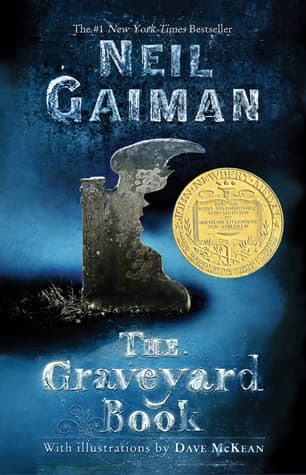
- The Graveyard Book
Neil Gaiman
4.1 (438k) average on GoodreadsFantasyFeatures a young orphan raised in an unusual, slightly macabre environment with a strong sense of mystery and found family.
- Jonathan Strange & Mr Norrell
Susanna Clarke
3.8 (198k) average on GoodreadsFantasyOffers a richly imagined historical setting with a unique, slightly dark fantastical element and detailed world-building.
- Harry Potter and the Sorcerer's Stone
J.K. Rowling
4.5 (7M) average on GoodreadsFantasyRescued from a miserable life under the stairs, an orphaned boy discovers he's a wizard destined for a magical school, where he uncovers a dangerous secret tied to the dark wizard who murdered his parents.
- The Hunger Games
Suzanne Collins
4.3 (6.4M) average on GoodreadsFantasyIn a future where children fight to the death on live television, Katniss Everdeen volunteers for the arena, turning a death sentence into a fight for survival and a spark of rebellion.
- 1984
George Orwell
4.2 (3.1M) average on GoodreadsPoliticsIn a future where surveillance and thought control are absolute, a man's search for truth clashes with the Party, showing that hope can be a form of rebellion.
- Divergent
Veronica Roth
4.2 (2.9M) average on GoodreadsFantasyIn a society divided by virtues, a sixteen-year-old's difference from the norm starts a rebellion that threatens her world.





Enjoyed the summary?
A summary gives you the shape of the book. The book itself has the detail, the examples and the voice.
Find The Good Thief on AmazonAs an Amazon Associate, BookBrief earns from qualifying purchases. How we're funded