

Synopsis
Covers the whole plot, including the ending.
- Difficulty
- Easy
- Pacing
- Moderate
- Mood
- Satirical, Romantic, Disillusioned, Hopeful
- Read it if
- You enjoy stories about youthful rebellion, unconventional romance, and the search for meaning in a conformist world.
- Skip it if
- You prefer traditional, straightforward love stories without moral ambiguity or a focus on generational disillusionment.
The Graduate Plot Summary
Covers the whole plot, including the ending.
Return to Pasadena
Benjamin Braddock, a recent college graduate, returns to his parents' wealthy Pasadena home. He receives many congratulations and questions about his future from his parents, Mr. and Mrs. Braddock, and their friends. Benjamin feels a deep sense of aimlessness and disappointment, finding little meaning in his studies or the usual paths set for him. At a party celebrating his return, Mrs. Robinson, the wife of his father's business partner, Mr. Robinson, asks him to drive her home. This invitation quickly takes an unexpected turn.
The First Seduction
After dropping Mrs. Robinson off, Benjamin is convinced to come inside for a drink. Mrs. Robinson, older and more experienced, makes increasingly clear advances, eventually undressing in front of him. Despite his initial discomfort, Benjamin is seduced. This encounter starts their secret affair. He enters a world of forbidden passion and moral uncertainty, often meeting Mrs. Robinson at a Los Angeles hotel, all while trying to keep their relationship hidden from their families and social circle.
A Summer of Affairs
Benjamin spends the summer meeting Mrs. Robinson secretly at the Taft Hotel. Their affair is only physical, without emotional connection or shared interests. Benjamin finds himself more and more detached and bored by the routine, yet unable to leave Mrs. Robinson's control. He often feels like a pawn, struggling with growing guilt and the moral emptiness of their relationship. His parents, unaware of his secret life, continue to pressure him about his future, increasing his feelings of alienation and confusion.
Elaine's Return
As summer ends, Benjamin's parents, along with Mr. Robinson, begin to insist that Benjamin take Elaine Robinson, Mrs. Robinson's daughter, on a date. Elaine has just returned from Berkeley, and both families hope they will form a relationship. Benjamin is at first unwilling, knowing the problems it would cause with Mrs. Robinson, who strongly opposes the idea. He tries to avoid Elaine, but his parents' pressure becomes too much, forcing him to arrange a date.
The Disastrous Date
On his first date with Elaine, Benjamin tries to make a bad impression to deter her. He drives carelessly, takes her to a strip club, and acts rudely. His goal is to make sure she never wants to see him again, avoiding problems with her mother. However, despite his efforts, a surprising connection begins to form. Elaine, at first shocked, eventually sees through his act and recognizes his vulnerability. Benjamin, in turn, finds himself unexpectedly drawn to her intelligence, kindness, and genuine nature, realizing he truly likes her.
Confession and Revelation
As Benjamin and Elaine spend more time together, their feelings for each other grow. However, the secret of his affair with Mrs. Robinson weighs heavily on him. Unable to bear the deception any longer, Benjamin tells Elaine everything. She is devastated and horrified by the news, feeling betrayed by both Benjamin and her mother. The news quickly reaches Mr. Robinson, who, learning of his wife's affair with Benjamin, reacts with furious anger, threatening Benjamin and forbidding Elaine from ever seeing him again.
Elaine Flees to Berkeley
Distraught and embarrassed by her mother's affair and the resulting family trouble, Elaine goes back to Berkeley, hoping for a fresh start. Benjamin, now deeply in love with Elaine and determined to prove his sincerity, follows her. He arrives in Berkeley and tries repeatedly to see her, but Elaine, still hurt and confused, at first rejects him, fearing more pain and the consequences of their relationship. He is persistent in his pursuit, trying to convince her that his feelings are real.
The Engagement and the Chase
Under pressure from her father and still recovering from the scandal, Elaine agrees to marry Carl Smith, a medical student and a seemingly safe choice. Benjamin, upon hearing about the engagement, is heartbroken and determined to stop the wedding. He races against time, driving quickly across California to Santa Barbara, where the wedding is to take place. He hopes desperately to reach Elaine before she says 'I do,' believing she truly loves him and that this marriage is a mistake driven by outside pressures.
Interrupting the Ceremony
Benjamin arrives at the church in Santa Barbara just as the wedding ceremony is about to end. He bursts in, shouting Elaine's name and causing chaos. The wedding guests, at first stunned, react with shock and anger. Elaine, seeing Benjamin, pauses, then calls out his name. She leaves her groom, Carl, at the altar and runs to Benjamin. Together, they flee the church amid the protests and confusion of the wedding party, locking themselves in the back of a passing bus.
The Bus Ride
As the bus leaves the church, Benjamin and Elaine sit together in the back, at first filled with triumph and relief. They smile at each other, still excited from their dramatic escape. However, as the initial rush fades, a more serious realization begins. Their smiles slowly disappear, replaced by looks of uncertainty and even worry. They look out the window, then at each other, the weight of their impulsive decision and the unknown future settling between them, leaving their ultimate destination and happiness unclear.
Principal Figures
Benjamin Braddock
Protagonist
A disillusioned college graduate searching for meaning and direction.
Benjamin is a highly intelligent, recently graduated college student who feels a profound sense of alienation and aimlessness despite his academic success. He is passive, easily influenced, and struggles to articulate his desires or stand up for himself against the expectations of his parents and society. Initially, he drifts into an affair with Mrs. Robinson, but his encounter with Elaine awakens a desire for genuine connection and purpose. His journey is one of awakening and rebellion against the superficiality he perceives.
Relationships: Mrs. Robinson (Mistress; manipulative, predatory, and ultimately an antagonist to his true desires.); Elaine Robinson (Love interest; a source of genuine connection, hope, and purpose.); Mr. Braddock (Father; well-meaning but oblivious and pressuring.); Mrs. Braddock (Mother; similarly well-meaning but overbearing and focused on appearances.)
Mrs. Robinson
Antagonist/Supporting
A seductive, cynical, and manipulative older woman who preys on Benjamin's vulnerability.
Mrs. Robinson is a sophisticated, bored, and deeply unhappy older woman, married to Mr. Robinson, Benjamin's father's business partner. She is cynical, manipulative, and emotionally detached, using Benjamin to alleviate her own ennui and resentment. She shows little genuine affection and becomes fiercely possessive when Benjamin develops feelings for her daughter, Elaine. Her actions are driven by a mix of boredom, bitterness, and a desire to control. She represents the corrupting influence of the older generation and the emptiness of their lives.
Relationships: Benjamin Braddock (Lover; a means to combat her boredom and exert control.); Elaine Robinson (Daughter; she is protective and possessive, seeing Elaine as an extension of herself, especially concerning Benjamin.); Mr. Robinson (Husband; a distant, likely loveless marriage.)
Elaine Robinson
Love Interest/Supporting
Mrs. Robinson's daughter, who becomes Benjamin's true love and catalyst for change.
Elaine is a kind, intelligent, and somewhat naive young woman studying at Berkeley. She initially appears conventional but possesses an underlying strength and independence. She is deeply hurt and conflicted by the revelation of her mother's affair with Benjamin but ultimately chooses to follow her heart. Elaine represents the possibility of genuine connection, authenticity, and a future free from the cynicism of the older generation. She is a stark contrast to her mother, offering Benjamin a chance at a meaningful relationship.
Relationships: Benjamin Braddock (Love interest; a source of genuine affection and a shared future.); Mrs. Robinson (Mother; a strained and complicated relationship, marked by betrayal and disillusionment.); Mr. Robinson (Father; a typical father-daughter relationship, but he is controlling regarding her marriage.)
Mr. Braddock
Supporting
Benjamin's well-meaning but oblivious father, representative of the materialistic upper class.
Mr. Braddock is Benjamin's father, a successful businessman who embodies the affluent, conventional, and somewhat superficial upper-middle-class society of Pasadena. He genuinely cares for Benjamin but expresses it through pressure for Benjamin to conform to societal expectations—attend graduate school, pursue a respectable career, and marry well. He is largely oblivious to Benjamin's inner turmoil and the true nature of his son's relationships, representing the generation Benjamin struggles to understand and escape.
Relationships: Benjamin Braddock (Son; he cares for Benjamin but struggles to truly understand him.); Mrs. Braddock (Wife; a stable, conventional marriage.)
Mrs. Braddock
Supporting
Benjamin's doting but overbearing mother, focused on appearances and social status.
Mrs. Braddock is Benjamin's mother, a quintessential suburban housewife who is highly concerned with social appearances and what others think. She is doting and proud of Benjamin's achievements but, like her husband, pressures him to adhere to conventional paths. She is largely oblivious to the deeper emotional currents in Benjamin's life and the affair, acting as a symbol of the superficiality and conformity that Benjamin seeks to escape. Her focus is on maintaining a perfect family image.
Relationships: Benjamin Braddock (Son; she loves him but is more concerned with his outward success and conformity.); Mr. Braddock (Husband; a stable, conventional marriage.)
Mr. Robinson
Supporting
Mrs. Robinson's husband and Benjamin's father's business partner, who embodies the patriarchal establishment.
Mr. Robinson is Mrs. Robinson's husband and a business associate of Benjamin's father. He is a seemingly jovial and respected member of their social circle, but beneath the surface, his marriage is clearly troubled. When he discovers his wife's affair with Benjamin, he reacts with explosive anger and a deep sense of betrayal, reflecting the patriarchal expectations of the time. He tries to control Elaine's life, pushing her into a marriage to preserve his family's reputation, making him an obstacle to Benjamin and Elaine's love.
Relationships: Mrs. Robinson (Wife; their marriage is revealed to be deeply fractured.); Elaine Robinson (Daughter; he is protective but also controlling, particularly after the scandal.); Mr. Braddock (Business partner and friend.)
Carl Smith
Mentioned
Elaine's fiancé, a safe and respectable choice.
Carl Smith is a medical student and Elaine Robinson's fiancé. He is presented as a conventional, stable, and respectable young man—the kind of suitable husband that Mr. Robinson and society would approve of for Elaine. He serves as a foil to Benjamin, representing the safe, predictable path that Benjamin and Elaine ultimately reject. His role is brief but crucial in highlighting the choice Elaine makes between security and passionate love.
Relationships: Elaine Robinson (Fiancé; a relationship arranged or encouraged by her father.)
Themes & Insights
Alienation and Disillusionment
The novel explores Benjamin's strong feeling of being separate from his parents' generation's values and expectations. Despite his academic success, he feels a deep emptiness and lack of purpose, finding the adult world he is expected to join to be shallow and meaningless. His affair with Mrs. Robinson, instead of fulfilling him, only makes his detachment and boredom worse, showing the moral emptiness he sees in the older generation's lives. This theme is clear from the beginning scenes where Benjamin is overwhelmed by meaningless congratulations and questions about his future, to his listless summer spent in the affair.
“'I'm just a little worried about my future.' 'What about it?' 'I don't know what I want to do.”
Rebellion Against Conformity
Benjamin's journey is a rebellion against social pressures to conform. His affair with Mrs. Robinson, while passive at first, is an act of defiance against the usual path. More clearly, his pursuit of Elaine and his dramatic interruption of her wedding show a complete rejection of the pre-planned, 'safe' choices offered by his parents and Mr. Robinson. He refuses to settle for a life without passion and truth, choosing instead to follow his heart, even if it means being an outcast and facing an uncertain future. The final scene on the bus shows this theme.
“'What I mean is, you're not going to be like them.' 'No,' Benjamin said, 'I'm not going to be like them.”
The Corrupting Influence of the Older Generation
The novel shows the older generation, especially Mrs. Robinson, as morally corrupt and emotionally stunted. Mrs. Robinson uses Benjamin to fill a void in her own life, showing a cynical and manipulative way of handling relationships. The parents, though well-meaning, are shown as unaware and shallow, pushing their children toward lives of material comfort and social acceptance rather than true happiness. This theme is highlighted by Mrs. Robinson's predatory nature and Mr. Robinson's attempt to force Elaine into a marriage to save his reputation, illustrating a world Benjamin must escape.
“'I think you're going to have a wonderful future. You're going to be a plastics man.”
The Search for Authentic Connection
Beneath Benjamin's initial passivity is a deep desire for real human connection, which he does not find in his affair with Mrs. Robinson. His relationship with Elaine, however, is a strong contrast. It shows vulnerability, honesty, and a mutual understanding that goes beyond the superficiality of his past experiences. Elaine helps Benjamin break free from his emotional paralysis and actively seek a meaningful relationship, symbolizing hope for a future built on real love rather than social expectations. Their dramatic escape from the wedding is the clearest expression of this search.
“'I love you.' 'I love you too.”
Plot Devices & Literary Techniques
The Taft Hotel
A recurring setting symbolizing the illicit and sterile nature of Benjamin's affair.
The Taft Hotel serves as the primary location for Benjamin and Mrs. Robinson's affair. Its anonymous, sterile environment reflects the transactional and emotionally detached nature of their relationship. The hotel room becomes a confined, secret world, devoid of warmth or genuine intimacy, mirroring Benjamin's increasing sense of emptiness. Its repeated use emphasizes the cyclical and unfulfilling routine of the affair, contrasting sharply with the more public and emotionally charged settings where Benjamin pursues Elaine.
The Plastics Speech
A symbolic piece of dialogue representing the soulless future Benjamin is expected to embrace.
Early in the novel, Mr. McGuire famously advises Benjamin to go into 'plastics.' This seemingly innocuous suggestion becomes a potent symbol for the superficial, materialistic, and ultimately unfulfilling career path that Benjamin's parents' generation champions. It represents the lack of imagination and the focus on material gain over personal fulfillment that Benjamin finds so alienating. The word 'plastics' itself evokes artificiality and conformity, encapsulating the very essence of what Benjamin is rebelling against.
The Bus
A symbol of uncertainty, escape, and the beginning of an unknown future.
The bus, in the final scene, is a powerful symbol. It represents Benjamin and Elaine's impulsive escape from the restrictive confines of their families and societal expectations. Unlike a private car, the bus is public and ordinary, suggesting a departure from their privileged lives and an embrace of an uncertain, less glamorous future. The final shot of them sitting silently on the bus, their smiles fading, encapsulates the ambiguity of their triumph and the daunting reality of forging a new path together without a clear destination.
The Swimming Pool
A recurring visual motif representing Benjamin's isolation and detachment.
Benjamin is frequently depicted floating alone in his parents' swimming pool, often wearing his diving suit. This imagery symbolizes his isolation, his desire to escape the pressures of the adult world, and his feeling of being submerged and detached from reality. The water provides a temporary refuge from the demands and expectations of his family and society, but it also signifies his passivity and inability to fully engage with his life. It's a place of contemplation and inertia, reflecting his initial aimlessness.
The Graduate Quotes
“I want to say one word to you. Just one word.”
“Are you listening?”
“Plastics.”
“I'm not a kid, Mrs. Robinson.”
“Mrs. Robinson, you're trying to seduce me. Aren't you?”
“Oh, my God. What am I going to do?”
“Ben, what's wrong?”
“This is ridiculous. I can't do this.”
“It's like I'm not really here.”
“You're going to marry Elaine, aren't you?”
“I love you, Elaine.”
“We're going to be all right.”
“The future is just a big, dark cloud.”
“I feel like I'm drowning.”
Quiz
10 questions on the plot and the characters. Each answer comes with a short explanation.
Question 1
What is Benjamin Braddock's initial major concern after graduating from college?
- Finding a high-paying job immediately.
- Figuring out what to do with his life.
- Moving to a new city.
- Dealing with his parents' disapproval.
Show answer
B. Figuring out what to do with his life. Benjamin is 'embittered by the emptiness of his college education and indifferent to his grim prospects,' indicating his primary struggle is a lack of direction for his future.
Question 2
Who is Mrs. Robinson married to?
- Benjamin's college professor.
- Benjamin's father's business partner.
- A close family friend.
- Elaine's college dean.
Show answer
B. Benjamin's father's business partner. The book states Mrs. Robinson is 'the relentlessly seductive wife of his father's business partner.'
Question 3
What is Benjamin's initial attitude towards the affair with Mrs. Robinson?
- He actively pursues it with great enthusiasm.
- He is hesitant but ultimately sees it as a way to rebel.
- He falls into it 'haplessly,' indicating a lack of clear intent or enthusiasm.
- He views it as a serious romantic relationship.
Show answer
C. He falls into it 'haplessly,' indicating a lack of clear intent or enthusiasm. The text describes Benjamin as falling 'haplessly into an affair,' suggesting he is more passive and accidental in its beginning rather than actively seeking it out.
Question 4
What career path is mentioned as a grim prospect for Benjamin?
- Law.
- Medicine.
- A career in plastics.
- Teaching.
Show answer
C. A career in plastics. The narrative explicitly mentions 'a career in plastics?' as one of the 'grim prospects' for Benjamin.
Question 5
What changes Benjamin's perspective and gives him a sense of direction?
- A new job offer.
- Meeting Elaine Robinson.
- A stern lecture from his father.
- Ending his affair with Mrs. Robinson.
Show answer
B. Meeting Elaine Robinson. The text states, 'It's only when beautiful coed Elaine Robinson comes home to visit her parents that Benjamin, now smitten, thinks he might have found some kind of direction in his life.'
Question 6
How does Mrs. Robinson react to Benjamin's interest in Elaine?
- She encourages their relationship.
- She becomes indifferent.
- She plays the role of a protective mother, creating conflict.
- She tries to rekindle her own affair with Benjamin.
Show answer
C. She plays the role of a protective mother, creating conflict. The description notes, 'Mrs. Robinson plays the role of protective mother as well as she does the one of mistress,' indicating her resistance to Benjamin and Elaine.
Question 7
What is a central theme highlighted by the 'fierce and absurd battle of wills'?
- The importance of wealth and social status.
- The conflict between generations and societal expectations.
- The struggle for academic excellence.
- The pursuit of political power.
Show answer
B. The conflict between generations and societal expectations. The battle represents Benjamin's 'love and idealism' triumphing over 'corruption and conformity,' which are often tied to older generations and established societal norms.
Question 8
What is the primary emotional state Benjamin feels regarding his college education?
- Pride.
- Excitement.
- Embitterment.
- Gratitude.
Show answer
C. Embitterment. The text states Benjamin is 'Embittered by the emptiness of his college education,' clearly defining his emotional response.
Question 9
The description implies that Benjamin's journey is ultimately a triumph of what two qualities?
- Wealth and power.
- Cynicism and despair.
- Love and idealism.
- Conformity and tradition.
Show answer
C. Love and idealism. The final sentence states, 'love and idealism triumphing over the forces of corruption and conformity,' directly answering the question.
Question 10
Which of the following best describes Mrs. Robinson's character in her initial interaction with Benjamin?
- Shy and reserved.
- Aggressive and manipulative.
- Relentlessly seductive.
- Indifferent and distant.
Show answer
C. Relentlessly seductive. The description explicitly calls Mrs. Robinson 'the relentlessly seductive wife,' highlighting her dominant characteristic.
The Graduate FAQ
What is Benjamin Braddock's primary internal conflict at the beginning of the novel?
Benjamin is grappling with a profound sense of aimlessness and disillusionment after graduating college. He feels that his education was ultimately meaningless and is indifferent to the conventional paths laid out for him, such as graduate school or a career in plastics, leading to an existential crisis.
How does Mrs. Robinson initiate her affair with Benjamin?
Mrs. Robinson subtly but persistently seduces Benjamin by inviting him to her house, offering him drinks, and eventually luring him into her bedroom under the guise of needing him to retrieve something. She exploits his vulnerability and lack of direction with her aggressive charm.
What is the nature of Benjamin's relationship with Mrs. Robinson?
Their relationship is purely physical and transactional, devoid of emotional intimacy or genuine affection. Mrs. Robinson uses Benjamin to alleviate her boredom and dissatisfaction, while Benjamin drifts into it largely due to his passivity and lack of other compelling engagements.
How does Elaine Robinson's arrival change Benjamin's perspective?
Elaine's return home introduces a genuine romantic interest into Benjamin's life, offering him a sense of purpose and direction that was previously absent. He becomes smitten with her, viewing her as an escape from his affair with Mrs. Robinson and the conformity he despises.
What major obstacle does Benjamin face in pursuing Elaine?
The primary obstacle is Mrs. Robinson, who is Elaine's mother and Benjamin's current lover. Mrs. Robinson vehemently opposes Benjamin's pursuit of Elaine, motivated by a mix of possessiveness, jealousy, and a desire to protect her daughter from Benjamin, whom she views as unsuitable.
Is there any subtle foreshadowing of Mrs. Robinson's character before her direct seduction of Benjamin?
Yes, early descriptions hint at her sophisticated, almost predatory allure, and her detached demeanor suggests a certain world-weariness. Her immediate interest in Benjamin, despite his youth and his parents' presence, subtly sets the stage for her later actions.
What is the significance of the 'plastics' advice given to Benjamin?
The advice to go into 'plastics' symbolizes the superficiality and conformity of the adult world Benjamin is expected to join. It represents a path that is financially secure but creatively and spiritually unfulfilling, precisely what Benjamin is rebelling against.
Are there any unspoken tensions between Mr. and Mrs. Robinson that contribute to Mrs. Robinson's behavior?
The novel implies a loveless and perhaps unfulfilling marriage between Mr. and Mrs. Robinson. Mrs. Robinson's alcoholism and her pursuit of Benjamin suggest a deep-seated dissatisfaction with her life and a yearning for excitement or escape that her husband cannot provide.
How does Benjamin's initial passivity evolve throughout the story?
Benjamin begins as highly passive, letting events and others dictate his actions, especially in his affair with Mrs. Robinson. However, his love for Elaine ignites a newfound agency, compelling him to actively pursue her and challenge the forces trying to keep them apart.
Analyze Mrs. Robinson's motivations for her affair with Benjamin and her opposition to him and Elaine.
Mrs. Robinson is driven by boredom, a desire for control, and a need for validation in her unsatisfying life. Her opposition to Benjamin and Elaine stems from jealousy, a twisted sense of proprietorship over Benjamin, and perhaps a subconscious desire to prevent Elaine from making similar 'mistakes' or experiencing the disillusionment she feels.
What psychological impact does the affair with Mrs. Robinson have on Benjamin?
The affair initially deepens Benjamin's sense of detachment and nihilism, as it offers no emotional connection and reinforces his feeling of being adrift. It also makes him feel complicit in the adult world's hypocrisy, which he despises, until Elaine provides a reason to break free.
How does Elaine's character serve as a psychological foil to Mrs. Robinson?
Elaine represents innocence, genuine affection, and the possibility of a pure, idealistic future, starkly contrasting Mrs. Robinson's jadedness, cynicism, and destructive sensuality. She offers Benjamin an alternative to the corrupt and meaningless relationships of the adult world.
Is Benjamin's final act of taking Elaine from the wedding truly an act of triumph, or is there ambiguity?
While presented as a triumph of love and idealism, there's significant ambiguity. Their escape is impulsive and lacks a clear plan, hinting that their future together might be challenging. The final, uncertain expressions on their faces suggest that the 'real world' they've escaped might still catch up to them.
What does the ending suggest about the nature of rebellion and conformity?
The ending suggests that rebellion, while exhilarating, doesn't automatically lead to a stable or easy future. Benjamin and Elaine's escape is a rejection of conformity, but it doesn't provide an immediate solution to the societal pressures they face, leaving their long-term success uncertain.
Can Mrs. Robinson be viewed as a tragic figure, or is she purely an antagonist?
While primarily an antagonist, Mrs. Robinson can also be seen as a tragic figure. Her unhappiness, alcoholism, and manipulative behavior stem from a life of unfulfilled potential and societal expectations, making her a victim of the very conformity Benjamin is trying to escape.
To what extent is Benjamin responsible for his own predicament, rather than being a victim of circumstance?
Benjamin bears significant responsibility for his initial predicament due to his passivity and reluctance to make choices. He allows himself to drift into the affair with Mrs. Robinson rather than actively seeking direction, though societal pressures certainly contribute to his disillusionment.
Does the novel endorse Benjamin's final actions, or does it offer a more critical perspective?
The novel offers a complex perspective. While it celebrates the idealism and courage of Benjamin's rebellion, the ambiguous ending, particularly the characters' expressions, suggests that such impulsive actions may not guarantee happiness and could lead to new challenges, thus offering a critical nuance.
About the author

Charles Webb is an American novelist best known for his 1963 debut novel, The Graduate. The book was adapted into the critically acclaimed 1967 film of the same name, which garnered multiple Academy Award nominations. Webb's work often explores themes of societal expectations and disillusionment among young adults.
Similar books
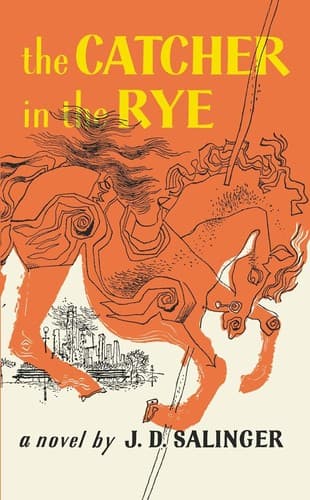
- The Catcher in the Rye
J.D. Salinger
3.8 (2.7M) average on GoodreadsYoung AdultExplores themes of youthful alienation and disillusionment with adult society.
- On The Road
Jack Kerouac
3.6 (349k) average on GoodreadsLifestyleFeatures young protagonists rebelling against societal norms and searching for freedom.
- A Separate Peace
John Knowles
3.6 (191k) average on GoodreadsHistorical FictionDeals with coming-of-age, identity, and the complexities of relationships.
- Catch-22
Joseph Heller
4.0 (723k) average on GoodreadsHistorical FictionHeller's work also uses satire to critique societal madness and institutional absurdity, but does so on a grander, more complex scale with a sprawling cast and intricate plot. The Graduate is much more focused on individual alienation and a specific romantic/existential crisis, whereas Catch-22 offers a broader, more politically charged critique of war and bureaucracy.
- The Hunger Games
Suzanne Collins
4.3 (6.4M) average on GoodreadsFantasyIn a future where children fight to the death on live television, Katniss Everdeen volunteers for the arena, turning a death sentence into a fight for survival and a spark of rebellion.
- The Great Gatsby
F. Scott Fitzgerald
3.9 (3.8M) average on GoodreadsHistorical FictionIn the opulent Roaring Twenties, a mysterious millionaire's lavish parties hide his desperate, tragic pursuit of a lost love, exposing the emptiness within the American Dream.





Enjoyed the summary?
A summary gives you the shape of the book. The book itself has the detail, the examples and the voice.
Find The Graduate on AmazonAs an Amazon Associate, BookBrief earns from qualifying purchases. How we're funded