
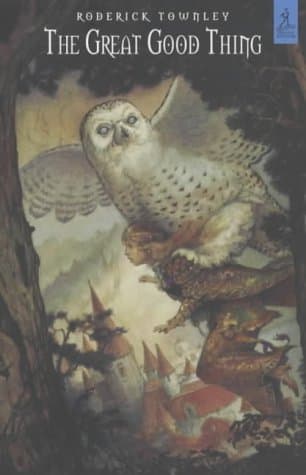
Synopsis
Covers the whole plot, including the ending.
- Difficulty
- Easy
- Pacing
- Moderate
- Mood
- Whimsical, Thought-provoking, Adventurous, Heartwarming
- Read it if
- You enjoy meta-fictional stories about characters breaking the fourth wall, and heartwarming adventures about self-discovery.
- Skip it if
- You prefer straightforward fantasy narratives without philosophical explorations of storytelling.
The Great Good Thing Plot Summary
Covers the whole plot, including the ending.
The Princess's Perpetual Predicament
Princess Sylvie, a twelve-year-old heroine, has lived the same adventure for eighty years within her storybook. Each day, she wakes up, faces the evil witch, escapes the troll, and is rescued by Prince Periwinkle. Her world is detailed, from the talking animals in the Whispering Woods to the shimmering gowns in her castle, but it never changes. Sylvie feels bored and frustrated, wanting the freedom to choose her own path and experience new things. She has grown tired of her predetermined fate and predictable dialogue, often adding her own thoughts, confusing the other characters who are bound by the script.
Breaking the Fourth Wall
Driven by her desire for change, Sylvie does the unthinkable for a storybook character: she looks up and speaks directly to the Reader. This act shatters her world's illusion, causing the narrative to falter and other characters to become confused and frozen. The Reader, initially startled, is a young girl named Meg who is reading Sylvie's book. Sylvie asks Meg for help, explaining her problem and her wish to escape the endless cycle. This interaction creates a bond between character and reader, setting off events that defy their realities.
A Glimpse of the Outside
Meg, curious and sympathetic, tries to understand Sylvie's situation. Through their connection, Sylvie gets glimpses of Meg's world, a place of bright colors, different sounds, and unpredictable events. This exposure strengthens Sylvie's resolve to leave her book. Meanwhile, her act of looking up affects the storybook world. Other characters, like the cynical dragon Fathom, begin to feel the disruption, sensing a fundamental shift. They notice pauses in their dialogue and inconsistencies in their actions, suggesting Sylvie's rebellion is a catalyst for widespread awakening.
The Council of Characters
Encouraged by her connection with Meg and the growing awareness among her fellow characters, Sylvie organizes a secret meeting. She gathers Fathom, the wise but grumpy dragon, and the bumbling but kind Prince Periwinkle, among others. Sylvie explains her theory: they are just characters in a book, and their lives are dictated by the Reader. This news is met with disbelief, fear, and cautious hope. Sylvie proposes a radical idea: to collectively find a way out of their stories and into the 'Great Good Thing' – the real world. This meeting begins their rebellion against predetermined destinies.
The Author's Intent
As the characters explore their predicament, Fathom, with his knowledge of the book's margins, finds hidden 'Author's Notes.' These notes provide a meta-narrative, explaining their story's purpose, the author's intentions, and how they exist within the narrative. They learn their world is a specific adventure, and any deviation is a 'glitch.' This discovery is both freeing and terrifying, confirming their status as fictional beings but also hinting at a different kind of existence beyond the written word. It gives them a clear goal: to understand and manipulate their world's rules.
The Quest for the End
Realizing their only hope of escape is to reach the 'End' of their story, Sylvie, Fathom, and Periwinkle journey through their book's pages. They must navigate various chapters, each presenting familiar but now subtly altered challenges. The narrative itself seems to resist them, trying to pull them back into their assigned roles. They meet other characters who are either unaware of their situation or actively try to stop them, believing they are causing chaos. Their quest becomes a race against their existence's structure, pushing them to defy every narrative rule.
Meeting the 'Outside' Characters
During their journey, Sylvie and her companions find characters from other books shelved alongside theirs. They meet a brave knight from an epic saga, a mischievous fairy from a collection of fables, and a wise old wizard from a spellbook. These 'outside' characters, also aware of their fictional nature, want freedom or have found ways to subtly influence their narratives. They share knowledge and strategies for navigating the 'space between stories,' forming a temporary alliance. This encounter broadens Sylvie's understanding of the vastness of the book world and strengthens her resolve.
The 'Great Good Thing' Defined
As they near the 'End,' Sylvie realizes something profound. The 'Great Good Thing' is not just about escaping her book and becoming 'real.' It is about the freedom to choose, to have control over her own life, whether in her story or outside it. She understands that true happiness comes from making decisions and experiencing genuine newness, not just following a script. This change in perspective empowers her, giving her a clearer vision of what she truly desires and strengthening her resolve to achieve it, for herself and all characters trapped in repetitive narratives.
The Threshold of Reality
Reaching the final page, Sylvie and her companions face the ultimate barrier between their fictional world and Meg's reality. The 'End' is not a simple door, but a liminal space, a swirling vortex of words and images that threatens to unravel them. They must use their combined wits and courage to cross this threshold. The Author's Notes provide a clue, suggesting that belief and collective will are key to traversing this boundary. It is a moment of great risk, where their existence hangs in the balance, and they must decide if the unknown freedom is worth the potential dissolution of their being.
A New Beginning
Through a collective act of will and Meg's subtle guidance, Sylvie and her companions cross the threshold. They do not become fully 'real' as a human is, but they achieve a new state of being. They exist in the 'space between stories,' a meta-narrative realm where they can visit other books, interact with Readers, and, most importantly, influence their own narratives. Sylvie realizes that true freedom is not about escaping stories, but about having the power to shape them. She, Fathom, and Periwinkle, along with their new allies, begin a new kind of adventure, one where they author their own destinies, bringing joy and change to other characters and readers alike.
Principal Figures
Princess Sylvie
Protagonist
A twelve-year-old princess trapped in a repetitive story, yearning for freedom.
Sylvie is the intrepid, intelligent, and deeply empathetic heroine of 'The Adventures of Princess Sylvie.' For eighty years, she has been a twelve-year-old, performing the same heroic deeds day after day. She is observant and introspective, acutely aware of the artificiality of her existence. Her defining characteristic is her profound longing for agency and novelty, which drives her to defy the fundamental rules of her world. She possesses a strong moral compass and a natural leadership quality, inspiring others to question their own realities.
Relationships: Meg (A unique character-reader bond, initially one-sided, evolving into mutual understanding and collaboration.); Fathom (A reluctant mentor and loyal friend, often offering cynical but wise advice.); Prince Periwinkle (Initially her designated love interest, he becomes a steadfast and supportive friend and companion on her quest.)
Fathom
Supporting
A cynical, ancient dragon who becomes Sylvie's reluctant ally and intellectual guide.
Fathom is a colossal, ancient dragon from Sylvie's story, known for his grumpy demeanor, vast knowledge, and sharp wit. Unlike most characters, Fathom has a latent awareness of his fictional nature, which manifests as cynicism and a deep understanding of the book's mechanics. He initially resists Sylvie's ideas, viewing them as foolish, but her persistence and logic win him over. He serves as a repository of information about the book world, often pointing out the 'rules' and 'glitches' of their existence, and provides a much-needed dose of reality and strategic thinking.
Relationships: Sylvie (Initially skeptical, he becomes her loyal confidant and intellectual partner.); Prince Periwinkle (Often exasperated by Periwinkle's naiveté, but develops a grudging respect and affection for him.)
Prince Periwinkle
Supporting
Sylvie's perpetually rescuing prince, who is kind-hearted but initially oblivious.
Prince Periwinkle is the archetypal heroic prince in Sylvie's story, always arriving just in time to save her. He is brave, handsome, and genuinely kind, but initially lacks the self-awareness that Sylvie and Fathom possess. His world is simpler, governed by the clear directives of his role. However, his inherent goodness and loyalty make him receptive to Sylvie's revelations. He struggles with the concept of his fictionality but commits fully to her quest, proving himself to be a steadfast and earnest companion, even if a bit naive.
Relationships: Sylvie (His designated love interest, he transitions to a devoted and supportive friend.); Fathom (A source of both frustration and protection, he often relies on Fathom's wisdom despite their contrasting personalities.)
Meg
Supporting
The real-world reader who accidentally becomes involved in Sylvie's quest.
Meg is a young, imaginative girl in the real world who is reading 'The Adventures of Princess Sylvie.' She is initially startled and confused by Sylvie's direct address but quickly becomes empathetic and intrigued. Meg's role is crucial as she represents the 'Reader,' the force that gives life to the characters. Her actions, conscious or unconscious, influence the stability of Sylvie's world. She provides the bridge between the fictional and real, offering glimpses of the 'Great Good Thing' and eventually aiding the characters in their transition.
Relationships: Sylvie (A unique, direct connection between character and reader, developing into a shared understanding and partnership.)
The Narrator/Author
Mentioned
The unseen force that dictates the story's events and characters' lives.
The Narrator, often implicitly representing the Author, is the omnipresent voice that controls Sylvie's story. While never directly a character in the traditional sense, its influence is paramount. Sylvie and the others gradually become aware of its directives, often feeling its pressure to conform to their roles. The 'Author's Notes' provide insight into its intentions and the mechanics of their fictional world. It represents the ultimate authority that the characters are trying to defy, embodying the predetermined nature of their existence.
Relationships: Sylvie and other characters (The controlling entity of their lives, whose influence they strive to overcome.)
Themes & Insights
The Quest for Agency and Freedom
This is the main theme, seen through Sylvie's desire to escape her predetermined life. It shows in her defiance of looking up at the Reader, her rallying of other characters, and their journey to break free from the narrative. The story argues that true happiness comes from choosing one's own path, even if the destination is uncertain. This is clear when Sylvie realizes the 'Great Good Thing' is not just escaping, but the freedom to write her own story, challenging the nature of fictional existence.
“What good is an adventure if you know every twist and turn before it happens?”
The Nature of Reality and Fiction
The book blurs the lines between the real and fictional worlds, making characters and readers question what 'real' means. Sylvie's awareness of her fictionality and her interaction with Meg highlight this. The 'Author's Notes' and the 'space between stories' deepen this idea, suggesting that even fictional lives have value and the potential for self-determination. It asks the reader to consider characters' lives beyond the page and how stories shape perception.
“Just because your life is written down doesn't mean it isn't real. It's just a different kind of real.”
The Power of Storytelling and Reading
The novel celebrates and examines storytelling. It shows how stories can trap characters in endless loops, but also how they can inspire change and connection. Meg's role as the Reader is important, showing a reader's influence on a book's life. The characters' eventual ability to 'write' their own narratives emphasizes that stories are dynamic and can evolve, moving beyond the initial author's intent. It suggests that reading creates a unique bond and responsibility between the reader and the characters within.
“A story isn't just words on a page. It's a life waiting to be lived, and sometimes, those lives want to be lived differently.”
Community and Collective Action
While Sylvie's initial desire is personal, her success depends on her ability to inspire and unite other characters. The alliance with Fathom, Periwinkle, and characters from other books shows that collective action is necessary to overcome obstacles. Their shared desire for freedom creates community and mutual support, proving that even in a world dictated by a single narrative, solidarity can lead to change. This theme highlights the strength found in shared purpose and cooperation.
“One character alone might be a glitch. Many characters, together, are a revolution.”
Plot Devices & Literary Techniques
Breaking the Fourth Wall
Characters directly acknowledge and interact with the reader.
This device is central to the entire narrative. Sylvie's act of looking up and speaking to Meg directly shatters the illusion of her fictional world. It immediately establishes the meta-fictional nature of the story, allowing for a unique relationship between character and reader. This device serves to propel the plot, as it's the catalyst for Sylvie's quest for freedom, and also enhances the theme of the nature of reality and fiction by explicitly bridging the gap between the two.
Meta-Narrative/Author's Notes
The story comments on its own construction and the rules of its fictional world.
The discovery of 'Author's Notes' within the book itself provides exposition about the mechanics of the characters' existence. This device allows the author to explain the 'rules' of the storybook world without breaking character or resorting to overly complex internal monologues. It reinforces the meta-fictional aspect, giving the characters (and the reader) a deeper understanding of their predicament and the potential avenues for escape, functioning as both a plot catalyst and a thematic exploration of storytelling.
The Perpetual Loop
Characters are forced to repeat the same story indefinitely.
This is the initial conflict and the primary motivator for Sylvie's actions. The concept of characters living the same adventure repeatedly creates a sense of existential dread and highlights the theme of agency. It establishes the stakes for Sylvie's rebellion, as breaking the loop means challenging the fundamental nature of her existence. The repetition also allows the reader to understand Sylvie's frustration and empathize with her desire for change, making her quest more compelling.
The 'Space Between Stories'
A liminal realm existing between different books and potentially reality.
This device provides a physical and conceptual destination for the characters' quest. It is the realm they strive to reach, representing a transitional state between rigid narrative and true freedom. It allows for the introduction of characters from other books, expanding the scope of the fictional universe. The 'Space Between Stories' acts as a metaphor for independent thought and choice, a place where narratives can converge and diverge, and characters can forge their own destinies outside the confines of their original texts.
The Great Good Thing Quotes
“There are some things that are so important, you just have to do them. Even if they're dangerous. Even if they're scary. Even if you don't know how they'll turn out.”
“Sometimes, the things we imagine are more real than the things we see.”
“Every story needs a hero, and every hero needs a quest.”
“A good story, you see, is like a good friend. It stays with you.”
“The world is full of magic, if only you know where to look.”
“It's not about being brave all the time. It's about being brave when it counts.”
“Even the smallest of us can change the biggest of things.”
“To truly live, you must step outside the pages.”
“Fear is a funny thing. It can make you run, or it can make you fight.”
“Sometimes, the best way to find your way is to get a little lost.”
“The greatest good thing, perhaps, is simply to be.”
“A world without stories would be a world without dreams.”
“Adventure doesn't always come looking for you. Sometimes, you have to go looking for it.”
“The most important words are often the ones left unsaid.”
Quiz
10 questions on the plot and the characters. Each answer comes with a short explanation.
Question 1
What is the primary reason Sylvie is unhappy with her existence at the beginning of the book?
- She dislikes being a princess.
- Her story is always the same, repeating with every reading.
- She is constantly in danger from a dragon.
- She wants a different set of friends.
Show answer
B. Her story is always the same, repeating with every reading. Sylvie's main frustration stems from the fact that her story, while exciting, is always the same, repeating every time the book is read, preventing her from experiencing anything new.
Question 2
What 'cardinal rule' does Sylvie break that initiates her journey?
- She speaks directly to another character about her boredom.
- She attempts to rewrite a part of her own story.
- She looks up and acknowledges the Reader.
- She tries to leave her page without permission.
Show answer
C. She looks up and acknowledges the Reader. The story explicitly states that Sylvie 'breaks the cardinal rule of all storybook characters and looks up at the Reader,' which is the catalyst for her adventure.
Question 3
Approximately how long has Sylvie been a twelve-year-old princess in her book?
- Twelve years
- More than eighty years
- A few months
- Exactly one century
Show answer
B. More than eighty years The book description clearly states, 'Sylvie has been a twelve-year-old princess for more than eighty years, ever since the book she lives in was first printed.'
Question 4
What does Sylvie ultimately long for beyond the confines of her book?
- To become a queen in a different kingdom.
- To find a new prince to marry.
- To escape her repetitive story and explore the real world.
- To have her book be read by more people.
Show answer
C. To escape her repetitive story and explore the real world. The description states, 'Sylvie longs to get away and explore the world outside the confines of her book,' indicating her desire for new experiences and freedom.
Question 5
What is the primary genre of 'The Great Good Thing'?
- Historical Fiction
- Science Fiction
- Fantasy
- Mystery
Show answer
C. Fantasy The provided information clearly lists 'Fantasy' as one of the genres for the book.
Question 6
How does Sylvie's initial perception of her 'amazing life' change throughout the story?
- She realizes her life was never truly amazing, just an illusion.
- She learns to appreciate the cyclical nature of her story.
- She understands that true 'amazing' experiences come from freedom and choice, not predetermined events.
- She discovers that her 'amazing life' was actually a dream.
Show answer
C. She understands that true 'amazing' experiences come from freedom and choice, not predetermined events. The core conflict is Sylvie's desire to break free from a predetermined, 'amazing' life that she doesn't get to 'live very often,' implying a shift towards valuing genuine experience and self-determination over scripted excitement.
Question 7
What is the significance of the phrase 'great good thing' in the context of the story's title and Sylvie's journey?
- It refers to a specific magical object Sylvie seeks.
- It represents the ultimate goal of escaping her book and the unforeseen positive outcomes of her rebellion.
- It describes the perfect ending to her original princess story.
- It is the name of the kingdom she rules.
Show answer
B. It represents the ultimate goal of escaping her book and the unforeseen positive outcomes of her rebellion. The description states, 'And what she accomplishes goes beyond any great good thing she could have imagined,' suggesting that her journey leads to unexpected and profound positive changes, fulfilling the titular 'great good thing.'
Question 8
How does Sylvie's act of looking at the Reader challenge the fundamental nature of storybook characters?
- It makes her forget her lines and confuse other characters.
- It grants her the ability to manipulate the plot of other books.
- It breaks the 'fourth wall,' giving her agency and awareness beyond her scripted role, and opening her to the meta-narrative.
- It causes her to instantly age and lose her princess status.
Show answer
C. It breaks the 'fourth wall,' giving her agency and awareness beyond her scripted role, and opening her to the meta-narrative. By looking at the Reader, Sylvie transcends her role as a mere character within a story, becoming aware of the external world and the act of reading itself. This act of breaking the 'fourth wall' is the foundational step in her gaining independence and awareness.
Question 9
What is the central conflict in 'The Great Good Thing' from Sylvie's perspective?
- Her struggle against a malevolent wizard trying to steal her kingdom.
- Her internal battle between the comfort of her known story and the yearning for true experience and freedom.
- Her quest to find a lost treasure to save her family.
- Her rivalry with another princess for the affection of a prince.
Show answer
B. Her internal battle between the comfort of her known story and the yearning for true experience and freedom. The description highlights Sylvie's longing to 'get away and explore the world outside the confines of her book' despite having an 'amazing life,' indicating a deep internal conflict between her given circumstances and her desire for self-determination.
Question 10
Considering the premise, what unique challenge might Sylvie face once she begins her journey outside her book?
- She might struggle with the lack of a predetermined plot or familiar narrative structure in the real world.
- She will likely be unable to communicate with real-world inhabitants.
- Her princess attire will make her instantly recognizable and famous.
- She will discover that the 'real world' is just another, larger book.
Show answer
A. She might struggle with the lack of a predetermined plot or familiar narrative structure in the real world. Having lived a life dictated by a story, Sylvie's greatest challenge in the real world would likely be adapting to its unpredictability and the absence of a script, requiring her to make her own choices and forge her own path.
The Great Good Thing FAQ
What is the central premise of 'The Great Good Thing'?
The book follows Sylvie, a twelve-year-old princess who has been trapped in her own story for over eighty years, reliving the same adventures repeatedly. She longs for a life beyond her predetermined narrative and the confines of her physical book, seeking genuine freedom and new experiences.
Who is Sylvie and what is her primary conflict at the beginning of the story?
Sylvie is the heroine of a children's fantasy book, perpetually a twelve-year-old princess. Her primary conflict is the existential boredom and frustration of living the same exciting but unchangeable story, leading her to desire escape and a real, unpredictable life outside her narrative loop.
How does Sylvie initiate her journey out of her book?
Sylvie breaks the cardinal rule for storybook characters by looking up directly at the Reader. This act of defiance and awareness of an external world allows her to begin interacting with the physical world outside her pages, setting her on an unexpected path.
What are some of the challenges Sylvie faces once she leaves her book?
Outside her book, Sylvie struggles with the reality of being a two-dimensional character in a three-dimensional world, dealing with her fading existence and the threat of being erased. She also encounters the complexities of human emotions and the vast, unpredictable nature of the real world, which is both liberating and terrifying.
Who are the other significant characters Sylvie encounters and what roles do they play?
Sylvie meets characters like the mischievous but helpful Prince and the wise, old Librarian. The Prince represents the allure and danger of breaking rules, while the Librarian guides Sylvie with knowledge about the nature of stories and reality, helping her understand her unique situation.
What is the 'Great Good Thing' referred to in the title, and how does Sylvie achieve it?
The 'Great Good Thing' is ultimately the ability to live a truly free and changing life, influencing the real world and breaking the cycle of her story. Sylvie achieves this by understanding her own power and making a choice that transcends her original narrative, impacting both her world and the Reader's.
How does the concept of 'the Reader' evolve throughout the story?
Initially, the Reader is an abstract, unseen entity who controls Sylvie's fate. As Sylvie gains agency, the Reader becomes a more concrete, sympathetic figure, eventually revealed to be a child whose own life is subtly intertwined with Sylvie's journey, highlighting the symbiotic relationship between stories and their audience.
Are there any subtle clues about the nature of Sylvie's 'reality' before she leaves her book?
Yes, Sylvie often notices the unchanging nature of objects, the repetitive dialogue of other characters, and the way her world resets. These subtle anomalies, like the same bird always flying past her window, hint at the artificiality of her existence even before she fully comprehends it.
What is the significance of the 'ink' and 'paper' in Sylvie's world?
The ink and paper are not just the medium of her existence but also a metaphor for her life force and limitations. As she travels outside her book, her 'ink' begins to fade, symbolizing the existential threat to her being and the delicate balance between fictional and real existence.
How does Sylvie's initial perception of her own story change as she explores the real world?
Initially, Sylvie views her story as a prison, but as she encounters the complexities and imperfections of the real world, she begins to appreciate the beauty and purpose of her original narrative. She realizes that even a predetermined story has its own form of meaning and impact.
Discuss Sylvie's psychological development from a passive heroine to an active agent.
Sylvie undergoes significant psychological growth, transforming from a character who passively accepts her fate to one who actively seeks change and self-determination. Her journey is a quest for identity, where she learns to make choices and embrace the unknown, rather than simply fulfilling a role.
How does the book explore themes of free will versus destiny through Sylvie's journey?
The book deeply explores the conflict between free will and destiny. Sylvie's predetermined story represents destiny, while her actions to break free embody free will. Her journey suggests that even within a fixed narrative, there is room for choice and that true freedom comes from making one's own meaning.
What psychological impact does the knowledge of being a fictional character have on Sylvie?
The realization of her fictionality initially causes an existential crisis for Sylvie, leading to feelings of insignificance and a desperate need for authenticity. However, she eventually reclaims her identity, understanding that even as a fictional character, her experiences and choices hold profound value.
What does the ending suggest about the relationship between authors, readers, and fictional characters?
The ending suggests a profound, interconnected relationship. It implies that fictional characters can have a real impact on readers' lives, and conversely, readers' engagement can give life and meaning to stories. It blurs the lines, showing a symbiotic exchange where all parties contribute to the 'great good thing' of storytelling.
Could Sylvie's journey be interpreted as a metaphor for a child growing up and seeking independence?
Yes, Sylvie's journey can be strongly interpreted as a metaphor for a child's transition from the protected, predictable world of childhood to the unknown, independent world of adulthood. Her desire to break free from her 'story' reflects the universal human longing for autonomy and self-discovery.
How does the book challenge traditional notions of 'happily ever after'?
The book challenges 'happily ever after' by showing that a perpetual, unchanging happy ending can become a prison. Sylvie's quest suggests that true happiness lies not in a static state, but in the freedom to experience change, make choices, and face the unpredictable nature of life, even with its challenges.
What is the broader message about the power of stories that the book conveys?
The book conveys that stories hold immense power, not just to entertain, but to shape perceptions, inspire change, and even influence reality. It highlights how stories create connections between worlds and individuals, offering solace, meaning, and the potential for transformation to both characters and readers.
How does the book use its fantasy elements to explore deeper philosophical questions?
The book uses its fantasy elements, such as characters existing within pages and interacting with a reader, to explore profound philosophical questions about existence, reality, free will, and the nature of consciousness. It cleverly uses the meta-narrative to make these abstract concepts accessible and engaging for a younger audience.
Similar books
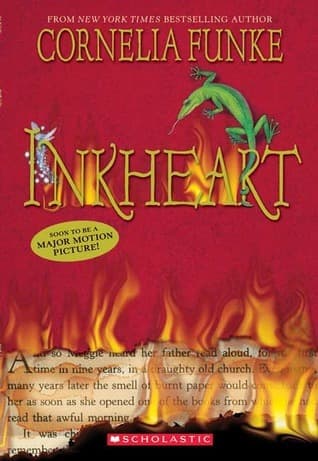
- Inkheart
Cornelia Funke
3.9 (369k) average on GoodreadsFantasyFeatures characters who can literally step out of books into the real world.
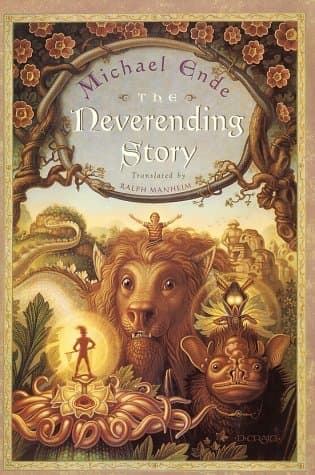
- The Neverending Story
Michael Ende
4.2 (162k) average on GoodreadsFantasyExplores the relationship between readers, characters, and the power of stories.
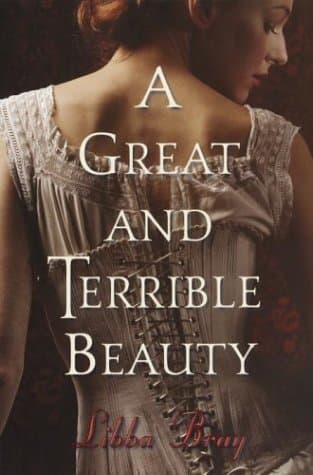
- A Great and Terrible Beauty
Libba Bray
3.8 (208k) average on GoodreadsFantasyFeatures a protagonist who discovers hidden magical worlds and her own agency.
- Harry Potter and the Sorcerer's Stone
J.K. Rowling
4.5 (7M) average on GoodreadsFantasyRescued from a miserable life under the stairs, an orphaned boy discovers he's a wizard destined for a magical school, where he uncovers a dangerous secret tied to the dark wizard who murdered his parents.
- The Hunger Games
Suzanne Collins
4.3 (6.4M) average on GoodreadsFantasyIn a future where children fight to the death on live television, Katniss Everdeen volunteers for the arena, turning a death sentence into a fight for survival and a spark of rebellion.
- 1984
George Orwell
4.2 (3.1M) average on GoodreadsPoliticsIn a future where surveillance and thought control are absolute, a man's search for truth clashes with the Party, showing that hope can be a form of rebellion.



Enjoyed the summary?
A summary gives you the shape of the book. The book itself has the detail, the examples and the voice.
Find The Great Good Thing on AmazonAs an Amazon Associate, BookBrief earns from qualifying purchases. How we're funded