

Core Idea
- Difficulty
- Easy
- Read it if
- You are seeking a profound, yet accessible, spiritual reflection on the nature and supremacy of love, and wish to understand its practical implications for daily living.
- Skip it if
- You are looking for a historical or critical theological analysis, or prefer a purely secular philosophical perspective on ethics.
Key Takeaways from The Greatest Thing In the World
Love as the Ultimate Law
Beyond faith and hope, love is the foundational principle for a meaningful life.
Drummond says that faith, hope, and knowledge are valuable but temporary. Love, however, is eternal and includes all virtues. It is not just an emotion but a guiding law, a 'supreme good' that shapes our lives and our connection with God and others. He argues that without love, even great spiritual gifts or intellectual achievements mean little. This raises love from a feeling to the basic system for human well-being and spiritual connection, suggesting that a life without active, caring love is ultimately incomplete, no matter what else is achieved.
“The greatest thing a man can do for his Heavenly Father is to be kind to some of His other children.”
In the book: Drummond's central argument is an extensive exposition of 1 Corinthians 13, dissecting each facet of love described by Paul and contrasting it with other virtues.
Try this: Evaluate daily interactions through the lens of love's qualities (patience, kindness, humility). Prioritize acts of service and empathy over intellectual debates or personal gain.
Related ideas: agape-love, spiritual-virtues, christian-ethics
The Anatomy of Love
Love is a composite of specific, actionable virtues, not a vague feeling.
Drummond carefully lists love's thirteen traits from 1 Corinthians 13, turning an abstract idea into a practical guide. He stresses that love is not a single emotion but a group of specific behaviors and attitudes: patience, kindness, generosity, humility, courtesy, unselfishness, good temper, honesty, and sincerity. By breaking love into these parts, he gives a clear way to develop it. This detailed breakdown challenges the common idea of love as just a passing feeling. Instead, it presents love as a disciplined practice needing conscious effort and self-reflection. Understanding these parts helps with self-improvement.
“Love suffereth long, and is kind; love envieth not; love vaunteth not itself, is not puffed up, doth not behave itself unseemly, seeketh not its own, is not provoked, taketh not account of evil; rejoiceth not in unrighteousness, but rejoiceth with the truth; beareth all things, believeth all things, hopeth all things, endureth all things.”
In the book: The entire essay is structured around an in-depth analysis of each clause of 1 Corinthians 13:4-7, providing detailed explanations and examples for each attribute.
Try this: Choose one specific quality of love (e.g., patience or kindness) to focus on for a week. Observe your interactions and actively practice that quality, journaling your experiences.
Related ideas: virtue-ethics, 1-corinthians-13, character-development
Love's Unselfish Core
True love prioritizes the well-being of others above personal gain or ego.
Drummond highlights 'unselfishness' as a main characteristic of love. He argues that selfishness causes most human conflict and suffering, while true love focuses outward. This means not just avoiding personal gain but actively seeking the good of others, even at personal cost. He contrasts this with pride, ambition, and self-centeredness, which he sees as opposite to love. This focus on unselfishness is a strong call to shift one's life from ego-driven goals to a real concern for humanity, making altruism not just a moral good but the core of a loving spirit.
“Love seeketh not its own. That is the supreme characteristic. The greatest thing in the world is to be unselfish.”
In the book: Drummond dedicates significant attention to the phrase 'seeketh not its own,' explaining how it manifests in humility, courtesy, and a lack of envy.
Try this: Before making a decision or reacting in a conversation, pause and ask: 'What would be the most unselfish response here?' Practice active listening without formulating your own reply.
Related ideas: altruism, ego-death, selflessness
The Practicality of Patience and Kindness
Love begins with the foundational practices of enduring and showing grace.
Drummond puts great importance on patience and kindness as ways to begin practicing love. He describes patience as the ability to 'suffer long' without anger or retaliation, especially when provoked or when things are slow. Kindness, on the other hand, is the active show of goodwill, 'doing good turns.' These are not passive traits but deliberate choices that require conscious effort and self-control. He suggests that mastering these two basic virtues is essential, as they set the stage for all other aspects of love. Without patience, one cannot bear others' imperfections; without kindness, love stays an inner feeling rather than an outward force for good.
“Love suffereth long, and is kind. These two words are a summary of love, and contain its very essence.”
In the book: He starts his exposition of 1 Corinthians 13 by immediately focusing on 'suffereth long' and 'is kind,' demonstrating their primary importance.
Try this: Identify a recurring source of irritation in your daily life (e.g., traffic, a difficult colleague). Commit to responding with patience and a small act of kindness (even internal) for a set period.
Related ideas: temperance, empathy, interpersonal-skills
Love's Immunity to Evil
Love does not dwell on wrongdoing but seeks truth and restoration.
Drummond explains that true love does not remember wrongs, nor does it enjoy others' failures or misfortunes. Instead, it actively resists the urge to dwell on past hurts or to gloat over unfairness. He emphasizes that love aims for truth and rightness, meaning it tries to understand, forgive, and restore, rather than to condemn or punish. This view is vital for healthy relationships, as it encourages moving past complaints and building trust and reconciliation. It is a powerful way to fight bitterness and resentment, pushing for a conscious choice to focus on what is good and true.
“Love taketh not account of evil, rejoiceth not in unrighteousness, but rejoiceth with the truth.”
In the book: The phrase 'taketh not account of evil' is a direct translation from the Greek, which Drummond interprets as love refusing to 'keep a ledger' of offenses.
Try this: When someone wrongs you, consciously choose not to replay the incident or recount it to others. Instead, try to understand their perspective or focus on a positive attribute they possess.
Related ideas: forgiveness, reconciliation, non-judgment
The Enduring Power of Love
All other gifts and knowledge will fade, but love alone remains eternal.
Drummond powerfully contrasts love with other spiritual gifts and human achievements, stating its unique and eternal nature. He argues that prophecy, tongues, and even knowledge are temporary, serving a purpose in this life but becoming obsolete when ultimate truth arrives. Faith and hope, while essential, are also temporary, fulfilled when their goals are met. Love, however, is not a means to an end but the end itself. It is the very essence of the divine and the ultimate state of being. This view offers great comfort and direction, reminding the reader that investing in love is the only truly lasting pursuit, a foundation that will never break.
“When that which is perfect is come, then that which is in part shall be done away... But now abideth faith, hope, love, these three; and the greatest of these is love.”
In the book: Drummond directly quotes and expounds upon 1 Corinthians 13:8-13, particularly 'love never faileth' and 'now abideth faith, hope, love, these three; but the greatest of these is love.'
Try this: Reflect on your life's priorities. Are you investing more in temporary gains (career, possessions, fleeting knowledge) or in building lasting relationships and practicing love?
Related ideas: eternity, spiritual-legacy, divine-nature
Love as the Measure of Greatness
True significance is found not in power or intellect, but in the depth of one's love.
Drummond challenges common ideas of greatness, seeing worldly achievements like wealth, fame, power, or even deep intelligence as less important than developing love. He says a person's real worth is measured by their capacity for patience, kindness, humility, and selflessness. This new definition of greatness encourages a big shift in values, urging readers to prioritize character over accomplishment. It is a freeing idea, suggesting that anyone, no matter their place in life, can achieve true greatness by showing love in their daily interactions, making it an accessible and universal goal for human excellence.
“The only great thing in the world is love.”
In the book: He implicitly contrasts love with the 'sounding brass or a tinkling cymbal' of those who speak with tongues but lack love, and with the 'knowledge' that is temporary.
Try this: When you admire someone, reflect on *why* you admire them. Is it for their achievements, or for their character and how they treat others? Strive to emulate the latter.
Related ideas: humility, moral-philosophy, virtuous-living
The Growth of Love
Love is not innate, but a skill cultivated through consistent practice and intention.
Drummond emphasizes that love is not just a gift given to a few, but a skill that can be learned and grown through intentional practice. He compares its growth to that of a plant, needing consistent effort, care, and attention to each of its virtues. This view offers hope and power, suggesting that anyone can grow in love regardless of where they start. It changes the pursuit of love from a passive hope into an active, lifelong effort of self-improvement and spiritual discipline. The implication is that a lack of love is not a fixed state, but a call to diligent practice.
“The greatest thing in the world is to learn how to love.”
In the book: Drummond repeatedly uses analogies of character development and spiritual growth to describe how love is formed within a person, contrasting it with instantaneous 'gifts.'
Try this: Start a 'Love Practice' journal. Each day, identify one opportunity to practice patience, kindness, or another specific aspect of love, and reflect on your efforts and outcomes.
Related ideas: spiritual-discipline, habit-formation, self-mastery
Love as the Divine Image
Embodying love aligns humanity with the very nature of God.
For Drummond, the ultimate meaning of love in theology is that it is the very essence of God. To love, then, is to share in the divine nature, to reflect the image of the creator. This raises the practice of love beyond just morality or good manners; it becomes a spiritual necessity, a way to deeper connection with God. He suggests that understanding and embodying love is the deepest way to understand and connect with the divine. This view provides a strong reason for cultivating love, framing it not just as a human virtue, but as the path to spiritual enlightenment and true religious experience, making it the central part of Christian life.
“God is Love. He that loveth not knoweth not God.”
In the book: Drummond directly references the Biblical statement 'God is Love' (1 John 4:8) and uses it as a foundational premise for his entire discourse.
Try this: View acts of love and kindness not just as good deeds, but as moments of connection with the divine. Reflect on how your loving actions contribute to manifesting God's nature in the world.
Related ideas: theology-of-love, imago-dei, spiritual-communion
The Greatest Thing In the World Quotes
“The Greatest Thing, then, in the world, is Love.”
“You will find, if you think over it, that almost all the problems and sorrows of life arise from a lack of love.”
“Love is the sum of all virtue.”
“The greatest thing a man can do for his Heavenly Father is to be kind to some of His other children.”
“What does it matter whether you have faith, or hope, or all the talents in the world, if you have not love?”
“The one thing that cannot be overdone is love.”
“Love is patient, love is kind. It does not envy, it does not boast, it is not proud. It is not rude, it is not self-seeking, it is not easily angered, it keeps no record of wrongs.”
“If you have not love, you have nothing. If you have love, you have everything.”
“The man who is not kind has no religion.”
“Nothing that we can do is of any avail, unless it is done in love.”
“Love is eternal. It never fails.”
“To be gentle, to be patient, to be self-forgetful, to be pure, to be modest, to be true – this is to be Christ-like.”
“Life is not a having and a getting, but a being and a becoming.”
“The only way to get love is to give love.”
Quiz
10 questions on the main ideas. Each answer comes with a short explanation.
Question 1
According to Drummond, what is the 'greatest thing in the world' that he expounds upon throughout his sermon?
- Faith
- Hope
- Love
- Knowledge
Show answer
C. Love Drummond's entire sermon is a deep dive into the nature and supremacy of Love, as described in 1 Corinthians 13.
Question 2
Drummond suggests that if one possesses all spiritual gifts—prophecy, understanding mysteries, and all knowledge—but lacks love, what is the ultimate outcome?
- They will still be highly revered in the spiritual community.
- Their efforts are meaningless and profit them nothing.
- They will achieve a lesser form of spiritual enlightenment.
- They will eventually acquire love through their other gifts.
Show answer
B. Their efforts are meaningless and profit them nothing. Drawing directly from 1 Corinthians 13, Drummond emphasizes that without love, all other spiritual gifts and achievements are void and profitless.
Question 3
Which specific chapter of the Bible does Drummond primarily base his sermon, 'The Greatest Thing In the World,' upon?
- Matthew 5 (Sermon on the Mount)
- Romans 8 (Life in the Spirit)
- 1 Corinthians 13 (The Love Chapter)
- John 14 (Jesus' Farewell Discourse)
Show answer
C. 1 Corinthians 13 (The Love Chapter) The entire sermon is an exposition of the 'Love Chapter,' 1 Corinthians 13, breaking down each attribute of love.
Question 4
Drummond illustrates that Love is not merely a sentiment but a practical, active force. He categorizes its attributes into what he calls 'ingredients' or 'notes.' Which of the following is NOT one of the specific attributes of Love he discusses?
- Patience
- Self-righteousness
- Kindness
- Humility
Show answer
B. Self-righteousness Drummond meticulously breaks down the characteristics of love from 1 Corinthians 13, such as patience, kindness, humility (not envying, not boasting), generosity, goodness, truthfulness, forbearance, faith, hope, and endurance. Self-righteousness is contrary to his description of love.
Question 5
When discussing the 'decay' or 'wearing out' of certain spiritual elements, what does Drummond conclude about Love compared to other gifts like prophecy or knowledge?
- Love, like other gifts, will eventually cease or diminish.
- Love is the only attribute that endures into eternity and never fails.
- Love transforms into a different, higher virtue in the afterlife.
- Love is only relevant in the earthly realm, not the spiritual.
Show answer
B. Love is the only attribute that endures into eternity and never fails. Drummond strongly emphasizes that 'Love never fails.' While prophecies, tongues, and knowledge will cease, love is eternal and transcends the temporary nature of other spiritual gifts.
Question 6
Drummond argues that the cultivation of Love is not a mystical process but rather a practical one achieved through what primary means?
- Intense theological study and debate.
- Strict adherence to religious rituals and ceremonies.
- Consistent practice of its individual attributes in daily life.
- Seeking miraculous divine intervention for its bestowal.
Show answer
C. Consistent practice of its individual attributes in daily life. Drummond's sermon is highly practical. He suggests that one cultivates love by actively practicing its components (patience, kindness, humility, etc.) in everyday interactions, treating it like a skill to be developed.
Question 7
In his discussion of Love's 'working clothes,' Drummond emphasizes that love is not found in grand, dramatic gestures but often in which of the following?
- Public declarations of faith.
- The quiet, unseen acts of daily self-denial and service.
- Large financial contributions to charity.
- Eloquent preaching and teaching.
Show answer
B. The quiet, unseen acts of daily self-denial and service. Drummond stresses that true love manifests in the 'minor moralities'—the small, consistent acts of kindness, patience, and humility in daily life, rather than only in extraordinary events.
Question 8
Drummond contrasts the 'gifts' of the spirit with the 'fruit' of the spirit. What is his primary argument regarding the relative importance and permanence of these two categories?
- Gifts are superior because they demonstrate divine power, while fruit is secondary.
- Both gifts and fruit are equally important for spiritual maturity and eternal life.
- Gifts are temporary and pass away, while the fruit (especially Love) is eternal and reflects character.
- The distinction between gifts and fruit is largely semantic and holds no practical difference.
Show answer
C. Gifts are temporary and pass away, while the fruit (especially Love) is eternal and reflects character. Drummond makes a strong case that spiritual gifts are given for a purpose and will cease, but the 'fruit' of the Spirit, particularly love, is about character transformation and lasts into eternity, being part of the divine nature.
Question 9
Drummond uses the analogy of a plant growing from a seed to explain the development of love. What is the key implication of this analogy regarding the nature of love's growth?
- Love is an instantaneous transformation that requires no effort.
- Love is a natural, organic process that unfolds gradually through nurture and environment.
- Love is a purely intellectual pursuit, requiring deep philosophical understanding.
- Love is a genetic predisposition, unchangeable by personal actions.
Show answer
B. Love is a natural, organic process that unfolds gradually through nurture and environment. He emphasizes that love is not something we can simply 'will' into existence but grows organically, like a plant, by cultivating its individual virtues and creating an environment where it can flourish.
Question 10
In his final exhortation, Drummond challenges the reader to embark on a 'quest' for love. What specific method does he propose for beginning this quest and developing love within oneself?
- To isolate oneself for intense meditation and self-reflection.
- To meticulously study and memorize the entire Bible daily.
- To commit to practicing one specific attribute of love (e.g., patience or kindness) for a day.
- To seek out and perform one grand, heroic act of self-sacrifice.
Show answer
C. To commit to practicing one specific attribute of love (e.g., patience or kindness) for a day. Drummond's practical advice is to start small: pick one attribute of love, like patience, and consciously practice it for a day, observing its effects and allowing it to grow.
The Greatest Thing In the World FAQ
What is 'The Greatest Thing in the World' about?
'The Greatest Thing in the World' is a spiritual and philosophical book by Henry Drummond that explores the paramount importance of love, as described in 1 Corinthians 13, in the Christian life. It delves into the various facets and practical applications of love, presenting it as the ultimate virtue.
Does Drummond's teaching on love still apply today?
Yes, Drummond's teachings on love are considered timeless and highly relevant even today. The principles of patience, kindness, humility, and selflessness he expounds are universal virtues that transcend specific eras or cultural contexts, offering profound guidance for personal and interpersonal relationships.
What is 'agape love' as discussed in the book?
'Agape love' is a central concept in the book, referring to a selfless, unconditional, and benevolent love that is often associated with divine love. Drummond emphasizes that this form of love is not merely an emotion but a deliberate choice and a way of life, characterized by giving and compassion.
How is this book different from other Christian devotionals?
While sharing devotional qualities, 'The Greatest Thing in the World' distinguishes itself through its deep philosophical exploration and systematic dissection of love as described in 1 Corinthians 13. It offers a more analytical and profound meditation on a single, pivotal virtue, rather than a broad range of daily reflections.
Who was Henry Drummond?
Henry Drummond (1851-1897) was a Scottish evangelist, lecturer, and scientist, known for his ability to bridge the gap between science and religion. He was a professor of natural science at the Free Church College, Glasgow, and his writings often focused on the practical application of Christian principles.
Is 'The Greatest Thing in the World' suitable for non-religious readers?
Yes, while rooted in Christian scripture, the book's profound insights into the nature of love, kindness, and human character possess universal appeal. Many non-religious readers find its ethical wisdom and psychological observations deeply meaningful and applicable to their own lives.
What is the primary message of 1 Corinthians 13, which the book expounds?
The primary message of 1 Corinthians 13, as expounded by Drummond, is that love is the supreme virtue and the most essential element of the Christian life. It asserts that without love, even great spiritual gifts, knowledge, or acts of sacrifice are ultimately meaningless.
Does practicing Drummond's principles guarantee happiness?
While practicing Drummond's principles of love is presented as a path to a more fulfilling and meaningful life, it doesn't guarantee a state of constant happiness devoid of challenges. Rather, it offers a framework for living with integrity, purpose, and harmonious relationships, which are foundations for deep contentment and joy.
What is the new large-type edition of the book?
The new large-type edition refers to a version of Henry Drummond's classic sermons that has been formatted with a larger font size. This makes the text easier to read, especially for individuals with visual impairments or those who prefer a more comfortable reading experience.
Similar books
- The Four Loves
C.S. Lewis
4.1 (44k) average on GoodreadsSpiritualityLewis provides a more nuanced and multifaceted exploration of different types of love (agape, philia, eros, storge), offering a broader psychological and philosophical scope than Drummond's singular focus on agape. Lewis delves into the complexities and potential pitfalls of each love, whereas Drummond is more prescriptive and idealized in his approach to divine love.
- Eat, Pray, Love
Elizabeth Gilbert
3.6 (1.5M) average on GoodreadsLifestyleA heartbroken writer leaves her conventional life for a year-long global search for pleasure in Italy, spiritual devotion in India, and unexpected love and balance in Bali.
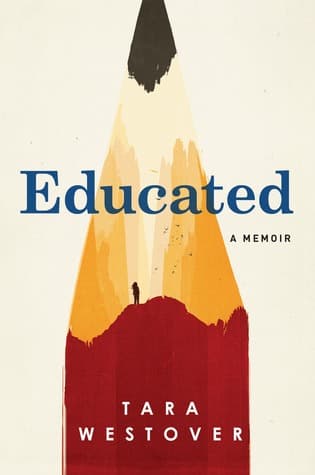
- Educated
Tara Westover
4.5 (796k) average on GoodreadsBiographyRaised in the Idaho mountains by fundamentalist survivalists, a young woman forges her own path to education, battling fierce family loyalty and personal demons to discover a world beyond her isolated upbringing.
- The Poisonwood Bible
Barbara Kingsolver
4.1 (659k) average on GoodreadsLiterary FictionA zealous missionary's rigid faith clashes with the Belgian Congo's wilderness and people, unraveling his family through the eyes of his five unforgettable women.
- Siddhartha
Hermann Hesse
4.0 (583k) average on GoodreadsHistorical FictionSiddhartha leaves a life of privilege and piety, embracing asceticism, wealth, and love to find enlightenment not in dogma, but in the whispers of a river and the unity of all existence.
- The Five People You Meet in Heaven
Mitch Albom
3.9 (578k) average on GoodreadsFantasyAn amusement park mechanic, Eddie, dies saving a child and awakens in an afterlife where five souls, some familiar, some strangers, reveal the meaning of his ordinary life.





Enjoyed the summary?
A summary gives you the shape of the book. The book itself has the detail, the examples and the voice.
Find The Greatest Thing In the World on AmazonAs an Amazon Associate, BookBrief earns from qualifying purchases. How we're funded