
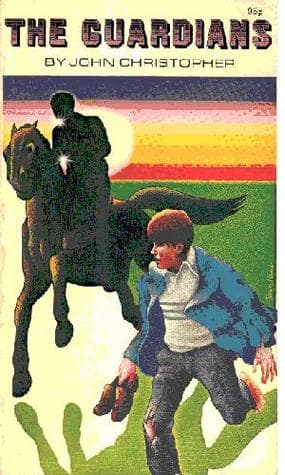
Synopsis
Covers the whole plot, including the ending.
- Difficulty
- Medium
- Pacing
- Moderate
- Mood
- Dystopian, Thought-provoking, Suspenseful, Reflective
- Read it if
- You enjoy classic dystopian young adult novels with a strong social commentary and themes of freedom vs. control.
- Skip it if
- You prefer fast-paced action over philosophical exploration and social critique.
The Guardians Plot Summary
Covers the whole plot, including the ending.
A Conurban Life and a Glimpse of the County
Robert Westall, a twelve-year-old, lives in the London Conurb in 2052. His world is one of constant surveillance, automated efficiency, and a managed, if uninspiring, life. His days include school, regulated entertainment, and the 'Voice' from the wall-screen. His best friend, Mike Gifford, is preparing to move to the County, a rare placement Rob views with envy and confusion. Rob's father is content with the Conurban system, while his mother quietly wonders about the world beyond their city. Mike's departure leaves a void in Rob's life, and he feels a growing restlessness and dissatisfaction with his regimented existence, even if he cannot name these feelings.
Mike's Invitation and Rob's Escape
Months after Mike leaves, Rob receives a physical letter, rare in the Conurbs, inviting him to visit Mike in the County. The invitation, approved by authorities, is a unique chance, but it also shows the rigid control of Conurban society. Rob's parents are hesitant, but official approval makes refusal difficult. Rob sees it as an escape from his uniform life. He plans his journey, using the efficient but impersonal transport system. The anticipation of seeing Mike and experiencing the mysterious County fuels his resolve, an early sign of rebellion against his predetermined path.
Arrival in the County and First Impressions
Rob's journey takes him through automated checkpoints and sterile environments until he reaches the County's edge. The change is stark: the Conurb's concrete and chrome give way to rolling green hills, forests, and open space he has never known. A horse-drawn carriage, an old-fashioned sight, meets him and drives him to Mike's family estate, a grand, old house from a different era. He meets Mike's family, who show the refined, almost aristocratic manners of the County. Rob is overwhelmed by the quiet, the greenery, and the freedom from electronic surveillance. The novelty is intoxicating, a welcome contrast to his old life.
Life in the County and its Rules
Life in the County is very different from the Conurb. Rob learns to ride horses, plays traditional games, and experiences a social structure built on hierarchy and tradition. He sees the class divisions, with the 'Guardians' (the ruling elite) and their families living a life of leisure, while 'Workers' maintain the estates. Mike, now fully integrated, helps Rob understand the unwritten rules. Rob enjoys the freedom from technology and the focus on personal interaction, but he also notices the underlying rigidity and subtle control by the County's ruling class, which, though different from the Conurb's, is still widespread.
A Growing Disillusionment
As Rob spends more time in the County, his initial charm fades. He witnesses the casual disdain the Guardians show the Workers and the snobbery that runs through their society. He sees how Mike, once his equal, has adopted these attitudes, creating a rift between them. Rob also observes the deliberate suppression of technology and modern knowledge, which he finds stifling. He misses some Conurban conveniences and questions the County's self-imposed isolation. The County's superficial charm gives way to an awareness of its own control and class system, making him feel like an outsider again.
The Revealed Truth: The Guardians' Role
Through listening and careful observation, Rob uncovers the truth about the County. The Guardians are not just preserving a traditional way of life; they control the Conurbs. The County is a place where the elite are raised in a 'natural' environment, free from technology's 'weakening' influences, to become future leaders of both societies. The Conurbs are kept technologically dependent and socially conforming to prevent rebellion. Rob realizes the entire system is a facade designed to maintain the Guardians' power and privilege, and that both societies are, in their own ways, prisons.
Rob's Rebellion and Mike's Betrayal
Horrified by his discovery, Rob decides he cannot stay silent. He tries to tell Mike, hoping his friend will see the injustice, but Mike, fully committed to the County's ideology, dismisses Rob's concerns as 'Conurban paranoia' and accuses him of being disruptive. Mike's loyalty to the County and his future there outweighs his friendship with Rob. Feeling isolated and betrayed, Rob decides to escape the County and expose the Guardians' secret to the Conurban people. He plans his escape carefully, knowing the risks and the Guardians' power.
The Escape and Pursuit
Rob executes his escape plan, using his knowledge of the County's terrain and his Conurban resourcefulness. He evades the initial pursuit by the County's guards, who are used to more traditional tracking methods. The chase is tense and dangerous, with Rob constantly looking back. He pushes himself physically, driven by the urgency to expose the truth. The Guardians, realizing the threat he poses, intensify their search, using their network to prevent him from reaching the Conurbs and revealing their secret.
Return to the Conurb and a New Purpose
Rob successfully re-enters the Conurb, a place that now feels both familiar and strange. He is safe from immediate capture but faces a new challenge: how to tell a populace conditioned to accept the status quo and distrust any deviation. The Conurban system is designed to absorb dissent, to make individual voices seem insignificant. Rob realizes the difficulty of breaking through the ingrained complacency and pervasive information control. He understands that simply speaking the truth is not enough; he needs a strategy, a way to awaken the people without being dismissed or neutralized by the system he seeks to challenge.
The Seeds of Change
Instead of a direct confrontation, Rob tries a subtle approach. He reconnects with former schoolmates and begins sharing his experiences and observations of the County, carefully framing them to sow doubt about the official narrative. He highlights the lack of true freedom in both societies and the Guardians' manipulation. His efforts are slow and painstaking, but he finds some receptive ears among those who, like him, feel an unarticulated dissatisfaction with their lives. He realizes that true change will come not from a single dramatic revelation, but from a gradual awakening of individual consciousness, fostering a quiet, growing resistance from within the Conurb itself.
The Guardians Characters
Robert 'Rob' Westall
Protagonist
A Conurban boy who uncovers the truth about his society and its rulers.
Rob is an intelligent and observant twelve-year-old from the London Conurb. Initially a product of his regimented environment, he possesses an innate curiosity and a subtle dissatisfaction that sets him apart. His experiences in the County awaken a strong sense of justice and a desire for genuine freedom. He is resourceful and determined, capable of adapting to new environments and thinking critically about the world around him, even when it challenges his ingrained beliefs. He is driven by a need to expose the truth and fight against manipulation.
Relationships: Mike Gifford (Best friend who becomes an ideological opponent); Rob's Parents (Loving but complacent Conurban parents)
Mike Gifford
Supporting/Antagonist
Rob's best friend who fully embraces the County's ideology.
Mike is Rob's best friend from the Conurb, whose family secures a coveted placement in the County. Initially, he seems like a regular boy, but his transition to the County reveals a capacity for assimilation and a desire for status. He quickly adopts the aristocratic mannerisms and prejudiced views of the Guardians, becoming a staunch defender of their system. His transformation highlights the powerful influence of environment and ideology, and he ultimately betrays Rob due to his loyalty to his new life and the promise of power.
Relationships: Robert 'Rob' Westall (Former best friend, now ideological adversary)
Rob's Mother
Supporting
A Conurban mother with a quiet longing for something more.
Rob's mother is a loving and attentive parent, seemingly content within the Conurban system. However, she occasionally expresses a subtle, almost unacknowledged, curiosity about the County and the world beyond their regulated existence. Her quiet observations and questions hint at a deeper, unfulfilled yearning for spontaneity and freedom, even if she rarely acts on it. She represents the latent potential for questioning the status quo among some Conurbans.
Relationships: Robert 'Rob' Westall (Son, whom she supports and worries about); Rob's Father (Husband, sharing a typical Conurban family life)
Rob's Father
Supporting
A content and compliant Conurban citizen.
Rob's father is a typical Conurban citizen, fully integrated and seemingly content with the predictable, managed life provided by the system. He values order, efficiency, and the benefits of technology, seeing no reason to question the authority or structure of their society. He represents the majority of the Conurban populace, who have accepted their lot and find comfort in the stability and lack of personal responsibility that the system offers. His complacency provides a stark contrast to Rob's growing restlessness.
Relationships: Robert 'Rob' Westall (Son, whose curiosity he doesn't fully understand); Rob's Mother (Wife, sharing a typical Conurban family life)
The Guardians
Antagonist
The secretive ruling class of the County, manipulating both societies.
The Guardians are the aristocratic elite who reside in the County and secretly control both the traditional County life and the technological Conurbs. They are portrayed as refined, intelligent, and deeply committed to maintaining their power and their vision of society. They believe they are preserving humanity by raising a superior ruling class in the County, free from the 'decadence' of technology, while managing the Conurbs for the 'greater good.' They are cold, calculating, and ruthless in their pursuit of control, using subtle psychological manipulation rather than overt force.
Relationships: Robert 'Rob' Westall (The individual who threatens to expose their system); Mike Gifford (A successful product of their indoctrination)
Mr. Gifford
Supporting
Mike's father, a newly inducted member of the County elite.
Mr. Gifford is Mike's father, who, through some unspecified means, secures a rare and coveted placement for his family in the County. He quickly adapts to the County's traditional ways and embraces its snobbery and prejudices. He represents the aspirations of some ambitious Conurbans to join the elite, and his rapid assimilation highlights the allure and corrupting influence of the County's lifestyle. He is proud of his family's new status and enforces the County's values within his household.
Relationships: Mike Gifford (Son, whom he guides into County life); Robert 'Rob' Westall (Mike's friend, viewed with suspicion as a Conurban outsider)
Mrs. Gifford
Supporting
Mike's mother, adapting to the County's social norms.
Mrs. Gifford is Mike's mother, who, like her husband, embraces the County's lifestyle after their move. She is concerned with appearances and social propriety, keen to fit into the aristocratic circles of the County. Her character illustrates the social pressures and expectations placed upon those who join this privileged society. She is less overtly political than her husband but equally committed to maintaining their new status.
Relationships: Mike Gifford (Son, whose integration she oversees); Robert 'Rob' Westall (Mike's friend, whom she tolerates but sees as an outsider)
The Guardians Themes
Control vs. Freedom
The novel contrasts two forms of control: the Conurbs' overt technological surveillance and conditioning versus the County's subtle, traditional, and class-based manipulation. Rob first sees the Conurb as lacking freedom, but later realizes the County, despite its open appearance, imposes its own rigid social and intellectual limits. Both societies control their inhabitants, though by different means, denying true individual freedom. Rob's journey is about seeking genuine freedom from both types of oppression, as seen when he escapes the County and then subtly challenges the Conurban narrative.
“Freedom, he realised, was not just about doing what you wanted, but about being able to think what you wanted.”
The Nature of Dystopia
John Christopher presents a dual dystopia where neither the technologically advanced, sterile Conurbs nor the seemingly idyllic, traditional County offers a desirable existence. The Conurbs are a dystopia of comfort and conformity, where individuals are pacified and monitored. The County, conversely, is a dystopia of enforced ignorance and social hierarchy, where a privileged few keep power by suppressing knowledge. The novel asks readers to consider that dystopia is not always overt oppression; it can be a comfortable cage or a beautiful prison, as Rob discovers when the County's facade crumbles.
“Two societies, two different kinds of chains, but chains nonetheless.”
Identity and Belonging
Rob's struggle for identity is central as he moves between two different worlds. In the Conurb, his identity is defined by the collective, with little room for individuality. In the County, he is first an outsider, then tries to fit in, only to find that true belonging requires conforming to a prejudiced system. His realization that he does not truly belong in either society, as both are flawed, forces him to create his own identity based on his values rather than external definitions. This is clear in his decision to return to the Conurb to plant seeds of change, choosing a path of independent thought and action.
“He was not one of them, not truly. He was not one of the Conurbans anymore, either. He was simply Rob, and that was a new kind of freedom.”
The Dangers of Ignorance and Elitism
The novel shows the dangers of both deliberate ignorance and unchecked elitism. The Conurbans are kept ignorant of the County's true purpose and their manipulated lives. The County's Guardians, believing they are superior and must control society, suppress knowledge and progress to maintain power. This elitism leads to a rigid class structure and disdain for the 'lesser' Conurbans. Rob's awakening shows how ignorance, whether imposed or chosen, allows manipulation to thrive, and how elitism justifies exploiting others, as seen in the Guardians' entire system.
“Knowledge, he understood, was the most dangerous weapon against their kind of power.”
Plot Devices & Literary Techniques
The Dual Society Structure
The fundamental division of England into Conurbs and the County.
This device is the core of the novel's world-building, creating a stark contrast that allows for exploration of different dystopian controls. The Conurbs represent a technologically advanced, highly regulated urban environment, while the County embodies a traditional, aristocratic, and seemingly idyllic rural setting. This division serves to highlight that control can manifest in various forms, and both societies are ultimately facets of the same overarching system. It provides the perfect backdrop for Rob's comparative journey and his eventual disillusionment with both extremes.
The 'Voice' and Surveillance
The omnipresent electronic monitoring in the Conurbs.
The 'Voice' emanating from wall-screens, along with ubiquitous surveillance, represents the explicit form of control in the Conurbs. It provides constant guidance, information, and subtle psychological conditioning, making individuals feel perpetually observed and guided. This device establishes the initial sense of oppression that Rob feels, making his escape to the County's apparent freedom all the more appealing. It also contrasts sharply with the County's more traditional, less visible forms of control, emphasizing the different methods of maintaining social order.
The Letter of Invitation
The physical letter inviting Rob to the County.
The physical letter serves as a crucial turning point and a symbol of the County's distinctness. In a world dominated by electronic communication, a tangible letter is an anomaly, immediately signaling the County's deliberate rejection of Conurban technology. It acts as the catalyst for Rob's journey, providing the official permission needed for his initial transition. More importantly, it represents the seductive allure of the unknown and the initial promise of a different, potentially better, life for Rob, driving the narrative forward.
Mike's Transformation
The change in Rob's best friend after moving to the County.
Mike's complete assimilation into the County's ideology and his subsequent betrayal of Rob is a powerful plot device. It demonstrates the profound influence of environment and social conditioning, showing how even close friendships can be broken by ideological divides. Mike's transformation serves as a personal tragedy for Rob, deepening his understanding of the County's insidious control and reinforcing his resolve to fight against the system. It also highlights the personal cost of the Guardians' manipulative practices.
The Guardians Quotes
“The iron was not a thing to be played with. It was a thing of the System, and of the Guardians.”
“Freedom was a word, a concept, that had been lost. Or rather, it had been redefined.”
“The Conurbs were for efficiency, for work, for the common good. The County was for the few, for leisure, for the past.”
“Sometimes, the hardest thing to do was to question what everyone else accepted.”
“Ignorance was not bliss; it was simply ignorance, and it was dangerous.”
“The past was a weapon, and the Guardians wielded it with deadly precision.”
“There was a hollow ring to the laughter, a forced gaiety that didn't quite reach the eyes.”
“He felt like a puppet, with strings he couldn't see, controlled by hands he didn't know.”
“To be different was to be a threat. To think differently was the first step towards destruction.”
“The silence was not peaceful; it was heavy, pregnant with unspoken fears.”
“They built walls, not of brick, but of custom, of habit, of fear.”
“The truth was a dangerous thing, a disruptive force that could shatter the most carefully constructed lies.”
“Even in the most rigid of systems, there were cracks. And sometimes, those cracks were enough.”
“The past was not just a story; it was a living thing, capable of shaping the present and the future.”
Quiz
10 questions on the plot and the characters. Each answer comes with a short explanation.
Question 1
In what year is 'The Guardians' by John Christopher primarily set?
- 2022
- 2052
- 1952
- 2100
Show answer
B. 2052 The novel is explicitly set in the year 2052, depicting a future England.
Question 2
What are the two distinct societies that England is divided into in 'The Guardians'?
- The North and The South
- The Conurbs and The County
- The Cities and The Villages
- The Workers and The Elite
Show answer
B. The Conurbs and The County England is divided into the technology-pervasive Conurbs and the aristocratic County, as described in the book's premise.
Question 3
What is the name of the young Conurban protagonist who experiences life in both worlds?
- Tom
- John
- Rob
- David
Show answer
C. Rob The protagonist of the story is a young Conurban named Rob, whose journey forms the central plot.
Question 4
Which of the following best describes the 'Conurbs' society?
- Manors and rolling countrysides reminiscent of 19th-century England.
- Crowded city districts with all-pervasive technology.
- A self-sufficient agricultural community.
- A military encampment on the outskirts of civilization.
Show answer
B. Crowded city districts with all-pervasive technology. The Conurbs are characterized by their crowded city districts and widespread technology, contrasting sharply with the County.
Question 5
What historical period does the 'County' society's lifestyle primarily resemble?
- Medieval feudalism
- The Roman Empire
- 19th-century England
- The Roaring Twenties
Show answer
C. 19th-century England The County is described as having manors and countrysides typical of 19th-century England, a deliberate contrast to the modern Conurbs.
Question 6
What is a central theme explored through Rob's journey between the Conurbs and the County?
- The importance of technological advancement above all else.
- The benefits of strict social stratification.
- The contrast between different societal values and the search for truth.
- The inevitability of conflict between urban and rural populations.
Show answer
C. The contrast between different societal values and the search for truth. Rob's experiences in both worlds lead him to uncover truths and choose sides, highlighting the theme of contrasting societal values and personal discovery.
Question 7
What kind of government is depicted in 'The Guardians'?
- A democratic republic
- An anarchic system
- An authoritarian regime
- A benevolent monarchy
Show answer
C. An authoritarian regime The novel depicts a 'future, authoritarian England,' indicating a government with strict control over its citizens.
Question 8
What is the primary characteristic that distinguishes the Conurbs from the County in terms of population?
- The Conurbs are sparsely populated, while the County is densely populated.
- The Conurbs are overpopulated, while the County is rarefied.
- Both societies have equal population densities.
- The Conurbs are populated by the elderly, and the County by the young.
Show answer
B. The Conurbs are overpopulated, while the County is rarefied. The description states the Conurbs are 'overpopulated' and the County is 'rarefied,' highlighting a key demographic difference.
Question 9
What does Rob's journey of 'uncovering truths and choosing sides' imply about the nature of the two societies?
- Both societies are equally flawed and offer no real choice.
- There are hidden aspects or moral complexities within each society that Rob must discern.
- Rob's choice is purely based on personal comfort rather than ethical considerations.
- The truths are superficial, and the sides are predetermined for him.
Show answer
B. There are hidden aspects or moral complexities within each society that Rob must discern. The phrase 'uncovering truths and choosing sides' suggests that the initial perception of these societies might be misleading, and Rob must delve deeper to understand their true nature and make a moral or ideological stand.
Question 10
Considering the genre blend of 'Fantasy, Children's, Science Fiction, Young Adult,' what is a likely core purpose of presenting such a divided future England?
- To strictly predict the future of England's social structure.
- To criticize the lack of technological progress in the author's present day.
- To explore societal divisions, individual freedom, and the impact of contrasting ideologies on young protagonists.
- To solely entertain with fantastical elements without deeper social commentary.
Show answer
C. To explore societal divisions, individual freedom, and the impact of contrasting ideologies on young protagonists. Given the YA and sci-fi genres, such a stark division often serves as a backdrop to explore themes of social commentary, individual choice, and maturation in the face of differing ideologies, particularly from a young protagonist's perspective.
The Guardians FAQ
What is the fundamental societal division depicted in 'The Guardians'?
'The Guardians' portrays a stark division in England by 2052: the technologically advanced, overpopulated 'Conurbs' and the rural, aristocratic 'County'. The Conurbs represent a future of communal living and pervasive surveillance, while the County embodies a nostalgic, upper-class 19th-century lifestyle with private property and less technology.
Who is Rob and what prompts his initial journey between societies?
Rob is the protagonist, a young Conurban boy who initially lives in a communal dwelling. His journey begins when his father, a seemingly loyal Conurban, is exiled to the County after being deemed 'unsatisfactory' by the authorities. Rob, despite his initial reluctance, follows his father to this unfamiliar world.
How does Rob's experience in the County differ from his upbringing in the Conurbs?
In the County, Rob experiences privacy, personal possessions, and a slower pace of life, all alien concepts from his Conurban upbringing. He lives in a manor, attends a traditional school, and learns about individual responsibility and social hierarchy, a stark contrast to the collective identity he knew.
What role do 'Guardians' play in maintaining the societal structure?
The 'Guardians' are the unseen, authoritarian power that governs both the Conurbs and the County, ensuring the separation and stability of the two societies. They are responsible for monitoring citizens, enforcing rules, and deciding who belongs where, ultimately controlling the lives of everyone.
What is the significance of the 'Games' in the Conurbs?
The 'Games' in the Conurbs are a form of controlled entertainment and social outlet, serving to channel youthful energy and aggression. They are highly organized, competitive events that reinforce the collective spirit and distract from deeper societal issues, preventing independent thought or rebellion.
How does Rob's friendship with Mike in the County challenge his Conurban conditioning?
Rob's friendship with Mike, a County boy, introduces him to concepts like individual loyalty and personal choice, which were suppressed in the Conurbs. Mike's independent spirit and questioning nature gradually erode Rob's ingrained collectivist mindset, making him critically evaluate both societies.
What specific 'truth' does Rob uncover about the relationship between the Conurbs and the County?
Rob eventually discovers that the societal division is not a natural evolution but a deliberately maintained system engineered by the Guardians. The County serves as a 'safety valve' or an 'outlet' for those deemed unsuitable for the Conurbs, preventing unrest and maintaining social control in both sectors.
What is the psychological impact of constant surveillance on Conurban citizens, like Rob initially?
The constant surveillance in the Conurbs fosters a sense of conformity and suppresses individuality. Citizens internalize the watchful eye, leading to a lack of independent thought, emotional expression, and personal ambition, as any deviation could lead to being deemed 'unsatisfactory'.
How does Rob's father's fate influence Rob's perception of the Conurban system?
His father's exile, initially perceived as a just punishment, gradually makes Rob question the Conurban system's fairness and humanity. It highlights the arbitrary nature of the Guardians' power and the lack of appeal or true justice, planting seeds of doubt about the 'perfect' society.
What is the symbolic significance of the 'wall' or barrier separating the Conurbs and the County?
The physical barrier symbolizes not just a geographical division but also a psychological and ideological one. It represents the rigid control the Guardians exert over information and movement, preventing citizens from comparing the two worlds and fostering distinct identities.
What is the ultimate choice Rob makes, and what does it signify about his character development?
Rob ultimately chooses to return to the Conurbs, not to conform, but with the intention of working within the system to effect change. This signifies his growth from a passive observer to an active agent, choosing a difficult path of subtle rebellion over outright escape or blind acceptance.
Are the Guardians truly benevolent, or are they manipulative figures?
The Guardians are depicted as manipulative figures, not benevolent. While they maintain order, their methods involve deliberate social engineering, suppression of freedom, and the creation of a rigid, two-tiered society for their own control and stability, rather than for the genuine well-being of all citizens.
What is the implication of the County existing as a 'solution' for Conurban 'malcontents'?
The existence of the County as a destination for 'malcontents' implies that the Conurban system is not truly perfect or inclusive. It reveals a hidden flaw: the inability to accommodate diverse human nature, necessitating an external 'dumping ground' for those who don't fit the mold.
How does Rob's internal conflict between his Conurban upbringing and County experiences resolve?
Rob's internal conflict resolves not by fully embracing one world over the other, but by synthesizing insights from both. He retains the Conurban sense of community but values the County's emphasis on individuality, leading him to seek a future that integrates the best of both while rejecting their limitations.
What broader social commentary does 'The Guardians' offer regarding technology and freedom?
'The Guardians' critiques unchecked technological advancement when coupled with authoritarian control, showing how technology can be used for pervasive surveillance and social engineering to suppress freedom. It also questions whether a 'simpler' life, even if aristocratic, truly equates to ultimate freedom if it's part of a controlled system.
What is the significance of Rob's decision to pursue a career in the Conurban administration?
Rob's decision to enter the Conurban administration is a strategic one, signifying his intention to change the system from within. Instead of escaping, he chooses to gain influence and understanding, hoping to subtly challenge the Guardians' control and introduce more humane values over time.
How do the 'Games' in the Conurbs reflect the underlying control mechanisms of the Guardians?
The 'Games' are a microcosm of the Guardians' control, demonstrating how even leisure is structured and monitored to reinforce conformity and channel dissent. They provide a sanctioned outlet for competitive instincts, preventing individuals from applying that energy to questioning the larger societal structure.
In what ways does Rob's relationship with his father evolve throughout the novel?
Initially, Rob sees his father as a figure of authority and a victim of the system. As Rob matures and understands the system better, their relationship evolves into one of mutual understanding and shared purpose, with Rob recognizing his father's quiet resistance and ultimately choosing a similar path.
About the author
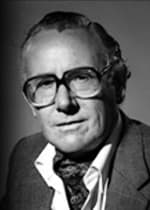
John Christopher was a British author known for his contributions to science fiction and speculative fiction. His notable works include "The White Mountains," which is part of the Tripods trilogy, "The Death of Grass," a post-apocalyptic novel, "When the Tripods Came," a prequel to the trilogy, and "The Guardians," which explores themes of survival and conflict.
Similar books
- The Giver
Lois Lowry
4.1 (1.8M) average on GoodreadsFantasyExplores a seemingly perfect society with a dark underlying truth and a young protagonist who rebels against it.
- Brave New World
Aldous Huxley
4.0 (1.4M) average on GoodreadsFantasyDepicts a future society controlled through psychological conditioning and social stratification, with a focus on individual rebellion.
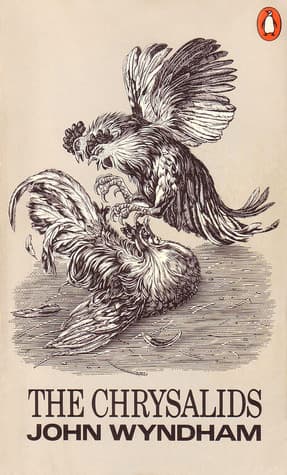
- The Chrysalids
John Wyndham
3.9 (43k) average on GoodreadsFantasyFeatures a post-apocalyptic world with strict social rules and a protagonist who discovers a hidden, freer way of life.
- Harry Potter and the Sorcerer's Stone
J.K. Rowling
4.5 (7M) average on GoodreadsFantasyRescued from a miserable life under the stairs, an orphaned boy discovers he's a wizard destined for a magical school, where he uncovers a dangerous secret tied to the dark wizard who murdered his parents.
- The Hunger Games
Suzanne Collins
4.3 (6.4M) average on GoodreadsFantasyIn a future where children fight to the death on live television, Katniss Everdeen volunteers for the arena, turning a death sentence into a fight for survival and a spark of rebellion.
- 1984
George Orwell
4.2 (3.1M) average on GoodreadsPoliticsIn a future where surveillance and thought control are absolute, a man's search for truth clashes with the Party, showing that hope can be a form of rebellion.





Enjoyed the summary?
A summary gives you the shape of the book. The book itself has the detail, the examples and the voice.
Find The Guardians on AmazonAs an Amazon Associate, BookBrief earns from qualifying purchases. How we're funded