
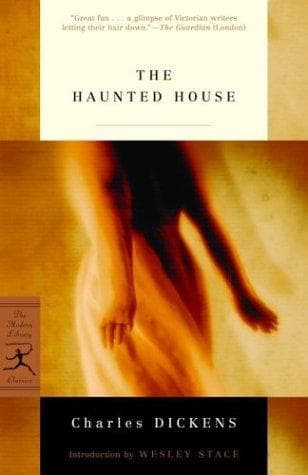
Synopsis
Covers the whole plot, including the ending.
- Difficulty
- Medium
- Pacing
- Variable
- Mood
- Atmospheric, Mysterious, Witty, Victorian, Supernatural
- Read it if
- You enjoy classic Victorian ghost stories, collaborative storytelling, or want to see how Dickens and his contemporaries approached the supernatural with a blend of mystery and comedy.
- Skip it if
- You're looking for a single, cohesive narrative with a definitive supernatural resolution, or prefer modern horror over atmospheric, character-driven ghost tales.
The Haunted House Plot Summary
Covers the whole plot, including the ending.
The Narrator's Discovery
The unnamed narrator, a man of means and an adventurous spirit, travels by train when he sees a large, deserted house in a remote area. Intrigued by its desolate look and local rumors of it being haunted, he decides to rent the property for a year. He is practical and initially skeptical of the supernatural, but drawn to the challenge of living in a place others fear. This decision sets the stage for his social experiment, as he plans to investigate the alleged hauntings firsthand, inviting company to share the experience.
Initial Occupancy and Local Fears
After moving into the Haunted House, the narrator finds that local villagers are very superstitious and tell many tales of ghostly events linked to the property. These stories, though vague, are strong enough to scare his newly hired servants. Despite the narrator's attempts to reassure them, the servants are so unnerved by the local legends and their own anxieties that they leave their jobs, leaving the narrator and his sister, Patty, mostly alone in the large, eerie house. This early departure highlights the strong psychological effect of the house's reputation.
The Invitation to Friends
Undeterred by the servants' departure and still determined to find the truth behind the house's reputation, the narrator and Patty decide to invite a select group of friends to join them. Their plan is to spend the Christmas and Twelfth Night period in the house, turning what could be a lonely watch into a social gathering with a shared goal. The invitation is presented as an adventure, a chance to directly confront the supernatural claims. This gathering of diverse personalities promises an interesting mix of skepticism, belief, and storytelling.
Assigning Rooms and Tasks
Upon arrival, guests receive specific rooms within the Haunted House, each with its own character and history. The narrator, as host, assigns these rooms as individual 'posts' for observation. Besides sharing household chores, each guest's main task is to record any supernatural events, strange feelings, or unexplained phenomena they experience in their assigned space. This structured approach aims for a systematic investigation into the house's mysteries, setting the stage for their eventual sharing of experiences.
Mortals in the House (Dickens)
In 'Mortals in the House,' Charles Dickens, as the narrator, details his first impressions and the practicalities of settling into the Haunted House. He describes daily life, the challenges of managing an old house without staff, and the initial lack of obvious supernatural events. He considers that the 'ghosts' might be more about human perception and expectation than actual spirits. This section introduces the reader to the physical setting and establishes the narrator's practical yet curious viewpoint before the more overtly supernatural tales begin.
Ghost in the Clock Room (Stretton)
Hesba Stretton's contribution, 'Ghost in the Clock Room,' describes a spectral presence linked to an old clock. The guest in this room experiences unsettling phenomena, a sense of distorted time, and a lingering, sorrowful spirit connected to the clock's mechanism. The narrative explores themes of regret and the passage of time, suggesting the ghost is a manifestation of past grief or an unresolved moment. The clock becomes a symbol for the spectral activity, marking not just hours but also the passage of sorrow.
Ghost in the Double Room (Sala)
George Augustus Sala's 'Ghost in the Double Room' presents a more vivid and unsettling haunting. The occupant of the double room sees a recurring, phantom vision of a past tragedy, perhaps a murder or betrayal, playing out within their space. The ghost is not just a feeling but a clear, if brief, scene from a past event, leaving a strong emotional mark. This story explores the idea of places holding memories of intense human drama, imprinted into the very fabric of the house.
Ghost in the Garden Room (Gaskell)
Elizabeth Gaskell's 'Ghost in the Garden Room' offers a more poignant and less terrifying ghost story. The guest in the garden room encounters a gentle, melancholic spirit, often perceived through the scents of flowers or a faint, sorrowful presence. This ghost is not evil but seems to linger due to unrequited love or a broken heart. Gaskell's story explores themes of quiet suffering, lasting devotion, and how human emotions can leave an ethereal trace, even after death. It adds a layer of tender sadness to the collection of hauntings.
Ghost in Master B.'s Room (Dickens)
In 'Ghost in Master B.'s Room,' Charles Dickens again narrates, this time describing an experience that feels personal and almost dreamlike. The ghost is not terrifying but a mysterious, somewhat childlike figure, perhaps a reflection of innocent wonder or unresolved childhood memories. The encounter is more about atmosphere and psychological impact than overt horror, hinting at the lingering presence of past inhabitants, especially children, and how their spirits might subtly influence the living. It adds a touch of whimsical melancholy to the collection.
Twelfth Night Revelations
On Twelfth Night, the narrator and his friends gather, as planned, to share the supernatural experiences they encountered in their rooms. This meeting is the culmination of their social experiment and the central narrative device of the book. Each friend recounts their unique story, from subtle atmospheric disturbances to more distinct apparitions. The collective sharing of these diverse tales creates a mosaic of the house's haunting, allowing readers to piece together the multifaceted nature of its spectral inhabitants and their varying impacts on the living.
A Feast of Storytelling
The Twelfth Night gathering becomes a feast of storytelling, showing the distinct literary styles and perspectives of the contributing authors. Each tale, though about the supernatural, reflects its author's unique voice and thematic concerns. From psychological subtleties to direct encounters, the stories explore different facets of fear, memory, human emotion, and the unexplained. This collaborative narrative structure highlights the Victorian fascination with ghost stories and how the supernatural could be interpreted and presented in literature.
The Enduring Mystery
Despite the detailed accounts shared on Twelfth Night, the ultimate mystery of the Haunted House largely remains. The stories offer glimpses into past tragedies and lingering presences, but no single explanation for the hauntings is given. Instead, the focus shifts to the human experience of the unexplained – the fear, fascination, and introspection it causes. The book ends with the understanding that the true 'haunting' is not just spectral events, but the psychological impact of such a place on the living, and the lasting power of storytelling.
Principal Figures
The Narrator (Charles Dickens)
Protagonist
The skeptical yet curious host who rents the haunted house.
The unnamed narrator, primarily voiced by Charles Dickens, is a pragmatic and adventurous gentleman. He is initially skeptical of supernatural claims but deeply intrigued by the challenge of inhabiting a house no one else dares to. He approaches the haunting with a scientific curiosity, setting up an experiment to observe and document any phenomena. Despite his rational leanings, he is not immune to the house's atmosphere and finds himself reflecting on human nature and the power of imagination. He is a convivial host, gathering friends for a unique social experiment.
Relationships: Patty (Sister and initial companion); His Friends (Guests and collaborators in the ghost investigation)
Patty
Supporting
The narrator's sister, who accompanies him to the house.
Patty is the narrator's sister and his initial companion in the Haunted House. She is presented as a loyal and supportive figure, willing to join her brother in his unusual venture. While less vocal than her brother, she shares in the initial observations and the challenges of settling into the deserted property. Her presence provides a sense of domesticity and companionship amidst the eerie setting, subtly highlighting the human element within the supernatural context. She acts as a sounding board for the narrator's ideas and helps to manage the household.
Relationships: The Narrator (Brother and primary companion)
The Ghost in the Clock Room
Mentioned
A sorrowful spirit tied to an old clock and lost time.
This spectral entity, described in Hesba Stretton's tale, is a sorrowful presence associated with an old clock in one of the rooms. It manifests through feelings of distorted time, a sense of melancholy, and a connection to past regrets. The ghost is not malevolent but rather a lingering echo of an individual's sorrow or an unresolved moment in time, forever bound to the ticking mechanism. It embodies the theme of time's relentless march and the weight of past burdens.
The Ghost in the Double Room
Mentioned
A recurring vision of a past tragedy and betrayal.
Featured in George Augustus Sala's narrative, this ghost is a more vivid and unsettling apparition. It appears as a recurring vision of a past tragic event, possibly a murder or a profound act of betrayal, imprinted upon the very space of the double room. The ghost is a dramatic manifestation of human suffering and a violent history, leaving a strong emotional and visual impact on the room's occupant. It represents the idea of a place retaining the memory of intense human drama.
The Ghost in the Garden Room
Mentioned
A gentle, melancholic spirit linked to unrequited love.
Elizabeth Gaskell's contribution introduces a gentle and poignant ghost in the garden room. This spirit is not frightening but rather a melancholic presence, often perceived through subtle sensory details like the scent of flowers or a feeling of quiet sorrow. It is believed to be the lingering essence of someone who suffered from unrequited love or a broken heart. This ghost embodies the theme of enduring devotion and the quiet tragedy of unfulfilled desires.
The Ghost in Master B.'s Room
Mentioned
A mysterious, childlike figure from the narrator's own experience.
This ghost, recounted by Dickens himself, is a mysterious and somewhat childlike figure encountered in 'Master B.'s Room.' It is less a terrifying apparition and more a subtle, almost dreamlike presence that evokes a sense of innocent wonder or unresolved childhood memories. The encounter is more psychological and atmospheric, hinting at the lingering imprints of past inhabitants, particularly children, and their subtle influence on the living. It adds a touch of whimsical melancholy to the collection.
The Servants
Supporting
Local staff who are too terrified to stay in the house.
The local servants hired by the narrator are a group easily swayed by the pervasive superstitions and local legends surrounding the Haunted House. Despite the narrator's reassurances, their fear is so profound that they quickly abandon their posts, leaving the narrator and Patty to manage the large house alone. Their fear serves to immediately establish the house's formidable reputation and the deep-seated belief in the supernatural among the villagers, underscoring the challenge the narrator has taken on.
Relationships: The Narrator (Employer (briefly))
The Friends (Various Authors)
Supporting
Guests invited to investigate the house, each contributing a ghost story.
This group comprises the various friends invited by the narrator and Patty to spend Christmas and Twelfth Night in the Haunted House. Each friend is a distinct personality, representing different degrees of skepticism and belief, and each is assigned a specific room to observe. Their individual experiences form the core of the collaborative ghost stories, showcasing the diverse ways in which people perceive and interpret the supernatural. They are the vehicles through which the various contributing authors tell their tales.
Relationships: The Narrator (Host and friend); Patty (Hostess and friend)
Themes & Insights
The Nature of Fear and Belief
The book explores how fear grows and lasts, often without clear proof. The local villagers' terror, based on legend, directly causes the servants to flee, showing the power of collective belief. The narrator, initially a skeptic, tries a rational investigation, yet even he and his friends, despite their different beliefs, are affected by the house's atmosphere. This theme highlights the psychological aspect of hauntings – that sometimes, the 'ghosts' are more about human perception, expectation, and the stories we tell ourselves, rather than actual spirits. The varying accounts on Twelfth Night show how different people interpret and are affected by the same mysterious setting.
“It is a question whether the house was haunted, or whether we were.”
The Power of Storytelling
At its heart, 'The Haunted House' celebrates storytelling. The framework of friends gathering on Twelfth Night to share their experiences turns the house into a stage for diverse narratives. Each 'ghost story' is a distinct piece of fiction, showing the unique voices of the contributing authors. The act of recounting these tales, embellishing them, and listening to others' interpretations, is a basic human activity, turning the mysterious into something understandable and shareable. It shows how narratives shape our understanding of the world, even the supernatural.
“A good ghost story is a mental exercise, a kind of pleasing terror.”
Memory and the Lingering Past
Many individual ghost stories within the collection suggest that the hauntings are manifestations of past events, emotions, or unresolved lives. The ghost in the Clock Room relates to lost time and regret; the Double Room's specter re-enacts a past tragedy; and the Garden Room's ghost embodies unrequited love. The house itself acts as a container for these memories, with its old walls and objects holding the imprint of human experiences. The 'ghosts' are not just spirits but echoes of what once was, showing how the past continues to influence and inhabit the present.
“The past is not dead; it is not even past.”
Domesticity vs. the Uncanny
The narrative contrasts everyday domestic routines with the unsettling presence of the uncanny. The narrator and his sister, and later their friends, try to create a sense of normalcy – cooking, cleaning, and socializing – in a setting that constantly defies it. The servants' departure highlights the difficulty of maintaining domestic order when facing overwhelming fear. This contrast emphasizes the fragility of human comfort and routine when confronted by the inexplicable, suggesting that the most terrifying aspects of a haunting often invade the most familiar and intimate spaces.
“To be alone in a house that has the reputation of being haunted, is to be in a house that has a double reputation.”
Plot Devices & Literary Techniques
Framing Device
A larger narrative that encloses a series of shorter, individual stories.
The primary plot device in 'The Haunted House' is its framing narrative. Charles Dickens's sections, particularly 'Mortals in the House' and 'Ghost in Master B.'s Room,' establish the premise: a group of friends gathering in a haunted house to share their experiences. This frame story sets the scene, introduces the characters, and provides the context for the individual ghost stories contributed by other authors. It unifies the disparate tales into a cohesive collection, making the house itself the central character and the catalyst for all the supernatural encounters.
First-Person Narration (Multiple)
Each story within the frame is told from a distinct first-person perspective.
While Dickens provides the overarching first-person narration for the frame story, each subsequent ghost tale is also told from a first-person perspective by the character assigned to that specific room. This allows for a diverse range of voices, tones, and interpretations of the supernatural. It creates a sense of immediacy and personal experience for each haunting, making the accounts feel more authentic and varied, reflecting the different personalities and sensitivities of the 'investigators.' This device emphasizes the subjective nature of ghostly encounters.
The Haunted House (as a character)
The house itself functions as a central, enigmatic entity that influences all characters.
The Haunted House is more than just a setting; it acts almost as a character itself. Its formidable reputation, its desolate appearance, and its unknown history are the driving forces behind the plot. It actively 'haunts' not just through specific apparitions but through its pervasive atmosphere, influencing the fears of the villagers, the flight of the servants, and the subtle psychological effects on the guests. The house is the catalyst for all the events and stories, an enigmatic entity that evokes curiosity, fear, and introspection in all who encounter it.
Twelfth Night Gathering
A specific date and event for sharing and culmination of experiences.
The decision to gather on Twelfth Night to share their ghostly tales serves as a crucial plot device. This specific date, traditionally associated with festive gatherings and the end of the Christmas season, provides a natural and dramatic culmination point for the individual investigations. It creates anticipation and structure for the narrative, allowing the various authors' contributions to be presented sequentially and collectively. The gathering transforms individual, isolated experiences into a communal storytelling event, highlighting the social aspect of fear and mystery.
The Haunted House Quotes
“The wind went by me with a shrill, unearthly cry, as if the very air were in pain.”
“It was a dreary, solitary place, that house, standing by itself, with its blank windows staring out upon the sea.”
“There is a ghostly presence in this house, I know it, I feel it.”
“The fire burned low, the shadows flickered, and the silence grew deeper and more oppressive.”
“Every object in the room seemed to have a history, a secret, a voice that only silence could hear.”
“I found myself listening, not for sounds, but for the absence of them; for the sudden cessation that might denote a presence.”
“The shadows here are not merely the absence of light; they are entities, with their own cold life.”
“It is not the dead who haunt us, but the memories they leave behind.”
“The wind howled like a banshee, and the rain lashed against the panes, as if trying to force its way in.”
“I felt a chill that had nothing to do with the weather, a cold breath on my neck that was not the wind.”
“The very air seemed thick with unspoken words, with forgotten sorrows, with the echoes of lives long past.”
“Fear is a strange companion; it keeps you awake, but it also sharpens your senses.”
“The silence in this house is not empty; it is full of whispers that only the heart can hear.”
“Every creak of the floorboards, every rustle of the curtains, became a signal, a message from the unseen.”
“To truly see a ghost, perhaps one must first believe in the possibility of its existence.”
Quiz
10 questions on the plot and the characters. Each answer comes with a short explanation.
Question 1
What is the primary motivation for the narrator to take up residence in the deserted house?
- He inherited the house and needed a place to stay.
- He was challenged by the local villagers to prove its safety.
- He cannot resist the challenge of inhabiting a place no one else will.
- He believed the house contained hidden treasure.
Show answer
C. He cannot resist the challenge of inhabiting a place no one else will. The narrator is driven by the challenge of occupying a house that local legend has made uninhabitable for others.
Question 2
What event causes the narrator's initial servants to abandon the house?
- A direct supernatural encounter in the kitchen.
- The house's remote location and lack of amenities.
- The local legend and the terrified villagers convincing them.
- The narrator's demanding behavior.
Show answer
C. The local legend and the terrified villagers convincing them. The local legend of the haunted house terrified the villagers, who then convinced the narrator's servants to leave.
Question 3
Who joins the narrator and his sister to help investigate the supernatural occurrences?
- A team of professional ghost hunters.
- A group of friends invited by the narrator and his sister.
- The local constable and his deputies.
- His distant relatives from London.
Show answer
B. A group of friends invited by the narrator and his sister. The narrator and his sister invite a group of friends to join them in the haunted house.
Question 4
What specific task are the guests commissioned to do in their respective rooms?
- To redecorate and furnish the rooms.
- To write a detailed report on the house's history.
- To rout out the supernatural from their respective rooms.
- To perform a scientific experiment on the house's structure.
Show answer
C. To rout out the supernatural from their respective rooms. After sharing out household tasks, the guests are specifically commissioned to find and deal with any supernatural elements in their assigned rooms.
Question 5
Which specific holiday is mentioned as the date when the guests meet to share their ghostly tales?
- Christmas Eve
- Halloween
- Twelfth Night
- New Year's Day
Show answer
C. Twelfth Night The guests meet on Twelfth Night to share their experiences and ghostly tales.
Question 6
Which of the following authors contributed a 'Ghost in the Garden Room' tale?
- Wilkie Collins
- Elizabeth Gaskell
- George Augustus Sala
- Adelaide Anne Procter
Show answer
B. Elizabeth Gaskell Elizabeth Gaskell contributed the story titled 'Ghost in the Garden Room'.
Question 7
What literary characteristic is highlighted as being present in 'The Haunted House' alongside the supernatural elements?
- Grim social realism.
- Touches of pure Dickensian comedy.
- Gothic romance and melodrama.
- Scientific rationalism and skepticism.
Show answer
B. Touches of pure Dickensian comedy. The description explicitly states that the book features 'touches of pure Dickensian comedy' alongside the supernatural.
Question 8
According to Peter Ackroyd in the Foreword, why is 'The Haunted House' significant for those interested in Charles Dickens's genius?
- It showcases Dickens's skill in writing pure horror.
- It is a document of self-revelation.
- It demonstrates his ability to collaborate with lesser-known authors.
- It was his most commercially successful work.
Show answer
B. It is a document of self-revelation. Peter Ackroyd states that 'As a document of self-revelation, The Haunted House is of the utmost significance for anyone interested in exploring the genius of Charles Dickens.'
Question 9
Beyond Charles Dickens, which two other prominent Victorian literary talents are explicitly mentioned as contributors to 'The Haunted House'?
- Jane Austen and Mary Shelley.
- Charlotte Brontë and George Eliot.
- Elizabeth Gaskell and Wilkie Collins.
- Thomas Hardy and Oscar Wilde.
Show answer
C. Elizabeth Gaskell and Wilkie Collins. The introduction explicitly names Elizabeth Gaskell and Wilkie Collins among its contributors.
Question 10
What is the overarching structure of the story, as revealed by the gathering on Twelfth Night?
- A linear narrative of a single ghost hunt.
- A series of independent ghost stories told by different characters.
- A mystery solved by a detective character.
- A historical account of a truly haunted dwelling.
Show answer
B. A series of independent ghost stories told by different characters. The guests gather on Twelfth Night to share 'their ghostly tales,' indicating a collection of individual stories rather than a single, continuous narrative.
The Haunted House FAQ
What is the central premise of 'The Haunted House' and who is the primary narrator?
The central premise revolves around a narrator, who remains unnamed but is implied to be Dickens himself, taking up residence in a supposedly haunted deserted house. He then invites friends to join him, assigning them specific rooms to investigate for supernatural occurrences, culminating in a sharing of their ghostly experiences on Twelfth Night.
How does the narrator initially come across the haunted house, and what motivates him to inhabit it?
The narrator first spies the deserted house from his railway carriage, sparking his curiosity and a sense of challenge. He is motivated by a desire to confront the local legends and the fear surrounding the house, undeterred by the villagers' superstitions or his servants' subsequent abandonment.
Who are some of the notable contributors to the collection of tales within 'The Haunted House'?
Beyond Charles Dickens himself, significant contributors include Elizabeth Gaskell, who penned 'Ghost in the Garden Room,' and Wilkie Collins, responsible for 'Ghost in the Cupboard Room.' George Augustus Sala, Adelaide Anne Procter, and Hesba Stretton also contributed distinct supernatural narratives.
What is the significance of Twelfth Night in the structure of the book?
Twelfth Night serves as the climactic gathering point for the guests to reconvene and share their individual ghostly tales. This traditional end-of-Christmas celebration provides a perfect, atmospheric setting for the recounting of supernatural experiences, unifying the disparate narratives.
How do the villagers react to the narrator's decision to occupy the house, and what impact does this have?
The local villagers are terrified by the house's reputation and actively discourage the narrator, even convincing his servants to abandon their posts. This initial fear sets a foreboding tone and underscores the perceived danger and isolation of the house.
Are there any recurring motifs or themes that subtly connect the different ghost stories, despite their varied authors?
While diverse, many tales subtly explore themes of past trauma, unresolved guilt, and the lingering presence of memory, often manifesting as spectral figures tied to specific objects or rooms. The idea of psychological haunting often intertwines with overt supernatural events.
What is the significance of 'Master B.'s Room' and its specific ghost story by Charles Dickens?
Master B.'s Room, and Dickens's story within it, often represents childhood innocence or vulnerability corrupted by unseen forces. The 'ghost' here might be interpreted less as a literal specter and more as a manifestation of the anxieties or hidden grief associated with a child's space.
Does the framing narrative by Dickens offer any clues about the true nature of the hauntings, or are they left ambiguous?
The framing narrative generally maintains ambiguity regarding the 'true' nature of the hauntings. While it sets up the premise, it allows the individual stories to explore different facets of the supernatural, leaving readers to ponder whether the events are truly spectral, psychological, or a blend of both.
How does Elizabeth Gaskell's 'Ghost in the Garden Room' differ thematically or stylistically from Dickens's contributions?
Gaskell's 'Ghost in the Garden Room' often exhibits a more melancholic and subtly psychological tone, focusing on the emotional resonance of the past rather than overt scares. Her ghost stories frequently delve into domestic tragedies and the quiet despair of women, which can contrast with Dickens's more theatrical or comedic elements.
How does the shared experience of confronting the supernatural affect the psychology of the assembled guests?
The shared experience likely fosters a unique bond among the guests, as they collectively confront fear and the unknown. It might also lead to introspection, as their individual encounters force them to question their perceptions of reality and the boundaries between the living and the dead.
Is there a psychological explanation offered or implied for why people are drawn to investigate haunted places, as seen with the narrator?
The narrator's initial motivation suggests a psychological drive for challenge and perhaps a desire to rationalize or demystify the unknown. It could also stem from a Victorian fascination with the supernatural, combined with a scientific curiosity to test the limits of belief.
How do the individual ghost stories reflect the psychological states or anxieties of their respective characters/narrators?
Many stories subtly project the characters' inner anxieties onto their surroundings. For instance, a character experiencing guilt might perceive a condemning specter, or one grappling with loss might encounter a ghost embodying their grief, reflecting the psychological burden they carry.
What role does collective belief or suggestion play in the perception of the hauntings among the group?
Collective belief likely amplifies the perception of hauntings. The shared purpose of investigating, coupled with the house's reputation, could prime the guests to interpret ambiguous events as supernatural, demonstrating the power of suggestion and shared experience.
To what extent can the 'ghosts' in the stories be interpreted as manifestations of trauma or unresolved past events?
Many of the 'ghosts' can indeed be interpreted as symbolic manifestations of trauma, guilt, or unresolved historical events. They often represent the lingering impact of past actions or tragedies on the present, rather than purely external, malevolent entities.
Does 'The Haunted House' ultimately endorse a belief in the supernatural, or does it lean towards a more skeptical view?
'The Haunted House' maintains a deliberate ambiguity, allowing for both interpretations. While the stories present vivid supernatural occurrences, the framing narrative and the varied nature of the tales permit readers to consider psychological explanations or the power of storytelling itself, rather than a definitive endorsement of the supernatural.
How does the inclusion of multiple authors impact the overall message or thematic coherence of the work?
The multiple authors create a rich tapestry of perspectives on the supernatural, preventing a single, monolithic message. While sharing a common theme of haunting, each author brings their unique style and thematic concerns, enriching the collection with diverse interpretations of fear, memory, and the unknown.
What is the significance of the house itself as a character or symbolic entity in the narrative?
The house functions as more than just a setting; it is a central character, a repository of history and memory that actively influences its inhabitants. Its deserted state and ominous reputation symbolize the weight of the past and the unknown, inviting both fear and curiosity.
How might 'The Haunted House' be seen as a commentary on Victorian society's fascination with spiritualism and the supernatural?
The book can be interpreted as a reflection of Victorian society's intense fascination with spiritualism, séances, and ghost stories. It both indulges in this cultural interest by presenting a variety of tales and subtly interrogates the nature of belief and perception surrounding such phenomena.
About the author
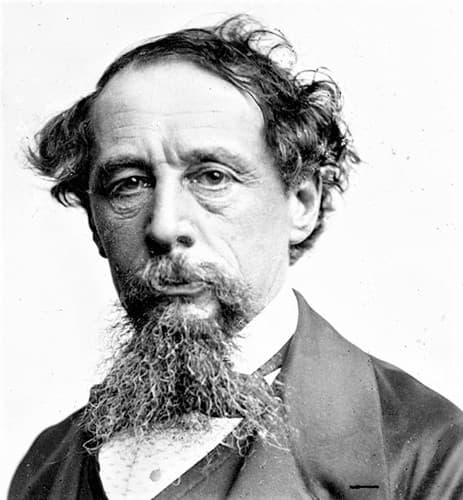
Charles John Huffam Dickens was an English writer and social critic who created some of the world's best-known fictional characters and is regarded by many as the greatest novelist of the Victorian era. His works enjoyed unprecedented popularity during his lifetime and, by the 20th century, critics and scholars had recognised him as a literary genius. His novels and short stories are widely read today.
Similar books
- A Christmas Carol
Charles Dickens
4.1 (600k) average on GoodreadsFantasyFeatures Dickensian prose, supernatural elements, and a festive holiday setting.
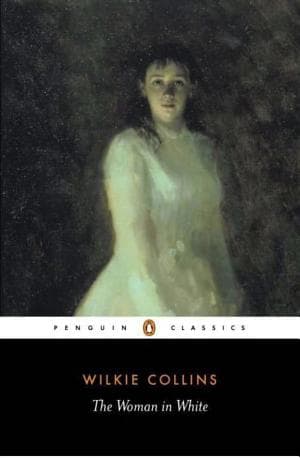
- The Woman in White
Wilkie Collins
4.0 (132k) average on GoodreadsHistorical FictionShowcases Victorian mystery, suspense, and the work of a contributor to 'The Haunted House'.
- The Haunting of Hill House
Shirley Jackson
3.8 (162k) average on GoodreadsThrillerJackson's novel offers a more unified and psychologically intense exploration of a haunted house, with a singular authorial voice maintaining consistent tension and character focus. "The Haunted House," by contrast, provides a broader, more episodic view through its collaborative structure, which can dilute the overall psychological impact but offers a wider range of perspectives.
- The Turn of the Screw
Henry James
3.4 (104k) average on GoodreadsMysteryJames's novella is renowned for its deep psychological ambiguity, where the 'ghosts' are arguably manifestations of the governess's disturbed mind. While "The Haunted House" also plays with ambiguity, it leans more towards a collection of distinct supernatural encounters, some more literal than others, whereas James maintains a singular, intense focus on the unreliable narrator's perception, creating a more cohesive and unsettling psychological horror.
- To Kill a Mockingbird
Harper Lee
4.3 (4.5M) average on GoodreadsHistorical FictionIn the 1930s Jim Crow South, Harper Lee writes about racial injustice, moral growth, and the quiet courage of a lawyer father, Atticus Finch, as seen through his young daughter's eyes.
- The Great Gatsby
F. Scott Fitzgerald
3.9 (3.8M) average on GoodreadsHistorical FictionIn the opulent Roaring Twenties, a mysterious millionaire's lavish parties hide his desperate, tragic pursuit of a lost love, exposing the emptiness within the American Dream.




Enjoyed the summary?
A summary gives you the shape of the book. The book itself has the detail, the examples and the voice.
Find The Haunted House on AmazonAs an Amazon Associate, BookBrief earns from qualifying purchases. How we're funded