
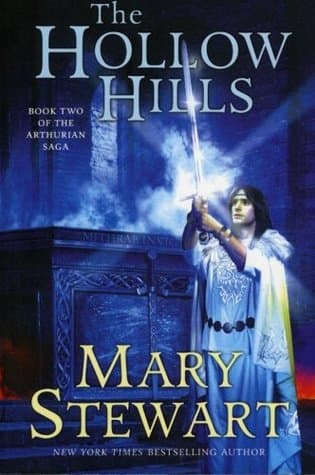
Synopsis
Covers the whole plot, including the ending.
- Difficulty
- Medium
- Pacing
- Moderate
- Mood
- Mystical, Historical, Epic, Reflective
- Read it if
- You love rich, character-driven retellings of Arthurian legend focusing on Merlin's perspective, with a blend of historical detail and subtle magic.
- Skip it if
- You prefer fast-paced action fantasies or a version of Arthurian legend with overt, flashy magic.
The Hollow Hills Plot Summary
Covers the whole plot, including the ending.
The Boy and the Prophet
The story begins with Merlin, a seasoned prophet and counselor, living with his foster-mother, Elen, in the Welsh hills. He is concerned about Britain's future, which is fragmented and vulnerable after Ambrosius Aurelianus's death. Merlin focuses on young Arthur, whom he placed with Sir Ector's family years ago. Arthur, growing into a strong and intelligent boy, believes he is Ector's son. Merlin frequently visits him in disguise, subtly influencing his education and character. Merlin has recurring, vivid dreams of a hidden sword, a symbol of kingship, and a mysterious stone, both important to Arthur's destiny. He understands that Arthur will soon claim his true heritage, but the exact path is unclear.
Uther's Demise and the Shifting Sands of Power
King Uther, Arthur's biological father, is increasingly ill and troubled by internal strife and Saxon attacks. Merlin, despite his duty to Uther, focuses on Arthur's future. He witnesses Uther's final, desperate attempts to unify Britain, which fail. Uther dies, not in battle, but in his bed, leaving a power vacuum and no clear heir. This causes widespread chaos and land grabs by warlords and minor kings. The country is near collapse, making Merlin's mission to establish Arthur as the rightful High King even more urgent and dangerous. Uther's death also removes the last obstacle for Arthur's true identity to be revealed, though the timing and method are still critical.
The Quest for the Sword
Merlin's dreams become clearer, providing clues about the sword and its location. He understands this is Caliburn, Ambrosius's sword, hidden after his death. Guided by these visions and his knowledge of ancient lore, Merlin travels alone across Britain. His quest leads him to ancient, sacred sites, including a hidden cave in the Mendip Hills, where he believes the sword is hidden. The journey is difficult and dangerous, reflecting the spiritual and physical challenges he faces. He uses his prophetic abilities and a deep connection to the land to decipher signs, eventually leading him closer to the sword's resting place, a place of strong magical energy.
Caliburn Revealed
Following clues from his dreams and his intuition, Merlin finally finds the hidden cave. Deep inside, he finds Caliburn and the stone in which it is magically embedded. Caliburn is more than a weapon; it has powerful magic and represents the ancient power of Britain's rightful kings. Merlin recognizes its importance and understands that only the true king, Arthur, will be able to pull it out. He prepares the site, ensuring the sword and stone are both protected and accessible when the time is right. This discovery is a turning point, as the physical sign of Arthur's destiny is now secured, waiting for its rightful wielder.
The Gathering of Kings
With Caliburn secured, Merlin returns to London, now a city in chaos. He uses his influence and reputation as a prophet to summon Britain's warring kings and chieftains to a great council. His goal is to offer a solution to the succession crisis and create a unified kingdom under a new High King. The kings arrive, each with their own ambitions and distrust, making the assembly tense. Merlin understands that a simple declaration will not be enough; a powerful sign is needed to convince these proud rulers to accept an unknown boy as their leader. He prepares the stage for the sword's revelation and the true heir.
The Sword in the Stone
At the grand assembly, Merlin reveals Caliburn, now magically embedded in a massive stone, in the churchyard of St. Paul's. He declares that only Britain's true High King will be able to pull the sword from the stone. One by one, the powerful kings and knights try to pull Caliburn free, but none succeed, regardless of their strength or lineage. Their failures show the spiritual and magical nature of kingship, proving that physical might or inherited title alone is not enough. The spectacle creates awe and frustration among the assembled rulers, setting the stage for the true heir's unexpected revelation.
Arthur's Unintentional Revelation
During the tournament after the failed attempts to draw the sword, Sir Kay, Arthur's foster-brother, realizes he has forgotten his sword. He sends Arthur to get it. Unable to find Kay's sword, Arthur, seeing the unattended sword in the stone, innocently pulls it free, intending to use it for Kay. When he returns with Caliburn, Kay recognizes the sword and tries to claim the feat himself, but Ector, his father, questions Arthur. Arthur honestly describes how he drew the sword. Ector, recognizing the prophecy, makes Arthur re-insert and re-draw the sword for all to see. The awe-struck crowd, including many kings, witnesses Arthur's easy act, confirming him as the rightful heir and chosen High King of Britain.
The Resistance and the Coronation
Despite the clear sign, many proud kings and warlords initially refuse to accept Arthur, a mere boy of unknown parentage, as their High King. They question his lineage and demand more proof. Merlin steps forward and publicly reveals Arthur's true identity as the son of Uther and Igraine, explaining his birth and Merlin's role in protecting him. This revelation, combined with the miraculous drawing of the sword, begins to sway public opinion. After tense days and further political maneuvering by Merlin, Arthur is eventually accepted and crowned High King of Britain. This marks the beginning of his reign and the next chapter in Merlin's plan for a unified kingdom.
Merlin's Role as Counselor
With Arthur now High King, Merlin becomes his most trusted and visible counselor. He advises Arthur on statecraft, military strategy, and diplomacy, helping the young king navigate Britain's political landscape. Merlin uses his wisdom, foresight, and knowledge of ancient traditions to guide Arthur in establishing his authority and uniting the kingdoms. He is Arthur's mentor, friend, and spiritual guide, constantly reminding him of his destiny and the responsibilities of kingship. Their deep bond, formed by years of shared purpose, is the foundation of Arthur's early reign as they work to build a new, stronger Britain.
The Seeds of Future Conflict
While Arthur's coronation is a triumph, the story subtly hints at ongoing challenges he will face. The resistance from some kings, though currently quelled, suggests future rebellions and internal strife. The Saxon threat remains, requiring Arthur to prove his military skill. Merlin understands that lasting peace will be a continuous struggle, and his role as Arthur's guide is far from over. The book concludes with Arthur beginning to establish his court and assert his authority, but the reader understands that this is only the beginning of his legendary reign, with many trials ahead, and Merlin's watchful eye continuing.
Principal Figures
Merlin Ambrosius
Protagonist
The wise prophet and guardian of Arthur's destiny.
Merlin is a powerful prophet, a skilled healer, and a deep scholar of ancient lore and magic. He is the son of a Roman princess and an unknown father, granting him a unique blend of Roman intellect and ancient British mysticism. His primary drive is to ensure the rightful heir, Arthur, ascends to the throne and unifies Britain, fulfilling a destiny he has foreseen. He is patient, cunning, and deeply committed to his purpose, often operating in the shadows and using subtle manipulation to guide events. He carries the burden of great knowledge and the weight of Britain's future.
Relationships: Arthur Pendragon (mentor and guardian); Uther Pendragon (adviser, but with a hidden agenda for Arthur); Elen (foster-mother and confidante); Sir Ector (trusted ally in raising Arthur)
Arthur Pendragon
Protagonist
The unwitting heir to the throne, destined to become High King.
Arthur is introduced as a spirited, intelligent, and compassionate young boy, unaware of his royal birth. He is fostered by Sir Ector and raised alongside Kay, developing a strong sense of justice and loyalty. He possesses an innate goodness and a natural aptitude for leadership, even before knowing his destiny. His upbringing, guided by Merlin's subtle influence, instills in him humility and practical skills, preparing him for the immense responsibilities he will eventually bear. He is brave and earnest, with a strong moral compass that sets him apart from the squabbling warlords.
Relationships: Merlin Ambrosius (respected mentor and guide); Uther Pendragon (biological father, unknown to him for most of the story); Sir Ector (foster-father, deeply loved and respected); Sir Kay (foster-brother, with a sometimes strained but ultimately loyal relationship); Igraine (biological mother, unknown to him)
Uther Pendragon
Supporting
The aging and beleaguered King of Britain, Arthur's biological father.
Uther Pendragon is portrayed as a once-mighty warrior-king, now diminished by age, illness, and the constant strain of defending Britain from internal and external enemies. He is a tragic figure, haunted by the past and unable to effectively unify his fractured kingdom. He relies on Merlin for counsel but is ultimately unable to overcome his own weaknesses and the political machinations around him. His death is a catalyst for the events that bring Arthur to the forefront, though he never knows of his son's eventual destiny. He represents the old, failing order that Arthur is destined to replace.
Relationships: Merlin Ambrosius (trusted, yet manipulated, counselor); Igraine (wife, whose initial union was controversial); Arthur Pendragon (unacknowledged son)
Sir Ector
Supporting
Arthur's loyal and loving foster-father.
Sir Ector is a kind, honorable, and practical knight who raises Arthur as his own son. He is a man of good character and solid principles, providing Arthur with a stable and loving upbringing. Ector is unaware of Arthur's true parentage until the revelation of the sword in the stone, but his unwavering love and mentorship are crucial to Arthur's development. He represents the best of the common nobility, loyal and fair, and readily accepts Arthur's destiny once it is revealed, demonstrating his deep affection and respect for the boy he raised.
Relationships: Arthur Pendragon (foster-father, deeply affectionate and loyal); Sir Kay (biological father); Merlin Ambrosius (acquaintance, initially unaware of Merlin's grand plan)
Sir Kay
Supporting
Arthur's foster-brother, sometimes resentful but ultimately loyal.
Sir Kay is Ector's biological son and Arthur's foster-brother. He is often portrayed as somewhat brash, ambitious, and occasionally jealous of Arthur's natural abilities, yet he is not malicious. His character provides a contrast to Arthur's humility and serves as a foil. Kay's forgetfulness of his sword is the direct catalyst for Arthur drawing Caliburn from the stone, making him an unwitting, yet crucial, agent of destiny. Despite his initial attempts to claim credit, he ultimately acknowledges Arthur's rightful place, and their brotherly bond endures, albeit with a shifted dynamic.
Relationships: Arthur Pendragon (foster-brother, sometimes competitive but ultimately loyal); Sir Ector (father)
Elen
Supporting
Merlin's foster-mother and a wise, ancient woman of the hills.
Elen is an old, wise woman who has served as Merlin's foster-mother and confidante since his youth. She embodies the ancient, pagan wisdom of Britain and is deeply connected to the land and its magic. She provides Merlin with a grounding presence and a place of refuge, offering him support and understanding without questioning his grand, often mysterious, endeavors. Her role is primarily supportive, offering comfort and a connection to Merlin's past and the mystical forces he commands. She represents the enduring spirit of the old ways.
Relationships: Merlin Ambrosius (foster-mother and trusted confidante)
Igraine
Mentioned
Arthur's biological mother, Uther's queen.
Igraine is Arthur's biological mother, a beautiful and noble queen. Her story, particularly her union with Uther, is recounted by Merlin as part of Arthur's lineage revelation. She is a figure of tragedy and a key part of the prophecy surrounding Arthur's birth, but she does not appear directly in the narrative of 'The Hollow Hills'. Her significance lies in establishing Arthur's royal bloodline and the circumstances of his conception, which Merlin orchestrated to ensure Arthur's future.
Relationships: Uther Pendragon (husband); Arthur Pendragon (biological mother)
Ambrosius Aurelianus
Mentioned
Merlin's uncle and the previous High King, whose legacy Arthur inherits.
Ambrosius Aurelianus was Merlin's uncle and a previous High King of Britain, a wise and just ruler who attempted to unify the land after the Roman withdrawal. He is a revered figure, and his spirit and legacy deeply influence Merlin's actions. The sword Caliburn was his, and its rediscovery and Arthur's wielding of it symbolize the continuation of Ambrosius's vision for a united Britain. Though deceased, his presence is felt throughout the narrative as the ideal king whom Arthur is destined to emulate and surpass.
Relationships: Merlin Ambrosius (uncle and mentor)
Themes & Insights
Destiny and Prophecy
The theme of destiny, guided by Merlin's prophecies, underlies the entire story. Merlin is not just a prophet but actively shapes the future he foresees. His dreams of Caliburn and the stone are precise instructions for his actions. Arthur's entire life, from his hidden birth to his fostering and education, fulfills a grand design. Drawing the sword from the stone is the ultimate sign of this destiny, proving Arthur is the chosen one, regardless of his awareness. This theme suggests that some paths are predetermined but need human action (Merlin's) to happen.
“The future is not a road, Arthur, but a river. It flows, and we must learn to swim with it, or drown.”
Kingship and Leadership
The novel explores the nature of true kingship, contrasting it with mere power or inherited title. Uther's reign, though legitimate, fails due to his weaknesses. The squabbling kings after his death show self-serving leadership. Arthur, by contrast, is the ideal king: humble, just, compassionate, and connected to the land and its people, symbolized by his easy drawing of Caliburn. Merlin's guidance emphasizes that a true king must unite, protect, and inspire, not just rule. The sword itself symbolizes this spiritual authority, not just a weapon.
“It is not the strongest arm that draws the sword, but the truest heart that is chosen.”
The Old Ways vs. New Order
The story examines the shift from ancient pagan beliefs, shown by Merlin's connection to the land and its magic, to the rising Christian influence. While Christianity is present, Merlin's power comes from older, primal forces. He uses his 'magic' for a greater, unifying purpose, bridging these two worlds. Placing the sword in a churchyard, for instance, symbolizes combining ancient power with new spiritual authority. Arthur's reign is presented as a blend, drawing strength from both the mystical past and the promise of a more ordered, unified future for Britain.
“The land remembers, Arthur, even when men forget. And the land will choose its king.”
Mentorship and Sacrifice
Merlin's relationship with Arthur shows the impact a wise guide can have on a leader. Merlin dedicates his life to Arthur's upbringing and rise, making personal sacrifices. He works in the background, subtly shaping Arthur's character and experiences, always with Britain's greater good in mind. His willingness to reveal Arthur's true parentage and step into a counselor role shows selfless commitment to his protégé's destiny, prioritizing the kingdom's future over personal glory. This theme highlights the importance of guidance in shaping great leaders.
“My life is bound to yours now, Arthur. For good or ill, we walk this path together.”
Plot Devices & Literary Techniques
Prophetic Dreams and Visions
Merlin's primary source of information and guidance for Arthur's destiny.
Merlin's prophetic dreams and visions serve as the driving force behind the plot. They are not merely symbolic but often contain precise details and instructions, guiding Merlin to the location of Caliburn and informing his strategic decisions regarding Arthur's upbringing and eventual revelation. These visions lend a mystical and fated quality to the narrative, establishing that Arthur's rise is part of a larger, divinely or magically ordained plan. They also highlight Merlin's unique connection to the unseen forces that shape Britain's destiny, making him an indispensable figure.
The Sword in the Stone (Caliburn)
A magical artifact and a symbolic test of rightful kingship.
Caliburn, embedded in the stone, is the central plot device for Arthur's revelation. It functions as a magical test, demonstrating that true kingship is not about physical strength or noble birth alone, but about a deeper, inherent worthiness. Its magical nature ensures that only the destined king can draw it, making Arthur's act undeniable proof of his claim. The sword is also a symbol of continuity, representing the legacy of Ambrosius and the ancient power of Britain, which Arthur, as High King, is meant to wield and restore.
The Hidden Heir
The trope of a royal child raised in obscurity, unaware of their true lineage.
The device of the hidden heir is crucial to the narrative's tension and eventual triumph. Arthur's upbringing as a commoner, unaware of his royal blood, allows him to develop a grounded and compassionate character, free from the corrupting influences of court politics. It also creates dramatic irony, as the audience knows his destiny while he remains oblivious. This device allows for a powerful reveal, where his inherent goodness and destiny, rather than his lineage, are initially highlighted as the reasons for his ascension, making his claim all the more compelling and miraculous.
The Wise Old Man/Mentor
Merlin's archetypal role as Arthur's guide and teacher.
Merlin embodies the 'wise old man' archetype, a common plot device in heroic narratives. He provides the hero (Arthur) with knowledge, guidance, and the means to fulfill his destiny. Merlin's wisdom, magical abilities, and foresight are essential for navigating the political landscape and overcoming obstacles. This device allows for exposition of the backstory and prophecies, while also shaping the hero's character and moral compass. Merlin's selfless dedication to Arthur's cause makes him more than just a plot enabler; he is the driving force behind the hero's journey.
The Hollow Hills Quotes
“For the mind cannot be forced to believe what it does not believe.”
“There are no accidents. There is only the inevitable.”
“The past is never dead. It is not even past.”
“A man must be what he is, and not what he would wish to be.”
“Power is a thing that must be taken, not given.”
“The world is full of signs, if only you know how to read them.”
“Sometimes a lie is a kindness, and the truth a cruelty.”
“Fear is a poor counsellor.”
“To rule, one must first learn to serve.”
“The greatest battles are fought within the heart.”
“Even the wise make mistakes. The difference is that they learn from them.”
“There are always choices. Even when it seems there are none.”
“The land remembers. It remembers everything.”
“Magic is not a trick. It is a way of seeing.”
Quiz
10 questions on the plot and the characters. Each answer comes with a short explanation.
Question 1
Where does Merlin Ambrosius initially find the young Arthur Pendragon after Uther's death?
- At the court of King Lot of Lothian
- Living with Sir Ector at his castle
- In the care of the Lady Igraine
- Hidden in the forest with his foster parents
Show answer
B. Living with Sir Ector at his castle After Uther's death, Merlin retrieves Arthur from Sir Ector's household, where he has been raised as Ector's son, Kay's foster brother.
Question 2
What is the name of the magical sword that Merlin has been haunted by dreams of, and which Arthur is destined to claim?
- Excalibur
- Caliburn
- Durendal
- Arondight
Show answer
B. Caliburn The fabled sword that Merlin dreams of and Arthur is destined to claim is specifically named Caliburn in 'The Hollow Hills'.
Question 3
Who is Arthur's foster brother, who attempts to claim the sword Caliburn for himself before Arthur does?
- Bedivere
- Lancelot
- Kay
- Gawain
Show answer
C. Kay Kay, Arthur's foster brother and Sir Ector's son, is the one who tries to claim the sword from the stone/anvil before Arthur, initially for himself.
Question 4
What is the primary location where Merlin often seeks guidance and performs rituals involving the 'old ways'?
- The Roman temple in Londinium
- The White Horse Hill
- The Hollow Hills, specifically the mound at Bryn Myrddin
- The Isle of Avalon
Show answer
C. The Hollow Hills, specifically the mound at Bryn Myrddin Merlin frequently returns to the ancient mound at Bryn Myrddin, the titular 'Hollow Hills', for prophecy and connection to the older magic.
Question 5
What is the significant role of the Christian Bishop Dubricius in the early stages of Arthur's claim to the throne?
- He actively opposes Arthur's claim, supporting a different candidate.
- He is the one who places the sword in the stone, under Merlin's guidance.
- He provides the initial military support for Arthur's campaign.
- He excommunicates Merlin for his pagan practices.
Show answer
B. He is the one who places the sword in the stone, under Merlin's guidance. Bishop Dubricius, a key Christian figure, is instrumental in the public presentation of the sword-in-the-stone challenge, working with Merlin to legitimize Arthur.
Question 6
What is the primary internal conflict Merlin faces regarding his role in Arthur's destiny?
- His desire to retire from public life versus his duty to Arthur.
- His struggle between his pagan heritage and the rising tide of Christianity.
- His love for a woman versus his celibacy as a prophet.
- His fear of Uther's ghost versus his loyalty to Arthur.
Show answer
B. His struggle between his pagan heritage and the rising tide of Christianity. A central theme is Merlin's navigation of his ancient, pagan prophetic gifts and the growing influence of Christianity, and how these forces must coexist for Arthur's Britain.
Question 7
What specific physical ailment does Merlin suffer from that is sometimes exacerbated by his prophetic visions?
- A recurring fever
- A limp from an old battle wound
- Headaches and moments of disassociation
- Blindness in one eye
Show answer
C. Headaches and moments of disassociation Merlin frequently experiences intense headaches and periods of mental disorientation or 'absence' after receiving powerful visions or prophecies, linking his physical state to his prophetic burden.
Question 8
How does Merlin manage to ensure Arthur's safety and anonymity during his childhood after Uther's arrangement?
- He casts a powerful illusion over Arthur to disguise him.
- He arranges for Arthur to be fostered by Sir Ector, who is unaware of Arthur's true parentage initially.
- He hides Arthur in a remote monastery under a false name.
- He takes Arthur to the continent to be raised in secret.
Show answer
B. He arranges for Arthur to be fostered by Sir Ector, who is unaware of Arthur's true parentage initially. Merlin's plan for Arthur's safety involves placing him with Sir Ector, a loyal knight, who raises Arthur as his own son, keeping his true lineage a secret until the time is right.
Question 9
What is the political climate of Britain like immediately after Uther Pendragon's death, which necessitates Arthur's swift ascension?
- A brief period of peace and prosperity before the Saxon invasions.
- A unified Britain under a council of loyal lords.
- Chaos, civil war among various claimants, and renewed Saxon incursions.
- A period of interregnum with a clear successor already chosen.
Show answer
C. Chaos, civil war among various claimants, and renewed Saxon incursions. Uther's death plunges Britain into immediate political instability, with various minor kings vying for power and the Saxons threatening from all sides, making a strong High King essential.
Question 10
Merlin often experiences visions and prophecies through what specific natural phenomenon, which he interprets as the 'voice' of the land?
- The flight patterns of ravens
- The sound of the wind through trees and the earth's vibrations
- The ripples in a sacred pool of water
- The flickering flames of a ceremonial fire
Show answer
B. The sound of the wind through trees and the earth's vibrations Merlin frequently hears the 'voice' of the land, experiencing prophecies and insights through the sounds of the wind, the rustling of leaves, and the subtle vibrations of the earth itself, particularly at ancient sites.
The Hollow Hills FAQ
What is the central conflict driving the plot of 'The Hollow Hills'?
The central conflict revolves around Merlin's urgent quest to locate and retrieve the magical sword Caliburn, which has been hidden for centuries, so that young Arthur Pendragon can claim it and fulfill his destiny as the High King of Britain. This quest is made critical by the sudden death of Uther Pendragon, leaving Britain vulnerable and without a clear leader.
Who is Arthur Pendragon in this book, and what is his status at the beginning of the story?
Arthur Pendragon is introduced as a young boy, raised in secrecy away from court, unaware of his true parentage as the son of Uther Pendragon. He is under the tutelage and protection of Merlin Ambrosius, who is guiding him towards his fated role as the High King, though Arthur himself is still innocent of this grand destiny.
What role does Merlin Ambrosius play in Arthur's life and the overall narrative?
Merlin Ambrosius is Arthur's mentor, protector, and prophet, deeply burdened by his prophetic dreams and the responsibility of guiding Arthur to his destiny. He actively searches for Caliburn and navigates the political landscape to ensure Arthur's safety and eventual kingship, acting as the primary driver of the plot's mystical and strategic elements.
How does the death of Uther Pendragon impact the story's progression?
Uther Pendragon's death in battle is the pivotal inciting incident, creating a power vacuum and a desperate urgency for Arthur to claim his birthright and the sword Caliburn. It thrusts Merlin into immediate action, accelerating the timeline for Arthur's revelation and ascension, and plunging Britain into a period of instability.
What is the significance of the sword Caliburn to Arthur's destiny?
Caliburn is not merely a weapon but a symbol of legitimate kingship and divine right, essential for Arthur to prove his claim to the throne and unite Britain. Merlin's prophecies indicate that only with Caliburn can Arthur truly become the High King, making its recovery paramount to the future of the realm.
What historical figures or events from Roman Britain are subtly referenced or integrated into the narrative's setting?
The novel subtly weaves in elements of post-Roman Britain, including the lingering influence of Roman roads, forts, and administrative structures, and the fragmented nature of the land after their departure. Merlin's own background and knowledge often hint at a connection to older, pre-Christian traditions and the last vestiges of Roman order.
Are there any deeper connections between Merlin's prophetic dreams and specific geographical locations mentioned in the book?
Merlin's prophetic dreams are often tied to ancient, sacred sites like the 'hollow hills' themselves, which are presented as places of power and memory. These locations are not just settings but active participants in the magical current that guides Merlin, often revealing clues about Caliburn's whereabouts or Arthur's path.
How does the book subtly foreshadow Arthur's eventual challenges or betrayals from figures like Lot or Morgause?
While not explicitly detailed, the narrative subtly introduces the political complexities and rivalries among the various kings and chieftains, such as Lot, who vie for power. This establishes a foundation for future conflicts and betrayals that Arthur will face, hinting at the difficult path ahead even after he claims the throne.
What is the psychological toll of Merlin's prophetic abilities on him throughout the story?
Merlin's prophetic abilities are depicted as a heavy burden, causing him intense mental and emotional strain, often manifesting as vivid, disturbing dreams and a sense of isolation. He grapples with the weight of knowing future events and the immense responsibility of guiding Arthur, all while maintaining secrecy and navigating political intrigue.
How does Arthur's upbringing in ignorance of his true parentage shape his character and initial reactions to his destiny?
Arthur's upbringing as a seemingly ordinary boy instills in him a sense of humility and practicality, rather than arrogance. When confronted with his true parentage and destiny, he initially reacts with a mixture of disbelief and awe, his grounded nature providing a stark contrast to the grandeur of his fate.
Examine the psychological dynamics of the mentor-protégé relationship between Merlin and Arthur.
The relationship between Merlin and Arthur is deeply paternal and protective, with Merlin bearing the full weight of Arthur's future on his shoulders. Arthur, in turn, trusts Merlin implicitly, seeing him as a wise and guiding figure. This dynamic is crucial for Arthur's development, as Merlin provides not just instruction but also emotional support and unwavering belief in his destiny.
How does the book explore the themes of fate versus free will, particularly through Merlin's perspective?
Merlin constantly grapples with the tension between fate, as revealed through his prophecies, and the choices he and others make. While he believes in Arthur's destiny, he also understands the necessity of human action and cunning to bring it to fruition, suggesting that fate provides the framework, but free will dictates the path within it.
What is the allegorical significance of Caliburn being 'hidden for centuries' and needing to be 'claimed' by Arthur?
The centuries-long hiding of Caliburn can be interpreted as Britain's long period of fragmentation and lack of true leadership, awaiting a unifying force. Arthur 'claiming' it symbolizes his inherent legitimacy and the reawakening of a rightful, powerful kingship that can bring order and purpose back to the land.
How does Mary Stewart's portrayal of magic in 'The Hollow Hills' differ from more conventional fantasy depictions?
Stewart's magic is subtle, often intertwined with natural phenomena, ancient sites, and Merlin's intuitive 'Sight,' rather than overt spells or flashy displays. It feels more like an inherent force of the land and a deep connection to the spiritual world, grounding the fantasy elements in a sense of historical realism and mystery.
What philosophical statement might the novel be making about leadership and the qualities required of a true king?
The novel suggests that true kingship requires more than just birthright; it demands wisdom, courage, a connection to the land and its people, and the ability to inspire unity. Arthur's humble upbringing and Merlin's careful guidance emphasize that a true king is forged through character and destiny, not just power.
What is the symbolic meaning of the 'hollow hills' in the book's title?
The 'hollow hills' symbolize ancient, magical places, often burial mounds or sacred sites, where the veil between worlds is thin and powerful energies reside. They represent hidden knowledge, the presence of the 'Old Ones,' and the deep, mystical history of Britain that Merlin taps into for his prophecies and quest.
How does the political landscape of post-Roman Britain influence the challenges faced by Merlin and Arthur?
The fragmented, warring kingdoms and vying chieftains of post-Roman Britain create a treacherous political environment. Merlin must navigate these alliances and rivalries carefully to protect Arthur and secure his eventual claim, highlighting the constant threat of betrayal and the desperate need for a unifying leader.
Are there any specific omens or prophecies that Merlin interprets beyond the need for Caliburn?
Merlin interprets numerous omens and prophecies, often through dreams and visions, which guide his path beyond just Caliburn. These include insights into specific individuals' intentions, warnings of impending dangers, and glimpses of future events that shape his decisions regarding Arthur's movements and safety.
How does Arthur's initial skepticism or questioning of his destiny contribute to his development?
Arthur's initial skepticism and questioning serve to humanize him, making him a relatable protagonist rather than a passive recipient of destiny. This internal struggle allows him to consciously accept his role, developing a stronger sense of purpose and commitment as he grapples with the enormity of his fate, rather than blindly following it.
About the author
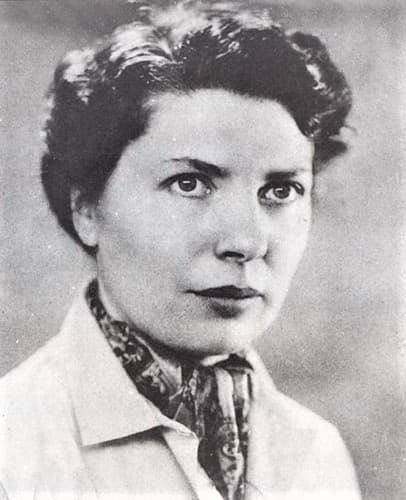
Mary Stewart was a British author known for her works of historical fiction and romantic suspense. Her notable books include "The Crystal Cave," which explores the legend of King Arthur, "The Hollow Hills," a continuation of that story, "Nine Coaches Waiting," a romantic thriller set in France, and "The Wicked Day," which delves into the aftermath of Arthur's reign.
Similar books
- The Crystal Cave
Mary Stewart
4.1 (42k) average on GoodreadsFantasyThe preceding book in the same acclaimed Arthurian saga, offering Merlin's early life and the origins of the legend.
- The Mists of Avalon
Marion Zimmer Bradley
4.1 (192k) average on GoodreadsFantasyAnother classic Arthurian retelling, offering a different, often female-centric, perspective on the well-known myths.
- Harry Potter and the Sorcerer's Stone
J.K. Rowling
4.5 (7M) average on GoodreadsFantasyRescued from a miserable life under the stairs, an orphaned boy discovers he's a wizard destined for a magical school, where he uncovers a dangerous secret tied to the dark wizard who murdered his parents.
- The Hunger Games
Suzanne Collins
4.3 (6.4M) average on GoodreadsFantasyIn a future where children fight to the death on live television, Katniss Everdeen volunteers for the arena, turning a death sentence into a fight for survival and a spark of rebellion.
- 1984
George Orwell
4.2 (3.1M) average on GoodreadsPoliticsIn a future where surveillance and thought control are absolute, a man's search for truth clashes with the Party, showing that hope can be a form of rebellion.
- Divergent
Veronica Roth
4.2 (2.9M) average on GoodreadsFantasyIn a society divided by virtues, a sixteen-year-old's difference from the norm starts a rebellion that threatens her world.





Enjoyed the summary?
A summary gives you the shape of the book. The book itself has the detail, the examples and the voice.
Find The Hollow Hills on AmazonAs an Amazon Associate, BookBrief earns from qualifying purchases. How we're funded