
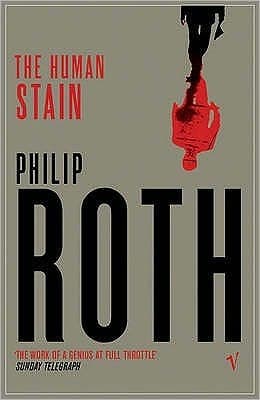
Synopsis
Covers the whole plot, including the ending.
- Difficulty
- Medium
- Pacing
- Moderate
- Mood
- Introspective, Melancholy, Provocative, Thought-provoking
- Read it if
- You enjoy deep psychological character studies, explorations of identity and race in America, and narratives driven by secrets and societal judgment. Fans of literary fiction with a strong philosophical bent and complex moral dilemmas will appreciate this.
- Skip it if
- You prefer fast-paced plots, clear-cut heroes and villains, or straightforward narratives without extensive introspection and social commentary.
The Human Stain Plot Summary
Covers the whole plot, including the ending.
The Accusation and Coleman's Outrage
In 1998, Coleman Silk, a seventy-one-year-old classics professor and former dean at Athena College in New England, finds his academic career ending. During a lecture, he calls two absent African-American students 'spooks,' not knowing their race or even that they exist. His colleagues use this remark as proof of racism, leading to a campus scandal and a formal hearing. Feeling unfairly treated and refusing to apologize for what he saw as a non-offense, Coleman resigns. The stress and shame contribute to his wife Iris's sudden death from a stroke. Coleman is left with grief and a strong desire to prove wrong the moral hypocrisy of the college faculty.
Nathan Zuckerman Enters the Narrative
After Iris's death and his forced resignation, Coleman Silk contacts the writer Nathan Zuckerman, who lives nearby. Coleman feels a deep injustice and needs to tell his side of the story. He wants Zuckerman to write it, specifically to expose the 'human stain' of hypocrisy and moralizing he believes caused his downfall at Athena College. Zuckerman is unsure at first, not wanting to get involved in Coleman's personal fight, but he is interested by the professor's anger and the complex situation around his public shaming. Their first meetings set up a relationship where Coleman wants to control his story and Zuckerman seeks deeper truths.
Faunia Farley's Introduction
Adding more scandal to his life, Coleman Silk begins an affair with Faunia Farley, a thirty-four-year-old illiterate cleaner who works at the college and on a local farm. Faunia has a difficult past, including child abuse and the accidental deaths of her two young children in a fire. Their relationship is unusual and very physical, driven by loneliness and a shared feeling of being outsiders. Faunia's rough manner, lack of education, and working-class background are very different from Coleman's intellectual world. This further fuels gossip and disapproval from his former colleagues and even his own children, who see the relationship as undignified for his age.
Lester Farley's Obsession
The affair between Coleman and Faunia is made harder and more dangerous by Faunia's ex-husband, Lester Farley, a troubled Vietnam veteran. Lester blames Faunia for their children's deaths and for leaving him. He becomes more unstable and violent. He stalks Faunia, leaving threats and showing up menacingly, convinced that Coleman is corrupting her. His increasing harassment is a constant threat to the couple, showing Faunia's vulnerability and Coleman's protective feelings. Lester's mental state and history of violence make him a truly dangerous person, casting a dark shadow over Coleman and Faunia's attempts to find comfort together.
The Big Secret Revealed
As Zuckerman looks deeper into Coleman's past, interviewing his family and putting together clues, the truth about Coleman Silk's identity comes out. Coleman, born Steely Dan Silk, is a light-skinned African-American man from East Orange, New Jersey. He chose to 'pass' as white after serving in the Navy during World War II. He cut all ties with his family, including his mother, father, and siblings, to live a life free from racial prejudice and the limits on Black men in mid-20th century America. This discovery completely changes how Coleman's anger over the 'spooks' accusation is seen, showing deep irony and a lifetime of deception.
Coleman's Background and Choice
Zuckerman finds out the painful details of Coleman's youth in a respected Black family in East Orange. Coleman was a smart student, a good boxer, and loved by his family. However, he felt limited by the racial rules of his time and wanted to create his own identity. In the Navy, he felt free being seen as white and decided to permanently leave his past and family. This choice, made for individual freedom, came at a huge personal cost. He had to live a lie and deny his heritage, a secret he kept for over fifty years, even from his wife, Iris.
The Irony of the Accusation
The truth about Coleman's identity makes the 'spooks' accusation very ironic. The man accused of racism by his white liberal colleagues and forced to resign was, in fact, African-American. He was a man who had given up everything to avoid the very racial category that caused his downfall. This irony highlights the novel's main ideas about identity, performance, and the destructive power of quick judgments. Coleman's anger, first seen as self-righteousness, is now understood as the fury of a man whose life, built on denying his race, was destroyed by an accusation of racial insensitivity – an accusation that, to him, was not only false but deeply, tragically wrong.
The Relationship with Faunia Deepens
Despite society's disapproval and Lester's threats, Coleman and Faunia's relationship grows. They find in each other a shared feeling of being outsiders and survivors. Faunia, with her honesty and passion, gives Coleman a connection beyond his intellectual world. For Faunia, Coleman is a gentle, protective presence she rarely had. Their bond is physical, emotional, and very private, giving both of them a refuge from their pains and pasts. Their relationship, though scandalous to others, is shown as a real and important connection for two people on the edges of society.
Confrontation and Escalation
Lester Farley's obsession with Faunia and his hatred for Coleman grows. He confronts them repeatedly, his mental state getting worse. He sends threatening letters, makes threatening calls, and even shows up where they are. Coleman, despite his age, tries to protect Faunia, but Lester's unpredictable and violent nature makes him a constant and scary threat. The police get involved, but their efforts are limited by Lester's cleverness and lack of clear evidence of direct physical harm. The growing tension around Lester creates a sense of dread, suggesting a tragic event is coming.
Tragedy Strikes
One winter night, Coleman and Faunia die in a car crash. The details are unclear at first, but Lester Farley later confesses to his lawyer that he caused the accident. He had been following them, waited for the right moment, and rammed their car off the road, killing them both. This tragic event ends their unusual love story and Coleman's complex, secret life. The deaths are surrounded by public guesses, with many assuming Coleman, being old, simply lost control of the car, never knowing the real, murderous reason behind it.
Zuckerman's Search for Truth Continues
After Coleman and Faunia's deaths, Nathan Zuckerman feels he must put together the full story of Coleman Silk. He continues his research, interviewing Coleman's remaining family, including his sister Ernestine, who confirms Coleman's African-American heritage and the pain his 'passing' caused the family. Zuckerman also talks to Lester Farley's lawyer, who reveals Lester's confession about causing the accident. Through these accounts, Zuckerman slowly builds a complete story of Coleman's life, from his beginnings as a brilliant Black man to his reinvention as a white intellectual, and the tragic end of his life. He wants to understand the 'human stain' not just of hypocrisy, but of identity, secrecy, and the American racial experience.
The Unveiling of Coleman's Legacy
Afterward, Zuckerman thinks about the meaning of Coleman's life and death. He considers the courage and great cost of Coleman's decision to 'pass,' a choice made to control his own life in a racially separated America. He considers the irony that Coleman, who spent his life denying his Blackness, became a victim of the very racial politics he tried to escape, though indirectly. Zuckerman's story becomes a reflection on identity, how we present ourselves, the destructive power of societal judgment, and the lasting complexity of the American experience. It leaves the reader to consider the real 'human stain' that affects individual lives and history.
The Human Stain Characters
Coleman Silk
Protagonist
A classics professor whose life is unravelled by a false accusation and a lifelong secret.
Coleman Silk is a brilliant and proud classics professor, former dean of Athena College, and a man who has meticulously constructed his identity. Born light-skinned African-American Steely Dan Silk, he made the radical choice to 'pass' as white after World War II, severing all ties with his family to live a life free from racial constraints. This secret defines his existence, making him fiercely independent and deeply private. He is intellectual, articulate, and possesses a profound sense of personal integrity, which makes the false accusation of racism particularly galling to him. His affair with Faunia Farley reveals a deep capacity for tenderness and a need for connection, despite his advanced age and the societal disapproval it garners. He is driven by a desire for vindication and a profound, if unarticulated, yearning for authenticity.
Relationships: Nathan Zuckerman (confidant and chronicler); Faunia Farley (lover and fellow outcast); Iris Silk (deceased wife, unaware of his secret); Ernestine Silk (estranged sister, keeper of his past)
Nathan Zuckerman
Narrator and Supporting
A reclusive writer who reconstructs Coleman Silk's complex life story.
Nathan Zuckerman is the novel's primary narrator, a recurring alter-ego character in Roth's oeuvre. He is a successful but reclusive writer, living in the Berkshires, grappling with his own mortality and the challenges of storytelling. Initially reluctant to engage with Coleman Silk's request to write his story, Zuckerman becomes increasingly fascinated by the professor's life, particularly after the revelation of Coleman's secret. He acts as a detective, piecing together fragments of truth from various sources, and as a philosophical commentator, reflecting on the nature of identity, truth, and the American experience. Zuckerman's perspective provides the reader with a critical lens through which to view Coleman's choices and the broader societal implications.
Relationships: Coleman Silk (subject and friend); Faunia Farley (interviewee and source of insight)
Faunia Farley
Supporting
A young, uneducated cleaner with a traumatic past who becomes Coleman's lover.
Faunia Farley is a thirty-four-year-old illiterate woman working as a cleaner at Athena College and on a local farm. She has endured immense suffering, including child abuse, the accidental deaths of her two young children, and a violent marriage to Lester Farley. Despite her rough exterior and limited education, Faunia possesses a profound resilience, a raw sensuality, and an unvarnished honesty. She is an outsider, scorned by society for her past and her unconventional relationship with Coleman. She finds solace and genuine connection with Coleman, who sees beyond her circumstances to her inherent strength and vulnerability. Faunia embodies a different kind of American experience, one marked by class, trauma, and a struggle for survival.
Relationships: Coleman Silk (lover and protector); Lester Farley (abusive ex-husband); Her deceased children (source of profound grief)
Lester Farley
Antagonist
Faunia's mentally unstable, violent ex-husband who stalks her and Coleman.
Lester Farley is a Vietnam veteran suffering from severe PTSD and mental instability. He is Faunia's ex-husband, obsessed with her, and blames her for the death of their children, which he twists into a justification for his abusive behavior. Lester is a deeply disturbed and dangerous individual, prone to violent outbursts and delusions. He stalks Faunia and Coleman, increasingly convinced that Coleman is corrupting her. His escalating threats and eventual act of murder serve as the tragic culmination of the novel's tension, representing a destructive force rooted in personal trauma and societal neglect. He is a figure of raw, untethered malevolence.
Relationships: Faunia Farley (ex-wife, object of his obsession and hatred); Coleman Silk (rival, object of his hatred)
Ernestine Silk
Supporting
Coleman's younger sister, who reveals the truth of his African-American heritage.
Ernestine Silk is Coleman's younger sister, living in East Orange, New Jersey. She is a dignified, intelligent woman who has maintained her connection to her African-American heritage and family. Ernestine is the keeper of Coleman's past, providing Nathan Zuckerman with the crucial information about Coleman's true identity as a Black man who chose to 'pass' as white. She recounts the family's pain and heartbreak over Coleman's decision to sever ties, offering a vital counterpoint to Coleman's individualistic narrative. Her perspective highlights the profound human cost of Coleman's choice and the enduring impact of his deception on those he left behind.
Relationships: Coleman Silk (estranged brother); Nathan Zuckerman (informant)
Iris Silk
Supporting/Mentioned
Coleman's deceased wife, who dies from a stroke after his public shaming.
Iris Silk is Coleman's devoted wife, who dies suddenly from a stroke shortly after his forced resignation from Athena College. Her death is a catalyst for Coleman's deep grief and his desire for vindication. Throughout their marriage, Iris remained unaware of Coleman's secret, living a life built on a foundation of his deception. Her character, though largely present through Coleman's memories and the narrative's retrospective, symbolizes the innocent victim of Coleman's lifelong concealment and the collateral damage of public scandal. Her love for Coleman is depicted as profound and unwavering.
Relationships: Coleman Silk (devoted wife)
Delphine Roux
Supporting
A French literature professor at Athena College, a key figure in Coleman's downfall.
Delphine Roux is a young, ambitious, and politically correct French literature professor at Athena College. She is a leading voice in the campus outcry against Coleman Silk following his 'spooks' comment, portraying herself as a champion of racial justice. Her rigid moralism and self-righteousness are central to the 'human stain' of hypocrisy that Coleman rails against. She represents a particular strain of academic liberalism that, in Roth's portrayal, becomes dogmatic and punitive. Her actions contribute significantly to Coleman's public shaming and forced resignation.
Relationships: Coleman Silk (academic rival and accuser)
Walter Silk
Supporting
Coleman's eldest son, who struggles with his father's affair and controversial past.
Walter Silk is Coleman's eldest son, a successful ophthalmologist. He embodies the conventional, respectable life that Coleman's 'passing' allowed his children to inherit. Walter is deeply disturbed by his father's affair with Faunia Farley, viewing it as an undignified and scandalous act that tarnishes the family name. He struggles to reconcile the image of his esteemed father with the man who has become embroiled in public scandal and an unconventional relationship. His reaction highlights the generational and moral clash within the family, and his perspective serves as a foil to Coleman's defiant individualism.
Relationships: Coleman Silk (son, conflicted by his father's actions)
The Human Stain Themes
Identity and Self-Invention
The novel explores how identity is made, shown, and changed. Coleman Silk's lifelong choice to 'pass' as white is the main example of this, showing his act of self-creation to escape racial limits in mid-20th century America. His identity is a performance, kept up for decades, and the revelation of his true background makes people re-evaluate everything he seemed to be. The book questions if one's true identity is from birth or chosen experience, and the great personal cost of such a deep deception.
“What do you do with a life that isn't yours? He'd wanted to be free. He'd wanted to be nobody. He'd wanted to be anybody but who he was.”
The American Racial Experience
Roth looks at race in America, especially the historical practice of 'passing.' Coleman's choice to leave his African-American family and heritage shows the strict racial lines of the past and the desperate actions people took to escape their limits. The novel examines the societal pressures that led to such a choice and the irony that Coleman, a man who denied his Blackness his whole life, is undone by a racism accusation. It looks at how race, perceived or real, shapes one's life and how America deals with its own 'stain' of racial prejudice and classification.
“He chose not to be a Negro. He chose not to be a Jew. He chose not to be anything but himself.”
Hypocrisy and Moral Outrage
A main idea is the harm caused by moralistic judgment and public shaming. Coleman Silk's downfall begins with a racism accusation based on a misunderstanding, driven by the self-righteousness of his academic colleagues. The novel criticizes political correctness and how easily people can be condemned without real understanding or empathy. The 'human stain' refers not only to Coleman's secret but also to the moral failures of those who judge him, especially the intellectuals who claim moral superiority while often acting out of ignorance or personal reasons, like Delphine Roux.
“The human stain. And it is a stain. The stain that comes from being human.”
Sex, Desire, and Social Taboos
The unusual affair between Coleman Silk and Faunia Farley explores late-life desire, sex across age and class, and society's discomfort with such relationships. Their affair is physical and passionate, giving them both comfort and a defiant statement of life in the face of loss and disapproval. It challenges common ideas of romance and respectability, showing the judgmental attitudes of those around them. Their bond, though scandalous, is shown as a real and important connection between two outsiders finding refuge in each other.
“What she wanted from him, what he wanted from her, was an intimacy that went beyond words.”
The Burden of Secrecy
Coleman's lifelong secret of passing as white is a heavy burden that isolates him and affects every part of his life. The novel shows the psychological toll of living a lie, the constant watchfulness needed to keep the deception going, and the emotional distance it creates even from loved ones. This idea explores how secrets, even those chosen for personal freedom, can become confining, affecting not only the person but also those around them, as seen in the shock and betrayal felt by his family when the truth comes out. The secret is both Coleman's protection and his weak spot.
“To be free, he had to be nobody. To be free, he had to be somebody else.”
Plot Devices & Literary Techniques
First-Person Narrator (Nathan Zuckerman)
A recurring Roth alter-ego who pieces together the story of Coleman Silk.
Nathan Zuckerman, a reclusive writer, serves as the primary narrator, but his narration is not omniscient. He reconstructs Coleman Silk's story through interviews, speculation, and his own interpretations, creating a layered and somewhat subjective account. This device allows for the gradual unveiling of Coleman's secret, mirroring Zuckerman's own process of discovery. It also provides a meta-commentary on the act of storytelling itself, the challenges of knowing another person's full truth, and the writer's responsibility in shaping a narrative. Zuckerman's presence adds a layer of intellectual reflection and moral inquiry to the plot.
Dramatic Irony
The audience is aware of Coleman's secret before most characters, intensifying the 'spooks' accusation.
The novel employs dramatic irony, particularly around the central conflict of Coleman's 'racism.' The reader eventually learns Coleman's secret – that he is a Black man passing as white – long before many of the characters in the story, including his accusers. This creates a profound sense of irony when Coleman is accused of being a racist for using the term 'spooks.' The dramatic irony highlights the absurdity and injustice of the accusation, underscoring the novel's critique of superficial judgment and the destructive power of identity politics, while also deepening the tragic dimensions of Coleman's meticulously constructed life.
Flashbacks and Retrospective Narration
Zuckerman's narrative shifts between present events and Coleman's past to reveal his history.
The narrative structure frequently employs flashbacks and retrospective narration as Zuckerman pieces together Coleman's life story. While the 'present' action concerns Coleman's affair with Faunia and the aftermath of his resignation, Zuckerman continually delves into Coleman's past, particularly his youth in East Orange and his decision to 'pass.' This non-linear approach allows for the slow, deliberate revelation of Coleman's profound secret, building suspense and gradually enriching the reader's understanding of his motivations and the complex ironies of his life. It emphasizes that a full understanding of the present requires a deep excavation of the past.
The 'Human Stain' as a Metaphor
A symbolic phrase representing various forms of human imperfection and societal judgment.
The title itself, 'The Human Stain,' functions as a powerful, multifaceted metaphor throughout the novel. Initially, Coleman uses it to refer to the moral hypocrisy and judgmental nature of his colleagues and society. However, as the story unfolds, it expands to encompass various forms of human imperfection: the indelible mark of racial identity, the stain of secrets and lies, the scars of trauma (Faunia), the moral failings of individuals, and the collective 'stain' of American history regarding race and class. The metaphor invites readers to consider the inescapable flaws and judgments that define the human condition.
The Human Stain Quotes
“You can't know anything. The things you don't know are the things that matter.”
“We leave a stain, we leave a trail, we leave our imprint. Impurity, cruelty, abuse, error, excrement, semen—there's no other way to be here.”
“He had learned the worst lesson that life can teach—that it makes no sense.”
“The tyranny of propriety is the tyranny of the small-minded.”
“What underlies the anarchy of the train of events, the uncertainties, the mishaps, the disunity, the shocking irregularities that define human affairs? Nothing.”
“To be alive is to be stained.”
“The terror of the unforeseen is what the science of history hides, turning a disaster into an epic.”
“He had decided to take the future into his own hands rather than to leave it to an unenlightened society.”
“The desire to be free of the past is as powerful as the desire to be free of the future.”
“We are all impostors, aren't we?”
“The human stain is the stain of being human.”
“What we know about people is only what they choose to tell us.”
“The past is not a place to live, but it's the only place we can understand.”
“To be truly free, one must first be truly hidden.”
Quiz
10 questions on the plot and the characters. Each answer comes with a short explanation.
Question 1
What event in 1998 serves as the backdrop for the novel's exploration of public scandal and private secrets?
- The Monica Lewinsky scandal and impeachment of President Bill Clinton
- The O.J. Simpson trial verdict
- The Columbine High School shooting
- The dot-com bubble burst
Show answer
A. The Monica Lewinsky scandal and impeachment of President Bill Clinton The novel explicitly sets its events in 1998 during the impeachment of President Bill Clinton over the Monica Lewinsky scandal, using this public frenzy about private behavior as a parallel to Coleman Silk's situation.
Question 2
What accusation causes Coleman Silk to be forced into retirement from his position as a Classics professor?
- Plagiarism in his academic publications
- Sexual harassment of a student
- Making a racist remark in class
- Financial misconduct at the university
Show answer
C. Making a racist remark in class Silk's colleagues accuse him of racism when he refers to two absent students as 'spooks'—a term he meant in the sense of 'ghosts' but that was interpreted as a racial slur. This false accusation triggers his forced retirement.
Question 3
Who is the narrator who discovers Coleman Silk's secret and reconstructs his life story?
- Philip Roth himself as a character
- Nathan Zuckerman
- Silk's son Mark
- A journalist from the Wall Street Journal
Show answer
B. Nathan Zuckerman Nathan Zuckerman, a recurring character in Roth's novels and a writer, narrates the story and pieces together Silk's hidden past after becoming his friend and confidant.
Question 4
What is Coleman Silk's lifelong secret that he has kept from everyone, including his family?
- He is actually a woman who transitioned to male
- He is Jewish but has pretended to be WASP
- He is African American but has been passing as white
- He was a Soviet spy during the Cold War
Show answer
C. He is African American but has been passing as white Silk's secret is that he was born to a light-skinned African American family but decided to pass as white to escape racial barriers, concealing this from his wife, children, and colleagues for decades.
Question 5
How does Silk's relationship with Faunia Farley, a much younger janitor at the college, contribute to the novel's themes?
- It symbolizes his rejection of academic elitism
- It parallels the Clinton-Lewinsky scandal as a transgressive affair
- It provides comic relief from the main plot
- It reveals his secret plan to expose the university
Show answer
B. It parallels the Clinton-Lewinsky scandal as a transgressive affair Silk's affair with Faunia, a working-class woman with her own traumatic past, mirrors the public obsession with private sexual conduct during the Clinton impeachment, highlighting themes of hypocrisy and judgment.
Question 6
What tragic event in Faunia Farley's past haunts her and influences her relationship with Silk?
- She was disowned by her family for marrying outside her race
- Her two children died in a fire she accidentally caused
- She was wrongfully convicted of a crime she didn't commit
- She lost her inheritance due to a legal dispute
Show answer
B. Her two children died in a fire she accidentally caused Faunia carries immense guilt over the deaths of her two children in a fire, which contributes to her emotional fragility and complex dynamic with Silk, adding layers of trauma to the narrative.
Question 7
Which character serves as Silk's primary antagonist, driven by envy and a desire to destroy him?
- Delphine Roux, a French professor
- Les Farley, Faunia's ex-husband
- Nathan Zuckerman
- Silk's son Jeff
Show answer
A. Delphine Roux, a French professor Delphine Roux, a younger colleague in the French department, leads the charge against Silk over the 'spooks' incident, motivated by professional jealousy and ideological fervor, embodying the novel's critique of academic hypocrisy.
Question 8
How does the novel connect Silk's personal story to broader American history, as noted in the Wall Street Journal description?
- By tracing his family's immigration during the Great Depression
- Through his service in World War II and the GI Bill
- By interweaving his experience of passing with themes of race, identity, and social change in 20th-century America
- Via his involvement in the Civil Rights Movement of the 1960s
Show answer
C. By interweaving his experience of passing with themes of race, identity, and social change in 20th-century America Silk's decision to pass as white reflects the racial tensions and opportunities in America from the mid-20th century onward, linking his private struggle to public historical shifts around race, assimilation, and the American Dream.
Question 9
What ironic twist underscores the novel's exploration of identity and accusation?
- Silk is accused of racism while hiding his own African American heritage
- Zuckerman turns out to be Silk's long-lost brother
- Faunia is revealed to be a wealthy heiress in disguise
- The university president secretly supports Silk but can't intervene
Show answer
A. Silk is accused of racism while hiding his own African American heritage The central irony is that Silk, who is actually Black, is falsely condemned as a racist, highlighting the novel's themes of mistaken identity, societal hypocrisy, and the complexities of racial perception.
Question 10
In what way does Silk's early life decision to pass as white reflect the novel's title, 'The Human Stain'?
- It refers to a literal stain on his academic robe from a childhood accident
- It symbolizes the inescapable mark of one's true identity, no matter how hidden
- It alludes to a chemical stain used in a lab experiment he conducted
- It describes the moral corruption of his accusers at the university
Show answer
B. It symbolizes the inescapable mark of one's true identity, no matter how hidden The title metaphorically represents the indelible aspects of human nature—such as race, desire, and past actions—that cannot be erased, echoing Silk's hidden heritage that ultimately shapes his life despite his efforts to conceal it.
The Human Stain FAQ
What is 'The Human Stain' about?
The novel follows Coleman Silk, an aging Classics professor forced into retirement after being falsely accused of racism by his colleagues. Through narrator Nathan Zuckerman, the story reveals Silk's lifelong secret—that he is a light-skinned Black man who has been passing as Jewish—and explores how this hidden identity unravels against the backdrop of 1998 America's political scandals.
Why should I read 'The Human Stain'?
The book offers a profound exploration of identity, secrecy, and hypocrisy in American society through its intricate character study of Coleman Silk. Roth masterfully connects personal tragedy with national politics, creating a compelling narrative about how public morality clashes with private truth during the Clinton impeachment era.
What is the background/setting of 'The Human Stain'?
The story takes place primarily in 1998 in a small New England college town, with flashbacks to Silk's youth in 1940s Newark. The historical backdrop includes the Clinton-Lewinsky scandal and impeachment proceedings, which mirror the novel's themes of public shaming and private transgression.
What are the most memorable quotes?
Key quotes include 'You can't let the big they impose its bigotry on you' (Silk's advice about self-determination) and 'the human stain' itself—Roth's metaphor for the inescapable marks of desire and mortality that define human existence. Another significant line is 'the tyranny of the we' describing how society imposes collective identity.
What writing style does Philip Roth use?
Roth employs a dense, intellectual prose style with intricate psychological analysis, blending first-person narration through Zuckerman with omniscient perspectives. The writing features long, complex sentences that mirror the convoluted nature of Silk's secret and America's moral contradictions.
What minor details add significant meaning?
Silk's meticulous destruction of family photographs and documents symbolizes his complete erasure of his Black heritage. The recurring motif of 'spooks'—first as Silk's accidental racial slur about absent students, then as his childhood nickname—creates layered meaning about ghosts of identity and racial haunting.
What are some subtle foreshadowing moments?
Early descriptions of Silk's 'impeccable' self-presentation hint at his constructed identity. His fascination with classical masks in his teaching foreshadows his own masking of race. The violent death of his son foreshadows Silk's own tragic end, suggesting the cost of his secret.
What unexpected character connections exist?
Faunia Farley, Silk's much younger lover, shares his experience of reinvention—she fabricates an illiteracy story just as he fabricated his racial identity. Les Farley, Faunia's abusive ex-husband, becomes the agent of Silk's destruction, connecting working-class resentment with academic hypocrisy.
What are unspoken character motivations?
Silk's decision to pass as white stems not from self-hatred but from a fierce desire for self-invention free from racial constraints. Delphine Roux's persecution of Silk masks her own sexual frustration and professional jealousy. Faunia seeks in Silk not just romance but an escape from her traumatic past.
What psychological complexities do characters exhibit?
Silk embodies the paradox of achieving success through deception while maintaining intellectual integrity. His relationship with Faunia combines genuine affection with his need for transgression. Zuckerman serves as both observer and participant, projecting his own artistic and sexual frustrations onto Silk's story.
What are the major emotional turning points?
The death of Silk's wife Iris from a stroke immediately after his racism accusation marks his complete isolation. His confession to Zuckerman about his racial passing represents emotional catharsis. The discovery of Faunia's fabricated illiteracy reveals her parallel deception, deepening their bond.
How do relationship dynamics evolve?
Silk and Faunia's relationship transforms from scandalous affair to genuine, if doomed, partnership based on mutual understanding of secrecy. Zuckerman's relationship with Silk evolves from neighborly acquaintance to confessor and biographer, blurring lines between friendship and exploitation.
Which parts remain ambiguous or open-ended?
The exact circumstances of Faunia's children's deaths remain ambiguous—whether accidental or intentional. Whether Silk truly loved Faunia or was primarily motivated by rebellion is debated. The novel leaves unresolved how much Zuckerman's narration reflects truth versus his own interpretations.
What are controversial scenes or decisions?
Silk's complete abandonment of his Black family and heritage remains morally ambiguous. His sexual relationship with the traumatized, illiterate Faunia raises questions about exploitation. The novel's parallel between presidential adultery and academic scandal sparked debate about false equivalencies.
'The Human Stain' ending explained: how it ends & what it means
The novel ends with Silk and Faunia's deaths in a car accident caused by her jealous ex-husband Les Farley. This tragic conclusion suggests that despite Silk's lifelong control over his identity, he cannot escape the violent consequences of human passion and social judgment—the 'human stain' of mortality and desire that marks all existence.
How does Roth connect personal and national history?
Roth parallels Silk's personal scandal with the Clinton impeachment, both involving accusations of misconduct that mask deeper truths about identity and hypocrisy. The 'stain' metaphor connects presidential semen stains with Silk's racial 'stain,' suggesting how America obsesses over private morality while ignoring structural injustices.
What does Silk's classical scholarship reveal about his character?
His expertise in Greek tragedy and epic poetry reflects his own life as a tragic hero whose fatal flaw is his secret. Teaching about masks and identities in classical drama becomes ironic commentary on his own performance. His academic rigor contrasts with the emotional truth he conceals.
How does the novel treat the theme of betrayal?
Silk betrays his family by passing as white, his colleagues by hiding his true identity, and himself by living a lie. Yet the novel suggests this self-betrayal is also an act of self-preservation in a racist society. The academic community's betrayal of Silk through false accusations mirrors larger societal betrayals.
About the author

Philip Milton Roth was an American novelist and short story writer. Roth's fiction—often set in his birthplace of Newark, New Jersey—is known for its intensely autobiographical character, for philosophically and formally blurring the distinction between reality and fiction, for its "sensual, ingenious style" and for its provocative explorations of American identity. He first gained attention with the 1959 short story collection Goodbye, Columbus, which won the U.S. National Book Award for Fiction. Ten years later, he published the bestseller Portnoy's Complaint. Nathan Zuckerman, Roth's literary alter ego, narrates several of his books. A fictionalized Philip Roth narrates some of his others, such as the alternate history The Plot Against America.
Similar books
- American Pastoral
Philip Roth
3.9 (65k) average on GoodreadsLiterary FictionExplores the unraveling of an American life against a backdrop of national turmoil, with similar themes of identity and disillusionment.
- Passing
Nella Larsen
3.9 (22k) average on GoodreadsHistorical FictionDirectly addresses the theme of racial passing and its complex social and psychological implications, though set in an earlier era.
- Disgrace
J. M. Coetzee
3.8 (87k) average on GoodreadsLiterary FictionFeatures an academic protagonist facing public scandal and personal ruin, exploring themes of judgment, dignity, and societal condemnation.
- Invisible Man
Ralph Ellison
3.9 (157k) average on GoodreadsLiterary FictionEllison's work, written in 1952, explores racial identity and invisibility from a mid-20th-century perspective of systemic oppression and the search for self within a segregated society. Roth's novel, in contrast, examines passing as a deliberate act of self-creation and the consequences of its revelation in a post-civil rights era, focusing on the individual's defiance rather than systemic societal structures.
- The Bluest Eye
Toni Morrison
4.1 (173k) average on GoodreadsLiterary FictionMorrison's 1970 novel delves into the psychological damage inflicted by white beauty standards on young Black girls and the devastating effects of internalized racism. While both address race, Morrison's work foregrounds the Black female experience and systemic racism's impact on self-perception, whereas Roth's narrative focuses more on the individual's choice to pass, the societal reaction to transgression, and a critique of contemporary academic culture, rather than the origins of racial self-hatred.
- The Old Man and the Sea
Ernest Hemingway
3.8 (831k) average on GoodreadsLiterary FictionA Cuban fisherman's long struggle with a giant marlin becomes a story of endurance and dignity, now retold for young adults with illustrations, phonetic guides, and writing prompts in Traditional Chinese.





Enjoyed the summary?
A summary gives you the shape of the book. The book itself has the detail, the examples and the voice.
Find The Human Stain on AmazonAs an Amazon Associate, BookBrief earns from qualifying purchases. How we're funded