
Synopsis
Covers the whole plot, including the ending.
- Difficulty
- Easy
- Pacing
- Moderate
- Mood
- Informative, exciting, nostalgic, appreciative
The Hunger Games Plot Summary
Covers the whole plot, including the ending.
From Page to Screen: Adapting a Phenomenon
This section covers the early stages of adapting 'The Hunger Games' novel into a screenplay. It discusses the pressure to stay true to Suzanne Collins's original story while making necessary changes for film. Screenwriter Billy Ray and director Gary Ross talk about their collaboration, focusing on capturing the book's emotional core, political ideas, and action. Key decisions, like showing Katniss's first-person view through visuals and making the violence impactful but not excessive, are highlighted. The section also touches on the initial excitement and worries of both the filmmakers and Collins herself about the project.
Casting Katniss: The Search for a Mockingjay
This chapter focuses on the casting search for Katniss Everdeen. Director Gary Ross and producer Nina Jacobson describe the qualities they looked for: strength, vulnerability, endurance, and relatability. Jennifer Lawrence's audition process is detailed, including her initial doubts and eventual decision to take the role. Interviews with Lawrence show her grasp of Katniss's complex character and her commitment to playing her honestly. The section explains how her talent, physical presence, and ability to show deep emotion without words made her the clear choice, setting the tone for the entire film's casting.
Assembling the Tributes: Crafting a Diverse Ensemble
Beyond Katniss, this section explores the casting of other District Tributes, especially Peeta Mellark (Josh Hutcherson) and Gale Hawthorne (Liam Hemsworth), and the young actors chosen for roles like Rue, Thresh, Cato, and Clove. The filmmakers discuss their criteria for these roles, aiming for a mix of physical skill, emotional depth, and on-screen connection. Interviews with Hutcherson and Hemsworth explain their views of Peeta and Gale and their experiences joining the cast. Creating a believable and varied group of competitors, each with their own presence, is a central point.
The World of Panem: Production Design and Set Building
This chapter describes the process of designing Panem's distinct environments: the poor District 12, the rich Capitol, and the deadly Arena. Production designer Philip Messina explains the aesthetic choices, contrasting District 12's rough, rustic feel with the Capitol's futuristic, over-the-top, and often flashy look. Detailed descriptions of the sets, including the Justice Building, the Tribute Train, and the Cornucopia, are provided. The goal was to create a visually rich world that showed the clear class divide and the Capitol's oppressive nature.
Fashioning Panem: Costume Design and Stylization
Costume designer Judianna Makovsky discusses her vision for the film's wardrobe, which helps define characters and show societal differences. The section explores the muted, practical clothes of District 12 versus the avant-garde, often flashy, and high-tech fashion of the Capitol. Key costumes, such as Katniss's 'Girl on Fire' dress, Cinna's simple yet effective style, and Effie Trinket's elaborate outfits, are analyzed for their symbolic meaning and design challenges. The aim was to use clothing as a strong storytelling tool, reflecting status, rebellion, and conformity within Panem.
Training for Survival: Stunt Work and Physical Preparation
This chapter highlights the physical training and stunt work needed for the film, especially for the actors playing the Tributes. It covers the various routines, including archery, climbing, hand-to-hand combat, and survival skills, undertaken by Jennifer Lawrence and the other young actors. Stunt coordinator Jeff Imada details the challenges of choreographing realistic fight scenes while keeping actors safe. Interviews with the cast members describe the friendships formed during training and how the physical demands helped them better understand their characters' struggles and the harshness of the Hunger Games.
The Capitol's Architects: Crafting the Adult Characters
This section focuses on the casting and performances of the adult characters who shape Katniss's journey, including Haymitch Abernathy (Woody Harrelson), Cinna (Lenny Kravitz), Effie Trinket (Elizabeth Banks), and President Snow (Donald Sutherland). The filmmakers discuss their choices for these roles, seeking actors who could bring depth to characters that range from cynical mentors to flashy escorts and cruel oppressors. Interviews with these actors reveal their interpretations of their characters' motives and their contributions to the film's themes, especially in showing Panem's complex power dynamics.
On Set in the Arena: Filming the Games
This chapter details the logistics and creative decisions involved in filming the Hunger Games sequences within the Arena. Director Gary Ross explains his method for capturing the action and emotional intensity, often using handheld cameras and practical effects for realism. The various locations used for the Arena, from dense forests to open fields, are discussed, along with the challenges of managing large casts of young actors and stunt performers in demanding environments. The goal was to create a sense of immediacy and danger, putting the audience directly into the Games.
The Director's Vision: Gary Ross's Approach
This section provides insight into director Gary Ross's overall vision for the film. He discusses his commitment to honoring the book's themes of survival, sacrifice, and social inequality, and his choice to focus on Katniss's emotional journey rather than explicit gore. Ross explains his directing style, emphasizing character-driven storytelling, the use of natural light, and a dynamic camera to immerse the audience. His collaboration with the cast and crew is highlighted, showing how he created an environment that allowed for creative input while maintaining a clear artistic direction for the adaptation.
Post-Production: Editing, Score, and Visual Effects
This chapter covers the post-production phase of 'The Hunger Games,' including editing, musical score, and visual effects. Editor Stephen Mirrione discusses shaping the narrative flow and pacing, especially in the action sequences and emotional moments. Composer James Newton Howard explains creating the film's score, blending traditional instruments with modern sounds to add tension and emotion. The visual effects team explains how they integrated digital enhancements, such as the Tracker Jackers and the Capitol's architecture, to enhance the world without overshadowing the human story.
The Mockingjay's Legacy: Impact and Future
This concluding section reflects on the film's release, its success, and its cultural impact. Cast and crew members share their thoughts on the film's reception and the strong connection audiences made with the story and its characters. The discussion touches on the film's relevance to current social issues and its role in starting conversations about inequality, media manipulation, and rebellion. The chapter also looks ahead to the future of the franchise, acknowledging the foundation laid by the first film and the anticipation for later installments.
Principal Figures
Katniss Everdeen
Protagonist
The reluctant hero and symbol of rebellion.
Portrayed by Jennifer Lawrence, Katniss is the resilient and resourceful protagonist from District 12. She volunteers for the Hunger Games to save her younger sister, Prim, displaying immense courage and self-sacrifice. Her primary skills include archery and survival in the wilderness. Katniss is often stoic and introverted but possesses a fierce loyalty to those she loves. The film emphasizes her internal struggles and her unintentional role as a symbol of hope and defiance against the Capitol, driven by her protective instincts rather than political ambition.
Relationships: Peeta Mellark (fellow Tribute, romantic interest); Gale Hawthorne (best friend, hunting partner, potential romantic interest); Primrose Everdeen (younger sister); Haymitch Abernathy (mentor); Cinna (stylist, confidante); Rue (ally, friend)
Peeta Mellark
Supporting
The baker's son with a kind heart and strategic mind.
Played by Josh Hutcherson, Peeta is the male Tribute from District 12. Unlike Katniss, he is articulate, empathetic, and possesses a talent for baking and camouflage. He openly declares his love for Katniss, a move that becomes a crucial part of their strategy to gain sponsors. Peeta's strength lies in his compassion and his ability to manipulate public perception, often balancing Katniss's more abrasive nature. He genuinely cares for Katniss and struggles with the moral compromises required to survive the Games, always striving to maintain his humanity.
Relationships: Katniss Everdeen (fellow Tribute, romantic interest); Haymitch Abernathy (mentor)
Haymitch Abernathy
Supporting
The cynical, alcoholic mentor from District 12.
Portrayed by Woody Harrelson, Haymitch is the only living victor from District 12 and thus serves as the mentor for Katniss and Peeta. Initially presented as a drunken, indifferent figure, he gradually reveals a sharp mind and a strategic understanding of the Games and the Capitol's machinations. His cynical demeanor masks a deep-seated trauma and a desire to see his Tributes survive. He provides crucial advice and secures sponsors for Katniss and Peeta, ultimately becoming a vital ally in their fight for survival, albeit with a gruff exterior.
Relationships: Katniss Everdeen (mentee); Peeta Mellark (mentee); Effie Trinket (colleague, often exasperated by each other)
Cinna
Supporting
Katniss's kind and rebellious stylist.
Played by Lenny Kravitz, Cinna is Katniss's stylist for the 74th Hunger Games. Unlike most Capitol citizens, he exhibits genuine warmth, empathy, and a subtle rebellious spirit. He designs Katniss's iconic 'Girl on Fire' dress, which makes a powerful statement and helps her gain popularity. Cinna serves as a confidante and a source of quiet strength for Katniss, understanding the political undertones of his work and subtly challenging Capitol norms through his fashion. He is a crucial figure in shaping Katniss's public image and boosting her morale.
Relationships: Katniss Everdeen (stylist, confidante)
Effie Trinket
Supporting
The flamboyant and meticulously organized escort from District 12.
Portrayed by Elizabeth Banks, Effie is the escort for District 12's Tributes. She is characterized by her elaborate Capitol fashion, colorful wigs, and strict adherence to rules and schedules. While seemingly oblivious to the suffering of the Districts, her interactions with Katniss and Peeta reveal glimpses of a more complex character underneath her Capitol conditioning. She genuinely wants her Tributes to succeed, albeit within the confines of the Games. Effie represents the superficiality and detachment of the Capitol, yet she also develops a peculiar attachment to her charges.
Relationships: Katniss Everdeen (escort); Peeta Mellark (escort); Haymitch Abernathy (colleague, often exasperated by each other)
President Coriolanus Snow
Antagonist
The cunning and ruthless dictator of Panem.
Played by Donald Sutherland, President Snow is the autocratic ruler of Panem and the orchestrator of the Hunger Games. He is a shrewd and manipulative leader who maintains control through fear, spectacle, and strategic violence. Snow is outwardly calm and composed, but his underlying ruthlessness is always apparent. He sees Katniss's actions as a potential threat to his regime and closely monitors her, understanding the power of symbolism and public perception. His character embodies the oppressive and tyrannical nature of the Capitol.
Relationships: Katniss Everdeen (adversary); Seneca Crane (subordinate, Gamesmaker)
Gale Hawthorne
Supporting
Katniss's fiercely loyal best friend and hunting partner.
Portrayed by Liam Hemsworth, Gale is Katniss's best friend and hunting partner in District 12. He shares her resourcefulness and a deep resentment towards the Capitol and the Hunger Games. Gale is protective and passionate, openly expressing his anger at the injustices they face. His relationship with Katniss is one of deep trust and mutual reliance, hinting at a romantic undertone. He represents the possibility of rebellion and a life beyond the Capitol's control, fiercely loyal to Katniss and her family.
Relationships: Katniss Everdeen (best friend, hunting partner, potential romantic interest); Primrose Everdeen (friend)
Rue
Supporting
The small, agile Tribute from District 11 who allies with Katniss.
Rue, played by Amandla Stenberg, is the twelve-year-old female Tribute from District 11. She is small and nimble, with exceptional climbing skills and knowledge of the forest. Rue reminds Katniss of her younger sister, Prim, fostering a protective bond between them. She becomes Katniss's key ally in the Arena, offering valuable assistance and companionship. Her innocence and tragic death profoundly impact Katniss, solidifying her hatred for the Games and inadvertently sparking widespread grief and unrest in the Districts.
Relationships: Katniss Everdeen (ally, friend)
Primrose Everdeen (Prim)
Supporting
Katniss's gentle and beloved younger sister.
Prim, portrayed by Willow Shields, is Katniss's sweet and vulnerable younger sister, whose name being drawn for the Hunger Games lottery prompts Katniss to volunteer. She is gentle and compassionate, with a talent for healing. Prim represents everything Katniss is fighting to protect and serves as a constant motivation for her survival. Her innocence and the threat of her participation in the Games underscore the brutality of Panem and the deep bond of family.
Relationships: Katniss Everdeen (older sister); Gale Hawthorne (friend)
Seneca Crane
Supporting
The Head Gamemaker of the 74th Hunger Games.
Played by Wes Bentley, Seneca Crane is the Head Gamemaker responsible for designing and overseeing the 74th Hunger Games. He manipulates the Arena environment and introduces rule changes to heighten the drama and entertainment value for the Capitol audience. Crane is a figure of authority within the Games, constantly balancing the need for spectacle with the unpredictable nature of the Tributes. His ultimate fate, at the hands of President Snow, serves as a stark reminder of the Capitol's ruthless control, even over its own elite.
Relationships: President Snow (superior)
Themes & Insights
Survival vs. Humanity
This theme explores the moral choices and extreme actions people take to survive in a brutal environment like the Hunger Games. Katniss and Peeta constantly struggle between their natural desire to live and the need to keep their empathy and sense of self. The film shows how the Games force Tributes to dehumanize opponents, yet also reveals moments where humanity, kindness, and alliance appear, suggesting that compassion can last even when facing death. This struggle is key to the characters' stories and the audience's emotional connection.
“I keep wondering if there's a way to be a person, a human, who lives in this world and doesn't become a monster.”
The Power of Spectacle and Media Manipulation
The Hunger Games are not just a fight to the death; they are a televised show designed to entertain the Capitol and control the Districts. This theme examines how media is used as a tool of oppression and propaganda. The film details the role of stylists, mentors, and Gamemakers in creating stories and manipulating public perception to boost ratings and reinforce the Capitol's power. Katniss's 'Girl on Fire' persona and her fake romance with Peeta are examples of how images and stories are carefully built to serve a political agenda, often at the expense of truth.
“You never get a second chance at a first impression.”
Class Inequality and Oppression
The sharp contrast between the poor, starving Districts and the rich, extravagant Capitol is a central theme. The film visually emphasizes this divide through set design, costumes, and character interactions. The Hunger Games themselves are a brutal reminder of the Capitol's power and a punishment for past rebellions, forcing the Districts to sacrifice their children for the Capitol's entertainment. This theme explores the systemic exploitation, lack of resources, and constant threat faced by District citizens, fueling their resentment and showing the injustice of Panem's society.
“Hope. It is the only thing stronger than fear.”
Rebellion and Resistance
While not an open rebellion in the first film, the theme of resistance is woven into the narrative through small acts of defiance and growing unrest in the Districts. Katniss volunteering for Prim, her alliance with Rue, her mourning for Rue, and her act of defiance with the berries, all act as sparks of rebellion. These acts, shown on Capitol television, begin to chip away at the Capitol's control and inspire hope among the oppressed. The film explores how individual acts of courage, even unintended ones, can start a larger movement for change.
“A little hope is effective. A lot of hope is dangerous.”
Plot Devices & Literary Techniques
The Hunger Games
The annual televised death match.
The Hunger Games are the central plot device, serving as the ultimate antagonist and catalyst for the entire story. They are an annual event where two Tributes from each of Panem's twelve districts are forced to fight to the death in a televised arena. This device creates constant tension, forces characters into impossible moral dilemmas, and serves as a brutal mechanism of control and punishment by the Capitol. It is the driving force behind Katniss's journey, forcing her to develop survival skills, form alliances, and ultimately defy the system.
The 'Girl on Fire' Persona
Katniss's iconic, fiery public image.
Crafted by Cinna, the 'Girl on Fire' persona is a crucial plot device that elevates Katniss from an unknown District 12 Tribute to a memorable figure in the Capitol. Her flaming costumes for the Tribute Parade and interview make her instantly recognizable and popular, gaining her crucial sponsors. This image symbolizes her fiery spirit and inadvertently becomes a symbol of rebellion. It highlights the power of media and spectacle in Panem, showing how a carefully constructed image can influence public opinion and even challenge the Capitol's narrative.
The Star-Crossed Lovers Narrative
Katniss and Peeta's manufactured romance.
This plot device, initially suggested by Haymitch and amplified by Peeta's public declaration, is a strategic fabrication designed to gain sponsors for Katniss and Peeta. Their 'romance' in the Arena garners sympathy and support from the Capitol audience, leading to rule changes that allow two Tributes from the same district to win. It forces Katniss to play a role, blurring the lines between reality and performance, and complicates her genuine feelings for both Peeta and Gale. This device highlights the manipulative nature of the Games and the Capitol's obsession with drama.
The Tracker Jackers
Genetically engineered venomous wasps.
Tracker Jackers are a genetically engineered, venomous wasp species created by the Capitol. Their nests, when dropped into the Arena by Katniss, serve as a critical plot device for eliminating several Career Tributes and allowing Katniss to escape. The hallucinogenic venom also plays a role in Katniss's temporary incapacitation, making her vulnerable but ultimately leading to her alliance with Rue. They exemplify the Capitol's advanced and deadly technology, used to control and enhance the brutality of the Games.
Quiz
10 questions on the plot and the characters. Each answer comes with a short explanation.
Question 1
What is the primary focus of 'The Hunger Games: Official Illustrated Movie Companion'?
- The original book series by Suzanne Collins
- The behind-the-scenes making of the film adaptation
- A detailed analysis of the political themes in the movie
- Biographies of the main actors
Show answer
B. The behind-the-scenes making of the film adaptation The book companion explicitly states it goes 'behind the scenes of the making of The Hunger Games' and covers various aspects of the film's production.
Question 2
Which aspect of the film's creation is NOT mentioned as being covered in the companion book?
- Screenwriting process
- Casting decisions
- Musical score composition
- Elaborate sets and costumes
Show answer
C. Musical score composition The description lists screenwriting, casting, sets, costumes, performances, and directors' vision. The musical score is not explicitly mentioned.
Question 3
According to the description, who is the author of 'The Hunger Games: Official Illustrated Movie Companion'?
- Suzanne Collins
- Gary Ross
- Kate Egan
- Jennifer Lawrence
Show answer
C. Kate Egan The book is attributed to 'Kate Egan' in the provided text.
Question 4
What genre is associated with 'The Hunger Games' franchise, as mentioned in the context of the book?
- Science Fiction, Dystopian
- Fantasy, Adventure
- Historical Fiction, Drama
- Mystery, Thriller
Show answer
A. Science Fiction, Dystopian While the description mentions 'Young Adult, Romance', the core themes of The Hunger Games are dystopian and science fiction. The question asks about the franchise's genre, which is more broadly understood as dystopian sci-fi.
Question 5
The companion book promises 'exclusive images'. What other type of content does it offer?
- Author's personal diary entries
- Interviews with cast and crew
- Concept art from the book's illustrator
- Fan fiction stories
Show answer
B. Interviews with cast and crew The description explicitly states 'exclusive images and interviews'.
Question 6
The companion aims to be the 'definitive' guide to the film. Which of the following roles is highlighted as having a vision discussed in the book?
- The composer
- The cinematographer
- The director
- The casting director
Show answer
C. The director The description mentions 'directors' vision' as one of the elements covered.
Question 7
What does the phrase 'elaborate sets and costumes' suggest about the film's production?
- The production was low-budget and minimalist
- Significant resources were dedicated to the visual design
- The costumes were all sourced from vintage clothing stores
- The sets were primarily computer-generated imagery
Show answer
B. Significant resources were dedicated to the visual design 'Elaborate' implies complexity, detail, and significant effort or expense, suggesting a high level of visual production.
Question 8
The book is described as a 'companion to the breathtaking film'. This implies the book is intended for people who:
- Have never seen the movie
- Are interested in the film's production process
- Are critical of the film's artistic choices
- Are primarily interested in the original novel's literary merit
Show answer
B. Are interested in the film's production process A 'movie companion' typically enhances the viewer's experience and understanding of the film itself, focusing on how it was made.
Question 9
Considering the content described, what would be the most likely reason someone would purchase this book?
- To learn how to write a movie script
- To understand the challenges of adapting a popular book
- To find recipes inspired by the movie's setting
- To compare the movie's accuracy to the original book's plot
Show answer
B. To understand the challenges of adapting a popular book While the book touches on screenwriting, its main purpose is to show the process of bringing the film to life, which includes adapting the book. The other options are not directly supported by the description.
Question 10
The description mentions 'actors' performances'. This suggests the book might include insights into:
- The actors' personal lives off-set
- The process of character interpretation and portrayal
- The actors' previous filmographies
- The actors' training regimens
Show answer
B. The process of character interpretation and portrayal When discussing 'performances' in the context of filmmaking, it typically refers to how actors brought their characters to life on screen, including their choices and interpretations.
The Hunger Games FAQ
What is The Hunger Games: Official Illustrated Movie Companion about?
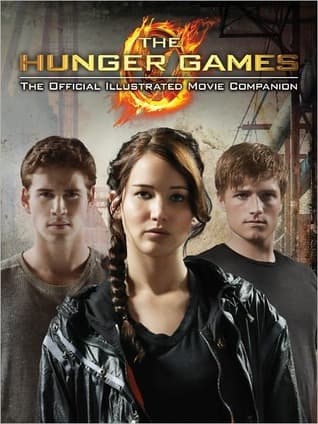
This book provides an in-depth look at the making of the film "The Hunger Games." It features exclusive images, interviews with cast and crew, and details about the screenwriting, casting, sets, costumes, and directorial vision.
Who is the author of The Hunger Games: Official Illustrated Movie Companion?
The author of this book is Kate Egan.
What kind of content can I expect in this book?
You can expect behind-the-scenes content, including exclusive photographs, interviews with key people involved in the film's production, and insights into various aspects of filmmaking.
Is this book a novel or a companion guide?
This book is a movie companion guide, focusing on the production of "The Hunger Games" film rather than retelling the story.
Does this book cover the casting process for the movie?
Yes, the book delves into the casting decisions made for "The Hunger Games" film, offering insights into how the actors were chosen.
Will I find information about the costumes and sets in the book?
Absolutely. The "Official Illustrated Movie Companion" explores the elaborate sets and costumes created for the film, giving you a closer look at their design and execution.
Are there interviews with the actors and director in this book?
Yes, the book includes interviews with the actors and the director, providing their perspectives on the film and their roles in bringing it to life.
Is this book suitable for fans of The Hunger Games books?
Yes, this book is highly recommended for fans of "The Hunger Games" books who are interested in seeing how the story was translated to the big screen.
What makes this book the "definitive" companion?
It's considered definitive because it offers comprehensive coverage of the film's production, from initial concepts to final performances, supported by exclusive visuals and direct input from the filmmakers.
Can I learn about the screenwriting process in this book?
Yes, the book discusses the screenwriting process for "The Hunger Games" film, explaining how the novel was adapted for the screen.
Similar books
- Harry Potter and the Sorcerer's Stone
J.K. Rowling
4.5 (7M) average on GoodreadsFantasyRescued from a miserable life under the stairs, an orphaned boy discovers he's a wizard destined for a magical school, where he uncovers a dangerous secret tied to the dark wizard who murdered his parents.
- The Hunger Games
Suzanne Collins
4.3 (6.4M) average on GoodreadsFantasyIn a future where children fight to the death on live television, Katniss Everdeen volunteers for the arena, turning a death sentence into a fight for survival and a spark of rebellion.
- To Kill a Mockingbird
Harper Lee
4.3 (4.5M) average on GoodreadsHistorical FictionIn the 1930s Jim Crow South, Harper Lee writes about racial injustice, moral growth, and the quiet courage of a lawyer father, Atticus Finch, as seen through his young daughter's eyes.
- The Fault in Our Stars
John Green
4.2 (3.6M) average on GoodreadsYoung AdultA girl with a terminal illness finds her story rewritten when a charming boy with a similar past enters her life at a cancer support group, leading to a star-crossed romance.
- Divergent
Veronica Roth
4.2 (2.9M) average on GoodreadsFantasyIn a society divided by virtues, a sixteen-year-old's difference from the norm starts a rebellion that threatens her world.
- The Hobbit, or There and Back Again
J.R.R. Tolkien
4.3 (2.9M) average on GoodreadsFantasyA comfort-loving hobbit named Bilbo Baggins is whisked away by a mischievous wizard and a band of dwarves on an unexpected journey to reclaim stolen treasure from a fearsome dragon, discovering courage and a magical ring along the way.






Enjoyed the summary?
A summary gives you the shape of the book. The book itself has the detail, the examples and the voice.
Find The Hunger Games on AmazonAs an Amazon Associate, BookBrief earns from qualifying purchases. How we're funded