
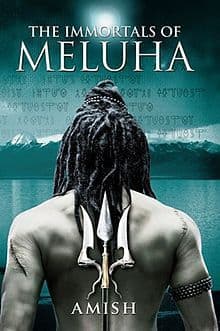
Synopsis
Covers the whole plot, including the ending.
- Difficulty
- Medium
- Pacing
- Moderate
- Mood
- Epic, Mythological, Action-packed, Introspective
- Read it if
- You enjoy epic fantasy rooted in Indian mythology, with a focus on a reluctant hero, political intrigue, and philosophical questions about good and evil.
- Skip it if
- You prefer hard fantasy with complex magic systems over mythological retellings, or are put off by a blend of historical fiction and fantastical elements.
The Immortals of Meluha Plot Summary
Covers the whole plot, including the ending.
Arrival in Devagiri
Shiva, the chief of the Guna tribe, leads his people from persecution in Tibet to the land of Meluha, a prosperous empire ruled by the Suryavanshis. They are granted asylum in the capital city of Devagiri. Upon their arrival, Meluhan doctors give Shiva a drink to help him adjust to the new environment. However, the drink, a potent mixture of 'Somras' and other herbs, turns Shiva's throat blue. This catches the attention of the Meluhans, especially the royal priest, Divodasa, who sees it as a sign of the prophesied Neelkanth — the destroyer of evil.
The Prophecy and Lady Sati
After his throat turns blue, the Meluhans revere Shiva as the Neelkanth, the prophesied savior. He meets Emperor Daksha and his daughter, Princess Sati. Sati is initially cold and faces a societal taboo (she is a 'Vikarma', an untouchable due to a past tragedy). Shiva is instantly drawn to her. He feels a deep, unexplainable connection. Emperor Daksha explains Meluha's dire situation: the sacred Saraswati river is drying, and they face constant attacks from the Chandravanshis and their Naga allies. This fulfills an ancient prophecy that a hero will emerge when evil is widespread.
Shiva's Doubts and Initial Encounters
Shiva, a practical and humble man, struggles to accept his role as a god and the Neelkanth. He cares more about his tribe's welfare and understanding Meluhan life. He meets Veerbhadra, the head of the Meluhan army, and learns about their military strategies and the constant threat from the Chandravanshis. Shiva accompanies Veerbhadra to a border skirmish. There, he sees the brutal realities of war and the ferocity of the Naga warriors. He is disturbed by the violence but begins to understand the scale of the threat facing Meluha.
A Developing Romance
Sati is a Vikarma, which makes marriage to a non-Vikarma taboo. Despite this, Shiva pursues her. He sees past her societal label and recognizes her strength and kindness. Their interactions become more frequent, and Sati, initially resistant, begins to return his feelings. Shiva learns about Sati's past tragedy — she was raped, and her child was stillborn, leading to her Vikarma status. He is angered by the injustice of her treatment and vows to protect her. Their mutual respect and affection grow into love, challenging Meluha's rigid social norms.
The War Against the Chandravanshis
Emperor Daksha, convinced of Shiva's divine nature, entrusts him with leading the Meluhan army against the Chandravanshis. Shiva, using his unconventional tactics and martial skills, proves to be a strong leader. He leads a successful campaign, showing his bravery and strategic mind. During battles, he defeats several powerful Naga warriors, further cementing his reputation as the Neelkanth. The Meluhans achieve significant victories under his command, pushing back the Chandravanshi forces and giving hope to the people.
The Somras and its Side Effects
While celebrating victories, Shiva grows suspicious of the Somras, the drink that turned his throat blue and is also consumed by Meluhans for health and longevity. He notices a disturbing pattern of birth defects and illness among children born to Somras consumers. His investigations reveal that while Somras grants long life and immunity to disease, it also causes genetic mutations, leading to the birth of deformed children, who are then outcast as Nagas. This revelation shakes Shiva's perception of the 'perfect' Meluhan society and its leaders.
The Naga Connection
Shiva discovers the Nagas are not an entirely separate, evil race. Instead, they are descendants of Meluhans who suffered birth defects due to the Somras. They were exiled and formed their own society. This explains their animosity towards Meluha and their alliance with the Chandravanshis. Shiva realizes the war is not a simple battle of good versus evil. It is a complex conflict rooted in injustice and the devastating side effects of the Somras. He begins to question the Suryavanshis' cause and their long-held beliefs.
Confrontation and Betrayal
Armed with the truth, Shiva confronts Emperor Daksha and Divodasa. He accuses them of knowingly continuing a system that creates the Nagas and then demonizes them. Daksha, initially defensive, reveals the full extent of the problem: the Somras was created to combat a plague centuries ago. Its side effects were unforeseen but became an accepted 'sacrifice' for the greater good of Meluhan longevity. Shiva is horrified by their moral compromises and the suffering inflicted upon the Nagas. He feels betrayed by the very people who hailed him as their savior.
The Journey to Branga
Disturbed by the revelations and the moral ambiguity of the conflict, Shiva decides to travel to Branga, the capital of the Chandravanshis. He wants to understand their perspective and the Nagas' grievances firsthand. He believes a true solution cannot be found through war alone but through understanding and addressing the root causes of the conflict. Sati, now his wife, insists on accompanying him, showing her unwavering loyalty and support. This journey marks a significant shift in Shiva's approach, from warrior to seeker of truth and justice.
The Pursuit and Ambush
As Shiva and Sati embark on their journey to Branga, Meluhan forces sent by Divodasa pursue them. Divodasa sees Shiva's actions as a betrayal. During their escape, a group of Naga warriors ambush them. In the fight, Shiva, Sati, and their loyal companions show bravery. Shiva's combat skills are tested, and he gains new insights into the Nagas' fighting techniques and their deep-seated resentment. The encounter further strengthens Shiva's resolve to bridge the gap between the warring factions.
The Naga City
After overcoming many obstacles, Shiva and Sati arrive at the mysterious city of the Nagas. They are initially met with hostility but eventually gain an audience with the Naga chief. Here, Shiva hears the full, harrowing story of the Nagas — their forced exile, the pain of their deformities, and their desperate struggle for survival. He realizes the extent of the injustice they have suffered at the hands of the Suryavanshis. This experience deepens Shiva's empathy and strengthens his resolve to find a way to heal the rift between the two societies.
An Unexpected Alliance
Within the Naga city, Shiva uncovers a shocking truth: the Chandravanshis are not the ultimate orchestrators of the conflict. A more sinister, hidden force is manipulating both the Suryavanshis and the Chandravanshis for its own purposes, aiming to destabilize the entire region. Shiva realizes that to bring peace, he must unite the warring factions against this common, unseen enemy. He begins to forge an alliance with some of the Naga leaders, understanding that the true path to justice is cooperation, not continued conflict.
The Quest for Answers
With the understanding that a hidden enemy is pulling the strings, Shiva, now accompanied by Sati and a few trusted Naga allies, resolves to uncover the identity of this mastermind. He knows this will be a dangerous and arduous quest, requiring him to investigate the secrets of the ancient lands. His journey has shifted from simply being the Neelkanth to actively seeking out and dismantling the source of all the suffering. The book concludes with Shiva embarking on this new, more important mission, promising further revelations and challenges.
The Immortals of Meluha Characters
Shiva
Protagonist
The rough-hewn Tibetan immigrant prophesied to be the Neelkanth.
Shiva is the chief of the Guna tribe, a pragmatic, honorable, and fiercely loyal man. He possesses exceptional martial skills but is initially humble and reluctant to accept his divine destiny as the Neelkanth. He is driven by a strong sense of justice and a deep empathy for the suffering of others. His love for Sati and his concern for his people are central to his motivations. He is an outsider who brings a fresh perspective to the rigid society of Meluha, questioning its norms and discovering its dark secrets.
Relationships: Sati (wife, deep love and mutual respect); Veerbhadra (loyal friend and military general); Emperor Daksha (initially revered, later conflicted and betrayed); Divodasa (initially respected, later viewed with suspicion and distrust)
Sati
Supporting
The beautiful but ostracized Suryavanshi princess, a 'Vikarma'.
Princess Sati is the daughter of Emperor Daksha. She is strong-willed, intelligent, and deeply compassionate, despite being branded a 'Vikarma' due to a past tragedy. This status makes her an outcast, forbidden from marrying. She carries immense emotional pain but also possesses remarkable resilience. Her initial coldness towards Shiva slowly melts as she recognizes his genuine affection and respect. She becomes Shiva's most trusted confidante and a powerful force by his side.
Relationships: Shiva (husband, deep love and mutual respect); Emperor Daksha (father, complex relationship due to her Vikarma status); Parvateshwar (loyal bodyguard and friend)
Emperor Daksha
Supporting
The wise but morally compromised Emperor of Meluha.
Emperor Daksha is the revered ruler of the Suryavanshi empire, Meluha. He is a wise and benevolent leader who genuinely cares for his people, but he is also bound by ancient traditions and a desperate need to preserve his empire. He is the one who first recognizes Shiva as the Neelkanth and places his faith in him. However, he harbors a dark secret regarding the Somras and its long-term effects, which puts him at odds with Shiva's sense of justice. He represents the difficult choices made for the perceived greater good.
Relationships: Shiva (sees him as the prophesied savior, later conflicted); Sati (father, loves her but bound by societal rules regarding her status); Divodasa (trusted royal priest and advisor)
Divodasa
Supporting
The Chief Royal Priest of Meluha and interpreter of prophecies.
Divodasa is the Chief Royal Priest of Meluha, a highly intelligent and influential figure. He is a staunch traditionalist and a fervent believer in the ancient prophecies, particularly that of the Neelkanth. He is the first to identify Shiva as the prophesied savior based on his blue throat. While initially supportive of Shiva, his rigid adherence to Meluhan laws and his knowledge of the Somras's secrets create tension with Shiva's evolving understanding of justice. He represents the established order and its resistance to change.
Relationships: Shiva (initially a guide, later an ideological opponent); Emperor Daksha (trusted advisor and spiritual guide)
Veerbhadra
Supporting
The brave and loyal general of the Meluhan army.
Veerbhadra is the head of the Meluhan army, a seasoned warrior, and a man of immense loyalty and integrity. He is initially skeptical of Shiva, an outsider, but quickly comes to respect and admire Shiva's courage, combat skills, and leadership. He becomes one of Shiva's most trusted friends and allies, standing by him even when Shiva begins to question Meluhan authority. He embodies the warrior spirit and unwavering devotion to his cause, which eventually shifts to Shiva's cause.
Relationships: Shiva (loyal friend and military colleague); Sati (respectful acquaintance)
Parvateshwar
Supporting
Princess Sati's loyal bodyguard and a skilled warrior.
Parvateshwar is Princess Sati's devoted bodyguard, a powerful and disciplined warrior who has served her family for years. He is fiercely protective of Sati and initially views Shiva with suspicion, seeing him as a threat to her well-being. However, as he witnesses Shiva's genuine affection for Sati and his courage in battle, his skepticism transforms into deep respect and loyalty. He is a man of few words but strong actions, always putting Sati's safety first.
Relationships: Sati (loyal bodyguard and friend); Shiva (initially antagonist, later loyal ally)
Nandi
Supporting
Shiva's trusted aide and general of his personal army.
Nandi is Shiva's most trusted aide and the leader of Shiva's personal Guna army. He is a loyal and capable warrior who follows Shiva without question. He provides Shiva with practical advice and unwavering support throughout his journey in Meluha. Nandi represents the steadfast loyalty and camaraderie of Shiva's original tribe, a constant reminder of Shiva's roots and his responsibility to his own people.
Relationships: Shiva (trusted aide and loyal friend)
Bhadra
Supporting
Shiva's childhood friend and another loyal Guna warrior.
Bhadra is one of Shiva's closest childhood friends from the Guna tribe. He is a brave and good-hearted warrior who accompanies Shiva to Meluha and remains a steadfast supporter. Bhadra offers Shiva emotional support and a connection to his past, often providing comic relief or a grounded perspective. He is a testament to the enduring bonds of friendship and loyalty that Shiva inspires.
Relationships: Shiva (childhood friend and loyal warrior)
The Nagas
Antagonists/Supporting
An ostracized race of deformed humans, initially perceived as enemies.
The Nagas are a mysterious and feared race of deformed humans, possessing astonishing martial skills. They are initially presented as the primary antagonists, allied with the Chandravanshis against Meluha. However, as the story progresses, it is revealed that they are descendants of Meluhans born with deformities due to the side effects of Somras, who were then outcast. They are driven by a deep-seated resentment and desire for justice against the Suryavanshis who exiled them. Their portrayal challenges the simplistic good vs. evil narrative.
Relationships: Shiva (initial enemies, later potential allies); Chandravanshis (allies against Meluha); Suryavanshis (oppressors and enemies)
The Immortals of Meluha Themes
The Nature of Good and Evil
The novel challenges simple ideas of good and evil. Initially, the Suryavanshis are 'good' and the Chandravanshis/Nagas are 'evil.' However, Shiva's journey reveals that the Meluhans, despite their prosperity, are responsible for the Nagas' suffering through the Somras. The Nagas, though violent, are driven by deep injustice. This theme appears when Shiva discovers the truth about the Somras and the origin of the Nagas, forcing him to question the Meluhan cause and the definition of 'evil.'
“What is good? What is evil? Where do you draw the line?”
Destiny vs. Free Will
Shiva is hailed as the Neelkanth, the prophesied destroyer of evil, but he repeatedly questions this destiny. He is a man of action and free will, making choices based on his conscience rather than blindly following prophecy. His journey is a constant struggle between the path laid out for him by others and the path he creates for himself. This is evident from his initial reluctance to accept his role, his pursuit of Sati despite societal norms, and his decision to seek the truth about the Nagas rather than simply fight them as commanded.
“I am not a god. I am Shiva. And I will do what I believe is right.”
Love and Sacrifice
Love, both romantic and familial, drives much of the narrative. Shiva's love for Sati crosses societal barriers and taboos, offering her redemption and strength. Their relationship is built on mutual respect and a willingness to sacrifice for each other. Additionally, love for one's people and the sacrifices made for their well-being are central, as seen in Emperor Daksha's choices regarding the Somras, however flawed. Shiva's ultimate quest is driven by his love for humanity and his desire to end suffering.
“Love is not about possession. Love is about appreciation.”
The Price of Progress and Utopia
Meluha is presented as a near-perfect empire, a utopia sustained by the miraculous Somras. However, the novel exposes the dark side of this progress: the genetic deformities and the subsequent ostracization of the Nagas. The 'perfect' society comes at a horrific cost. This highlights that technological or societal advancements can have unintended and morally compromising consequences. This theme is central to Shiva's disillusionment with Meluha and his realization that their perceived perfection is built on the suffering of others.
“Perfection often has a price, a hidden cost borne by those unseen.”
Social Justice and Inequality
The Nagas' plight, outcast and demonized due to birth defects caused by the Somras, highlights the theme of social justice and inequality. Sati's status as a 'Vikarma' also highlights the rigid and often cruel social hierarchies. Shiva, an outsider, challenges these injustices, advocating for the marginalized and seeking to understand their perspective. His journey exposes the systemic discrimination in Meluhan society and inspires him to fight for a more equitable world.
“To cast out the deformed, to brand them as evil... that is not justice.”
Plot Devices & Literary Techniques
The Neelkanth Prophecy
An ancient prophecy foretelling the arrival of a blue-throated savior.
The Neelkanth prophecy serves as the central inciting incident and a major driving force of the plot. It establishes Shiva's predetermined role and immediately thrusts him into the Meluhan conflict. It creates a sense of destiny and urgency, while also providing a framework for the Meluhans' actions and their initial reverence for Shiva. However, the prophecy's interpretation and Shiva's willingness to fulfill it on his own terms become a source of internal and external conflict, allowing the author to explore themes of free will versus destiny.
The Somras
A miraculous drink that grants longevity but causes birth defects.
The Somras acts as a crucial plot device, initially presented as a benevolent elixir that sustains Meluhan prosperity and health. However, its true nature as a cause of genetic deformities among the Nagas is a major revelation, shattering the illusion of Meluhan perfection. It serves as the catalyst for Shiva's disillusionment and his realization that the conflict is not simply good versus evil. The Somras is a symbol of the moral compromises made for progress and directly links the Meluhans to the existence and suffering of the Nagas.
The Vikarma Status
A societal branding for those who have suffered immense tragedy, making them untouchable.
The Vikarma status, specifically applied to Princess Sati, is a powerful plot device that highlights the rigid and often cruel social structures of Meluha. It creates a significant barrier to Shiva and Sati's relationship, making their love a rebellious act. It also serves to deepen Sati's character, revealing her resilience and the immense pain she carries. By challenging this status, Shiva demonstrates his progressive ideals and his rejection of arbitrary social constructs, further solidifying his role as a revolutionary figure.
The Saraswati River Drying
The gradual drying of Meluha's sacred river, signifying the empire's decline.
The drying of the Saraswati River is a symbolic and literal plot device that underscores the dire situation of Meluha. It represents the decay of the empire, a physical manifestation of the problems festering beneath its prosperous facade. This environmental crisis creates urgency for the Meluhans to find a savior and contributes to their desperation in combating the Chandravanshis. It also subtly hints at a deeper imbalance within the land, perhaps connected to the moral compromises of its people, setting the stage for Shiva to discover the true roots of Meluha's decline.
The Immortals of Meluha Quotes
“Mahadev, Lord of Lords, you are the God of Gods. I can see you, I can feel you, but how can I know you?”
“My people need me. And I will not betray them.”
“Sometimes, the greatest truths are found in the simplest things.”
“A man's worth is not measured by the power he wields, but by the love he inspires.”
“Evil is not born. It is made. By choices. By circumstances. By fear.”
“The greatest battles are not fought on fields of war, but in the heart of man.”
“Dharma is not a set of rules. It is a way of life. A path of righteousness.”
“Sometimes, the greatest gifts are disguised as burdens.”
“Love is not about possession. It is about freedom. The freedom to be yourself, with someone who accepts you completely.”
“Fear is a powerful weapon. But hope is stronger.”
“A leader must not only lead his people, but also protect them from themselves.”
“The past is a lesson. The future is a mystery. The present is a gift.”
“To truly know someone, you must walk a mile in their shoes. Or, in my case, a thousand miles in their bare feet.”
Quiz
10 questions on the plot and the characters. Each answer comes with a short explanation.
Question 1
Which ancient river, crucial to the Suryavanshi empire, is slowly drying up?
- Ganga
- Yamuna
- Saraswati
- Indus
Show answer
C. Saraswati The revered Saraswati river is slowly drying to extinction, posing a severe peril for the Suryavanshi empire.
Question 2
Who is the rough-hewn Tibetan immigrant believed by some to be the prophesied hero?
- Lord Ram
- Shiva
- Brahaspati
- Daksh
Show answer
B. Shiva Shiva is the rough-hewn Tibetan immigrant who is questioned if he is truly the hero of the ancient legend.
Question 3
Which empire is known as Meluha in the story, described as a near-perfect empire created by Lord Ram?
- Chandravanshi
- Naga
- Suryavanshi
- Ayodhya
Show answer
C. Suryavanshi Meluha is the land of the Suryavanshis, described as a near-perfect empire created by Lord Ram.
Question 4
From which direction do the devastating terrorist attacks against the Suryavanshis originate?
- North
- South
- East
- West
Show answer
C. East The Suryavanshis face devastating terrorist attacks from the east, the land of the Chandravanshis.
Question 5
What is the primary characteristic that distinguishes the Nagas, making them an ostracised and sinister race?
- Their immense wealth
- Their advanced technology
- Their deformed human appearance
- Their peaceful nature
Show answer
C. Their deformed human appearance The Nagas are described as an ostracised and sinister race of deformed humans with astonishing martial skills.
Question 6
What is the ancient legend that offers hope to the Suryavanshis when all seems lost?
- That Lord Ram will return to save them.
- That a hero will emerge when evil reaches epic proportions.
- That the Saraswati river will magically refill.
- That the Chandravanshis will convert to their faith.
Show answer
B. That a hero will emerge when evil reaches epic proportions. The ancient legend states that 'When evil reaches epic proportions, when all seems lost, when it appears that your enemies have triumphed, a hero will emerge.'
Question 7
Who is credited with creating the near-perfect empire of Meluha centuries before the events of the story?
- Shiva
- Lord Ram
- The Chandravanshi King
- A Naga chieftain
Show answer
B. Lord Ram Meluha was a near-perfect empire created many centuries earlier by Lord Ram, one of the greatest monarchs that ever lived.
Question 8
The story takes place in a period that modern Indians mistakenly call the Indus Valley Civilisation. What was this land called by its inhabitants at that time?
- Aryavarta
- Meluha
- Bharatvarsha
- Gandhara
Show answer
B. Meluha The inhabitants of that period called it the land of Meluha, not the Indus Valley Civilisation.
Question 9
What is the primary motivation, besides duty, that draws Shiva to his destiny as a potential hero?
- The promise of immense wealth
- The desire for political power
- Love
- A thirst for vengeance against the Nagas
Show answer
C. Love Shiva is drawn suddenly to his destiny, by duty as well as by love.
Question 10
The Chandravanshis are stated to have allied with which group, making the situation worse for the Suryavanshis?
- The Devas
- The Vanaras
- The Nagas
- The Gandharvas
Show answer
C. The Nagas To make matters worse, the Chandravanshis appear to have allied with the Nagas, an ostracised and sinister race.
The Immortals of Meluha FAQ
What is the central conflict driving the plot of 'The Immortals of Meluha'?
The central conflict revolves around the Suryavanshi empire of Meluha facing multiple threats: the drying Saraswati river, devastating terrorist attacks from the Chandravanshis, and the Chandravanshis' alliance with the mysterious Nagas. The Suryavanshis desperately await the prophesied hero, the Neelkanth, to save them from these existential dangers.
Who is Shiva and what is his initial role in the story before becoming a potential hero?
Shiva is initially a rough-hewn chief of the Guna tribe, a Tibetan immigrant known for his fighting prowess and loyalty to his people. He arrives in Meluha seeking refuge and trade, unaware of the ancient prophecy that marks him as the Neelkanth, the savior of the Suryavanshis, due to his blue throat.
What is the significance of Shiva's blue throat, and how does it connect to the Meluhan prophecy?
Shiva's blue throat is a result of consuming a potent, life-saving medicine called Somras during his youth, which inadvertently turned his throat blue. This physical characteristic perfectly matches the ancient Meluhan prophecy of the Neelkanth, the savior who will emerge when evil reaches epic proportions, marking him as their awaited hero.
Who are the Chandravanshis, and what is their relationship with the Suryavanshis?
The Chandravanshis are the inhabitants of the land to the east, traditional rivals of the Suryavanshis, and are presented as the primary antagonists in the initial conflict. They are accused of launching terrorist attacks against Meluha and forming an alliance with the ostracized Nagas, fueling the Suryavanshis' fear and animosity.
What is the role of Sati in Shiva's journey, and what is her background?
Sati is the Princess of Meluha, daughter of Emperor Daksha, and a formidable warrior cursed as a 'Vikarma' due to a past tragedy. She becomes Shiva's love interest and a crucial ally, challenging his perceptions and pushing him towards embracing his destiny as the Neelkanth, despite her own personal struggles and societal ostracism.
How does the consumption of Somras affect the Meluhans, and what is its hidden dark side?
Somras is a powerful elixir that grants the Meluhans extended lifespans, immunity to disease, and enhanced abilities, making them 'immortals' in a sense. However, it is later hinted that prolonged consumption of Somras has unforeseen negative effects, potentially leading to genetic deformities in offspring or other societal ills, a detail foreshadowing future conflicts.
What is the true nature of the Nagas, and how does Shiva's perspective on them evolve?
Initially portrayed as sinister, deformed terrorists allied with the Chandravanshis, the Nagas are an ostracized race of humans with physical mutations and advanced martial skills. Shiva's initial prejudice gives way to empathy and curiosity as he learns more about their suffering and the complex political landscape, suggesting they are not purely evil.
What is the significance of the drying Saraswati river beyond an environmental crisis?
The drying Saraswati river is not merely an environmental crisis but a symbol of Meluha's decaying spiritual and moral fabric, hinting at an imbalance caused by their reliance on Somras and their rigid societal structures. It foreshadows a deeper systemic issue within the Suryavanshi empire that Shiva must address.
How does Shiva's initial reluctance to be the Neelkanth reflect a deeper human struggle?
Shiva's reluctance stems from his desire for a simple life with his tribe and his discomfort with the idea of a predetermined destiny, mirroring a universal human struggle against imposed expectations. He values his free will and initially resists the weight of a divine prophecy, preferring to forge his own path rather than follow a script.
Analyze Emperor Daksha's leadership style and his psychological motivations for inviting Shiva.
Emperor Daksha is a pragmatic and desperate ruler, psychologically driven by the survival of his empire and his legacy. He is willing to manipulate prophecies and individuals, like Shiva, to achieve his goals, demonstrating a utilitarian approach to leadership, prioritizing the state above individual truths or moral ambiguities.
How does Sati's status as a 'Vikarma' impact her self-perception and her interactions with others?
Sati's status as a 'Vikarma' due to her past trauma leads to profound self-loathing and social ostracism, causing her to internalize shame and maintain emotional distance. This psychological burden makes her initially guarded, but also fuels her fierce independence and compassion for other outcasts, like the Nagas.
What psychological transformation does Shiva undergo as he embraces his role as the Neelkanth?
Shiva undergoes a significant psychological transformation, moving from a self-interested tribal chief to a leader burdened by destiny and a growing sense of responsibility. He grapples with the expectations placed upon him, confronting his own biases and learning to see beyond superficial appearances, ultimately accepting his potential for divine leadership.
Is Shiva truly a 'divine' figure, or is his heroism a result of circumstance and personal choice?
This is open to interpretation. While the prophecy identifies him as divine, Shiva's actions are driven by his innate sense of justice, love for Sati, and loyalty to his adopted people, suggesting his heroism is more a product of his character and choices than inherent divinity. The blue throat is a physical marker, but his journey is deeply human.
How does the book challenge traditional notions of 'good' and 'evil' through its portrayal of the Chandravanshis and Nagas?
The book subtly challenges binary notions of good and evil by presenting the Chandravanshis and Nagas not as inherently evil, but as adversaries with their own motivations and grievances, possibly even victims of Meluhan policies. It suggests that the Meluhans' perspective is biased, hinting at a more complex geopolitical reality where no side is entirely virtuous or villainous.
What philosophical questions does the existence of Somras and its side effects raise about human progress and perfection?
The existence of Somras raises profound philosophical questions about the pursuit of perfection and immortality. While it offers a seemingly utopian existence, its hidden side effects suggest that attempts to defy natural order or achieve artificial perfection can lead to unforeseen consequences, deformities, and moral decay, questioning the true cost of 'progress.'
To what extent is 'The Immortals of Meluha' a retelling of myth, and to what extent is it a commentary on modern society?
The book is a creative retelling of Hindu mythology, reimagining Lord Shiva's origins in a historical fiction setting. However, it also serves as a commentary on modern societal issues, such as environmental degradation (drying rivers), terrorism, religious fundamentalism, and the ethical implications of genetic engineering or advanced biotechnology (Somras), making ancient myths relevant to contemporary concerns.
What is the ultimate goal of the Chandravanshis in their conflict with the Suryavanshis, and is it purely destructive?
While initially portrayed as purely destructive terrorists, hints suggest the Chandravanshis' ultimate goal might not be mere destruction but a rebellion against Meluhan dominance or perceived injustices. Their alliance with the Nagas points towards a deeper, perhaps existential, struggle rather than simple malice, implying a complex political motivation that will be explored further.
About the author

Amish Tripathi is a celebrated Indian author, best known for his "Shiva Trilogy," which includes "The Immortals of Meluha" and "The Secret of the Nagas." His novels blend mythology, history, and fiction, offering a unique perspective on ancient Indian narratives. Tripathi's work has achieved significant commercial success and critical acclaim, making him a prominent voice in contemporary Indian literature.
Similar books
- The Palace of Illusions
Chitra Banerjee Divakaruni
4.2 (34k) average on GoodreadsFantasyRetelling of an Indian epic from a unique perspective.
- Harry Potter and the Sorcerer's Stone
J.K. Rowling
4.5 (7M) average on GoodreadsFantasyRescued from a miserable life under the stairs, an orphaned boy discovers he's a wizard destined for a magical school, where he uncovers a dangerous secret tied to the dark wizard who murdered his parents.
- The Hunger Games
Suzanne Collins
4.3 (6.4M) average on GoodreadsFantasyIn a future where children fight to the death on live television, Katniss Everdeen volunteers for the arena, turning a death sentence into a fight for survival and a spark of rebellion.
- 1984
George Orwell
4.2 (3.1M) average on GoodreadsPoliticsIn a future where surveillance and thought control are absolute, a man's search for truth clashes with the Party, showing that hope can be a form of rebellion.
- Divergent
Veronica Roth
4.2 (2.9M) average on GoodreadsFantasyIn a society divided by virtues, a sixteen-year-old's difference from the norm starts a rebellion that threatens her world.
- The Hobbit, or There and Back Again
J.R.R. Tolkien
4.3 (2.9M) average on GoodreadsFantasyA comfort-loving hobbit named Bilbo Baggins is whisked away by a mischievous wizard and a band of dwarves on an unexpected journey to reclaim stolen treasure from a fearsome dragon, discovering courage and a magical ring along the way.





Enjoyed the summary?
A summary gives you the shape of the book. The book itself has the detail, the examples and the voice.
Find The Immortals of Meluha on AmazonAs an Amazon Associate, BookBrief earns from qualifying purchases. How we're funded