
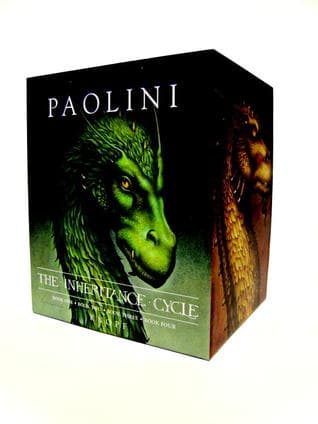
Synopsis
Covers the whole plot, including the ending.
- Difficulty
- Medium
- Pacing
- Variable
- Mood
- Epic, Adventurous, Magical, Heroic, Grand
- Read it if
- You love classic high fantasy epics with dragons, magic, elves, dwarves, and a clear good-vs-evil narrative.
- Skip it if
- You prefer gritty, morally ambiguous fantasy or fast-paced, concise stories without extensive world-building.
The Inheritance Cycle Plot Summary
Covers the whole plot, including the ending.
A Dragon's Egg and a Farm Boy's Discovery
Eragon, a fifteen-year-old farm boy in the remote village of Carvahall, finds a polished blue stone while hunting. He tries to trade it, but no one in Carvahall knows what it is. One night, the stone opens to reveal a baby dragon, which Eragon names Saphira. He raises Saphira in secret, forming a strong mental link with her. Their existence is found out when two of King Galbatorix's servants, the Ra'zac, come to Carvahall looking for the dragon egg. They burn Eragon's home and kill his uncle, Garrow, forcing Eragon and Saphira to leave Carvahall with Brom, the village storyteller, who reveals he is a former Dragon Rider.
Training and Revelation
Brom starts to teach Eragon sword fighting, old languages, and basic magic. He tells the history of the Dragon Riders, Galbatorix's betrayal, and the Riders' fall. During their travels, they visit Teirm, where they meet the seer Angela and her companion, Solembum, a werecat, who gives Eragon cryptic advice. Their journey leads them to Dras-Leona, where the Ra'zac ambush them. Brom is badly hurt protecting Eragon. Before he dies, Brom says he was a Dragon Rider and had looked for the egg for decades. He also hints at a deeper link to Eragon's past, making Eragon feel he has lost a father.
Meeting Murtagh and the Varden
After Brom's death, Eragon and Saphira are joined by a mysterious swordsman named Murtagh, who saves them from another Ra'zac attack. Murtagh, a skilled fighter, at first does not want to talk about his past but later says he is the son of Morzan, one of the Forsworn (traitors to the Dragon Riders who joined Galbatorix). Together, they track the Ra'zac to their hideout in the mountains, but Eragon is captured. He is rescued by a beautiful Elf named Arya, whom he had seen in visions. Arya, badly hurt, leads them to the Beor Mountains, where they find safety with the Varden, a rebel group fighting Galbatorix, led by Ajihad. Eragon and Saphira are welcomed into their hidden city of Tronjheim, though with some doubt.
The Battle of Farthen Dûr
In Tronjheim, Eragon trains more with the Varden's magic users and fighters. He also learns more about Alagaësia's politics and history. Galbatorix soon attacks the Varden's stronghold with a large army of Urgals. In the Battle of Farthen Dûr, Eragon and Saphira fight with the Varden. Eragon faces and beats the Shade Durza, a strong sorcerer who had been bothering him. After the battle, Eragon gets a bad back wound, which causes him pain and limits his magic. Ajihad is killed in an ambush, and his daughter, Nasuada, becomes the Varden's new leader.
Journeys to Ellesméra
After the battle, Eragon and Saphira go to Ellesméra, the Elves' hidden city, to continue training with Oromis, an old, injured Dragon Rider, and his dragon, Glaedr. During their trip, Eragon's back injury causes him great pain, often stopping him. In Ellesméra, Eragon learns advanced magic, sword fighting, and what it truly means to be a Rider. He also finds out his back injury is a magic curse. During the Agaetí Blödhren, the Elves' Blood-Oath Celebration, Eragon is magically changed, healing his wound and making him physically stronger, looking half-Elf. This change also gives him more magic power.
The Serpent and the Twins
Eragon and Saphira return to the Varden to help in their war. They go to hunt the Ra'zac, who are still a danger. After a hard journey, they find the Ra'zac's lair and, with Eragon's cousin Roran, they defeat the creatures and their parents, the Lethrblaka. During this fight, Eragon learns a shocking truth: his mother, Selena, was Brom's lover and a Rider who had joined Galbatorix before she died. He also finds a scroll showing that Murtagh is his brother, both sons of Morzan. This changes Eragon's view of himself and his future. This discovery makes him question good and evil.
The Empire's New Rider
The Varden continues its fight against Galbatorix's forces, attacking several imperial cities. During a key battle, Eragon and Saphira meet a new, strong Dragon Rider and his red dragon, Thorn. This Rider is Murtagh, who has been captured, tortured, and forced to serve Galbatorix. Murtagh says he is now bound by a king's unbreakable oath and has great power, trained and enchanted by Galbatorix. He beats Eragon in their fight but spares his life, saying a sense of brotherly duty stops him from killing Eragon. This meeting shows Galbatorix's true power and his ability to control Riders.
The Vault of Souls and the Eldunarí
With Solembum the werecat's help, Eragon goes to the old city of Doru Araeba on Vroengard island, the former home of the Dragon Riders. There, he finds the Vault of Souls, a hidden room with hundreds of Eldunarí—the hearts of dragons that let them live after their bodies die. These Eldunarí hold the wisdom and power of many old dragons. The dragons in the vault explain that Galbatorix gets his great power from many captured Eldunarí. This discovery gives Eragon the knowledge and a way to challenge Galbatorix, as the Eldunarí offer to share their power and wisdom, giving him a chance against the king.
The Final Battle for Urû'baen
With the Eldunarí's knowledge and power, Eragon and Saphira, along with the Varden and their friends (Elves and Dwarves), attack Urû'baen, Galbatorix's capital. The siege is long and hard, with many deaths on both sides. Eragon and Saphira, stronger with the Eldunarí, lead the attack, facing Galbatorix's strongest fighters and magicians. Murtagh and Thorn, still tied to Galbatorix, fight Eragon many times, leading to emotional battles. The Varden's forces slowly move through the city's defenses, aiming for the citadel where Galbatorix lives, knowing Alagaësia's future depends on this last fight.
Confronting the King
Eragon, Saphira, and the Eldunarí finally face Galbatorix in his throne room. The king shows his vast power, from hundreds of captured Eldunarí, making him seem unbeatable. Galbatorix tries to break Eragon's will and force him to swear loyalty. But Eragon, using the combined power and wisdom of the free Eldunarí, uses a unique and powerful magic: he does not attack with destructive spells but with a spell of pure empathy. This spell makes Galbatorix feel the pain and suffering he has caused countless beings, overwhelming him with sadness and guilt, leading to his self-destruction rather than a direct magical defeat.
Aftermath and New Beginnings
With Galbatorix gone, Alagaësia is free. Nasuada is crowned queen, and the Varden starts rebuilding the war-damaged land. Murtagh and Thorn, free from their oath to Galbatorix, leave to find their own way, seeking to make amends. Eragon sees that the new Dragon Riders cannot safely stay in Alagaësia because of their great power and the fear they might cause. He decides to leave. He goes beyond Alagaësia's known borders with Saphira, the Eldunarí, and the remaining dragon eggs, to build a new home and training ground for the next generation of Dragon Riders, ensuring their safety and the future of their kind.
The Inheritance Cycle Characters
Eragon Shadeslayer
Protagonist
A humble farm boy who becomes the last free Dragon Rider.
Eragon is initially a naive and somewhat impulsive farm boy from Carvahall. His discovery of Saphira's egg thrusts him into a world of magic, war, and ancient prophecies. He is brave, compassionate, and possesses a strong sense of justice, often struggling with the moral complexities of his role. He is driven by a desire to protect his loved ones and avenge his uncle's death, eventually evolving into a wise and powerful leader. His bond with Saphira is the cornerstone of his identity and power.
Relationships: Saphira (Dragon companion, soulmate); Brom (Mentor, father figure); Murtagh (Half-brother, rival); Arya (Love interest, ally); Roran (Cousin, close family); Angela (Mysterious advisor); Oromis (Elven Rider mentor)
Saphira Bjartskular
Protagonist
Eragon's fierce and loyal dragon, the last female dragon.
Saphira is a magnificent blue dragon, intelligent, proud, and fiercely loyal to Eragon. She shares a deep, telepathic bond with him, acting as his conscience, companion, and partner in battle. Her ancient wisdom and sharp wit often guide Eragon, and her power is instrumental in their fight against Galbatorix. She embodies the majesty and power of the dragons, representing hope for their species' revival. Her personality is strong and independent, often challenging Eragon but always standing by him.
Relationships: Eragon (Dragon Rider companion, soulmate); Glaedr (Mentor, elder dragon)
Brom
Supporting
A mysterious storyteller who reveals himself to be a former Dragon Rider and Eragon's first mentor.
Brom is a wise, enigmatic old man from Carvahall who initially appears as a simple storyteller. He becomes Eragon's first mentor, teaching him sword fighting, magic, and the history of Alagaësia and the Dragon Riders. He carries a deep burden of guilt and grief from the fall of the Riders and his past mistakes. He is revealed to be a former Dragon Rider, Saphira I's Rider, and Eragon's biological father, though Eragon only learns of the latter after Brom's death. His sacrifice sets Eragon on his path.
Relationships: Eragon (Mentor, father); Saphira (Former Rider of a previous Saphira, guardian); Morzan (Former friend, rival)
Murtagh Morzansson
Antagonist/Supporting
A mysterious swordsman, Eragon's half-brother, and a reluctant Rider for Galbatorix.
Murtagh is a skilled, brooding swordsman with a dark past, initially an ally to Eragon. He is the son of Morzan, one of the Forsworn, and carries the stigma of his father's treachery. Driven by a desire for freedom from Galbatorix and his own past, he is eventually captured and forced into service as a Dragon Rider for the king, bonded with the red dragon, Thorn. Despite his forced allegiance, he retains a moral compass, often showing mercy to Eragon and struggling with his forced loyalty. He is Eragon's half-brother, a fact that deeply complicates their relationship.
Relationships: Eragon (Half-brother, rival); Thorn (Dragon companion, forced bond); Galbatorix (Captor, master (forced))
Galbatorix
Antagonist
The tyrannical king of Alagaësia and the primary antagonist.
Galbatorix is the former Dragon Rider who betrayed his brethren, orchestrated the fall of the Riders, and seized control of Alagaësia, ruling with an iron fist for a century. He is immensely powerful, cruel, and manipulative, driven by a desire for absolute control and the acquisition of more power, primarily through the subjugation of dragons and the use of their Eldunarí. He is intelligent and cunning, a master of dark magic and ancient languages, making him a formidable and seemingly unbeatable foe. His tyranny is the central conflict of the story.
Relationships: Eragon (Arch-enemy); Murtagh (Forced Rider, pawn); Morzan (Former ally, Forsworn leader)
Arya Dröttningu
Supporting
An Elven princess, warrior, and eventually a Dragon Rider.
Arya is a fierce and elegant Elven princess and warrior, initially encountered as a captive of Durza. She is highly skilled in magic and combat, and possesses a strong sense of duty and honor. She becomes an important ally and later a love interest for Eragon, though she initially keeps him at arm's length due to her responsibilities and the age difference. She eventually becomes a Dragon Rider herself, bonded with the green dragon, Fírnen, signifying the rebirth of the Riders.
Relationships: Eragon (Ally, love interest); Fírnen (Dragon companion); Ismira (Mother, Elven Queen)
Roran Garrowsson
Supporting
Eragon's cousin, a strong and determined human warrior.
Roran is Eragon's older cousin, a strong, stubborn, and fiercely loyal human. After the Ra'zac murder his father, Garrow, and threaten his beloved Katrina, Roran embarks on a relentless quest for revenge and to protect his family. He rallies the villagers of Carvahall and leads them on an epic journey to join the Varden. Despite lacking magic or dragon, he proves himself a formidable warrior and leader, demonstrating immense courage and determination. He represents the strength and resilience of ordinary people in a world of magic.
Relationships: Eragon (Cousin, close family); Katrina (Love interest, wife); Garrow (Father)
Nasuada
Supporting
The determined leader of the Varden.
Nasuada is the daughter of Ajihad, the former leader of the Varden. After her father's death, she courageously steps up to lead the rebel organization. She is intelligent, politically savvy, and possesses an unwavering resolve to defeat Galbatorix. Despite facing skepticism due to her youth and gender, she proves to be a highly effective and inspiring leader, earning the respect of her people and allies. She is a pragmatic and strategic thinker, willing to make difficult decisions for the greater good.
Relationships: Ajihad (Father, predecessor); Eragon (Ally, trusted advisor)
Oromis
Supporting
An ancient Elven Dragon Rider and Eragon's second mentor.
Oromis is an ancient Elven Dragon Rider, one of the few survivors of Galbatorix's purge. He lives in hiding in Ellesméra with his golden dragon, Glaedr. Though crippled by an old injury and unable to wield magic or fight as he once could, Oromis is incredibly wise and possesses vast knowledge of ancient languages, magic, and the ways of the Riders. He becomes Eragon's second, more advanced mentor, teaching him the deeper philosophies of magic, the subtleties of the ancient language, and the responsibilities of a Rider. He represents the lost glory and wisdom of the old order.
Relationships: Eragon (Apprentice, student); Glaedr (Dragon companion); Galbatorix (Former enemy)
Angela
Supporting
An eccentric and mysterious herbalist and seer.
Angela is an enigmatic herbalist, witch, and seer with an unnervingly accurate ability to predict the future and possess powerful, ancient magic. She is highly intelligent, eccentric, and often speaks in riddles, yet her advice and interventions are consistently crucial to Eragon's journey. Her true origins and full capabilities remain shrouded in mystery throughout the series, suggesting a much deeper and older connection to the world than she lets on. She is often accompanied by her silent werecat companion, Solembum.
Relationships: Eragon (Mysterious advisor); Solembum (Werecat companion)
The Inheritance Cycle Themes
The Burden of Power and Responsibility
The series looks at the great power of Dragon Riders and the heavy duty that comes with it. Eragon, at first a naive farm boy, struggles with the moral side of his actions and his magic's destructive potential. This is clear when he accidentally kills a soldier early in his training or when he makes choices that affect thousands of lives. The theme also shows through Galbatorix's rule, showing how unchecked power can corrupt when duty is forgotten. Eragon's journey is about learning to use his power wisely for the good of all, not giving in to its temptations.
“A Rider's power is not his own, but a gift from his dragon, and with that gift comes a sacred trust.”
Family, Identity, and Belonging
Eragon's search for who he is is key to the story. He deals with not knowing his parents, the discovery that Brom is his father, and Murtagh is his brother, all while becoming a Dragon Rider. The struggle for belonging also shows in Roran's loyalty to his family and village, and the Varden's fight for a free society. Murtagh's sad story, tied to his father's past and Galbatorix's magic, further shows how family and circumstances can shape identity, and the struggle to make one's own path. The series explores how family, both blood and chosen, shapes characters.
“It is not the name that makes the man, but the man who makes the name.”
Good vs. Evil and Moral Ambiguity
While Galbatorix is clearly evil, the series explores the complex nature of morality. Murtagh's story is a good example; he is forced to serve Galbatorix but keeps a sense of honor and kindness, blurring the lines between good and bad. Eragon himself makes morally questionable choices, like using dark magic or taking lives, forcing him to face the unclear parts of war. The story also questions if the Varden's methods are always 'good' in reaching their goals. This theme asks readers to look past simple ideas and consider the reasons and results of actions.
“The greatest evil is that which is done in the name of good.”
Loss, Grief, and Resilience
Loss is a constant part of the Inheritance Cycle. Eragon experiences the deaths of his uncle Garrow, his mentor Brom, and many friends. These losses deeply affect him, driving his actions and shaping his character. The Elves and Dwarves carry the weight of past defeats and the loss of their Riders. The characters' strength, especially Eragon, Saphira, and Roran, when facing great sadness and problems, is a repeating idea. They learn to grieve but also to find strength from their losses, using them to fuel their fight and to protect what remains.
“Grief is the price we pay for love.”
Destiny vs. Free Will
The idea of destiny often comes up through prophecies and old stories, suggesting Eragon is meant to defeat Galbatorix. However, the story always highlights the importance of personal choices and free will. Eragon, Murtagh, and even Galbatorix face choices that shape their paths, often going against what was expected. Murtagh's forced loyalty to Galbatorix shows the struggle against a destiny forced upon someone, while Eragon's win is not just fulfilling a prophecy, but through his unique choices and his strong bond with Saphira. The series ultimately argues that while fate may set the scene, individual actions write the play.
“A man's choices are his own, and they alone define him.”
Plot Devices & Literary Techniques
The Ancient Language
A magical language that grants power over reality.
The Ancient Language is a fundamental plot device, serving as the basis for almost all magic in Alagaësia. Speaking a word in this language compels reality to conform to the speaker's will, provided they have enough energy. It allows Riders and magicians to cast spells, heal, and communicate telepathically. Its rules and limitations (such as the energy cost and the inability to lie) are crucial to understanding the magic system and how characters interact with it. Knowledge of the Ancient Language is power, making its mastery a key element of Eragon's training and a major advantage for Galbatorix.
The Eldunarí
Dragon heart of hearts, containing a dragon's consciousness and power.
The Eldunarí are crystal-like objects that contain a dragon's consciousness and magical power after its physical body has died, or even while it is still alive. This device introduces a significant power dynamic, as Galbatorix has amassed hundreds of captive Eldunarí, using their power to fuel his own. Eragon's discovery of the free Eldunarí in the Vault of Souls provides him with the collective wisdom and immense magical reserves needed to finally challenge the king. They represent the enduring spirit of the dragons and a way to circumvent Galbatorix's seemingly insurmountable power advantage.
The Dragon-Rider Bond
A telepathic and empathetic link between a Rider and their dragon.
The bond between a Dragon Rider and their dragon is the central relationship and a crucial plot device. It is a deep, telepathic, and empathetic connection that grants Riders magical abilities, enhanced senses, and a shared consciousness with their dragons. This bond is the source of their strength, but also their vulnerability, as harm to one can affect the other. It underpins Eragon and Saphira's journey, their growth, and their ability to overcome challenges. The broken bond is also what allowed Galbatorix to rise to power, and its restoration is key to the cycle's resolution.
Prophecy and Foreshadowing
Cryptic predictions and hints about future events.
The narrative frequently employs prophecy and foreshadowing, particularly through characters like Angela the herbalist and Solembum the werecat, who offer cryptic advice and visions. These hints often allude to Eragon's destiny, the fate of Alagaësia, and the true identities of characters. For example, Angela's early readings and Solembum's instructions about the Vault of Souls provide crucial, albeit veiled, guidance. This device builds suspense, creates a sense of an overarching fate, and allows for satisfying reveals as the story progresses, even while the characters retain their free will.
The Inheritance Cycle Quotes
“Live in the present, remember the past, and fear not the future, for it doesn't exist and never will. There is only now.”
“The greatest enemy is one that has nothing to lose.”
“May your swords stay sharp!”
“Words are not the only way to share what's in your heart.”
“It is one thing to believe in a cause, another to fight for it, and still another to die for it.”
“There is no good or evil, only power and those too weak to seek it.”
“The world is not a wish-granting factory.”
“You are a Rider. You will always be a Rider. The bond cannot be broken, only stretched.”
“That which is impossible, is often simply that which has not yet been tried.”
“Pity is a wasted emotion. It solves nothing, and only serves to make the one who feels it suffer.”
“True strength lies not in the ability to wield a sword, but in the courage to sheathe it.”
“To be truly free, one must first be free of fear.”
“It is not the strength of the body that counts, but the strength of the spirit.”
“The greatest gift you can give someone is your time, because when you give your time, you are giving a portion of your life that you will never get back.”
“Beware of your thoughts, for they become your words. Beware of your words, for they become your actions. Beware of your actions, for they become your habits. Beware of your habits, for they become your character. Beware of your character, for it becomes your destiny.”
Quiz
10 questions on the plot and the characters. Each answer comes with a short explanation.
Question 1
What is the name of Eragon's first dragon?
- Thorn
- Saphira
- Glaedr
- Firnen
Show answer
B. Saphira Eragon's first and primary dragon companion throughout the series is Saphira.
Question 2
What kind of creature does Eragon initially mistake Saphira's egg for?
- A large, unusually colored rock
- A sapphire gem
- A petrified tree stump
- A giant bird's egg
Show answer
B. A sapphire gem Eragon initially believes the egg is a large, polished sapphire gem when he finds it in the Spine.
Question 3
Which ancient language word means 'friend'?
- Varden
- Ebrithil
- Shur'tugal
- Waíse heill
Show answer
D. Waíse heill The ancient language phrase 'Waíse heill' translates to 'Be well,' and is often used as a greeting or farewell among friends, embodying the concept of well-wishing.
Question 4
What is the name of the king who rules Alagaësia at the beginning of the series?
- Ajihad
- Murtagh
- Galbatorix
- Orik
Show answer
C. Galbatorix Galbatorix is the tyrannical king of Alagaësia and the primary antagonist throughout the entire series.
Question 5
What is the name of the organization Eragon and Saphira join to fight against the Empire?
- The Riders' Order
- The Urgals
- The Varden
- The Forsworn
Show answer
C. The Varden The Varden is the rebel organization dedicated to overthrowing King Galbatorix, which Eragon and Saphira join.
Question 6
What is the primary power source for magic in Alagaësia?
- The sun and moon
- Life energy, drawn from the caster or their surroundings
- Ancient artifacts
- The Will of the Dragon Riders
Show answer
B. Life energy, drawn from the caster or their surroundings Magic in Alagaësia is powered by the life energy (or 'strength') of the caster, or by drawing energy from other living beings or the environment.
Question 7
What is the true identity of the character known as Brom?
- A former Rider who faked his death
- A spy sent by Galbatorix
- A reclusive magician from the Spine
- Eragon's uncle
Show answer
A. A former Rider who faked his death Brom is revealed to be a former Dragon Rider and Eragon's biological father, who faked his death after the fall of the Riders.
Question 8
What is the significance of the Eldunarí?
- They are ancient magical weapons created by the elves.
- They are the hearts of dragons, which can store a dragon's consciousness even after its body dies.
- They are the sacred texts of the Dragon Riders, containing forbidden spells.
- They are the magical wards that protect the Varden's headquarters.
Show answer
B. They are the hearts of dragons, which can store a dragon's consciousness even after its body dies. Eldunarí are the 'hearts of hearts' of dragons, allowing them to store their consciousness and power even after their physical bodies are gone, providing invaluable wisdom and strength.
Question 9
What is the ultimate fate of King Galbatorix?
- He is imprisoned in a magical dungeon.
- He flees Alagaësia and is never seen again.
- He is killed by Eragon and Saphira with the help of the Eldunarí.
- He willingly abdicates his throne after being defeated in battle.
Show answer
C. He is killed by Eragon and Saphira with the help of the Eldunarí. Galbatorix is ultimately defeated and killed by Eragon and Saphira, utilizing the combined power of many Eldunarí, during the final confrontation in Urû'baen.
Question 10
What is the main theme explored through Eragon's journey from a farm boy to a Dragon Rider?
- The importance of royal lineage in determining destiny.
- The corrupting influence of power and magic.
- The responsibility that comes with power and the struggle for justice against tyranny.
- The inevitable triumph of good over evil without personal sacrifice.
Show answer
C. The responsibility that comes with power and the struggle for justice against tyranny. Eragon's journey emphasizes the profound responsibility that comes with the immense power of a Dragon Rider, and his personal sacrifices in the fight against Galbatorix's tyranny for the freedom of Alagaësia.
The Inheritance Cycle FAQ
What is the core premise of 'The Inheritance Cycle'?
The Inheritance Cycle follows the journey of a farm boy named Eragon who discovers a dragon egg, leading him to become a Dragon Rider—a legendary figure thought to be extinct. He is thrust into a war against the tyrannical King Galbatorix, who destroyed the original Riders and seeks ultimate power, forcing Eragon to embrace his destiny and fight for freedom.
Who are the primary antagonists Eragon faces throughout the series?
Eragon's main antagonist is King Galbatorix, the former Rider who betrayed his brethren and seized control of Alagaësia. Other significant antagonists include the Shade Durza, who Eragon defeats in 'Eragon,' and the Ra'zac, monstrous creatures loyal to Galbatorix who hunt Eragon and Saphira relentlessly.
What is the significance of the Varden in Eragon's quest?
The Varden are a rebel organization dedicated to overthrowing King Galbatorix and restoring peace to Alagaësia. They provide Eragon with allies, training, and strategic support, becoming his primary human faction in the war against the Empire. Their leaders, like Ajihad and later Nasuada, play crucial roles in guiding the rebellion.
How does magic work in Alagaësia, and what are its limitations?
Magic in Alagaësia is primarily based on the Ancient Language, where speaking a word or phrase imbues it with power, drawing energy from the user's body. It requires immense mental discipline and physical stamina, with overuse leading to exhaustion, injury, or even death. Spells can also be subtly influenced by the caster's intent and emotional state.
What is the role of the Eldunarí and how do they impact the war?
Eldunarí are the hearts of dragons, which can survive independently after a dragon's death, preserving their consciousness and memories. Eragon discovers a vast collection of Eldunarí in 'Brisingr,' and they become invaluable allies in 'Inheritance,' providing ancient knowledge, immense magical power, and psychological support to Eragon and Saphira, turning the tide against Galbatorix.
What is the true origin and purpose of the Menoa Tree's power?
The Menoa Tree is a sentient, ancient tree in Ellesméra that holds deep magical connections to the land and the elves. Eragon makes a pact with it in 'Brisingr,' giving it his sword Brisingr in exchange for a boon. The tree later reveals its true power by enhancing Eragon's abilities and providing a vital component for his final confrontation with Galbatorix, signifying a profound bond between Rider and nature.
How does the prophecy of the 'new race' of Dragon Riders evolve throughout the series?
The prophecy initially hints at Eragon restoring the Dragon Riders, but it expands to include not just elves and humans, but also urgals and dwarves as potential Riders. This revelation, especially the inclusion of urgals and dwarves, signifies a broader, more inclusive future for Alagaësia, breaking down traditional racial barriers and offering a truly new era of peace.
What is the significance of the name 'Brisingr' for Eragon's sword?
'Brisingr' means 'fire' in the Ancient Language, and it's the first word Eragon speaks in that language that truly manifests magic. When he names his sword Brisingr, it literally bursts into flame every time he speaks its name, symbolizing his growing mastery over magic and his deep connection to fire, a core element of dragons and a powerful force in his journey.
How does Eragon's relationship with Arya evolve from mentorship to a deeper bond?
Initially, Arya is Eragon's stoic elven mentor and a symbol of his cause. Over time, their shared experiences, mutual respect, and battles against the Empire forge a profound emotional connection. While their relationship never fully romanticizes in the traditional sense, it develops into a deep, unspoken love and partnership, with Arya becoming a Dragon Rider herself and a crucial ally.
What psychological impact does Saphira's presence have on Eragon's identity and decision-making?
Saphira is not just a companion but an extension of Eragon's mind and soul. Her presence grounds him, offers unwavering support, and provides a unique perspective due to her draconic wisdom. Their mental bond means Eragon constantly considers her thoughts and feelings, shaping his empathy, courage, and strategic thinking, making him a more balanced and powerful individual.
How does Galbatorix's isolation and reliance on power corrupt his original ideals as a Rider?
Galbatorix, initially a powerful but arrogant Rider, became consumed by grief and a lust for power after losing his dragon. His isolation in Urû'baen, combined with the immense power he gained from the captured Eldunarí, warped his mind. He became detached from morality and empathy, viewing all of Alagaësia as his plaything, demonstrating how absolute power can utterly corrupt.
Analyze the psychological journey of Murtagh and Thorn, particularly their struggle against Galbatorix's control.
Murtagh and Thorn endure immense psychological torment under Galbatorix's forced oaths, making them unwilling instruments of his will. Their journey is one of internal conflict, battling against their own desires for freedom and the king's magical compulsion. Their eventual breaking of Galbatorix's hold, driven by their love for each other and a flicker of hope, represents a triumph of free will over tyranny.
Was Eragon's decision to leave Alagaësia at the end of the series a necessary sacrifice or an evasion of responsibility?
Eragon's departure was presented as a necessary sacrifice for the future of Alagaësia. To establish a new, safe home for dragons and train future Riders away from political interference, he had to leave his beloved homeland. While it might seem like an evasion of immediate responsibility, it was framed as taking on a larger, long-term responsibility for the survival of the Dragon Riders and the balance of power.
Could the war against Galbatorix have ended differently if Eragon had killed Murtagh earlier in the series?
Killing Murtagh earlier would have prevented the emotional and strategic complexities he brought to the war. While it might have removed a powerful enemy, it would have also removed the potential for Murtagh's redemption and the eventual weakening of Galbatorix's forces from within. The moral dilemma of killing his brother also shaped Eragon's character, making the original path more profound.
What is the thematic significance of the Ancient Language and its connection to truth and power?
The Ancient Language is more than just a magical tongue; it is intrinsically linked to truth itself. Speaking a falsehood in the language is impossible, and oaths sworn in it are unbreakable. This connection symbolizes the purity and immutable nature of magic, reinforcing themes of honesty, integrity, and the profound responsibility that comes with wielding such power, contrasting sharply with Galbatorix's deceptive rule.
Does the ending, with Eragon and Saphira leaving Alagaësia, truly resolve all conflicts, or does it leave room for future challenges?
While Eragon's departure resolves the immediate threat of Galbatorix and establishes a new era, it doesn't resolve all potential conflicts. The future of Alagaësia is left in the hands of the Varden and the newly formed council, suggesting ongoing political challenges. The dragons' new home is also a significant distance away, implying a continued separation and potential for new, unknown threats to emerge in their new sanctuary.
How do the different races – elves, dwarves, urgals – contribute unique strengths and perspectives to the fight against Galbatorix?
The elves bring ancient magic, wisdom, and unparalleled martial skill. The dwarves offer their engineering prowess, underground networks, and fierce loyalty. The urgals, surprisingly, contribute their raw strength, ferocity in battle, and a unique perspective on honor, proving that unity across diverse cultures is essential for victory. Each race fills a crucial strategic and cultural role in the Varden.
What is the overarching message about destiny versus free will explored through Eragon's journey?
Eragon's journey explores the tension between destiny and free will. While prophecies and 'fate' seem to guide him, his choices, sacrifices, and personal growth ultimately determine his path. He is not merely a puppet of destiny but actively shapes his future and the future of Alagaësia, demonstrating that even with a grand destiny, individual will and moral decisions are paramount.
About the author
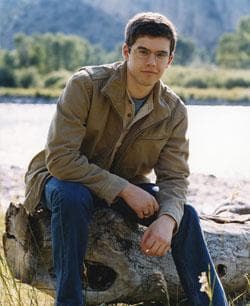
Christopher Paolini is the bestselling author of The Inheritance Cycle, a fantasy series that began with Eragon. Published when he was just 19, the series has sold over 40 million copies worldwide and was adapted into a major motion picture. Paolini's intricate world-building and epic storytelling have captivated millions of readers globally.
Similar books
- A Wizard of Earthsea
Ursula K. Le Guin
4.0 (241k) average on GoodreadsFantasyFocus on a young magic-user's training and coming-of-age, exploring the nature of power and responsibility.
- Harry Potter and the Sorcerer's Stone
J.K. Rowling
4.5 (7M) average on GoodreadsFantasyRescued from a miserable life under the stairs, an orphaned boy discovers he's a wizard destined for a magical school, where he uncovers a dangerous secret tied to the dark wizard who murdered his parents.
- The Hunger Games
Suzanne Collins
4.3 (6.4M) average on GoodreadsFantasyIn a future where children fight to the death on live television, Katniss Everdeen volunteers for the arena, turning a death sentence into a fight for survival and a spark of rebellion.
- 1984
George Orwell
4.2 (3.1M) average on GoodreadsPoliticsIn a future where surveillance and thought control are absolute, a man's search for truth clashes with the Party, showing that hope can be a form of rebellion.
- Divergent
Veronica Roth
4.2 (2.9M) average on GoodreadsFantasyIn a society divided by virtues, a sixteen-year-old's difference from the norm starts a rebellion that threatens her world.
- The Hobbit, or There and Back Again
J.R.R. Tolkien
4.3 (2.9M) average on GoodreadsFantasyA comfort-loving hobbit named Bilbo Baggins is whisked away by a mischievous wizard and a band of dwarves on an unexpected journey to reclaim stolen treasure from a fearsome dragon, discovering courage and a magical ring along the way.






Enjoyed the summary?
A summary gives you the shape of the book. The book itself has the detail, the examples and the voice.
Find The Inheritance Cycle on AmazonAs an Amazon Associate, BookBrief earns from qualifying purchases. How we're funded