
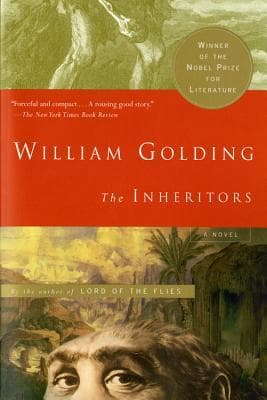
Synopsis
Covers the whole plot, including the ending.
- Difficulty
- Medium
- Pacing
- Slow
- Mood
- Melancholy, Primal, Meditative, Disorienting, Tragic
- Read it if
- You are fascinated by early human history, enjoy deeply empathetic and unique perspectives, or appreciate allegorical tales about the nature of humanity and progress. Fans of 'Lord of the Flies' looking for another thought-provoking Golding novel will also find this compelling.
- Skip it if
- You prefer fast-paced plots with clear protagonists and antagonists, or you are uncomfortable with themes of loss, extinction, and the brutal reality of species displacement. The narrative style can be disorienting as it tries to capture a non-human perspective.
The Inheritors Plot Summary
Covers the whole plot, including the ending.
The People's Peaceful Existence and a New Threat
The People, a small Neanderthal group including Lok, Fa, Liku, Ha, Nil, Mal, and their Old Woman, live a simple, shared life. Instinct and the Old Woman's wisdom guide them. They are happy with their seasonal moves, gathering food, and sharing thoughts through their special, empathetic 'newt' process. Their world has strong ties to nature and each other. But as they go back to their summer cave, Lok feels a change. Strange smells, sounds, and unfamiliar shapes start to appear in their peaceful valley. A fallen tree blocks their way, something that has never happened before. This suggests a problem bigger than any natural event they have known. Lok, with his sharp senses, notices these unsettling signs most, feeling a growing worry that his people do not fully grasp.
The Disappearance of Liku and Mal
The People continue their journey, but the feeling of unease grows. While crossing a stream, the youngest, Liku, and the baby, Mal, play near the water. Suddenly, an unseen force takes them. The People are confused and scared; they do not know about intentional harm from another creature like themselves. They search hard, but their limited understanding stops them from seeing what truly happened. Lok's senses are overwhelmed by new, troubling smells—'the smell of the other'—and strange tracks that are not animal. Losing Liku and Mal is a deep shock. It brings a new, confusing kind of suffering and fear into their world. This is the first direct loss from the approaching 'new people'.
The Discovery of the New People's Camp
Lok and Fa, grieving and needing to understand, follow the strange tracks. They carefully go to a clearing and see an amazing sight: a group of 'new people,' Homo sapiens, unlike anything they have ever met. These beings have advanced tools like bows and arrows, fire, and strange, stiff shelters. Lok is fascinated and scared by their complex actions, loud laughter, odd rituals, and clear power. He tries to understand what they are doing, often misunderstanding their goals because of his own limited view of the world. They see the 'new people' eating meat, using fire to cook, and doing things that are completely foreign to the People's simple life. This confirms that a powerful, dangerous new species is in their territory.
The Old Woman's Death and the People's Decline
The stress of the new surroundings and the shock of the children disappearing weigh on the Old Woman. Her wisdom, once a guide, is now not enough to understand the new threats. As the People try to make sense of the 'new people's' presence, the Old Woman, weak and without hope, dies. Her death is a heavy blow, as she was the memory and spiritual center of their group. With her gone, the People lose their main source of guidance and understanding, leaving Lok, Fa, Ha, and Nil even more open to harm and confused. The 'new people' are not just a physical threat, but a threat to their very existence, breaking down the Neanderthals' traditional way of life and their ability to handle change.
Lok's Attempts to Understand the 'New People'
Lok, with his sharp senses and simple, literal mind, keeps watching the 'new people'. He tries to understand their actions, which often seem conflicting and cruel to him. He sees them hunt with better weapons, make fire when they want, and have complex social interactions he cannot grasp. He sees acts of violence, drunkenness, and sex that are foreign to his people's gentle ways. He is especially confused by their use of tools and their ability to change their environment so much. Despite his fear, a strange pull makes him go back to watch them, hoping to find a pattern or understanding that might explain their power and their threat. He even sees his lost Liku's anklet on one of the new people, a scary sign of their involvement.
Ha's Capture and Imprisonment
While watching the 'new people', Ha, one of the remaining Neanderthals, gets caught in a trap. Lok and Fa watch in horror as Ha is taken back to the 'new people's' camp. He is tied up and held captive, treated in their strange and cruel way. This event shows the huge power difference between the two groups. The 'new people's' ability to trap and control one of the People is a terrifying show of their power and their lack of care for the Neanderthals. Ha's capture is a clear reminder that the 'new people' are not just different, but actively dangerous, and can cause suffering the People have never known.
The Rescue Attempt and Ha's Death
Lok and Fa, desperate to save Ha, try a nighttime rescue. They go to the 'new people's' camp, but the Homo sapiens misunderstand their efforts. In the confusion, during a moment of drunken celebration, Ha is accidentally killed by one of his captors. The 'new people' react with a mix of confusion and not caring, not fully understanding what they have done. Lok and Fa are crushed by this further loss, confirming the 'new people's' deadly nature and their own lack of power. The event shows the huge gap in understanding between the two species, where one's casual violence is another's deep tragedy.
Nil's Fate and the People's Last Stand
After Ha's death, the remaining People, Lok, Fa, and Nil, are more and more desperate. Nil, the last of the younger generation, gets separated from Lok and Fa. It is suggested he is hunted and killed by the 'new people'. The 'new people', having found the Neanderthals, start actively hunting them, seeing them as little more than animals or obstacles. Lok and Fa are forced to flee, constantly chased. Their world, once safe and predictable, has become a never-ending nightmare of running and fear. The 'new people's' organized hunting groups and better weapons make escape harder, showing the near end of the Neanderthal way of life.
The Fire and the Pursuit
The 'new people' use a new, destructive method: they set fire to the forest, creating a huge blaze that burns the Neanderthals' familiar land. The fire, a terrifying force to Lok and Fa, drives them toward the sea. They are trapped between the fire and the chase by the Homo sapiens, who now use their greater intelligence and tools to get rid of the remaining Neanderthals. The fire shows the destructive power of the 'new people' and their full control over nature, a sharp contrast to the People's balanced relationship with their environment. Lok and Fa's world is literally burning around them.
Fa's Death and Lok's Isolation
Cornered by the fire and the chasing 'new people' at the edge of a cliff over the sea, Fa, weak and tired, falls to her death. Lok is left completely alone, the last of his kind. He is overwhelmed by sadness and hopelessness, realizing his people are gone. He watches the 'new people' celebrating, their shapes dark against the burning land. His isolation is complete; no one is left to share a 'newt' with, no one to understand him. His world is destroyed, replaced by a new, harsh reality where his kind does not belong.
Lok's Final Vision and the Future
From his high spot, Lok watches the 'new people' in their boats, sailing into the future. He sees their leader, Marlan, and his pregnant mate, Vivi, who carries the next generation of Homo sapiens. He has a quick, almost seeing 'newt' vision of their future: their growing numbers, their control of the sea, their increasing power, and their full conquest of the world. He sees their ability to create and destroy, their complex feelings, and their final win. As the 'new people' sail out of sight, Lok stays on the cliff, a solitary reminder of a past era, his people's story over, while the earth's new inhabitants start their own, very different, journey.
The Inheritors Characters
Lok
Protagonist
The last Neanderthal, struggling to understand a changing world.
Lok is a gentle, curious, and deeply empathetic Neanderthal. He possesses acute senses, particularly smell, which often provides him with early warnings of danger, though he struggles to interpret them fully. He is observant and tries to understand the 'new people' through his limited, literal worldview. He is deeply connected to his family and experiences profound grief with each loss. His perception is rooted in the present, with little capacity for abstract thought, planning, or understanding malicious intent. He is innocent, trusting, and fundamentally good, making him a tragic figure in the face of the Homo sapiens' brutality.
Relationships: Fa (Mate and companion); Liku (Youngest member of his family, like a child); Mal (Infant member of his family, like a child); Ha (Male member of his family); Nil (Young male member of his family); Old Woman (Wise matriarch of his family)
Fa
Supporting
Lok's mate, sharing his struggles and fears.
Fa is Lok's mate and a female member of the People. She shares Lok's deep connection to their tribe and their way of life. While not as acutely observant as Lok, she is equally gentle and suffers deeply from the loss of their young and the encroaching dangers. She is a loyal companion to Lok, and they share a profound, non-verbal understanding. Her reactions are often fear and sadness, as she, too, struggles to comprehend the 'new people's' actions. Her death marks the final, devastating blow to Lok's hope and his connection to his past.
Relationships: Lok (Mate and companion); Liku (Youngest member of her family, like a child); Mal (Infant member of her family, like a child)
Old Woman
Supporting
The matriarch and spiritual guide of the People.
The Old Woman is the wise and respected matriarch of the Neanderthal tribe. She holds the collective memory and traditions of the People, guiding them with her intuitive understanding of nature and their simple world. She is the keeper of their 'newt' connections and their rituals. Her wisdom is rooted in experience and instinct, but it proves inadequate against the unprecedented threat of the 'new people'. Her death early in the narrative signifies the loss of the People's guiding force and their inability to adapt to the new, complex challenges, accelerating their decline.
Relationships: Lok (Member of her family, guided by her); Fa (Member of her family, guided by her)
Liku
Supporting
One of the young Neanderthal children, the first victim of the 'new people'.
Liku is one of the youngest members of the People, full of the innocent joy and curiosity of a child. Her disappearance, along with Mal, is the first direct, devastating encounter with the 'new people's' capacity for harm. Her loss is a catalyst for the People's growing fear and confusion. Lok later finds her anklet among the 'new people's' belongings, providing a horrifying confirmation of her fate and the Homo sapiens' brutality, profoundly impacting Lok's understanding of their danger.
Relationships: Lok (Family member, like a child); Fa (Family member, like a child)
Ha
Supporting
A male Neanderthal, captured and killed by the 'new people'.
Ha is a male member of the People, strong and capable within their traditional way of life. His capture by the 'new people' is a pivotal moment, showcasing their superior trapping skills and their indifference to the Neanderthals' suffering. His subsequent accidental death at the hands of his captors, during Lok and Fa's rescue attempt, further illustrates the vast cultural and cognitive gap between the two species. Ha's fate highlights the 'new people's' unintentional cruelty and the Neanderthals' vulnerability.
Nil
Supporting
A young male Neanderthal, lost to the 'new people'.
Nil is a young male Neanderthal, still learning the ways of the People. He is less experienced than Lok or Ha and represents the future generation that is tragically cut short. His disappearance and presumed death by the 'new people' further diminish the Neanderthal's numbers and their hope for survival. His loss contributes to the overwhelming sense of despair and the realization that the 'new people' are systematically eradicating them.
Marlan
Antagonist
The cunning leader of the Homo sapiens tribe.
Marlan is the leader of the 'new people' (Homo sapiens). He is portrayed from Lok's perspective as a powerful, often cruel, but also intelligent and pragmatic individual. He is a skilled hunter and strategist, responsible for the organized pursuit and eventual destruction of the Neanderthals. He represents the dawn of human intellect, ambition, and dominance over nature. While Lok cannot fully comprehend his motivations, Marlan embodies the traits that allow Homo sapiens to survive and conquer, even if it means extinguishing another species.
Relationships: Vivi (His pregnant mate); Homo sapiens tribe (Leader of the tribe)
Vivi
Mentioned
Marlan's pregnant mate, representing the future of Homo sapiens.
Vivi is Marlan's pregnant mate, seen by Lok in the final moments of the novel. She is a symbol of the future of the 'new people', carrying the next generation of Homo sapiens who will inherit the earth. Her presence emphasizes the theme of succession and the inevitable replacement of one species by another. She embodies fertility and the promise of a thriving new era, directly contrasting with the extinction of Lok's people.
Relationships: Marlan (His pregnant mate)
Tuami
Supporting
A shamanistic figure among the 'new people', wielding strange powers.
Tuami is a shaman or spiritual leader among the 'new people'. Lok observes him performing rituals, using strange objects, and seemingly influencing events. Tuami represents the nascent development of religion, superstition, and abstract thought in Homo sapiens. His actions, often confusing and frightening to Lok, highlight the 'new people's' more complex cognitive abilities and their emerging cultural practices, which include both practical skills and mystical beliefs.
Relationships: Homo sapiens tribe (Spiritual figure within the tribe)
The Inheritors Themes
The End of Innocence and Extinction
The novel shows the sad end of the Neanderthals, represented by Lok's people, because of Homo sapiens. Their innocence, gentleness, and inability to understand bad intentions or complex ideas make them completely helpless. The 'new people' are a more advanced, yet brutal, kind of human whose existence leads to the Neanderthals' end. The story shows the unavoidable, often violent, way evolution works, where one species' win means another's loss. The constant deaths of Liku, Mal, Ha, Nil, Fa, and the Old Woman directly show this, ending with Lok's lonely survival.
“He was not afraid of the new people in the way that an animal is afraid of a man. He was afraid of them in the way that a man is afraid of a god.”
The Nature of Humanity and Savagery
Golding explores what 'human' means by comparing the Neanderthals' gentle, shared life with the Homo sapiens' more complex, often violent, and technologically advanced society. The Neanderthals, with their empathy and lack of aggression, might be seen as more 'humane' in their interactions, but they are considered 'less evolved'. The 'new people' show both smart thinking and casual cruelty, showing the two sides of human nature. Their use of fire, weapons, and organized hunting, along with their laughter and rituals, paints a picture of early civilization built on controlling others and the environment.
“The new people had a fire that ate wood, and they made things from the wood, and they ate the things they made.”
Communication and Misunderstanding
A main theme is the big problem with communication and understanding between Neanderthals and Homo sapiens. The People talk through a kind of empathetic 'newt' or shared thought, which the 'new people' cannot understand. Lok, in turn, struggles to understand the complex language, facial expressions, and abstract actions of the Homo sapiens, often misreading what they mean. This lack of understanding makes the tragedy worse, as the 'new people' see the Neanderthals as animals, while Lok cannot grasp their bad intentions or advanced intelligence. This breakdown means living together is impossible, leading to fighting and destruction.
“It was not a thing that happened to them, but a thing that was done. The new people did it.”
Technology vs. Instinct
The novel clearly contrasts the Neanderthals' reliance on instinct, tradition, and a deep connection to nature with the Homo sapiens' developing technology and intelligence. The 'new people' use fire, bows and arrows, and boats—tools that give them great power over their environment and other species. The Neanderthals, in contrast, have only basic tools and rely on their senses and shared memory. This difference in technology is a main reason for the Neanderthals' fall, as their instinctive wisdom is no match for the Homo sapiens' strategic planning and better weapons. This shows the shift in power in evolution.
“The new people had a stick that killed at a distance.”
The Loss of Paradise
The Neanderthals' valley first seems like a paradise, a peaceful life in harmony with nature. Their lives are simple, repeating, and free from bad intentions. The 'new people's' arrival breaks this ideal world, bringing fear, violence, and destruction. The Homo sapiens burning the forest literally destroys this paradise, forcing Lok and Fa to run. This theme looks at how progress, while bringing advancement for one species, often costs another a simpler, more balanced way of life. It shows the lasting impact of human expansion.
“The world was not a good place any more. It was full of new smells and new sounds, and the new people.”
Plot Devices & Literary Techniques
Limited Third-Person Perspective (Lok's POV)
Narrative filtered exclusively through the Neanderthal protagonist's senses and understanding.
The entire story is told from Lok's perspective, filtering all events through his Neanderthal senses, simple thought processes, and limited understanding of the world. This device immerses the reader in the Neanderthal experience, creating empathy and highlighting their innocence. It also creates dramatic irony, as the reader often understands the 'new people's' actions better than Lok does, emphasizing the communication barrier and the tragic inevitability of the Neanderthals' demise. This perspective makes the 'new people' seem alien and terrifying, just as they do to Lok.
'Newt' (Shared Thought/Empathy)
The Neanderthals' unique form of non-verbal, empathetic communication.
The 'newt' is the Neanderthals' primary mode of communication, a form of shared thought or empathetic connection that transcends spoken language. It allows them to understand each other's feelings and simple intentions directly. This device underscores their communal nature and lack of individualistic malice. The loss of others means the loss of shared 'newts', culminating in Lok's ultimate isolation when there is no one left to 'newt' with. It highlights their difference from Homo sapiens, who rely on complex, abstract language, and contributes to the theme of communication breakdown.
Sensory Details (Smell, Sight, Sound)
Emphasis on primal senses to convey the Neanderthal experience.
Golding heavily uses sensory details, particularly smell, sight, and sound, to convey Lok's experience of the world. Lok's acute sense of smell is often the first indicator of danger or the presence of the 'new people'. This device grounds the narrative in the Neanderthals' primal, instinctual reality and emphasizes their deep connection to their environment. It allows the reader to experience the world as Lok does, making the 'new people's' strange smells and loud sounds particularly jarring and threatening, contributing to the sense of unease and the impending doom.
The Fire
Symbol of destruction, technology, and the end of a natural world.
Fire is a powerful symbol in the novel. For the Neanderthals, fire is a terrifying, uncontrollable force of nature. For the 'new people', it is a tool – for cooking, warmth, and ultimately, for warfare and destruction. The deliberate setting of the forest fire by the Homo sapiens to drive out the Neanderthals symbolizes their mastery over nature and their capacity for devastating, calculated destruction. It marks the literal burning away of the Neanderthals' world and the dawn of a new era dominated by human technology and control.
The Boats
Symbol of progress, exploration, and the 'new people's' future dominance.
The boats of the 'new people' are a key symbol of their advanced technology, their ability to conquer new frontiers, and their inevitable future dominance. For Lok, the boats are incomprehensible objects that move on water without effort, representing a power beyond his understanding. In the novel's closing scene, the 'new people' sailing away in their boats signifies their successful migration, their ability to expand and populate the world, and the final, irreversible departure from the Neanderthals' era, leaving Lok as the sole relic of a bygone age.
The Inheritors Quotes
“They were not aware that they were a people; they were the people.”
“The world was a place of voices, and the voices were the things themselves.”
“They had no words for evil, only for things that were not understood.”
“The new people were like a river that had burst its banks, flooding the world with strangeness.”
“He did not think; he knew.”
“They were the inheritors, and they did not know what they had inherited.”
“The fire was a red flower in the night, and they were its petals.”
“They could not imagine a world without themselves in it.”
“The new people had words that cut like knives, separating thing from thing.”
“They lived in a web of kindness, an invisible net of mutual care.”
“The world was shrinking, and they were being pushed to the edge of it.”
“They had no need for gods; the world was enough.”
“The new people carried death in their hands like a gift.”
“They were a dream that the world was forgetting.”
Quiz
10 questions on the plot and the characters. Each answer comes with a short explanation.
Question 1
What is the primary setting of 'The Inheritors'?
- A modern-day island
- A prehistoric world inhabited by Neanderthals
- A futuristic colony on another planet
- A medieval European village
Show answer
B. A prehistoric world inhabited by Neanderthals The book is set in a prehistoric world where Neanderthals are the main characters, as described in the summary as 'a startling recreation of the lost world of the Neanderthals'.
Question 2
What do the Neanderthal people notice happening as the spring comes?
- They find abundant food and resources
- Strange and terrifying things they have never experienced before
- They are attacked by wild animals
- They discover a new tribe of friendly Neanderthals
Show answer
B. Strange and terrifying things they have never experienced before The summary states that 'strange things were happening, terrifying things that had never happened before,' including inexplicable sounds, smells, and new creatures.
Question 3
What is the central theme suggested by the book's title 'The Inheritors'?
- The Neanderthals inheriting the earth from previous species
- The new creatures (likely Homo sapiens) inheriting the world from the Neanderthals
- The inheritance of wealth and property among prehistoric tribes
- The spiritual inheritance of ancient traditions
Show answer
B. The new creatures (likely Homo sapiens) inheriting the world from the Neanderthals The title refers to the new age beginning, where the Neanderthals' day is over, implying that another species (likely early humans) will inherit the world, as hinted in the summary.
Question 4
According to the summary, what do the Neanderthal people not know?
- How to hunt the new creatures
- That their day as a people is already over
- The location of their ancestral home
- The reason for the changing seasons
Show answer
B. That their day as a people is already over The summary explicitly states: 'What the people didn't, and perhaps never would, know, was that the day of their people was already over.'
Question 5
What genre is 'The Inheritors' classified as, based on the provided description?
- Fantasy, Historical Fiction, and Science Fiction
- Romance and Mystery
- Horror and Thriller
- Comedy and Drama
Show answer
A. Fantasy, Historical Fiction, and Science Fiction The book is described as 'Fantasy, Historical Fiction, Science Fiction' in the summary, blending elements of these genres to recreate a prehistoric world.
Question 6
How does the book portray the Neanderthals' perception of the new creatures?
- As familiar and friendly beings
- As half-glimpsed, unimaginable threats through the leaves
- As divine entities to be worshipped
- As extinct animals from their myths
Show answer
B. As half-glimpsed, unimaginable threats through the leaves The summary mentions 'new, unimaginable creatures half glimpsed through the leaves,' indicating that the Neanderthals see them as mysterious and threatening.
Question 7
What historical event does 'The Inheritors' likely depict, based on the summary?
- The rise of the Roman Empire
- The extinction of the Neanderthals and the rise of Homo sapiens
- The discovery of fire by early humans
- The migration of humans out of Africa
Show answer
B. The extinction of the Neanderthals and the rise of Homo sapiens The book is described as showing 'the beginning of a new age' with the Neanderthals' day over, aligning with the historical transition from Neanderthals to modern humans.
Question 8
Why might the author, William Golding, have chosen to write about Neanderthals?
- To explore themes of civilization, survival, and human nature, similar to 'Lord of the Flies'
- To write a purely scientific account of prehistoric life
- To create a fantasy story with magical elements
- To criticize modern political systems
Show answer
A. To explore themes of civilization, survival, and human nature, similar to 'Lord of the Flies' Golding is known for examining human nature in 'Lord of the Flies,' and this book likely extends that to prehistoric contexts, exploring primal instincts and societal collapse.
Question 9
What role do the 'old paths from the sea' play in the story?
- They are routes the Neanderthals use to migrate seasonally
- They lead to a hidden treasure
- They are symbolic of the Neanderthals' technological advancement
- They are created by the new creatures to trap the Neanderthals
Show answer
A. They are routes the Neanderthals use to migrate seasonally The summary mentions that the people 'moved back by the old paths from the sea' when spring came, indicating these are traditional migration routes they follow.
Question 10
How does the book's perspective contribute to its 'frightening vision'?
- By telling the story from the Neanderthals' limited viewpoint, making the unknown threats more terrifying
- By using a third-person omniscient narrator to explain all events clearly
- By focusing on the new creatures' advanced technology and superiority
- By including graphic descriptions of violence and gore
Show answer
A. By telling the story from the Neanderthals' limited viewpoint, making the unknown threats more terrifying The summary highlights that the Neanderthals do not understand what is happening, creating suspense and fear through their limited perception of the strange events.
The Inheritors FAQ
What is 'The Inheritors' about?
The novel follows a small group of Neanderthals, led by the elderly Mal and the young Lok, as they encounter a new species of humans (Homo sapiens) who are invading their territory. Through the Neanderthals' limited perspective, it depicts their peaceful, instinctual way of life being disrupted by the more advanced, violent newcomers, culminating in the Neanderthals' displacement and implied extinction.
Why should I read 'The Inheritors'?
It offers a unique, empathetic portrayal of Neanderthal consciousness and culture, challenging anthropocentric views of human evolution. Golding's experimental prose immerses readers in a pre-linguistic mindset, making it a profound exploration of 'otherness,' innocence, and the brutal cost of progress.
What is the background/setting of 'The Inheritors'?
Set in a prehistoric Europe during the last Ice Age, the story unfolds in a forested river valley that is home to the Neanderthals. The setting shifts from their familiar caves and trails to the unsettling new territories where the 'new people' (Homo sapiens) have arrived, symbolizing the clash between two human species.
What are the most memorable quotes?
Key quotes include: 'The people could not conceive of a world without them,' reflecting their limited self-awareness; 'They are like a river... they do not care,' describing the newcomers' indifferent violence; and 'The day of their people was already over,' which frames the novel's tragic inevitability.
What writing style does the author use?
Golding employs a highly sensory, impressionistic style that mirrors the Neanderthals' pre-linguistic thought processes. The narrative is fragmented, relying on smells, sounds, and images rather than abstract concepts, with simple syntax that gradually becomes more complex as Lok learns from the newcomers.
What minor details add significant meaning?
The Neanderthals' ritual of 'sharing a picture'—a communal mental imagery—highlights their empathetic, non-verbal communication. The 'ice woman' figurine carved by the newcomers symbolizes their abstract art and spirituality, contrasting with the Neanderthals' immediate, physical relationship to the world.
What are some subtle foreshadowing moments?
Early descriptions of 'strange smells' and 'unimaginable creatures' hint at the newcomers' presence before they are fully seen. Lok's accidental discovery of a dugout canoe foreshadows the technological gap that will doom his people, as it represents the newcomers' mastery of tools and travel.
What unexpected character connections exist?
Lok forms a silent, observational bond with a Homo sapiens child he calls 'the new one,' who mirrors his own curiosity. This connection underscores the shared humanity between the species, even as the adults engage in conflict, suggesting that understanding is possible but ultimately overwhelmed by fear and difference.
What are unspoken character motivations?
The Neanderthals are driven by a deep, instinctual need for community and survival, unaware of their impending extinction. The newcomers are motivated by expansion and resource acquisition, but their actions—like kidnapping the Neanderthal woman Fa—reveal a blend of curiosity, superstition, and aggression that they never verbally explain.
What psychological complexities do characters exhibit?
Lok evolves from innocence to a flicker of abstract thought as he observes the newcomers, grappling with concepts like 'evil' and 'future.' The newcomers exhibit cognitive dissonance, viewing the Neanderthals as both 'devils' to be feared and objects of ritualistic interest, reflecting early human superstition and violence.
What are the major emotional turning points?
The death of the elder Mal marks the loss of wisdom and stability for the Neanderthals. The kidnapping of Fa by the newcomers triggers Lok's desperate, futile attempts at rescue, symbolizing the breakdown of their world. The final scene, where Lok is left alone, embodies the profound loneliness of extinction.
How do relationship dynamics evolve?
Initially, the Neanderthals' relationships are harmonious and based on shared instinct, but stress from the newcomers causes fractures, such as Lok taking leadership after Mal's death. The newcomers' hierarchical, conflict-driven dynamics contrast sharply, with their treatment of the Neanderthals shifting from avoidance to violent confrontation.
Which parts remain ambiguous or open-ended?
The ultimate fate of the Neanderthals is implied but not explicitly shown—readers infer their extinction from Lok's solitude. The newcomers' motivations and beliefs, such as why they take Fa, are left unclear, reflecting the Neanderthals' limited understanding and adding to the novel's eerie, unresolved tension.
What are controversial scenes or decisions?
The newcomers' ritualistic behavior, including possibly cannibalizing a Neanderthal, is disturbing and debated for its historical accuracy. Lok's decision to not retaliate violently, even when his people are harmed, raises questions about pacifism versus survival, challenging readers' expectations of 'primitive' behavior.
'The Inheritors' ending explained: how it ends & what it means
The novel ends with Lok alone, watching the newcomers depart by canoe, as he vaguely senses that 'the people' are gone forever. This symbolizes the Neanderthals' extinction and the rise of Homo sapiens, with Lok's lingering presence suggesting a lost innocence and the tragic, inevitable march of evolutionary progress.
How does Golding contrast Neanderthal and Homo sapiens societies?
Neanderthals are depicted as communal, empathetic, and in tune with nature, using simple tools and 'pictures' for communication. Homo sapiens are individualistic, technological, and violent, with complex language and rituals that allow for abstraction but also cruelty, highlighting the trade-offs of human advancement.
What role does nature play in the story?
Nature is a character in itself—the river, forest, and seasons reflect the Neanderthals' harmonious existence and the disruptions caused by the newcomers. Changes in the environment, like the melting ice, parallel the evolutionary shift, with nature ultimately indifferent to the fate of either species.
How does the point of view affect the reader's experience?
The limited third-person perspective, filtered through Lok's consciousness, forces readers to experience the world as the Neanderthals do—confused by the newcomers' actions and unable to grasp abstract threats. This creates empathy for the Neanderthals and a sense of dread as their doom becomes clear to readers before it does to them.
About the author
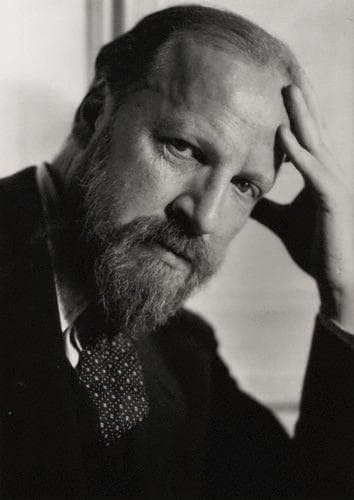
Sir William Gerald Golding was a British novelist, playwright, and poet. Best known for his debut novel Lord of the Flies (1954), he published another twelve volumes of fiction in his lifetime. In 1980, he was awarded the Booker Prize for Rites of Passage, the first novel in what became his sea trilogy, To the Ends of the Earth. He was awarded the 1983 Nobel Prize in Literature.
Similar books
- Lord of the Flies
William Golding
3.7 (2.3M) average on GoodreadsYoung AdultShares Golding's characteristic exploration of human nature, tribalism, and the darker aspects of 'progress' and survival.
- Sapiens: A Brief History of Humankind
Yuval Noah Harari
4.4 (502k) average on GoodreadsPsychologyHarari's non-fiction Sapiens (2011) provides a broad historical and scientific overview of Homo sapiens' rise, including their interaction with Neanderthals. Harari discusses the 'Cognitive Revolution' that gave Sapiens an advantage, often framing it as a key to our dominance. Golding's The Inheritors, conversely, offers a deeply empathetic, fictional counter-narrative from the perspective of the displaced species. While Harari analyzes the why of Sapiens' success, Golding makes us feel the cost of that success from the perspective of those who lost.
- Harry Potter and the Sorcerer's Stone
J.K. Rowling
4.5 (7M) average on GoodreadsFantasyRescued from a miserable life under the stairs, an orphaned boy discovers he's a wizard destined for a magical school, where he uncovers a dangerous secret tied to the dark wizard who murdered his parents.
- The Hunger Games
Suzanne Collins
4.3 (6.4M) average on GoodreadsFantasyIn a future where children fight to the death on live television, Katniss Everdeen volunteers for the arena, turning a death sentence into a fight for survival and a spark of rebellion.
- 1984
George Orwell
4.2 (3.1M) average on GoodreadsPoliticsIn a future where surveillance and thought control are absolute, a man's search for truth clashes with the Party, showing that hope can be a form of rebellion.
- Divergent
Veronica Roth
4.2 (2.9M) average on GoodreadsFantasyIn a society divided by virtues, a sixteen-year-old's difference from the norm starts a rebellion that threatens her world.






Enjoyed the summary?
A summary gives you the shape of the book. The book itself has the detail, the examples and the voice.
Find The Inheritors on AmazonAs an Amazon Associate, BookBrief earns from qualifying purchases. How we're funded