

Core Idea
- Difficulty
- Medium
- Read it if
- You're a Christian seeking a deeper, more challenging understanding of Jesus beyond Sunday school narratives, or if you're a spiritual seeker curious about the historical and theological complexities of Christ.
- Skip it if
- You prefer a straightforward, systematic theology of Jesus, or if you are not open to re-examining long-held beliefs about Christianity.
Key Takeaways from The Jesus I Never Knew
Unveiling the Real Jesus
Moving beyond cultural caricatures to encounter the challenging figure of the Gospels.
Yancey says that two millennia of history, tradition, and human interpretation have unintentionally hidden the radical, unsettling, and compelling figure of Jesus as shown in the Gospels. He asks readers to let go of their old ideas—whether from Sunday school, cultural norms, or religious rules—and read the biblical stories with fresh eyes. This process shows a Jesus far more complex and demanding than the simplified or sentimental versions often presented. Yancey believes that many modern Christians have settled for a tamed Jesus, one who fits easily into their current worldview, instead of engaging with the disruptive and transforming presence that truly comes from the New Testament. The book's main idea is an invitation to rediscover this 'Jesus I Never Knew,' a journey that will challenge comfortable assumptions and require real self-reflection.
“No one who meets Jesus ever stays the same.”
In the book: Yancey's journalistic approach, where he systematically examines various aspects of Jesus' life and teachings (e.g., his birth, miracles, death, resurrection) against popular perceptions and theological interpretations.
Try this: Actively question inherited religious understandings. Read the Gospels as if for the first time, seeking to identify the unexpected or uncomfortable aspects of Jesus' character and message. Engage in critical self-reflection on how personal biases or cultural norms might be shaping one's view of Jesus.
Related ideas: deconstruction-faith, gospel-reading, cultural-christianity
The Upside-Down Kingdom
Jesus' radical redefinition of power, success, and divine favor.
One of the deepest insights for Yancey is Jesus' constant challenge to conventional wisdom and societal rules. Jesus announced a 'kingdom' where the last become first, the humble are honored, and real power comes from service and sacrifice, not from control or wealth. This 'upside-down kingdom' is very different from human systems built on hierarchy, self-interest, and outward achievements. Yancey points out how Jesus always connected with those on the margins—tax collectors, prostitutes, Samaritans, the sick—and challenged religious leaders who cared more about rituals than compassion. This part of Jesus is deeply unsettling because it requires a basic shift in personal priorities and societal structures, questioning the very foundations of much human ambition. It is a call to be open and to have deep empathy.
“Jesus turned the world's values upside down, elevating the poor, the meek, and the persecuted.”
In the book: The Beatitudes (Matthew 5:3-12), Jesus' parables of the lost sheep, lost coin, and prodigal son, and his interactions with outcasts like Zacchaeus and the woman at the well.
Try this: Examine personal values against the principles of the 'upside-down kingdom.' Actively seek out and serve the marginalized in one's community. Challenge internal biases that equate success with wealth or status. Prioritize compassion and humility over personal gain or recognition.
Related ideas: kingdom-of-god, social-justice, humility, radical-love
A Disturbing Compassion
Jesus' empathy extends to the 'unworthy,' challenging our boundaries of inclusion.
Yancey stresses that Jesus' compassion was not the soft, easy sentimentality often shown. Instead, it was a 'disturbing' compassion that actively sought out and accepted those society considered untouchable, unclean, or unworthy. This was not just tolerance; it was an active, often scandalous, connection with outcasts. Jesus ate with sinners, touched lepers, and interacted with women in ways that went against cultural norms. This part of Jesus forces readers to confront their own biases and the often unspoken standards they use to decide who is 'worthy' of love or attention. It is a challenge to expand one's concern beyond comfort zones and to see the divine spark in everyone, regardless of their social standing or moral history.
“Jesus' compassion was not a gentle, sentimental pity, but a fierce, boundary-breaking love.”
In the book: Jesus' healing of the leper (Mark 1:40-45), his conversation with the Samaritan woman at the well (John 4), and his defense of the woman caught in adultery (John 8:1-11).
Try this: Intentionally seek out relationships with people outside one's usual social or religious circles. Practice active listening and empathy with those who hold different views or come from different backgrounds. Challenge internal judgments and biases against individuals or groups deemed 'other.'
Related ideas: radical-empathy, inclusion, social-outcasts, unconditional-love
The Fearless Challenger
Jesus confronts religious hypocrisy and systemic injustice with bold authority.
Yancey highlights Jesus' remarkable courage, especially in confronting the religious and political leaders of his time. Far from a timid prophet, Jesus boldly challenged the legalism, hypocrisy, and self-serving actions of the Pharisees and Sadducees. He overturned tables in the Temple, condemned empty rituals, and consistently put human need and divine love above strict adherence to man-made rules. This part of Jesus is important because it reminds us that true faith is not passive or obedient when facing injustice or spiritual corruption. It requires courage to speak truth, even at personal cost, and to actively work for righteousness within existing systems. This Jesus is not just a comforter but a revolutionary who demands integrity from those who claim to represent God.
“Jesus was not afraid to speak truth to power, even when that power resided in the religious establishment.”
In the book: Jesus' cleansing of the Temple (John 2:13-16), his 'Woe to you, scribes and Pharisees' pronouncements (Matthew 23), and his parables criticizing religious leaders.
Try this: Develop the courage to speak out against injustice or hypocrisy, even within one's own community or religious group. Prioritize ethical behavior and genuine compassion over outward religious observance. Reflect on personal complicity in systems that perpetuate injustice and seek ways to challenge them.
Related ideas: prophetic-voice, social-justice, religious-hypocrisy, courageous-faith
The Human Paradox
Jesus' complete humanity makes his divinity all the more profound.
Yancey explores the deep paradox of Jesus' dual nature: fully God and fully human. He emphasizes Jesus' true humanity, showing moments when he felt hunger, thirst, tiredness, temptation, grief, and even doubt. This is not a weakness but a crucial part of his identity, making him relatable and accessible. By embracing his humanity, Jesus shows that God truly understands the human condition, with all its struggles and limits. This complete humanity, Yancey argues, makes his divine actions and teachings even more amazing. It is through his openness and shared experience that he connects with us most deeply, offering a way to live a fully human life in line with God's will, not by escaping our humanity but by making it holy.
“Jesus was fully human, not just a divine being playing a part. He felt hunger, thirst, pain, and temptation.”
In the book: Jesus' temptation in the wilderness (Matthew 4:1-11), his weeping at Lazarus's tomb (John 11:35), his agony in Gethsemane (Matthew 26:36-46), and his physical needs.
Try this: Embrace one's own humanity, including vulnerabilities and struggles, as part of the spiritual journey. Seek to understand and empathize with others' human experiences. Recognize that God understands and relates to human suffering, offering comfort and strength in weakness.
Related ideas: incarnation, humanity-of-christ, divinity-of-christ, suffering-savior
The Power of Parables
Jesus' teaching method invited engagement, challenging listeners to discover truth.
Yancey admires Jesus' skill as a communicator, especially his use of parables. Unlike direct commands or lectures, parables drew listeners in, creating a story space where they had to actively participate in finding the meaning. These stories were often unclear, thought-provoking, and open-ended, allowing different people to find different layers of truth, or to be challenged by uncomfortable realities. Yancey notes that this teaching method aimed not to give easy answers, but to make people think, question assumptions, and encourage personal change. It shows a Jesus who respects human choice and desires genuine, heartfelt understanding rather than just intellectual agreement. This approach keeps the message alive and relevant across cultures and generations.
“Jesus did not give simple answers; he told stories that forced his audience to wrestle with truth and apply it themselves.”
In the book: Parables such as the Good Samaritan, the Sower, the Prodigal Son, and the Unforgiving Servant. Yancey's analysis of how these stories continue to resonate and challenge readers.
Try this: Engage with religious texts and spiritual teachings reflectively, seeking deeper meaning rather than superficial answers. Use storytelling as a tool for communication and teaching, inviting participation and personal discovery. Be open to ambiguity and multiple interpretations in spiritual matters, fostering dialogue rather than dogmatism.
Related ideas: storytelling, spiritual-formation, hermeneutics, active-learning
The Scandal of the Cross
Jesus' death redefines victory, sacrifice, and the nature of God's love.
For Yancey, the cross is not just a historical event but a deep theological scandal that overturns human ideas of power and success. It shows God's ultimate openness and self-sacrifice, demonstrating a love that goes to extremes to bring humanity back together. The world sees weakness and failure, but Yancey argues that in the cross, Jesus shows ultimate strength—the strength to love enemies, forgive those who hurt him, and endure suffering for others. This new definition of victory challenges the human desire for control, instead pointing to redemptive suffering and sacrificial love as the path to true change. It reveals a God who does not demand sacrifice from afar but participates in it closely.
“The cross, far from being a defeat, was Jesus' ultimate act of power and love, revealing the heart of God.”
In the book: The narrative of Jesus' crucifixion, his prayers for his executioners, and the theological interpretations of atonement found in the New Testament epistles.
Try this: Reflect on the meaning of sacrifice and self-giving in one's own life. Seek to understand and practice forgiveness, even towards those who have caused harm. Re-evaluate what constitutes 'victory' or 'success' from a spiritual perspective, prioritizing love and service over personal gain.
Related ideas: atonement, sacrifice, redemption, agape-love
The Resurrected Hope
The resurrection validates Jesus' claims and offers a living hope for transformation.
Yancey ends by stressing the transforming power of the resurrection. Without it, Jesus' life would be a noble tragedy; with it, his claims are proven, and a radical hope for all humanity is set free. The resurrection is not just a historical event but a living reality that empowers believers and assures them of final victory over death and evil. It means that Jesus is not just a historical figure but a living presence, continuing to transform lives and the world. This hope is not about escaping reality but is active, motivating followers to live out the values of the 'upside-down kingdom' with the belief that their efforts are part of a larger, redemptive plan that ends in new creation.
“The resurrection is the ultimate vindication of Jesus' life and message, proving that death does not have the final word.”
In the book: The various accounts of the resurrection in the Gospels and Paul's theological arguments for its centrality to Christian faith (e.g., 1 Corinthians 15).
Try this: Live with a forward-looking hope, understanding that current struggles are not the end of the story. Seek personal and communal transformation, believing in the power of new beginnings. Share the message of hope and new life with others, inspired by the resurrection.
Related ideas: resurrection, hope, new-creation, spiritual-transformation
Beyond Knowing: Following
True understanding of Jesus leads to radical discipleship, not mere intellectual assent.
Ultimately, Yancey's journey to rediscover Jesus is not an academic exercise but a call to radical following. He argues that encountering the 'Jesus I Never Knew' inevitably leads to a deep challenge to one's lifestyle, priorities, and worldview. It is not enough to simply understand who Jesus was; true understanding requires active obedience and a willingness to shape one's life according to his teachings and example. This means embracing the 'upside-down kingdom,' practicing disturbing compassion, and living with fearless honesty. Yancey suggests that the gap between the Jesus of the Gospels and the often lukewarm practice of modern Christianity comes from failing to move beyond mere acquaintance to genuine, demanding following. The book invites readers to let Jesus 'shake up their ideas' and inspire a more authentic, transforming faith.
“Jesus doesn't just want to be known; he wants to be followed, and that following will radically transform your life.”
In the book: Jesus' consistent calls to 'follow me,' his emphasis on 'taking up your cross,' and the demanding nature of his ethical teachings throughout the Gospels.
Try this: Regularly evaluate one's life choices and priorities against Jesus' teachings. Identify specific areas where one can more authentically 'follow' Jesus, even if it means personal cost or discomfort. Engage in practices that foster deeper commitment and obedience to Christ.
Related ideas: discipleship, spiritual-growth, obedience, transformed-life
The Jesus I Never Knew Quotes
“Grace means there is nothing we can do to make God love us more, and nothing we can do to make God love us less.”
“The church is a hospital for sinners, not a museum for saints.”
“Faith does not eliminate questions. But faith knows where to take them.”
“Perhaps the most telling mark of a Christian is the almost complete absence of complaint.”
“Jesus came not to make bad people good but to make dead people alive.”
“The gospel of grace is a glorious thing. It's a message that says, 'You are loved just as you are.'”
“What makes Christianity unique is that it is not a religion of the virtuous, but of the repentant.”
“The greatest scandal of the church is not its hypocrisy, but its lack of joy.”
“God's love is not based on who we are, but on who He is.”
“Doubt is not the opposite of faith; it is an element of faith.”
“To be a Christian is to be a work in progress, not a finished product.”
“Jesus taught that the kingdom of God is not about power or prestige, but about service and humility.”
“The only thing that can truly transform a human heart is love.”
“Our deepest fear is not that we are inadequate. Our deepest fear is that we are powerful beyond measure.”
Quiz
10 questions on the main ideas. Each answer comes with a short explanation.
Question 1
According to Philip Yancey in 'The Jesus I Never Knew', what is the primary goal of his examination of Jesus?
- To prove the historical accuracy of the Gospels to skeptics.
- To reconcile the teachings of Jesus with modern scientific understanding.
- To uncover the true Jesus often obscured by two thousand years of history and preconceptions.
- To critique traditional church doctrines about the divinity of Christ.
Show answer
C. To uncover the true Jesus often obscured by two thousand years of history and preconceptions. Yancey's primary goal is to 'put his preconceptions aside and take a long look at the Jesus described in the Gospels,' revealing what 'two thousand years of history covered up.'
Question 2
Yancey suggests that the Jesus he rediscovers is not merely comforting but also what?
- Primarily focused on political reform.
- A disturbing and exhilarating figure who wants to radically transform life and stretch faith.
- A predictable figure whose actions align perfectly with human expectations.
- A detached observer of human suffering.
Show answer
B. A disturbing and exhilarating figure who wants to radically transform life and stretch faith. The text describes Jesus as 'a disturbing and exhilarating Jesus who wants to radically transform your life and stretch your faith,' indicating he is more than just a comforting figure.
Question 3
What kind of character does Yancey present Jesus as, regarding the questions he generates?
- A simple character who provides straightforward answers to all questions.
- A complex character who generates questions as well as answers.
- A character primarily focused on silencing all doubts and questions.
- A character who avoids intellectual engagement.
Show answer
B. A complex character who generates questions as well as answers. Yancey's perspective is that Jesus is 'a complex character who generates questions as well as answers,' not just a source of simple solutions.
Question 4
Which of the following characteristics does Yancey explicitly attribute to the Jesus he uncovers?
- Aloof, rigid, and dogmatic.
- Passive, conforming, and predictable.
- Brilliant, creative, challenging, fearless, compassionate, and unpredictable.
- Mysterious, reclusive, and enigmatic.
Show answer
C. Brilliant, creative, challenging, fearless, compassionate, and unpredictable. The text directly states, 'The Jesus I Never Knew uncovers a Jesus who is brilliant, creative, challenging, fearless, compassionate, unpredictable, and ultimately satisfying.'
Question 5
From what two key geographical points does Yancey trace Jesus's journey in the book?
- From Nazareth to Capernaum.
- From the Sea of Galilee to the Dead Sea.
- From the manger in Bethlehem to the cross in Jerusalem.
- From Egypt to the Promised Land.
Show answer
C. From the manger in Bethlehem to the cross in Jerusalem. The provided text outlines Jesus's journey as 'From the manger in Bethlehem to the cross in Jerusalem,' highlighting his birth and death.
Question 6
What is Yancey's personal reflection regarding those who bear Jesus's name, based on his rediscovery of Jesus?
- He believes they are perfectly embodying Jesus's teachings.
- He questions why they don't do a better job of following him.
- He finds their faith to be too rigid and legalistic.
- He concludes that following Jesus is an impossible task for humans.
Show answer
B. He questions why they don't do a better job of following him. Yancey states, 'Jesus has rocked my own preconceptions and has made me ask hard questions about why those of us who bear his name don't do a better job of following him.'
Question 7
How does Yancey describe the impact of meeting Jesus, according to his closing statement?
- It often leads to confusion and doubt.
- It primarily offers intellectual enlightenment.
- No one who meets Jesus ever stays the same.
- It results in a deeper understanding of historical theology.
Show answer
C. No one who meets Jesus ever stays the same. Yancey concludes with a powerful statement: 'No one who meets Jesus ever stays the same,' emphasizing a profound personal transformation.
Question 8
Yancey, as a 'respected Christian journalist,' approaches the Gospels with an intention to:
- Critique the historical inaccuracies within them.
- Confirm his existing theological biases.
- Put his preconceptions aside and take a long look.
- Rewrite the Gospels in a modern, accessible language.
Show answer
C. Put his preconceptions aside and take a long look. The text highlights Yancey's methodology: 'What happens when a respected Christian journalist decides to put his preconceptions aside and take a long look at the Jesus described in the Gospels?'
Question 9
The book aims to compare 'the Jesus of the New Testament' with what other two versions of Jesus?
- The Jesus of secular history and the Jesus of ancient mythology.
- The Jesus of early church fathers and the Jesus of medieval art.
- The new, rediscovered Jesus and the Jesus we think we know so well.
- The prophetic Jesus and the kingly Jesus.
Show answer
C. The new, rediscovered Jesus and the Jesus we think we know so well. The description asks, 'How does the Jesus of the New Testament compare to the new, rediscovered Jesus or even the Jesus we think we know so well?' setting up a three-way comparison.
Question 10
Beyond his life and teachings, what other aspects of Jesus does Yancey cover in his book?
- Only his parables and sermons.
- His miracles, his death, and his resurrection.
- His childhood and his silent years exclusively.
- His interactions with Roman authorities and Jewish leaders, but not his miracles.
Show answer
B. His miracles, his death, and his resurrection. Yancey's perspective covers 'his work, his teachings, his miracles, his death and resurrection and ultimately, who he was and why he came.'
The Jesus I Never Knew FAQ
What is the main premise of 'The Jesus I Never Knew'?
Philip Yancey explores the historical Jesus described in the Gospels, challenging common preconceptions and cultural interpretations. He seeks to uncover a more authentic and often surprising portrait of Christ, distinct from the versions we might think we know.
Does 'The Jesus I Never Knew' offer a new theological interpretation of Jesus?
Rather than offering new theology, Yancey aims to reintroduce readers to the Jesus found directly in the New Testament. He focuses on stripping away historical and personal biases to reveal the complex, challenging, and compassionate character depicted in the Gospels.
What aspects of Jesus' life does Philip Yancey cover in the book?
Yancey examines various facets of Jesus' life, including his birth, teachings, miracles, death, and resurrection. He delves into who Jesus was, why he came, and the profound implications of his life for believers today.
How does this book differ from other biographies of Jesus?
'The Jesus I Never Knew' stands out by focusing on Yancey's personal journey of rediscovery, rather than a purely academic or devotional approach. It contrasts the Jesus of popular culture and personal assumption with the often-unpredictable Jesus of the Gospels, emphasizing transformation.
What does Yancey mean by 'the Jesus I never knew'?
It refers to the startling and often uncomfortable realization that the Jesus presented in the Gospels is far more complex, radical, and different than the domesticated or culturally shaped image many have. Yancey describes a Jesus who challenges preconceptions and demands a deeper faith.
Is 'The Jesus I Never Knew' suitable for non-Christians?
Yes, while written from a Christian perspective, Yancey's journalistic approach and honest questioning make it accessible. It invites anyone curious about the historical figure of Jesus to engage with the Gospel accounts in a fresh and thought-provoking way.
Does reading this book require prior biblical knowledge?
No, Yancey writes in an accessible style that doesn't assume extensive biblical knowledge. He guides readers through the Gospel narratives, making the book approachable for both long-time believers and those new to studying the life of Christ.
How does 'The Jesus I Never Knew' aim to impact a reader's faith?
The book aims to deepen and stretch a reader's faith by presenting a Jesus who is both disturbing and exhilarating. Yancey suggests that encountering the true Jesus from the Gospels will inevitably lead to personal transformation and a re-evaluation of how one follows him.
About the author
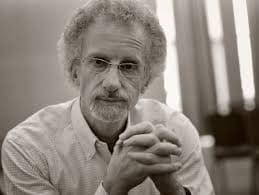
Philip Yancey is an American author known for his works exploring faith and spirituality. His notable books include "The Jesus I Never Knew," which offers a fresh perspective on the life of Jesus, and "The Bible Jesus Read," which examines the Old Testament's impact on Christian faith. Yancey's writing often reflects his journey through doubt and belief.
Similar books
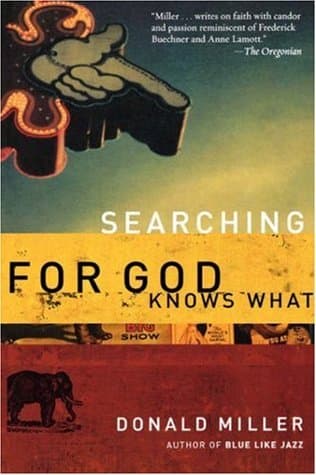
- Searching for God Knows What
Donald Miller
3.9 (25k) average on GoodreadsMemoirOffers a candid, often humorous, exploration of faith and doubt in a relatable, personal style.
- Eat, Pray, Love
Elizabeth Gilbert
3.6 (1.5M) average on GoodreadsLifestyleA heartbroken writer leaves her conventional life for a year-long global search for pleasure in Italy, spiritual devotion in India, and unexpected love and balance in Bali.
- Educated
Tara Westover
4.5 (796k) average on GoodreadsBiographyRaised in the Idaho mountains by fundamentalist survivalists, a young woman forges her own path to education, battling fierce family loyalty and personal demons to discover a world beyond her isolated upbringing.
- The Poisonwood Bible
Barbara Kingsolver
4.1 (659k) average on GoodreadsLiterary FictionA zealous missionary's rigid faith clashes with the Belgian Congo's wilderness and people, unraveling his family through the eyes of his five unforgettable women.
- Siddhartha
Hermann Hesse
4.0 (583k) average on GoodreadsHistorical FictionSiddhartha leaves a life of privilege and piety, embracing asceticism, wealth, and love to find enlightenment not in dogma, but in the whispers of a river and the unity of all existence.
- The Five People You Meet in Heaven
Mitch Albom
3.9 (578k) average on GoodreadsFantasyAn amusement park mechanic, Eddie, dies saving a child and awakens in an afterlife where five souls, some familiar, some strangers, reveal the meaning of his ordinary life.





Enjoyed the summary?
A summary gives you the shape of the book. The book itself has the detail, the examples and the voice.
Find The Jesus I Never Knew on AmazonAs an Amazon Associate, BookBrief earns from qualifying purchases. How we're funded