
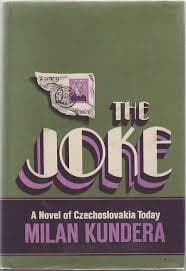
Synopsis
Covers the whole plot, including the ending.
- Difficulty
- Medium
- Pacing
- Moderate
- Mood
- Philosophical, Cynical, Melancholic, Reflective
- Read it if
- You appreciate intricate character studies, philosophical reflections on politics, love, and memory, and a multi-perspectival narrative style.
- Skip it if
- You prefer fast-paced plots with clear resolutions, or are looking for a straightforward political critique without existential depth.
The Joke Plot Summary
Covers the whole plot, including the ending.
Ludvik's Joke and its Consequences
Ludvik Jahn, a university student in Stalinist Czechoslovakia, sends a postcard to his girlfriend, Marketa, who is at a Party re-education camp. The postcard, a joke against communist optimism, reads: 'Optimism is the opium of the people! A healthy atmosphere stinks of stupidity! Long live Trotsky!' Marketa, taking it seriously or under pressure, shows it to Party authorities. This seemingly harmless joke is seen as political rebellion. Ludvik is expelled from the Communist Party and the university, drafted into a military unit for 're-education,' and forced into years of hard labor in Ostrava's coal mines. This is a severe, life-changing punishment for a simple, sarcastic remark.
Jaruslav's Folk Music and the Party
Jaruslav, a friend of Ludvik's from their Moravian hometown, loves traditional folk music and customs. He leads a folk ensemble and works to preserve Moravian heritage, which he sees as real and important. However, the Communist Party tries to take over and sanitize folk culture, turning it into state-approved propaganda. Jaruslav constantly negotiates with Party officials who want to control his music. He believes in the true spirit of folk traditions but also tries to navigate the political system to ensure their survival. This creates a conflict between his artistic integrity and political needs.
Helena's Search for Meaning
Helena Zemánková, a radio journalist and wife of Pavel Zemánek, Ludvik's former Party comrade and accuser, feels a growing emptiness in her life. Her marriage to Pavel lacks real intimacy and intellectual connection. Helena is an idealist who first believed in the Party's promises but has become aware of the hypocrisy around her. She longs for authenticity and a meaningful relationship, often projecting her desires onto others. She is drawn to Ludvik, whom she meets at a Party conference, seeing him as a man of depth and suffering. She does not know he is using her for his revenge against Pavel.
Ludvik's Plan for Revenge
After years of suffering from injustice, Ludvik carefully plans his revenge against Pavel Zemánek, the former Party comrade who played a big part in his expulsion. Ludvik learns that Pavel is now a well-known cultural figure and a womanizer, and that his wife, Helena, is unhappy. Ludvik's plan is to seduce Helena, not out of genuine attraction, but only to humiliate Pavel. He arranges to meet Helena, pretending interest in her and her work. He hides his true motives and the deep bitterness from his past. His revenge is a calculated act, designed to cause maximum emotional harm.
The Moravian Ride of the Kings
The annual Moravian 'Ride of the Kings' festival is a key setting for the novel's converging stories. Jaruslav is deeply involved in organizing and performing at the festival, seeing it as a vital expression of Moravian identity, even as Party officials try to control its message. Ludvik, having seduced Helena, brings her to the festival. He intends to publicly expose their affair and humiliate Pavel, who is also attending in an official role. The vibrant folk customs, music, and traditional costumes contrast sharply with the characters' inner turmoil, their political maneuvering, and Ludvik's cold revenge plot. This highlights the tension between authentic culture and manipulated ideology.
The Failed Seduction and Misunderstandings
Ludvik seduces Helena, but his satisfaction is brief and complicated. Helena, genuinely attracted to Ludvik and seeking a deeper connection, sees their encounter as a profound, romantic event. She is unaware of his vengeful intentions. Ludvik, in his cold calculations, finds himself unexpectedly put off by her earnestness and vulnerability, which conflicts with his desire for a clean, detached act of revenge. The act itself is clumsy and unsatisfying for him. This misinterpretation of intentions leads to tragicomic events, including Helena's misguided suicide attempt after Ludvik cruelly reveals his true motives. This further complicates his careful plan.
Pavel's Indifference and Ludvik's Disillusionment
Ludvik's elaborate revenge against Pavel Zemánek does not end in the dramatic confrontation he imagined. Instead, Pavel reacts with complete indifference to the affair with Helena. Pavel, a cynical and self-absorbed man, is neither surprised nor deeply hurt by his wife's infidelity. He treats it as a minor inconvenience, even a source of detached amusement. This nonchalance completely deflates Ludvik's long-held bitterness and years of planning. The revenge, rather than providing relief, leaves Ludvik feeling emptier and more disillusioned. He realizes that his suffering and his act of vengeance have meant nothing to his target.
Kostka's Religious Conversion
Kostka, another old friend of Ludvik's, offers a different way to find meaning outside the Party's ideology. He was once a devoted communist but became disillusioned and converted to Christianity, finding spiritual solace and a new purpose. He now works as a physical therapist and practices his faith. Kostka tries to help Ludvik, offering him a path to forgiveness and spiritual peace, believing Ludvik's suffering comes from a lack of faith. His view contrasts sharply with Ludvik's atheistic cynicism and his pursuit of earthly revenge. This highlights an alternative way to cope with life's injustices and find redemption.
Marketa's Return and Ludvik's Reflection
Ludvik unexpectedly meets Marketa, the girlfriend who reported his infamous postcard joke to the Party, many years later. Their meeting is brief and awkward. Marketa, now older and seemingly ordinary, shows no sign of understanding the profound impact her actions had on Ludvik's life. This encounter forces Ludvik to face the ordinary nature of evil and the random quality of his suffering. He realizes his torment was not from a grand, malicious conspiracy, but a chain of misunderstandings and rigid bureaucracy. This realization further shows the futility of his revenge and the absurdity of his initial punishment.
The Final Concert and Jaruslav's Collapse
The novel ends with a folk concert where Jaruslav's ensemble performs. During the performance, Jaruslav, already burdened by compromises with the Party and his son's declining health, falls ill and collapses on stage. This collapse symbolizes his physical and spiritual exhaustion, the pressure of preserving authentic Moravian culture against state control, and the general loss of genuine human spirit under totalitarianism. Ludvik, present at the concert, sees this collapse. It reflects on the vulnerability of art and tradition, and the heavy price paid by those who try to uphold them in a repressive regime.
The Joke Characters
Ludvik Jahn
Protagonist
A former university student expelled and punished for a political joke, consumed by a desire for revenge.
Ludvik is an intellectual, initially optimistic and somewhat rebellious, whose life is irrevocably altered by a seemingly innocent, sarcastic postcard. His expulsion from the Party and university, followed by years of forced labor, transforms him into a cynical, bitter man driven by a profound sense of injustice. He internalizes his suffering, meticulously planning an elaborate revenge against Pavel, one of his accusers. Despite his intellectual prowess, he often struggles with emotional connection and understanding, viewing the world through a lens of calculated self-interest and resentment. His journey is one of disillusionment and the ultimate futility of vengeance.
Relationships: Marketa (Former girlfriend who reported his joke, catalyst for his downfall.); Pavel Zemánek (Former Party comrade and accuser, target of Ludvik's revenge.); Helena Zemánková (Pavel's wife, whom Ludvik seduces as part of his revenge plot.); Jaruslav (Childhood friend, a folk musician who represents Moravian tradition.); Kostka (Former acquaintance, now a devout Christian, offering a path to spiritual peace.)
Jaruslav
Supporting
A passionate Moravian folk musician dedicated to preserving traditional culture.
Jaruslav is Ludvik's childhood friend, a musician and fervent advocate for Moravian folk traditions. He is deeply rooted in his culture, finding authenticity and meaning in its music, dances, and customs. He strives to preserve these traditions against the homogenizing and politicizing forces of the Communist Party, often making compromises to ensure their survival. Jaruslav is an earnest and somewhat naive character, representing a connection to a genuine, uncorrupted past. His struggles highlight the tension between authentic cultural expression and state control. He is also a devoted father, burdened by his son's illness, which adds to his overall sense of melancholy.
Relationships: Ludvik Jahn (Childhood friend, their paths diverge but their lives remain intertwined.); Jaruslav's Son (His ailing son, a source of worry and a symbol of vulnerability.)
Helena Zemánková
Supporting
A disillusioned radio journalist seeking meaning and genuine connection outside her unhappy marriage.
Helena is the wife of Pavel Zemánek and a radio journalist. Initially an idealist who believed in the Party's promises, she has become increasingly disillusioned with her superficial marriage and the hypocrisy of her surroundings. She yearns for authenticity, depth, and a meaningful romantic connection. Helena is emotionally vulnerable and prone to romanticizing situations and people, leading her to misinterpret Ludvik's intentions. Her idealism, though often misguided, makes her a sympathetic character caught between her desires for genuine human interaction and the cynical manipulations of others. She represents the human need for love and understanding in a world often devoid of both.
Relationships: Pavel Zemánek (Her husband, with whom she has a loveless and superficial marriage.); Ludvik Jahn (Her lover, unaware he is being used as a pawn in Ludvik's revenge.)
Pavel Zemánek
Antagonist/Supporting
Ludvik's former Party comrade and accuser, now a cynical and self-serving cultural figure.
Pavel Zemánek is a former Party comrade of Ludvik's who played a role in his expulsion. He has since risen in the Party ranks and become a prominent cultural figure, embodying the opportunistic and cynical aspects of the regime. Pavel is a womanizer, self-important, and emotionally detached, viewing relationships and political ideology as tools for personal advancement. He represents the superficiality and moral bankruptcy that Ludvik despises. His indifference to Ludvik's revenge plot highlights the futility of Ludvik's long-held grudge and exposes Pavel's shallow nature, making him less a villain and more a symbol of systemic banality.
Relationships: Ludvik Jahn (Former comrade, target of Ludvik's revenge.); Helena Zemánková (His wife, whom he treats with indifference.)
Kostka
Supporting
A former Party member who found solace and purpose in Christianity.
Kostka is an old acquaintance of Ludvik's who, after experiencing disillusionment with the Communist Party, converted to Christianity. He now works as a physical therapist and is a devout man, embodying a spiritual alternative to political ideology. Kostka attempts to offer Ludvik a path to forgiveness and peace through faith, believing that Ludvik's suffering and bitterness stem from a lack of spiritual connection. His character serves as a foil to Ludvik's cynicism and Jaruslav's cultural nationalism, presenting a different worldview focused on inner peace and redemption. He represents a search for meaning outside of worldly power structures.
Relationships: Ludvik Jahn (Former acquaintance, whom he tries to guide towards spiritual redemption.)
Marketa
Mentioned/Supporting
Ludvik's former girlfriend, whose reporting of his joke initiated his downfall.
Marketa is Ludvik's girlfriend at the time of his infamous postcard joke. While at a Party re-education camp, she reports his satirical message to the authorities, either out of genuine belief in the Party's ideals or under pressure to conform. Her action, whether naive or opportunistic, is the catalyst for Ludvik's expulsion and years of hardship. Ludvik later encounters her, finding her to be an ordinary woman, seemingly oblivious to the profound impact her actions had on his life. She represents the arbitrary nature of the totalitarian system and the ease with which individuals can become instruments of its oppression, often without full comprehension of the consequences.
Relationships: Ludvik Jahn (Former girlfriend, whose action led to his downfall.)
The Joke Themes
The Absurdity and Cruelty of Totalitarianism
The novel shows how a harmless joke can lead to devastating consequences under a totalitarian regime. Ludvik's expulsion and forced labor for a sarcastic postcard show the disproportionate nature of state power. The Party's attempts to control folk culture, as seen in Jaruslav's struggles, illustrate the regime's reach into every part of life. It demonstrates its capacity for both cruelty and bureaucratic absurdity. The characters' struggles often come from a lack of individual freedom and the constant threat of state surveillance and punishment.
“Optimism is the opium of the people! A healthy atmosphere stinks of stupidity! Long live Trotsky!”
The Futility of Revenge
Ludvik spends years planning revenge against Pavel Zemánek, thinking it will bring him relief and justice. However, when he carries out his plan, it feels empty. Pavel's indifference to the affair with Helena deflates Ludvik's bitterness, leaving him feeling hollow. The novel suggests that revenge offers a temporary illusion of control but fails to heal past wounds or provide real satisfaction. It often continues a cycle of emptiness rather than resolution. Ludvik's realization shows that the 'joke' was ultimately on him.
“My revenge was as meaningless as the joke that had caused my downfall.”
Misunderstanding and Miscommunication
A main theme is the widespread nature of misunderstanding. Ludvik's joke is taken seriously, and Helena misinterprets Ludvik's intentions. His sarcastic postcard is seen as political rebellion, causing his downfall. Helena, seeking genuine connection, completely misreads Ludvik's cold, vengeful seduction as a profound romantic encounter. Even Ludvik misjudges Pavel's reaction, expecting a dramatic confrontation instead of indifference. These layers of miscommunication drive much of the plot's tragicomic elements and highlight how difficult true human connection is, especially in a society where real expression is suppressed.
“What happens in the realm of misunderstanding is perhaps the most human of all stories.”
The Erosion of Authenticity and Culture
The novel explores how totalitarian regimes try to control and distort cultural expression, leading to a loss of authenticity. Jaruslav's efforts to preserve genuine Moravian folk music and traditions constantly clash with the Party's desire to sanitize and use them for propaganda. The 'Ride of the Kings,' an ancient ritual, becomes a stage for political maneuvering rather than pure cultural celebration. This theme highlights the struggle to maintain a connection to genuine heritage and individual expression against ideological conformity. It suggests that true culture is often suppressed or manipulated for political ends.
“The past is being systematically destroyed, liquidated, forgotten. Or, if it is remembered, it is remembered in a falsified, distorted form.”
Plot Devices & Literary Techniques
Multiple First-Person Narrators
The story is told from the perspectives of several main characters.
The novel employs a rotating first-person narrative, shifting between Ludvik, Jaruslav, Helena, and Kostka. This allows Kundera to present a multifaceted view of events, highlighting the subjective nature of truth and how each character interprets the same situations differently based on their experiences, beliefs, and emotional states. This technique deepens the theme of misunderstanding and provides a rich tapestry of internal monologues, revealing the characters' motivations, their internal conflicts, and the psychological impact of their environment. It also prevents any single character from holding complete authority over the narrative's 'truth'.
The 'Joke' as a Catalyst and Metaphor
Ludvik's sarcastic postcard acts as the inciting incident and a symbol for the novel's central themes.
The postcard Ludvik sends is the primary catalyst for all the subsequent events, setting his life on a trajectory of suffering and revenge. Beyond its literal role, the 'joke' itself functions as a powerful metaphor. It represents the arbitrary nature of totalitarian power, where a lighthearted jest can be interpreted as serious subversion. It also symbolizes the profound miscommunication between individuals and between the individual and the state. The joke highlights the tragicomic absurdity of life under such a regime, where intent is irrelevant and consequences are severe, ultimately exposing the hollow nature of Ludvik's revenge.
Folk Music and Tradition
Moravian folk music and customs serve as a cultural backdrop and a symbol of authenticity.
Moravian folk music, particularly through Jaruslav's character, is more than just a setting; it's a symbolic element representing genuine cultural identity and resistance against political manipulation. It embodies authenticity, a connection to the past, and a form of expression that the Communist Party attempts to co-opt and control. The 'Ride of the Kings' festival, with its ancient roots and vibrant traditions, stands in stark contrast to the sterile, ideological world of the Party. The vulnerability of this folk culture mirrors the vulnerability of individual freedom and truth in the face of totalitarian power, highlighting what is lost when authenticity is suppressed.
Ironic Juxtaposition
Kundera frequently places contrasting elements side-by-side to highlight absurdity and meaning.
Kundera uses ironic juxtaposition to underscore the novel's themes. For example, the vibrant, celebratory atmosphere of the 'Ride of the Kings' festival is juxtaposed with Ludvik's cold, calculated revenge plot and the characters' internal turmoil. The earnest idealism of Helena is contrasted with Ludvik's cynical manipulation. The profound suffering Ludvik endures for his joke is ironically contrasted with Pavel's utter indifference to the revenge. This device emphasizes the absurd disjuncture between intention and outcome, appearance and reality, and the human desire for meaning versus the often meaningless nature of existence under a repressive regime.
The Joke Quotes
“The only reason people want to be masters of the future is to change the past.”
“A man who has lost his memory is like a man who has lost his shadow.”
“The joke is that there is no joke. Or rather, the joke is that we don't know there is a joke.”
“Humanity's true moral test, its fundamental test, consists of its attitude towards those who are at its mercy: animals.”
“The past is a foreign country; they do things differently there.”
“When we want to destroy a man, we say he is a traitor. Then we destroy him.”
“The more time passes, the more I am convinced that the world is governed by misunderstandings.”
“There are things in life that are not a joke, but they are born from a joke.”
“Man can never know what to want, because he lives only one life and in no way can he compare it with his previous lives nor adjust it in his subsequent lives.”
“The most dangerous thing for a political regime is not the opposition, but the joke.”
“The only way to be happy is to love your suffering.”
“A human life, once it is born, must continue to live, it must continue to develop, it must continue to grow old. It cannot stop and go back.”
“The beautiful is always strange.”
“Life is a one-way street, and no matter how many detours you take, none of them lead back.”
Quiz
10 questions on the plot and the characters. Each answer comes with a short explanation.
Question 1
Which character sends a postcard to his girlfriend, Ludvik, with a joke that leads to his expulsion from the Communist Party?
- Jaroslav
- Zemanek
- Ludvik Jahn
- Pavel
Show answer
C. Ludvik Jahn Ludvik Jahn is the protagonist who sends the fateful postcard to Marketa, which is misinterpreted as anti-state propaganda.
Question 2
What is the primary motivation behind Ludvik Jahn's decision to seduce Helena?
- He genuinely falls in love with her.
- He wants to exact revenge on Zemanek, her husband.
- He is pressured by his friends to do so.
- He is bored and seeking a new experience.
Show answer
B. He wants to exact revenge on Zemanek, her husband. Ludvik's primary motivation for seducing Helena is to get revenge on Zemanek, who played a role in his expulsion from the party.
Question 3
Which musical instrument does Jaroslav play, symbolizing his connection to traditional Moravian folk culture?
- Piano
- Violin
- Cimbalom
- Guitar
Show answer
C. Cimbalom Jaroslav is a cimbalom player, and his passion for folk music and traditional culture is a significant aspect of his character.
Question 4
What is the 'joke' Ludvik writes on the postcard that leads to his downfall?
- 'Long live Trotsky!'
- 'Optimism is the opium of the people! A healthy atmosphere stinks of stupidity! Long live Trotsky!'
- 'Down with the Party!'
- 'Our leaders are fools!'
Show answer
B. 'Optimism is the opium of the people! A healthy atmosphere stinks of stupidity! Long live Trotsky!' Ludvik's postcard read: 'Optimism is the opium of the people! A healthy atmosphere stinks of stupidity! Long live Trotsky!' It was intended as a sarcastic joke but was taken literally and as anti-state.
Question 5
How does Helena react when she discovers Ludvik's true intentions regarding their affair?
- She confronts Zemanek directly.
- She attempts suicide.
- She accepts his apology and forgives him.
- She immediately leaves him and returns to her husband.
Show answer
B. She attempts suicide. Upon realizing Ludvik's deceit and the true nature of their relationship, Helena attempts suicide by consuming an overdose of pills.
Question 6
Which of the following themes is most central to 'The Joke'?
- The triumph of love over adversity.
- The power of forgiveness and reconciliation.
- The destructive nature of political ideology and the futility of revenge.
- The importance of tradition in modern society.
Show answer
C. The destructive nature of political ideology and the futility of revenge. The novel deeply explores how political ideology distorts human relationships and how Ludvik's quest for revenge ultimately proves hollow and self-defeating.
Question 7
What is the ultimate irony of Ludvik's revenge plan against Zemanek?
- Zemanek was already planning to divorce Helena.
- Helena was secretly in love with Ludvik.
- Ludvik accidentally falls in love with Helena.
- Zemanek never truly cared for Helena.
Show answer
A. Zemanek was already planning to divorce Helena. The profound irony is that Zemanek was already planning to leave Helena, rendering Ludvik's elaborate revenge scheme completely meaningless and ineffective in causing Zemanek any significant pain.
Question 8
The novel employs a multi-perspectival narrative structure. Which of the following characters is NOT one of the primary narrators?
- Ludvik Jahn
- Helena
- Karel
- Jaroslav
Show answer
C. Karel The novel is narrated from the perspectives of Ludvik, Helena, Jaroslav, and Kostka. Karel is a minor character but not a narrator.
Question 9
What philosophical concept, often associated with Kundera's work, is explored through Ludvik's inability to escape the consequences of his past actions?
- Existentialism
- The eternal return
- Absurdism
- Nihilism
Show answer
B. The eternal return Kundera frequently explores the idea of 'the eternal return' (Nietzschean concept) in his work, which suggests that life's events repeat, trapping characters in cycles of their past decisions, much like Ludvik is haunted by his 'joke'.
Question 10
At the end of the novel, what is Ludvik's emotional state regarding his revenge and past grievances?
- He feels triumphant and satisfied.
- He experiences profound regret and a desire for reconciliation.
- He is left with a sense of emptiness and the realization of the futility of his actions.
- He is planning new acts of revenge against other former adversaries.
Show answer
C. He is left with a sense of emptiness and the realization of the futility of his actions. By the novel's conclusion, Ludvik realizes that his long-held desire for revenge has been utterly pointless and has left him with a deep sense of disillusionment and emptiness, rather than satisfaction.
The Joke FAQ
What is the central premise of 'The Joke'?
'The Joke' centers on Ludvik Jahn, a student expelled from the Communist Party in 1950s Czechoslovakia for a 'joke' postcard he sent to his girlfriend, Marketa. The novel explores the long-lasting repercussions of this seemingly trivial act on Ludvik's life and his subsequent attempts at revenge decades later.
Who are the main narrators in the novel, and how do their perspectives differ?
The novel is narrated by four main characters: Ludvik Jahn, Helena Zemánková, Jaroslav, and Kostka. Ludvik's perspective is marked by bitterness and a desire for revenge, Helena offers a more naive and romanticized view of her past, Jaroslav provides a nostalgic and somewhat idealized look at Moravian folk culture, and Kostka brings a spiritual and philosophical dimension to the narrative.
What 'joke' leads to Ludvik's expulsion and subsequent suffering?
Ludvik sends a postcard to his girlfriend, Marketa, with the message: 'Optimism is the opium of the people! A healthy atmosphere stinks of stupidity! Long live Trotsky!' This sarcastic remark, taken out of context by Party officials, is interpreted as anti-state subversion, leading to his immediate expulsion from the university and the Party.
How does Ludvik attempt to enact his revenge later in life?
Decades after his expulsion, Ludvik plans to seduce Helena, the wife of Pavel Zemánek, the man he believes was most responsible for his downfall. His intention is to humiliate Pavel and find satisfaction in his former tormentor's suffering, but the plan unravels in unexpected ways.
What role does Moravian folk music and culture play in the novel?
Moravian folk music, particularly through the character of Jaroslav, represents a connection to tradition, authenticity, and a simpler past, often contrasted with the oppressive and inauthentic nature of the Communist regime. It becomes a symbol of cultural identity and a source of both solace and conflict for the characters.
What is the significance of the repeated motif of 'misunderstanding' throughout the book?
Misunderstanding is a central theme, starting with the misinterpretation of Ludvik's postcard. It highlights how words, intentions, and even entire lives can be irrevocably altered by context, authority, and the inability of others to grasp true meaning, leading to tragic and ironic outcomes.
How does Kundera use the structure of multiple narrators to reveal different facets of the same events?
The multiple narrators allow Kundera to present the same events from conflicting perspectives, revealing the subjective nature of truth and memory. For instance, Ludvik's bitter recollection of his past contrasts sharply with Helena's romanticized version or Jaroslav's nostalgic view, creating a layered and complex understanding of history.
What is the deeper connection between Ludvik and Kostka, despite their seemingly different paths?
Both Ludvik and Kostka grapple with existential questions and the search for meaning, though they arrive at different conclusions. Ludvik seeks meaning in revenge and earthly justice, while Kostka finds solace and purpose in his Christian faith and a rejection of worldly pursuits. They represent two divergent responses to suffering and disillusionment.
How does the novel subtly critique the concept of 'historical truth'?
Through the differing accounts of the narrators, the novel demonstrates that 'historical truth' is often a construct, influenced by personal biases, political agendas, and the passage of time. The 'truth' of Ludvik's joke, for example, is less about his actual intention and more about its interpretation and consequences.
Analyze Ludvik's psychological state throughout the novel. Is his quest for revenge ultimately satisfying?
Ludvik is consumed by bitterness, resentment, and a deep-seated desire for retribution. His psychological state is one of arrested development, unable to move past the trauma of his past. His quest for revenge against Pavel is not satisfying; instead, it exposes the hollowness of his pursuit and the futility of trying to undo the past.
How does Helena's character embody a certain psychological naivety or idealism?
Helena often maintains a naive and romanticized view of her past, her marriage, and even her understanding of Ludvik's intentions. She projects her own desires and interpretations onto situations, demonstrating a psychological idealism that often clashes with the harsh realities experienced by Ludvik and others.
Discuss the psychological impact of living under a totalitarian regime as depicted in the book.
The novel profoundly illustrates the psychological impact of totalitarianism, showing how fear, suspicion, and the constant threat of denunciation warp personal relationships and individual identity. Characters like Ludvik carry the scars of state oppression, leading to paranoia, resentment, and a profound sense of alienation.
What is the psychological role of memory and forgetting for the characters?
Memory is both a burden and a source of identity for the characters. Ludvik is haunted by his memories, while Jaroslav clings to nostalgic ones. The novel suggests that while forgetting can sometimes be a form of liberation, the inability to truly forget or reconcile with the past leads to prolonged psychological suffering and an inability to move forward.
In what ways does 'The Joke' challenge the notion of a single, objective truth?
By presenting the same events through multiple, often contradictory, narrators, the novel fundamentally challenges the idea of an objective truth. Each character's 'truth' is subjective, shaped by their experiences, biases, and desires, demonstrating that reality is a fragmented and contested construct.
How does the novel explore the theme of identity in the context of political change?
The novel shows how political forces can profoundly shape and distort individual identity. Ludvik's identity is irrevocably marked by his expulsion, reducing him to 'the man who made the joke.' Characters struggle to maintain or reclaim a sense of self in a world where personal identity is often subsumed by political labels.
Is 'The Joke' primarily a political novel, or does it transcend political commentary?
While deeply rooted in the political context of Communist Czechoslovakia, 'The Joke' transcends mere political commentary to explore universal themes of human existence. It uses the political backdrop to delve into themes of love, revenge, fate, misunderstanding, memory, and the search for meaning, making it a timeless work of literature.
What philosophical questions does Kostka's perspective introduce into the narrative?
Kostka's perspective introduces profound philosophical questions about faith, suffering, forgiveness, and the nature of good and evil. He offers an alternative to Ludvik's secular despair, suggesting that true freedom and meaning might lie in spiritual transcendence rather than worldly pursuits or political struggles.
How does the novel critique the nature of 'progress' or 'modernity'?
The novel critiques 'progress' as often leading to the destruction of authentic culture (like Moravian folk traditions) and the imposition of artificial ideologies. It questions whether modernity, especially under a totalitarian regime, truly enhances human life or instead alienates individuals and stifles genuine expression.
What is the ultimate irony in Ludvik's attempt at revenge?
The ultimate irony is that Ludvik's carefully planned revenge against Pavel Zemánek completely misfires. Pavel is indifferent to Helena's infidelity, and Ludvik's act of seduction becomes an empty gesture, revealing the futility of his decades-long grudge and the profound disconnect between his internal suffering and the external world.
About the author
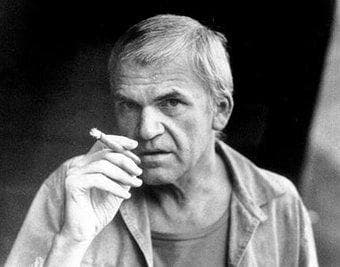
Milan Kundera is a Czech-born French writer. Kundera went into exile in France in 1975, acquiring citizenship in 1981. His Czech citizenship was revoked in 1979 and restored in 2019. He "sees himself as a French writer and insists his work should be studied as French literature and classified as such in book stores".
Similar books
- The Unbearable Lightness of Being
Milan Kundera
4.1 (342k) average on GoodreadsLiterary FictionExplores similar themes of love, politics, and the human condition with philosophical depth and a multi-narrator approach.
- One Day in the Life of Ivan Denisovich
Aleksandr Solzhenitsyn
4.0 (93k) average on GoodreadsHistorical FictionOffers a stark portrayal of life in a Soviet labor camp and the resilience of the human spirit under oppression.
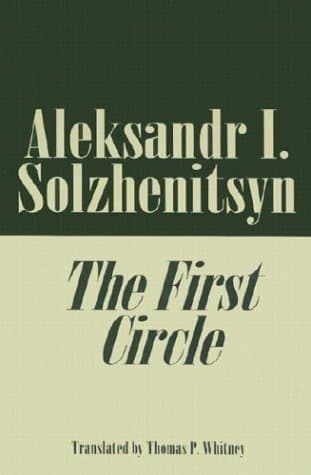
- The First Circle
Aleksandr Solzhenitsyn
4.2 (7k) average on GoodreadsPoliticsWhile both _The Joke_ and Solzhenitsyn's _The First Circle_ expose the absurdities and cruelties of totalitarian regimes, they differ significantly in their approach. Solzhenitsyn's work offers a more direct, journalistic, and sprawling indictment of the Soviet Gulag system, focusing on the sheer scale of human suffering and moral endurance within a prison setting. Kundera, in contrast, delves more deeply into the psychological and philosophical ramifications of totalitarianism on individual lives outside direct incarceration, emphasizing the subtle ways ideology distorts communication, love, and identity. Solzhenitsyn's narrative is epic and realist, whereas Kundera employs a more modernist, fragmented, and ironic style, focusing on the subjective experience of political oppression rather than its objective documentation.
- The Old Man and the Sea
Ernest Hemingway
3.8 (831k) average on GoodreadsLiterary FictionA Cuban fisherman's long struggle with a giant marlin becomes a story of endurance and dignity, now retold for young adults with illustrations, phonetic guides, and writing prompts in Traditional Chinese.
- One Hundred Years of Solitude
Gabriel García Márquez
4.1 (753k) average on GoodreadsLiterary FictionThrough the multi-generational story of the Buendía family, a mythical town deals with the repeating patterns of time, love, and solitude, as the extraordinary mixes with the ordinary.
- The Goldfinch
Donna Tartt
3.9 (720k) average on GoodreadsLiterary FictionHaunted by a tragic explosion and clutching a stolen Dutch masterpiece, a young orphan navigates the opulent drawing rooms of New York and the gritty underbelly of the art world, desperately seeking connection and redemption amidst a life spiraling into crime and obsession.





Enjoyed the summary?
A summary gives you the shape of the book. The book itself has the detail, the examples and the voice.
Find The Joke on AmazonAs an Amazon Associate, BookBrief earns from qualifying purchases. How we're funded