
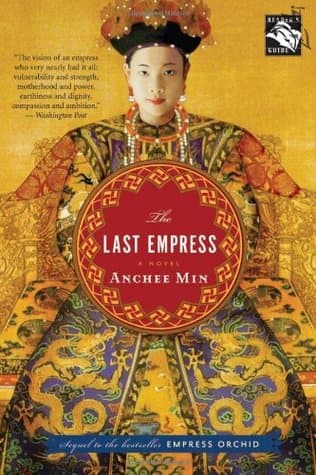
Synopsis
Covers the whole plot, including the ending.
- Difficulty
- Medium
- Pacing
- Moderate
- Mood
- Epic, Resilient, Tragic, Thought-provoking
- Read it if
- You enjoy historical fiction about powerful women, Chinese history, or stories of political intrigue and personal sacrifice.
- Skip it if
- You prefer fast-paced action or are looking for a light, uncomplicated read.
The Last Empress Plot Summary
Covers the whole plot, including the ending.
The Burden of Motherhood and Succession
The novel opens with Empress Orchid, formerly Lady Yehonala, navigating the complex politics of the Forbidden City. Her son, Emperor Tongzhi, is nearing adulthood and preparing to assume full power, which will move Orchid to a less influential, though still respected, position as Empress Dowager. Orchid worries about Tongzhi's frivolous nature and lack of interest in governance. She believes him unprepared for the throne's immense responsibilities. She also faces scrutiny from conservative Manchu elders and the lingering influence of Empress Nuharoo, Emperor Xianfeng's former primary wife. Orchid's past decisions, especially her role in the coup that brought her to power, continue to cast a long shadow, making her aware of the dangers around her and her son.
Tongzhi's Rebellion and Tragic Demise
As Emperor Tongzhi comes of age, he increasingly resents his mother's continued guidance and the Grand Council's influence. He asserts his authority by making impulsive decisions, including favoring a concubine over his empress and engaging in illicit activities outside the palace. Orchid, despite her deep love for him, finds herself in a difficult position. She is torn between allowing him to rule independently and protecting the dynasty from his perceived recklessness. Tongzhi's defiance and rumored visits to brothels lead to him contracting smallpox (or syphilis, as hinted), a disease that quickly incapacitates him. His death devastates Orchid and leaves the empire without a direct heir, causing a succession crisis.
The Succession Crisis and Guangxu's Ascension
Following Tongzhi's death, the Manchu clan faces a severe succession problem. Custom dictates that the new emperor must be of the next generation to properly honor the deceased emperor. However, Orchid, determined to maintain stability and her influence, makes the controversial decision to adopt her nephew, Zaitian (later Emperor Guangxu), as her son and install him as emperor. This move violates Manchu tradition but is supported by powerful figures like Prince Gong, who recognize the need for strong leadership during a turbulent period. Orchid's decision secures her position as co-regent with Empress Nuharoo, consolidating her power while creating a complex family dynamic within the imperial court.
The Death of Empress Nuharoo and Sole Regency
Empress Nuharoo, Orchid's co-regent and Emperor Xianfeng's former primary wife, eventually dies from illness. Her death removes a significant political rival and a constant source of tension for Orchid. While Nuharoo often opposed Orchid, her presence also provided a balance of power within the regency. With Nuharoo gone, Orchid becomes the sole Empress Dowager Regent, taking on the full weight of governing a vast and troubled empire. This transition marks a turning point, as Orchid must now navigate internal politics and external threats without Nuharoo's buffer or challenge. The burden of leadership, already immense, now rests entirely on her.
The Threat of Foreign Powers and Internal Unrest
Throughout her regency, Empress Orchid faces continuous challenges from Western powers – Britain, France, Russia, Japan, and the United States – who demand trade concessions, extraterritorial rights, and territorial leases. The Opium Wars and subsequent treaties have weakened China, and foreign gunboats frequently threaten the coast. At the same time, internal rebellions, such as the Taiping Rebellion (which was largely suppressed earlier but its aftermath still resonates) and smaller uprisings, plague the countryside. These show deep discontent among the people. Orchid struggles to modernize China's military and infrastructure while resisting foreign encroachment without provoking full-scale war. This delicate balancing act often pits conservatives against progressives within her own court.
Guangxu's Education and Growing Independence
Empress Orchid dedicates herself to Emperor Guangxu's education, ensuring he receives instruction in both traditional Manchu customs and modern subjects. She selects tutors and oversees his studies with meticulous care, hoping to mold him into a capable ruler. However, as Guangxu matures, he becomes influenced by progressive thinkers and reformist ideas, particularly those advocating for Western-style modernization. This intellectual awakening creates a growing ideological divide between Guangxu and Orchid. While Orchid recognizes the need for some reform, she is more cautious and traditional, prioritizing the Manchu dynasty's stability over radical change. Their differing visions for China begin to create tension in their relationship.
The Hundred Days' Reform and its Crushing
Emperor Guangxu, inspired by Kang Youwei and Liang Qichao, launches the Hundred Days' Reform in 1898. He issues numerous edicts aimed at modernizing China's government, education, and military. These reforms threaten the power of conservative Manchu officials and eunuchs, who appeal to Empress Orchid. Seeing the reforms as too radical, too fast, and a direct challenge to her authority and the Manchu dynasty's foundations, Orchid, with the support of powerful conservative generals like Ronglu, stages a counter-coup. She quickly reverses Guangxu's edicts, imprisons or executes the reformers, and places Guangxu under house arrest. This reasserts her absolute control over the empire. This event marks the end of Guangxu's political autonomy.
The Boxer Rebellion and Flight to Xi'an
Frustrated by foreign aggression and the imperial government's perceived weakness, a xenophobic peasant movement known as the Boxers rises in northern China. Empress Orchid, swayed by anti-foreign sentiment and the Boxers' claims of supernatural protection, initially supports them. She even issues an edict declaring war on all foreign powers. This catastrophic decision leads to the siege of the foreign legations in Beijing and a swift, brutal military intervention by an Eight-Nation Alliance. As foreign troops march on the capital, Orchid, along with Emperor Guangxu and the imperial court, is forced to flee Beijing in disguise to Xi'an. This is a humiliating experience that exposes the dynasty's vulnerability and her misjudgment.
Return to Beijing and Renewed Reforms
Following the signing of the humiliating Boxer Protocol, which imposed heavy indemnities and allowed foreign troops to be stationed in Beijing, Empress Orchid and the imperial court return to the capital. The experience of exile and the crushing defeat by foreign powers force Orchid to recognize the urgent need for modernization. She begins a new, more comprehensive reform program, known as the New Policies. This includes abolishing the imperial examination system, establishing modern schools, creating a new army, and even promising a constitutional monarchy. These reforms are far-reaching and, ironically, mirror many of the changes Guangxu had attempted years earlier, showing Orchid's ability to adapt, even if it came late.
The Lingering Shadow of Guangxu
Despite her reform efforts, the relationship between Empress Orchid and Emperor Guangxu remains strained and marked by deep resentment. Guangxu, essentially her prisoner, never forgives her for crushing his reforms and limiting his power. He becomes increasingly frail and sickly, a shadow of his former self. Orchid, though she holds all the power, is haunted by the knowledge of his unhappiness and their bond's tragic course. She is torn between her love for him as a son and her conviction that her actions were necessary to preserve the dynasty. Their complex, often agonizing relationship is a central emotional thread throughout this period. It culminates in a final, tragic twist.
The Deaths of Guangxu and Orchid
In November 1908, Emperor Guangxu dies suddenly and mysteriously, just one day before Empress Orchid's own death. The timing raises immediate suspicions of foul play, with many believing Orchid, fearing Guangxu might regain power after her death, ordered his poisoning. Orchid herself dies shortly after, having designated the infant Puyi as the next emperor, with Prince Chun (Puyi's father) as regent. Her death marks the end of her extraordinary and tumultuous reign, a period characterized by challenges and her unwavering, often ruthless, determination to preserve the Manchu dynasty. Her final act of succession planning, however, proved to be a temporary solution for a dynasty already on the brink of collapse.
The Last Empress Characters
Empress Orchid (Tzu Hsi, Lady Yehonala)
Protagonist
The resilient and politically astute Empress Dowager who rules China for decades.
Empress Orchid, originally Lady Yehonala, is the central figure of the novel. She is depicted as a woman of immense intelligence, strength, and pragmatism, thrust into a position of power in a male-dominated world. Initially a concubine, she rises to become the de facto ruler of China, navigating treacherous court politics, foreign aggression, and internal rebellions. Orchid is deeply devoted to her family and the Manchu dynasty, believing her actions, however ruthless, are necessary for its survival. She possesses a remarkable capacity for learning and adaptation, evolving from an instinctive young woman to a wise, albeit authoritarian, leader.
Relationships: Emperor Tongzhi (Her biological son, whom she loves deeply but struggles to guide, leading to conflict and his tragic death.); Emperor Guangxu (Her adopted son and nephew, whom she initially grooms for rule but later places under house arrest due to ideological differences.); Empress Nuharoo (Her co-regent and former rival, with whom she shares a complex, often tense, working relationship.); Prince Gong (A powerful and intelligent ally who supports her ascension to regency and offers counsel.); Ronglu (A trusted general and loyal supporter, sometimes hinted to have a deeper, unspoken connection to Orchid.)
Emperor Tongzhi
Supporting
Empress Orchid's biological son and the young emperor whose reign is cut short.
Emperor Tongzhi is Empress Orchid's only biological son and the heir to the Manchu throne. He is portrayed as a young man who struggles with the immense pressure of his position. He is often depicted as rebellious, preferring pleasure and independence over the rigid demands of imperial rule. His desire to escape his mother's influence and the confines of the palace leads him down a path of recklessness, ultimately resulting in his early death. His inability to rule effectively and his untimely demise are significant catalysts for the political turmoil and succession crisis that follow.
Relationships: Empress Orchid (His mother, whose strict guidance he resents, leading to conflict despite her deep love for him.)
Emperor Guangxu (Zaitian)
Supporting
Empress Orchid's adopted son and nephew, a reform-minded emperor who challenges her authority.
Emperor Guangxu is Empress Orchid's adopted son and biological nephew, chosen by her to succeed Tongzhi. He is depicted as intelligent, earnest, and deeply committed to modernizing China. Unlike Tongzhi, Guangxu is eager to learn and embrace new ideas, particularly those from the West. This progressive outlook, however, puts him directly at odds with Empress Orchid's more cautious and traditional approach to governance. His attempt at radical reform, the Hundred Days' Reform, is brutally suppressed by Orchid, leading to his effective imprisonment and a life of profound resentment and powerlessness.
Relationships: Empress Orchid (His adoptive mother and aunt, who initially grooms him but later crushes his reforms and restricts his freedom.); Kang Youwei (A key reformist ideologue who heavily influences Guangxu's political agenda.)
Empress Nuharoo (Empress Ci'an)
Supporting
The former primary wife of Emperor Xianfeng and co-regent with Empress Orchid.
Empress Nuharoo is the former primary wife of Emperor Xianfeng and, for a time, co-regent with Empress Orchid. She represents the conservative faction within the Manchu court and often serves as a foil to Orchid's more pragmatic and sometimes ruthless decisions. While not as politically shrewd as Orchid, Nuharoo holds significant traditional authority and influence. Her relationship with Orchid is complex, marked by a blend of rivalry, shared responsibility, and occasional mutual respect. Her death leaves Orchid as the sole regent, further consolidating Orchid's power but also removing a vital check on her authority.
Relationships: Empress Orchid (Her co-regent and political rival, with whom she shares a tense but often necessary alliance.)
Prince Gong
Supporting
Empress Orchid's intelligent and reform-minded brother-in-law, a key political ally.
Prince Gong is a highly intelligent and capable statesman, the brother of Emperor Xianfeng and a crucial ally to Empress Orchid. He is more open to Western ideas and modernization than many other conservative Manchu officials, advocating for reforms to strengthen China against foreign aggression. He plays a pivotal role in supporting Orchid's regency and her controversial decision to place Guangxu on the throne. Prince Gong often acts as a bridge between Orchid and the more progressive elements of the court, providing strategic advice and a measured voice of reason, though even he eventually falls out of favor with Orchid at times.
Relationships: Empress Orchid (Her brother-in-law and a crucial political ally and advisor, sharing a mutual respect despite occasional disagreements.)
Ronglu
Supporting
A powerful Manchu general and loyal confidant of Empress Orchid.
Ronglu is a prominent Manchu general and a deeply loyal supporter of Empress Orchid. He is a pragmatic and powerful figure in the military and court, often serving as Orchid's enforcer and a steadfast conservative force. His loyalty to Orchid is unwavering, and he plays a critical role in her suppression of the Hundred Days' Reform and in maintaining order during turbulent times. The novel hints at a deeper, unspoken affection or bond between Ronglu and Orchid, suggesting a relationship that transcends mere political alliance and adds a layer of personal tragedy to their shared burdens.
Relationships: Empress Orchid (A deeply loyal general and confidant, possibly with unexpressed romantic feelings, who acts as her key enforcer and protector.)
Kang Youwei
Mentioned
A leading intellectual and key figure in the Hundred Days' Reform.
Kang Youwei is a prominent scholar and leading figure in the reform movement of the late 19th century. He advocates for radical institutional and political changes inspired by Western models, believing they are essential for China's survival. His ideas profoundly influence Emperor Guangxu, leading to the Hundred Days' Reform. Kang Youwei's intellectual vision represents the progressive challenge to the traditional Manchu order and ultimately contributes to the clash between Guangxu and Empress Orchid. After the reform's failure, he becomes a hunted man, escaping into exile.
Relationships: Emperor Guangxu (His intellectual mentor and inspiration for the Hundred Days' Reform.)
Liang Qichao
Mentioned
A prominent reformer and student of Kang Youwei.
Liang Qichao is another influential intellectual and student of Kang Youwei, who actively participates in the Hundred Days' Reform. Like Kang, he advocates for significant political and social changes to modernize China. His involvement with the reform movement solidifies his status as a key figure among the progressive intellectuals. After the conservative backlash, he also flees into exile, continuing to advocate for reform from abroad. Liang Qichao represents the younger generation of intellectuals who desperately sought to propel China into the modern era.
Relationships: Emperor Guangxu (An influential advisor during the Hundred Days' Reform.); Kang Youwei (His teacher and fellow reformist.)
The Last Empress Themes
The Burden of Leadership and Sacrifice
The novel explores the personal and moral costs of leadership, especially for Empress Orchid. She is shown as a woman who constantly sacrifices personal happiness, family relationships, and her reputation to protect the Manchu dynasty and what she believes is best for China. Her decisions, whether with her sons, Nuharoo, or foreign powers, are almost always driven by this strong sense of duty. The isolation that comes with her power, and the internal struggle to make unpopular but necessary choices, is a recurring idea, highlighting the heavy price of her reign. For example, her decision to crush Guangxu's reforms, though presented as a painful necessity, leads to his lifelong suffering.
“A leader must not be loved, but feared. Only then can order be maintained.”
Tradition vs. Modernization
A central conflict in the novel is the tension between China's deep traditions and the urgent need for modernization in the face of Western intrusion. Empress Orchid, while a practical reformer, is bound by the conservative Manchu clan's customs and imperial history. Her son, Guangxu, represents the strong desire for rapid, Western-style reform. The clash between these two ideas is most clear during the Hundred Days' Reform, where Guangxu's radical changes are brutally suppressed by Orchid, who fears they will destabilize the dynasty. However, even Orchid eventually implements similar reforms, showing a slow, painful recognition that tradition alone cannot save China.
“The past is a heavy cloak, but the future demands we shed it, piece by painful piece.”
Power and Gender in a Patriarchal Society
The novel shows the challenges faced by a woman with ultimate power in a patriarchal society. Empress Orchid constantly battles against the expectations and limitations placed on her gender. She must be more cunning, ruthless, and capable than her male counterparts to maintain authority. Her gender is often used against her by critics, who call her the 'Dragon Lady.' The story explores how she manipulates, persuades, and sometimes intimidates to assert her will, often working through male figures like Prince Gong or Ronglu. Her ability to rise and rule for decades shows her extraordinary will, but also highlights the immense societal barriers she had to overcome.
“They call me Dragon Lady. They forget that a dragon, even a female one, can breathe fire.”
The Nature of Motherhood and Family
Empress Orchid's role as a mother is explored, especially through her relationships with her biological son, Tongzhi, and her adopted son, Guangxu. She loves them fiercely but also sees them as tools for the dynasty's survival. Her attempts to guide Tongzhi are met with rebellion and tragedy, while her efforts to control Guangxu's reforms lead to a profound and tragic separation. The novel explores the complexities of a mother's love when mixed with the demands of imperial power, showing how personal affection can clash with political necessity, leading to heartbreak and difficult choices. Her final acts, including Puyi's succession, are still rooted in a desire to protect her lineage.
“A mother's love is a heavy crown, especially when that mother is also an Empress.”
The Inevitability of Decline
A pervasive theme is the sense of an empire in decline, facing an inevitable end despite its strongest ruler's efforts. Even Empress Orchid's strong will and strategic mind cannot reverse history's tide. The constant pressure from foreign powers, internal corruption, and the dynastic system's weaknesses all point towards an inescapable end. The Boxer Rebellion and the subsequent flight to Xi'an symbolize the empire's vulnerability and humiliation. Despite Orchid's late reforms, the seeds of revolution are already sown, suggesting that her reign, however long and powerful, was ultimately a holding action against a preordained collapse.
“We are a dying empire, and I am merely holding back the flood with my bare hands.”
Plot Devices & Literary Techniques
Historical Revisionism
Retelling a maligned historical figure's story with a sympathetic and humanizing perspective.
Anchee Min's novel directly challenges the prevailing Western narrative of Empress Tzu Hsi as the 'Dragon Lady' – a cruel, manipulative, and power-hungry tyrant. Instead, it presents her as a complex, pragmatic, and deeply human leader driven by a fierce loyalty to her family and empire. This device allows readers to reconsider a historical figure often demonized, offering a nuanced view of her motivations, struggles, and the impossible choices she faced. The author uses extensive research to create a plausible, empathetic portrait that counters decades of negative propaganda, inviting a re-evaluation of her legacy.
Internal Monologue and Perspective
Providing deep insight into Empress Orchid's thoughts and emotional landscape.
The narrative frequently employs internal monologues, allowing readers direct access to Empress Orchid's thoughts, fears, justifications, and emotional turmoil. This device is crucial for humanizing a figure often portrayed as cold and calculating. It reveals her inner conflicts, her love for her children, her anxieties about the empire, and her personal sacrifices. By showing the world through her eyes, the novel builds empathy and provides a richer understanding of her complex decisions, particularly in moments of political crisis or personal tragedy, such as her grief over Tongzhi or her conflicted feelings about Guangxu's imprisonment.
Foreshadowing of Decline
Subtly hinting at the inevitable collapse of the Manchu dynasty throughout the narrative.
The novel uses various forms of foreshadowing to convey the impending doom of the Manchu dynasty, even amidst Empress Orchid's strong rule. This includes constant references to foreign incursions, the weakness of the imperial system, and the growing discontent among the populace. Events like the humiliating Boxer Protocol and the flight to Xi'an serve as stark warnings of the empire's fragility. The early deaths of emperors and the succession crises also hint at instability. This device creates a sense of tragic inevitability, underscoring that even the most powerful ruler cannot indefinitely hold back the tide of historical change, building a melancholic tone throughout the story.
The Last Empress Quotes
“When the will of Heaven is for you to rule, no one can stop you. When the will of Heaven is against you, no one can help you.”
“A woman's place is in the home, but a woman's mind can rule an empire.”
“To be an empress is to be a ghost in a gilded cage.”
“The greatest weapon a woman possesses is her intelligence, not her beauty.”
“History is written by the victors, and I intend to be one of them.”
“Love is a luxury I cannot afford, nor do I have time for it.”
“Beneath the Dragon Robe, the heart of a woman still beats, longing for what could never be.”
“A good ruler must sometimes make unpopular decisions for the good of the nation.”
“The whispers of eunuchs are more dangerous than the shouts of soldiers.”
“To reform is to risk everything, but to stand still is to guarantee ruin.”
“My greatest sorrow is not my enemies, but the weakness of my own people.”
“The Forbidden City is a place of immense beauty and crushing loneliness.”
“Even an empress must sometimes bow to the inevitable.”
“I will not be remembered as a concubine, but as the woman who saved an empire.”
Quiz
10 questions on the plot and the characters. Each answer comes with a short explanation.
Question 1
What was Lady Yehonala's initial name as she entered the Forbidden City, as referenced in the previous novel 'Empress Orchid'?
- Empress Dowager
- Dragon Lady
- Empress Orchid
- Lady Butterfly
Show answer
C. Empress Orchid The synopsis mentions that readers came to know her as Empress Orchid in Anchee Min’s critically acclaimed novel covering the first part of her life.
Question 2
During what historical period did the events of 'The Last Empress' primarily take place?
- The early Ming Dynasty
- The last decades of the nineteenth century
- The Tang Dynasty's golden age
- The beginning of the Han Dynasty
Show answer
B. The last decades of the nineteenth century The synopsis explicitly states, 'The last decades of the nineteenth century were a violent period in China’s history' during which the story unfolds.
Question 3
What significant political entity ultimately came to an end during the period depicted in 'The Last Empress'?
- The Ming Dynasty
- The Han Dynasty
- The Ch'ing (Qing) Dynasty
- The Yuan Dynasty
Show answer
C. The Ch'ing (Qing) Dynasty The synopsis mentions that this tumultuous time ultimately ended in 'the demise of the Ch’ing dynasty'.
Question 4
How long did Empress Orchid (Tzu Hsi) rule China, according to the provided text?
- More than one decade
- Exactly two decades
- More than four decades
- Less than a decade
Show answer
C. More than four decades The text states that she 'ruled China for more than four decades'.
Question 5
What major personal losses does Orchid face during her rule, as described in the synopsis?
- The loss of her husband and her sister
- The early deaths of her son and then her adopted son
- The betrayal of her closest advisors
- The destruction of her family home
Show answer
B. The early deaths of her son and then her adopted son The synopsis explicitly states she faces 'a series of devastating personal losses, as first her son and then her adopted son succumb to early death'.
Question 6
What was the common derogatory term used by the Western press to describe Tzu Hsi?
- The Jade Empress
- The Iron Lady
- The Dragon Lady
- The Serpent Queen
Show answer
C. The Dragon Lady The text notes she was 'Viciously maligned by the western press of the time as the 'Dragon Lady''.
Question 7
Anchee Min's portrait of Tzu Hsi aims to be a 'revisionist portrait'. What does this imply about the portrayal compared to contemporary Western views?
- It reaffirms the Western view of her as manipulative and blood-thirsty.
- It presents a more balanced and human perspective, countering negative stereotypes.
- It focuses solely on her romantic relationships, ignoring her political role.
- It suggests she was even more ruthless than previously thought.
Show answer
B. It presents a more balanced and human perspective, countering negative stereotypes. A revisionist portrait, as explained in the synopsis, counters the 'viciously maligned' image of the 'Dragon Lady' by presenting her as a 'compelling, very human leader who assumed power reluctantly'.
Question 8
What internal political challenge did Empress Orchid face in trying to unite the nation, as described in the text?
- She had to choose between the military and the navy.
- She needed to balance the demands of foreign powers with domestic needs.
- She had to hold together rival factions, specifically progressives and the conservative Manchu clan.
- She struggled to gain the support of the common people against the nobility.
Show answer
C. She had to hold together rival factions, specifically progressives and the conservative Manchu clan. The text states 'only she—allied with the progressives, but loyal to the conservative Manchu clan of her dynasty—can hold the nation’s rival factions together'.
Question 9
The synopsis highlights Orchid's transformation. What is the core characteristic of this transformation from her early life to her later rule?
- From a politically savvy leader to a reclusive figure.
- From a strong-willed, instinctive young woman to a wise and politically savvy leader.
- From a conservative traditionalist to a radical revolutionary.
- From a foreign-educated intellectual to a traditional empress.
Show answer
B. From a strong-willed, instinctive young woman to a wise and politically savvy leader. The text describes her 'dramatic transition from a strong-willed, instinctive young woman to a wise and politically savvy leader'.
Question 10
What is the primary motivation attributed to Empress Orchid for her continued rule, despite yearning to step aside?
- Her insatiable desire for personal power and wealth.
- Her ambition to expand the Chinese empire through conquest.
- To protect those she loved and an empire that was doomed to die.
- Her commitment to introducing Western democratic reforms.
Show answer
C. To protect those she loved and an empire that was doomed to die. The revisionist portrait states she 'sacrificed all she had to protect those she loved and an empire that was doomed to die'.
The Last Empress FAQ
What is the central conflict of 'The Last Empress' and how does it relate to Tzu Hsi's personal journey?
The central conflict revolves around Tzu Hsi's struggle to maintain control and unity in a crumbling Chinese empire facing both foreign incursions and internal rebellions. This mirrors her personal journey as she reluctantly transforms from a concubine to a powerful, politically savvy leader, constantly battling personal losses and the 'Dragon Lady' image imposed by the Western press while striving to protect her people.
How does Anchee Min challenge the traditional Western portrayal of Empress Orchid (Tzu Hsi)?
Anchee Min offers a revisionist portrait, refuting the Western 'Dragon Lady' stereotype that depicted Tzu Hsi as manipulative and bloodthirsty. Instead, Min portrays her as a compelling, very human leader who assumed power reluctantly and made immense sacrifices to protect her loved ones and a doomed empire, highlighting her resilience and political acumen rather than cruelty.
What significant personal losses does Tzu Hsi endure in the novel, and how do they impact her rule?
Tzu Hsi endures the devastating early deaths of both her biological son, Emperor Tung Chih, and later her adopted son, Emperor Kuang Hsu. These losses profoundly affect her, making her yearn to step aside from power, yet paradoxically solidifying her resolve to continue ruling as she feels a greater responsibility to protect the empire in their stead.
How does Tzu Hsi navigate the political factions within her court, specifically the progressives and conservatives?
Tzu Hsi demonstrates remarkable political skill by allying with the progressives to enact necessary reforms, while simultaneously remaining loyal to the conservative Manchu clan of her dynasty to maintain stability and legitimacy. This delicate balancing act is crucial for her to hold the nation's rival factions together amidst constant threats.
What role does the 'concubine quarters' play in Tzu Hsi's early development into a leader?
The concubine quarters, initially a place of confinement and intrigue, served as a crucial training ground for Tzu Hsi. Here, she honed her observational skills, learned about court politics, and developed the resilience and strategic thinking that would later be essential for her transition from a strong-willed young woman to a wise and politically savvy leader on the world stage.
Are there specific historical events, like the Boxer Rebellion or the Sino-Japanese War, explicitly detailed or alluded to in the novel?
While the novel focuses more on Tzu Hsi's personal and political struggles, it broadly covers the violent period of foreign incursions and domestic rebellion in late 19th-century China. The humiliating foreign incursions and the general instability leading to the Ch'ing dynasty's demise certainly allude to events like the Sino-Japanese War and the Boxer Rebellion, framing the dire circumstances Tzu Hsi faced.
What subtle hints does Min provide about the eventual downfall of the Ch'ing dynasty?
Min subtly foreshadows the dynasty's demise through the constant internal strife, the escalating foreign pressures, and Tzu Hsi's own weariness and recognition of the empire's 'doomed to die' status. The repeated personal losses and the overwhelming challenges, despite Tzu Hsi's efforts, paint a picture of an empire on an irreversible decline, hinting at its eventual collapse.
How does the novel subtly connect Tzu Hsi's early life as 'Empress Orchid' to her later role as 'The Last Empress'?
The novel subtly connects her past as 'Empress Orchid' by showing how the resilience, sharp intellect, and strong will she developed in her younger years, particularly during her time in the concubine quarters, are the foundational traits that enable her dramatic transition into 'The Last Empress.' Her early experiences with power dynamics and survival directly inform her later leadership.
Is there any symbolism in the repeated deaths of her sons (biological and adopted) regarding the future of China?
The repeated deaths of her sons, Emperor Tung Chih and Emperor Kuang Hsu, can be interpreted symbolically as representing the dying hope for the Ch'ing dynasty's future and its inability to produce a stable, long-lasting successor. Each death deepens the sense of tragedy and futility in Tzu Hsi's fight to preserve a line seemingly destined for extinction.
How does Tzu Hsi's gender influence her approach to leadership in a male-dominated imperial court?
Tzu Hsi's gender significantly influences her leadership, forcing her to be exceptionally shrewd and politically astute to navigate a male-dominated court that often underestimated or outright opposed her. She had to rely on intellect, alliances, and a strong will, often in the face of misogynistic resistance, to assert her authority and make critical decisions for the empire.
What psychological toll do the 'devastating personal losses' take on Tzu Hsi, and how does she cope?
The devastating personal losses, particularly the deaths of her sons, inflict immense psychological toll, manifesting as profound grief and a yearning to relinquish power. Tzu Hsi copes by internalizing her pain, channeling her sorrow into a deeper commitment to her duty, and finding strength in her resolve to protect the empire and its people, even when personally broken.
How does the pressure of being 'viciously maligned by the western press' affect Tzu Hsi's self-perception and decision-making?
The constant vilification by the Western press as the 'Dragon Lady' undoubtedly creates immense external pressure, potentially leading to a defensive stance in her decision-making. While the book portrays her as internally driven by duty, the awareness of this negative perception likely solidifies her resolve to act in China's best interest, regardless of foreign opinion, and reinforces her isolation.
What internal conflicts does Tzu Hsi face between her personal desires and her duty to the empire?
Tzu Hsi faces significant internal conflicts, primarily yearning to step aside from the burdens of power and experience a more personal life, especially after her devastating losses. However, her profound sense of duty, loyalty to her clan, and love for her people consistently compel her to sacrifice personal desires for the greater good of the empire, creating a constant tension within her.
Is Tzu Hsi's 'reluctance' to assume power a genuine sentiment or a strategic performance to gain support?
Anchee Min portrays Tzu Hsi's reluctance as a genuine sentiment, stemming from her personal losses and the overwhelming challenges of ruling a crumbling empire. While a degree of strategic humility might always be present in such a position, the narrative emphasizes her internal struggle and her deep-seated desire for a simpler life, suggesting her reluctance is sincere.
To what extent can Tzu Hsi be considered a 'progressive' leader, given her loyalty to the 'conservative Manchu clan'?
Tzu Hsi can be considered a pragmatic progressive. While loyal to the conservative Manchu clan, she recognized the necessity of modernizing reforms to save the empire, aligning with progressives when needed. Her progressivism was not ideological but born of survival, indicating a willingness to adapt traditional structures to modern challenges, even if it meant challenging conservative norms.
How does Min's portrayal of Tzu Hsi as 'very human' impact the reader's understanding of historical events?
Min's 'very human' portrayal of Tzu Hsi allows readers to understand historical events not just as grand political movements, but as the result of personal struggles, grief, and difficult choices made by a complex individual under immense pressure. It humanizes the history, making the political and social turmoil of late 19th-century China more relatable and emotionally resonant.
Does the novel ultimately vindicate Tzu Hsi, or does it present a more nuanced view of her legacy?
The novel offers a highly nuanced view, leaning towards vindication by challenging the 'Dragon Lady' stereotype, but not absolving her of all historical complexities. It presents her as a compelling leader who made difficult choices, often under duress, sacrificing personal happiness for her empire. While highlighting her strengths and humanity, it acknowledges the tragic outcome for the dynasty she fought to save.
How does the title 'The Last Empress' evoke both power and tragedy for Tzu Hsi?
The title 'The Last Empress' powerfully evokes both her immense authority and the inherent tragedy of her reign. 'Empress' signifies her ultimate power and control, while 'Last' immediately foreshadows the end of an era and the impending collapse of the dynasty she desperately fought to preserve, highlighting the poignant futility of her efforts despite her strength.
About the author

Anchee Min is a Chinese-born American author celebrated for her historical fiction novels, particularly those focusing on Chinese empresses. Her notable works, "The Last Empress" and "Empress Orchid," offer vivid portrayals of imperial China's powerful women. Min's writing is known for its immersive detail and compelling narratives, drawing from her own experiences and extensive research.
Similar books
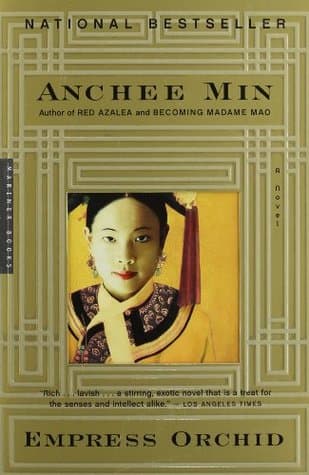
- Empress Orchid
Anchee Min
3.9 (22k) average on GoodreadsHistorical FictionThe first book in the duology, detailing Cixi's early life and rise to power.
- Snow Flower and the Secret Fan
Lisa See
4.1 (339k) average on GoodreadsHistorical FictionFocuses on the lives of women in historical China, exploring their struggles and resilience.
- To Kill a Mockingbird
Harper Lee
4.3 (4.5M) average on GoodreadsHistorical FictionIn the 1930s Jim Crow South, Harper Lee writes about racial injustice, moral growth, and the quiet courage of a lawyer father, Atticus Finch, as seen through his young daughter's eyes.
- The Great Gatsby
F. Scott Fitzgerald
3.9 (3.8M) average on GoodreadsHistorical FictionIn the opulent Roaring Twenties, a mysterious millionaire's lavish parties hide his desperate, tragic pursuit of a lost love, exposing the emptiness within the American Dream.
- Pride and Prejudice
Jane Austen
4.3 (3M) average on GoodreadsHistorical FictionIn a society focused on status and money, Elizabeth Bennet navigates love and pride, challenging Mr. Darcy and social expectations to find true affection.
- Angels & Demons
Dan Brown
3.9 (2.7M) average on GoodreadsThrillerA Harvard symbologist races through Rome's ancient sites, deciphering cryptic clues to unmask the Illuminati and stop a vengeful plot to destroy the Vatican with a stolen antimatter weapon.




Enjoyed the summary?
A summary gives you the shape of the book. The book itself has the detail, the examples and the voice.
Find The Last Empress on AmazonAs an Amazon Associate, BookBrief earns from qualifying purchases. How we're funded