

Synopsis
Covers the whole plot, including the ending.
- Difficulty
- Medium
- Pacing
- Fast
- Mood
- Gritty, Epic, Immersive, Violent, Historical
- Read it if
- You love gritty historical fiction, Viking sagas, tales of identity conflict, and epic battles.
- Skip it if
- You prefer fantasy over historical accuracy, or are sensitive to graphic violence and pagan themes.
The Last Kingdom Plot Summary
Covers the whole plot, including the ending.
Bebbanburg's Fall and Uhtred's Captivity
In 866 AD, Uhtred, a ten-year-old Saxon noble from Bebbanburg, sees Danish Vikings arrive on Northumbrian shores. His older brother, also named Uhtred, dies fighting the Danes, making young Uhtred the heir. His father, Ealdorman Uhtred, goes to fight the Viking forces led by Earl Ragnar the Fearless. During the battle at Eoferwic (York), Uhtred's father dies. Ragnar captures Uhtred. Impressed by the boy's defiance, Ragnar decides to take him in instead of killing him. Uhtred goes to Ragnar's settlement, where he slowly starts to live like a Dane, bonding with Ragnar's family and adopting their pagan customs and warrior code, though he still dreams of getting Bebbanburg back.
Life Among the Danes
Under Earl Ragnar's care, Uhtred grows up with Ragnar's children, especially Ragnar the Younger and Thyra. He learns to fight with a sword and shield, to sail, and to respect the Norse gods, while also being taught by the priest Beocca, who later returns to Wessex. Uhtred struggles with his mixed identity, feeling loyal to Ragnar and his family, who treat him as one of their own, but also remembering his Saxon heritage and Christian faith. He becomes close friends with Brida, a Saxon girl also adopted by the Danes, and falls in love with her. He takes part in raids and fights, proving himself a good warrior and earning the Danes' respect, but the memory of Bebbanburg still affects him.
Ragnar's Murder and Uhtred's Oath
Years later, on a peaceful winter night, a rival Danish warlord, Kjartan, and his son Svein of the White Horse, attack Earl Ragnar's hall. Kjartan, driven by old grudges and wanting Ragnar's wealth, sets the hall on fire. Ragnar the Fearless and most of his family and household burn to death. Uhtred and Brida escape the fire. Seeing the terrible act, Uhtred feels great grief and a strong desire for revenge. He makes a sacred promise to avenge Ragnar's death, vowing to kill Kjartan and Svein. With no home or family among the Danes, Uhtred, now an adult, must find a new path, his future tied to his promise.
Seeking Refuge in Wessex
After Ragnar's hall is destroyed, Uhtred and Brida, now without a home, travel south to Wessex, the only independent Anglo-Saxon kingdom left, hoping to find a place. They first look for Father Beocca, who is now a priest in King Aethelred of Wessex's court, Alfred's older brother. Beocca, recognizing Uhtred, helps them meet the royal court. Uhtred, despite his Danish upbringing and pagan beliefs, offers his sword to King Aethelred, hoping to gain favor and maybe use Wessex's resources to eventually reclaim Bebbanburg and avenge Ragnar. Here he first meets Prince Alfred, a religious and educated man, whom Uhtred initially dislikes for seeming weak.
Service to King Alfred
Uhtred, with Brida, begins serving King Alfred, who becomes King of Wessex after Aethelred's death. Their relationship is tense. Alfred, a religious Christian, dislikes Uhtred's paganism, arrogance, and lack of respect, while Uhtred sees Alfred as a weak, overly religious, and demanding lord. Despite their personal dislike, Alfred sees Uhtred's great skill as a warrior and strategist, making him a key asset in the ongoing war against the Danes. Uhtred fights in several skirmishes and battles, showing his skill and gaining a reputation, even as he struggles under Alfred's strict rule and constant attempts to convert him.
The Battle of Ashdown
During a important part of the war, the Danes under Halfdan and Guthrum launch a major attack into Wessex. The Saxons, led by King Alfred and his brother Aethelred, meet them at the Battle of Ashdown. Uhtred, despite his dislike for Alfred, fights fiercely and bravely, leading a charge that helps change the battle. His understanding of tactics and raw fighting ability prove very valuable, helping greatly in a rare and important Saxon win against the strong Danish forces. This battle confirms Uhtred's reputation as a strong warrior serving Alfred, though the underlying tension between him and the king remains.
Marriage and Betrayal
Alfred, wanting to control Uhtred and make him more a part of Wessex society, arranges for him to marry Mildrith, a religious Christian Saxon noblewoman. As part of the marriage, Uhtred gets land and a debt to the Church, which he dislikes. His relationship with Brida becomes difficult, and she eventually leaves him, unable to accept his (even if superficial) conversion and service to Alfred. Uhtred's life becomes complicated by his new lord's demands, his wife's faith, and the constant threat of Danish invasion. He struggles with money problems and his ongoing desire for revenge against Kjartan and Svein, feeling more and more trapped by his situation.
The Great Heathen Army's Advance
The Danes, determined in their ambition, continue to conquer England. They take Mercia and East Anglia, establishing their rule and moving further into Saxon lands. Wessex, under King Alfred, is the last place of Anglo-Saxon resistance. The Great Heathen Army, a large force of Danish warriors, threatens to take over the entire kingdom. Alfred's position becomes very difficult, with his forces spread thin and his people losing hope. Uhtred, despite his personal complaints, sees the great danger to Wessex and, by extension, to any chance he has of getting Bebbanburg back or fulfilling his promise, making him commit to Alfred's cause.
Alfred's Retreat to Athelney
The Danish leader Guthrum launches a sudden winter attack, overwhelming Alfred's forces and making the king run away. Alfred, with a small group of loyal followers, including Uhtred and Beocca, retreats to the remote marshes of Athelney. This time is one of great difficulty and despair for Alfred and his kingdom. Uhtred, despite his dislike for Alfred's religiousness, stays loyal, seeing the king's determination and the strategic importance of his survival. In the marshes, Alfred, with Uhtred's advice, starts to plan his return, gathering his remaining forces and sending out calls for help.
The Gathering of the Fyrd
From Athelney, Alfred plans a great comeback. He sends messengers through Wessex, calling on the scattered fyrd (local militias) to gather at a secret spot. Uhtred helps a lot in this effort, using his knowledge of the land and fighting skills to help secure routes and protect the gathering forces. His presence and fighting ability help build confidence among the Saxon warriors. Slowly, a large army starts to come together, made up of men from all over Wessex, united by their wish to drive out the Danes and restore their kingdom. This moment is a turning point, as Alfred gets ready for a final fight.
The Battle of Ethandun
The Saxon forces, led by King Alfred and his commanders, including Uhtred, fight the main Danish army under Guthrum at the Battle of Ethandun. This is the story's main battle. Uhtred, fighting in the shield wall, shows great leadership and bravery. His tactical ideas, combined with his fierceness in combat, are key to breaking the Danish lines. The Saxons win a stunning and decisive victory, crushing Guthrum's army and making them retreat. This battle saves Wessex and secures Alfred's rule, marking a major turning point in the Anglo-Saxon fight against the Danes.
Aftermath and Future
After the win at Ethandun, Alfred surrounds Guthrum and his remaining warriors. Eventually, Guthrum surrenders and, as part of the peace terms, agrees to be baptized as a Christian, with Alfred as his godfather. This event shows a temporary peace and the growing influence of Alfred's plan for England. Uhtred, though he helped win, remains restless. He has helped Alfred secure his kingdom but is still bound by his promise to avenge Ragnar and his lifelong goal to reclaim Bebbanburg. He knows his path is far from over, and the fight for his family home and his true identity continues, setting up future conflicts.
The Last Kingdom Characters
Uhtred of Bebbanburg
Protagonist
Dispossessed Saxon noble, raised by Danes, struggling with identity and vengeance.
Uhtred is the central character, a Saxon noble heir who is captured by Danes at a young age after his father's death. He is raised as a Dane by Earl Ragnar, adopting their language, customs, and pagan beliefs, becoming a formidable warrior. He is intelligent, arrogant, fiercely independent, and driven by two main desires: to avenge Ragnar's murder by Kjartan and Svein, and to reclaim his ancestral home, Bebbanburg. Despite serving King Alfred, he often clashes with the pious king due to his paganism and rebellious spirit, yet he proves to be an indispensable military asset. His internal conflict between his Saxon heritage and Danish upbringing is a constant theme.
Relationships: Earl Ragnar the Fearless (Adoptive father, mentor); Brida (Lover, companion, fellow outcast); King Alfred (Lord and adversary, a complex relationship of mutual reliance and disdain); Mildrith (Wife, pious and gentle, a source of conflict); Father Beocca (Former tutor, spiritual guide, loyal friend)
King Alfred
Supporting
Pious King of Wessex, determined to unite England against the Danes.
Alfred is the King of Wessex, a devout Christian, highly intelligent, and a visionary who dreams of a united England. He is often depicted as physically frail and bookish, contrasting sharply with the brutish warriors around him. He is a shrewd politician and strategist, capable of inspiring loyalty and making difficult decisions. Alfred recognizes Uhtred's military genius but is constantly frustrated by his paganism, arrogance, and lack of deference. He uses Uhtred's skills while attempting to mold him into a Christian Saxon lord, creating a complex and often adversarial relationship between the two.
Relationships: Uhtred of Bebbanburg (Trusted but troublesome warrior, an essential but challenging subordinate); Father Beocca (Loyal priest and advisor)
Brida
Supporting
Saxon girl also raised by Danes, Uhtred's lover and fierce pagan companion.
Brida is a Saxon girl who, like Uhtred, was captured and raised by the Danes in Ragnar's household. She becomes Uhtred's first love and closest companion, sharing his pagan beliefs and warrior spirit. She is fierce, independent, and deeply loyal to the Danish way of life. When Uhtred enters Alfred's service and marries Mildrith, Brida feels betrayed and eventually leaves him, unable to compromise her pagan identity or tolerate Uhtred's perceived conversion. She represents Uhtred's Danish past and his unbridled, pagan self.
Relationships: Uhtred of Bebbanburg (Lover and closest confidante); Earl Ragnar the Fearless (Adoptive father)
Earl Ragnar the Fearless
Supporting
Danish Earl who adopts Uhtred, a respected and powerful Viking leader.
Ragnar the Fearless is the Danish earl who captures young Uhtred and, impressed by his courage, adopts him into his family. He becomes a loving, if stern, adoptive father figure to Uhtred, teaching him the ways of the Danes, including their fighting skills, culture, and pagan religion. He is a powerful and respected Viking leader, known for his wisdom and generosity. His murder by Kjartan serves as a major catalyst for Uhtred's quest for vengeance, profoundly shaping Uhtred's motivations and future path.
Relationships: Uhtred of Bebbanburg (Adoptive father); Ragnar the Younger (Biological son); Thyra (Biological daughter)
Father Beocca
Supporting
Pious Saxon priest and Uhtred's former tutor, a loyal friend.
Father Beocca is a kind and devout Christian priest who was Uhtred's childhood tutor at Bebbanburg. After Uhtred's capture, Beocca eventually makes his way to Wessex and becomes a trusted advisor to King Alfred. He acts as a bridge between Uhtred's Saxon past and his Danish present, often serving as an intermediary between Uhtred and Alfred. Despite Uhtred's paganism, Beocca remains a loyal friend and tries to guide him, always hoping for his spiritual redemption. He represents the unwavering Christian faith and a sense of continuity for Uhtred.
Relationships: Uhtred of Bebbanburg (Former tutor, loyal friend, spiritual guide); King Alfred (Trusted advisor)
Mildrith
Supporting
Uhtred's devout Christian wife, given to him by Alfred.
Mildrith is a devoutly Christian Saxon noblewoman whom King Alfred arranges for Uhtred to marry. She is gentle, kind, and deeply pious, representing the traditional Saxon Christian values that Uhtred often disdains. Her presence in Uhtred's life creates conflict, particularly regarding his paganism, his debts to the Church, and his wanderlust. She genuinely tries to be a good wife, but her faith and Uhtred's nature make for a challenging marriage, ultimately highlighting Uhtred's struggle to conform to Saxon society.
Relationships: Uhtred of Bebbanburg (Wife, a relationship strained by differences in faith and lifestyle)
Guthrum
Antagonist
Danish warlord, a cunning and formidable leader of the Great Heathen Army.
Guthrum is one of the primary Danish warlords and a leader of the Great Heathen Army that invades Wessex. He is a cunning strategist and a formidable warrior, posing a significant threat to Alfred's kingdom. While an adversary, he is portrayed as a capable leader rather than purely evil. His campaigns against Wessex drive much of the plot's conflict, culminating in the Battle of Ethandun. His eventual defeat and baptism by Alfred mark a temporary turning point in the war.
Relationships: King Alfred (Primary military opponent); Uhtred of Bebbanburg (Opponent in battle)
Kjartan
Antagonist
Viking warlord responsible for the murder of Earl Ragnar.
Kjartan is a treacherous Danish warlord who harbors a deep-seated grudge against Earl Ragnar the Fearless. He orchestrates the burning of Ragnar's hall, murdering Ragnar and his family. This act of betrayal provides Uhtred with his primary motivation for vengeance throughout the story. Kjartan is depicted as cruel and opportunistic, a stark contrast to Ragnar's more honorable, albeit still brutal, warrior code. His actions set Uhtred on his path of seeking justice.
Relationships: Earl Ragnar the Fearless (Bitter enemy, murderer); Svein of the White Horse (Son, accomplice)
Svein of the White Horse
Antagonist
Kjartan's son, involved in Ragnar's murder and Uhtred's enemy.
Svein is the son of Kjartan and participates in the brutal murder of Earl Ragnar the Fearless. He is characterized by his cruelty and disfigurement (one eye plucked out by a hawk), which Uhtred remembers vividly. He is an accomplice in the act that fuels Uhtred's desire for vengeance and is thus a direct target of Uhtred's oath. Svein represents the younger generation of opportunistic and violent Danes.
Relationships: Kjartan (Father, accomplice); Uhtred of Bebbanburg (Sworn enemy)
The Last Kingdom Themes
Identity and Belonging
Uhtred's struggle with his mixed identity, as a Saxon noble raised by Danes, is central to the story. He is always torn between his birthright and the culture that formed him. He speaks Danish, fights like a Dane, and worships their gods, but he wants to reclaim his Saxon inheritance of Bebbanburg. This inner conflict shows in his relationships, loyalty, and beliefs, as he questions where he truly belongs in a divided England. His journey is about trying to bring these two opposing worlds together within himself.
“My name is Uhtred. I am a Northumbrian by birth, a Dane by upbringing and a Wessexman by oath. I am a warrior, and I will die a warrior.”
Vengeance and Justice
The idea of vengeance is a strong force for Uhtred. The brutal murder of his adoptive father, Earl Ragnar, by Kjartan and Svein, makes Uhtred promise to seek revenge. This personal quest for revenge often clashes with his duties to King Alfred and the wider political situation, but it remains a constant reason for his actions. The story explores the difficult morality of vengeance, whether it is right or an all-consuming obsession, and how it shapes Uhtred's character and choices.
“I would kill them, given the chance, and I would make it slow. I would take my time. I would make them wish they had never been born.”
Clash of Cultures and Religions
The book clearly shows the harsh clash between pagan Danish culture and Christian Anglo-Saxon society. Uhtred shows this conflict, being pagan by upbringing but serving a religious Christian king. Their different gods, customs, and laws are a constant source of tension and misunderstanding. Alfred's vision of a Christian England united under one God contrasts sharply with the Danes' polytheistic, warrior-focused way of life. This theme highlights the deep social divisions and the fight for cultural and religious power in 9th-century England.
“God, or the gods, what did it matter? There was always a price to be paid.”
The Making of a Nation
Under Uhtred's personal story is the larger history of England's beginning. King Alfred's strong will to defend Wessex against the Danish invaders and his vision for a united Anglo-Saxon kingdom are central to this theme. The book shows the political moves, strategic battles, and great sacrifices needed to create a single nation from separate, war-torn kingdoms. Uhtred, despite his personal complaints, becomes an unwilling but key participant in this founding moment of English history.
“He wants one kingdom, one king, one God. He wants England.”
Plot Devices & Literary Techniques
First-Person Retrospective Narration
Uhtred recounts his life story from an older, experienced perspective.
The entire novel is narrated by an older Uhtred, looking back on his youth and early adulthood. This allows for a blend of immediate action and reflective commentary. The older Uhtred often interjects with insights, foreshadowing, and judgments about his younger self's actions and the people he encountered. This device provides a unique voice, revealing Uhtred's evolving wisdom and biases, and adds a layer of depth to the historical events he describes, as he is both a participant and a chronicler.
The Oath
A sacred vow that binds Uhtred's actions and motivations.
The 'oath' is a powerful and recurring plot device, particularly Uhtred's sacred vow to avenge Earl Ragnar's death. In this historical context, oaths were binding and carried immense weight, often dictating a warrior's entire life path. Uhtred's oath to Ragnar, and later his reluctant oaths of fealty to Alfred, shape his decisions, force him into conflicts, and drive his long-term goals. It is a constant reminder of his obligations and the source of much of his internal conflict and external action.
The Sword and Shield
Symbolic representations of Uhtred's warrior identity and his loyalties.
The sword and shield are more than just weapons; they are potent symbols of Uhtred's identity as a warrior, his skill, and his allegiance. His mastery of these tools represents his Danish upbringing and pagan strength. The shield wall itself is a recurring visual and tactical device, embodying the brutal reality of Dark Age combat and the communal spirit of warriors. Uhtred's proficiency with these items underscores his place in the world and his effectiveness in both Saxon and Danish armies, despite his shifting loyalties.
Bebbanburg
A symbolic ancestral home representing Uhtred's lost heritage and ultimate desire.
Bebbanburg, Uhtred's ancestral fortress, functions as a powerful symbol throughout the novel. It represents his lost Saxon heritage, his birthright, and his ultimate ambition. Though he is raised by Danes, the memory and desire to reclaim Bebbanburg are constant motivators for Uhtred. It is his true home, the place he believes he belongs, and its recovery would signify the culmination of his journey and the reconciliation of his fractured identity, even if it is not achieved in this first book.
The Last Kingdom Quotes
“I am Uhtred, son of Uhtred, and this is my story.”
“Fate is all.”
“The Saxons believed in one god, a god who was forever sending his son to be killed. My gods were better. My gods were alive.”
“A man is what he does, not what he says he is.”
“We fight for the land, for the soil, for the graves of our ancestors. We fight for England.”
“Swords are for killing, not for showing off.”
“To be a king, you must first be a warrior.”
“There is no shame in fear, only in letting it stop you.”
“I was a Dane by training, a Saxon by birth, and a warrior by choice.”
“He was a good man, Alfred, but he was also a king, and kings have to make hard choices.”
“The world changes, and we must change with it, or be left behind.”
“A shield-wall is a living thing, breathing, moving, pushing, holding.”
“Love is a dangerous thing, it can make a man weak.”
“The future is not written, only the past.”
Quiz
10 questions on the plot and the characters. Each answer comes with a short explanation.
Question 1
Who captured Uhtred as a child after the Danes invaded his homeland?
- King Alfred's forces
- Earl Ragnar the Fearless
- Ubba Lothbrokson
- Guthrum's war band
Show answer
B. Earl Ragnar the Fearless Uhtred was captured by Earl Ragnar the Fearless after Ragnar's Danes killed Uhtred's father and took Bebbanburg. Ragnar subsequently raised Uhtred as his own son.
Question 2
What is the name of Uhtred's ancestral home, which he vows to reclaim?
- Winchester
- Eoferwic
- Bebbanburg
- Mercia
Show answer
C. Bebbanburg Uhtred's primary motivation throughout the book is to reclaim Bebbanburg, his father's fort by the northern sea, which was taken by the Danes.
Question 3
Why does Uhtred initially view King Alfred with disdain?
- Alfred betrayed Uhtred's family in the past.
- Alfred refused to pay Uhtred for his service.
- Uhtred considers Alfred a pious weakling, unfit for command against Vikings.
- Alfred forced Uhtred to convert to Christianity.
Show answer
C. Uhtred considers Alfred a pious weakling, unfit for command against Vikings. Having been raised by Danes, Uhtred initially sees Alfred as a 'pious weakling' and a priest-king, believing him ill-equipped to fight the brutal Viking invaders.
Question 4
What event ultimately forces Uhtred to choose sides and fight for Wessex?
- Alfred offers Uhtred a high position in his army.
- The Danes turn on Uhtred after Alfred's unexpected victory.
- Uhtred's Danish family is killed by another Viking war band.
- He falls in love with a Saxon woman who demands his loyalty.
Show answer
B. The Danes turn on Uhtred after Alfred's unexpected victory. Despite his initial reluctance, Uhtred is forced to ally with Alfred after the Danes themselves turn against him following Alfred's surprising victory, leaving him with no other option.
Question 5
Which of the following best describes the central conflict or theme of 'The Last Kingdom'?
- The struggle for personal wealth and power in a chaotic era.
- The clash between pagan Viking culture and Christian English identity.
- A coming-of-age story set against a backdrop of court intrigue.
- The exploration of ancient magical beliefs and superstitions.
Show answer
B. The clash between pagan Viking culture and Christian English identity. The book vividly portrays the violent clash between the invading pagan Danes and the Christian Anglo-Saxons, with Uhtred caught between these two worlds, embodying the theme of identity and cultural conflict.
Question 6
What is the name of the woman Uhtred falls in love with and marries, who is later tragically killed?
- Mildrith
- Aethelflaed
- Iseult
- Thyra
Show answer
D. Thyra Uhtred marries Thyra, the daughter of Earl Ragnar, who is later tragically killed by Kjartan and Sven. This event deeply impacts Uhtred.
Question 7
What is the 'shield wall' and why is it significant in the battles depicted?
- A defensive structure built around a fort to repel sieges.
- A tactical formation where warriors stand shoulder-to-shoulder with shields interlocked, forming a defensive barrier.
- A religious relic carried into battle to inspire troops.
- A type of wooden palisade used to protect longships during landings.
Show answer
B. A tactical formation where warriors stand shoulder-to-shoulder with shields interlocked, forming a defensive barrier. The shield wall is a crucial battle formation in the book, emphasizing the brutal, close-quarters combat of the era. Warriors lock shields to create an impenetrable barrier, and Uhtred's training for it is a key part of his development as a warrior.
Question 8
How does Uhtred's dual upbringing (Saxon by birth, Dane by raising) influence his allegiances and worldview?
- He consistently favors the Danes, viewing Saxons as inherently weaker.
- He becomes a neutral observer, refusing to take sides in any conflict.
- He struggles with divided loyalties, often feeling like an outsider to both cultures, and adopts aspects of both.
- He immediately rejects his Danish upbringing upon meeting Alfred.
Show answer
C. He struggles with divided loyalties, often feeling like an outsider to both cultures, and adopts aspects of both. Uhtred's dual heritage is central to his character. He constantly grapples with his identity, feeling an outsider in both Saxon Christian England and pagan Danish society, adopting the fighting prowess of the Danes and the strategic mind of the Saxons.
Question 9
Which historical figure, known for uniting Anglo-Saxon kingdoms against the Vikings, is a key character in the book?
- King Aethelred
- King Edward the Elder
- King Alfred the Great
- King Cnut
Show answer
C. King Alfred the Great The book centers around King Alfred the Great, his struggle to defend Wessex, and his vision for a united England against the Danish invaders. Uhtred serves him, albeit reluctantly at times.
Question 10
What is the primary motive behind the Danish invasion of England as depicted in the book?
- To spread their unique religious beliefs across England.
- To establish trade routes with the Anglo-Saxon kingdoms.
- To conquer land, plunder wealth, and settle new territories.
- To form alliances with the existing English kings against a common enemy.
Show answer
C. To conquer land, plunder wealth, and settle new territories. The Danes in 'The Last Kingdom' are portrayed as driven by a desire for land, wealth, and the opportunity to settle and rule new territories, rather than just raiding.
The Last Kingdom FAQ
What is 'The Last Kingdom' about?
'The Last Kingdom' is the first book in Bernard Cornwell's 'Saxon Stories' series, following Uhtred of Bebbanburg, a Saxon nobleman's son captured and raised by Danes. It chronicles his journey torn between his Saxon heritage and Danish upbringing, set against the backdrop of King Alfred the Great's struggle to defend Wessex against Viking invasions and forge England in the 9th century.
Why should I read 'The Last Kingdom'?
You should read 'The Last Kingdom' for its thrilling blend of historical accuracy and gripping adventure. It offers a unique perspective through Uhtred, a morally complex protagonist caught between two cultures, and provides an immersive look into the brutal, formative years of England's creation, rich with detailed battle scenes and political intrigue.
What is the background/setting of 'The Last Kingdom'?
The story is set in 9th-century England, a land fractured into several kingdoms, primarily Mercia, Northumbria, East Anglia, and Wessex. It depicts the historical period when Danish Vikings (the Northmen) had overrun and occupied three of these kingdoms, leaving only Wessex under King Alfred's rule, making it 'the last kingdom' standing against total pagan conquest.
What are the most memorable quotes?
Memorable quotes often revolve around Uhtred's identity and fighting prowess, such as his frequent 'Destiny is all,' or descriptions of battle like 'The shield wall was a living thing, a beast of wood and iron.' Quotes also highlight the clash of cultures, like Uhtred's cynical observations on Christian piety versus pagan pragmatism.
What writing style does the author use?
Bernard Cornwell employs a vivid, first-person narrative style through Uhtred's eyes, characterized by its immediacy, bluntness, and occasional anachronistic humor. His writing is highly descriptive, especially concerning combat, weaponry, and the harsh realities of the era, making historical events feel personal and visceral.
What minor details add significant meaning?
Uhtred's constant yearning for Bebbanburg, his ancestral home, isn't just about land; it symbolizes his lost identity and a longing for a past that was violently taken from him. The religious differences between the Christian Saxons and pagan Danes, though often a source of conflict, also subtly highlight shared human values and fears beneath the surface.
What are some subtle foreshadowing moments?
Early mentions of Uhtred's skill with a sword and his natural leadership, even as a young boy among the Danes, subtly foreshadow his future role as a formidable warrior and reluctant leader crucial to Alfred's cause. Similarly, the initial disdain between Uhtred and Alfred hints at their complex, interdependent relationship that will define the series.
What unexpected character connections exist?
The most significant unexpected connection is Uhtred's bond with Ragnar the Younger, his Danish foster-brother, who remains a complex figure throughout. Despite their differing loyalties in the larger war, their shared upbringing creates a deep, albeit strained, connection that transcends the Saxon-Dane divide, often leading to internal conflict for Uhtred.
What are unspoken character motivations?
King Alfred's unwavering piety, while genuine, also serves as a powerful political tool to unite his kingdom and inspire his people against the pagan invaders, an unspoken motivation beyond pure faith. Uhtred's apparent mercenary nature often masks a deeper loyalty to those who earn his respect, and a profound desire for belonging after being dispossessed.
What psychological complexities do characters exhibit?
Uhtred exhibits deep psychological complexity, constantly battling his dual identity as a Saxon lord raised by Danes, leading to internal conflict, cynicism, and a struggle with loyalty. King Alfred, despite his devout and often frail exterior, possesses an iron will, strategic genius, and a capacity for ruthlessness, demonstrating the complex burden of leadership.
What are the major emotional turning points?
A major emotional turning point is Uhtred's forced choice of allegiance after the Danes turn on him following the Battle of Cynwit, pushing him towards Alfred despite his disdain. Another is the tragic death of his first wife, Mildrith, which profoundly impacts his emotional landscape and fuels his quest for purpose and retribution.
How do relationship dynamics evolve?
The relationship between Uhtred and Alfred evolves from mutual disdain and distrust to a grudging respect and a deeply interdependent, if often fraught, alliance. Uhtred sees Alfred as a weakling, while Alfred views Uhtred as a pagan brute, yet they come to recognize each other's indispensable qualities, forming the strategic backbone of the narrative.
Which parts remain ambiguous or open-ended?
The long-term fate of Bebbanburg, Uhtred's ancestral home, remains an open-ended quest throughout the first book, serving as a driving force for Uhtred but not resolved. The ultimate success of Alfred's vision for a united England is also left ambiguous, as the Danes remain a formidable threat at the book's close, hinting at future struggles.
What are controversial scenes or decisions?
Uhtred's decision to initially side with the Danes and participate in raids against Saxon lands, despite his birthright, can be controversial for some readers. His pragmatic, often brutal, approach to warfare and his rejection of Christian piety, which clashes with Alfred's devoutness, also sparks debate about morality in a savage age.
'The Last Kingdom' ending explained: how it ends & what it means
The book ends with Uhtred having played a pivotal role in Alfred's victory at the Battle of Ethandun, securing Wessex's survival, but not without significant personal loss. He has solidified his allegiance to Alfred, though still with reservations, and his quest for Bebbanburg remains unfulfilled. The ending signifies the fragile triumph of Wessex and the ongoing struggle for England's identity, setting the stage for Uhtred's continued adventures and the larger historical narrative of nation-building.
About the author
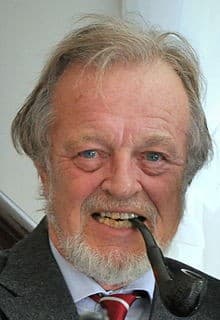
Bernard Cornwell is a prolific British author celebrated for his masterful historical fiction. He is best known for his Sharpe series, chronicling the Napoleonic Wars, and his Warlord Chronicles, which reimagines Arthurian legend. Cornwell's work is lauded for its meticulous research, gritty realism, and compelling narratives.
Similar books
- The Pillars of the Earth
Ken Follett
4.3 (649k) average on GoodreadsFantasyWhile both Cornwell and Follett write historical fiction set in England, 'The Pillars of the Earth' focuses on the construction of a cathedral in the 12th century, emphasizing political intrigue, social structures, and economic development through a multi-generational saga. Cornwell's 'The Last Kingdom' is more focused on warfare, cultural clash, and the personal journey of a single warrior in a much earlier, more brutal period. Follett's scope is broader in terms of social strata and economic detail, whereas Cornwell excels at the immediate, visceral experience of conflict and individual heroism/survival.
- Wolf Hall
Hilary Mantel
3.9 (166k) average on GoodreadsLiterary FictionHilary Mantel's 'Wolf Hall' (and its sequels) offers a stark contrast in historical fiction style. Set in the Tudor period, Mantel's work is characterized by its deep psychological insight, intricate prose, and focus on the internal world of Thomas Cromwell, exploring political maneuvering and power dynamics with meticulous detail. Cornwell's 'The Last Kingdom,' while engaging, is more outwardly focused, emphasizing action, battle, and the tangible struggles of survival and conquest. Mantel's approach is often described as literary historical fiction, delving into the ambiguities of historical figures and events with a more contemplative tone, whereas Cornwell's is more action-adventure oriented, prioritizing narrative drive and visceral experience.
- To Kill a Mockingbird
Harper Lee
4.3 (4.5M) average on GoodreadsHistorical FictionIn the 1930s Jim Crow South, Harper Lee writes about racial injustice, moral growth, and the quiet courage of a lawyer father, Atticus Finch, as seen through his young daughter's eyes.
- The Great Gatsby
F. Scott Fitzgerald
3.9 (3.8M) average on GoodreadsHistorical FictionIn the opulent Roaring Twenties, a mysterious millionaire's lavish parties hide his desperate, tragic pursuit of a lost love, exposing the emptiness within the American Dream.
- Pride and Prejudice
Jane Austen
4.3 (3M) average on GoodreadsHistorical FictionIn a society focused on status and money, Elizabeth Bennet navigates love and pride, challenging Mr. Darcy and social expectations to find true affection.
- Angels & Demons
Dan Brown
3.9 (2.7M) average on GoodreadsThrillerA Harvard symbologist races through Rome's ancient sites, deciphering cryptic clues to unmask the Illuminati and stop a vengeful plot to destroy the Vatican with a stolen antimatter weapon.






Enjoyed the summary?
A summary gives you the shape of the book. The book itself has the detail, the examples and the voice.
Find The Last Kingdom on AmazonAs an Amazon Associate, BookBrief earns from qualifying purchases. How we're funded