
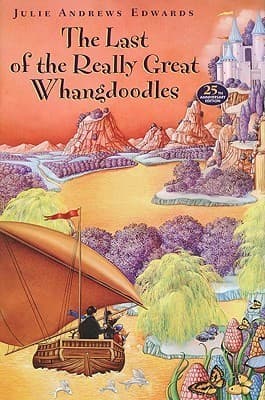
Synopsis
Covers the whole plot, including the ending.
- Difficulty
- Easy
- Pacing
- Moderate
- Mood
- Whimsical, Gentle, Imaginative, Dreamy, Heartwarming
- Read it if
- You love classic, whimsical children's fantasy with unique creatures and a gentle, imaginative journey.
- Skip it if
- You prefer fast-paced action, complex adult themes, or stories without a clear antagonist.
The Last of the Really Great Whangdoodles Plot Summary
Covers the whole plot, including the ending.
The Professor's Invitation
Lindy, Tom, and Ben Potter, three siblings, spend their summer vacation bored in a new town. One day, they find the eccentric Professor Savant, who lives in a peculiar house full of strange things. The Professor, a brilliant but reclusive scholar, likes the children. He tells them his lifelong goal: finding the mythical Whangdoodle, the last of its kind, said to live in Whangdoodleland. He believes the Whangdoodle holds the key to happiness and wisdom and has sought its realm for years. The children are captivated and agree to help him.
The Training Begins
Professor Savant explains that reaching Whangdoodleland needs more than a physical journey; it needs mental preparation and imagination. He starts training the children with unusual exercises to expand their minds and senses. They learn to see with their 'mind's eye,' hear the 'unheard,' and feel the 'unfelt.' These exercises include staring at blank walls to see patterns, listening to silence for hidden sounds, and focusing inward to understand emotions. Lindy, the oldest, is skeptical but eventually accepts the challenge. Tom and Ben, being younger, find it easier to use their imaginations. The Professor stresses that only those with pure hearts and open minds can truly enter Whangdoodleland.
The Secret Way
After weeks of training, Professor Savant thinks the children are ready. He reveals that Whangdoodleland's entrance is a magical portal, accessible through focused thought and shared imagination. They gather in a hidden room in the Professor's house, which he has prepared with symbolic objects. Following his instructions, they close their eyes and concentrate, visualizing Whangdoodleland and their desire to reach it. As they focus, the room shimmers, and a strange, swirling light appears. With a final, shared effort, they step through the shimmering portal, leaving their world for Whangdoodleland.
Arrival in Whangdoodleland
Inside Whangdoodleland, the Professor and children find a colorful, otherworldly place unlike anything they have seen. Trees are made of candy, rivers flow with lemonade, and the sky is a mix of colors. They quickly meet some of the land's unique creatures: the ten-legged Sidewinders, shy but helpful, and small, furry Flukes, who communicate with musical chirps. The children are charmed by the place's beauty and strangeness, but Professor Savant reminds them of their mission to find the Whangdoodle. They learn that Whangdoodleland has many fantastic beings, some friendly, some less so. Their journey has truly begun.
Encounter with the Prock
As they go deeper into Whangdoodleland, the group meets the Prock, a cunning creature who guards the Whangdoodle. His loyalty is mostly to himself. The Prock is suspicious of the outsiders, seeing their presence as a threat to his comfortable life and influence over the Whangdoodle. He uses tricks to discourage them, sending them on false trails and inventing stories about the Whangdoodle's dislike of visitors. The Prock's attempts to mislead them become a repeated challenge, testing the children's resolve and the Professor's wisdom. He is a master manipulator, and his presence adds danger to their quest.
Meeting the Whiffle Bird
Despite the Prock, the travelers continue, driven by their goal. They soon meet the Whiffle Bird, a gentle and wise creature known for its songs and helpfulness. The Whiffle Bird, unlike the Prock, wants to help them and sees their arrival as a potential source of joy for the lonely Whangdoodle. It gives them important directions and warnings about the Prock's plans. The Whiffle Bird's songs lift their spirits and strengthen their belief in the Whangdoodle's goodness, offering hope amidst challenges. The bird's kindness contrasts with the Prock's malice.
Navigating Whangdoodleland's Wonders
The journey through Whangdoodleland includes both wonders and small problems. They cross landscapes where colors change and sounds echo strangely. They learn to talk with Sidewinders and understand Flukes. The Prock keeps appearing, setting small traps or giving bad advice. But the Professor and children, learning his ways, overcome these problems. They meet the 'Thingamajig,' a creature that shows their inner thoughts, and learn to navigate the 'Frazzle Maze,' a place where logic is inverted. Each encounter helps them understand Whangdoodleland and themselves.
The Prock's Final Stand
As the group nears the Whangdoodle's home, the Prock grows desperate. Fearing he will lose his influence, he plans a more complex scheme to stop them. He leads them to a seemingly impassable barrier, a 'Wall of Worries,' made of the travelers' doubts and fears. He also spreads rumors that the Whangdoodle is angry and does not want visitors. The Professor and children must use their combined mental strength and positive thinking to overcome this final psychological barrier. This is a moment of self-reflection and determination, where they must face their anxieties and trust their purpose.
Meeting the Whangdoodle
After overcoming the Prock's last deception and the Wall of Worries, the group finally arrives at the Whangdoodle's secluded home. They find the Whangdoodle, a magnificent and old creature, but also very sad and lonely. The Whangdoodle is at first hesitant, having lived alone for so long. Professor Savant explains their purpose: to remind him he is not forgotten and that joy and connection still exist. The children, with their genuine curiosity and kindness, slowly break through the Whangdoodle's solitude. They share stories of the outside world and express their admiration for him.
Granting the Whangdoodle's Wish
Through their talks, the Whangdoodle reveals his wish: not for solitude, but for companionship and shared joy. He confesses he created Whangdoodleland to escape being the 'last of his kind,' but isolation only made him lonelier. The children, especially Lindy, understand that the Whangdoodle needs 'connection' more than he needs to be 'found.' They explain that while he is the last *Whangdoodle*, he is not alone, and his wisdom and kindness can be shared. They offer him friendship and promise to return, bringing a renewed sense of purpose and connection to the outside world.
A Renewed Whangdoodleland
With his wish for companionship granted and his spirit rekindled, the Whangdoodle changes. The sadness that filled him lifts, and he radiates a renewed sense of purpose and joy. This change shows in Whangdoodleland; colors become more vibrant, whimsical elements more apparent, and happiness fills the air. The Prock, seeing the Whangdoodle's contentment, also seems to lose some of his 'oiliness' and becomes less antagonistic, realizing his king's happiness benefits everyone. The Whangdoodle, now a kind and joyful ruler, embraces his role with new enthusiasm.
The Return Journey
Having completed their mission and brought joy back to the Whangdoodle, Professor Savant and the children prepare to return. They say goodbye to the Whangdoodle, who promises to keep the portal open for future visits. The Whiffle Bird sings a final, happy song, and even the Prock gives a reluctant nod of respect. The children are no longer the bored individuals they were at summer's start. They have grown in imagination, courage, and self-understanding. They gather again in the Whangdoodle's home, and with a shared thought of returning home, they step back through the shimmering portal, leaving Whangdoodleland.
Home, But Different
The Professor and children reappear in the hidden room in his house, back in their own world. Everything looks the same, but *they* are different. The children are no longer bored; their imaginations are alive, and they now see the ordinary world with new eyes, finding magic in everyday things. Lindy has lost her skepticism, Tom is more confident, and Ben's innocence is enriched. Professor Savant is no longer a solitary eccentric; he has found kindred spirits and validation for his lifelong quest. They carry the lessons of Whangdoodleland, understanding the importance of imagination, kindness, and connection, knowing that the greatest adventures are within themselves.
The Last of the Really Great Whangdoodles Characters
Professor Savant
Protagonist/Mentor
An eccentric and brilliant scholar obsessed with finding the Whangdoodle.
Professor Savant is a kind-hearted, intellectual, and somewhat reclusive man. He dedicates his life to the pursuit of knowledge and the belief in the unseen. His house is a testament to his eclectic interests, filled with books, scientific instruments, and peculiar inventions. He possesses a deep understanding of human nature and the power of imagination, which makes him an ideal guide for the children. He is driven by a profound sense of wonder and a desire to prove that magic and extraordinary creatures exist, not just in stories, but in a hidden reality. His ultimate goal is to connect with the Whangdoodle, believing it holds ancient wisdom.
Relationships: Lindy Potter (mentor and student, mutual respect); Tom Potter (mentor and student, encourages his imagination); Ben Potter (mentor and student, cherishes his innocence); Whangdoodle (object of his quest, eventually a friend)
Lindy Potter
Protagonist
The eldest Potter child, initially skeptical but ultimately imaginative.
Lindy is the most grounded and initially the most skeptical of the three Potter children. As the eldest, she often feels responsible for her younger brothers and tends to be more practical and logical. She approaches new ideas with caution and a healthy dose of doubt, making her growth in imagination particularly significant. Despite her initial reservations, she possesses a keen intellect and a strong sense of empathy. Her journey through Whangdoodleland teaches her to open her mind to possibilities beyond the tangible, transforming her from a pragmatic girl into one who embraces wonder and inner strength. She becomes a leader and a voice of reason within the group, tempered by her newfound belief.
Relationships: Professor Savant (student, initially challenges his ideas but grows to respect him); Tom Potter (older sister, protective and guiding); Ben Potter (older sister, nurturing); Whangdoodle (empathizes with his loneliness, helps him find joy)
Tom Potter
Protagonist
The middle Potter child, adventurous and easily excited.
Tom is the adventurous and spirited middle child. He is more open to the Professor's ideas than Lindy and approaches the quest with enthusiasm and a sense of fun. He is curious, energetic, and often the first to explore new areas or interact with the creatures of Whangdoodleland. While sometimes impulsive, he possesses a good heart and a strong sense of loyalty. His journey helps him channel his energy and curiosity into more focused imagination and problem-solving, making him an invaluable member of the team. Tom often provides the initial spark of excitement and daring that keeps the group moving forward.
Relationships: Professor Savant (eager student, shares his sense of wonder); Lindy Potter (younger brother, sometimes chafes under her authority but respects her); Ben Potter (older brother, playful and protective)
Ben Potter
Protagonist
The youngest Potter child, innocent and full of unbridled imagination.
Ben is the youngest of the Potter siblings, characterized by his innocence, pure heart, and boundless imagination. He is the most receptive to the Professor's teachings and finds it easiest to believe in the magical world of Whangdoodleland. His unclouded perspective often allows him to see solutions or truths that the others, burdened by logic or doubt, might miss. He possesses a natural empathy and a gentle spirit, making him particularly adept at connecting with the creatures they encounter. Ben represents the pure, uninhibited wonder of childhood, and his joy is infectious, often uplifting the spirits of the entire group. His simple faith is a powerful asset.
Relationships: Professor Savant (favorite student, shares a special bond through imagination); Lindy Potter (younger brother, looks up to her); Tom Potter (younger brother, playful companion)
The Whangdoodle
Central Figure/Catalyst
The last of his kind, a wise but lonely creature who created Whangdoodleland.
The Whangdoodle is a magnificent and ancient being, described as once being the wisest, kindest, and most extraordinary creature. He created Whangdoodleland as a refuge for himself and other unique creatures after realizing he was the last of his kind. Despite his power and the beauty of his realm, he is profoundly lonely and has become reclusive, his joy dimming over time. He represents the sorrow of isolation and the universal need for connection. His initial sadness is a key element that the Professor and children must overcome, not by 'finding' him, but by understanding and addressing his emotional needs. He is the heart of Whangdoodleland.
Relationships: Professor Savant (initially a reclusive figure, becomes a friend); Lindy Potter (receives empathy and understanding from her); Tom Potter (receives renewed wonder from him); Ben Potter (receives pure, unconditional acceptance from him); The Prock (his gatekeeper, manipulated by the Prock's self-interest); The Whiffle Bird (loyal and caring subject)
The Prock
Antagonist/Obstacle
An oily, self-serving creature who acts as the Whangdoodle's gatekeeper.
The Prock is the primary antagonist, though his motivations are more self-serving than truly evil. He is described as 'oily' and cunning, delighting in trickery and deception. He serves as the Whangdoodle's gatekeeper but primarily seeks to maintain his own comfortable position and influence. He views the arrival of the Professor and children as a threat to his established order and does everything in his power to prevent them from reaching the Whangdoodle. His schemes, while often frustrating, serve to test the resolve and ingenuity of the protagonists. He represents the obstacles that arise from selfishness and resistance to change.
Relationships: Whangdoodle (gatekeeper, attempts to control access to him); Professor Savant (adversary, attempts to mislead him); Potter Children (adversary, tries to deter them)
The Whiffle Bird
Supporting
A friendly and melodious bird who aids the travelers.
The Whiffle Bird is a benevolent creature of Whangdoodleland, known for its beautiful songs and helpful nature. Unlike the Prock, the Whiffle Bird welcomes the Professor and children, offering them guidance and encouragement. Its songs are not just beautiful but also imbued with a sense of hope and wisdom, often providing comfort and clarity when the travelers face challenges. The Whiffle Bird represents the pure good and supportive elements within Whangdoodleland, acting as a counterpoint to the Prock's mischievousness. It embodies the theme of kindness and the power of positive influence.
Relationships: Professor Savant (ally, provides guidance); Potter Children (ally, offers comfort and direction); Whangdoodle (loyal subject, wishes for his happiness)
Sidewinders
Supporting
Ten-legged, shy creatures of Whangdoodleland.
The Sidewinders are unique inhabitants of Whangdoodleland, characterized by their ten legs and shy demeanor. While not central to the plot, they represent the diverse and wondrous life within the magical realm. They are generally harmless and, when approached with kindness, can be helpful, offering directions or small pieces of information. Their unusual appearance adds to the fantastical atmosphere of the land. They symbolize the idea that even the strangest creatures can be friendly and contribute to the overall ecosystem of Whangdoodleland, if only one takes the time to understand them.
Relationships: Potter Children (brief, helpful encounters)
Flukes
Supporting
Small, furry creatures who communicate through musical chirps.
The Flukes are another group of unique creatures in Whangdoodleland, described as small, furry, and communicating through musical chirps. They add to the whimsical charm of the land and further illustrate its imaginative qualities. Like the Sidewinders, they are not major characters but serve to populate the world and provide moments of wonder and lightheartedness. Their musical communication emphasizes the theme of understanding different forms of expression and the beauty found in diverse life forms. They embody the innocent and joyful aspects of Whangdoodleland.
Relationships: Potter Children (brief, enchanting encounters)
The Last of the Really Great Whangdoodles Themes
The Power of Imagination and Belief
This theme highlights that imagination is not just fantasy but a strong tool for understanding and changing reality. Professor Savant teaches the children to 'see with their mind's eye' and 'hear the unheard,' suggesting that people limit their own perception. Their ability to enter Whangdoodleland depends entirely on their shared belief and imagination. Challenges in Whangdoodleland, like the 'Wall of Worries,' are overcome not by physical strength but by mental strength and belief in possibilities. This shows that belief can create real results and overcome inner obstacles. The journey itself confirms that the world holds more than appears if one is willing to imagine it.
“The Whangdoodle exists because he is believed in. He exists because you believe in him. And if you stop believing in him, he will cease to exist.”
The Importance of Connection and Overcoming Loneliness
The Whangdoodle's situation shows how much loneliness affects even a powerful, magical creature. He created an entire land to avoid being the 'last of his kind,' but this isolation made him sad and withdrawn. The children's mission changes from just 'finding' him to understanding and easing his deep loneliness by offering friendship and connection. The Prock's selfishness, which adds to the Whangdoodle's isolation, further emphasizes the negative effects of being disconnected. The story's ending, where the Whangdoodle finds joy through renewed companionship, underlines the universal need for belonging and shared experiences.
“He wasn't lonely because he was the last of his kind. He was lonely because he had no one to share his wonderful land with.”
The Value of Different Perspectives and Open-Mindedness
The different personalities of the Potter children—Lindy's skepticism, Tom's enthusiasm, and Ben's innocence—are all needed for their success. Lindy's logical approach helps them with the Professor's abstract ideas, while Ben's free belief often helps him grasp concepts others struggle with. Professor Savant encourages them to look beyond the obvious, question assumptions, and embrace new ways of seeing the world. The creatures of Whangdoodleland, from the ten-legged Sidewinders to the musical Flukes, challenge their ideas of what is 'normal' or 'possible,' promoting a greater appreciation for diversity and the richness of different perspectives.
“You must learn to see with your mind's eye, not just with your ordinary eyes. For the world holds many wonders that are invisible to the unthinking observer.”
The Journey of Self-Discovery
While the goal is to find the Whangdoodle, the children's adventure is about self-discovery and personal growth. Lindy learns to trust her imagination and intuition, overcoming her initial skepticism. Tom sharpens his adventurous spirit into focused determination. Ben's natural wonder is confirmed and celebrated. Professor Savant also finds validation and companionship. The challenges they face in Whangdoodleland, especially the 'Wall of Worries' made from their own fears, force them to confront inner obstacles and understand their strengths and weaknesses. They return home not just with stories, but as changed individuals with a deeper understanding of themselves and the world.
“The journey to Whangdoodleland is not just a journey to a place, but a journey within yourselves.”
Good vs. Selfishness
This theme appears in the contrast between the good characters and the Prock. The Whangdoodle, though reclusive, is good and kind. The Whiffle Bird is a loyal and helpful friend. Professor Savant and the children have pure intentions and want connection. In contrast, the Prock acts only for himself, trying to manipulate and stop the protagonists to keep his comfortable position. His 'oily' nature symbolizes the damaging effect of selfishness. The story shows that good intentions and working together win over selfish and dishonest motives, leading to a better outcome for Whangdoodleland.
“Some creatures, my dears, only see what benefits themselves, and they will try to make you see it their way too.”
Plot Devices & Literary Techniques
The Magical Portal
A non-physical gateway to Whangdoodleland, accessed through imagination.
The magical portal is a crucial plot device, representing the bridge between the ordinary world and the extraordinary. Unlike a traditional physical gate, it requires mental and imaginative effort to activate, reinforcing the book's central theme of the power of belief. This device allows the protagonists to transcend conventional reality and enter a fantastical realm, setting the stage for their adventure. Its non-physical nature emphasizes that the journey is as much internal as external, and that the ability to perceive and access magic lies within the human mind. It serves as both the entry and exit point for their transformative journey.
The Prock's Deceptions
The antagonist's use of trickery and misinformation to create obstacles.
The Prock's deceptions serve as the primary source of conflict and rising action throughout the journey in Whangdoodleland. His attempts to mislead the Professor and children, sending them on false trails, fabricating stories, and creating psychological barriers (like the 'Wall of Worries'), test their resolve, intelligence, and belief. This device not only creates suspense but also forces the protagonists to sharpen their critical thinking and trust their instincts. It highlights the theme of overcoming obstacles through perseverance and discernment, and allows for character development as the children learn to see through the Prock's 'oiliness' and rely on their own inner compass.
The Whangdoodle's Loneliness
The emotional state of the titular character, serving as the central quest's motivation.
The Whangdoodle's profound loneliness is the driving force behind the entire quest. It provides the Professor with his initial motivation to find the creature and gives the children a deeper purpose beyond mere adventure. This emotional state transforms the mission from a simple exploration into one of empathy and connection, underscoring the book's themes of companionship and overcoming isolation. The Whangdoodle's sadness makes him a sympathetic figure, and the ultimate goal becomes not just to 'see' him, but to bring him joy. This device elevates the narrative beyond a simple fantasy tale, giving it emotional depth and a meaningful resolution.
Professor Savant's Training Exercises
Unusual mental and sensory drills designed to prepare the children for Whangdoodleland.
Professor Savant's eccentric training exercises are a crucial plot device that enables the children to access Whangdoodleland. These drills, which focus on imagination, perception, and inner awareness, are not just preparatory but also symbolic. They illustrate the book's central message that special places and experiences require an expanded way of thinking. By teaching the children to 'see the unseen' and 'hear the unheard,' the Professor equips them with the mental tools necessary to navigate a world that defies conventional logic. This device effectively grounds the fantastical elements in a process of learning and self-improvement, making the children's eventual success feel earned and logical within the story's framework.
The Last of the Really Great Whangdoodles Quotes
“There are some things you can't hurry and some you can't stop. A tree growing, for instance, or a river flowing. And a Whangdoodle, once it decides to appear, will appear.”
“It's all a matter of looking at things the right way. And sometimes, the right way is a little bit sideways.”
“The Whangdoodle is a creature of pure delight, and it responds to joy. But it also responds to sadness, because sadness, too, is a form of feeling.”
“You can't catch a Whangdoodle. You have to wait for it to catch you.”
“The world is full of wonders, if only you have the eyes to see them.”
“Imagination, you see, is not just for making up things. It's for understanding things, too.”
“Sometimes the most important things are the ones you can't see.”
“Don't be afraid to be a little bit silly. Sometimes silliness is the shortest path to wisdom.”
“The greatest adventures are often found in the most unexpected places.”
“Curiosity is a wonderful thing, but it must be tempered with respect.”
“There's a reason for everything, even if you don't understand it yet.”
“The Whangdoodle is not just a creature; it's a feeling, a way of looking at the world.”
“Never underestimate the power of a good story.”
“To find something truly special, you often have to go where no one else has gone.”
Quiz
10 questions on the plot and the characters. Each answer comes with a short explanation.
Question 1
Which three children accompany Professor Savant on his journey to find the Whangdoodle?
- Mary, John, and Michael
- Lindy, Tom, and Ben
- Susan, Peter, and Lucy
- Alice, David, and Sarah
Show answer
B. Lindy, Tom, and Ben The synopsis explicitly states that Professor Savant told 'the three Potter children of his search for the spectacular creature, Lindy, Tom, and Ben'.
Question 2
What is the primary characteristic that defines the Whangdoodle?
- His immense size and strength
- His ability to fly and change colors
- His wisdom, kindness, and extraordinary nature
- His magical singing voice
Show answer
C. His wisdom, kindness, and extraordinary nature The description of the Whangdoodle states he 'was once the wisest, the kindest, and the most extraordinary creature in the world'.
Question 3
Which creature is described as 'treacherous' and 'oily' and tries to keep the travelers away from the Whangdoodle?
- The Whiffle Bird
- The Sidewinders
- The Flukes
- The Prock
Show answer
D. The Prock The synopsis introduces 'the treacherous, "oily" Prock' who 'would use almost any means to keep them away from his beloved king'.
Question 4
According to the synopsis, what does the Whangdoodle rule his kingdom with?
- Strict laws and absolute power
- Peace, love, and a sense of fun
- Wisdom, justice, and order
- Silence, solitude, and reflection
Show answer
B. Peace, love, and a sense of fun The text states that the Whangdoodle could rule his kingdom with 'peace, love and a sense of fun'.
Question 5
What is the main reason the Whangdoodle created his special land?
- To hide from Professor Savant and the children
- To establish a place for himself and other remarkable animals, apart from and forgotten by people
- To gather all the world's wisdom in one place
- To prepare for a great battle against evil forces
Show answer
B. To establish a place for himself and other remarkable animals, apart from and forgotten by people The Whangdoodle 'disappeared and created a wonderful land for himself and all the other remarkable animals...apart from and forgotten by people'.
Question 6
What is the primary method by which the four travelers (Professor Savant and the children) are able to discover the Whangdoodle?
- Following a magical map
- Receiving help from the friendly Whiffle Bird
- Through skill and determination, despite the Prock's interference
- By deciphering ancient riddles
Show answer
C. Through skill and determination, despite the Prock's interference The synopsis states, 'Only by skill and determination were the four travelers able to discover the last of the really great Whangdoodles'.
Question 7
Which of the following is NOT mentioned as a type of animal found in Whangdoodleland?
- Ten-legged Sidewinders
- Little furry Flukes
- Sparkling Glimmerwings
- Friendly Whiffle Bird
Show answer
C. Sparkling Glimmerwings The synopsis lists 'the ten-legged Sidewinders, the little furry Flukes, the friendly Whiffle Bird, and the treacherous, "oily" Prock'. Sparkling Glimmerwings are not mentioned.
Question 8
What is the significance of the year 1974 for this novel?
- It was the year the movie adaptation was released
- It was the year Julie Andrews won an award for the book
- It was the year the novel was originally published
- It was the year the author began writing the story
Show answer
C. It was the year the novel was originally published The final sentence of the synopsis states, 'The novel was originally published in 1974'.
Question 9
What specific role does Professor Savant play in the children's journey to Whangdoodleland?
- He provides the magical map that guides them directly there.
- He helps them discover the secret way to Whangdoodleland.
- He distracts the Prock while the children sneak past.
- He is merely a storyteller who inspires the children to seek the Whangdoodle on their own.
Show answer
B. He helps them discover the secret way to Whangdoodleland. The text says, 'With the Professor's help, they discovered the secret way'. This indicates his active role in enabling their travel.
Question 10
What is the ultimate outcome for the Whangdoodle once the travelers reach him?
- He is convinced to return to the human world.
- He grants the travelers a magical wish.
- The travelers are able to grant him his heart's desire.
- He punishes the Prock for his treachery.
Show answer
C. The travelers are able to grant him his heart's desire. The synopsis concludes by stating the travelers were able to 'discover the last of the really great Whangdoodles and grant him his heart's desire'.
The Last of the Really Great Whangdoodles FAQ
What is the central premise of 'The Last of the Really Great Whangdoodles'?
'The Last of the Really Great Whangdoodles' centers on Professor Savant and the three Potter children, Lindy, Tom, and Ben, as they embark on a secret quest to find Whangdoodleland. This hidden world is home to the Whangdoodle, a wise and extraordinary creature, and other unique animals, who have retreated from humanity.
Who are the main human characters and what are their roles in the adventure?
Professor Savant is the eccentric and determined scholar who believes in the Whangdoodle and initiates the quest. Lindy Potter is the imaginative and sensitive eldest child, Tom is the practical and often skeptical middle child, and Ben is the youngest, known for his keen observation and innocence. Together, they learn the 'secret way' to Whangdoodleland.
Describe Whangdoodleland and some of its unique inhabitants.
Whangdoodleland is a fantastical, secluded kingdom created by the Whangdoodle for himself and other remarkable creatures, emphasizing 'peace, love, and a sense of fun.' Its inhabitants include the ten-legged Sidewinders, the furry Flukes, the friendly Whiffle Bird, and the mischievous, 'oily' Prock, each with distinct characteristics.
What is the primary obstacle the travelers face in Whangdoodleland?
The primary obstacle is the scheming Prock, a creature determined to keep the Professor and the Potter children from reaching the Whangdoodle. The Prock employs various tricks and manipulations, such as creating illusions and misdirections, to protect his king from what he perceives as human intrusion.
How do the children and Professor Savant ultimately succeed in meeting the Whangdoodle?
Through a combination of skill, determination, and their individual strengths—Lindy's imagination, Tom's logic, Ben's observation, and the Professor's guidance—they navigate the Prock's traps. They apply the lessons learned about the 'secret way' and the nature of Whangdoodleland, eventually proving their worthiness to the Whangdoodle.
What is the significance of the 'secret way' and how is it learned?
The 'secret way' isn't just a physical path but a state of mind, requiring belief, imagination, and a willingness to see beyond the ordinary. Professor Savant teaches the children about focusing their minds and using their senses in unconventional ways, emphasizing that the journey is as much internal as external.
What is the Whangdoodle's 'heart's desire' that the travelers help him achieve?
The Whangdoodle's heart's desire is to be remembered and to have his story shared with the outside world, breaking his self-imposed isolation. By finding him, the Professor and children fulfill this longing, proving that not all humans have forgotten the magic and wonder he represents.
Are there any subtle clues about the Whangdoodle's true nature or past before his reveal?
Yes, hints are peppered throughout, describing him as 'the wisest, the kindest, and the most extraordinary creature.' The very existence of Whangdoodleland, a place built on 'peace, love, and a sense of fun,' reflects his benevolent and imaginative nature, even before the children meet him.
What do the different Potter children represent psychologically in their approach to the adventure?
Lindy embodies imagination and empathy, often seeing things others miss. Tom represents logic and skepticism, needing practical explanations but growing to accept wonder. Ben, the youngest, symbolizes innocence and uninhibited observation, often pointing out simple truths that adults overlook.
How does Professor Savant's character evolve throughout the journey?
Professor Savant initially appears as a quirky academic, driven by intellectual curiosity. However, through his interactions with the children and the challenges they face, he deepens his understanding of belief and wonder, learning that true discovery requires more than just academic knowledge; it demands heart and imagination.
Analyze the Prock's motivations. Is he purely evil, or more complex?
The Prock is more complex than purely evil. While his actions are manipulative and obstructive, his primary motivation is a misguided loyalty to the Whangdoodle, believing he is protecting his king from the potential harm or disappointment that humans might bring. He fears the Whangdoodle being forgotten or hurt again.
How does the book explore the theme of belief versus skepticism?
The book constantly contrasts belief, exemplified by Lindy and Professor Savant, with skepticism, often voiced by Tom. It suggests that while logic has its place, a willingness to believe in the unseen and extraordinary is essential for experiencing true wonder and unlocking hidden possibilities.
What is the overarching message about the importance of imagination and wonder?
The book strongly advocates for the power of imagination and wonder, suggesting they are vital for a full and meaningful life. It implies that without these qualities, one risks missing the magic hidden in the world, much like how the Whangdoodle was almost forgotten by humanity.
Could Whangdoodleland be interpreted as a metaphor for an internal state or forgotten aspect of humanity?
Yes, Whangdoodleland can be interpreted as a metaphor for the forgotten aspects of human nature: innocence, imagination, kindness, and the capacity for pure joy. Its isolation reflects how these qualities can be lost or suppressed in the adult world, and the quest to find it is a journey to reclaim them.
How does the book subtly critique the modern world or adult perspectives?
The book subtly critiques the modern world's tendency towards cynicism and a lack of belief in the fantastical, which leads to the Whangdoodle's initial retreat. It suggests that adults often lose the capacity for wonder that children naturally possess, becoming too focused on the tangible and logical.
What role does the Whiffle Bird play in the narrative beyond being a unique creature?
The friendly Whiffle Bird serves as a guide and a symbol of kindness and helpfulness within Whangdoodleland. Its interactions with the children often provide crucial, if subtle, assistance and reassurance, contrasting with the Prock's obstruction and highlighting the benevolent side of the magical world.
Is there a deeper meaning behind the Whangdoodle's name or its whimsical nature?
The name 'Whangdoodle' itself is wonderfully whimsical and evocative, suggesting something playful and unique, which perfectly matches the creature's character. Its whimsical nature emphasizes that wonder often lies in the delightfully absurd and the joy of the unexpected, defying rigid definitions.
How do the ten-legged Sidewinders contribute to the atmosphere of Whangdoodleland?
The ten-legged Sidewinders, along with the Flukes and Whiffle Bird, contribute significantly to the whimsical and slightly surreal atmosphere of Whangdoodleland. Their unusual characteristics establish the land as truly extraordinary and distinct from the mundane world, reinforcing the sense of magical discovery.
About the author

Julie Andrews Edwards is an author known for her work in children's literature. Among her notable books is "The Last of the Really Great Whangdoodles," a whimsical tale that captures the imagination. In addition to her writing, she is widely recognized for her career in film and music, particularly for her roles in classic movies.
Similar books
- A Wrinkle in Time
Madeleine L'Engle
4.0 (1.1M) average on GoodreadsFantasyFeatures children on a fantastical journey guided by wise, eccentric figures to a magical land.
- Alice's Adventures in Wonderland
Lewis Carroll
4.0 (245k) average on GoodreadsFantasyExplores a surreal, nonsensical world filled with unique and memorable characters.
- The Phantom Tollbooth
Norton Juster
4.2 (242k) average on GoodreadsFantasyA journey to a fantastical land filled with wordplay, unique creatures, and a quest for discovery.
- Harry Potter and the Sorcerer's Stone
J.K. Rowling
4.5 (7M) average on GoodreadsFantasyRescued from a miserable life under the stairs, an orphaned boy discovers he's a wizard destined for a magical school, where he uncovers a dangerous secret tied to the dark wizard who murdered his parents.
- The Hunger Games
Suzanne Collins
4.3 (6.4M) average on GoodreadsFantasyIn a future where children fight to the death on live television, Katniss Everdeen volunteers for the arena, turning a death sentence into a fight for survival and a spark of rebellion.
- 1984
George Orwell
4.2 (3.1M) average on GoodreadsPoliticsIn a future where surveillance and thought control are absolute, a man's search for truth clashes with the Party, showing that hope can be a form of rebellion.




Enjoyed the summary?
A summary gives you the shape of the book. The book itself has the detail, the examples and the voice.
Find The Last of the Really Great Whangdoodles on AmazonAs an Amazon Associate, BookBrief earns from qualifying purchases. How we're funded