
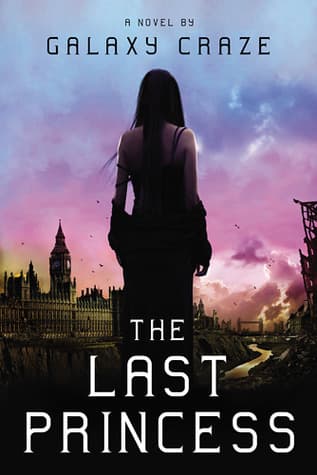
Synopsis
Covers the whole plot, including the ending.
- Difficulty
- Easy
- Pacing
- Moderate
- Mood
- Dark, Hopeful, Romantic, Adventurous
- Read it if
- You enjoy dystopian YA novels with a strong female protagonist, a dash of romance, and themes of survival and rebellion.
- Skip it if
- You prefer hard science fiction over fantasy-infused dystopia, or are looking for a lighthearted read.
The Last Princess Plot Summary
Covers the whole plot, including the ending.
The Fall of Buckingham Palace
Sixteen-year-old Princess Eliza lives in post-apocalyptic England, damaged by natural disasters. Food is scarce, and the sun rarely shines. Her family, the monarchy, lives in a fortified Buckingham Palace. One night, revolutionary forces led by Lord Marcus breach the palace. Eliza, her younger sister Beatrice, and their parents, King George and Queen Victoria, are caught in the sudden attack. Amidst the chaos, Eliza's parents are murdered, and Beatrice is captured. Hidden by a loyal guard, Eliza escapes through secret passages, emerging into the desolate streets of London, alone and heartbroken, vowing revenge.
A Life in Hiding
After her escape, Eliza, disguised as a commoner named 'Liz,' struggles to survive in the harsh new world. She scavenges for food and avoids revolutionary guards. Driven by a desire to avenge her family and rescue Beatrice, Eliza seeks information about Lord Marcus and his forces. She eventually meets a group of independent rebels, led by a young man named Finn. Initially cautious, Eliza convinces them to take her in, making up a story about losing her family to the revolution. She carefully watches their movements and gathers intelligence, all while hiding her true identity.
Joining the Enemy Ranks
Realizing that direct confrontation is impossible, Eliza plans to infiltrate Lord Marcus's inner circle. She learns that Marcus is recruiting new soldiers and uses her survival skills to present herself as a capable recruit. She passes the tests and is assigned to a unit, where she works to earn the trust of her fellow soldiers. Her goal is to get close enough to Marcus to get her revenge, all while maintaining her 'Liz' persona and hiding her intense hatred. She constantly fears being discovered, knowing it means certain death.
Encounters with Finn
While with Marcus's forces, Eliza often sees Finn, who, unknown to her, is also working undercover within the revolutionary ranks. Their interactions are initially full of suspicion and curiosity. Finn seems to recognize a strength and intelligence in 'Liz.' As they are forced to work together on assignments, a reluctant trust begins to form. Eliza finds herself drawn to Finn's quiet strength and surprising kindness, which challenges her focus on revenge and makes her confront emotions she thought were gone.
The Seeds of Doubt
As Eliza goes deeper into Lord Marcus's organization, she starts to uncover information that complicates her simple view of the conflict. She overhears conversations and reads documents hinting at the widespread suffering and discontent under her family's rule, especially regarding resources for common people. While Marcus is ruthless, Eliza begins to see that the revolution was not simply an evil act, but a response to real problems. This realization creates a moral dilemma, forcing her to question the justice of her revenge and the true nature of her family's legacy.
Beatrice's Discovery
Through careful scouting and information gathering, Eliza confirms that her sister, Beatrice, is alive and held captive within a heavily guarded part of Marcus's compound. This discovery rekindles Eliza's hope and strengthens her resolve, but also shifts her main goal from pure revenge to rescue. She realizes her actions could endanger Beatrice, making her plan far more complicated. Seeing her sister, even from a distance, reminds Eliza of the innocent life she is fighting for and the family she has lost, reinforcing her determination to save her.
Finn's Revelation
Finn finally tells Eliza his true identity, confessing that he is not just a rebel, but also the son of a high-ranking official executed by the monarchy for dissent. He explains that he joined Marcus's forces to gather intelligence and find a way to dismantle the oppressive parts of both the old and new regimes, seeking a more just future for England. This revelation shocks Eliza, as she realizes Finn has his own complex reasons and is not simply an enemy. It forces her to confront the unclear lines between hero and villain, and the shared trauma that connects them, despite their different backgrounds.
A Shared Mission
After Finn's confession, Eliza, dealing with her conflicted feelings, decides to trust him. They realize their individual goals—Eliza's desire to rescue Beatrice and Finn's ambition to expose Marcus's tyranny—can be achieved by working together. They create a daring plan to infiltrate the deepest parts of Marcus's compound, rescue Beatrice, and gather undeniable evidence of Marcus's abuses of power. This alliance marks a turning point for Eliza, as she moves beyond solely seeking revenge and embraces a broader vision of justice and hope for her shattered world, with Finn as her unexpected ally.
The Rescue Attempt and Confrontation
Eliza and Finn carry out their plan, infiltrating the fortified compound where Beatrice is held. They navigate complex security and engage in tense fights with Marcus's guards. They reach Beatrice, who is weak but overjoyed to see Eliza. However, Lord Marcus himself intercepts their escape, having anticipated their move. A tense confrontation follows, where Marcus reveals more about his motivations and the perceived injustices of the former monarchy. Eliza, no longer driven solely by blind rage, prepares to fight, not just for revenge, but for her sister's freedom and a chance at a new future.
The Climax and Marcus's Defeat
In a final battle, Eliza and Finn confront Lord Marcus and his elite guards. Eliza, using her natural leadership and combat skills, fights fiercely to protect Beatrice. Finn, showing surprising tactical ability, creates an opening. During the intense struggle, Marcus is defeated, though the cost is high, with several loyal allies dying. With Marcus overthrown, his regime crumbles. Eliza and Finn ensure Beatrice's safety, but the immediate aftermath is one of uncertainty and the immense challenge of rebuilding a shattered society.
Aftermath and New Beginnings
With Lord Marcus defeated, Eliza, Finn, and Beatrice become unexpected leaders in post-revolutionary England. The immediate challenge is to restore order, provide for the starving people, and establish a new, fair government. Eliza, having let go of her desire for pure revenge, takes on her leadership responsibilities, guided by a new understanding of her people's needs. Finn stands by her side, offering support and advice, their relationship strengthened by shared difficulties. They both understand that the path ahead is difficult, but for the first time in a long time, there is a glimmer of hope for a brighter future for their devastated nation.
Principal Figures
Princess Eliza
Protagonist
The last surviving princess, driven by revenge and a desire to save her sister.
Sixteen-year-old Princess Eliza is initially portrayed as a sheltered royal, but the brutal murder of her family and the capture of her sister force her to mature rapidly. She is resourceful, intelligent, and possesses an inner strength she never knew she had. Her primary motivation is revenge against Lord Marcus, but this gradually evolves into a desire to protect her sister and fight for a more just society. She is skilled in observation and adapts quickly to the harsh realities of her new life, showing remarkable resilience and courage.
Relationships: Princess Beatrice (Younger sister, Eliza's primary motivation for survival and rescue.); Lord Marcus (Arch-nemesis, murderer of her family.); Finn (Initially an enigmatic rebel, later her trusted ally and romantic interest.); King George (Father, deceased.); Queen Victoria (Mother, deceased.)
Finn
Supporting/Love Interest
A mysterious rebel with his own agenda, who becomes Eliza's ally.
Finn is a pragmatic and observant young man, initially appearing as a leader of an independent rebel group. He is intelligent, capable, and possesses a quiet charisma. He is driven by a desire for justice and a better future for England, having suffered personal loss under the previous monarchy. His motivations are complex, as he seeks to dismantle oppressive systems rather than simply replace them. He is initially wary of Eliza but comes to trust and admire her, eventually falling in love with her. He is a skilled fighter and strategist.
Relationships: Princess Eliza (Ally, confidant, and romantic interest.); Lord Marcus (Antagonist, a figure Finn seeks to expose.); His deceased father (Motivator for his fight against tyranny.)
Lord Marcus
Antagonist
The ruthless revolutionary who overthrows the monarchy.
Lord Marcus is the cunning and ruthless leader of the revolutionary forces. He is driven by a strong belief that the monarchy was corrupt and oppressive, and that he is bringing about a necessary change for England. While his methods are brutal and he is responsible for immense bloodshed, he sees himself as a liberator. He is intelligent, charismatic, and a formidable strategist, capable of inspiring loyalty among his followers. He is not simply evil, but a man shaped by the injustices he perceived and the power he now wields, making him a complex antagonist.
Relationships: Princess Eliza (His primary target, and later his nemesis.); Princess Beatrice (His captive, a bargaining chip.)
Princess Beatrice
Supporting
Eliza's younger sister, held captive by Lord Marcus.
Princess Beatrice is Eliza's younger sister, a symbol of innocence and the last remaining member of Eliza's immediate family. She is initially portrayed as vulnerable and dependent. Her capture by Lord Marcus fuels Eliza's quest for revenge and later, her mission of rescue. Beatrice represents the hope for the future and the personal stakes of the conflict for Eliza. While her direct involvement in the action is limited, her survival is a driving force for the protagonist, reminding Eliza of what she is fighting for beyond mere vengeance.
Relationships: Princess Eliza (Older sister and protector.); Lord Marcus (Her captor.)
King George
Mentioned/Deceased
Eliza's father, the former King of England.
King George was the reigning monarch of England before the revolution. He is portrayed as a figurehead, perhaps somewhat out of touch with the suffering of his people in the post-disaster world. His murder by Lord Marcus's forces is a catalyst for Eliza's initial quest for revenge. While his direct actions are not shown, his reign is later revealed to have had its own flaws, contributing to the discontent that fueled the revolution. He represents the old order that was violently overthrown.
Relationships: Princess Eliza (Daughter.); Queen Victoria (Wife.); Lord Marcus (His killer.)
Queen Victoria
Mentioned/Deceased
Eliza's mother, the former Queen of England.
Queen Victoria was Eliza's mother and the Queen of England. Like King George, she is murdered during the revolutionary assault on Buckingham Palace, serving as another catalyst for Eliza's vengeful quest. Her role is primarily to establish Eliza's royal lineage and the devastating loss she experiences. She represents the personal tragedy of the revolution for Eliza and the complete destruction of her former life. Her memory often surfaces in Eliza's thoughts as she grapples with her grief.
Relationships: Princess Eliza (Daughter.); King George (Husband.); Lord Marcus (Her killer.)
General Thorne
Supporting
A high-ranking officer in Marcus's army.
General Thorne is a loyal and capable officer within Lord Marcus's revolutionary army. He is a pragmatic and disciplined soldier, overseeing many of the military operations. Eliza encounters him frequently while disguised as 'Liz,' and he serves as a point of contact within the enemy ranks. He represents the more organized and disciplined aspect of Marcus's forces, contrasting with some of the more brutal elements. Thorne is a professional soldier, driven by loyalty to Marcus's cause, but he also possesses a sense of honor.
Relationships: Lord Marcus (His superior officer and leader.); Princess Eliza (as Liz) (One of his recruits, whom he unknowingly supervises.)
The Old Guard
Mentioned/Supporting
A loyal royal guard who helps Eliza escape Buckingham Palace.
The Old Guard is a nameless, loyal royal guard who sacrifices himself to ensure Princess Eliza's escape during the attack on Buckingham Palace. His brief appearance highlights the loyalty some still held for the monarchy and underscores the immediate danger Eliza faces. He represents the last vestige of Eliza's old life and the sacrifice made to preserve her. His actions are pivotal in allowing the plot to unfold, as without his intervention, Eliza would not have survived the initial assault.
Relationships: Princess Eliza (Protector, enabling her escape.)
Themes & Insights
Revenge vs. Justice
Eliza's initial motivation is revenge for her family's murder. However, as she infiltrates Lord Marcus's forces and learns more about the reasons for the revolution, her understanding of the conflict grows. She begins to question if her family's rule was truly fair and if Marcus is entirely evil. This internal conflict forces her to shift her focus from simple retribution to seeking a more equitable future for England, especially after she discovers Beatrice is alive. The theme explores how destructive unchecked revenge is compared to the harder, but ultimately more constructive, path of justice and rebuilding, shown when she and Finn unite for a shared, broader goal.
“Revenge is a fire that consumes everything, even the one who lights it.”
Hope in Despair
Set in a post-apocalyptic world where the sun rarely shines and life is a constant struggle, the story deeply explores the effort to maintain hope. Eliza loses everything—her family, her home, her identity—and is thrust into a brutal reality. Her journey has moments of deep despair, but finding her sister, Beatrice, and her growing relationship with Finn, rekindle her capacity for hope. Finn, despite his own tragic past, also represents a practical hope for a better future, not through blind optimism but through action and collaboration. The rare sight of the sun subtly reinforces the idea that even a small glimmer of light can make a difference.
“Even in the darkest night, a single star can guide you home.”
Identity and Transformation
Eliza undergoes a significant change in identity. From a sheltered princess, she becomes 'Liz,' a tough survivor, a rebel, and an infiltrator in the enemy's ranks. This forced change challenges her ideas of herself and her royal background. She sheds her royal status and learns to rely on her own strength and cleverness. The theme explores how extreme circumstances can strip away preconceived notions of self, forcing individuals to redefine who they are and what they stand for. Her journey is not just about physical survival, but about building a new, stronger identity that can lead a broken nation.
“I was no longer a princess. I was a weapon forged in the fires of loss.”
The Nature of Leadership
The novel examines different forms of leadership through Eliza, Lord Marcus, and Finn. Lord Marcus is a revolutionary leader who gains power through force and maintains it through control, believing his vision justifies his brutal methods. Eliza, initially a hesitant leader, learns that true leadership involves empathy, understanding her people's needs, and encouraging collaboration rather than demanding obedience. Finn, with his more democratic and justice-focused approach, offers a contrasting model. The story suggests that effective leadership in a broken world requires not just strength, but also a moral compass and the ability to inspire genuine hope and shared purpose, rather than fear.
“A true leader doesn't just command; they inspire a path worth following.”
Plot Devices & Literary Techniques
Disguise and Hidden Identity
Eliza's primary method for survival and infiltration.
Eliza's disguise as 'Liz,' a commoner, is central to the plot. It allows her to move undetected among Lord Marcus's forces, gather intelligence, and ultimately get close to her target. This device creates constant tension, as Eliza must meticulously maintain her false identity, fearing discovery at every turn. It also forces her to shed her royal persona and interact with people from different social strata, broadening her perspective and challenging her preconceived notions about the common people and the revolution.
The Post-Apocalyptic Setting
A devastated world that fuels the conflict and shapes characters.
The setting of a post-natural disaster England, characterized by perpetual gloom, scarcity, and lawlessness, is more than just a backdrop. It directly influences the plot by creating the conditions for the revolution, highlighting the desperation of the populace, and hardening the characters. The struggle for resources and survival is a constant underlying tension, justifying the extreme measures taken by both the monarchy and the revolutionaries. It also serves as a metaphor for the brokenness of society and the immense challenge of rebuilding, underscoring the high stakes of Eliza's mission.
The Inciting Incident: Palace Attack
The violent event that propels Eliza's journey.
The brutal and sudden attack on Buckingham Palace, resulting in the murder of Eliza's parents and the capture of her sister, serves as the primary inciting incident. This event shatters Eliza's world, strips her of her identity, and ignites her burning desire for revenge. It immediately establishes the high stakes, the ruthlessness of the antagonist, and Eliza's personal loss, setting her on a clear path of retribution. Without this traumatic event, Eliza would remain a sheltered princess, and the story would not exist.
The Revelation of Finn's True Motives
A plot twist that reshapes Eliza's understanding and alliance.
Finn's confession of his true identity and his own complex motivations is a significant plot device. It acts as a major turning point, forcing Eliza to re-evaluate her black-and-white view of the conflict and the 'enemy.' This revelation builds trust between Eliza and Finn, transforming their relationship from wary allies to genuine partners. It complicates the narrative, adding layers of moral ambiguity, and enables them to combine their efforts for a more effective and just outcome, moving beyond individual revenge to a shared goal.
The Last Princess Quotes
“It was not a dream, but a memory, as vivid and sharp as the day it happened, of a world that was no more.”
“Power isn't about how many people you can control, but how many you can inspire.”
“The stars were not just lights in the sky; they were the eyes of ancestors, watching, guiding.”
“Sometimes, the greatest strength is knowing when to yield, when to bend so you don't break.”
“Fear is a cage, but hope is the key, even when you can't see the lock.”
“The forest remembers. Every tree has a story, every leaf a whisper of what was.”
“Love isn't a weakness, it's the most powerful weapon you possess, if you know how to wield it.”
“To be truly free, you must first free yourself from the expectations of others.”
“Even in the darkest night, a single spark can ignite a revolution.”
“The past is a foundation, not a prison. Build upon it, don't be confined by it.”
“Not all battles are fought with swords. Some are won with words, others with silence.”
“The universe doesn't care about your plans, only your courage to face what comes.”
“Home isn't a place, it's the people you choose to stand with, no matter where you are.”
“Every ending is just a new beginning, disguised as something sad.”
Quiz
10 questions on the plot and the characters. Each answer comes with a short explanation.
Question 1
What catastrophic events have decimated the Earth, leading to England's isolated and bleak state?
- A global war and subsequent famine.
- A series of natural disasters.
- An alien invasion and environmental collapse.
- A prolonged ice age and volcanic eruptions.
Show answer
B. A series of natural disasters. The book states that 'a series of natural disasters has decimated the earth,' leading to the current harsh conditions in England.
Question 2
What is Princess Eliza's initial primary motivation after her family is attacked?
- To escape England and find refuge in another country.
- To rally loyalists and reclaim the throne immediately.
- To seek revenge on the man who destroyed her family.
- To find her lost siblings and ensure their safety.
Show answer
C. To seek revenge on the man who destroyed her family. After the attack, Eliza is 'determined to kill the man who destroyed her family,' indicating revenge is her driving force.
Question 3
Where does the revolutionary's attack on the royal family take place?
- Windsor Castle
- Buckingham Palace
- The Tower of London
- Balmoral Castle
Show answer
B. Buckingham Palace The text explicitly states, 'Blood is shed in Buckingham Palace,' during the attack.
Question 4
How does Princess Eliza manage to infiltrate the enemy forces?
- She uses her royal connections to negotiate a truce.
- She joins them in disguise.
- She is captured and forced to join them.
- She pretends to be a common citizen seeking refuge.
Show answer
B. She joins them in disguise. To pursue her revenge, Eliza 'joins the enemy forces in disguise.'
Question 5
What is the general state of England in the aftermath of the disasters, besides the lack of sunlight and scarce food?
- It is a police state with strict military control.
- It is a utopian society rebuilt on new principles.
- It is plagued by roaming criminal groups and growing unrest.
- It is a peaceful, agrarian society focused on survival.
Show answer
C. It is plagued by roaming criminal groups and growing unrest. The description highlights that 'groups of criminals roam the woods, searching for prey,' and 'the people are growing restless,' indicating widespread lawlessness and discontent.
Question 6
What new emotion or feeling does Eliza begin to experience after meeting a specific individual?
- Overwhelming fear and paranoia.
- Renewed ambition for power.
- Hope and love.
- Deep resentment towards the common people.
Show answer
C. Hope and love. The synopsis states that after meeting someone, Eliza 'remember[s] how to hope-and love-once more,' shifting her focus from pure revenge.
Question 7
What is the central conflict or dilemma Eliza faces once she develops new feelings?
- Whether to abandon her quest for revenge entirely or risk everything for her new hope and love.
- Deciding between ruling as a benevolent queen or a vengeful dictator.
- Choosing between her duty to her family and her personal desires.
- Whether to expose her identity or remain hidden indefinitely.
Show answer
A. Whether to abandon her quest for revenge entirely or risk everything for her new hope and love. The core conflict is implied by 'Now she must risk everything to ensure that she does not become... The Last Princess,' suggesting her new hope and love are at odds with her original path of revenge.
Question 8
What is the significance of the title 'The Last Princess' in relation to Eliza's journey?
- It refers to her being the youngest princess in her family.
- It foreshadows her ultimate failure to reclaim the throne.
- It highlights the existential threat to the monarchy and her own survival, which she must 'risk everything' to prevent.
- It signifies her being the final heir to a long-lost magical kingdom.
Show answer
C. It highlights the existential threat to the monarchy and her own survival, which she must 'risk everything' to prevent. The phrase 'Now she must risk everything to ensure that she does not become... The Last Princess' implies that the title refers to the potential end of her lineage and the monarchy, a fate she is actively trying to prevent.
Question 9
The revolutionary is described as 'ruthless.' How does this characteristic contribute to the initial conflict and Eliza's motivation?
- It suggests the revolutionary is open to negotiation, making Eliza's revenge quest less justified.
- It implies the revolutionary's actions were driven by personal vendetta, not political ideology.
- It establishes the extreme danger and brutality of the antagonist, justifying Eliza's fierce desire for revenge and the high stakes of her mission.
- It foreshadows the revolutionary's eventual change of heart and alliance with Eliza.
Show answer
C. It establishes the extreme danger and brutality of the antagonist, justifying Eliza's fierce desire for revenge and the high stakes of her mission. Describing the revolutionary as 'ruthless' and making the royal family his 'first target' by shedding 'blood in Buckingham Palace' immediately establishes him as a dangerous and unforgiving antagonist, fueling Eliza's equally fierce desire for revenge.
Question 10
What is the broader societal implication of England being 'cut off from the rest of the world' and experiencing scarce food and little sun?
- It suggests that England has become a technologically advanced, self-sufficient nation.
- It highlights the theme of isolation and the breakdown of global cooperation, contributing to the desperation and unrest within the country.
- It implies that England is undergoing a spiritual awakening and returning to simpler times.
- It indicates a successful post-apocalyptic rebuilding effort that prioritizes local resources.
Show answer
B. It highlights the theme of isolation and the breakdown of global cooperation, contributing to the desperation and unrest within the country. Being 'cut off from the rest of the world' combined with resource scarcity and a gloomy environment ('sun rarely shines, food is scarce') emphasizes a theme of isolation and contributes to the overall desperation and 'restlessness' of the people, setting the stage for revolution.
The Last Princess FAQ
What is the central premise of 'The Last Princess'?
'The Last Princess' is set in a post-apocalyptic England, isolated and ravaged by natural disasters, where food is scarce and criminals roam. The story follows sixteen-year-old Princess Eliza as she seeks revenge on the revolutionary who overthrew her family and destroyed Buckingham Palace, forcing her to join his ranks in disguise.
Who is Princess Eliza and what motivates her actions?
Princess Eliza is the sole survivor of the royal family after a ruthless revolutionary massacres them in Buckingham Palace. Her primary motivation is an intense desire for revenge against the man responsible for her family's destruction, leading her to infiltrate his forces under an assumed identity.
What kind of world does Eliza navigate outside of Buckingham Palace?
Outside the palace, Eliza navigates a desolate and dangerous England where the sun rarely shines, food is scarce, and lawlessness is rampant. She encounters groups of criminals in the woods, highlighting the extreme societal breakdown following the natural disasters and isolation.
Who is the main antagonist and what are his goals?
The main antagonist is a ruthless revolutionary who aims to overthrow the crown, viewing the royal family as an obstacle to his vision for England. He initiates a violent coup at Buckingham Palace, demonstrating his brutal efficiency and determination to seize power.
How does romance play a role in Eliza's journey?
Romance emerges as a crucial element when Eliza, consumed by revenge, meets someone within the enemy ranks who helps her rediscover hope and love. This relationship challenges her singular focus on vengeance, providing an alternative path and internal conflict.
Are there any subtle clues about the true identity or motivations of the revolutionary leader?
While the synopsis paints him as purely ruthless, keen readers might notice subtle hints about his past grievances or a deeper, perhaps misguided, ideology behind his actions. His revolutionary rhetoric, though violent, could appeal to the desperate populace, suggesting a more complex character than initially perceived.
What hidden connections might exist between the natural disasters and the political unrest?
The narrative suggests a strong correlation: the natural disasters decimated the earth, leading to scarcity and desperation, which in turn fueled the people's restlessness and made them susceptible to a revolutionary's call. The environmental collapse directly precipitates the political instability and the overthrow of the monarchy.
Does Eliza's disguise hide any unique skills or knowledge she possesses from her royal upbringing?
Beyond her royal etiquette, Eliza likely possesses an education in strategy, history, or even diplomacy that she can subtly leverage while disguised among the enemy. These 'hidden' skills, though not immediately obvious, could prove crucial in gathering intelligence or navigating complex political situations within the revolutionary camp.
How does Eliza's initial drive for revenge impact her psychological state?
Eliza's initial drive for revenge consumes her entirely, leaving her with 'nothing left to live for but revenge.' This singular focus likely leads to a profound sense of grief, anger, and a suppression of her former identity, making her emotionally rigid and vulnerable to manipulation.
What internal conflicts does Eliza face when she meets someone who offers hope and love?
Eliza faces a significant internal conflict between her deep-seated desire for vengeance and the burgeoning feelings of hope and love. This forces her to confront whether she can truly abandon her past trauma for a future, and if pursuing love compromises her duty to her fallen family.
How does the trauma of losing her family affect Eliza's decision-making throughout the story?
The trauma of witnessing her family's massacre and being the sole survivor profoundly shapes Eliza's decision-making, initially pushing her towards extreme and risky actions like joining the enemy. It likely fuels a fear of further loss but also a fierce determination to protect what little she has left, including her new-found hope.
What psychological journey does the revolutionary leader undergo, if any, beyond his initial ruthlessness?
While initially portrayed as ruthless, a deeper psychological journey for the revolutionary leader might involve confronting the consequences of his actions, the true cost of power, or the moral compromises he makes. He might grapple with the public's reaction to his rule or the sacrifices he made to achieve his goals.
Is Eliza's decision to join the enemy forces a pragmatic choice or a desperate act?
It appears to be a desperate act born from her singular focus on revenge, rather than a purely pragmatic strategic move. While it offers proximity to her target, it also places her in extreme danger, suggesting her emotional state overrides logical caution in her pursuit of vengeance.
How does the title 'The Last Princess' foreshadow Eliza's potential fate?
The title 'The Last Princess' strongly foreshadows Eliza's precarious position, implying she is the final vestige of a fallen line. It raises questions about whether she will survive, restore the monarchy, or if her efforts will ultimately fail, making her truly 'the last' in every sense.
What message does the book convey about the nature of revenge versus hope and love?
The book seems to explore the destructive nature of revenge as a sole motivator, contrasting it with the transformative power of hope and love. It suggests that while revenge can drive action, it is hope and connection that truly offer a path to healing and a meaningful future, challenging Eliza to choose between them.
Could the 'natural disasters' symbolize something more than just environmental collapse?
Beyond literal environmental devastation, the 'natural disasters' could metaphorically represent the breakdown of societal order, moral decay, or even the inherent instability of power structures. They act as a catalyst, stripping away civilization to reveal raw human nature and political vulnerability.
How does the 'darkness' of England, both literal and metaphorical, contribute to the story's themes?
The 'darkness' of England, with its rare sunshine and scarce resources, literally reflects the post-apocalyptic setting. Metaphorically, it underscores themes of despair, moral ambiguity, and the absence of hope, creating a bleak backdrop against which Eliza's internal struggle for light and purpose unfolds.
Similar books
- The Hunger Games
Suzanne Collins
4.3 (6.4M) average on GoodreadsFantasyFeatures a strong female lead in a dystopian world, forced to fight for survival and navigate complex alliances.
- Divergent
Veronica Roth
4.2 (2.9M) average on GoodreadsFantasyFollows a young protagonist rebelling against a corrupt system while exploring themes of identity and forbidden love.
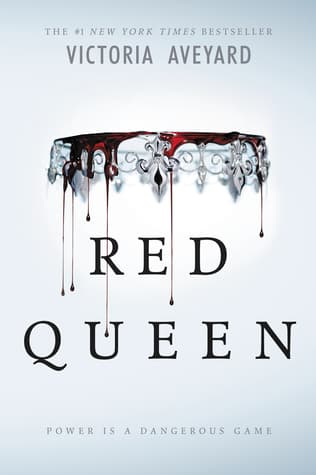
- Red Queen
Victoria Aveyard
4.0 (565k) average on GoodreadsFantasyA commoner with special abilities infiltrates the royal court, leading to rebellion and a fight for justice.
- Harry Potter and the Sorcerer's Stone
J.K. Rowling
4.5 (7M) average on GoodreadsFantasyRescued from a miserable life under the stairs, an orphaned boy discovers he's a wizard destined for a magical school, where he uncovers a dangerous secret tied to the dark wizard who murdered his parents.
- 1984
George Orwell
4.2 (3.1M) average on GoodreadsPoliticsIn a future where surveillance and thought control are absolute, a man's search for truth clashes with the Party, showing that hope can be a form of rebellion.
- The Hobbit, or There and Back Again
J.R.R. Tolkien
4.3 (2.9M) average on GoodreadsFantasyA comfort-loving hobbit named Bilbo Baggins is whisked away by a mischievous wizard and a band of dwarves on an unexpected journey to reclaim stolen treasure from a fearsome dragon, discovering courage and a magical ring along the way.





Enjoyed the summary?
A summary gives you the shape of the book. The book itself has the detail, the examples and the voice.
Find The Last Princess on AmazonAs an Amazon Associate, BookBrief earns from qualifying purchases. How we're funded