

Synopsis
Covers the whole plot, including the ending.
- Difficulty
- Easy
- Pacing
- Moderate
- Mood
- Heartwarming, Humorous, Thought-provoking
- Read it if
- You enjoy heartwarming stories about sibling relationships, learn about basic business concepts in a fun way, or appreciate books that gently tackle themes of jealousy and forgiveness.
- Skip it if
- You dislike stories with sibling conflict or prefer books with more complex plots and mature themes.
The Lemonade War Plot Summary
Covers the whole plot, including the ending.
A Shocking Announcement and the Start of the War
Fourth-grader Evan Treski is enjoying the end of summer vacation when his mother tells him his younger sister, Jessie, who is in third grade, will be skipping a grade and joining him in fifth grade in the fall. This news upsets Evan's feeling of being older and his privacy. He feels Jessie is invading his space and doing better than him. Hurt and angry, Evan says he will not talk to Jessie for the rest of the summer. Jessie, confused and sad by Evan's sudden coldness, tries to understand why he is acting this way. The growing tension between them sets the stage for a competition, as Evan goes to his room to avoid his sister, and Jessie tries to understand the unexpected hostility.
The First Lemonade Stand and a Challenge
Angry and wanting to show he is independent, Evan decides to open a lemonade stand. He plans his strategy, choosing a good spot and using a catchy sign. On his first day, he makes a good profit, feeling happy. But his happiness does not last. Jessie, seeing his success and still upset by his rejection, decides to open her own lemonade stand right next to his. This direct challenge makes Evan furious. He sees it as a declaration of war. The siblings' first business attempts are marked by unspoken rivalry, with each trying to outsell the other, setting up their growing conflict.
Escalation and Marketing Strategies
The lemonade war quickly gets more intense. Evan, with his friend Scott Spencer, tries different marketing plans, including a 'buy one, get one free' offer and moving to a busier spot near the town green. He even tries to hurt Jessie's stand by suggesting she add 'secret ingredients' like dirt. Jessie, despite being socially awkward, is a strong opponent. She looks up business terms, makes a marketing plan, and uses her math skills to figure out profits and prices. She even works with Megan Moriarty, who offers 'free sprinkles' with her lemonade. Each sibling's move is met with a counter-move, turning their personal fight into a full business competition.
The Tricky Part and Unfair Advantages
Evan, feeling more and more desperate to win, gets the idea of a 'franchise.' He gets other kids in the neighborhood, including Paul and Ryan, to open their own lemonade stands. He promises them a share of the profits for selling 'Evan's Lemonade.' This plan first boosts his sales a lot. Meanwhile, Jessie deals with a difficult customer, a woman who wants her money back for lemonade she says is too sour. Jessie, trying to be fair, offers a replacement, but the woman's rudeness leaves her feeling confused and questioning her business skills. These events show the different challenges and ethical problems each sibling faces as they try to win.
The Betrayal and the Missing Money
The war takes a bad turn when Evan's supposed friend, Scott Spencer, betrays him. Scott, who had been helping Evan with his lemonade stand, secretly sells lemonade for Jessie, using Evan's supplies, and keeps the money. Evan finds out about Scott's trick, leading to a fight and a strong feeling of betrayal. To make things worse, Evan realizes that all his earnings, a lot of money he was saving for a new toy, are missing from his hiding spot. He immediately suspects Jessie, believing she has stolen his money as a final act of revenge in their war, making his anger and resentment towards her even deeper.
Jessie's Despair and a Confession
Jessie, despite her strategic efforts, struggles. Her last attempt to sell lemonade at the Labor Day fair, hoping for a big finish, does not work out. The fair is crowded, but her stand is ignored, and she makes little money. Overwhelmed by her failure and Evan's continued hostility, Jessie cries. She tells her mother that she only wanted to make enough money to buy a specific toy for Evan as a peace offering, hoping to fix their broken relationship. She says she thought Evan wanted the money for the same toy, explaining her competitive drive and the misunderstanding behind her actions.
The Truth About the Money
Evan, still sure Jessie stole his money, confronts her. But the truth comes out through discoveries. Jessie, trying to make peace, had only taken a small amount of money from Evan's earnings, planning to combine it with her own to buy him the toy. Most of Evan's missing money is found under his bed, having fallen out of his hiding spot. It turns out Scott Spencer, Evan's 'friend,' was the one who had stolen some of Evan's money, and had also been selling lemonade for both siblings and keeping the profits. This shows Evan that his sister was not the mean thief he thought she was, shifting his anger from Jessie to Scott.
A Moment of Reconciliation
With the truth about the money revealed and Scott Spencer exposed, the intense bad feelings between Evan and Jessie start to go away. Evan realizes his anger towards Jessie was mostly wrong and came from his own insecurities about her academic success. Jessie, in turn, understands Evan's feelings of being replaced and overshadowed. They share a quiet moment of understanding, acknowledging the pain and misunderstandings that caused their war. While the sibling rivalry does not disappear completely, they start to make up. They both learn about communication, forgiveness, and what friendship and family mean.
Reflecting on the War and New Beginnings
As summer ends and school starts, Evan and Jessie think about their intense lemonade war. They both have learned important lessons about business, competition, and their relationship. Evan understands how important communication is and not letting his pride control him, while Jessie has gained confidence in her math and social skills. The experience has, in a surprising way, brought them closer, as they now have a shared, though difficult, history. They face going to fifth grade together with a new, if still careful, understanding of each other, ready to handle the challenges of school and being siblings.
Principal Figures
Evan Treski
Protagonist
Fourth-grader who feels overshadowed by his younger sister.
Evan is a 'people-smart' fourth-grader who excels at social interactions and enjoys being popular. He is generally good-natured but struggles with insecurity and jealousy, especially when his younger sister, Jessie, threatens his sense of superiority. He is competitive and prone to acting on impulse and emotion, leading him to declare war on Jessie. His journey involves learning to manage his emotions, understanding the true meaning of friendship, and appreciating his sister's unique strengths. He initially sees Jessie's academic jump as an invasion of his territory and a personal affront.
Relationships: Jessie Treski (Younger sister, rival, eventual friend); Scott Spencer (Best friend, later revealed as a betrayer); Mom (Mrs. Treski) (Supportive mother, tries to mediate sibling disputes)
Jessie Treski
Protagonist
Third-grader, highly intelligent and 'math-smart,' who skips a grade.
Jessie is a 'math-smart' third-grader with an exceptional talent for numbers and logic, but she struggles with social cues and understanding emotions. She is earnest, persistent, and methodical, often approaching problems with a spreadsheet-like precision. Her decision to skip a grade, while academically sound, inadvertently sparks the conflict with Evan. Throughout the lemonade war, she demonstrates her intelligence and determination, but also her vulnerability and longing for her brother's affection. She often misinterprets social situations, leading to further misunderstandings with Evan.
Relationships: Evan Treski (Older brother, rival, eventual friend); Megan Moriarty (Friend and business partner); Mom (Mrs. Treski) (Supportive mother, tries to mediate sibling disputes)
Scott Spencer
Supporting
Evan's best friend who becomes involved in the lemonade war.
Scott Spencer is Evan's best friend and initially his loyal partner in the lemonade war. He is somewhat mischievous and easily swayed, often encouraging Evan's competitive streak and participating in his schemes. However, Scott proves to be untrustworthy, betraying Evan by secretly selling lemonade for both siblings and pocketing the money. His actions lead to a significant emotional blow for Evan and highlight the complexities of friendship and loyalty. He is driven by self-interest and a desire for easy money, ultimately damaging his friendship with Evan.
Relationships: Evan Treski (Best friend, later betrayed); Jessie Treski (Briefly worked for, without Evan's knowledge)
Megan Moriarty
Supporting
Jessie's friend and business partner in the lemonade war.
Megan Moriarty is Jessie's friend who joins her as a business partner during the lemonade war. She is more socially adept than Jessie and offers practical advice and emotional support. Megan's idea of adding 'free sprinkles' to their lemonade is a clever marketing tactic that helps Jessie compete with Evan. She represents a positive and loyal friendship, contrasting with Scott's betrayal of Evan. Megan's presence helps Jessie navigate the social aspects of their business venture and provides a sense of camaraderie.
Relationships: Jessie Treski (Friend and business partner)
Mrs. Treski (Mom)
Supporting
Evan and Jessie's mother, who tries to mediate their conflict.
Mrs. Treski is the mother of Evan and Jessie. She is a caring parent who tries to understand and mediate the escalating conflict between her children. She is the one who delivers the news of Jessie skipping a grade, unknowingly triggering the lemonade war. Throughout the book, she offers advice, sets boundaries, and encourages her children to communicate and resolve their differences. She represents the parental figure trying to foster harmony while also allowing her children to learn from their own experiences. She provides a sense of stability amidst the sibling chaos.
Relationships: Evan Treski (Son); Jessie Treski (Daughter)
Paul
Mentioned
A kid from the neighborhood who joins Evan's 'franchise'.
Paul is one of the neighborhood kids recruited by Evan to participate in his 'franchise' scheme. He sets up his own lemonade stand under Evan's banner, contributing to Evan's overall sales. His involvement highlights Evan's attempt to scale his business and create an advantage over Jessie.
Relationships: Evan Treski (Business associate (franchisee))
Ryan
Mentioned
Another kid who joins Evan's lemonade 'franchise'.
Ryan is another neighborhood kid who joins Evan's 'franchise' to sell lemonade. Like Paul, he helps Evan expand his reach and increase his earnings, demonstrating Evan's entrepreneurial spirit and his ability to rally others to his cause.
Relationships: Evan Treski (Business associate (franchisee))
Themes & Insights
Sibling Rivalry and Jealousy
The main theme is about the strong competition and emotional conflict between Evan and Jessie. Evan's jealousy over Jessie skipping a grade causes his initial anger and makes him start a 'lemonade war.' Jessie, in turn, feels hurt by Evan's rejection and responds with her own competitive spirit. This theme shows through their increasing business tactics, emotional outbursts, and eventual attempts to make up. It shows how easily misunderstandings and insecurities can harm family bonds. For example, Evan's thoughts often show his frustration with Jessie's intelligence and his wish to keep his older brother status.
“For a full hour, he poured lemonade. The world is a thirsty place, he thought as he nearly emptied his fourth pitcher of the day. And I am the Lemonade King.”
The Nature of Business and Entrepreneurship
The book uses the lemonade stand as a small example of real-world business ideas. Both Evan and Jessie use different plans, including marketing, pricing, finding locations, and even franchising, to get an advantage. The story includes definitions of business terms like 'profit,' 'loss,' 'franchise,' and 'goodwill,' making complicated economic ideas clear to young readers. This theme shows the challenges, ethics, and rewards of entrepreneurship, as seen through the siblings' competitive businesses. Jessie's detailed spreadsheets and Evan's attempts at advertising directly show these ideas.
“A good location, she knew, was a business's most important asset.”
Communication and Misunderstanding
An important theme is how communication, or lack of it, makes conflict worse. Evan's initial silence and refusal to talk to Jessie, along with Jessie's trouble expressing her feelings and understanding social cues, lead to many misunderstandings. The war gets worse because neither sibling truly understands the other's reasons or pain. Only when they start to communicate, first indirectly and later directly, does the truth behind the stolen money and Jessie's intentions for Evan come out, allowing them to make up. Jessie telling her mother she wanted to buy Evan a gift is an important moment for this theme.
“It was a misunderstanding, pure and simple. But it was a misunderstanding that had turned into a war.”
Friendship and Loyalty
The theme of friendship and loyalty shows through the relationships Evan and Jessie have with their friends. Evan's friendship with Scott Spencer is tested and broken by Scott's betrayal. This shows the pain of disloyalty and how important trust is. In contrast, Jessie's friendship with Megan Moriarty shows positive support and teamwork. These different friendships help show the moral lessons learned during the lemonade war, showing how true friends support each other, while false friends can cause harm.
“A business has to have goodwill... Goodwill is when people like you and want to buy from you.”
Plot Devices & Literary Techniques
Alternating Perspectives
The story is told from the viewpoints of both Evan and Jessie.
The novel alternates chapters between Evan's and Jessie's third-person perspectives. This device allows the reader to understand the motivations, feelings, and thought processes of both siblings, providing a comprehensive view of the conflict. It highlights how their individual insecurities and differing interpretations of events fuel the 'lemonade war,' making it clear that neither is entirely right or wrong. This narrative structure is crucial for building empathy for both characters and for illustrating the theme of misunderstanding.
Business Terminology and Definitions
Each chapter begins with a business term and its definition.
A unique structural device in the book is the inclusion of a business term and its definition at the beginning of each chapter. These terms, such as 'competition,' 'profit,' 'loss,' 'franchise,' and 'goodwill,' directly relate to the events and strategies unfolding in that chapter. This device not only educates young readers about basic economic concepts but also cleverly frames the sibling rivalry as a literal business competition, adding an extra layer of meaning to their actions and decisions throughout the 'lemonade war.'
Symbolism of Lemonade
Lemonade represents both a simple childhood venture and a complex economic product.
Lemonade, a seemingly innocuous childhood staple, serves as a powerful symbol in the novel. It represents innocence and summer fun, yet it quickly becomes the vehicle for intense sibling rivalry and the complexities of business. The act of selling lemonade transforms from a simple activity into a battleground for ego, competition, and ultimately, a means for the siblings to learn about themselves and their relationship. The quality, price, and presentation of the lemonade become metaphors for their efforts and strategies.
The 'War' Metaphor
The conflict between siblings is framed as an actual war.
The entire premise of the book is built around the metaphor of a 'war' between siblings. This framing device is used consistently, from the title itself to the language used to describe their competitive actions and emotional states. It highlights the intensity of their rivalry and the feeling of being in opposition to each other. By using this metaphor, the author emphasizes how quickly a personal disagreement can escalate into a full-blown conflict, even within a family, and the strategies one might employ to 'win.'
The Lemonade War Quotes
“When life gives you lemons, make lemonade.”
“It's not a war unless both sides are fighting.”
“Business is war. And in war, there are no rules.”
“Sometimes you have to lose a battle to win the war.”
“Money isn't everything, but it's a way to keep score.”
“Friends are like lemonade: sweet, but sometimes they can be sour too.”
“You can't just sit there and wait for people to give you what you want.”
“The hardest part of making lemonade is squeezing the lemons.”
“A good businessperson knows when to adapt.”
“Sometimes the person you're fighting with is the one who understands you best.”
“Lemonade stands are like life: you mix the sweet and the sour.”
“In the end, it's not about the money. It's about what you learn.”
“A war can start with something as small as a misunderstanding.”
“The best way to win is to make sure everyone gets something sweet.”
Quiz
10 questions on the plot and the characters. Each answer comes with a short explanation.
Question 1
What is the main reason Evan and Jessie start competing with lemonade stands?
- They want to raise money for a family vacation
- They have an argument about who is smarter and decide to settle it with a business competition
- Their parents challenge them to earn their own spending money
- They want to beat the neighborhood kids who already have successful stands
Show answer
B. They have an argument about who is smarter and decide to settle it with a business competition The lemonade war begins after Evan and Jessie have a fight about their different strengths - Evan is people-smart while Jessie is math-smart. They decide to settle their argument by seeing who can earn the most money from lemonade stands before school starts.
Question 2
What special talent does Evan Treski possess that helps him in the lemonade business?
- He is excellent at math and calculations
- He is people-smart and good at talking with customers
- He has artistic skills for making attractive signs
- He is physically strong and can carry heavy pitchers
Show answer
B. He is people-smart and good at talking with customers Evan is described as 'people-smart' - he's good at talking with people, including grownups, which gives him an advantage in customer service and sales.
Question 3
What grade is Evan Treski in when the lemonade war takes place?
- Third grade
- Fourth grade
- Fifth grade
- Sixth grade
Show answer
B. Fourth grade The book specifically states that Evan is a fourth-grader, which is important context for understanding his age and developmental stage during the competition.
Question 4
What business strategy does Jessie use to try to gain an advantage over Evan?
- She lowers her prices dramatically to undercut Evan
- She uses her math skills to calculate optimal locations and pricing
- She hires neighborhood kids to work for her
- She makes fancier lemonade with special ingredients
Show answer
B. She uses her math skills to calculate optimal locations and pricing Jessie is math-smart, so she applies her analytical skills to the business competition by calculating the best locations for her stand and determining optimal pricing strategies.
Question 5
What does Evan call himself when he's feeling particularly successful with his lemonade sales?
- The Lemonade Boss
- The Lemonade King
- The Lemonade Master
- The Lemonade Champion
Show answer
B. The Lemonade King In the provided excerpt, Evan thinks 'And I am the Lemonade King' when he's successfully selling lemonade and nearly emptying his fourth pitcher of the day.
Question 6
What important lesson do Evan and Jessie learn through their lemonade war?
- That business competition always leads to better profits
- That arguments can escalate beyond what anyone intends
- That lemonade stands are not profitable businesses
- That parents should always settle sibling disputes
Show answer
B. That arguments can escalate beyond what anyone intends The book description notes that the novel 'subtly explores how arguments can escalate beyond anyone's intent,' which is a key theme as the siblings' competition grows more intense than they initially planned.
Question 7
How does the book incorporate educational elements about business?
- Through a teacher character who gives business lessons
- Through definitions of business terms, charts, diagrams, and math problems woven into the story
- Through a business textbook that the characters study
- Through a business competition sponsored by a local bank
Show answer
B. Through definitions of business terms, charts, diagrams, and math problems woven into the story The book description specifically mentions it contains 'definitions of business terms, charts, diagrams, and even math problems' that are integrated into the narrative, making it both entertaining and educational.
Question 8
What is the time constraint on Evan and Jessie's lemonade war competition?
- One weekend
- Until school starts
- The entire summer
- One month
Show answer
B. Until school starts The siblings' competition is to see who can earn the most money from their lemonade stands before school starts, creating urgency and a clear endpoint for their war.
Question 9
Which of the following is NOT one of the awards won by 'The Lemonade War'?
- 2009 Rhode Island Children's Book Award
- 2007 New York Public Library 100 Titles for Reading and Sharing
- 2011 Caldecott Medal
- 2011 Nutmeg Award (Connecticut)
Show answer
C. 2011 Caldecott Medal While the book won several awards including the Rhode Island Children's Book Award, NYPL 100 Titles, North Carolina Children's Book Award, and Nutmeg Award, it did not win the Caldecott Medal (which is for picture books, not chapter books like this one).
Question 10
What practical business concept is demonstrated when Evan thinks 'The world is a thirsty place' while selling lemonade?
- Supply and demand
- Market need or demand
- Profit margin calculation
- Advertising strategy
Show answer
B. Market need or demand When Evan thinks 'The world is a thirsty place,' he's recognizing a market need or demand - the fundamental business concept that there are customers who want what he's selling, which is why his business is successful.
The Lemonade War FAQ
What is 'The Lemonade War' about?
The book follows fourth-grader Evan Treski and his younger sister Jessie as they engage in a fierce competition to see who can earn the most money from their lemonade stands before summer ends. Their rivalry escalates from friendly competition to a full-blown 'war' with sabotage and strategic maneuvers, testing their sibling relationship while teaching business concepts.
Why should I read 'The Lemonade War'?
This book combines an engaging sibling rivalry story with practical lessons about entrepreneurship, math, and marketing. Through Evan and Jessie's competition, readers learn business terms, see charts and diagrams illustrating their strategies, and explore how small arguments can grow beyond control in a relatable family context.
What is the background/setting of 'The Lemonade War'?
The story takes place during the final days of summer vacation in a suburban neighborhood where Evan and Jessie set up competing lemonade stands. The setting is contemporary, with the siblings using basic materials like pitchers, signs, and cash boxes to run their small businesses on their street.
What are the most memorable quotes?
Key quotes include Evan's triumphant declaration 'I am the Lemonade King' as he sells his fourth pitcher, and Jessie's realization that 'The world is a thirsty place' which reflects both her literal observation about customers and her emotional thirst for recognition. Another memorable line is when Evan thinks 'He's good at talking with people, even grownups,' highlighting his people skills versus Jessie's math abilities.
What writing style does the author use?
Jacqueline Davies uses a clear, accessible narrative style with alternating perspectives between Evan and Jessie chapters. The book incorporates business elements like marketing tips, definitions of terms (e.g., 'undercutting,' 'partnership'), charts showing earnings, and math problems that mirror Jessie's analytical thinking.
What minor details add significant meaning?
Small details like Evan nearly emptying his fourth pitcher while thinking 'The world is a thirsty place' subtly connect his business success to emotional needs. Jessie's precise tracking of earnings on charts versus Evan's intuitive approach highlights their different strengths. The gradual escalation from fair competition to sabotage (like hiding supplies) shows how minor actions can damage relationships.
What are some subtle foreshadowing moments?
Early descriptions of Evan as 'people-smart' and Jessie as 'math-smart' foreshadow their complementary but conflicting approaches to the lemonade war. When Evan declares himself 'Lemonade King,' it hints at his overconfidence that will be challenged. Jessie's initial frustration with social interactions foreshadows her later strategic mistakes when dealing with customers and competitors.
What unexpected character connections exist?
While Evan and Jessie are the main competitors, their friends and neighbors become unexpectedly involved as customers, spies, or allies. For instance, their mutual friend Megan gets caught between them, and neighborhood adults' reactions to the war influence the siblings' strategies. These connections show how their rivalry affects their wider community.
What are unspoken character motivations?
Evan's drive to win stems from a desire to prove his worth as the older sibling and maintain his 'people-smart' identity. Jessie's motivation goes beyond money; she wants to demonstrate her intelligence and gain respect from Evan, whom she secretly admires despite their competition. Both are also motivated by fear of starting school—Evan in a new grade, Jessie in a class without him.
What psychological complexities do characters exhibit?
Evan shows complexity in his mix of confidence and insecurity—he's skilled socially but struggles with jealousy when Jessie's methods succeed. Jessie exhibits social anxiety despite her math brilliance, and her competitive drive masks a deep need for connection. Their evolving emotions reveal how sibling dynamics involve both rivalry and underlying loyalty.
What are the major emotional turning points?
Key turning points include when the competition escalates from earnings rivalry to active sabotage, causing real hurt. Another is when Evan realizes his 'Lemonade King' status is threatened, leading to desperation. The climax involves a moment of confrontation where both siblings recognize how their war has damaged their relationship, paving the way for resolution.
How do relationship dynamics evolve?
Evan and Jessie start as typical siblings with complementary skills, then become fierce competitors who undermine each other. As the war intensifies, their relationship strains to the breaking point, but through shared experiences and eventual cooperation, they learn to appreciate each other's strengths and rebuild their bond on more respectful terms.
Which parts remain ambiguous or open-ended?
The book leaves some ambiguity about whether Evan or Jessie truly 'wins' the war in financial terms, emphasizing instead the lessons learned. It also doesn't fully resolve how their relationship will change at school, leaving readers to imagine how their new understanding will play out in future challenges beyond the lemonade stands.
What are controversial scenes or decisions?
Some readers might debate the ethics of the siblings' sabotage tactics, like hiding each other's supplies or undercutting prices. Evan's initial overconfidence and Jessie's calculated risks could be seen as problematic behaviors. The escalation from competition to conflict raises questions about when healthy rivalry becomes harmful.
'The Lemonade War' ending explained: how it ends & what it means
The story concludes with Evan and Jessie reconciling after realizing their war has hurt their relationship more than helped their businesses. They combine their strengths—Evan's people skills and Jessie's math savvy—to work together, suggesting that cooperation beats competition. The ending emphasizes that family bonds and mutual respect are more valuable than winning a petty argument.
Similar books
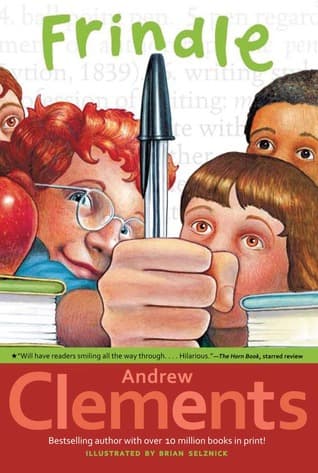
- Frindle
Andrew Clements
3.8 (104k) average on GoodreadsChildren'sFeatures a clever student challenging norms and a relatable school setting.
- Walk Two Moons
Sharon Creech
4.0 (151k) average on GoodreadsChildren'sThe Lemonade War integrates practical academic content (economics) with emotional narrative, making it distinct from Walk Two Moons, which is a deeply literary exploration of grief, family, and identity, without a similar emphasis on content-area learning.
- Harry Potter and the Sorcerer's Stone
J.K. Rowling
4.5 (7M) average on GoodreadsFantasyRescued from a miserable life under the stairs, an orphaned boy discovers he's a wizard destined for a magical school, where he uncovers a dangerous secret tied to the dark wizard who murdered his parents.
- The Hobbit, or There and Back Again
J.R.R. Tolkien
4.3 (2.9M) average on GoodreadsFantasyA comfort-loving hobbit named Bilbo Baggins is whisked away by a mischievous wizard and a band of dwarves on an unexpected journey to reclaim stolen treasure from a fearsome dragon, discovering courage and a magical ring along the way.
- Harry Potter and the Goblet of Fire
J.K. Rowling
4.6 (2.6M) average on GoodreadsFantasyA bewildered Harry Potter, underage and thrust into a deadly Triwizard Tournament, must brave dragons, mermaids, and a resurgent dark magic to survive a year that will forever alter the wizarding world.
- Harry Potter and the Order of the Phoenix
J.K. Rowling
4.5 (2.5M) average on GoodreadsFantasyIn a year of oppressive secrets and the threat of Voldemort, Harry Potter and Dumbledore's Army secretly train for war, shown through Jim Kay and Neil Packer's dark illustrations.





Enjoyed the summary?
A summary gives you the shape of the book. The book itself has the detail, the examples and the voice.
Find The Lemonade War on AmazonAs an Amazon Associate, BookBrief earns from qualifying purchases. How we're funded