

Synopsis
Covers the whole plot, including the ending.
- Difficulty
- Easy
- Pacing
- Moderate
- Mood
- Gritty, Humorous, Reflective, Poignant
- Read it if
- You enjoy raw, honest coming-of-age stories with a unique voice, explore Indigenous youth experiences, and appreciate narratives about overcoming trauma.
- Skip it if
- You prefer lighthearted stories without mature themes of abuse and trauma, or are uncomfortable with explicit language and drug references.
The Lesser Blessed Plot Summary
Covers the whole plot, including the ending.
Larry's Life in Fort Simmer and the Arrival of Johnny Beck
Sixteen-year-old Larry Sole lives in Fort Simmer, Northwest Territories. He is an introverted Dogrib Indian who often feels anxious. He has a vivid imagination, likes Iron Maiden, and has a crush on Juliet Hope, a girl in his class often talked about in town. Larry often has blackouts and vivid hallucinations, which come from past trauma, including sniffing gasoline and a car accident that killed several cousins. His home life is difficult because of his abusive, alcoholic father, Frank, and his mother, Vera, who tries to keep peace. His usual life changes when Johnny Beck, a charismatic Metis boy from Hay River, moves to Fort Simmer and joins Larry's school, quickly getting attention, especially from Juliet.
Forming an Unlikely Friendship
Larry is at first cautious of Johnny Beck, feeling insecure and less important than the new boy's easy charm and good looks. However, Johnny surprisingly wants to be friends with Larry. They connect over being Indigenous youth, their love for music, and their past struggles. Johnny also has a difficult history, hinting at his own family problems and experiences with violence. Their friendship grows as they spend time together, sharing secrets and supporting each other through school and small-town life. Larry feels a sense of belonging and understanding with Johnny that he has not found with anyone else, and he starts to tell him about his blackouts and anxieties.
Juliet Hope and Shifting Dynamics
Larry's long-standing crush on Juliet Hope remains important. He sees her as perfect, despite her reputation, and often imagines being with her. Juliet, however, seems more interested in Johnny. This creates tension between Larry and Johnny, as Larry struggles with jealousy and insecurity. Juliet seems to enjoy the attention from both boys, often flirting. This situation makes their friendship complicated, with Larry feeling torn between his loyalty to Johnny and his strong desire for Juliet's affection. He often watches their interactions from a distance, feeling like an outsider even when he is with them.
Confronting Trauma and Hallucinations
As the story continues, Larry's blackouts and hallucinations become more intense and frequent. These episodes often happen because of stress or specific memories, bringing back disturbing images from his past, especially the car accident that killed his cousins and his history of gasoline sniffing. He sees shadowy figures, hears voices, and feels a deep sense of dread. Johnny becomes someone Larry can talk to during these times, listening and trying to understand what Larry is experiencing. Larry starts to share more about his abusive father and the deep trauma that has shaped his life, realizing he can no longer ignore these painful memories.
The School Dance and a Revelation
The school dance is a key event. Larry, dressed nicely, hopes to finally have a moment with Juliet. However, he sees Juliet and Johnny together, dancing closely and later, in a private area, appearing to be in a passionate moment. Larry feels heartbroken, and his jealousy boils over. He confronts Johnny, saying he betrayed their friendship. Johnny, at first defensive, eventually admits his involvement with Juliet, though he tries to make it seem less important. This incident deeply hurts Larry, making him question his friendship with Johnny and his understanding of Juliet.
Johnny's Secret and Larry's Empathy
After the dance, tension is high between Larry and Johnny. Eventually, Johnny, carrying his own secrets, tells Larry about his past. He reveals that he was sexually abused as a child and, because of this, got HIV. This shocking news completely changes how Larry sees Johnny. His jealousy and anger turn into deep empathy and understanding. He realizes the great suffering Johnny has been through and the heavy burden he carries. This shared vulnerability makes their friendship stronger, creating a solid bond based on mutual support and a shared understanding of trauma.
Larry's Father and a Moment of Clarity
Larry's abusive father, Frank, has a serious heart attack. This makes Larry face his complicated feelings towards his father. While he feels deep anger for the abuse he endured, he also sees Frank's vulnerability and that he will not live forever. Larry visits his father in the hospital, and though their talk is minimal and tense, it marks a small change in Larry's view. He starts to see his father not just as an abuser, but as a flawed person, and begins to process the trauma passed down through his family. This experience, along with Johnny's revelation, moves Larry further towards self-reflection and healing.
Juliet's Perspective and Reconciliation
Larry eventually has a more honest talk with Juliet Hope. She shares parts of her own difficult life, including family problems and the reasons for her often misunderstood behavior. Larry starts to see her as a complex person with her own pain and vulnerabilities, rather than just the girl he wanted or the 'tramp' of town gossip. This conversation helps Larry move past his perfect image of her and the jealousy he felt, leading to a sense of peace and a more mature understanding of their interactions. It marks another step in Larry's journey of understanding and empathy.
Facing the Future Together
Towards the novel's end, Larry, stronger because of his friendship with Johnny and his growing self-awareness, begins to actively deal with his past traumas. He acknowledges the impact of his father's abuse and the car accident, no longer letting them completely define him. He still has blackouts, but he is learning to handle them and understand where they come from. With Johnny beside him, he feels a new sense of strength and hope. Their friendship, made strong by shared vulnerabilities and steady support, helps Larry heal, letting him look to the future with possibility and resilience.
A New Beginning
Larry's journey ends with him accepting himself and his identity as a Dogrib man in the North. He has come to terms with his past, understanding that while it has shaped him, it does not have to control his future. His friendships, especially with Johnny, give him strong support. He finds comfort and strength in his Northern environment, seeing its beauty and its place in his heritage. The novel closes with Larry looking forward, having found peace and a path towards healing and self-discovery, ready to navigate his life with a mature and resilient spirit.
Principal Figures
Larry Sole
Protagonist
A sensitive and introspective Dogrib teenager grappling with trauma, identity, and first love.
Larry is a sixteen-year-old Dogrib Indian living in Fort Simmer, Northwest Territories. He is skinny, prone to blackouts and vivid hallucinations stemming from childhood trauma (gasoline sniffing, a fatal car accident, and an abusive father). He is intelligent, observant, and possesses a rich inner life, often expressed through his love for Iron Maiden and his fantasies about Juliet Hope. Despite his outward shyness and insecurity, he has a strong moral compass and a deep capacity for empathy. His narrative voice is often self-deprecating but laced with humor and raw honesty.
Relationships: Johnny Beck (Best friend and confidant); Juliet Hope (Object of his intense crush and later, a complex friend); Frank Sole (Abusive, alcoholic father); Vera Sole (Supportive but often helpless mother)
Johnny Beck
Supporting
A charismatic Metis newcomer with a hidden past and a profound secret.
Johnny Beck is a Metis boy from Hay River who moves to Fort Simmer. He is initially portrayed as confident, handsome, and charming, easily attracting attention and friendship. He quickly becomes Larry's closest friend, offering a sympathetic ear and understanding. However, Johnny carries his own deep trauma, having been sexually abused as a child and subsequently contracting HIV. His outward bravado masks profound pain and vulnerability. He is a catalyst for Larry's healing, as his own confession allows Larry to process his experiences more openly.
Relationships: Larry Sole (Best friend and confidant); Juliet Hope (Brief romantic interest)
Juliet Hope
Supporting
A beautiful but misunderstood classmate, often the subject of town gossip and Larry's intense affection.
Juliet Hope is a girl in Larry's class who is widely considered the 'tramp' of Fort Simmer, a label she endures with a mix of defiance and resignation. She is beautiful and charismatic, attracting both Larry and Johnny. Despite the town's judgment, she is a complex character with her own struggles, including a difficult home life. She initially seems to enjoy the attention from both boys but later reveals her vulnerabilities to Larry, allowing him to see her as more than just an object of desire or gossip. She represents the challenges faced by young Indigenous women in the community.
Relationships: Larry Sole (Object of his crush, later a friend); Johnny Beck (Romantic interest)
Frank Sole
Supporting
Larry's abusive, alcoholic father, a source of deep trauma for the protagonist.
Frank Sole is Larry's father, an alcoholic whose abuse and neglect have profoundly impacted Larry's childhood and mental state. He is a largely absent and often violent figure, contributing to Larry's blackouts and anxieties. His character embodies the cycle of intergenerational trauma within Indigenous communities. Despite his destructive behavior, Larry grapples with complex feelings towards him, particularly after Frank suffers a heart attack, revealing his vulnerability and mortality.
Relationships: Larry Sole (Abusive father); Vera Sole (Husband)
Vera Sole
Supporting
Larry's mother, who tries to protect her son from his father's abuse while navigating her own difficult life.
Vera Sole is Larry's mother, a long-suffering woman who attempts to shield Larry from his father's abuse and maintain some semblance of peace in their home. She is a caring but often powerless figure, caught in the cycle of domestic violence. Her love for Larry is evident, and she provides what comfort she can, but she is also deeply affected by her circumstances. She represents the strength and resilience of Indigenous women facing adversity, but also the limitations they face.
Relationships: Larry Sole (Loving mother); Frank Sole (Wife)
Uncle Kenny
Mentioned
Larry's uncle, a wise and supportive figure who offers guidance and traditional knowledge.
Uncle Kenny is a recurring figure in Larry's thoughts and memories, representing a link to traditional Dogrib culture and a source of wisdom. Although he doesn't appear in many direct scenes, his presence is felt through Larry's recollections of his advice and teachings. He embodies a sense of stability and connection to heritage that contrasts with the chaos of Larry's immediate family life. He offers a different perspective on life and coping with challenges, hinting at the strength found in cultural roots.
Relationships: Larry Sole (Supportive uncle)
Auntie Mary
Mentioned
Larry's aunt, a figure who represents community and traditional support.
Auntie Mary is another relative who appears in Larry's memories and thoughts. She represents the broader community and the network of family support that exists, even if indirectly, for Larry. Her presence reinforces the importance of kinship and collective well-being in Indigenous culture. While not a central character, her existence highlights the contrast between the dysfunction in Larry's immediate household and the potential for comfort and belonging within the extended family.
Relationships: Larry Sole (Supportive aunt)
Mr. MacIntyre
Supporting
Larry's English teacher, an empathetic figure who recognizes Larry's potential.
Mr. MacIntyre is Larry's English teacher at school. He is one of the few adults who sees past Larry's shyness and recognizes his intelligence and potential. He encourages Larry's writing and offers quiet support, providing a small but significant source of affirmation for the protagonist. He represents the positive influence an empathetic educator can have on a struggling student, offering a glimpse of a future beyond Fort Simmer.
Relationships: Larry Sole (Encouraging teacher)
Themes & Insights
Trauma and Healing
The novel deeply looks at how past traumas affect Larry Sole. His blackouts and vivid hallucinations come directly from unaddressed pain from childhood gasoline sniffing, seeing a fatal car accident, and experiencing his father's abuse. Johnny Beck's revelation about his own sexual abuse and HIV status further shows how widespread trauma can be. The book demonstrates that healing is a complex, ongoing process, often needing support from others and a willingness to face painful memories instead of hiding them. Larry's story shows that it is possible to move towards acceptance and strength despite deep suffering.
“'I was just a kid, a kid with a brain that wanted to forget, a kid who wanted to forget so bad that it would just shut down and take me to somewhere else.”
Identity and Self-Discovery
Larry's coming-of-age story is about his search for identity as a young Dogrib man. He deals with his Indigenous heritage, community expectations, personal traumas, and developing sexuality. His interest in Juliet and his friendship with Johnny are important in forming his self-understanding. The novel shows Larry moving from insecurity and self-dislike to a more confident acceptance of his unique experiences and background. His connection to the Northern landscape and his cultural roots also helps him discover himself, giving him stability amid his inner struggles.
“'I was a Dogrib Indian from Fort Simmer, and I was going to be someone someday.”
Friendship and Connection
The bond between Larry and Johnny Beck is central to the story, helping them heal and grow. Their friendship is built on shared experiences of trauma, openness, and mutual understanding. Johnny gives Larry a much-needed confidant and a sense of belonging, helping him overcome his isolation. The novel shows how real connection and empathy can offer comfort and strength during difficult times, letting people face their deepest fears and secrets. This friendship goes beyond initial jealousy and misunderstanding, becoming a lifeline for both boys.
“'He was the first person I ever met who understood what it was like to be me.”
The Northern Indigenous Experience
The novel gives a close look at growing up Indigenous in Fort Simmer, a remote Northern Canadian community. It explores the specific challenges youth face in these places, including limited opportunities, the lasting effects of colonialism, trauma passed down through generations (alcoholism, abuse), and the struggle to keep cultural identity in a modern world. The setting, with its harsh beauty and isolation, is part of the characters' experiences. The story subtly shows the resilience, humor, and deep connection to the land that define the Dogrib people, while also acknowledging social issues common in many Indigenous communities.
“'The North could be a beautiful place, but it could also eat you alive if you weren't careful.”
Love, Sex, and Misunderstanding
Larry's strong crush on Juliet Hope causes much of his early emotional confusion. The novel explores first love, sexual awakening, and the complexities of adolescent relationships, often made harder by gossip and misunderstandings. Juliet's character challenges Larry's perfect views, making him face the reality of others' struggles. HIV/AIDS, revealed through Johnny's story, adds another serious layer to the exploration of sexuality, highlighting the importance of understanding and empathy in close relationships. The book moves beyond simple ideas of love and desire to explore the messy realities of human connection.
“'I wanted her so bad it hurt, and I knew it was wrong to want someone who everyone else called a tramp.”
Plot Devices & Literary Techniques
First-Person Narrative with Stream of Consciousness
Provides direct access to Larry's inner thoughts, anxieties, and fantasies.
The novel is told entirely from Larry Sole's first-person perspective, often employing a stream-of-consciousness style. This allows readers intimate access to his raw, unfiltered thoughts, insecurities, observations, and vivid fantasies. This narrative choice is crucial for understanding Larry's internal struggles with trauma, his unique voice, and his often-humorous, self-deprecating worldview. It blurs the line between reality and his subjective experience, particularly when he describes his hallucinations and blackouts, immersing the reader directly into his fragile mental state.
Hallucinations and Blackouts
Symbolic manifestations of Larry's unresolved trauma and psychological distress.
Larry's frequent hallucinations and blackouts are not just symptoms of past gasoline sniffing but serve as a powerful plot device to illustrate his deep-seated psychological trauma. These episodes create suspense, disrupt the narrative flow, and visually represent his internal chaos. They are physical manifestations of his brain's attempt to cope with or repress painful memories, particularly those related to his father's abuse and the fatal car accident. As the story progresses, understanding these episodes becomes key to Larry's journey of self-discovery and healing.
Iron Maiden Music
A cultural touchstone and emotional outlet for Larry's adolescent angst and escapism.
Iron Maiden, the heavy metal band, functions as more than just a musical preference for Larry. It's a significant cultural touchstone for his adolescent identity, providing an outlet for his anger, frustration, and desire for escape. The band's music serves as a soundtrack to his life, reflecting his inner turmoil and offering a sense of power and rebellion. It's a form of self-medication and a way for him to connect with a broader world beyond Fort Simmer, distinguishing him from others and providing a sense of belonging to something larger than himself.
Northern Setting (Fort Simmer)
A character in itself, shaping the characters' experiences, identity, and sense of isolation.
The remote Northern community of Fort Simmer, Northwest Territories, is more than just a backdrop; it functions as a character itself. Its isolation, harsh beauty, and unique social dynamics deeply influence Larry's identity, his sense of belonging, and the challenges he faces. The environment shapes the limited opportunities, the close-knit but often gossipy community, and the specific struggles of Indigenous youth. The starkness of the landscape often mirrors Larry's internal desolation, while its enduring presence also offers a source of strength and cultural connection.
Unreliable Narrator (Larry's subjectivity)
Larry's perspective, colored by trauma and imagination, shapes the reader's understanding of events.
While Larry is the sole narrator, his perspective is often unreliable due to his blackouts, hallucinations, and intense emotional states. His subjective interpretations of events, particularly concerning Juliet and his own past, mean the reader only gets his version of the truth. This unreliability forces the reader to actively interpret events and piece together the reality of the situation, adding depth to Larry's character and highlighting the profound impact of his trauma on his perception. It reinforces the theme of internal struggle and the difficulty of discerning truth when one's own mind is compromised.
The Lesser Blessed Quotes
“It was like the world was singing just for us.”
“Sometimes you just gotta laugh, eh? Even when everything is messed up.”
“I always felt like I was less than something, less than everyone else.”
“We were all just trying to figure things out, you know? Trying to find our way in the dark.”
“The past is like a ghost, always following you, always whispering.”
“You gotta be strong, Larry. Strong for yourself, strong for your family.”
“There’s magic in the world, if you just know where to look.”
“We're all broken in our own ways, but that doesn't mean we can't be whole again.”
“Sometimes the best thing to do is just keep walking, even if you don't know where you're going.”
“It was just us, under the big sky, and for a moment, nothing else mattered.”
“Love is a complicated thing, eh? It can hurt you, but it can also save you.”
“The wind always whispers stories, if you just listen close enough.”
“You can't outrun your shadow, Larry. You just gotta learn to live with it.”
“We were like stars, burning bright for a little while, then fading out, but always leaving a mark.”
Quiz
10 questions on the plot and the characters. Each answer comes with a short explanation.
Question 1
What is the name of the small northern town where Larry lives?
- Fort Resolution
- Fort Smith
- Fort Simmer
- Hay River
Show answer
C. Fort Simmer Larry lives in the small northern town of Fort Simmer, as stated in the book's description. Hay River is where Johnny Beck is from.
Question 2
What is Larry's ethnic background?
- Cree
- Metis
- Dene
- Dogrib Indian
Show answer
D. Dogrib Indian The description clearly states that 'Larry is a Dogrib Indian' from Fort Simmer. Johnny Beck is Metis.
Question 3
Which band does Larry love, according to the description?
- Metallica
- Iron Maiden
- Black Sabbath
- AC/DC
Show answer
B. Iron Maiden The book description mentions Larry's love for 'Iron Maiden' as part of his personality at sixteen.
Question 4
Who is Johnny Beck in relation to Larry?
- His cousin who died in an accident
- A new student from Hay River who becomes his friend
- Juliet Hope's boyfriend
- His abusive father
Show answer
B. A new student from Hay River who becomes his friend Johnny Beck is described as 'a Metis from Hay River' who 'moves to town' and through whom Larry finds friendship and strength to face his past.
Question 5
What significant event from Larry's past is mentioned as a source of terror?
- Being expelled from school for fighting
- A house fire that destroyed his home
- An accident that killed several of his cousins
- A period of homelessness in a big city
Show answer
C. An accident that killed several of his cousins The description explicitly states, 'His past holds many terrors: an abusive father, blackouts from sniffing gasoline, an accident that killed several of his cousins.'
Question 6
What is one of Larry's coping mechanisms or past struggles mentioned?
- Excessive gambling
- Blackouts from sniffing gasoline
- Chronic truancy from school
- An eating disorder
Show answer
B. Blackouts from sniffing gasoline The summary lists 'blackouts from sniffing gasoline' as one of the terrors from Larry's past.
Question 7
Which character is referred to as the high school 'tramp' whom Larry loves?
- Sarah Jane
- Maria
- Juliet Hope
- Brenda
Show answer
C. Juliet Hope The description states, 'At sixteen, he loves Iron Maiden, the North and Juliet Hope, the high school 'tramp.''
Question 8
What broader societal issues are hinted at as themes in the novel, besides personal coming-of-age?
- Environmental conservation and climate change
- The impact of residential schools and cultural assimilation
- The age of AIDS, disillusionment with Catholicism, and growing world consciousness
- Political corruption and resource extraction
Show answer
C. The age of AIDS, disillusionment with Catholicism, and growing world consciousness The book is described as 'an eye-opening depiction of what it is to be a young Native man in the age of AIDS, disillusionment with Catholicism and a growing world consciousness,' highlighting these broader themes.
Question 9
How does Larry's friendship with Johnny Beck primarily help him?
- It helps him escape Fort Simmer and move to Hay River.
- It provides him with financial stability and a job opportunity.
- It empowers him to face his past memories and future.
- It introduces him to a new social circle and popularity.
Show answer
C. It empowers him to face his past memories and future. The description states, 'But through his friendship with Johnny, he’s ready now to face his memories—and his future,' indicating its role in his personal growth.
Question 10
What stylistic characteristic is attributed to Larry's character in the novel?
- He is stoic and reserved, rarely speaking his mind.
- He is known for his quiet wisdom and thoughtful observations.
- His tongue, hallucinations, and fantasies are described as 'hotter than the sun.'
- He communicates primarily through art and drawings.
Show answer
C. His tongue, hallucinations, and fantasies are described as 'hotter than the sun.' The description vividly portrays Larry's internal world: 'His tongue, his hallucinations and his fantasies are hotter than the sun,' suggesting a vibrant and intense inner life.
The Lesser Blessed FAQ
What is 'The Lesser Blessed' about?
'The Lesser Blessed' is a coming-of-age story about Larry Sole, a sixteen-year-old Dogrib Indian living in the small northern town of Fort Simmer. Larry navigates the complexities of adolescence, first love with Juliet Hope, and deep-seated trauma from his past, all while experiencing vivid hallucinations and fantasies. His life takes a significant turn with the arrival of Johnny Beck, a Metis boy, who helps Larry confront his memories and look towards his future.
Why should I read 'The Lesser Blessed'?
You should read 'The Lesser Blessed' for its unique and authentic portrayal of growing up Native in the Canadian North, told through the unforgettable voice of Larry Sole. The novel offers a blend of humor, raw honesty, and profound emotional depth, tackling difficult themes like trauma, abuse, and identity with sensitivity and a distinctive writing style. It's a powerful story of resilience and self-discovery.
What is the background/setting of 'The Lesser Blessed'?
The story is set in Fort Simmer, a small northern town, likely in the Northwest Territories of Canada, where many Indigenous communities reside. The setting is crucial, highlighting the unique cultural context, the challenges of remote living, and the blend of traditional life with modern influences, including the impact of broader societal issues like AIDS and changing religious views.
What are the most memorable quotes?
While specific quotes aren't provided in the summary, Larry Sole's internal monologues and observations are noted for being 'hotter than the sun' and filled with 'bravado and vulnerability.' The book is celebrated for its original voice, suggesting that many of Larry's candid and often humorous reflections on life, love, and his past would be highly memorable.
What writing style does the author use?
Richard Van Camp employs a fresh, funny, and powerful first-person narrative style through Larry Sole. The writing is characterized by Larry's unique voice, which is self-deprecating yet bold, incorporating his fantasies, hallucinations, and candid observations, making it both engaging and deeply personal. It's often compared to 'The Catcher in the Rye' for its distinct teenage perspective.
What minor details add significant meaning?
Larry's love for Iron Maiden and his recurring hallucinations are minor details that add significant meaning. Iron Maiden represents a form of escape and identity for Larry, a common adolescent coping mechanism, while his hallucinations are external manifestations of his internal turmoil and unaddressed trauma, offering insight into his psychological state.
What are some subtle foreshadowing moments?
Larry's 'blackouts from sniffing gasoline' and the mention of 'an accident that killed several of his cousins' subtly foreshadow the deep-seated trauma he carries. These details hint at the severity of his past experiences and the psychological burden he's been living with, setting the stage for his eventual confrontation with these memories.
What unexpected character connections exist?
The most significant unexpected connection is between Larry and Johnny Beck. Johnny's arrival, seemingly just a new kid in town, unexpectedly becomes the catalyst for Larry to face his past. Their friendship transcends typical adolescent camaraderie, evolving into a crucial supportive bond that helps Larry in his journey of healing.
What are unspoken character motivations?
Larry's unspoken motivation is a deep-seated desire for normalcy and acceptance, despite his outward bravado and eccentricities. His pursuit of Juliet Hope and his initial apprehension towards Johnny Beck stem from a yearning to connect and to escape the isolating burden of his past traumas and the 'terrors' he holds within.
What psychological complexities do characters exhibit?
Larry Sole exhibits significant psychological complexities, including PTSD-like symptoms from past abuse and accidents, manifested through his hallucinations and blackouts. He also grapples with identity formation, self-worth issues, and the struggle to process trauma, all while trying to maintain a façade of coolness and humor typical of adolescence.
What are the major emotional turning points?
A major emotional turning point is the arrival of Johnny Beck, which provides Larry with a genuine, supportive friendship. This relationship creates a safe space for Larry, enabling him to finally confront the painful memories of his abusive father and the accident that killed his cousins, marking a shift from internalizing trauma to beginning the healing process.
How do relationship dynamics evolve?
Relationship dynamics evolve significantly, particularly between Larry and Johnny. Their initial interactions likely transition from cautious acquaintance to deep friendship, built on trust and mutual support. This evolving dynamic is crucial as Johnny's presence empowers Larry to address his past, fostering a bond that facilitates emotional growth and healing.
Which parts remain ambiguous or open-ended?
The full extent and nature of Larry's 'hallucinations' could remain somewhat ambiguous, leaving readers to interpret whether they are purely psychological manifestations of trauma, a unique aspect of his perception, or something more. The long-term implications of his healing journey, while hopeful, are also left open-ended, reflecting the ongoing process of recovery.
What are controversial scenes or decisions?
The depiction of Larry's past 'abusive father' and his 'blackouts from sniffing gasoline' could be considered controversial due to their sensitive and difficult nature. These scenes highlight harsh realities faced by some, prompting discussions about trauma, substance abuse, and the resilience of youth in challenging environments.
'The Lesser Blessed' ending explained: how it ends & what it means
The book ends with Larry, through his friendship with Johnny, ready to face his memories and his future. This signifies a hopeful, though not necessarily complete, resolution to his internal struggles. It means Larry has found the courage and support to begin processing his past traumas, moving from a state of internal suffering to one of active healing and looking forward to what comes next, embracing his identity as a young Native man.
Similar books
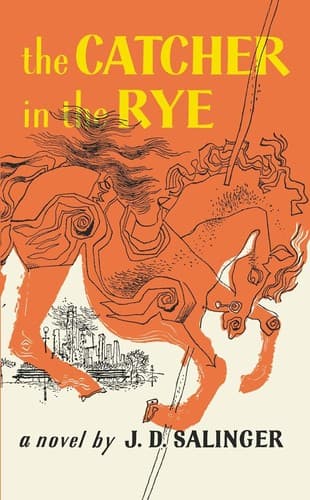
- The Catcher in the Rye
J.D. Salinger
3.8 (2.7M) average on GoodreadsYoung AdultFeatures a unique, introspective teenage narrator grappling with alienation and identity.
- The Absolutely True Diary of a Part-Time Indian
Sherman Alexie
4.1 (224k) average on GoodreadsYoung AdultWhile both novels explore Indigenous youth navigating cultural boundaries and adversity, The Lesser Blessed offers a distinct Northern Canadian Indigenous perspective, focusing more intensely on the psychological aftermath of trauma and the nuances of Tłı̨chǫ Dene identity, whereas Alexie's work often incorporates broader reservation experiences and a more overt comedic tone.
- The Fault in Our Stars
John Green
4.2 (3.6M) average on GoodreadsYoung AdultGreen's novel, while dealing with existential themes and suffering, grounds its exploration in a romantic narrative with a broader appeal. The Lesser Blessed, in contrast, grounds its exploration of identity and suffering in a specific socio-cultural context of Indigenous life in the North, offering a grittier, less romanticized portrayal of adolescence and trauma.
- Harry Potter and the Sorcerer's Stone
J.K. Rowling
4.5 (7M) average on GoodreadsFantasyRescued from a miserable life under the stairs, an orphaned boy discovers he's a wizard destined for a magical school, where he uncovers a dangerous secret tied to the dark wizard who murdered his parents.
- The Hunger Games
Suzanne Collins
4.3 (6.4M) average on GoodreadsFantasyIn a future where children fight to the death on live television, Katniss Everdeen volunteers for the arena, turning a death sentence into a fight for survival and a spark of rebellion.
- To Kill a Mockingbird
Harper Lee
4.3 (4.5M) average on GoodreadsHistorical FictionIn the 1930s Jim Crow South, Harper Lee writes about racial injustice, moral growth, and the quiet courage of a lawyer father, Atticus Finch, as seen through his young daughter's eyes.





Enjoyed the summary?
A summary gives you the shape of the book. The book itself has the detail, the examples and the voice.
Find The Lesser Blessed on AmazonAs an Amazon Associate, BookBrief earns from qualifying purchases. How we're funded