
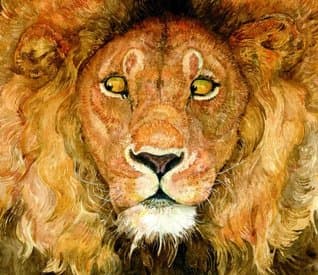
Synopsis
Covers the whole plot, including the ending.
- Difficulty
- Easy
- Pacing
- Moderate
- Mood
- Heartwarming, Inspiring, Timeless, Visually Rich
- Read it if
- You enjoy classic fables retold with stunning, expressive illustrations, appreciate wordless storytelling, or are looking for a book that teaches valuable lessons about kindness and unexpected heroes.
- Skip it if
- You prefer books with extensive dialogue and narrative text, or are looking for a complex plot with multiple characters.
The Lion and the Mouse Plot Summary
Covers the whole plot, including the ending.
A Mouse's Narrow Escape
The story begins with a tiny mouse running through the tall grass of the African Serengeti, avoiding an owl. Tired, the mouse seeks shelter and accidentally runs over the paw and then the face of a large, sleeping lion. The lion wakes up and pins the mouse under his paw, looking angry. The mouse, scared, silently begs for its life, its small paws raised. The lion thinks for a moment and decides to be kind. He lifts his paw, letting the thankful mouse run away into the grass. This is an unexpected act of kindness.
The Lion's Perilous Predicament
Days later, the lion roams the savanna, hunting. He stalks a zebra through the tall grasses. A poacher has set a net trap, hidden in the plants. As the lion charges, he steps into the snare. The heavy net springs up, catching the lion. The lion struggles, roaring in frustration and pain, but the ropes are too strong. He is completely caught, unable to move, his roars echoing across the land, showing his trouble and helplessness.
A Tiny Rescuer Arrives
The trapped lion's roars carry across the savanna. The same mouse the lion spared earlier hears these cries. Knowing the sound, the mouse stops, remembering the lion's kindness. Out of thanks and a sense of duty, the mouse bravely goes towards the roars. It travels through the dangerous land, past other wary animals, determined to reach the struggling lion. The mouse's small size hides its courage as it approaches the great, helpless lion caught in the net.
The Mouse's Ingenious Plan
When it reaches the trapped lion, the mouse sees the net holding the giant. The lion, still struggling and roaring, looks down at the tiny mouse, perhaps surprised. The mouse starts to gnaw at the thick ropes of the net with its sharp teeth. It works hard, focusing on one strand after another. Its small but steady efforts slowly weaken the trap. The lion watches, hope growing in his eyes as he understands what the mouse is doing. The seemingly impossible task slowly becomes possible through tiny, determined bites.
Freedom and Friendship
After a long time of gnawing, the mouse cuts enough ropes to make an opening. With a final struggle, the lion pulls himself free from the net. He stands, shaking off the last pieces of the trap, looking at the small mouse that saved him. They have a moment of silent understanding, sharing thanks and unexpected heroism. The lion then lets out a powerful, triumphant roar, not of anger, but of freedom and thanks. The two unlikely friends, the mighty lion and the tiny mouse, stand together, having learned that even a small act of kindness can lead to a great reward.
The Lion and the Mouse Characters
The Lion
Protagonist
The powerful, majestic king of the savanna who learns humility and the value of kindness.
The Lion is initially portrayed as a formidable and fearsome predator, capable of great power and intimidation. He is 'king' of his domain, exuding strength and confidence. His initial interaction with the mouse shows a moment of unexpected mercy, sparing the tiny creature when he could have easily devoured it. Later, he becomes vulnerable and helpless when caught in the poacher's trap, demonstrating that even the mightiest can fall. His roars shift from anger and frustration to gratitude and triumph, showcasing his emotional range and capacity for acknowledging help from an unlikely source.
Relationships: The Mouse (Initially captor/captive, then rescuer/rescued, leading to an unlikely friendship)
The Mouse
Protagonist
A small, vulnerable creature who proves that courage and gratitude can overcome size and power.
The Mouse is presented as tiny and seemingly insignificant, constantly in danger from predators like the owl. Its initial encounter with the lion highlights its extreme vulnerability and fear. However, the mouse possesses remarkable courage and a strong sense of gratitude. Upon hearing the lion's distress, it bravely ventures into danger to return the kindness it received. Its persistence and ingenuity in gnawing through the ropes are central to the plot, demonstrating that physical size does not dictate one's ability to make a significant impact. It is the embodiment of the fable's moral.
Relationships: The Lion (Initially captive/captor, then rescuer/rescued, leading to an unlikely friendship)
The Owl
Mentioned
A minor antagonist representing the dangers of the savanna for small creatures.
The Owl appears briefly at the very beginning of the story, depicted as a predator actively hunting the mouse. Its presence establishes the perilous world the mouse inhabits and underscores the mouse's vulnerability. While not a central character, the owl sets the initial conflict and highlights the mouse's precarious existence, making the lion's act of mercy even more impactful.
Relationships: The Mouse (Predator/Prey)
The Poacher
Antagonist
An unseen human who sets the trap that endangers the lion.
The Poacher is never seen directly but is the unseen force behind the lion's predicament. Their presence is implied through the expertly set net trap, which represents human interference and danger to wildlife. The poacher serves as the catalyst for the second major conflict in the story, creating the situation where the mouse can repay the lion's kindness. This character embodies a threat to the natural order and highlights the vulnerability of even the most powerful animals to human actions.
The Zebra
Mentioned
A potential prey animal, illustrating the lion's natural hunting behavior.
The Zebra is shown briefly as the lion's intended prey before the lion falls into the trap. It serves to illustrate the lion's natural role as a predator and his daily activities within the savanna ecosystem. Its appearance adds context to the lion's character as a hunter, before his unexpected vulnerability is revealed. It is a fleeting image that grounds the lion in his wild environment.
Relationships: The Lion (Prey/Predator)
The Lion and the Mouse Themes
Kindness and Compassion
The main idea is about the power of kindness, no matter who receives it or if they can return it. The lion's first act of mercy towards the mouse, sparing its life, starts the whole story. The mouse remembers this and later works hard to return the favor. The story shows that kindness is important for everyone, no matter their size, power, or species. Even a small act of kindness can have big, good results.
“A tiny creature's life spared by a mighty king, proving that mercy is a seed that blossoms into unexpected salvation.”
The Value of the Underestimated
This idea shows how even the smallest or seemingly weakest individuals are valuable and can do great things. The mouse, often ignored, ends up saving the powerful lion. This turns expectations around, showing that physical strength is not the only measure of importance. The mouse's steady work and sharp teeth, though small, are more effective against the trap than the lion's brute force. This shows that different kinds of strength and cleverness are equally valuable.
“Though small in stature, the mouse's courage and ingenuity proved mightier than the hunter's snare.”
Interdependence and Reciprocity
The story shows how everyone needs each other. Even the most powerful creatures can need help, and the smallest can give it. The lion, the king of the jungle, depends on the mouse for his freedom. This shows that no one is completely self-sufficient. Acts of generosity often create a cycle of giving back. The mouse's thanks drives its actions, completing a cycle where an initial act of kindness is returned, forming an unlikely bond based on mutual help.
“A shared moment of vulnerability and salvation forged an unbreakable bond between the powerful and the tiny.”
Overcoming Adversity
Both the lion and the mouse face problems. The mouse first escapes an owl and then faces the hard task of freeing a trapped lion. The lion, despite his strength, is made helpless by the poacher's trap. The story shows how both characters, in different ways, get past their problems. The lion's struggle and freedom, helped by the mouse's persistence, show struggle, hope, and winning against big challenges. This reinforces the idea that help can come from unexpected places.
“The roar of the mighty, once a cry of despair, transformed into a song of freedom.”
Plot Devices & Literary Techniques
Wordless Narrative
Conveys the entire story through illustrations, relying on visual storytelling.
Pinkney's adaptation is entirely wordless, which is a significant plot device. This forces the reader to interpret the characters' emotions, motivations, and the progression of events solely through the detailed and expressive illustrations. It heightens the universality of the fable, as it transcends language barriers. The absence of text allows the artwork to convey subtle nuances, such as the mouse's fear, the lion's initial contemplation, and their eventual bond, making the visual cues paramount to understanding the plot and themes.
Anthropomorphism
Animals display human-like emotions and motivations, making them relatable.
While remaining animals, the Lion and the Mouse exhibit distinct human-like emotions and motivations. The mouse's pleading gesture, the lion's thoughtful pause before showing mercy, and the shared look of understanding between them are all anthropomorphic elements. This device makes the characters more relatable to human readers, allowing them to connect with the fable's moral lessons about kindness, gratitude, and empathy on a deeper, more personal level. It transforms simple animal interactions into a profound narrative about human virtues.
Symbolism of Size
The stark contrast in size between the lion and the mouse symbolizes power dynamics and unexpected heroism.
The vast difference in physical size between the colossal lion and the tiny mouse is a powerful symbolic device. It initially represents the imbalance of power and the vulnerability of the small. However, this symbolism is inverted when the small mouse, through its specific skills and courage, saves the mighty lion. This reversal underscores the theme that physical might is not the only form of strength and that impact is not dictated by size, reinforcing the idea that even the smallest can achieve great things and that kindness is not measured by the stature of the giver or receiver.
The Poacher's Trap
A physical manifestation of external danger and a catalyst for the main conflict.
The poacher's net trap serves as a crucial plot device, representing external danger and the vulnerability of even the most powerful creatures to human interference. It is the mechanism that renders the lion helpless, creating the perfect opportunity for the mouse to repay its debt. The trap is a symbol of confinement and distress, and its intricate design highlights the challenge the mouse must overcome. Its presence escalates the conflict and provides the necessary dramatic tension for the climax of the story.
The Lion and the Mouse Quotes
“And so it happened that the tiny mouse repaid the lion's kindness.”
“A lion may be great, but even the great can be helpless.”
“Do not judge by size alone, for the smallest may prove the mightiest.”
“Kindness is never wasted.”
“In the heart of the jungle, even a roar can be a plea.”
“The bonds of the forest are woven by acts, not words.”
“Freedom given is freedom earned.”
“A tiny gnaw can cut through the strongest rope.”
“No creature is too small to make a difference.”
“The jungle remembers every kindness and every cruelty.”
“Sometimes, the mightiest need the meekest.”
“A roar of gratitude echoes longer than one of anger.”
“In saving another, we often save ourselves.”
“The net that binds can be undone by the smallest friend.”
Quiz
10 questions on the plot and the characters. Each answer comes with a short explanation.
Question 1
What does the lion do when he first encounters the mouse?
- He immediately eats the mouse
- He spares the mouse's life
- He traps the mouse in a net
- He ignores the mouse completely
Show answer
B. He spares the mouse's life The lion initially plans to eat the mouse but shows mercy and spares its life, setting up the central theme of kindness.
Question 2
How does the mouse help the lion later in the story?
- By bringing the lion food
- By scaring away other predators
- By freeing him from a poacher's trap
- By leading him to water
Show answer
C. By freeing him from a poacher's trap The mouse repays the lion's kindness by gnawing through the ropes of a poacher's trap, demonstrating that even small creatures can make a big difference.
Question 3
What is the main theme of 'The Lion and the Mouse'?
- Strength always wins
- No act of kindness is ever wasted
- Survival of the fittest
- Friendship requires equality
Show answer
B. No act of kindness is ever wasted The story illustrates that kindness, regardless of size or power, can have meaningful consequences, as shown by the mouse's rescue of the lion.
Question 4
What setting does Jerry Pinkney use for his adaptation of this fable?
- A European forest
- The African Serengeti
- An Asian jungle
- An Australian outback
Show answer
B. The African Serengeti Pinkney's wordless retelling is vividly set in the African Serengeti, with detailed illustrations that bring the landscape to life.
Question 5
How does Jerry Pinkney tell the story in this book?
- Through rhyming text
- With dialogue between characters
- Wordlessly, using only illustrations
- With a narrator's voice-over
Show answer
C. Wordlessly, using only illustrations Pinkney's adaptation is wordless, relying entirely on his expressive illustrations to convey the plot and emotions of the characters.
Question 6
What threat captures the lion in the story?
- A hunter's spear
- A poacher's trap
- A rival lion
- A natural pitfall
Show answer
B. A poacher's trap The lion is caught in a poacher's trap, which the mouse later frees him from, highlighting the mouse's crucial role despite its small size.
Question 7
Why is the mouse initially cowering when it meets the lion?
- It is lost and scared
- It is being chased by another animal
- The lion plans to eat it
- It is injured and weak
Show answer
C. The lion plans to eat it The mouse cowers because the lion, a much larger predator, has caught it and initially intends to make it his meal, emphasizing the power imbalance.
Question 8
What aspect of Jerry Pinkney's adaptation is particularly praised in the description?
- Its use of modern technology
- Its humorous dialogue
- Its stunning and expressive pictures
- Its complex plot twists
Show answer
C. Its stunning and expressive pictures The description highlights Pinkney's 'stunning pictures' and 'expressively-drawn characters' as key strengths that make this retelling special and wordless.
Question 9
How does the story challenge traditional notions of strength and weakness?
- By showing the lion as weak throughout
- By having the mouse defeat the lion in a fight
- By demonstrating that kindness and cleverness can overcome physical limitations
- By making both characters equally strong
Show answer
C. By demonstrating that kindness and cleverness can overcome physical limitations The fable subverts expectations by having the small, seemingly weak mouse save the powerful lion through an act of kindness and resourcefulness, emphasizing moral over physical strength.
Question 10
What is the original source of 'The Lion and the Mouse' story that Pinkney adapts?
- A Greek myth by Homer
- A fable by Aesop
- A fairy tale by the Brothers Grimm
- A folktale from Africa
Show answer
B. A fable by Aesop Pinkney's book is an adaptation of one of Aesop's most beloved fables, which are ancient Greek stories often teaching moral lessons through animal characters.
The Lion and the Mouse FAQ
What is 'The Lion and the Mouse' by Jerry Pinkney about?
This wordless picture book retells Aesop's fable set in the African Serengeti, where a mighty lion spares a tiny mouse from being eaten, and later the mouse returns the favor by freeing the lion from a poacher's trap, illustrating that kindness is never wasted.
Why should I read 'The Lion and the Mouse'?
Jerry Pinkney's stunning, award-winning illustrations vividly bring this classic tale to life without words, making it accessible to all ages and emphasizing themes of mercy, reciprocity, and unexpected friendships through visual storytelling.
What is the background/setting of 'The Lion and the Mouse'?
The story is set in the African Serengeti, depicted with rich, detailed landscapes including savannahs, acacia trees, and wildlife, which Pinkney uses to enhance the natural drama and cultural context of the fable.
What are the most memorable quotes?
As a wordless book, there are no text quotes, but key visual moments include the lion's paw hovering over the mouse in mercy and the mouse gnawing through the trap ropes, symbolizing 'no act of kindness is ever wasted.'
What writing style does the author use?
Jerry Pinkney uses a purely visual storytelling style with expressive, detailed watercolor illustrations that convey emotion, action, and narrative progression without any words, relying on imagery to tell the story.
What minor details add significant meaning?
Details like the mouse's fearful posture when captured and the lion's gentle expression when sparing it highlight vulnerability and compassion, while the poacher's trap in the background foreshadows the lion's later peril.
What are some subtle foreshadowing moments?
Early scenes show the mouse observing the lion from a distance and the trap being set by poachers, subtly hinting at the mouse's eventual role in the rescue and the danger the lion will face.
What unexpected character connections exist?
The connection between the lion and mouse is unexpected due to their size and power difference, but their bond grows from an act of mercy to mutual rescue, showing that relationships can form across vast disparities.
What are unspoken character motivations?
The lion's motivation to spare the mouse may stem from a momentary empathy or disdain for such a small meal, while the mouse's drive to rescue the lion reflects gratitude and a sense of moral obligation.
What psychological complexities do characters exhibit?
The lion displays both ferocity as a predator and compassion in sparing the mouse, while the mouse shows fear initially but later demonstrates bravery and loyalty, highlighting inner conflicts and growth.
What are the major emotional turning points?
Key emotional moments include the lion's decision to release the mouse, creating relief; the lion's capture, generating tension; and the mouse's successful rescue, leading to joy and a strengthened bond.
How do relationship dynamics evolve?
The dynamics shift from predator-prey to savior-saved and ultimately to mutual friends, with the lion learning humility and the mouse gaining confidence, culminating in a respectful parting.
Which parts remain ambiguous or open-ended?
The story leaves ambiguous whether the lion and mouse meet again or how their lives continue, and it doesn't specify the poachers' fate, allowing readers to imagine broader implications of kindness.
What are controversial scenes or decisions?
Some might debate the lion's initial decision to spare the mouse as unrealistic for a predator, or question if the mouse's rescue is plausible, but these elements serve the fable's moral message over realism.
'The Lion and the Mouse' ending explained: how it ends & what it means
The story ends with the mouse freeing the lion from the trap, and they share a moment of mutual respect before going their separate ways, symbolizing that kindness creates lasting bonds and can overcome great odds.
About the author
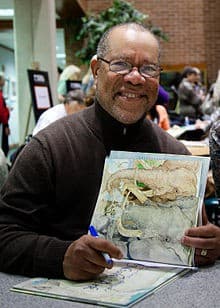
Jerry Pinkney is an American illustrator and author known for his work in children's literature. He is particularly recognized for his picture book "The Lion and the Mouse," which won the Caldecott Medal in 2010. Pinkney's illustrations often draw on themes from folklore and classic tales, bringing them to life for young readers.
Similar books
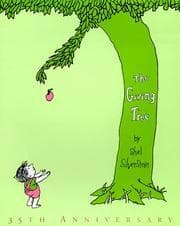
- The Giving Tree
Shel Silverstein
4.4 (906k) average on GoodreadsFantasyA classic children's book with a simple narrative that conveys deep messages about giving and receiving.
- Harry Potter and the Sorcerer's Stone
J.K. Rowling
4.5 (7M) average on GoodreadsFantasyRescued from a miserable life under the stairs, an orphaned boy discovers he's a wizard destined for a magical school, where he uncovers a dangerous secret tied to the dark wizard who murdered his parents.
- The Hunger Games
Suzanne Collins
4.3 (6.4M) average on GoodreadsFantasyIn a future where children fight to the death on live television, Katniss Everdeen volunteers for the arena, turning a death sentence into a fight for survival and a spark of rebellion.
- 1984
George Orwell
4.2 (3.1M) average on GoodreadsPoliticsIn a future where surveillance and thought control are absolute, a man's search for truth clashes with the Party, showing that hope can be a form of rebellion.
- Divergent
Veronica Roth
4.2 (2.9M) average on GoodreadsFantasyIn a society divided by virtues, a sixteen-year-old's difference from the norm starts a rebellion that threatens her world.
- The Hobbit, or There and Back Again
J.R.R. Tolkien
4.3 (2.9M) average on GoodreadsFantasyA comfort-loving hobbit named Bilbo Baggins is whisked away by a mischievous wizard and a band of dwarves on an unexpected journey to reclaim stolen treasure from a fearsome dragon, discovering courage and a magical ring along the way.





Enjoyed the summary?
A summary gives you the shape of the book. The book itself has the detail, the examples and the voice.
Find The Lion and the Mouse on AmazonAs an Amazon Associate, BookBrief earns from qualifying purchases. How we're funded