
Synopsis
Covers the whole plot, including the ending.
- Difficulty
- Easy
- Pacing
- Moderate
- Mood
- Heartwarming, Hopeful, Inspiring, Simple
- Read it if
- You enjoy classic children's stories about perseverance and the power of positive thinking, or if you're looking for a heartwarming tale with a clear moral lesson.
- Skip it if
- You prefer complex plots, nuanced characters, or stories that don't explicitly teach a lesson.
The Little Engine That Could Plot Summary
Covers the whole plot, including the ending.
A Train Full of Joy
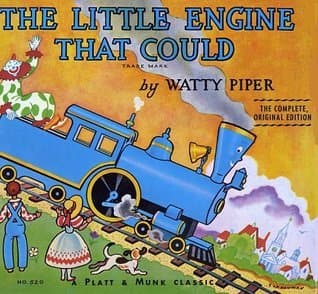
The story starts with a happy train, full of things for children. Its cars have toys, dolls, games, books, and food like oranges, apples, and milk. The train is happy and looks forward to taking its cargo to the good children on the other side of the mountain. It moves along, whistling, excited about the joy it will bring, not knowing about the difficulties ahead.
The Unexpected Breakdown
As the happy train travels, it hits an unexpected problem. It suddenly stops. The engine sputters, coughs, and then becomes silent. It cannot move forward. The train is stuck far from its goal, unable to carry the toys and food over the steep mountain to the waiting children. This breakdown leaves the dolls, toy animals, and other cargo in a difficult spot, as time runs out to reach the children.
The Shiny New Engine's Refusal
A shiny new passenger engine, pulling a train with important people, comes by. The stranded train's conductor, a friendly Toy Clown, flags it down. He explains their problem and asks for help to pull the broken train over the mountain. But the Shiny New Engine, proud of its speed and passengers, laughs at the idea of pulling a 'dirty' train of 'toys and food.' It says it is too important for such a job and speeds away, leaving the Toy Clown and the stranded train sad.
The Big Strong Engine's Disdain
Soon after, a big, strong freight engine, pulling many freight cars, approaches. The Toy Clown again steps forward, hopeful, and explains the situation, asking for help to get the toys and food to the children. But the Big Strong Engine, proud of its strength and heavy loads, looks down on the broken train. It says the toys and food are not important cargo and that it only pulls freight cars. With a huff, it moves past, leaving the stranded train and its passengers even more discouraged.
The Old Engine's Weariness
Next, an old, rusty engine, looking tired, slowly moves along the tracks. The Toy Clown, with little hope left, tries one last time to ask for help. He explains that the children are waiting for their toys and food and need help to cross the mountain. The Old Engine replies that it is too old and tired. It says it has worked hard for many years and is no longer strong enough for a difficult task like pulling a broken train over a steep hill. It slowly continues on its way, leaving the stranded train without help.
A Ray of Hope: The Little Blue Engine
Just when all hope seems gone, a tiny blue engine appears, moving along the tracks. It is much smaller than the other engines, but it looks cheerful. The Toy Clown, unsure after so many rejections, decides to try one last time. He calls out to the Little Blue Engine, explaining their trouble and how the children need their toys and food. He asks if she, despite her size, would help pull their broken train over the mountain.
The Little Blue Engine's Hesitation and Resolve
The Little Blue Engine pauses, saying she is very small and has never pulled a train of toys and food, especially not over such a high mountain. She shows her uncertainty about the hard task. However, when she sees the sad faces of the dolls and toy animals, and hears the urgency in the Toy Clown's voice about the waiting children, she decides she must try. She thinks helping others is important, even if the task seems too big.
The Ascent Begins
With new resolve, the Little Blue Engine connects herself to the broken train. Taking a breath, she starts to pull, repeating "I think I can, I think I can." The weight is huge, and the climb is steep, but she keeps moving, slowly gaining speed. Each "I think I can" shows her growing belief in herself and her ability to meet the challenge. The toys and food in the cars watch worried as she puts in all her effort.
Over the Peak and Down the Hill
With great effort and steady resolve, the Little Blue Engine keeps climbing. Her words change as she reaches the top, to "I thought I could, I thought I could." The hardest part is over. Now, as she goes down the other side of the mountain, her chant changes again, to "I know I can, I know I can." The speed helps her, and she moves more easily, bringing the train closer to its destination with each moment.
Arrival and Celebration
Finally, the Little Blue Engine pulls the train into the station where the children are waiting. Their faces light up with joy as they see the train full of toys and treats. The children cheer for the Little Blue Engine, thankful for her courage and hard work. The Little Blue Engine, though tired, is happy, knowing she did what no other engine would. She showed that even the smallest can achieve great things with determination.
The Little Engine That Could Characters
The Little Blue Engine
Protagonist
A small, determined engine who saves the day.
The Little Blue Engine is the central protagonist of the story. She is small in stature and initially expresses doubt about her ability to pull the broken-down train over the mountain. However, her compassion for the waiting children and her strong will drive her to attempt the seemingly impossible task. She embodies perseverance, self-belief, and the idea that size does not dictate capability. Her repeated mantra, 'I think I can,' is a core element of her character.
Relationships: The Toy Clown (receives plea for help from); The Broken-Down Train (rescues and pulls); The Children (delivers toys and food to)
The Toy Clown
Supporting
The representative of the stranded train, seeking help.
The Toy Clown acts as the spokesperson for the broken-down train and its cargo. He is the one who approaches each passing engine, explaining their predicament and pleading for assistance. He represents the desperation and hope of the toys and food, demonstrating persistence even after multiple rejections. His role is crucial in driving the plot forward by actively seeking a solution to their problem.
Relationships: The Little Blue Engine (pleads for help from); The Shiny New Engine (rejected by); The Big Strong Engine (rejected by); The Old Engine (rejected by)
The Shiny New Engine
Antagonist (minor)
A proud and dismissive engine, too important to help.
The Shiny New Engine is the first engine to pass the stranded train. It is characterized by its pride, its focus on its 'important' passengers, and its disdain for the 'dirty' cargo of toys and food. It represents arrogance and the refusal to help those perceived as beneath oneself. Its quick rejection of the plea for help highlights the initial hopelessness of the situation.
Relationships: The Toy Clown (rejects plea from)
The Big Strong Engine
Antagonist (minor)
A powerful engine, too strong for 'unimportant' tasks.
The Big Strong Engine is the second engine to pass. It prides itself on its strength and the heavy freight cars it typically pulls. Like the Shiny New Engine, it views the task of pulling a train of toys and food as beneath its dignity and importance. It represents a form of narrow-mindedness, only valuing tasks that align with its perceived status and strength, refusing to extend help to those in need.
Relationships: The Toy Clown (rejects plea from)
The Old Engine
Supporting
A weary engine, too tired to offer assistance.
The Old Engine is the third engine to pass the stranded train. Unlike the previous two, its refusal stems from genuine physical weariness and age rather than arrogance. It has worked hard for many years and simply lacks the strength to undertake such a demanding task. It represents the limitations that come with age and the natural decline of physical ability, providing a different reason for refusal.
Relationships: The Toy Clown (regretfully declines plea from)
The Broken-Down Train
Supporting
The initial train carrying toys and food, which becomes stranded.
This is the happy train that initially sets out with its precious cargo of dolls, toy animals, games, and food for the children. Its sudden breakdown is the inciting incident of the story, creating the central conflict. It represents the need for help and the valuable cargo that must reach its destination, symbolizing the hopes and expectations of the children.
Relationships: The Little Blue Engine (is pulled by); The Toy Clown (is represented by)
The Children
Mentioned
The unseen recipients of the toys and food, eagerly waiting.
The children are the ultimate beneficiaries of the train's journey. Although they are never directly seen until the very end, their anticipation and need for the toys and food serve as the primary motivation for the Toy Clown's pleas and the Little Blue Engine's eventual determination. They represent innocence, joy, and the importance of fulfilling promises.
Relationships: The Broken-Down Train (are waiting for)
The Little Engine That Could Themes
Perseverance and Determination
This is the main theme, shown by the Little Blue Engine. Despite her small size and early doubts, she tells herself "I think I can," and through will and effort, she pulls the heavy train over the mountain. This theme teaches that working hard when things are difficult, even when others will not help, can lead to success. It is clear when she keeps going uphill, even when the task seems impossible.
“I think I can. I think I can. I think I can.”
Self-Belief and Confidence
The story shows how important it is to believe in yourself, even when others doubt you or when you face a big challenge. The Little Blue Engine's thought, "I think I can," is a strong statement of self-belief. Her change from unsure to confident, ending with "I know I can," shows how believing in your own power helps achieve goals, no matter what others think or what your initial limits are. The larger engines' lack of belief for "unimportant" tasks also contrasts with her inner strength.
“I'm not very big. I've never pulled a train over a mountain.”
The Power of Optimism
The Little Blue Engine's positive attitude and hopeful view are key to her success. While other engines are proud, dismissive, or tired, she approaches the problem with a "can-do" spirit. Her optimism is not naive; it drives her to try and succeed where others failed. This theme suggests that a positive mindset can reveal potential and help overcome problems that seem too big for those with a negative or uncaring view.
“But I think I can. I think I can. I think I can.”
Helping Others (Empathy and Altruism)
The Little Blue Engine helps because she feels for the stranded toys and waiting children. Unlike the other engines, who put their own importance or limits first, she thinks about what others need. This theme shows the value of helping others and being kind, even when it takes personal effort or goes beyond your usual duties. Her act of service brings joy to the children and to herself.
“The good little boys and girls on the other side of the mountain will have no toys or good food unless I help them.”
Plot Devices & Literary Techniques
Personification
Giving human characteristics to inanimate trains.
The story extensively uses personification, attributing human qualities, emotions, and speech to the trains. The engines 'think,' 'feel proud,' 'scoff,' 'huff,' 'look tired,' and 'speak.' This device makes the characters relatable and allows for the exploration of human traits like pride, weariness, and determination through the actions of the trains. It helps convey the moral lessons in an accessible way for young readers.
Repetition (Mantra)
The repeated phrase 'I think I can' as a symbol of perseverance.
The phrase 'I think I can' is a central and highly effective use of repetition. It serves as the Little Blue Engine's mantra, representing her growing self-belief and determination. The repetition builds suspense during the climb and reinforces the theme of perseverance. Its evolution to 'I thought I could' and 'I know I can' marks the progression of her journey and confidence, making the message memorable and impactful.
Foil Characters
Contrasting engines highlighting the protagonist's virtues.
The Shiny New Engine, the Big Strong Engine, and the Old Engine serve as foil characters to the Little Blue Engine. Their contrasting traits—arrogance, indifference, and weariness—highlight the Little Blue Engine's humility, compassion, and determination. By showing what she is NOT, these foils emphasize her unique virtues and make her eventual success more significant and triumphant, reinforcing the story's core messages about inner strength over outward appearances.
The Little Engine That Could Quotes
“I think I can, I think I can.”
“I thought I could, I thought I could.”
“I am a very important engine indeed.”
“I can not, I can not.”
“I am a freight engine. I only pull freight cars.”
“I am a rusty old engine. I can not, I can not.”
“The little blue engine had never been over the mountain, but she wanted to help.”
“She was a happy little train, for she had such a jolly load.”
“The toys and good food were for the good little boys and girls on the other side of the mountain.”
“Chug, chug, chug. Puff, puff, puff.”
“The little blue engine smiled and seemed to say as she puffed steadily along, 'I think I can—I think I can—I think I can.'”
“Over the mountain and down the other side, the little blue engine went.”
“The little boys and girls will be happy because you helped us, little engine.”
Quiz
10 questions on the plot and the characters. Each answer comes with a short explanation.
Question 1
What is the main cargo that the broken-down train is carrying?
- Food and supplies for a village
- Toys and gifts for children
- Coal and machinery parts
- Passengers going on vacation
Show answer
B. Toys and gifts for children The story centers on a train carrying toys and gifts for little boys and girls, which breaks down before reaching them.
Question 2
What color is the little engine that eventually helps the stranded toys?
- Red
- Green
- Blue
- Yellow
Show answer
C. Blue The little engine that agrees to help is described as a little blue train, emphasizing her small size and determination.
Question 3
Why do the other trains refuse to help the broken-down train at first?
- They are too busy with their own schedules
- They think the hill is too steep for them
- They don't like the toys on board
- They are afraid of breaking down themselves
Show answer
B. They think the hill is too steep for them The passing trains, such as the shiny passenger engine and the big freight engine, refuse because they believe the hill is too steep or they are not suited for such a task.
Question 4
What is the key phrase the little blue train repeats to herself while climbing the hill?
- "I must be strong"
- "I think I can"
- "Help is on the way"
- "For the children"
Show answer
B. "I think I can" The little blue train motivates herself by repeating "I think I can, I think I can" as she struggles up the hill, which becomes a central theme of perseverance.
Question 5
What happens to the train carrying the toys before it asks for help?
- It runs out of fuel
- It breaks down
- It gets lost in a storm
- It is hijacked by bandits
Show answer
B. It breaks down The train breaks down before reaching the children, stranding the toys and gifts, which sets the plot in motion as they seek assistance.
Question 6
Which character first asks the passing trains for help?
- The clown doll
- The little blue train
- The broken-down engine
- A child from the town
Show answer
A. The clown doll In many versions of the story, the clown doll is among the toys and takes the initiative to ask the passing trains for help, showing leadership among the stranded cargo.
Question 7
What is the primary obstacle the little blue train must overcome?
- A wide river
- A steep hill
- A dark tunnel
- A broken bridge
Show answer
B. A steep hill The main challenge is climbing a steep hill to deliver the toys to the children on the other side, which tests the little engine's determination and strength.
Question 8
How does the story emphasize the theme of kindness and helping others?
- By showing the toys playing together
- Through the little blue train's willingness to help despite her size
- By having the children come to rescue the train
- Through the broken-down train's apology for its failure
Show answer
B. Through the little blue train's willingness to help despite her size The little blue train demonstrates kindness by agreeing to help the stranded toys when larger, more capable trains refuse, highlighting the value of compassion and effort.
Question 9
What is the significance of the little blue train being small in the context of the story?
- It makes her faster than the other trains
- It symbolizes that size doesn't limit one's ability to achieve goals with determination
- It allows her to carry more cargo than expected
- It causes the other trains to underestimate her from the start
Show answer
B. It symbolizes that size doesn't limit one's ability to achieve goals with determination Her small size contrasts with the larger trains that refuse to help, underscoring the message that perseverance and a positive attitude ("I think I can") can overcome physical limitations.
Question 10
In what way does the story's ending reinforce its central message?
- By showing the toys being sold at a market
- Through the little blue train successfully delivering the toys and repeating "I thought I could"
- By having the broken-down train repaired by the children
- Through the other trains apologizing for their refusal
Show answer
B. Through the little blue train successfully delivering the toys and repeating "I thought I could" The ending shows the little blue train reaching the top of the hill and saying "I thought I could," which reinforces the theme of self-belief and the rewards of persistence.
The Little Engine That Could FAQ
What is 'The Little Engine That Could' about?
The story follows a train carrying toys and gifts for children that breaks down before reaching them. After several larger trains refuse to help, a small blue engine agrees to pull the train over the mountain, repeating 'I think I can' to overcome her doubts and succeed in delivering the toys.
Why should I read 'The Little Engine That Could'?
This classic children's book teaches perseverance, self-belief, and kindness through a simple yet powerful narrative. Its repetitive, rhythmic text and inspiring message make it an enduring favorite for teaching children about overcoming challenges.
What is the background/setting of 'The Little Engine That Could'?
The story is set in a fantasy world of anthropomorphic trains, with the primary action occurring on a railway line leading over a steep mountain. The journey symbolizes overcoming obstacles to bring joy (the toys) to children on the other side.
What are the most memorable quotes?
The most iconic quotes are the little blue engine's mantras: 'I think I can' as she struggles uphill and 'I thought I could' after succeeding. The refusal of other trains, like the passenger engine saying 'I pull the likes of you? Indeed not!', also stands out.
What writing style does the author use?
Watty Piper uses simple, repetitive language with a rhythmic cadence, ideal for read-aloud sessions. The story employs anthropomorphism (giving trains human traits) and a clear moral framework, emphasizing optimism and effort through direct dialogue and action.
What minor details add significant meaning?
The toys' anxious expressions and pleas for help humanize them, making the stakes feel personal. The blue engine's small size and initial hesitation highlight that courage isn't about being the biggest or strongest, but about trying despite limitations.
What are some subtle foreshadowing moments?
The repeated refusals from larger trains foreshadow that help will come from an unexpected source. The blue engine's initial observation of the hill's difficulty ('It's so very long and so very high') sets up the central challenge she must overcome through determination.
What unexpected character connections exist?
The connection between the toys and the children they're destined for is implied but never shown, emphasizing the blue engine's role as a bridge between need and fulfillment. The trains form a hierarchy based on size and purpose, with the little blue engine breaking this pattern through compassion.
What are unspoken character motivations?
The larger trains likely refuse due to pride or a sense of superiority, seeing the task as beneath them. The little blue engine's motivation stems from empathy ('They are so little and so sad') and a desire to prove her worth, despite her insecurities.
What psychological complexities do characters exhibit?
The blue engine embodies the struggle between self-doubt and resilience, using positive self-talk to push through fear. The toys display vulnerability and hope, while the refusing trains show indifference or arrogance, creating a contrast in attitudes toward helping others.
What are the major emotional turning points?
Key emotional moments include the toys' despair when the original train breaks down, their renewed hope when the blue engine agrees to help, and the triumphant climax as she crests the hill chanting 'I think I can.' The final delivery of toys brings relief and joy.
How do relationship dynamics evolve?
The dynamic shifts from dependency (toys relying on the broken train) to desperation (seeking help from indifferent trains), then to a partnership of mutual encouragement between the toys and the blue engine. This evolves into a triumphant success that validates trust and effort.
Which parts remain ambiguous or open-ended?
The story doesn't specify what happens to the original broken train or the refusing engines afterward. It also leaves the children's reactions to receiving the toys to the reader's imagination, focusing instead on the journey's moral lesson.
What are controversial scenes or decisions?
Some readers debate whether the larger trains' refusals are justified (e.g., due to safety concerns) or simply selfish. Others question if the blue engine's success promotes unrealistic 'positive thinking' without practical preparation, though it's generally seen as a metaphor for effort.
'The Little Engine That Could' ending explained: how it ends & what it means
The story ends with the little blue engine successfully delivering the toys over the mountain, chanting 'I thought I could' as she rolls downhill. This reinforces the theme that self-belief and perseverance lead to success, suggesting that even small acts of kindness can have big impacts.
About the author

Watty Piper was an American author best known for writing children's literature. His most notable work, "The Little Engine That Could," has become a classic in children's storytelling, emphasizing themes of perseverance and optimism. Piper's contributions to children's fiction have made a lasting impact on the genre.
Similar books
- Mike Mulligan and His Steam Shovel
Virginia Lee Burton
4.2 (50k) average on GoodreadsFantasyFeatures a determined machine overcoming challenges with a 'can-do' attitude.
- The Story of Ferdinand
Munro Leaf
4.4 (86k) average on GoodreadsChildren's'Ferdinand' also champions an individual's unique spirit, but its message is about staying true to oneself and non-conformity, rather than overcoming a physical challenge through sheer will. Ferdinand's 'success' is found in his peaceful nature, contrasting with the engine's triumph through strenuous effort. While both instill positive values, 'Ferdinand' leans into individuality and peaceful resistance, whereas 'The Little Engine' champions active perseverance against a task.
- Harry Potter and the Sorcerer's Stone
J.K. Rowling
4.5 (7M) average on GoodreadsFantasyRescued from a miserable life under the stairs, an orphaned boy discovers he's a wizard destined for a magical school, where he uncovers a dangerous secret tied to the dark wizard who murdered his parents.
- The Hunger Games
Suzanne Collins
4.3 (6.4M) average on GoodreadsFantasyIn a future where children fight to the death on live television, Katniss Everdeen volunteers for the arena, turning a death sentence into a fight for survival and a spark of rebellion.
- 1984
George Orwell
4.2 (3.1M) average on GoodreadsPoliticsIn a future where surveillance and thought control are absolute, a man's search for truth clashes with the Party, showing that hope can be a form of rebellion.
- Divergent
Veronica Roth
4.2 (2.9M) average on GoodreadsFantasyIn a society divided by virtues, a sixteen-year-old's difference from the norm starts a rebellion that threatens her world.




Enjoyed the summary?
A summary gives you the shape of the book. The book itself has the detail, the examples and the voice.
Find The Little Engine That Could on AmazonAs an Amazon Associate, BookBrief earns from qualifying purchases. How we're funded