
Synopsis
Covers the whole plot, including the ending.
- Difficulty
- Easy
- Pacing
- Slow
- Mood
- Nostalgic, Heartwarming, Educational, Resilient
- Read it if
- You enjoy heartwarming historical fiction about pioneer life, family values, and personal growth, especially suitable for children and young adults.
- Skip it if
- You prefer fast-paced plots with high stakes and complex moral dilemmas, or find detailed descriptions of daily pioneer life too slow.
The Little House Collection Plot Summary
Covers the whole plot, including the ending.
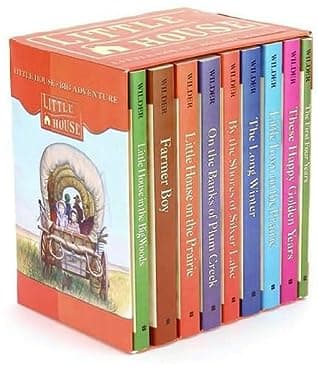
Little House in the Big Woods: Life in Wisconsin
The story introduces Laura Ingalls, her older sister Mary, baby Carrie, Ma (Caroline), and Pa (Charles), living in a log cabin in the woods of Wisconsin during the 1870s. Their days are filled with pioneer life: Ma churns butter, makes cheese, and sews, while Pa hunts, taps maple trees for syrup, and tells stories while playing his fiddle. They interact with their few neighbors, including local Native American tribes, and face occasional threats from wild animals like bears and wolves. The family prepares for winter by storing food and supplies, celebrating holidays like Christmas with simple, homemade gifts and treats, showing a close-knit, resourceful existence.
Farmer Boy: Almanzo's Childhood in New York
This book focuses on Almanzo Wilder, a young boy growing up on a large, successful farm in Malone, New York. Unlike Laura's frontier experience, Almanzo's life involves established agriculture and relative comfort, though it still requires much physical labor. He works with his older siblings, Royal and Eliza Jane, and his parents, learning all aspects of farming, from milking cows and harvesting crops to training horses. Almanzo dreams of owning his own horse, and much of the story follows his efforts to prove his maturity and responsibility to his father. The book details the seasonal routines of farm life, the hearty meals, and the importance of self-sufficiency and family effort.
Little House on the Prairie: Moving West to Kansas
Seeking more open land, Pa decides to sell their Wisconsin home, and the Ingalls family travels by covered wagon to the Kansas prairie. They cross rivers and vast plains, settling on land Pa believes is outside the designated Indian Territory. There, Pa builds their iconic little house, felling trees, digging a well, and constructing the cabin. Laura and Mary experience the challenges and wonders of the prairie, from encounters with Native Americans to the vast landscapes and the thrill of seeing wild horses. Despite moments of isolation, the family finds joy in their new home and the promise of a future on the frontier.
On the Banks of Plum Creek: Minnesota and the Grasshopper Plague
The Ingalls family moves to Minnesota, settling near Plum Creek. Initially, they live in a dugout home built into the creek bank. Pa soon builds them a house of sawed lumber, planning to pay for it with their first wheat crop. Laura and Mary attend school for the first time, make new friends, and enjoy their new surroundings. However, their hopes are lost when a large swarm of grasshoppers destroys their farm, leaving their fields barren. This disaster makes the family poor, forcing Pa to seek work far from home to support them, showing the unpredictable hardships of pioneer life.
By the Shores of Silver Lake: Dakota Territory and Town Founding
After the grasshopper plague, the Ingalls family leaves Plum Creek and heads west to the Dakota Territory, where Pa has a job working for the railroad. They first live in a surveyor's shanty by Silver Lake. As the railroad moves west, a new town, De Smet, begins to form, and Pa is one of its first settlers, helping to build. Mary, who lost her eyesight due to scarlet fever, begins to adjust. Laura takes on more responsibilities, helping Ma and caring for her younger sisters, Carrie and baby Grace. The family experiences harsh prairie winters and the excitement of a growing community, finding hope in De Smet's development.
The Long Winter: Survival in De Smet
The winter of 1880-1881 brings blizzards to De Smet, burying the town in snow for seven months and stopping all train deliveries. The Ingalls family, with other townspeople, faces severe hardship and starvation as supplies run low. Pa gets a small amount of wheat from a distant farmer, but it is not enough. Young Almanzo Wilder, who has also settled in De Smet, and a friend, Cap Garland, risk their lives to travel miles across the snowy prairie to find a hidden store of wheat, bringing it back to save the starving town. The family endures extreme cold, hunger, and isolation, relying on their resilience to survive.
Little Town on the Prairie: Life in De Smet and Laura's Growth
With spring, De Smet revives after the long winter. Laura, now a young woman, enjoys the social life of the growing town, attending parties, church socials, and 'literaries'—community gatherings for readings and debates. She also works hard, sewing shirts with Ma to earn money to send Mary to a college for the blind in Iowa. During this time, Almanzo Wilder begins calling on Laura, driving her to and from social events and spending evenings at the Ingalls home. Their relationship slowly grows amid Laura's responsibilities and her emerging independence, marking a change in her life from child to young adult.
These Happy Golden Years: Teaching and Courtship
To continue funding Mary's education, Laura takes her first teaching job twelve miles from De Smet. Living away from home for the first time, she faces classroom challenges and homesickness. Her spirits are lifted by Almanzo Wilder, who drives her home every Friday evening for the weekend. Their courtship becomes more serious, with long buggy rides and shared talks strengthening their bond. Despite teaching difficulties and family responsibilities, Laura finds joy and purpose in her work and her growing love for Almanzo, signaling a new chapter in her life.
The First Four Years: Marriage and Hardship
Laura Ingalls and Almanzo Wilder marry and begin their life together on a homestead near De Smet. Their first four years are marked by hardship. They endure severe storms, including blizzards and hailstorms that destroy crops, leading to financial struggles and unpaid debts. Both Laura and Almanzo suffer serious illnesses, nearly dying from diphtheria, which leaves Almanzo with a permanent disability. Their baby daughter, Rose, is born during these trials. Despite constant setbacks, including a house fire, their love and determination to make a life on the prairie remain strong, showing their resilience and commitment.
Pioneer Childhood: Adventures and Lessons
Throughout her childhood, Laura Ingalls experiences daily adventures and challenges of pioneer life. From exploring the woods of Wisconsin and the plains of Kansas to enduring grasshopper plagues and harsh winters in Minnesota and Dakota Territory, each move brings lessons. She learns to adapt to new environments, understands self-sufficiency, and sees the development of the American West. Her childhood is marked by a strong family bond, the simple joys of nature, and the continuous effort needed to build a life on the frontier, shaping her into a resilient young woman.
Family Unity and Support
Central to the series is the Ingalls family's unity and support. Through every move, disaster, illness, and financial hardship, Ma and Pa Ingalls provide a stable and loving environment for their daughters, Laura, Mary, Carrie, and Grace. They work together, share resources, offer comfort, and make sacrifices for each other, especially for Mary's education after she loses her sight. This strong family bond is the foundation of their survival and happiness on the frontier, showing how shared burdens and collective effort help them overcome obstacles and maintain hope.
The Call of the West: Migration and Settlement
The Ingalls family's journey across the American frontier is a continuous story of migration and settlement. Driven by Pa's desire for new land, better opportunities, and adventure, they move from the Big Woods of Wisconsin to the prairies of Kansas, then to Plum Creek in Minnesota, and finally to the Dakota Territory. Each move means a new beginning and new challenges, showing the relentless spirit of pioneers seeking to build a life in undeveloped areas. Their experiences highlight homesteading, the establishment of new communities like De Smet, and the transformation of wilderness into settled land.
Principal Figures
Laura Ingalls Wilder
Protagonist
An adventurous and spirited pioneer girl who grows into a determined young woman.
Laura is the spirited and observant second daughter of Charles and Caroline Ingalls. She possesses a keen love for nature, adventure, and freedom, often finding the strictures of ladylike behavior challenging. Throughout her childhood, she is curious, sometimes mischievous, and deeply attached to her Pa. As she matures, she develops a strong sense of responsibility, resilience, and a deep, enduring love for her family and the prairie. Her perspective is the primary lens through which the reader experiences the pioneer life.
Relationships: Charles Ingalls (Pa) (Deeply loving and admiring daughter-father bond); Caroline Ingalls (Ma) (Loving daughter, sometimes chafes under Ma's strictures but deeply respects her); Mary Ingalls (Close sisterly bond, often feels protective and responsible after Mary's blindness); Almanzo Wilder (Courtship evolves into a deep, enduring marital love and partnership); Carrie Ingalls (Affectionate older sister, often cares for Carrie); Grace Ingalls (Affectionate older sister, helps care for Grace)
Charles Ingalls (Pa)
Supporting
The adventurous, resourceful, and loving patriarch of the Ingalls family.
Pa is the embodiment of the pioneer spirit: adventurous, hardworking, optimistic, and deeply devoted to his family. He is a skilled hunter, farmer, carpenter, and fiddler, always ready to move to new land in search of a better life. Despite facing numerous setbacks and hardships, he maintains a cheerful demeanor and finds joy in simple pleasures, often entertaining his family with stories and music. His resilience and unwavering determination to provide for his family are central to their survival and well-being.
Relationships: Caroline Ingalls (Ma) (Deeply loving and respectful marital partnership); Laura Ingalls (Adoring father, shares a special bond with Laura over their adventurous spirits); Mary Ingalls (Loving father, deeply concerned for her well-being, especially after her blindness); Carrie Ingalls (Loving father); Grace Ingalls (Loving father)
Caroline Ingalls (Ma)
Supporting
The calm, resilient, and nurturing matriarch of the Ingalls family.
Ma is the steady, practical, and nurturing force of the Ingalls family. She is a skilled homemaker, capable of cooking, sewing, and managing the household under the most challenging frontier conditions. Ma embodies strength, patience, and unwavering faith, providing a sense of stability and refinement amidst the wilderness. She often serves as a moral compass for her daughters, emphasizing education, proper behavior, and religious values. Despite the hardships, she maintains a dignified and loving presence.
Relationships: Charles Ingalls (Pa) (Deeply loving and respectful marital partnership); Laura Ingalls (Loving mother, guides Laura's development, sometimes struggles with Laura's wilder nature); Mary Ingalls (Loving and devoted mother, particularly after Mary's blindness); Carrie Ingalls (Loving mother); Grace Ingalls (Loving mother)
Mary Ingalls
Supporting
Laura's older sister, known for her gentle nature and resilience in the face of blindness.
Mary is the eldest Ingalls daughter, characterized by her golden hair, gentle demeanor, and studious nature. She is traditionally well-behaved and a contrast to Laura's more adventurous spirit. Her life takes a tragic turn when she contracts scarlet fever and loses her eyesight. Despite this devastating blow, Mary demonstrates immense courage, patience, and determination, learning to navigate the world without sight and pursuing an education at a college for the blind. Her resilience inspires her family.
Relationships: Laura Ingalls (Close sisterly bond, often a patient listener and companion); Charles Ingalls (Pa) (Loving daughter, Pa feels a strong protective instinct towards her); Caroline Ingalls (Ma) (Loving daughter, Ma is deeply devoted to her care and education)
Almanzo Wilder
Supporting
A hardworking farmer boy who becomes Laura's husband, known for his kindness and courage.
Almanzo is introduced as a young boy on a prosperous New York farm, learning the demanding work of agriculture. He is hardworking, responsible, and possesses a deep love for horses. Later, he reappears in Laura's life as a young man in De Smet, becoming her suitor and eventually her husband. He is consistently portrayed as kind, brave, and reliable, demonstrating immense courage during 'The Long Winter' and enduring significant physical hardship in his early married life. His steadfast love and partnership with Laura are central to the later books.
Relationships: Laura Ingalls (Courtship evolves into a deep, enduring marital love and partnership); Royal Wilder (Brotherly relationship, works together on the family farm); Eliza Jane Wilder (Sisterly relationship, works together on the family farm)
Carrie Ingalls
Supporting
Laura's younger sister, often shy and frail, but a beloved member of the family.
Carrie is the third Ingalls daughter, often depicted as being more delicate and sensitive than Laura. She is present throughout many of the family's moves and experiences, often requiring care from her older sisters. While not as prominent as Laura or Mary, her presence contributes to the family dynamic, and her experiences, such as nearly freezing in 'The Long Winter,' highlight the extreme challenges faced by even the youngest pioneers. She represents the vulnerability and resilience of children on the frontier.
Relationships: Laura Ingalls (Affectionate younger sister, often cared for by Laura); Mary Ingalls (Affectionate younger sister); Charles Ingalls (Pa) (Loving daughter); Caroline Ingalls (Ma) (Loving daughter)
Grace Ingalls
Supporting
The youngest Ingalls daughter, born on the prairie and representing a new generation.
Grace is the youngest of the Ingalls children, born in the Dakota Territory. Her arrival further solidifies the family's presence on the frontier. As the baby of the family, she is doted upon by her parents and older sisters. Her experiences, though less detailed than Laura's, symbolize the continuity of life and the hope for the future in the developing West. She is a reminder of the domestic joys and challenges that persist even amidst the grander struggles of pioneer life.
Relationships: Laura Ingalls (Affectionate younger sister); Mary Ingalls (Affectionate younger sister); Carrie Ingalls (Affectionate younger sister); Charles Ingalls (Pa) (Loving daughter); Caroline Ingalls (Ma) (Loving daughter)
Mr. Edwards
Supporting
A rough but kind-hearted frontiersman who befriends the Ingalls family in Kansas.
Mr. Edwards is a colorful character who lives near the Ingalls family on the Kansas prairie. He is a rugged, independent frontiersman, often depicted as a bachelor with a gruff exterior but a warm heart. He helps Pa Ingalls with various tasks and shares stories and companionship with the family. His most memorable act is risking a dangerous river crossing to bring Christmas presents to the Ingalls children, demonstrating the spirit of generosity and community among pioneers, even those who live solitary lives.
Relationships: Charles Ingalls (Pa) (Frontier friend and neighbor); Laura Ingalls (Friendly adult figure)
Nellie Oleson
Antagonist
A snobbish and envious schoolmate who often antagonizes Laura and Mary.
Nellie Oleson is a recurring character who serves as Laura's primary rival and antagonist in the Minnesota and Dakota Territory books. She is the daughter of a prosperous store owner and often uses her family's wealth and social standing to try and assert superiority over Laura and Mary. Nellie is vain, snobbish, and frequently teases or plays cruel tricks on Laura, highlighting class differences and the challenges of navigating social dynamics in nascent frontier towns. Her character provides conflict and challenges Laura's patience and moral compass.
Relationships: Laura Ingalls (Rival and antagonist, often engages in childish disputes)
Themes & Insights
The Spirit of the American Frontier
The collection shows the American frontier experience. It details westward movement, homesteading challenges, and the resourcefulness needed for survival in undeveloped lands. The Ingalls family embodies the pioneer spirit, driven by dreams of self-sufficiency and new beginnings. From building log cabins to facing blizzards and grasshopper plagues, the books highlight the courage, hard work, and adaptability needed to settle the West. This theme is clear in Pa's constant desire for open land and the family's repeated moves, always seeking a better life.
“The West was new, and no one knew what might happen there. Anything was possible. The West was where the dreams went to live.”
Family Unity and Resilience
At the heart of the 'Little House' series is the Ingalls family's strength and love. Faced with poverty, disasters, illness, and constant relocation, their bond never breaks. Ma and Pa provide stability and moral guidance, while the children learn to support each other. The family's ability to unite during crises, such as the long winter or Mary's blindness, shows the importance of mutual reliance and emotional support. Their shared experiences create an unbreakable connection, showing that love and unity are essential to overcoming adversity.
“Home is the nicest word there is.”
Man vs. Nature
The books show the Ingalls family's struggle with nature. They battle harsh winters, devastating grasshopper swarms, prairie fires, and dangerous wildlife. Nature provides food through hunting and farming, but also poses threats that test their endurance. The family learns to read weather signs, respect the wilderness, and adapt their lives to its unpredictable rhythms. This theme emphasizes both the beauty and brutality of the natural world and humanity's place within it, showing the balance between survival and environmental harmony.
“The wind sang a wild, lonesome song, and the cold was cruel.”
The Importance of Education and Self-Improvement
Despite the basic conditions of frontier life, the Ingalls family, especially Ma, values education and intellectual growth. Laura, Mary, and Carrie attend one-room schoolhouses when possible, and Ma often teaches them at home. Mary's determination to attend a college for the blind, and Laura's journey to become a teacher, highlight the belief that education leads to independence and a richer life, even when practical survival skills are most important. This theme shows a progressive outlook amid the realities of pioneer existence.
“Some people call it studying, but I call it learning.”
Childhood and Growing Up on the Frontier
The series offers a view of childhood development within pioneer life. Laura's perspective lets readers experience the wonders and hardships of growing up on the frontier through a child's eyes. We see her change from a playful child to a responsible young woman, taking on adult roles and navigating her emotions and social interactions. The books capture the innocence of childhood games, the pains of adolescence, and the gradual acceptance of adult responsibilities, all shaped by the unique environment of the American West.
“The days were like a great book, with new pages always turning.”
Plot Devices & Literary Techniques
First-Person Narrative (Laura's Perspective)
The story is told primarily through Laura Ingalls's eyes, immersing the reader in her experiences.
The majority of the 'Little House' books are narrated from Laura Ingalls's limited first-person perspective, allowing readers to intimately experience her thoughts, feelings, and observations as she grows up. This device creates a strong sense of empathy and authenticity, grounding the grand narrative of pioneer life in the personal, day-to-day realities of a child. It also allows for moments of wonder and fear to be filtered through her developing understanding, making the historical events more relatable and immediate.
Seasonal Cycles and Natural Rhythms
The narrative often follows the changing seasons, reflecting the cyclical nature of pioneer life and its reliance on the natural world.
The stories are often structured around the changing seasons, from the bounty of summer harvests to the severe challenges of winter. This cyclical pattern emphasizes the close relationship between pioneer life and nature's rhythms, dictating work, travel, and survival. It highlights the constant preparation for the next season and the impact of weather on daily existence, reinforcing the theme of 'Man vs. Nature' and providing a natural framework for the progression of time and events within the narrative.
The Fiddle and Storytelling
Pa's fiddle music and storytelling serve as sources of comfort, entertainment, and cultural preservation.
Pa Ingalls's fiddle and his nightly stories are recurring motifs that provide solace, entertainment, and a connection to tradition amidst the harshness of frontier life. The music offers emotional release and a sense of joy, while his stories, often tales of his own adventures or local lore, educate and comfort his daughters. This device emphasizes the importance of art, oral tradition, and familial connection in maintaining spirits and cultural identity in isolated settings, fostering a sense of warmth and security within the Ingalls home.
The Journey/Migration Motif
Repeated physical journeys westward symbolize the search for opportunity and the constant evolution of the frontier.
The Ingalls family's repeated migrations across the American West serve as a central plot device, driving the narrative forward through different geographical settings and challenges. Each journey by covered wagon represents a new beginning, a quest for better land, and the embodiment of the pioneer spirit. This motif highlights the transient nature of early frontier life, the sacrifices involved in seeking opportunity, and the constant adaptation required to establish roots in new, undeveloped territories, making each new 'little house' a temporary but hopeful stop.
The Little House Collection Quotes
“As long as we have each other, we will be happy.”
“There was a little log cabin, built of round, unhewn logs, with a door and two windows.”
“The wind sang a wild, lonesome song.”
“Everything was new and strange and wonderful.”
“It was a good world, she thought, where there were such good things.”
“Hard work and self-reliance were the order of the day.”
“But Laura lay snug in bed and did not worry.”
“She was learning that everything had its time.”
“Her hair was brown and smooth and she had brown eyes like Ma's.”
“The wild, free prairie was not to be tamed.”
“Home was a safe, warm place, and the outside world was full of dangers.”
“It was a big country, and there was room for everyone.”
“Life was a song, and Pa loved to sing it.”
“The stars were like diamonds scattered on black velvet.”
Quiz
10 questions on the plot and the characters. Each answer comes with a short explanation.
Question 1
In 'Little House in the Big Woods', what instrument does Pa play that brings joyful sounds to the Ingalls family's cozy log cabin?
- Guitar
- Harmonica
- Fiddle
- Banjo
Show answer
C. Fiddle In 'Little House in the Big Woods', Pa's fiddle is specifically mentioned as bringing joyful sounds to their home.
Question 2
What significant event causes the Ingalls family to lose their entire wheat crop in 'On the Banks of Plum Creek'?
- A severe drought
- A massive flood
- A plague of grasshoppers
- A destructive prairie fire
Show answer
C. A plague of grasshoppers In 'On the Banks of Plum Creek', a strange glittering cloud of millions of grasshoppers covers the field and destroys the wheat crop.
Question 3
Which Ingalls child is sent to a college for the blind, requiring Laura to earn money for her tuition?
- Carrie
- Mary
- Grace
- Laura herself
Show answer
B. Mary In 'Little Town on the Prairie' and 'These Happy Golden Years', Laura works to earn money to send Mary to a college for the blind.
Question 4
In 'Farmer Boy', what is the one thing young Almanzo Wilder wishes for, and what must he prove to get it?
- A new farm; he must prove he can manage crops.
- His very own horse; he must prove he is ready for such a big responsibility.
- A better education; he must prove his intelligence in school.
- To leave the farm; he must prove he can survive on his own.
Show answer
B. His very own horse; he must prove he is ready for such a big responsibility. The description for 'Farmer Boy' states Almanzo wishes for his very own horse and must prove he is ready for the responsibility.
Question 5
What is the primary reason the Ingalls family moves from Wisconsin to Kansas in 'Little House on the Prairie'?
- To escape a bad winter
- Pa decides to sell the log house in the woods and move west
- To be closer to relatives
- They were evicted from their home
Show answer
B. Pa decides to sell the log house in the woods and move west In 'Little House on the Prairie', it is stated that Pa decides to sell the log house and move the family from Wisconsin to Kansas.
Question 6
During 'The Long Winter', how long does it snow almost without stopping, leading to starvation in De Smet?
- From November to February
- From December to March
- From October to April
- From January to May
Show answer
C. From October to April 'The Long Winter' explicitly states that it snows almost without stopping from October until April.
Question 7
What significant role does Pa play when the Ingalls family first arrives in the Dakota Territory, specifically in the town of De Smet?
- He becomes the town's first mayor.
- He starts work on the first building of the brand new town.
- He establishes the first school.
- He discovers a gold mine.
Show answer
B. He starts work on the first building of the brand new town. In 'By the Shores of Silver Lake', Pa starts work on the first building of the brand new town of De Smet.
Question 8
In 'These Happy Golden Years', what is Laura's first job away from home, and what makes it a little better?
- She works in a store; Almanzo delivers her supplies.
- She becomes a seamstress; Almanzo visits her daily.
- She gets a job as a teacher; Almanzo picks her up for the weekend.
- She works as a cook; Almanzo helps her with ingredients.
Show answer
C. She gets a job as a teacher; Almanzo picks her up for the weekend. In 'These Happy Golden Years', Laura becomes a teacher and Almanzo picks her up every Friday to take her home for the weekend.
Question 9
What is the name of Laura Ingalls and Almanzo Wilder's baby, who arrives during 'The First Four Years'?
- Lily
- Daisy
- Rose
- Violet
Show answer
C. Rose In 'The First Four Years', it is stated that Laura and Almanzo's love grows when baby Rose arrives.
Question 10
Which of the following is NOT listed as a challenge faced by Laura and Almanzo during 'The First Four Years' of their marriage?
- Storms
- Sickness
- Conflicts with neighbors
- Unpaid debts
Show answer
C. Conflicts with neighbors The description for 'The First Four Years' lists storms, sickness, fire, and unpaid debts as challenges, but not conflicts with neighbors.
The Little House Collection FAQ
What is the primary setting and time period for the Ingalls family's adventures in the early books of the series?
The Ingalls family initially lives in a cozy log cabin in the Big Woods of Wisconsin in the 1870s, as depicted in 'Little House in the Big Woods'. They later move to the Kansas prairie, where Pa builds them a new home, establishing the setting for 'Little House on the Prairie'.
How does the Ingalls family's life change when they move from the woods to the prairie in 'Little House on the Prairie'?
Moving from the Big Woods to the Kansas prairie introduces the family to a different way of life, with new challenges and opportunities. They trade the dense forest for open land, and Pa builds a new 'little house,' signifying their pioneering spirit and adaptation to a new frontier.
What significant natural disaster impacts the Ingalls family's finances and livelihood in 'On the Banks of Plum Creek'?
In 'On the Banks of Plum Creek,' the Ingalls family suffers a devastating loss when a massive swarm of grasshoppers descends upon their farm, destroying their entire wheat crop. This event leaves them without the money they expected for the lumber for their new house.
Who is Almanzo Wilder, and how is his story initially presented in the series?
Almanzo Wilder is introduced in 'Farmer Boy' as a young boy growing up on a large farm in New York, separate from Laura's narrative. His story details his hard work, responsibilities, and his wish for his own horse, providing a glimpse into his childhood before he meets Laura.
What challenges do Laura and Almanzo face during their 'First Four Years' of marriage, and what keeps them resilient?
During their 'First Four Years,' Laura and Almanzo endure numerous hardships, including severe storms, debilitating sickness, a destructive fire, and mounting debts. Despite these trials, their enduring love and determination, which only deepen with the arrival of their daughter Rose, help them persevere.
How does the character of Mary Ingalls evolve throughout the series, particularly after her illness?
Mary Ingalls initially serves as Laura's older, more demure sister. After she falls ill and loses her eyesight, her character shifts, becoming a source of inspiration for Laura and the family. Laura's efforts to earn money for Mary's education at a college for the blind become a significant plot point, highlighting Mary's continued importance.
What role does Pa's fiddle play in the family's life, and what does it symbolize?
Pa's fiddle is a constant source of comfort and joy for the Ingalls family, particularly in times of hardship or isolation. It symbolizes warmth, home, entertainment, and the enduring spirit of the family, providing emotional sustenance through music and stories.
Beyond the grasshopper plague, what other natural elements or events consistently challenge the Ingalls family's survival?
Besides the grasshopper plague, the Ingalls family faces relentless challenges from blizzards, particularly during 'The Long Winter' when snow piles high and trains cannot deliver supplies, leading to starvation. They also contend with droughts, prairie fires, and the constant threat of wild animals, underscoring the harsh realities of frontier life.
How does Laura's perception of her family's nomadic lifestyle change from childhood to young adulthood?
As a child, Laura often embraces the adventure of moving, finding excitement in new places. However, as she matures, especially after the hardships of 'The Long Winter' and the need to earn money for Mary, she begins to desire stability and a settled home, influencing her eventual marriage and homesteading with Almanzo.
What psychological impact does the isolation of frontier life have on the Ingalls family members, particularly Ma?
The isolation of frontier life often brings loneliness and a sense of vulnerability. Ma, in particular, displays a quiet resilience but also a longing for community and the comforts of settled life. The family relies heavily on each other for emotional support, with Pa's stories and music often alleviating the psychological toll of their solitude.
How does Laura's growth into a teacher in 'These Happy Golden Years' reflect her developing independence and character?
Laura's decision to become a teacher, living away from home for the first time, signifies a major step in her independence and maturity. It demonstrates her strong work ethic, her commitment to her family (to help Mary), and her courage in taking on new responsibilities, which are vital traits for her future as a homesteader.
Discuss the internal conflict Laura faces between her adventurous spirit and the societal expectations for women on the frontier.
Laura possesses a strong, independent, and adventurous spirit that often chafes against the more traditional roles expected of women on the frontier. While she enjoys riding and exploring, she also learns domestic skills and takes on teaching, balancing her personal desires with the practical necessities and societal norms of her time.
To what extent do the books romanticize or accurately portray the hardships of pioneer life, particularly regarding indigenous populations?
The books offer a romanticized view of pioneer life, emphasizing family bonds and resilience, but they also depict genuine hardships like starvation and natural disasters. However, they are often criticized for their limited and sometimes problematic portrayal of indigenous populations, largely from the perspective of white settlers, omitting the full scope of their experiences and displacement.
How does the series contribute to the American myth of self-reliance and the pioneering spirit?
The 'Little House' series strongly reinforces the American myth of self-reliance by showcasing the Ingalls family's ability to build homes, grow food, and survive extreme conditions with minimal external help. It celebrates the pioneering spirit through their constant movement westward, their adaptability, and their unwavering determination to forge a new life on the frontier.
What is the significance of the recurring theme of 'home' throughout the series, despite the family's frequent moves?
Despite the Ingalls family's frequent moves, the concept of 'home' remains central, evolving from a physical dwelling to an emotional sanctuary. Home is consistently defined by the presence of family, love, and security, rather than a fixed geographical location, highlighting the strength of their familial bonds against external instability.
How does the portrayal of gender roles in the Ingalls family reflect or challenge typical 19th-century expectations?
The Ingalls family largely adheres to traditional 19th-century gender roles, with Pa as the provider and Ma as the homemaker. However, the harsh realities of frontier life often necessitate flexibility, with Ma demonstrating remarkable strength and resourcefulness, and Laura developing skills that extend beyond typical feminine expectations, subtly challenging rigid norms.
What message does 'The Long Winter' convey about community and human resilience in the face of extreme adversity?
'The Long Winter' powerfully illustrates the vital importance of community and extraordinary human resilience. The townspeople of De Smet band together, sharing meager resources and supporting each other through months of isolation and near-starvation. Almanzo Wilder's heroic journey for wheat symbolizes the collective effort and courage required to survive such an ordeal, emphasizing that even in self-reliant frontier life, mutual aid is critical.
About the author
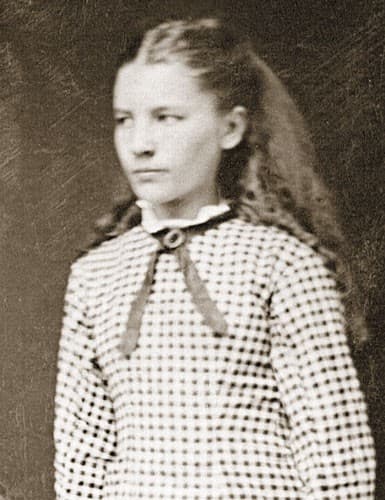
Laura Elizabeth Ingalls Wilder was an American writer. The Little House on the Prairie series of children's books, published between 1932 and 1943, were based on her childhood in a settler and pioneer family.
Similar books
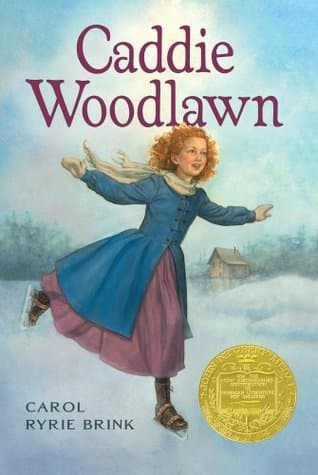
- Caddie Woodlawn
Carol Ryrie Brink
4.0 (48k) average on GoodreadsChildren'sExplores childhood adventures and frontier life in Wisconsin, focusing on a spirited girl.
- Harry Potter and the Sorcerer's Stone
J.K. Rowling
4.5 (7M) average on GoodreadsFantasyRescued from a miserable life under the stairs, an orphaned boy discovers he's a wizard destined for a magical school, where he uncovers a dangerous secret tied to the dark wizard who murdered his parents.
- The Hobbit, or There and Back Again
J.R.R. Tolkien
4.3 (2.9M) average on GoodreadsFantasyA comfort-loving hobbit named Bilbo Baggins is whisked away by a mischievous wizard and a band of dwarves on an unexpected journey to reclaim stolen treasure from a fearsome dragon, discovering courage and a magical ring along the way.
- Harry Potter and the Goblet of Fire
J.K. Rowling
4.6 (2.6M) average on GoodreadsFantasyA bewildered Harry Potter, underage and thrust into a deadly Triwizard Tournament, must brave dragons, mermaids, and a resurgent dark magic to survive a year that will forever alter the wizarding world.
- Harry Potter and the Order of the Phoenix
J.K. Rowling
4.5 (2.5M) average on GoodreadsFantasyIn a year of oppressive secrets and the threat of Voldemort, Harry Potter and Dumbledore's Army secretly train for war, shown through Jim Kay and Neil Packer's dark illustrations.
- The Lightning Thief
Rick Riordan
4.3 (2M) average on GoodreadsFantasyThrust into a world of mythological monsters and divine treachery, an ordinary boy discovers he's the son of Poseidon and must embark on a perilous quest across modern America to prevent an Olympian war.





Enjoyed the summary?
A summary gives you the shape of the book. The book itself has the detail, the examples and the voice.
Find The Little House Collection on AmazonAs an Amazon Associate, BookBrief earns from qualifying purchases. How we're funded