
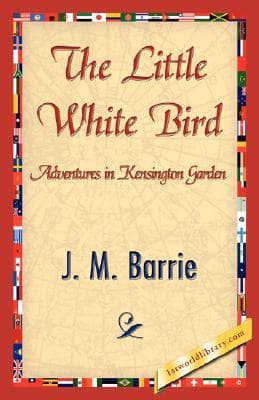
Synopsis
Covers the whole plot, including the ending.
- Difficulty
- Medium
- Pacing
- Slow
- Mood
- Whimsical, Reflective, Melancholic, Dreamlike
- Read it if
- You are fascinated by the origins of Peter Pan, enjoy whimsical and philosophical narratives, or appreciate a blend of fantasy and historical fiction with a melancholic undertone.
- Skip it if
- You prefer straightforward plots, dislike extensive digressions, or are uncomfortable with the narrator's somewhat unconventional relationship dynamics.
The Little White Bird Plot Summary
Covers the whole plot, including the ending.
The Narrator and David
The story starts with the narrator, a bachelor who enjoys observing life, describing his unusual connection with a young boy named David. David, though not his son, calls him 'father.' The narrator often gets invitations from David's mother, Mrs. Darling, but always declines, preferring to spend time with David on his own terms. He often takes David for walks in Kensington Gardens, sharing stories and his unique philosophy. The narrator enjoys David's innocence and imagination, using their time to share his ideas on childhood, nature, and the magical world he believes exists in the Gardens. He sees David as a window into the pure spirit of youth, a spirit he fears will eventually disappear.
Kensington Gardens and the Birds
The narrator describes the secret life of Kensington Gardens, a place he believes has magic and its own rules, especially after the gates close at night. He tells David that all babies start as birds, born in Kensington Gardens, and live there until they are ready to fly to their human parents. These 'bird-babies' learn to fly and play among the trees. The most important of these is the Little White Bird, a symbol of innocence and the short time of childhood. The narrator explains that once a baby chooses to leave the Gardens and become human, they slowly forget their bird beginnings, losing their ability to fly and their direct link to this magical world.
Peter Pan's Origins
The narrator tells the story of Peter Pan, a boy who, unlike other children, flew away from his human home and returned to Kensington Gardens when he was seven days old. Peter, still in his baby clothes, lives among the birds, learning their language and ways. He can play the pipes and has endless adventures. The narrator explains that Peter is special because he refused to grow up, staying a child forever. He interacts with fairies and other magical creatures, becoming a main figure in the secret life of the Gardens. Peter’s story is both charming and a little sad, as he is forever separate from human families, even those who might miss him.
The Fairy World and Maimie Mannering
The narrator explains more about Peter Pan's life in Kensington Gardens, describing his time with the fairies. Peter often plays games with them and helps them with their tasks. One day, Peter meets a human girl named Maimie Mannering, who accidentally got locked in the Gardens after closing time. Peter, curious about her, tries to teach her to fly. Maimie, at first scared, eventually connects with Peter. He shows her the hidden wonders of the Gardens and introduces her to some fairies. This meeting shows the mix and possible link between human and magical worlds, with Peter acting as a connection.
Maimie's Decision and Loss
As morning nears, Maimie Mannering must choose between staying with Peter and the fairies or returning to her human family. Despite the appeal of eternal childhood and magic, Maimie decides to go back to her mother. She realizes her human family is waiting for her and she belongs with them. Peter, who has grown fond of Maimie, is sad when she leaves. He offers her a thimble as a kiss, a sign of his affection. This event highlights Peter's constant loneliness and the basic difference between his world and the human world. Maimie's return shows the natural pull of growing up and leaving behind the purely imaginative realm.
The Narrator's Philosophy on Parenthood
Throughout the story, the narrator often includes his personal thoughts on parenthood, especially his unique 'fatherhood' to David. He sees himself as a protector of David's innocence, regretting the inevitable loss of childhood wonder. He thinks about how fathers are often distant figures, and that mothers have the true power of creation and connection. He admits his fear of getting too involved, but also his deep affection for David. His 'fatherhood' involves observing and telling stories, rather than typical family life, allowing him to keep a certain distance while still deeply influencing David's imaginative world.
David's Growing Up
As the story goes on, the narrator notices subtle changes in David. The boy, though still imaginative, starts to show signs of growing up, asking more practical questions and sometimes losing interest in the purely fantastical parts of the Gardens. The narrator observes this with fondness and sadness, knowing that David, like all children, will eventually leave behind the magic of childhood. He tries to share as much of his whimsical wisdom as possible, understanding that his time as David's 'father' in this way is limited. David's gradual maturation emphasizes the main theme of innocence fading.
The Narrator's Love for Mary
A notable part of the story is the narrator's unspoken love for Mary, David's mother. He explains that he was once deeply in love with her, but she married another man (David's actual father). This past love explains his unusual connection to David and his hesitation to visit Mary directly. His affection for David is partly an extension of his lasting feelings for Mary. He finds comfort and a form of indirect connection to her through his relationship with her son. This personal history adds a layer of sadness to his thoughts about life, love, and loss.
The Narrator's Identity
Throughout the book, the narrator's identity is hinted at but not clearly stated, though there are strong suggestions that he is J.M. Barrie himself. He shares personal stories, philosophies, and a way of telling stories that mirrors Barrie's own. The creation of Peter Pan within this story, presented as a tale told to David, further blurs the line between the fictional narrator and the author. This self-referential aspect allows Barrie to explore his own creative process and his interest in childhood and fantasy, making the narrator a thinly disguised version of himself who is creating the very mythology we are reading.
The Thimble and the Kiss
The 'thimble' and 'kiss' exchange, first seen with Peter Pan and Maimie Mannering, becomes an important symbol. Peter, not understanding human affection, offers a thimble as a 'kiss.' This misunderstanding of adult gestures, yet a genuine attempt at connection, appears in the narrator's own life and his interactions. It represents childhood innocence, where gestures and symbols have different meanings than in the adult world. It shows the gap between a child's understanding and adult customs, and the pure intention that often lies behind children's actions.
The End of Innocence
The main theme of the story ends with the narrator's sad thoughts on childhood innocence coming to an end. He knows that David, like all children, will eventually lose his ability to see fairies, to believe in the bird-babies, and to fully experience the magical world of Kensington Gardens. This loss is shown as a natural, but regrettable, part of growing up. The narrator tries to keep David's wonder alive for as long as possible through his stories, but ultimately acknowledges that becoming an adult means leaving behind the pure, carefree imagination of youth. He values these moments, knowing they are short-lived.
The Legacy of Peter Pan
The narrator finishes his stories by solidifying Peter Pan's place. He suggests that the story he has been telling David, the story of the boy who wouldn't grow up, will continue to be told and remembered. Peter Pan, living forever in Kensington Gardens, becomes a symbol of the lasting spirit of childhood and imagination. Even as David grows up and the narrator's direct influence decreases, the magic of Peter Pan and the Gardens lasts, showing how stories can keep wonder alive in the hearts of children, and in adults who remember their own childhoods.
The Little White Bird Characters
The Narrator
Protagonist
An unnamed, whimsical bachelor who acts as a surrogate father and storyteller to David.
The narrator is an older, unmarried man with a deeply philosophical and imaginative mind. He is a keen observer of human nature and the hidden magic he perceives in the world, particularly within Kensington Gardens. He delights in the innocence of children and fears the loss of imagination that comes with adulthood. He is a gentle, somewhat melancholic figure, deeply sentimental about childhood and harboring an unrequited love for David's mother, Mary. His primary drive is to preserve and share the magic of life, especially with David.
Relationships: David (Surrogate father/son, storyteller/listener); Mary (Mrs. Darling) (Unrequited love interest, David's mother); Peter Pan (Creator/chronicler of his story)
David
Supporting
A young, imaginative boy who calls the narrator 'father' and is his primary audience.
David is a young, innocent boy who serves as the narrator's companion and muse. He is receptive to the narrator's fantastical stories and shares a special bond with him, referring to him as 'father' despite the lack of a biological connection. David embodies the pure, unquestioning imagination of childhood, providing the narrator with an ideal audience for his whimsical tales about Kensington Gardens and its inhabitants. He gradually begins to show signs of growing up, prompting the narrator's reflections on the ephemeral nature of youth.
Relationships: The Narrator (Surrogate son/father, listener/storyteller); Mary (Mrs. Darling) (Biological mother)
Peter Pan
Supporting
A magical boy who ran away from home and never grew up, living among the birds and fairies in Kensington Gardens.
Peter Pan is a central figure in the narrator's tales, a boy who, at seven days old, flew back to Kensington Gardens and chose never to grow up. He lives a life of eternal childhood among the birds and fairies, playing the pipes and having endless adventures. Peter embodies the ultimate freedom and innocence of youth, but also a poignant loneliness, as he is forever separated from the human world and its affections. He is mischievous, charming, and oblivious to human customs, representing the wild, untamed spirit of imagination.
Relationships: Maimie Mannering (Brief companion and object of innocent affection); The Fairies (Friends and playmates); The Narrator (Subject of his stories)
Maimie Mannering
Supporting
A human girl who gets locked in Kensington Gardens overnight and befriends Peter Pan.
Maimie Mannering is a human child who accidentally finds herself locked in Kensington Gardens after dark. She is initially scared but quickly becomes fascinated by Peter Pan and the magical world he inhabits. Maimie represents the human child's encounter with pure fantasy and the temptation of eternal childhood. She forms a brief, innocent bond with Peter, learning about the fairies and the secrets of the Gardens. Ultimately, she chooses to return to her human family, symbolizing the inevitable pull of reality and the warmth of human connection.
Relationships: Peter Pan (Brief friend and companion); Her Mother (The reason for her return to the human world)
Mary (Mrs. Darling)
Supporting
David's mother, who was once the object of the narrator's unrequited love.
Mary, referred to as Mrs. Darling by the narrator, is David's biological mother. She is a kind and loving figure, who often invites the narrator to visit, though he always declines. She represents the domestic, maternal warmth that the bachelor narrator observes from a distance. Her past relationship with the narrator, where he harbored unrequited love for her, provides a poignant backstory that explains his deep, yet indirect, connection to her family and his particular affection for David.
Relationships: The Narrator (Past unrequited love interest, David's mother); David (Biological mother)
The Fairies
Mentioned
The tiny, magical inhabitants of Kensington Gardens who interact with Peter Pan.
The fairies are the magical, diminutive beings who populate Kensington Gardens. They are mischievous, playful, and an integral part of Peter Pan's world. They are often depicted as having specific roles, such as repairing flowers or guiding lost spirits. They represent the pure magic and wonder of childhood imagination, invisible to adults but very real to children like Peter and Maimie. Their existence underscores the secret, vibrant life that the narrator believes exists just beyond human perception.
Relationships: Peter Pan (Friends and playmates)
The Little White Bird
Mentioned
A symbolic bird in Kensington Gardens, representing innocence and the origin of babies.
The Little White Bird is a key symbolic figure within the narrator's mythology of Kensington Gardens. It is presented as one of the bird-babies, from which all human infants originate. It represents the purest form of innocence, the fleeting nature of childhood, and the magical connection between nature and human life. Its presence reinforces the idea that children come from a realm of wonder before entering the human world, and that a part of that 'bird-self' is lost as they grow up.
The Little White Bird Themes
The Fleeting Nature of Childhood and Innocence
This is the main theme of the novel. The narrator often expresses sadness about children losing their wonder and imagination as they get older. He watches David slowly move from believing in magic to a more practical view of the world. Peter Pan represents the wish to avoid this change, staying a child forever. The 'bird-baby' stories support this, suggesting that children lose their wings and memories of their magical origins when they become human. The narrator's stories are an effort to keep this innocence for David, even if only for a short time, as seen when he explains how Maimie Mannering chose to return to her human family, leaving Peter Pan sad.
“For the great thing about Peter is that he can't be made to grow up. He is the only boy in the world who has that secret.”
The Power of Imagination and Storytelling
The entire story builds on the power of imagination and storytelling. The narrator creates detailed myths for Kensington Gardens, filling it with bird-babies, fairies, and Peter Pan. These stories are not just for fun; they are a way for the narrator to understand the world, deal with his loneliness, and connect with David. Telling stories allows him to share his unique view of the world and keep magic alive for David. The stories themselves, especially Peter Pan's origin, show how imagination can shape reality and create lasting legacies, blurring the line between fiction and truth.
“All children, except one, grow up.”
Unconventional Parenthood and Love
The novel explores a unique kind of parental love through the narrator's connection with David. Though not his biological father, the narrator has a strong influence, guiding David's imagination and sharing wisdom. This 'fatherhood' is about storytelling, observation, and protective affection, rather than typical family life. The narrator's unreturned love for David's mother, Mary, further complicates this, suggesting his bond with David is also a continuation of his feelings for her. This theme highlights that love and family connection can appear in many ways, going beyond typical definitions.
“I was never a father to David in the common meaning of the word. I was his father as Peter Pan was a boy.”
The Secret Life of Nature and Urban Spaces
Kensington Gardens is more than just a place; it is a character with a secret, magical life. The narrator describes it as a place where human and magical worlds meet, especially after dark. The trees are conscious, the birds are baby souls, and fairies dance among the flowers. This theme emphasizes the hidden wonders in everyday city spaces, if one has the imagination to see them. It encourages a deeper appreciation for nature and the belief that there is always more to the world than what is obvious, especially through a child's eyes.
“The gates of Kensington Gardens are shut at dusk, and then the fairies come out of their hiding-places and hold their revels.”
Plot Devices & Literary Techniques
Frame Narrative
The story of Peter Pan is told within the larger narrative of the narrator's relationship with David.
The novel employs a frame narrative, where the primary story of the unnamed narrator's life and his relationship with David acts as the outer frame. Within this frame, the narrator recounts the detailed tales of Kensington Gardens, particularly the origin story of Peter Pan, to David. This structure allows Barrie to explore multiple layers of storytelling and reflection. The outer frame provides a personal, philosophical context for the fantastical inner stories, blurring the lines between reality and imagination, and allowing the narrator to comment on the very act of creation and the nature of childhood.
Mythology Creation
The narrator invents an elaborate mythology for Kensington Gardens, including the origin of babies as birds.
A significant plot device is the narrator's extensive creation of a unique mythology for Kensington Gardens. This includes the idea that all babies are initially birds who live in the Gardens before flying to their human parents, and the detailed lore surrounding fairies and other magical inhabitants. This device serves to immerse the reader in a world of wonder and to provide a fantastical explanation for the mysteries of life and childhood. It also reflects the narrator's own imaginative mind and his desire to impart a sense of magic to David, making the Gardens a truly enchanted space.
The Thimble and the Kiss
A symbolic exchange that highlights the innocence and misunderstanding between childhood and adulthood.
The 'thimble and the kiss' is a recurring symbolic motif, first introduced when Peter Pan, not understanding human affection, offers Maimie a thimble as a 'kiss.' This device highlights the fundamental differences in understanding between children and adults, and between the magical world and the human world. It represents the innocence of childhood, where gestures hold different meanings, and the purity of intent despite a lack of conventional understanding. It also serves as a poignant reminder of Peter's eternal childhood and his separation from adult emotional complexities.
Unreliable Narrator
The narrator's subjective and whimsical perspective shapes the entire story, blending fact and fantasy.
The narrator's perspective is highly subjective and infused with his own philosophical musings and fantastical beliefs, making him an unreliable narrator in a conventional sense. He presents his imaginings about Kensington Gardens and Peter Pan as undeniable truths, blurring the line between what is 'real' within the story and what is a product of his vivid imagination. This device allows Barrie to explore themes of belief, perception, and the power of storytelling itself. The reader is invited to accept the narrator's whimsical worldview, understanding that the 'truth' of the story lies in its emotional and thematic resonance rather than strict factual accuracy.
The Little White Bird Quotes
“All children, except one, grow up.”
“To be born is to be wrecked on an island.”
“When the first baby laughed for the first time, its laugh broke into a million pieces, and they all went skipping about. That was the beginning of fairies.”
“It is not in doing what you like, but in liking what you do, that is the secret of happiness.”
“The greatest change that came over the island was not a change in the island itself, but in the attitude of the grown-ups towards it.”
“You see, children know such a lot now, they soon don't believe in fairies, and every time a child says 'I don't believe in fairies,' there is a fairy somewhere that falls down dead.”
“Of course, he had a mother once, but she was a grown-up, and you know what grown-ups are like; they don't understand.”
“The world is so complicated, and grown-ups are so very, very clever, but they don't know the most important things.”
“I suppose I always knew that I was not a real boy, but a bird.”
“The loveliest of all the birds in the garden was the white bird, and he was the father of all the birds.”
“There are few things in life more interesting than a baby.”
“You must never ask a girl if she would like to be a boy. It is a terrible question.”
“I don't know whether you have ever seen a map of a child's mind. There are no lines, no boundaries, only colors and dreams.”
“The moment you doubt whether you can fly, you cease for ever to be able to do it.”
Quiz
10 questions on the plot and the characters. Each answer comes with a short explanation.
Question 1
What is the narrator's relationship with the little boy, David, at the beginning of the story?
- He is David's biological father.
- He is David's godfather.
- He is a bachelor who pretends to be David's father.
- He is David's uncle.
Show answer
C. He is a bachelor who pretends to be David's father. The narrator is a bachelor who has formed a unique, imaginary father-son relationship with David, despite not being his actual father.
Question 2
Where does the narrator often take David for their adventures and imaginative play?
- Kensington Palace Gardens
- Hyde Park
- Regent's Park
- Richmond Park
Show answer
A. Kensington Palace Gardens Many of the key imaginative adventures and stories, particularly those involving birds and fairies, take place in Kensington Palace Gardens.
Question 3
According to the narrator's whimsical theory, what happens to babies before they are born?
- They are spirits waiting in the clouds.
- They are little birds in Kensington Gardens.
- They are stars falling from the sky.
- They are mermaids in the Serpentine.
Show answer
B. They are little birds in Kensington Gardens. A central conceit of the book is the idea that babies are little birds in Kensington Gardens before they come to their mothers.
Question 4
What is the name of the 'Island' in Kensington Gardens where the fairies reside?
- Mermaid's Lagoon
- The Serpentine Isle
- The Bird's Nest Island
- The Thither
Show answer
D. The Thither The Thither is the specific magical island in Kensington Gardens where the fairies live and where the 'little white bird' lore is most prominent.
Question 5
What is the primary reason the narrator 'declines' invitations from David's mother, as mentioned in the opening?
- He is shy and prefers his own company.
- He wishes to preserve the fantasy world he shares with David, separate from adult reality.
- He has a feud with David's mother.
- He is often too busy with other engagements.
Show answer
B. He wishes to preserve the fantasy world he shares with David, separate from adult reality. The narrator explains that his refusal is to protect the special, imaginative bond he has with David, which he fears would be diminished by formal adult interaction.
Question 6
Who is Maimie Mannering, a significant figure in the Kensington Gardens stories?
- A real girl David knows.
- A doll belonging to David.
- A young girl who gets lost in the Gardens and spends time with the birds and fairies.
- David's older sister.
Show answer
C. A young girl who gets lost in the Gardens and spends time with the birds and fairies. Maimie Mannering is a character within the narrator's stories, a young girl who becomes an honorary bird/fairy in Kensington Gardens.
Question 7
What is the narrator's profession or primary activity, as implied throughout the book?
- A painter
- A writer/storyteller
- A gardener
- A musician
Show answer
B. A writer/storyteller The entire book is framed as the narrator's imaginative stories and observations, particularly those told to David, strongly implying he is a writer or storyteller.
Question 8
What is the ultimate fate of the boy who wouldn't grow up, implicitly Peter Pan, within the context of 'The Little White Bird'?
- He eventually leaves Kensington Gardens to live with humans.
- He is lost forever in the Thither, unable to return to his mother.
- He becomes the king of the fairies.
- He transforms into a bird himself.
Show answer
B. He is lost forever in the Thither, unable to return to his mother. Peter Pan, as introduced in this novel, is a baby who flies away to Kensington Gardens and is ultimately trapped there, unable to return to his mother, thus remaining a boy forever.
Question 9
How does the narrator describe the origin of fairies in Kensington Gardens?
- They are spirits of the flowers.
- They are the laughter of babies who have flown away to the Gardens.
- They are ancient magical beings who have always existed there.
- They are tiny humans who got lost and shrunk.
Show answer
B. They are the laughter of babies who have flown away to the Gardens. The narrator explains that when the first baby laughed for the first time, its laugh broke into a thousand pieces and became fairies.
Question 10
What is the overarching theme conveyed by the narrator's creation of the fantastical world for David?
- The importance of strict adherence to reality.
- The necessity of escaping from all adult responsibilities.
- The power of imagination and the poignant beauty of childhood innocence.
- A critique of Victorian society's rigid social structures.
Show answer
C. The power of imagination and the poignant beauty of childhood innocence. The narrator's elaborate stories and his reluctance to engage in adult society highlight the preciousness of childhood imagination and the fleeting nature of innocence.
The Little White Bird FAQ
What is the central premise of 'The Little White Bird' and who is the narrator?
The book is narrated by Peter Pan's creator, J.M. Barrie, through the persona of Captain W., an eccentric bachelor. Captain W. befriends a young boy named David and his mother, and the narrative explores his imaginative stories and philosophical musings, particularly those concerning Kensington Gardens and the fantastical origins of children.
Who is David, and what is his relationship with Captain W.?
David is a young boy whom Captain W. 'adopts' in his own unique, imaginative way, referring to him as 'my son.' Their relationship is built on storytelling and shared fantasy, with Captain W. often taking David on imaginary journeys through Kensington Gardens, using him as an audience for his intricate tales.
What role does Kensington Gardens play in the narrative?
Kensington Gardens is a magical, central setting in the book, serving as the backdrop for Captain W.'s elaborate fantasies. It is depicted as the place where birds become babies before they are found by their mothers, and where fairies, particularly Peter Pan, reside and have their adventures.
How does the book introduce the character of Peter Pan?
Peter Pan is introduced as a baby who flew away from his pram in Kensington Gardens and learned to fly with the birds. He is portrayed as a mischievous and eternal child, living among the fairies and having adventures, particularly with the birds and other creatures of the Gardens, setting the stage for his later stories.
What is the significance of the title, 'The Little White Bird'?
The title refers to the belief, central to Captain W.'s stories, that all babies are initially birds in Kensington Gardens before they are transformed into human children. This 'little white bird' represents the innocent, pre-human state of children, embodying the book's whimsical exploration of childhood origins and fantasy.
What is the 'secret' of the island in Kensington Gardens, as revealed by Captain W.?
Captain W. reveals that the island in Kensington Gardens is where all un-claimed babies, who were once birds, gather. It's a place of transition and magic, where the birds learn to fly and eventually become human children, waiting for their mothers to find them, and where Peter Pan resides.
Are there any subtle allusions to Barrie's own life or other works within Captain W.'s narrative?
Yes, Captain W.'s narrative contains numerous veiled references to Barrie's own experiences, particularly his relationships with the Llewelyn Davies boys, who inspired Peter Pan. The themes of eternal childhood, lost mothers, and the power of imagination echo throughout Barrie's broader literary contributions.
What is the implied fate of the babies who are never 'claimed' by mothers in Kensington Gardens?
The implied fate of unclaimed babies is that they remain as birds, or become part of the magical, unseen world of Kensington Gardens. Peter Pan himself is one such child who chose to remain a bird-boy, never fully transitioning into the human world, emphasizing the bittersweet aspect of eternal childhood.
How does Captain W. use storytelling to cope with his own loneliness or emotional distance?
Captain W. uses elaborate storytelling as a primary mechanism to connect with David and to explore his own complex emotions without direct confrontation. His fantastical narratives about Kensington Gardens and Peter Pan allow him to express profound ideas about childhood, loss, and love in a detached, imaginative way, shielding his vulnerabilities.
What psychological themes are explored through Peter Pan's character in this initial depiction?
Peter Pan, in 'The Little White Bird,' embodies the psychological theme of eternal childhood and the refusal to grow up. He represents the carefree, often mischievous, yet ultimately isolated nature of someone who rejects the responsibilities and changes of adulthood, highlighting both the allure and the tragedy of perpetual youth.
How does Captain W.'s relationship with David's mother reflect his own psychological state?
Captain W.'s refusal to meet David's mother, despite her invitations, reflects his deep-seated fear of adult relationships and commitment. He prefers the safety of his imaginative world and his idealized, fantastical connection with David, avoiding the complexities and potential disappointments of real-world adult interactions.
In what ways does Captain W. project his own desires and anxieties onto the children and fairies of Kensington Gardens?
Captain W. projects his longing for innocence, his fear of mortality, and his anxieties about loss onto the characters of Kensington Gardens. The eternal children and fairies represent a world free from adult burdens, allowing him to explore themes of escape, arrested development, and idealized familial bonds through his fantastical creations.
Is Captain W. a reliable narrator, or should his tales be viewed with skepticism?
Captain W. is an unreliable narrator in the sense that his stories are deeply intertwined with his subjective imagination and desires. While his tales hold emotional truth, they are not factual accounts. Readers should view his narratives as a blend of whimsical fantasy, psychological projection, and a unique way of processing reality.
How does 'The Little White Bird' compare to the later, more famous 'Peter and Wendy' in terms of tone and themes?
'The Little White Bird' is significantly darker and more melancholic than 'Peter and Wendy,' with a more introspective and philosophical tone. It delves deeper into the bittersweet nature of childhood, the pain of growing up, and the complexities of the adult imagination, whereas 'Peter and Wendy' is a more straightforward adventure story.
What is the ultimate message or moral Captain W. seems to convey about childhood?
Captain W. conveys a complex message about childhood: it is a fleeting, magical state of innocence that is both cherished and ultimately lost. He emphasizes the importance of imagination and play, but also hints at the inherent sadness of growing up and the longing for a return to that pure, untainted existence.
Does the book present a truly idyllic view of childhood, or are there darker undertones?
While it presents many idyllic elements, 'The Little White Bird' carries significant darker undertones. The themes of lost mothers, abandoned children, and the melancholic nature of Peter Pan's eternal youth suggest that childhood, even in fantasy, is not without its sorrows and complexities. It's an idyll tinged with wistfulness.
What is the significance of Captain W.'s repeated refusal to meet David's mother?
His repeated refusal signifies his deep-seated fear of adult relationships and the intrusion of reality into his carefully constructed imaginative world. It highlights his preference for controlling his interactions through fantasy and his discomfort with the demands and expectations of conventional social connections, preserving his unique bond with David.
How does the book explore the concept of a 'mother' through its fantastical elements?
The book explores the concept of a 'mother' through the lens of longing and idealized reunion. Mothers are portrayed as the essential figures who 'find' their baby-birds, bringing them into the human world. This emphasizes the profound, almost fated, bond between mother and child, often from the perspective of those who yearn for it.
About the author
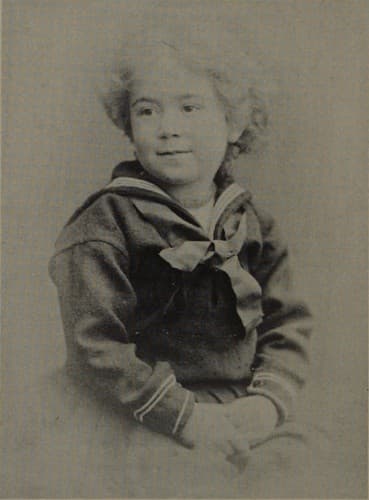
Sir James Matthew Barrie, 1st Baronet, was a Scottish novelist and playwright, best remembered as the creator of Peter Pan. He was born and educated in Scotland and then moved to London, where he wrote several successful novels and plays. There he met the Llewelyn Davies boys, who inspired him to write about a baby boy who has magical adventures in Kensington Gardens, then to write Peter Pan, or The Boy Who Wouldn't Grow Up, a 1904 West End "fairy play" about an ageless boy and an ordinary girl named Wendy who have adventures in the fantasy setting of Neverland.
Similar books
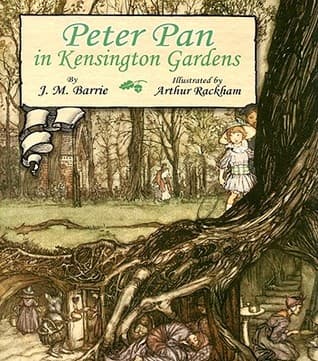
- Peter Pan in Kensington Gardens
J.M. Barrie
3.9 (8k) average on GoodreadsFantasyThis book is the direct prequel and origin story of Peter Pan, extracted and expanded from 'The Little White Bird'.
- Alice's Adventures in Wonderland
Lewis Carroll
4.0 (245k) average on GoodreadsFantasyBoth feature whimsical, fantastical worlds, child protagonists, and a blend of nonsense and deeper philosophical musings.
- Harry Potter and the Sorcerer's Stone
J.K. Rowling
4.5 (7M) average on GoodreadsFantasyRescued from a miserable life under the stairs, an orphaned boy discovers he's a wizard destined for a magical school, where he uncovers a dangerous secret tied to the dark wizard who murdered his parents.
- The Hunger Games
Suzanne Collins
4.3 (6.4M) average on GoodreadsFantasyIn a future where children fight to the death on live television, Katniss Everdeen volunteers for the arena, turning a death sentence into a fight for survival and a spark of rebellion.
- 1984
George Orwell
4.2 (3.1M) average on GoodreadsPoliticsIn a future where surveillance and thought control are absolute, a man's search for truth clashes with the Party, showing that hope can be a form of rebellion.
- Divergent
Veronica Roth
4.2 (2.9M) average on GoodreadsFantasyIn a society divided by virtues, a sixteen-year-old's difference from the norm starts a rebellion that threatens her world.




Enjoyed the summary?
A summary gives you the shape of the book. The book itself has the detail, the examples and the voice.
Find The Little White Bird on AmazonAs an Amazon Associate, BookBrief earns from qualifying purchases. How we're funded