

Core Idea
- Difficulty
- Medium
- Read it if
- You want a comprehensive, human-centered account of D-Day, blending strategic overview with intimate personal experiences from all perspectives.
- Skip it if
- You are looking for a purely academic analysis of World War II strategy or prefer a book with minimal focus on individual narratives.
Key Takeaways from The Longest Day
The Fog of War is Real
Uncertainty and miscommunication were constant companions on D-Day.
Ryan shows that even with careful planning, battle is chaotic. Communication failures, bad intelligence, and the operation's size meant commanders on both sides often had incomplete information. This 'fog of war' was a real force shaping decisions, leading to both errors and lucky breaks. The book highlights that leadership in such an environment requires adaptability, resilience, and the ability to make high-stakes decisions under pressure.
“No plan survives first contact with the enemy.”
In the book: The misinterpretations of German command regarding the timing and location of the invasion, particularly their belief that the main assault would occur at Pas-de-Calais, as well as the initial confusion among Allied paratroopers dropped far from their objectives.
Try this: In any complex project, anticipate and plan for communication failures and unexpected obstacles. Build in redundancies and empower team members to make informed decisions locally when central command is unclear. Prioritize clear, concise communication, even when under duress.
Related ideas: fog-of-war, military-strategy, decision-making
Individual Valor Amidst Mass Chaos
The human element, from private to general, dictated the battle's ebb and flow.
Ryan masterfully weaves together many personal stories, showing that while D-Day was a huge strategic effort, its success depended on the bravery, cleverness, and will of individual soldiers. From paratroopers behind enemy lines to infantry assaulting beaches, the book highlights acts of heroism, fear, and sacrifice. These small stories humanize the invasion's scale, reminding us that 'history' is often the sum of countless personal struggles and wins. It emphasizes war's deep psychological effect on those who fought.
“Every man had his own D-Day, his own private terror, his own moment of courage.”
In the book: Stories of individual soldiers like Private John Steele, whose parachute got caught on a church steeple, or the unwavering resolve of Rangers scaling Pointe du Hoc under heavy fire, despite immense casualties.
Try this: Recognize that even in large-scale endeavors, the performance and well-being of individuals are paramount. Foster a culture where personal initiative and resilience are valued. Understand that collective success is built upon the contributions and sacrifices of each team member.
Related ideas: heroism, military-history, human-element
Logistics: The Unsung Hero
The meticulous planning and execution of supplies were as crucial as combat.
While the combat stories are exciting, Ryan quietly emphasizes the huge logistical effort behind D-Day. The amount of men, equipment, food, and ammunition that had to cross the English Channel and land on the beaches was immense. Building artificial harbors (Mulberries) and ensuring a constant flow of supplies were essential for sustaining the invasion and preventing a stalemate. Without this unprecedented logistical support, the initial beachhead could not have expanded, and the operation would have failed. It demonstrates the power of careful planning and coordination.
“Victory goes to the side with the best logistics.”
In the book: The detailed descriptions of the Mulberry harbors being towed across the Channel, the constant stream of landing craft ferrying supplies, and the meticulous organization of ammunition and medical provisions.
Try this: In any project, never underestimate the importance of logistical planning. Ensure resources, supplies, and support systems are robust and adaptable. A brilliant strategy is useless without the means to execute it effectively and sustain it over time.
Related ideas: logistics, supply-chain, operational-planning
The Power of Deception
Allied strategic deception played a pivotal role in the invasion's success.
Ryan details Operation Fortitude, the Allied deception plan that convinced Germans the main invasion would be at Pas-de-Calais, not Normandy. This involved fake tanks, airfields, radio traffic, and a phantom army led by General Patton. This strategic misdirection was very effective, tying up many German forces away from the real landing zones and delaying their response. It shows how psychological warfare and intelligence can be as decisive as direct military action, shaping the battlefield before fighting begins.
“The greatest weapon in this war is not the tank or the bomber, but the lie.”
In the book: The detailed accounts of Operation Fortitude, including the creation of 'Patton's Army' (FUSAG) in southeast England and the German high command's steadfast belief in the Pas-de-Calais threat.
Try this: In competitive environments, strategic misdirection and controlling the narrative can be powerful tools. Understand competitor perceptions and, where ethical, use information asymmetry to your advantage. A well-executed 'bluff' can save significant resources.
Related ideas: deception, military-intelligence, psychological-warfare
The Brutality of the Beaches
Omaha Beach stands as a stark reminder of war's horrific cost.
Ryan does not avoid the terrible realities of D-Day, especially the carnage on Omaha Beach. He vividly describes the strong German defenses, the devastating machine-gun fire, and the high casualties among American troops. This part of the book is a powerful, raw reminder of war's human cost and the immense courage needed to face such odds. It balances any romantic ideas of battle, grounding the history in the grim reality faced by those on the front lines.
“For some, the longest day was over before it had truly begun, ending in the surf and the sand.”
In the book: The detailed accounts of the high casualty rates on Omaha Beach, the struggles of the landing craft to navigate obstacles, and the sheer volume of fire from German positions like 'Widerstandsnest 62'.
Try this: When undertaking high-risk endeavors, thoroughly assess and prepare for worst-case scenarios. Understand the potential for catastrophic failure and ensure that contingency plans and support systems are in place to mitigate losses and sustain morale.
Related ideas: war-realities, military-casualties, historical-trauma
Leadership Under Fire
Effective leadership was often decentralized and highly adaptive.
Ryan provides many examples of leadership, from Eisenhower's and Rommel's strategic decisions to the tactical actions of junior officers and NCOs on the beaches. The book shows that effective leadership on D-Day often meant taking action when communication failed, adapting to fast-changing situations, and inspiring troops despite great fear and casualties. It was not always about grand statements, but about small, brave acts that together turned the tide. This decentralized leadership was crucial in the chaotic environment.
“The greatest leaders are those who can inspire action in the face of despair.”
In the book: General Bradley's decision to consider withdrawing from Omaha before the breakthrough, and the numerous instances of junior officers rallying their men to advance off the beaches when higher command was stalled.
Try this: Empower leaders at all levels to make decisions and take initiative, especially in dynamic or crisis situations. Foster a culture of trust and adaptability, where rigid adherence to a plan is secondary to achieving the overarching objective. Lead by example and inspire resilience.
Related ideas: leadership, crisis-management, adaptive-leadership
The Element of Surprise
Despite leaks, the timing and location of D-Day were a near-total surprise.
One of D-Day's most remarkable aspects, as Ryan explains, is the secrecy maintained for such a large operation. Despite thousands of personnel and many chances for leaks, the Germans were truly surprised by the Normandy landings' location and size. This surprise was amplified by their misjudgment of the weather and their firm belief in the Pas-de-Calais deception. The success of this secrecy highlights the importance of counter-intelligence and strict security, even before modern digital communication.
“The enemy's greatest weakness is often his own certainty.”
In the book: The German high command's confidence that the weather was too poor for an invasion, leading many senior officers to be away from their posts, and their continued belief in the Pas-de-Calais feint even after the Normandy landings began.
Try this: In strategic planning, prioritize and protect critical information. Understand that a key advantage can be lost if details are compromised. Invest in robust security protocols and cultivate a culture of discretion within your organization.
Related ideas: secrecy, surprise-attack, information-security
The Cost of Indecision
German command paralysis played a significant role in their defeat.
Ryan effectively contrasts Allied initiative with the German high command's hesitation and internal conflicts. Hitler's strict control, conflicting advice from his generals, and the delay in releasing key armored reserves due to the belief in the Pas-de-Calais deception proved disastrous. This paralysis at the strategic level prevented a timely and coordinated German response, allowing the Allies to secure their beachheads. It is a strong lesson in the dangers of centralized, inflexible leadership and the need for quick, decisive action in a crisis.
“Hesitation in battle is a death sentence.”
In the book: The lengthy delays in deploying German panzer divisions, particularly the 12th SS Panzer Division, due to Hitler's personal approval being required and the persistent belief in the Pas-de-Calais threat.
Try this: In high-stakes situations, foster a culture of decisive action. Avoid analysis paralysis and empower decision-makers to act swiftly when opportunities arise or threats emerge. Understand that delaying a decision can be as detrimental as making the wrong one.
Related ideas: decision-paralysis, military-tactics, leadership-failure
The Global Impact, Personal Sacrifice
D-Day was a turning point for the world, built on individual struggles.
Ryan's story constantly reminds the reader of D-Day's huge stakes: liberating Europe from Nazi rule. He skillfully balances the grand strategy with the personal experiences of soldiers, civilians, and leaders. The book emphasizes that this moment in world history was built on the collective courage and sacrifice of countless individuals from different backgrounds. It is a powerful illustration that global outcomes result from personal actions, and freedom often comes at a great cost.
“The invasion was not just a battle, but a testament to what free nations could achieve.”
In the book: The stories of French civilians caught in the crossfire, the multinational composition of the Allied forces, and the solemn reflections of veterans years later.
Try this: Connect individual contributions to the larger organizational mission. Remind teams of the 'why' behind their work and the broader impact of their efforts. Foster a sense of shared purpose and acknowledge the personal sacrifices made for collective success.
Related ideas: world-history, sacrifice, collective-action
The Longest Day Quotes
“The wind was rising, and the sea was getting rougher. This was no day for an invasion.”
“They were young, most of them, and they were afraid. But they were ready.”
“The whole world seemed to explode. Then came the smell of burning cordite, and the screams.”
“Every man for himself now. That was the order, unspoken but understood.”
“The sea was red with blood and wreckage. But they kept coming.”
“It was a miracle anyone got off that beach alive.”
“The sound of church bells ringing in Normandy, a sound they hadn't heard for four years.”
“They were dying for the cause of freedom, and they knew it.”
“The fog of war was real, and it was thick with confusion and miscalculation.”
“Every yard gained was paid for in blood.”
“The Germans were surprised, but not broken. They fought with a desperate fury.”
“This was more than just a battle; it was the turning point of a war, and perhaps of history.”
“They had come to liberate, and they would not be denied.”
“The longest day, indeed, for those who lived it, and for those who died.”
Quiz
10 questions on the main ideas. Each answer comes with a short explanation.
Question 1
Which beach was the target for the American 1st Infantry Division and 29th Infantry Division, known for its particularly brutal German defenses?
- Gold Beach
- Juno Beach
- Omaha Beach
- Sword Beach
Show answer
C. Omaha Beach Omaha Beach was the scene of some of the fiercest fighting and highest casualties for the American forces on D-Day, as vividly detailed in 'The Longest Day.'
Question 2
What was the primary role of the German 352nd Infantry Division, which unexpectedly reinforced the defenses at Omaha Beach, significantly increasing American casualties?
- Naval bombardment
- Air defense
- Coastal defense
- Tank assault
Show answer
C. Coastal defense The presence of the experienced German 352nd Infantry Division, which had moved into position for coastal defense exercises, was a critical and unexpected factor contributing to the high American losses at Omaha Beach.
Question 3
According to 'The Longest Day,' what was Field Marshal Rommel's key strategic belief regarding the Allied invasion?
- The invasion would occur in the Pas-de-Calais region.
- The invasion must be defeated on the beaches, or it would be lost.
- The invasion would be a feint, with the main attack elsewhere.
- The invasion would be repelled by air superiority.
Show answer
B. The invasion must be defeated on the beaches, or it would be lost. Rommel famously believed that the war would be won or lost in the first 24 hours on the beaches, emphasizing the critical importance of immediate coastal defense.
Question 4
What specific weather condition was crucial in the Allied decision to launch D-Day on June 6th, despite initial reservations?
- A full moon for paratrooper drops.
- A brief clearing in a storm front.
- Unusually calm seas for landing craft.
- Dense fog to obscure the invasion fleet.
Show answer
B. A brief clearing in a storm front. General Eisenhower and his meteorologists made the difficult decision to proceed on June 6th, seizing a narrow window of improved weather after a period of severe storms, as meticulously recounted in the book.
Question 5
Which German officer famously left his post on the eve of D-Day to celebrate his wife's birthday, believing the weather made an invasion impossible?
- Gerd von Rundstedt
- Friedrich Dollmann
- Erwin Rommel
- Hans Speidel
Show answer
C. Erwin Rommel Field Marshal Rommel, confident that the poor weather would prevent an invasion, had indeed traveled to Germany to celebrate his wife's birthday, a detail that highlights the German high command's miscalculations.
Question 6
The book details the significant role of airborne divisions. Which two Allied airborne divisions were primarily responsible for securing the flanks and disrupting German communications on the American sector?
- British 6th Airborne and Canadian 1st Airborne
- US 82nd Airborne and US 101st Airborne
- US 82nd Airborne and British 1st Airborne
- Canadian 1st Airborne and US 101st Airborne
Show answer
B. US 82nd Airborne and US 101st Airborne The US 82nd and 101st Airborne Divisions were dropped behind Utah Beach, tasked with securing causeways, bridges, and disrupting German movements, facing significant scattering and fierce resistance.
Question 7
What significant German defensive structure, heavily featured in the book, was a series of concrete fortifications, obstacles, and minefields stretching along the coast of Western Europe?
- The Siegfried Line
- The Maginot Line
- The Atlantic Wall
- The Gothic Line
Show answer
C. The Atlantic Wall The Atlantic Wall was the extensive system of coastal defenses built by the Germans, which the Allies had to breach on D-Day, and its formidable nature is a central theme in 'The Longest Day.'
Question 8
The book highlights the confusion and delays in the German response to the invasion. What was a primary reason for the initial inability of German armored reserves, particularly the Panzer divisions, to counterattack effectively?
- Lack of fuel for their tanks.
- Hitler's personal approval was required for their movement.
- Severe damage to roads and bridges by Allied bombing.
- Misinformation suggesting the main invasion was elsewhere.
Show answer
B. Hitler's personal approval was required for their movement. A critical factor was Hitler's insistence on personally authorizing the movement of key Panzer divisions, leading to crucial delays in their deployment against the Allied landings.
Question 9
Beyond the strategic planning, 'The Longest Day' emphasizes the individual experiences of soldiers from both sides. What common theme emerges from these personal accounts regarding the initial hours of the invasion?
- Overwhelming confidence in victory.
- Profound chaos, terror, and disorientation.
- Strict adherence to planned maneuvers.
- A sense of calm and order amidst the battle.
Show answer
B. Profound chaos, terror, and disorientation. Ryan's narrative is celebrated for capturing the raw, often terrifying and chaotic individual experiences of soldiers, highlighting the human element amidst the grand strategy.
Question 10
Which highly anticipated Allied technological innovation, designed to clear minefields and provide close support, largely failed or was delayed at Omaha Beach, exacerbating the challenges there?
- Gliders for troop transport.
- DD Tanks (Duplex Drive amphibious tanks).
- Radar jamming technology.
- Naval rocket artillery.
Show answer
B. DD Tanks (Duplex Drive amphibious tanks). Many of the DD tanks, designed to swim ashore and provide crucial early fire support, sank in the rough seas off Omaha Beach, leaving the infantry exposed and without vital armored backing.
The Longest Day FAQ
What is 'The Longest Day' about?
'The Longest Day' is Cornelius Ryan's classic historical account of the D-Day invasion of Normandy on June 6, 1944. It meticulously recreates the hours before and after the massive invasion, detailing the courage, heroism, and tragedy of the pivotal battle that turned the tide of World War II.
Does 'The Longest Day' cover the entire scope of World War II?
No, 'The Longest Day' specifically focuses on the D-Day invasion of Normandy and its immediate aftermath. While D-Day was a crucial turning point in World War II, the book does not attempt to cover the entire war, but rather provides an in-depth look at this single, epic battle.
What makes 'The Longest Day' a 'masterpiece of living history'?
The book is considered a masterpiece of living history due to Cornelius Ryan's painstaking research, including interviews with hundreds of participants from all sides. This approach allows the narrative to vividly recreate the events through the eyes of those who lived it, making the history feel immediate and personal.
How is this 50th-anniversary edition different from previous versions?
The 50th-anniversary edition of 'The Longest Day' features the original photographs used in the first 1959 edition, which have been reassembled and painstakingly reproduced. Additionally, the text has been freshly reset, offering a newly presented and enhanced reading experience.
What is the significance of D-Day as depicted in the book?
D-Day, as depicted in 'The Longest Day,' signifies the crucial moment when the Allied forces launched the largest amphibious invasion in history. It marked the beginning of the liberation of Western Europe from Nazi Germany's control and was a decisive step in turning the tide against world fascism.
How does 'The Longest Day' differ from other historical accounts of D-Day?
'The Longest Day' is distinguished by its immersive, multi-perspective narrative, drawing heavily from first-hand accounts of soldiers, civilians, and commanders from all sides. Unlike some academic histories, Ryan's work prioritizes the human experience and immediate unfolding of events, creating a compelling, moment-by-moment recreation.
Is 'The Longest Day' suitable for readers new to World War II history?
Yes, 'The Longest Day' is an excellent entry point for readers new to World War II history, particularly those interested in D-Day. Its engaging narrative style and focus on individual experiences make complex historical events accessible and compelling, providing a vivid understanding of the battle.
Does 'The Longest Day' include maps or other visual aids?
The 50th-anniversary edition specifically mentions the reassembly and reproduction of the original photographs from the 1959 edition. While not explicitly stated for maps, historical accounts of this nature often include them to aid reader understanding of troop movements and locations.
What kind of research did Cornelius Ryan undertake for this book?
Cornelius Ryan conducted extensive research for 'The Longest Day,' including interviewing hundreds of survivors and participants from both Allied and Axis forces, as well as civilians. He also meticulously reviewed official documents, reports, and other historical records to build his detailed narrative.
About the author
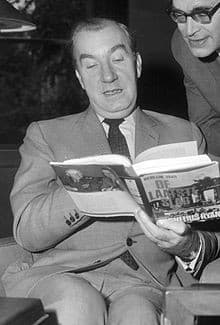
Cornelius Ryan was a renowned Irish-American journalist and author celebrated for his meticulously researched and gripping accounts of World War II. His most famous works, 'The Longest Day' and 'A Bridge Too Far,' are considered definitive narratives of pivotal Allied operations. Ryan's dedication to historical accuracy and vivid storytelling made him a master of military history non-fiction.
Similar books
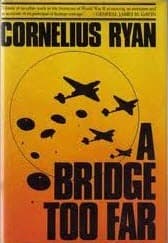
- A Bridge Too Far
Cornelius Ryan
4.3 (18k) average on GoodreadsHistoryAnother detailed, multi-perspective account of a major WWII battle by the same author.
- The Diary of a Young Girl
Anne Frank
4.2 (2.7M) average on GoodreadsBiographyDuring the Nazi occupation, a teenage girl's diary, written from a secret annex, shares observations on humanity, hope, and the wait for freedom.
- Night
Elie Wiesel
4.3 (970k) average on GoodreadsBiographyIn the darkness of Auschwitz and Buchenwald, a teenage Elie Wiesel faces the extermination of his family, the loss of his faith, and the lasting scars of humanity's deepest cruelty.
- Steve Jobs
Walter Isaacson
4.1 (957k) average on GoodreadsBusinessSteve Jobs was a visionary who fused creativity and technology to revolutionize six industries and shape our digital world.
- Unbroken: A World War II Story of Survival, Resilience and Redemption
Laura Hillenbrand
4.4 (767k) average on GoodreadsBiographyLouis Zamperini's incredible World War II odyssey transforms him from a rebellious youth and Olympic runner into a survivor of a plane crash, shark-infested waters, and brutal Japanese POW camps, only to find redemption through forgiveness.
- The Immortal Life of Henrietta Lacks
Rebecca Skloot
4.1 (587k) average on GoodreadsBiographyA poor Southern tobacco farmer's unwitting contribution of 'immortal' cells starts a journey through scientific breakthroughs, medical ethics, and her family's decades-long fight for recognition and understanding.





Enjoyed the summary?
A summary gives you the shape of the book. The book itself has the detail, the examples and the voice.
Find The Longest Day on AmazonAs an Amazon Associate, BookBrief earns from qualifying purchases. How we're funded