
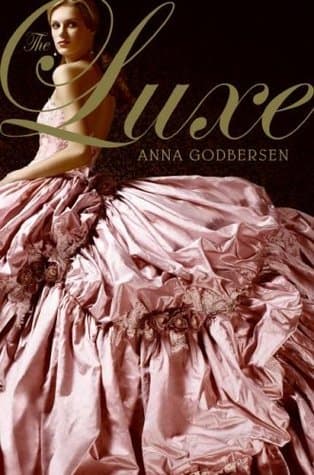
Synopsis
Covers the whole plot, including the ending.
- Difficulty
- Easy
- Pacing
- Moderate
- Mood
- Glamorous, Romantic, Mysterious, Dramatic, Suspenseful
- Read it if
- You enjoy historical dramas with a focus on high society, romance, and a touch of mystery, featuring strong female characters navigating complex social rules.
- Skip it if
- You prefer fast-paced thrillers or deep philosophical narratives, or are put off by themes of social climbing and period-specific gender roles.
The Luxe Plot Summary
Covers the whole plot, including the ending.
A Debutante's Dilemma
The year is 1899. Elizabeth Holland, Manhattan's most eligible debutante, prepares for her engagement party. However, her family's rich life hides a coming money problem. Her father, Mr. Holland, tells Elizabeth that only her marriage to Henry Schoonmaker, a wealthy but unreliable bachelor, can save them. This news crushes Elizabeth, who secretly loves Will Keller, a stable boy for her family. Despite her feelings for Will and her dislike of Henry, Elizabeth feels the pressure of family duty, knowing her younger sister Diana and their mother depend on her sacrifice. She reluctantly agrees to the engagement, which changes her life.
A Secret Rendezvous and a Broken Heart
Before her engagement to Henry Schoonmaker is announced, Elizabeth secretly meets Will Keller in the stables. They spend a passionate, secret night, confirming their love and sadness over their impossible situation. Will, aware of their different social classes and Elizabeth's family duties, is heartbroken but understands her sacrifice. He gives her a small, hand-carved bird to show his lasting affection. Elizabeth, torn between her love for Will and her duty, feels the weight of her decision, knowing this is their last moment together before her life leads to a marriage without love.
The Engagement Party and a Public Scandal
The Holland family hosts a grand engagement party for Elizabeth and Henry Schoonmaker. During the party, Henry's former mistress, a well-known courtesan named Miss Lila, crashes the event, causing a public scandal. This embarrasses Henry and the Hollands, especially Elizabeth, who already struggles with her forced engagement. Penelope Hayes, Elizabeth's jealous rival, enjoys the drama, showing the fierce nature of New York society. Despite the commotion, the engagement stays on, but the incident casts a shadow over the union, highlighting Henry's questionable character and the fragile nature of social standing.
Diana's Reckless Pursuit
While Elizabeth deals with her upcoming marriage, her younger sister Diana, unaware of the family's money problems and Elizabeth's love for Will, develops a crush on Henry Schoonmaker. Diana, impulsive and headstrong, sees Henry as charming and exciting, unlike the dull suitors she usually meets. She flirts with him openly, which upsets Elizabeth and concerns their mother. Diana's pursuit of Henry adds more tension to the Holland household, creating a conflict between the sisters and making Elizabeth's difficult situation even harder.
Lina's Schemes and the Hidden Locket
Lina Broud, a maid in the Holland home, deeply resents Elizabeth, because of a past humiliation involving Will Keller, whom Lina secretly loves. While cleaning Elizabeth's room, Lina finds a locket with a photo of Will. This confirms her suspicions about Elizabeth's secret feelings for the stable boy. Driven by jealousy and a desire for revenge, Lina starts to plan how to expose Elizabeth's secret and possibly ruin her engagement. She hopes to get Will's attention and also hurt the privileged Hollands, whom she dislikes.
The Fatal Carriage Accident
On the night before her wedding, Elizabeth travels in a carriage when it mysteriously crashes near the East River. The accident is violent, and the carriage falls into the dark, rushing water. Despite searches, Elizabeth's body is not found, and she is presumed dead. The news shocks New York society, leaving her family, friends, and even her fiancé, Henry, in mourning. The accident raises questions, but the official report calls it a tragic mishap, leaving the true events unknown among the city's elite.
A Funeral and Lingering Doubts
A grand, sad funeral is held for Elizabeth Holland, attended by New York's elite. However, the ceremony is marked by the fact that Elizabeth's body was never found, leading to an empty casket. This detail causes whispers and doubts among the mourners, especially Diana, who struggles to accept her sister's fate. Will Keller, heartbroken, attends the funeral quietly, his grief a stark contrast to the show of sorrow from some socialites. The lack of a body leaves a lingering unease and a subtle suspicion about what really happened to Elizabeth.
Diana's Investigation and Suspicions
Devastated by Elizabeth's death and unable to accept the official story, Diana begins her own investigation. She interviews witnesses and looks closely at the accident details, finding inconsistencies. Diana's suspicions grow because of the behavior of some people, including Penelope Hayes, who seems unusually happy about Elizabeth's death, and Henry Schoonmaker, whose grief appears somewhat fake. Her questions lead her to doubt the accident and the true intentions of those around her. She is determined to find the truth behind her sister's tragic end.
Lina's Manipulation of Will
After Elizabeth's death, Lina Broud, seeing a chance, tries to comfort the grieving Will Keller. She pretends to be sympathetic, while subtly trying to turn him against the Holland family, especially Elizabeth, by highlighting the social gap between them. Lina hopes to use Will's sadness to win his affection, believing that with Elizabeth gone, she finally has a chance with him. Her manipulative efforts show her deep jealousy and her desire to raise her own status by bringing down those she sees as her betters.
A Glimmer of Hope and a New Identity
In a shocking turn, it is revealed that Elizabeth Holland is not dead. She survived the carriage accident, having planned her own 'death' with Will Keller's help. Disguised and with a new identity, Elizabeth lives a quiet life, free from her old world's rules and the forced marriage to Henry. Her 'death' was a desperate act of rebellion, a way to escape society's gilded cage and live her own life, away from her family's expectations and money problems. This revelation sets up future difficulties as she navigates her new existence.
Diana's Discovery and Confrontation
Diana's investigation eventually leads her to the shocking discovery that Elizabeth is alive. She finds her sister, leading to an emotional and tense reunion. Diana is at first angry and hurt by Elizabeth's deception, feeling betrayed by her sister's decision to fake her death and leave her family to grieve. However, as Elizabeth explains the desperate reasons for her drastic action — the forced marriage, the family's ruin, and her love for Will — Diana begins to understand. Their reunion is full of complex emotions, but it ultimately strengthens their bond as they deal with this extraordinary secret.
Henry's Proposal and Diana's Dilemma
After Elizabeth's supposed death, Henry Schoonmaker, still needing to marry into the Holland family for his financial interests tied to the Holland estate, turns his attention to Diana. He proposes marriage to her, seeing her as a suitable replacement and a way to keep the original agreement. Diana is in a difficult spot: she is still attracted to Henry, but she now knows Elizabeth's true fate and the family's financial desperation that drove her sister's actions. This proposal forces Diana to weigh her own desires against her family's secrets and her sister's great sacrifice.
Lina's Scheme Unravels
Lina Broud, still driven by jealousy and resentment, tries to expose Elizabeth's secret and reveal that she is alive. She tries to find evidence and spread rumors, hoping to ruin the Holland family and get Will's affection. However, her efforts largely fail. Will, though heartbroken by Elizabeth's 'death,' remains loyal to her memory and sees through Lina's manipulative tactics. Diana, now knowing the truth, also works to protect Elizabeth's secret. Lina's plans backfire, isolating her further and showing her vindictive nature as her attempts to gain power and revenge fail.
The Weight of Secrecy
Elizabeth, living her new, anonymous life, struggles with the emotional cost of her deception. She misses her family and her past comforts, but she also values her newfound freedom. Diana, meanwhile, carries the heavy burden of knowing her sister is alive while everyone else mourns her. She must keep up the appearance of grief and navigate society's complexities, all while protecting Elizabeth's secret. The sisters' bond deepens through this shared experience, but the constant threat of exposure and the emotional strain of their separate lives weigh on both of them, hinting at future challenges.
Principal Figures
Elizabeth Holland
Protagonist
Manhattan's most beautiful and sought-after debutante, burdened by family duty.
Elizabeth is the elder Holland sister, renowned for her beauty, grace, and impeccable social standing. Beneath her polished exterior, she is deeply romantic and principled, secretly in love with Will Keller. She is fiercely loyal to her family, willing to sacrifice her own happiness for their financial security. Her sense of duty is strong, but so is her desire for genuine love and autonomy. She possesses a quiet strength that allows her to make drastic decisions for her future.
Relationships: Diana Holland (Devoted younger sister, initially unaware of Elizabeth's struggles, later her confidante.); Will Keller (Secret lover and co-conspirator in her escape, representing true love and freedom.); Henry Schoonmaker (Her wealthy, arranged fiancé, whom she does not love but accepts for family duty.); Lina Broud (Her maid, who harbors jealousy and resentment towards Elizabeth.)
Diana Holland
Protagonist/Supporting
The impulsive and headstrong younger Holland sister, initially naive but fiercely loyal.
Diana is Elizabeth's younger sister, known for her vibrant personality, quick wit, and rebellious streak. She is initially more naive about her family's financial struggles and Elizabeth's true feelings. Diana is impulsive and often acts on her emotions, which sometimes leads to trouble. She has a crush on Henry Schoonmaker, complicating Elizabeth's engagement. Despite her initial naivete, Diana possesses a deep love for her sister and a growing sense of independence and determination.
Relationships: Elizabeth Holland (Beloved elder sister, whose 'death' and subsequent revelation profoundly impact Diana.); Henry Schoonmaker (Object of her initial crush, later her potential fiancé, creating a complex dynamic.); Penelope Hayes (Social rival and occasional antagonist.)
Will Keller
Supporting
The Holland family's stable boy, Elizabeth's secret love.
Will Keller is a kind, honorable, and hardworking young man who works in the Holland stables. He is deeply in love with Elizabeth Holland, despite the insurmountable social chasm between them. He represents true love and a life free from the constraints of society's expectations. Will is fiercely protective of Elizabeth and plays a crucial role in her escape. He is loyal and selfless, willing to sacrifice his own happiness for Elizabeth's freedom, even if it means believing her to be dead.
Relationships: Elizabeth Holland (His secret, true love and partner in deception.); Lina Broud (The object of Lina's unrequited affection, which causes him trouble.)
Henry Schoonmaker
Supporting
Wealthy, debonair bachelor and Elizabeth's arranged fiancé.
Henry Schoonmaker is one of Manhattan's most eligible bachelors, known for his vast wealth and charming, albeit somewhat reckless, personality. He is a man of his time, accustomed to privilege and a certain degree of freedom in his personal life, which includes past indiscretions. He agrees to marry Elizabeth for financial and social convenience, as the union benefits his own family's standing. While he is initially drawn to Elizabeth's beauty, his feelings are more pragmatic than romantic. He is somewhat superficial but not entirely without honor.
Relationships: Elizabeth Holland (His arranged fiancée, whose 'death' complicates his plans.); Diana Holland (Elizabeth's sister, whom he later proposes to.); Miss Lila (A former mistress who causes a scandal at his engagement party.)
Lina Broud
Antagonist
A resentful maid in the Holland household, driven by jealousy and a desire for revenge.
Lina Broud is a maid in the Holland household who harbors deep-seated resentment and jealousy towards Elizabeth Holland. She is secretly in love with Will Keller and views Elizabeth as her rival. Lina is cunning, manipulative, and often spiteful, constantly looking for ways to undermine the Hollands and elevate her own position. Her actions are driven by a desire for revenge for past perceived slights and a desperate longing for affection and status. She is a symbol of the class divide and the hidden resentments it can foster.
Relationships: Elizabeth Holland (The object of her intense jealousy and resentment.); Will Keller (The object of her unrequited love and manipulation.)
Penelope Hayes
Supporting
Elizabeth's social rival, manipulative and envious.
Penelope Hayes is another prominent debutante in New York society and Elizabeth Holland's primary rival. She is beautiful, wealthy, and outwardly charming, but beneath the surface, she is manipulative, envious, and enjoys the misfortunes of others, especially Elizabeth's. Penelope constantly seeks to outshine Elizabeth and delights in any scandal that befalls the Holland family. She embodies the cutthroat and superficial nature of New York's elite social scene, where appearance and status are paramount.
Relationships: Elizabeth Holland (Her main social rival, whom she actively seeks to undermine.); Diana Holland (Also a rival, though less prominent than Elizabeth.)
Mr. Holland
Supporting
The patriarch of the Holland family, whose financial missteps drive the plot.
Mr. Holland is Elizabeth and Diana's father and the head of the Holland family. He is a man who has lived beyond his means, leading his family to the brink of financial ruin. His desperation to maintain their social standing and protect his family from destitution forces him to arrange Elizabeth's marriage to Henry Schoonmaker. He is a man burdened by his own failures, but his actions are motivated by a desire to protect his family, however misguided his methods may be.
Relationships: Elizabeth Holland (His daughter, whose sacrifice he demands for the family's survival.); Diana Holland (His younger daughter.)
Mrs. Holland
Supporting
The Holland matriarch, concerned with appearances and social standing.
Mrs. Holland is Elizabeth and Diana's mother. She is a woman deeply entrenched in the social expectations of 1899 New York, prioritizing appearances, reputation, and advantageous marriages above all else. She pressures Elizabeth to accept the marriage to Henry Schoonmaker, seeing it as the only way to save their family from social ruin. While she loves her daughters, her understanding of their happiness is often overshadowed by her adherence to societal norms and her own anxieties about their standing.
Relationships: Elizabeth Holland (Her daughter, whom she pressures into an arranged marriage.); Diana Holland (Her younger daughter, whose unconventional behavior she often disapproves of.)
Miss Lila
Mentioned
Henry Schoonmaker's former mistress.
Miss Lila is a courtesan who was Henry Schoonmaker's mistress. She briefly appears at Elizabeth and Henry's engagement party, causing a scandal by publicly revealing her past relationship with Henry. Her appearance highlights Henry's questionable character and the hypocrisy of society's double standards for men and women. She serves as a catalyst for drama and a stark reminder of the social codes that Elizabeth is forced to navigate.
Relationships: Henry Schoonmaker (His former mistress.)
Themes & Insights
The Illusion of Perfection and Social Facades
The novel shows the glittering, but deceptive, world of Gilded Age New York society. The Holland family, despite their grand mansion and social status, faces financial ruin, a secret they try to hide. Elizabeth's forced engagement to Henry Schoonmaker is another facade, hiding her love for Will Keller and her unhappiness. Characters like Penelope Hayes always seem polite while ruthlessly trying to get ahead socially. This theme shows clearly at the engagement party, where the lavish setting cannot hide Henry's past scandal or Elizabeth's inner turmoil, revealing how appearances are carefully made to hide darker truths and weaknesses.
“Pretty girls in pretty dresses, partying until dawn. Irresistible boys with mischievous smiles and dangerous intentions. White lies, dark secrets, and scandalous hookups. This is Manhattan, 1899.”
Duty vs. Desire
This theme is key to Elizabeth Holland's story. She is torn between her duty to her family, which requires her to marry Henry Schoonmaker to save them from financial ruin, and her desire for love and happiness with Will Keller. Her decision to fake her own death is a desperate act to resolve these conflicting forces, choosing personal freedom and true love over social expectations and family obligation. Diana also deals with this when Henry proposes to her, forcing her to consider her own desires against her family's hidden truths. The novel explores the great pressure on young women to put family and social standing above their own feelings.
“With the fate of the Hollands resting on her shoulders, Elizabeth must choose between family duty and true love.”
Class Divide and Social Mobility
The sharp contrast between the rich elite and the working class is a constant theme. The Hollands' luxurious life depends on the labor of people like Will Keller and Lina Broud. Lina's resentment toward Elizabeth and her desire for revenge come directly from her lower position and her unrequited love for Will, who is also of a lower social class. Elizabeth and Will's love affair is seen as scandalous and impossible precisely because of this strict class structure. The novel highlights how social status determines opportunities, relationships, and even what is considered moral, making true upward mobility or cross-class relationships almost impossible without extreme measures.
“Lina Broud… harbored a secret love for Will Keller, the stable boy, and a burning resentment for Elizabeth Holland.”
The Price of Freedom
Elizabeth's decision to fake her own death is the ultimate act of seeking freedom from the social cage she lives in. However, this freedom comes at a great cost: she must abandon her identity, cut ties with her family (at least at first), and live a life of secrecy and anonymity. While she escapes a loveless marriage and the restrictions of high society, she also loses the comforts, privileges, and relationships that defined her old life. The novel explores whether this drastic sacrifice is truly worth the freedom gained, showing the bittersweet nature of her choice and the emotional burden of living a lie.
“The girl whose glittering life lit up the city's gossip pages is swallowed by the rough current.”
Plot Devices & Literary Techniques
The Secret Love Affair
Elizabeth Holland's clandestine relationship with stable boy Will Keller.
This device serves as the primary emotional driver for Elizabeth's actions. Her secret love for Will provides a stark contrast to her forced engagement to Henry Schoonmaker, highlighting the theme of duty versus desire. It motivates her desperate act of faking her own death to escape her societal obligations and pursue a life with Will. The secrecy of their relationship intensifies the stakes and provides a powerful, forbidden romance that underpins much of the plot's tension.
The Faked Death
Elizabeth's orchestrated disappearance and presumed demise.
The faked death of Elizabeth Holland is the central plot twist and a major turning point in the narrative. It creates immediate suspense and mystery, as readers and characters alike question the circumstances of her 'death.' This device allows Elizabeth to escape her predetermined fate and pursue freedom, while simultaneously creating a complex web of grief, suspicion, and secrets that Diana must unravel. It effectively 'resets' Elizabeth's life and sets the stage for future revelations and conflicts.
The Jealous Maid (Lina Broud)
Lina's resentment and manipulative actions against the Holland family.
Lina Broud serves as an antagonist who embodies the simmering class tensions and provides a constant threat to Elizabeth's secrets. Her unrequited love for Will Keller and her deep-seated jealousy of Elizabeth fuel her manipulative schemes. Lina's snooping and attempts to expose Elizabeth add significant suspense and demonstrate the dangers of hidden animosity within seemingly perfect households. She functions as a foil to the privileged Hollands, representing the darker underbelly of their gilded world.
The Financial Ruin
The Holland family's hidden insolvency.
The Holland family's secret financial distress is the inciting incident that drives the entire plot. It forces Elizabeth into the arranged marriage with Henry Schoonmaker, setting in motion the chain of events that leads to her faked death. This device highlights the theme of social facades and the desperate measures people would take to maintain appearances in Gilded Age society. It provides a credible and powerful motivation for Elizabeth's drastic sacrifice and the subsequent unraveling of the family's carefully constructed image.
The Luxe Quotes
“Money was not the only thing that separated people, but it was a good place to start.”
“Some secrets are like that: they don't stay buried, no matter how deep you dig the hole.”
“New York was a city of glittering facades, and behind every one, a thousand tiny tragedies played out.”
“Love, she thought, was a dangerous game, especially when played by the rules of society.”
“There was a certain freedom in being ruined, a certain wildness that came with having nothing left to lose.”
“The truth was a messy thing, often inconvenient, and rarely what anyone wanted to hear.”
“A lady always knew when to smile, even when her heart was breaking.”
“Some people were born to shine, and others were born to stand in their shadow.”
“The past was a ghost that haunted them all, whispering temptations and regrets.”
“Nothing was ever truly forgotten, not in a city like New York, where every whisper found an ear.”
“Even the most beautiful cages were still cages.”
“She learned that the most dangerous lies were the ones you told yourself.”
“Politeness was a weapon, wielded with a smile and a sharp, hidden edge.”
“Sometimes, the only way to save yourself was to burn everything else down.”
Quiz
10 questions on the plot and the characters. Each answer comes with a short explanation.
Question 1
Which of the Holland sisters is initially engaged to Henry Schoonmaker?
- Diana Holland
- Elizabeth Holland
- Penelope Hayes
- Lina Broud
Show answer
B. Elizabeth Holland Elizabeth Holland is the sister initially engaged to Henry Schoonmaker, a match meant to save the family's financial standing.
Question 2
What is the primary reason Elizabeth feels she must marry Henry Schoonmaker, despite her feelings for someone else?
- She genuinely loves Henry and wants to be his wife.
- Her family is in severe financial trouble, and the marriage will secure their future.
- She wants to spite her sister, Diana, who also loves Henry.
- She is being blackmailed by Henry's family.
Show answer
B. Her family is in severe financial trouble, and the marriage will secure their future. Elizabeth feels the weight of family duty, knowing that marrying Henry Schoonmaker is crucial to saving the Holland family from financial ruin.
Question 3
Which character is described as a 'backstabbing socialite' and a rival to the Holland sisters?
- Lina Broud
- Diana Holland
- Penelope Hayes
- Clara Schoonmaker
Show answer
C. Penelope Hayes Penelope Hayes is explicitly described as the 'backstabbing socialite' who threatens the Holland's golden future.
Question 4
What is the specific event that leads New York to believe Elizabeth Holland has died?
- She falls ill with a mysterious sickness.
- Her carriage overturns near the East River.
- She is found murdered in her bed.
- She elopes and disappears from society.
Show answer
B. Her carriage overturns near the East River. The incident where Elizabeth's carriage overturns near the East River is the event that makes everyone believe she has drowned and died.
Question 5
Who is Lina Broud, and what is her relationship to the Holland family?
- She is a distant cousin who visits frequently.
- She is a wealthy heiress vying for Henry Schoonmaker's attention.
- She is the Holland family's maid with a spiteful nature.
- She is Diana's best friend and confidante.
Show answer
C. She is the Holland family's maid with a spiteful nature. Lina Broud is identified as the 'spiteful maid' within the Holland household.
Question 6
What is the overarching theme highlighted by the phrase 'appearance matters above everything' in Manhattan, 1899?
- The importance of genuine love and honesty.
- The superficiality and strict social codes of the Gilded Age elite.
- The pursuit of intellectual and artistic endeavors.
- The struggle for women's suffrage.
Show answer
B. The superficiality and strict social codes of the Gilded Age elite. The phrase 'appearance matters above everything' directly speaks to the theme of superficiality and the rigid social expectations of the Gilded Age aristocracy.
Question 7
What is the primary conflict Elizabeth faces regarding her engagement to Henry Schoonmaker?
- Her desire to travel the world instead of marrying.
- Her family's disapproval of Henry.
- Choosing between family duty and true love for someone else.
- Henry's infidelity with another woman.
Show answer
C. Choosing between family duty and true love for someone else. Elizabeth's central conflict revolves around the difficult choice between fulfilling her family's financial needs through a dutiful marriage and following her heart to be with the man she truly loves.
Question 8
What specific detail suggests that Elizabeth's disappearance might not be an accident?
- A note found in her room hinting at suicide.
- The public's immediate assumption that it was an accident.
- The narrator states, 'some begin to wonder... if, perhaps, someone wanted to see Manhattan's most celebrated daughter disappear...'
- Henry Schoonmaker confesses to tampering with the carriage.
Show answer
C. The narrator states, 'some begin to wonder... if, perhaps, someone wanted to see Manhattan's most celebrated daughter disappear...' The synopsis explicitly states that 'some begin to wonder... if, perhaps, someone wanted to see Manhattan's most celebrated daughter disappear,' directly hinting at foul play rather than an accident.
Question 9
The description of 'irresistible boys with mischievous smiles and dangerous intentions' and 'scandalous hookups' hints at what underlying aspect of the Gilded Age society portrayed?
- The strict adherence to moral codes.
- A hidden world of illicit affairs and rebellious behavior beneath a veneer of propriety.
- The openness and acceptance of all relationships.
- The innocence and naiveté of the youth.
Show answer
B. A hidden world of illicit affairs and rebellious behavior beneath a veneer of propriety. This description, combined with the phrase 'this thrilling trip to the age of innocence is anything but innocent,' strongly suggests a hidden world of scandal and deception lurking beneath the polite society.
Question 10
In what specific year is the story of 'The Luxe' set?
- 1889
- 1900
- 1899
- 1910
Show answer
C. 1899 The setting is explicitly stated as 'Manhattan, 1899' in the book description.
The Luxe FAQ
What is the central conflict Elizabeth Holland faces regarding her engagement to Henry Schoonmaker?
Elizabeth is forced into an engagement with Henry Schoonmaker to save her family from financial ruin, despite being deeply in love with her childhood sweetheart, Will Chanler. This duty-bound decision creates immense internal conflict and external pressure, as she struggles to reconcile her personal desires with her family's desperate need for a wealthy marriage.
How does Diana Holland's character contrast with her older sister Elizabeth?
Diana is more rebellious and less concerned with social conventions than Elizabeth, often pursuing her own desires and challenging societal expectations. While Elizabeth shoulders the burden of family duty, Diana seeks adventure and true love, even if it means defying her parents and risking scandal.
Who is Lina Broud and what is her relationship with the Holland family?
Lina Broud is a maid in the Holland household who harbors deep resentment and jealousy towards Elizabeth, particularly regarding her relationship with Will Chanler. Lina's actions are driven by her own desperate circumstances and her unrequited love for Will, making her a dangerous and unpredictable force.
What role does Penelope Hayes play in the social hierarchy and towards the Holland sisters?
Penelope Hayes is a rival socialite who is fiercely competitive and often seeks to undermine Elizabeth Holland's position and reputation. She is driven by ambition and a desire to be at the top of New York society, making her a constant source of gossip and manipulation against the Holland sisters.
What is the initial mystery surrounding Elizabeth Holland's disappearance?
Elizabeth Holland is presumed dead after her carriage overturns near the East River, leading society to believe she drowned or committed suicide. However, lingering questions about the circumstances of the accident and her previous emotional state suggest a more complex and potentially sinister truth behind her disappearance.
What subtle clues hint at Elizabeth's true fate before her 'death' is revealed?
There are subtle hints, such as Elizabeth's strong will and determination to be with Will, and the fact that her body is never definitively found, which suggest she might not be dead. The narrative also focuses on the perspectives of characters who knew her well, leaving room for doubt about the official story.
How does Lina Broud's backstory with Will Chanler influence her actions against Elizabeth?
Lina Broud and Will Chanler had a brief, secret romantic encounter in the past, leading Lina to believe she has a claim on Will and fueling her jealousy towards Elizabeth. This past relationship is a key motivator for Lina's manipulative actions and her desire to see Elizabeth suffer.
What is the significance of the 'Luxe' title beyond just the luxurious setting?
The title 'The Luxe' not only refers to the opulent lifestyle of Manhattan's elite in 1899 but also subtly alludes to the superficiality, moral decay, and hidden costs associated with maintaining such an image. It highlights how appearances can be deceiving and how luxury can mask dark secrets.
How does Elizabeth's decision to fake her death reflect her psychological state?
Elizabeth's drastic decision to fake her own death demonstrates her profound desperation and her inability to reconcile her duty to her family with her desire for personal happiness. It reveals a deep internal conflict and a willingness to sever all ties to her former life in pursuit of freedom and true love.
Analyze Henry Schoonmaker's emotional journey regarding Elizabeth and his arranged marriage.
Henry Schoonmaker initially appears indifferent to his arranged marriage but gradually develops genuine affection and concern for Elizabeth, even sensing her unhappiness. His psychological journey involves moving from a detached acceptance of his social role to a growing empathy and a desire for Elizabeth's well-being, complicating his character beyond a simple suitor.
How does Diana's pursuit of love, specifically with Henry, reflect her psychological needs?
Diana's pursuit of Henry, despite knowing he is engaged to her sister, stems from a deep-seated need for passion, excitement, and a sense of being chosen, contrasting with the more dutiful life Elizabeth leads. Her actions reveal a youthful impulsiveness and a desire to break free from the constraints of her societal role, seeking emotional fulfillment on her own terms.
What psychological impact does the pressure of social expectations have on the Holland sisters?
The constant scrutiny and rigid social expectations of Manhattan society place immense psychological strain on both Elizabeth and Diana. Elizabeth experiences profound anxiety and internal conflict, while Diana's rebellious nature is a coping mechanism against the suffocating pressure to conform, leading both to make desperate choices.
Is Elizabeth's faked death a heroic act of self-preservation or a selfish abandonment of her family?
Elizabeth's decision can be interpreted as both: a heroic act of self-preservation, as she reclaims agency over her life and happiness, or a selfish abandonment, given the financial ruin her family faces without her marriage. The debate lies in weighing individual happiness against familial duty in a society where women had limited choices.
To what extent is Lina Broud a villain, or a product of her circumstances?
Lina Broud's actions are undeniably malicious, driven by jealousy and a desire for revenge. However, her character also elicits sympathy as a product of her impoverished circumstances and unrequited love, highlighting the stark class divisions and limited opportunities for those outside the elite, making her motivations complex.
How does the ending challenge traditional notions of 'happily ever after' in historical romance?
The ending of 'The Luxe' challenges the traditional 'happily ever after' by presenting Elizabeth's freedom as a dramatic and morally ambiguous act, rather than a straightforward triumph. Her escape comes at a significant cost, leaving her family in turmoil and her future uncertain, questioning the ease of achieving happiness within societal constraints.
What commentary does the book offer on the role of women in 1899 high society?
The book vividly portrays women in 1899 high society as commodities, valued for their beauty and their ability to secure advantageous marriages to maintain family status. It highlights their limited autonomy and the immense pressure to conform to societal expectations, often at the expense of their personal desires and happiness.
Could Elizabeth have found another way out of her predicament without faking her death?
Given the rigid social structures and her family's dire financial situation, Elizabeth's options were severely limited, making her drastic decision seem almost inevitable within the context of the era. Any other 'way out' would likely have involved immense scandal, ostracization, or continued unhappiness, underscoring the severity of her predicament.
How does the setting of Manhattan, 1899, contribute to the novel's themes?
The opulent setting of Manhattan in 1899 emphasizes themes of class disparity, superficiality, and the gilded cage of high society. The era's strict social codes and emphasis on appearance fuel the characters' conflicts and choices, underscoring the high stakes of reputation and the allure of hidden scandalous lives.
Similar books
- A Great and Terrible Beauty
Libba Bray
3.8 (208k) average on GoodreadsFantasyFeatures young women in a historical setting, dealing with social expectations, mystery, and a touch of the supernatural.
- The Selection
Kiera Cass
4.1 (893k) average on GoodreadsFantasyInvolves a young woman choosing between love and duty within a strict social system, with elements of romance and competition.
- To Kill a Mockingbird
Harper Lee
4.3 (4.5M) average on GoodreadsHistorical FictionIn the 1930s Jim Crow South, Harper Lee writes about racial injustice, moral growth, and the quiet courage of a lawyer father, Atticus Finch, as seen through his young daughter's eyes.
- The Great Gatsby
F. Scott Fitzgerald
3.9 (3.8M) average on GoodreadsHistorical FictionIn the opulent Roaring Twenties, a mysterious millionaire's lavish parties hide his desperate, tragic pursuit of a lost love, exposing the emptiness within the American Dream.
- Pride and Prejudice
Jane Austen
4.3 (3M) average on GoodreadsHistorical FictionIn a society focused on status and money, Elizabeth Bennet navigates love and pride, challenging Mr. Darcy and social expectations to find true affection.
- Angels & Demons
Dan Brown
3.9 (2.7M) average on GoodreadsThrillerA Harvard symbologist races through Rome's ancient sites, deciphering cryptic clues to unmask the Illuminati and stop a vengeful plot to destroy the Vatican with a stolen antimatter weapon.





Enjoyed the summary?
A summary gives you the shape of the book. The book itself has the detail, the examples and the voice.
Find The Luxe on AmazonAs an Amazon Associate, BookBrief earns from qualifying purchases. How we're funded