
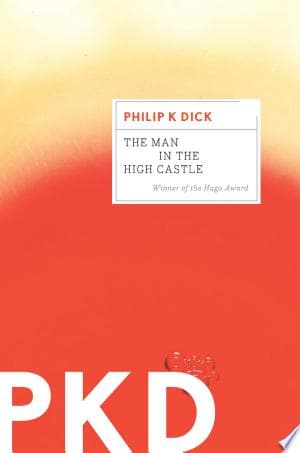
Synopsis
Covers the whole plot, including the ending.
- Difficulty
- Medium
- Pacing
- Moderate
- Mood
- Dystopian, Philosophical, Suspenseful, Thought-provoking, Atmospheric
- Read it if
- You enjoy thought-provoking alternate history, philosophical science fiction, and complex character studies set in a dystopian world.
- Skip it if
- You prefer fast-paced action, clear-cut heroes and villains, or straightforward narratives without ambiguity and existential themes.
The Man in the High Castle Plot Summary
Covers the whole plot, including the ending.
A Divided America
The story begins in 1962, fifteen years after the Axis powers won World War II. The former United States is divided: the Japanese Pacific States (JPS) govern the West Coast, and the Greater Nazi Reich (GNR) controls the East. A neutral Rocky Mountain States buffer zone separates them. Frank Frink, a war veteran, works at Wyndam-Matson Corporation in San Francisco, making reproduction antique firearms. He is a skilled craftsman but struggles with being Jewish in a society that persecutes his people. Juliana Frink, his ex-wife, lives in Cañon City, Colorado, in the neutral zone, teaching judo. Robert Childan, a San Francisco antique dealer, handles the complex social rules of selling authentic American artifacts to wealthy Japanese collectors, often struggling with their different cultural ideas about authenticity and value.
Frank's New Venture and Juliana's Journey
Frank Frink, tired of the bad working conditions at Wyndam-Matson, quits his job. He convinces his coworker, Ed McCarthy, to join him in a new business: making original, American-designed jewelry. They put their small savings into tools and materials, hoping to create something truly authentic and valuable, not just copies. Meanwhile, Juliana Frink, feeling restless, decides to leave Cañon City. She accepts a ride from Joe Cinnadella, a charming Italian truck driver heading east to Denver. Her journey moves her from the safety of her familiar life into the unknown.
Tagomi's Dilemma and the 'I Ching'
Nobusuke Tagomi, the Japanese Trade Minister in San Francisco, is involved in a sensitive negotiation with a Swedish industrialist, Baynes, and a high-ranking Nazi official, Wegener (secretly an Abwehr agent named Rudolf Wegener). Baynes' visit is meant to be about trade, but his real mission, coordinated with Wegener, is to warn a Japanese official about a Nazi plan to attack the Japanese Home Islands. Tagomi, who uses the 'I Ching,' often consults the ancient Chinese oracle for guidance in his life, relying on its wisdom to navigate the dangerous political world and his own moral choices.
The 'Grasshopper' and its Impact
Many characters in the story read 'The Grasshopper Lies Heavy,' a very popular and controversial novel by Hawthorne Abendsen. The book shows an alternate reality where the Allies won World War II. The GNR has banned the book, fearing its message, while the Japanese tolerate it with some worry. Juliana Frink is deeply interested in the novel, finding its vision of an Allied victory both fascinating and unsettling. Tagomi also reads it, struggling with what it means for his own reality. The book makes characters question their reality and the nature of truth, hinting at deeper levels of existence.
Frank's Revelation and Arrest
Frank Frink, wanting authenticity and dealing with his heritage, tells Ed McCarthy he is Jewish. This is a big risk in a society where Jews are persecuted. Soon after, the police raid Frank and Ed's jewelry workshop. They are both arrested, and all their new jewelry is taken. The arrest happens because Frank's former employer, Wyndam-Matson, found out about Frank's Jewish identity and his new business, then reported him to the authorities to get rid of a competitor and use racial laws for profit. Frank faces an uncertain and scary future.
Baynes' True Mission and the Assassination Attempt
Rudolf Wegener, disguised as the Swedish industrialist Baynes, meets with Nobusuke Tagomi to give a crucial warning about the Nazi plan for 'Operation Dandelion' – a surprise nuclear attack on the Japanese Home Islands. The meeting takes place in Tagomi's office. During their talk, two Nazi assassins, sent to kill Wegener before he can share the information, burst into the office. Tagomi, despite his peaceful nature, draws his antique Colt .44 pistol and, in a moment of violence, shoots and kills both assassins. This event deeply affects Tagomi, changing how he sees himself and the world.
Juliana's Encounter with Joe Cinnadella
Juliana Frink continues her trip to Denver with Joe Cinnadella. During their travels, Joe's behavior becomes more erratic and controlling. He says he plans to meet Hawthorne Abendsen, the author of 'The Grasshopper Lies Heavy,' in Cheyenne, Wyoming. Joe's true identity slowly comes out: he is a Nazi assassin, sent to kill Abendsen. Juliana, realizing the danger she is in and the sinister nature of Joe's mission, becomes terrified. She understands that she has accidentally become involved in a dangerous plot directly connected to the controversial book she has been reading.
Frank's Plea and Tagomi's Vision
After Frank Frink's arrest, his brother-in-law, Paul Kasoura, a respected Japanese attorney, helps him. He uses his connections to get Frank released, arguing that Frank's jewelry is not just Jewish but a unique form of American art. Meanwhile, the trauma of killing the assassins, combined with his thoughts on the 'I Ching' and 'The Grasshopper Lies Heavy,' causes Nobusuke Tagomi to have a strong hallucination. He briefly sees San Francisco as it is in Abendsen's novel, a world where the Allies won the war and the Japanese are not conquerors. This vision shatters his understanding of reality.
Juliana's Act of Desperation
As Juliana and Joe arrive in Cheyenne, Wyoming, and are about to meet Hawthorne Abendsen, Juliana understands the immediate danger to the author. Joe shows a pistol and says he plans to murder Abendsen for writing 'The Grasshopper Lies Heavy.' In a desperate act of self-preservation and to protect Abendsen, Juliana grabs a razor blade from Joe's toiletry kit and slashes his throat, killing him. This violent act is a turning point for Juliana, forcing her to face the brutal realities of her world and her own ability for extreme action. She then goes to meet Abendsen, alone.
The Truth About the 'I Ching'
Juliana Frink finally meets Hawthorne Abendsen, the author of 'The Grasshopper Lies Heavy,' at his fortified home, 'The High Castle.' She expresses her confusion about his novel, especially its depiction of an Allied victory. Abendsen tells Juliana that the entire plot of 'The Grasshopper Lies Heavy' was not created through typical writing, but by consulting the 'I Ching' for every major plot point. He explains that the oracle showed the 'truth' of an alternate reality where the Axis lost. This suggests that the 'I Ching' is not just a tool for guidance, but a way to understand reality itself, hinting at a meta-narrative about truth and fiction.
Principal Figures
Frank Frink
Protagonist
A Jewish American craftsman living in the Japanese Pacific States.
Frank Frink is a skilled craftsman, working initially in a factory producing reproduction antiques. He is a quiet, thoughtful man, deeply uncomfortable with the oppressive society he lives in and the suppression of his Jewish heritage. He yearns for authenticity and meaning, driving him to create original jewelry. His underlying moral compass and desire for self-expression are strong, leading him to take significant risks. He struggles with his past and present, seeking a way to live truthfully in a world built on lies.
Relationships: Juliana Frink (ex-wife, complex history); Ed McCarthy (business partner and friend); Paul Kasoura (brother-in-law, legal advocate)
Juliana Frink
Protagonist
Frank's ex-wife, a judo instructor living in the neutral zone, drawn into a dangerous quest.
Juliana is restless, independent, and impulsive. She lives in the neutral Rocky Mountain States, teaching judo, and is deeply fascinated by 'The Grasshopper Lies Heavy.' Her journey is one of self-discovery and confrontation with brutal reality. She is emotionally driven, seeking meaning beyond her mundane existence, which leads her into dangerous situations. She possesses an underlying strength and resourcefulness that emerges under pressure, allowing her to act decisively when confronted with evil.
Relationships: Frank Frink (ex-husband, still feels a connection); Joe Cinnadella (travel companion, then antagonist); Hawthorne Abendsen (seeker of truth, then protector)
Nobusuke Tagomi
Protagonist/Supporting
Japanese Trade Minister in San Francisco, grappling with ethics and reality.
Tagomi is a highly principled, deeply traditional Japanese official. He is a devout practitioner of the 'I Ching,' using it to guide his decisions in a complex political landscape. He is culturally sensitive, often struggling with the clash between Japanese and American values, particularly regarding authenticity. Despite his position, he is a man of peace, deeply disturbed by violence and moral compromise. His internal struggle reflects the larger moral quandaries of the Japanese occupation.
Relationships: Rudolf Wegener (Baynes) (diplomatic contact, recipient of vital information); Robert Childan (business contact, often frustrated by him)
Rudolf Wegener (aka Mr. Baynes)
Supporting
A German Abwehr agent secretly working against the Nazi regime.
Wegener is a German intelligence officer who, under the guise of the Swedish industrialist Mr. Baynes, travels to San Francisco to warn the Japanese of an impending Nazi attack. He is a man of conviction, willing to risk his life to prevent further atrocities and maintain a fragile peace between the Axis powers. He represents a glimmer of moral opposition within the Nazi apparatus, driven by a desire to prevent a catastrophic war. He is highly intelligent and adept at espionage.
Relationships: Nobusuke Tagomi (target of his warning); Reiss (Nazi official, antagonist)
Robert Childan
Supporting
A San Francisco antique dealer catering to Japanese tastes.
Childan is an American antique dealer who specializes in selling 'authentic' American artifacts to wealthy Japanese clients. He is a snobbish, somewhat cynical character, often resentful of his Japanese customers despite relying on them for his livelihood. He is obsessed with authenticity and historical value, but also pragmatic and willing to compromise his ideals for profit. His interactions highlight the cultural misunderstandings and power dynamics between the occupiers and the occupied.
Relationships: Nobusuke Tagomi (frequent customer, source of frustration); Frank Frink (sells Frank's jewelry, initially dismissive)
Hawthorne Abendsen
Supporting/Mentioned
The enigmatic author of the forbidden novel 'The Grasshopper Lies Heavy'.
Abendsen is the reclusive author of the controversial novel 'The Grasshopper Lies Heavy,' which depicts an alternate history where the Allies won WWII. He is known as 'The Man in the High Castle' due to his fortified home. He represents the power of art and narrative to challenge established realities. His true method of writing, revealed at the end, elevates him to a figure of profound philosophical significance, a conduit for a deeper truth.
Relationships: Juliana Frink (interlocutor, receives his revelation); Joe Cinnadella (target of assassination)
Joe Cinnadella
Antagonist
An Italian truck driver who is secretly a Nazi assassin.
Joe Cinnadella initially appears as a charming, friendly truck driver who offers Juliana a ride. However, he gradually reveals a darker, more sinister nature. He is a dedicated Nazi agent, tasked with assassinating Hawthorne Abendsen. He is manipulative and ruthless, representing the insidious reach of the Nazi regime even into the neutral zones. His cheerful facade hides a fanatical commitment to his ideology and a capacity for extreme violence.
Relationships: Juliana Frink (travel companion, then victim/killer); Hawthorne Abendsen (target of assassination)
Ed McCarthy
Supporting
Frank Frink's loyal friend and business partner.
Ed is Frank's coworker and later business partner. He is less adventurous than Frank but loyal and hardworking. He provides a grounded, common-sense perspective and is a reliable friend, even when faced with danger. He is not Jewish, which offers a different perspective on the persecution Frank faces. Ed represents the ordinary person caught in extraordinary circumstances, trying to make a living and support his friend.
Relationships: Frank Frink (business partner and close friend)
Themes & Insights
The Nature of Reality and Truth
The novel constantly questions what is real and true in a world where history has been rewritten. 'The Grasshopper Lies Heavy' acts as a mirror, showing an alternative reality that feels more 'true' to many characters. Tagomi's vision of an Allied-won San Francisco directly challenges his perception, while Abendsen's revelation about the 'I Ching' suggests multiple, equally valid realities. The theme explores how individual and group consciousness shapes our understanding of existence, and how deeply held societal stories can be challenged by art and ancient wisdom.
“Truth, she thought. As terrible as death. But harder to find.”
Authenticity vs. Fakery
This theme is central, especially through Frank Frink's jewelry and Robert Childan's antique business. Frank wants to create authentic American art, contrasting with the mass-produced 'reproductions' that first define his world. Childan's effort to find and sell 'authentic' American artifacts to Japanese collectors shows the cultural and commercial value placed on perceived originality, often without true understanding. The debate extends to human identity: is Frank's Jewish identity 'authentic' if hidden? Is the Axis victory 'authentic' history, or a made-up reality?
“What is authentic? What is imitation? What is a fake?”
Identity and Self-Discovery
Many characters deal with their identities in a world that denies or suppresses them. Frank Frink struggles with his hidden Jewish heritage and his wish to express himself through original art. Juliana Frink seeks meaning beyond her ordinary life, going on a journey that forces her to confront her own ability for violence and truth. Tagomi, a Japanese official, struggles with his role in an oppressive regime and his own moral compass. The characters' internal journeys are often started by external events and the influence of 'The Grasshopper Lies Heavy,' pushing them to redefine themselves.
“You're a Jew. That's a fact, like your arms and legs. But it's not a fact like a table or a chair. It's a fact for you, not for the world.”
The Power of Art and Narrative
'The Grasshopper Lies Heavy' is the main way this theme is shown. Abendsen's novel, a work of fiction, greatly impacts the characters, making them question their reality and even inspiring action. It represents a form of resistance and a channel for alternative truths. The book's existence, and the Nazi regime's fear of it, shows how stories can shape political landscapes and individual consciousness. Frank's jewelry also shows this, as his authentic creations challenge the manufactured reality around him.
“The book, she thought. The book has done this. It has changed my life.”
Moral Responsibility and Complicity
The novel explores the moral dilemmas faced by people living under an oppressive government. Tagomi, as a Japanese official, deals with his involvement in the occupation, even as he tries to act ethically. Rudolf Wegener risks his life to prevent a greater atrocity, showing active resistance. Even ordinary citizens like Frank Frink and Robert Childan navigate the moral compromises needed to survive. The theme asks questions about personal choice and the decisions individuals make when faced with injustice and the possibility of war.
“I will not be the one to unleash this horror.”
Plot Devices & Literary Techniques
'The Grasshopper Lies Heavy'
A novel-within-a-novel that depicts an alternate history where the Allies won WWII.
This fictional book serves as the central plot device, driving much of the character motivation and thematic exploration. It acts as a counter-narrative to the established reality, making characters question the 'truth' of their world. Its existence is forbidden by the Nazis and tolerated with unease by the Japanese, highlighting its subversive power. The book is not merely a story but a philosophical tool, revealing the possibility of alternate realities and ultimately linking to the 'I Ching' as a source of truth.
The 'I Ching' (Book of Changes)
An ancient Chinese oracle used by several characters for guidance and revelation.
The 'I Ching' is frequently consulted by Nobusuke Tagomi for decision-making and by Hawthorne Abendsen for writing 'The Grasshopper Lies Heavy.' It functions as a source of wisdom, prophecy, and, most importantly, a conduit to understanding different realities. Its ambiguous nature allows for multiple interpretations, but its ultimate revelation regarding the novel's plot suggests it's a more profound tool for accessing universal truths than simple divination, blurring the lines between fate, chance, and alternate dimensions.
The Rocky Mountain States (Neutral Zone)
A buffer region between the Japanese Pacific States and the Greater Nazi Reich.
The neutral zone serves as both a geographical and metaphorical plot device. Geographically, it's where characters like Juliana Frink reside, providing a brief respite from the direct control of either Axis power, yet still subject to their influence. Metaphorically, it represents a space of ambiguity, uncertainty, and a lack of clear allegiance. It's a place where the rules are less rigid, allowing for the free circulation of 'The Grasshopper Lies Heavy' and providing a meeting point for characters from different territories, facilitating plot developments and character interactions.
Authentic American Antiques/Art
Physical objects that symbolize lost American identity and cultural value.
The antique firearms, jewelry, and other artifacts sold by Robert Childan and created by Frank Frink are more than mere objects. They represent the lost American culture and identity under Axis rule. Their 'authenticity' is a constant point of debate and a source of both pride and shame for the Americans. The Japanese collectors' desire for these items, often without fully understanding their cultural significance, highlights the power dynamics and cultural clashes within the narrative, while Frank's original jewelry represents a defiant act of cultural reclamation.
The Man in the High Castle Quotes
“It is an immutable law in the forty-eight states that what a man has earned is his to keep.”
“The past is a phantom, a story that some one tells. What we have in common with it is this, and this only: that we can never make it come back.”
“There are some things you can't learn from others. You have to pass through the fire yourself.”
“The dead talk to us. They tell us about the future. They tell us to be careful.”
“It is a principle of the I Ching not to be too attached to one's own desires.”
“What do you want to be when you grow up? A Nazi. Everyone wants to be a Nazi.”
“The world is an enigma; space, time, and matter are its components.”
“There was a reason for the war, and it wasn't because of the Japanese or the Germans. It was because of the American people.”
“He knew that what he was doing was wrong, but he couldn't help himself. He was a man of his time.”
“Truth is a thing of this world, not of the next.”
“What is the I Ching? It is a book of wisdom, a book of changes.”
“The past is an illusion. The future is an illusion. Only the present is real.”
“He felt as if he were living in a dream, a dream from which he could not awaken.”
“The world is what you make of it. If it isn't to your liking, you can change it.”
“History is not what happened. History is what is written.”
Quiz
10 questions on the plot and the characters. Each answer comes with a short explanation.
Question 1
Which two major Axis powers are depicted as controlling the former United States in 'The Man in the High Castle'?
- Germany and Italy
- Germany and Japan
- Japan and Italy
- Germany and the Soviet Union
Show answer
B. Germany and Japan The novel establishes Germany controlling the Eastern states and Japan controlling the Pacific states, with a neutral zone in between.
Question 2
What is the title of the controversial book written by Hawthorne Abendsen within the story, which depicts an alternate history where the Allies won WWII?
- The Grasshopper Lies Heavy
- The Wasp's Nest
- The Man in the High Castle
- The Victory of the Allies
Show answer
A. The Grasshopper Lies Heavy Hawthorne Abendsen's book, 'The Grasshopper Lies Heavy,' is a central plot device, showing an alternate reality where the Allies won the war.
Question 3
What is the primary reason Hawthorne Abendsen is living in fear and seclusion?
- He is a former Nazi official in hiding.
- He wrote a book depicting the Allies winning WWII, which is considered subversive by the Axis powers.
- He possesses a valuable artifact that both Axis powers desire.
- He is a Jewish resistance fighter.
Show answer
B. He wrote a book depicting the Allies winning WWII, which is considered subversive by the Axis powers. Abendsen's book 'The Grasshopper Lies Heavy' challenges the Axis narrative of history and makes him a target.
Question 4
What philosophical text do many characters, particularly the Japanese, consult for guidance and decision-making?
- The Art of War
- The Analects of Confucius
- The I Ching (Book of Changes)
- The Hagakure
Show answer
C. The I Ching (Book of Changes) The I Ching is frequently used by characters like Mr. Tagomi and Frank Frink to make decisions and understand their fate.
Question 5
What is the profession of Frank Frink, the Jewish character living in the Japanese Pacific States, at the beginning of the novel?
- Antiques dealer
- Jewelry maker
- Factory worker
- Book salesman
Show answer
B. Jewelry maker Frank Frink works at a factory producing imitation American artifacts for the Japanese market before he starts his own jewelry business.
Question 6
What is the primary source of tension between the German Reich and the Japanese Pacific States in the novel?
- Disputes over trade routes in the Atlantic.
- Ideological differences regarding racial purity.
- A cold war and arms race, particularly concerning space exploration and potential nuclear conflict.
- Competition for control over the neutral buffer zone.
Show answer
C. A cold war and arms race, particularly concerning space exploration and potential nuclear conflict. The two powers are locked in a tense cold war, with Germany's rapid technological advancements and expansionist goals threatening Japan.
Question 7
Who is Julianna Frink, and what is her initial motivation for traveling to the neutral zone?
- She is Frank Frink's sister, seeking to join a resistance movement.
- She is Frank Frink's ex-wife, hoping to meet Hawthorne Abendsen and learn about 'The Grasshopper Lies Heavy'.
- She is a German spy, attempting to infiltrate Abendsen's compound.
- She is a Japanese official, tasked with assassinating Abendsen.
Show answer
B. She is Frank Frink's ex-wife, hoping to meet Hawthorne Abendsen and learn about 'The Grasshopper Lies Heavy'. Julianna, Frank's ex-wife, is drawn to the neutral zone and Abendsen's book, eventually encountering Joe Cinnadella.
Question 8
What is the significance of the authentic American artifacts that Robert Childan deals in?
- They are used as currency in the neutral zone.
- They represent a lost past and are highly valued by Japanese collectors seeking a connection to a defeated culture.
- They are secretly used to smuggle information between the Axis powers.
- They are components for a hidden resistance communication device.
Show answer
B. They represent a lost past and are highly valued by Japanese collectors seeking a connection to a defeated culture. Childan's authentic Americana serves as a symbol of the defeated American culture, fetishized by the Japanese victors.
Question 9
How does the novel explore the theme of reality and perception, particularly through the lens of 'The Grasshopper Lies Heavy'?
- By suggesting that the 'real' world is the one where the Axis powers won, and the book is pure fantasy.
- By implying that the reality presented in 'The Grasshopper Lies Heavy' is, in fact, the true reality, and the characters' world is the illusion.
- By demonstrating that both realities are equally valid and coexist simultaneously.
- By showing that the book is a propaganda tool designed by the Axis to confuse the populace.
Show answer
B. By implying that the reality presented in 'The Grasshopper Lies Heavy' is, in fact, the true reality, and the characters' world is the illusion. The novel subtly blurs the lines between reality and fiction, especially in the ending where Julianna learns the I Ching inspired Abendsen to write about the Allied victory, implying it's a 'truth' from another dimension or a deeper reality.
Question 10
What is the ultimate revelation Julianna Frink receives from Hawthorne Abendsen about the true nature of 'The Grasshopper Lies Heavy'?
- That he wrote it as a deliberate act of German propaganda.
- That he used the I Ching to write the book, and the I Ching revealed the truth that the Allies did win the war.
- That the book was a collaborative effort by multiple authors in the neutral zone.
- That the book is merely a fictional story with no deeper meaning.
Show answer
B. That he used the I Ching to write the book, and the I Ching revealed the truth that the Allies did win the war. Abendsen reveals to Julianna that the I Ching guided him in writing the book, and that the book's reality (Allied victory) is the 'truth' revealed by the oracle, challenging the perceived reality of the characters.
The Man in the High Castle FAQ
What is the central premise of 'The Man in the High Castle'?
'The Man in the High Castle' is set in an alternate 1962 where the Axis powers—Nazi Germany and Imperial Japan—won World War II. The former United States is divided into the Greater Nazi Reich in the East, the Japanese Pacific States in the West, and a neutral Rocky Mountain States buffer zone in between.
Who are the primary protagonists whose perspectives drive the narrative?
The narrative follows several key characters: Robert Childan, an antiques dealer in San Francisco; Frank Frink, a Jewish craftsman hiding his identity; Juliana Frink, Frank's ex-wife who becomes entangled with a Nazi agent; and Nobusuke Tagomi, a Japanese trade official navigating complex political landscapes.
What is 'The Grasshopper Lies Heavy' and why is it significant?
'The Grasshopper Lies Heavy' is a controversial novel within the book's world, written by Hawthorne Abendsen. It depicts an alternate history where the Allies won WWII, challenging the established reality of the Axis victory and inspiring hope and fear among different factions.
What is the role of the I Ching in the novel?
The I Ching, an ancient Chinese divination text, is widely used by many characters, including Tagomi, Juliana, and even high-ranking Nazis, to guide their decisions and provide insight into their complex world. It serves as a philosophical and practical tool for navigating an uncertain reality.
What is the status of Jews in the Axis-controlled America?
Jews, like Frank Frink, live in constant fear and must hide their identities to survive in the Japanese Pacific States, where they are tolerated but marginalized. In the Greater Nazi Reich, the systematic extermination of Jews is ongoing, reflecting the historical Holocaust.
What is the significance of the antique American artifacts Robert Childan deals in?
Childan's 'American' artifacts are often forgeries, catering to Japanese collectors who fetishize a romanticized, lost American past. This trade highlights themes of cultural appropriation, the loss of national identity, and the superficiality of collecting symbols without understanding their true meaning.
How does the concept of 'kipple' subtly reflect the world's decay?
While not explicitly named 'kipple' in this novel (that's from 'Do Androids Dream of Electric Sheep?'), the pervasive sense of decay, cheap imitations, and the accumulation of meaningless objects, particularly in Childan's business, hints at a similar theme of entropy and the devaluation of authenticity in the Axis-dominated world.
What is the 'truth' Juliana Frink seeks at the end of the novel regarding 'The Grasshopper Lies Heavy'?
Juliana's realization that 'The Grasshopper Lies Heavy' was divined using the I Ching, and that its alternate history is, in a sense, a 'true' history or a reflection of a higher reality, shatters her perception of her own world. It suggests that her reality is a false one, or at least one possibility among many.
How does Nobusuke Tagomi's experience in the final chapters reveal the fragility of reality?
After killing the Nazi assassins, Tagomi experiences a brief, jarring vision of an alternate San Francisco—one resembling our own reality. This momentary glimpse into another dimension profoundly shakes him, blurring the lines between what is real and what is imagined, and highlighting the instability of his world.
How does Frank Frink's artistic creation serve as a form of rebellion and self-expression?
Frank's metal jewelry, despite being dismissed by Childan as 'kitsch,' represents genuine artistic creation and an assertion of individual identity against a repressive regime. His work, unlike the fake antiques, possesses authenticity and beauty, making it a subtle act of defiance.
Analyze Juliana Frink's psychological journey from passive observer to active participant.
Juliana begins as somewhat adrift, living in the neutral zone and seemingly unconcerned with politics. Her encounter with Joe Cinnadella and her subsequent quest to find Hawthorne Abendsen force her into dangerous situations, leading her to confront the brutal realities of her world and take decisive, violent action.
What psychological impact does the constant threat of discovery have on characters like Frank Frink?
Frank, being Jewish, lives under immense psychological stress, constantly fearing exposure and persecution. This leads to paranoia, a guarded demeanor, and a deep-seated anxiety that permeates his interactions and decisions, even driving him to confront Childan and eventually face arrest.
How do characters cope with the moral ambiguity of living under totalitarian rule?
Many characters, like Childan, engage in moral compromises to survive, rationalizing their actions within the system. Others, like Tagomi, struggle deeply with their conscience, using the I Ching for moral guidance, while figures like Frank Frink actively resist or seek to preserve their humanity through art and personal connections.
Is the ending of 'The Man in the High Castle' meant to be hopeful or despairing?
The ending is ambiguous. While Juliana's discovery of the I Ching's role in 'The Grasshopper Lies Heavy' offers a glimpse of a different, perhaps truer, reality, it doesn't change the immediate oppressive circumstances. It's more of an existential revelation than a practical hope for liberation, leaving the reader to ponder the nature of reality itself.
What is the philosophical significance of the I Ching's 'truth' about the Axis victory being a lie?
The I Ching's revelation that the Axis victory is an illusion, a 'false' reality, suggests a profound philosophical statement about the nature of truth and reality. It implies that there are deeper, underlying truths that can be accessed through intuition or spiritual means, even when political and historical facts dictate otherwise.
Does the novel suggest that our own reality could also be an 'alternate' one?
By portraying a world that feels incredibly real, only to reveal it as an alternate possibility through 'The Grasshopper Lies Heavy' and Tagomi's vision, Dick subtly challenges the reader to question the solidity of their own perceived reality. It suggests that all realities might be contingent and constructed, a hallmark of his philosophical themes.
How does the novel critique fascism and totalitarianism without explicitly depicting Allied victory?
The novel critiques fascism by showing its dehumanizing effects, the constant fear, the casual racism, and the moral compromises it demands from its subjects. The alternate history where the Allies won, as depicted in Abendsen's book, serves as a stark contrast, highlighting the potential for a more just, albeit still flawed, world without needing a direct 'good triumphs over evil' narrative within the main plot.
What is the significance of the title, 'The Man in the High Castle'?
The title refers to Hawthorne Abendsen, the author of 'The Grasshopper Lies Heavy,' who lives in a heavily guarded, castle-like home. He is a figure of mystery and rebellion, symbolizing the power of alternative narratives and the pursuit of truth, even when it's dangerous, from a position of relative isolation.
About the author
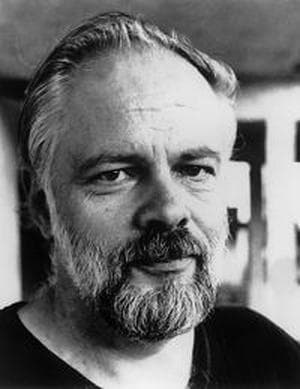
Philip Kindred Dick, often referred to by his initials PKD, was an American science fiction writer. He wrote 44 novels and about 121 short stories, most of which appeared in science fiction magazines during his lifetime. His fiction explored varied philosophical and social questions such as the nature of reality, perception, human nature, and identity, and commonly featured characters struggling against elements such as alternate realities, illusory environments, monopolistic corporations, drug abuse, authoritarian governments, and altered states of consciousness.
Similar books
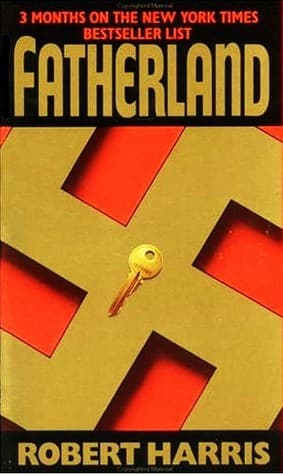
- Fatherland
Robert Harris
4.0 (37k) average on GoodreadsThrillerAnother alternate history where the Nazis won WWII, focusing on a detective story.
- 1984
George Orwell
4.2 (3.1M) average on GoodreadsPoliticsExplores totalitarianism, surveillance, and the manipulation of truth in a dystopian setting.
- Brave New World
Aldous Huxley
4.0 (1.4M) average on GoodreadsFantasyExamines a chilling vision of a future society and the nature of reality and happiness.
- Harry Potter and the Sorcerer's Stone
J.K. Rowling
4.5 (7M) average on GoodreadsFantasyRescued from a miserable life under the stairs, an orphaned boy discovers he's a wizard destined for a magical school, where he uncovers a dangerous secret tied to the dark wizard who murdered his parents.
- The Hunger Games
Suzanne Collins
4.3 (6.4M) average on GoodreadsFantasyIn a future where children fight to the death on live television, Katniss Everdeen volunteers for the arena, turning a death sentence into a fight for survival and a spark of rebellion.
- Divergent
Veronica Roth
4.2 (2.9M) average on GoodreadsFantasyIn a society divided by virtues, a sixteen-year-old's difference from the norm starts a rebellion that threatens her world.





Enjoyed the summary?
A summary gives you the shape of the book. The book itself has the detail, the examples and the voice.
Find The Man in the High Castle on AmazonAs an Amazon Associate, BookBrief earns from qualifying purchases. How we're funded