

Synopsis
Covers the whole plot, including the ending.
- Difficulty
- Easy
- Pacing
- Moderate
- Mood
- Whimsical, Hopeful, Dreamy, Comforting
- Read it if
- You enjoy enchanting origin stories of beloved mythical figures, especially if you appreciate beautiful illustrations and themes of hope and protection for children.
- Skip it if
- You prefer complex narratives with deep character development over whimsical, visually driven fables.
The Man in the Moon Plot Summary
Covers the whole plot, including the ending.
The Arrival of MiM
The story begins with the creation of the Man in the Moon, or MiM. He is an orphaned baby, found by the Moonbeams, who send him to the moon in a magical cradle. Once there, the infant MiM is lonely and wants companionship. He sees Earth below and watches children playing, laughing, and dreaming through his telescope. He feels an immediate connection to them, seeing them as his 'family.' He spends his days watching them, learning about their lives, and feeling a deep sense of belonging for the first time.
The First Nightmare
One night, MiM sees a child on Earth having a terrifying nightmare. He sees the child struggling in bed, clearly upset by the images in their sleep. This sight deeply affects MiM, who, having never felt fear himself, feels great sympathy for the child's suffering. He realizes that while he enjoys watching their joyful moments, children also experience fear and sadness. This moment changes things, as MiM understands his purpose might be more than just watching; he wants to protect them from such terrors.
The Quest for the Lost Toy
Wanting to help, MiM notices a child crying because their red balloon has floated into the night sky. He realizes he has a unique view and can get it back. Using his cleverness and the moon's resources, he catches the balloon. He then gently guides it back to Earth, making sure it lands softly beside the sleeping child. The child wakes to find their lost toy, a small miracle that fills MiM with a sense of success and strengthens his belief that he can make a difference.
The Rise of Pitch
As MiM continues to watch over the children, a new, evil force appears from the shadows of nightmares: Pitch, the King of Nightmares. Pitch grows stronger from fear and actively tries to fill children's dreams with terror. He is a shadowy figure who can create the deepest anxieties. MiM quickly recognizes Pitch as a direct threat to the children's happiness and well-being. Pitch's appearance strengthens MiM's decision to become their protector, understanding that his role must be active against this growing darkness.
MiM's First Intervention
Seeing Pitch's influence grow, MiM feels an urgent need to act more directly. He sees a child tormented by a nightmare, their face twisted in fear. From the moon, MiM tries to send comforting thoughts and images to the child, using the moon's light. He gently bathes the child's room in a soft, calming glow, hoping to push back the shadows of fear. While he cannot physically interact, this is his first conscious effort to directly fight Pitch's influence and bring comfort to a child in distress, marking his change from observer to guardian.
The Moonbeams' Guidance
The wise and ancient Moonbeams, who brought MiM to the moon, appear to him. They explain his special connection to the children of Earth and reveal his true destiny: to become the first Guardian of Childhood. They teach him about the delicate balance between dreams and nightmares, and the importance of protecting innocence. They encourage MiM to accept his role and assure him that he has the light and goodness needed to fight Pitch's growing darkness. This revelation clarifies MiM's purpose and gives him a deeper understanding of his powers.
Crafting the Dreamcatcher
Inspired by the Moonbeams' advice and his own observations, MiM begins to make a tool to help him in his new role. He uses stardust, moonbeams, and threads of children's joyful dreams to create a magnificent dreamcatcher. This magical object is designed not just to stop nightmares but to capture them and turn them into pleasant dreams or starlight. He understands that simply banishing fear is not enough; he must actively convert it into something positive, reflecting his gentle nature and his desire to bring pure joy.
The Battle of Dreams
With his new dreamcatcher, MiM actively fights Pitch each night. When Pitch sends his shadowy figures and terrifying dreams to Earth, MiM uses the dreamcatcher to intercept and neutralize them. He works tirelessly, his light pushing back against Pitch's darkness. This is not a physical fight, but a cosmic struggle for children's hearts and minds, fought in the realm of dreams. MiM's determination and the dreamcatcher's power begin to make a noticeable difference, lessening fear's hold on the sleeping world.
Bringing Light to Darkness
Through his constant efforts, MiM's presence in the night sky becomes a comforting idea for children. They may not see him directly, but they feel his watchful eye and the moon's gentle glow, which he fills with his protective magic. The dreamcatcher transforms many nightmares, and children begin to wake with better memories of their sleep. MiM's dedication ensures that even when there is fear, hope and wonder remain. He becomes a silent, ever-present guardian, his light a beacon against the growing shadows.
The First Guardian
By the end of the story, MiM has fully accepted his identity as the Man in the Moon and the first Guardian of Childhood. He understands his unique position as a protector who watches over children from afar, keeping their dreams safe and their fears away. His journey from an orphaned baby to a cosmic guardian is complete. He continues his nightly watch, a silent guardian of hope and wonder, always dedicated to the children of Earth, setting the stage for the wider universe of the Guardians.
Principal Figures
MiM (The Man in the Moon)
Protagonist
The orphaned baby who becomes the first Guardian of Childhood.
MiM begins as a lonely, orphaned infant propelled to the moon. He is inherently kind, curious, and deeply empathetic, especially towards the children of Earth whom he views as his family. He possesses a gentle spirit and a strong desire to protect the innocent. His journey is one of self-discovery and embracing a profound purpose. He is driven by love and a yearning to bring joy and safety to others, especially when confronted with the suffering caused by nightmares.
Relationships: Children of Earth (He sees them as his family and feels a deep, protective love for them.); Moonbeams (His cosmic guardians and mentors who reveal his destiny.); Pitch (His primary antagonist, the embodiment of fear and nightmares.)
Pitch (The King of Nightmares)
Antagonist
The shadowy embodiment of fear who preys on children's dreams.
Pitch is the primary antagonist, a dark and malevolent force that emerges from the shadows of fear and nightmares. He thrives on the terror of children, actively seeking to infect their dreams and spread dread. He is a shadowy figure, capable of manifesting their deepest anxieties. Pitch represents the universal concept of fear and the challenges that innocence faces. He is driven by a desire to dominate and instill terror, directly opposing MiM's mission of protection and comfort.
Relationships: MiM (His sworn enemy, locked in a cosmic battle for children's dreams.); Children of Earth (His victims, whose fear he feeds upon.)
The Moonbeams
Supporting
Ancient, wise cosmic beings who guide MiM.
The Moonbeams are ethereal, luminous beings who discover the orphaned baby MiM and bring him to the moon. They act as his silent guardians and later, his mentors. They possess ancient wisdom and a deep understanding of the cosmic balance. They reveal MiM's destiny as a Guardian and provide guidance, encouraging him to embrace his unique abilities and purpose. They represent the benevolent forces of the universe that nurture and protect potential, helping MiM understand his true nature and the importance of his role.
Relationships: MiM (His initial caretakers and later, his spiritual guides and mentors.)
Children of Earth
Supporting
The innocent beneficiaries of MiM's protection.
The children of Earth are the central focus of MiM's attention and affection. They are depicted in various states: playing joyfully, losing beloved toys, and experiencing terrifying nightmares. They represent innocence, vulnerability, and the preciousness of childhood that MiM is sworn to protect. While they do not directly interact with MiM, their experiences drive his actions and define his purpose. Their collective dreams and fears form the battleground between MiM and Pitch, making them the silent recipients of the cosmic struggle.
Relationships: MiM (The objects of his deep affection and protection.); Pitch (The targets of Pitch's fear-inducing schemes.)
Themes & Insights
The Power of Empathy and Connection
MiM's journey is driven by his deep empathy for Earth's children. Initially lonely, he finds connection by watching them. When he sees a child's nightmare, his inability to bear their suffering motivates him to become a protector. This theme appears when he retrieves the lost balloon for a crying child, feeling satisfied from easing their sadness. His empathy changes him from a passive observer to an active guardian, showing that deep connection can inspire great purpose and selflessness.
“He longed to be with them, to laugh with them, to be part of their world.”
Overcoming Fear and Protecting Innocence
The main conflict is the fight against fear, shown by Pitch, and the protection of children's innocence. MiM's role is to shield children from nightmares and replace fear with comfort and wonder. This theme is clear when MiM first sees a child's nightmare, realizing how vulnerable innocence is. His creation of the dreamcatcher and his nightly watch against Pitch directly address this theme, showing that even against great darkness, light and protection can win, ensuring childhood remains a time of wonder, not terror.
“He knew then, with a certainty that shone like a new star, that he must protect them.”
Finding Purpose and Identity
MiM's story is a classic hero's journey of finding one's true calling. As an orphaned baby, he is lost until he finds purpose in watching the children. The Moonbeams' revelation of his destiny as the first Guardian of Childhood confirms this. His actions, like getting the balloon and making the dreamcatcher, are steps in accepting this identity. By the end, MiM fully understands and accepts his role as the Man in the Moon, a protector and a source of hope, showing that even unlikely individuals can find extraordinary purpose.
“He was the Man in the Moon, and he would watch over them all.”
The Magic of Dreams and Imagination
The story highlights the importance of dreams, both good and bad, as a key part of childhood. MiM works within the world of dreams, fighting nightmares and promoting positive imagination. The creation of the dreamcatcher, which turns nightmares into pleasant dreams or starlight, directly shows this theme. The book suggests that dreams are vital to a child's world, and their quality greatly affects their well-being. MiM's mission is to protect this magical inner world, ensuring that imagination remains a source of joy and not fear.
“He wove the threads of joyful dreams into a net that would catch the shadows.”
Plot Devices & Literary Techniques
The Telescope
MiM's primary means of observing Earth and its children.
The telescope serves as a crucial plot device, allowing MiM to connect with the children of Earth from his lunar perch. It enables him to witness their joys, sorrows, and, most importantly, their nightmares. Without the telescope, MiM would remain isolated and unaware of the children's needs, thus never discovering his purpose. It acts as a bridge between his solitary world and the vibrant, vulnerable world of children, initiating his journey as a guardian and providing the insight needed to combat Pitch.
The Lost Balloon
A symbolic representation of lost hope and MiM's first act of direct intervention.
The red balloon that floats away from a crying child is a significant plot device. It symbolizes the small, everyday losses that can cause great sadness in a child's life. MiM's retrieval of the balloon is his first tangible act of bringing comfort and hope to a child, demonstrating his growing capacity to impact their lives positively. This event solidifies his resolve and shows him that he can make a difference, even from afar, laying the groundwork for his larger mission against Pitch.
The Dreamcatcher
A magical artifact created by MiM to combat nightmares.
The dreamcatcher is a pivotal magical artifact that MiM creates to directly combat Pitch's influence. Fashioned from stardust and moonbeams, it is designed to intercept and transform nightmares into positive dreams or starlight. This device is not just a tool; it's a physical manifestation of MiM's protective intent and ingenuity. It allows him to actively engage in the battle for children's dreams, providing a concrete mechanism for his guardianship and showcasing his unique powers as the first Guardian.
The Moonbeams' Revelation
The moment MiM's destiny as a Guardian is explicitly stated.
The appearance and guidance of the Moonbeams constitute a crucial plot device. Their intervention provides MiM with the explicit knowledge of his purpose and destiny as the first Guardian of Childhood. This revelation transforms MiM's vague desire to help into a clear mission, giving him direction and validating his innate protective instincts. It's a moment of exposition that clarifies the cosmic stakes and empowers MiM to fully embrace his role, providing the narrative with a defined conflict and a heroic trajectory.
The Man in the Moon Quotes
“Every child knows in their heart that the moon belongs to them.”
“And on the very tip-top of the highest mountain, there lived a boy. A boy who loved the moon more than anything.”
“He knew all the moon's secrets, and the moon knew all of his.”
“For MiM, the moon was not just a light in the sky; it was a friend, a confidant, a keeper of dreams.”
“He was the first guardian of childhood dreams, though he didn't know it yet.”
“The moon was always there, a silent witness to the world below, and a gentle beacon for MiM.”
“He learned to fly on the light of the moon, propelled by pure wonder and a child's belief.”
“And so, he became the Man in the Moon, watching over every child, every night.”
“His job was simple: to keep the light of childhood alive, even in the darkest night.”
“For every dream that drifted up to him, he sent a little bit of moon magic back down.”
“He knew that as long as children looked up and believed, the moon would always shine for them.”
“The moon's light was not just to see by, but to dream by.”
“He was the keeper of lost things, the whisperer of forgotten lullabies, and the guardian of all that was innocent and good.”
“And that is how the boy who loved the moon became the Man in the Moon, forever watching, forever dreaming.”
Quiz
10 questions on the plot and the characters. Each answer comes with a short explanation.
Question 1
What is the name of the very first Guardian of Childhood introduced in the story?
- Sandy
- North
- MiM
- Bunny
Show answer
C. MiM The book introduces MiM as the Man in the Moon and the very first Guardian of Childhood.
Question 2
What significant event led MiM to the moon and started his quest?
- A falling meteor, a new toy, and a lost pet
- A battle, a shooting star, and a lost balloon
- A dream, a magical key, and a talking animal
- A prophecy, an ancient map, and a wise old man
Show answer
B. A battle, a shooting star, and a lost balloon The book explicitly states that 'a battle, a shooting star, and a lost balloon' led him on his quest.
Question 3
What is MiM's primary motivation or goal after befriending the children of Earth?
- To find his original family and return to Earth
- To discover new constellations and name them
- To ward off their fears and nightmares
- To learn how to fly among the stars
Show answer
C. To ward off their fears and nightmares The description states, 'he seeks a way to ward off their fears and nightmares,' indicating his main purpose.
Question 4
Before becoming the Man in the Moon, what was MiM's status?
- An old wizard
- A brave knight
- A newly orphaned baby
- A celestial being
Show answer
C. A newly orphaned baby The synopsis mentions, 'When a newly orphaned baby in the moon makes friends with the children of Earth,' establishing his initial state.
Question 5
What kind of relationship does MiM initially form with the children of Earth?
- He observes them from afar but never interacts.
- He makes friends with them despite his distance.
- He is feared by the children of Earth.
- He communicates with them telepathically.
Show answer
B. He makes friends with them despite his distance. The text states, 'When a newly orphaned baby in the moon makes friends with the children of Earth,' indicating a direct connection.
Question 6
The book description implies that the Man in the Moon was not always a 'man' and not always 'on the moon.' What does this suggest about his journey?
- He was born on the moon as an adult.
- He underwent a transformation and traveled to the moon.
- He has always been both a man and on the moon, despite the misleading phrasing.
- He is a shapeshifter who can change his form and location at will.
Show answer
B. He underwent a transformation and traveled to the moon. The lines 'He wasn’t always a man. Nor was he always on the moon. He was once a child.' strongly suggest a journey and transformation.
Question 7
What is the implied significance of MiM being 'the very first Guardian of Childhood'?
- He is the only Guardian who ever existed.
- He set the precedent for others to follow in protecting children.
- His role is limited to only protecting children on the moon.
- He invented the concept of childhood itself.
Show answer
B. He set the precedent for others to follow in protecting children. Being 'the very first' implies a foundational role, establishing the concept and potentially inspiring future guardians.
Question 8
What specific detail is mentioned about MiM's past that hints at a dramatic origin story?
- He was a prince of a forgotten kingdom.
- He was involved in a 'battle' before coming to the moon.
- He was an astronaut who crash-landed.
- He was created by a magical spell.
Show answer
B. He was involved in a 'battle' before coming to the moon. The text explicitly mentions 'a battle' as one of the events leading him to his quest, suggesting a dramatic past.
Question 9
How does the opening phrase 'Up there in the sky. Don’t you see him? No, not the moon. The Man in the Moon.' set the tone for the story?
- It establishes a scientific, factual narrative about space.
- It creates a sense of wonder and invites the reader to look beyond the obvious.
- It immediately introduces a conflict between the moon and the man.
- It suggests a scary, mysterious tale about a hidden figure.
Show answer
B. It creates a sense of wonder and invites the reader to look beyond the obvious. By distinguishing the Man in the Moon from just 'the moon,' it encourages imaginative thought and wonder about a hidden, special entity.
Question 10
Considering MiM's origin as an 'orphaned baby' who later becomes a guardian, what overarching theme is strongly suggested?
- The importance of wealth and status in achieving one's destiny.
- That even the most vulnerable can rise to become protectors and heroes.
- The necessity of remaining solitary to fulfill a great purpose.
- The idea that all guardians must originate from the moon.
Show answer
B. That even the most vulnerable can rise to become protectors and heroes. Starting as an 'orphaned baby' and becoming a 'Guardian of Childhood' highlights a journey from vulnerability to strength and purpose, a classic hero's journey theme.
The Man in the Moon FAQ
What is the core premise of 'The Man in the Moon'?
The book tells the origin story of MiM, the Man in the Moon, who was once a baby named Nightlight. After being orphaned and sent to the moon, he forms a connection with Earth's children and dedicates himself to protecting them from fears and nightmares, becoming the very first Guardian of Childhood.
Who is Nightlight and what is his significance?
Nightlight is the original name of the Man in the Moon, a baby discovered by the Man in the Moon (who later becomes MiM). He is special because he can see the dreams and fears of children on Earth, a unique ability that drives his eventual role as their protector.
What event leads Nightlight to the moon?
Nightlight, as a baby, is orphaned during a cosmic battle involving creatures of darkness and is sent into space for his safety. He drifts through the cosmos until he lands on the moon, where he is discovered and raised.
How does MiM communicate with the children of Earth?
MiM communicates with children through their dreams and by observing them from the moon. He uses his unique ability to see their inner worlds, allowing him to understand their needs and fears, which he then tries to alleviate.
Who are the 'creatures of darkness' mentioned in the synopsis?
The creatures of darkness are the antagonists who bring fear and nightmares to children and are responsible for the cosmic battle that orphans Nightlight. Their presence underscores MiM's ultimate purpose to guard childhood against such malevolent forces.
What is the significance of the lost balloon in Nightlight's journey?
The lost balloon is a symbolic connection between Nightlight on the moon and the children on Earth. It represents the children's hopes and dreams reaching him, fostering his desire to protect them and solidifying his bond with humanity.
How does the 'shooting star' mentioned relate to the plot?
The shooting star is part of the cosmic events leading to Nightlight's arrival on the moon, possibly a vehicle or a marker of his journey. It signifies a moment of destiny and the beginning of his transformation into the Man in the Moon.
Are there any subtle hints about other Guardians of Childhood in MiM's story?
While not explicitly named, MiM being the 'very first' Guardian implies the existence of others who will follow or assist him. His role establishes the foundational purpose for the entire group, setting the stage for a larger mythos.
What is the symbolic meaning of MiM's constant vigil from the moon?
MiM's constant vigil from the moon symbolizes unwavering protection and hope. He is a distant yet ever-present guardian, a comforting light in the darkness, representing the idea that someone is always watching over children.
How does Nightlight's experience of being an orphan influence his role as a protector?
Nightlight's experience as an orphan instills in him a deep empathy for vulnerability and a fierce desire to prevent others from feeling alone or unprotected. This personal history fuels his dedication to shielding children from fear and loneliness.
What psychological need does the character of MiM fulfill for children?
MiM fulfills the psychological need for safety, comfort, and the belief that there is a benevolent force watching over them, especially during the night. He provides reassurance against the anxieties and fears that often accompany childhood.
How does the book portray the concept of fear in children?
The book portrays children's fears as real and impactful, originating from 'creatures of darkness' but also from the natural anxieties of childhood. MiM's mission acknowledges and validates these fears while offering a means of combating them.
Discuss the theme of connection despite distance in the story.
The story strongly emphasizes connection despite physical distance, as MiM, from the moon, forms a profound bond with Earth's children. This highlights the idea that emotional and empathetic ties can transcend vast physical separation, creating a powerful sense of belonging.
What is the central message about hope in 'The Man in the Moon'?
The central message about hope is that even in the face of darkness and fear, there is always a source of light and protection. MiM embodies this hope, reminding children that they are never truly alone and that dreams can overcome nightmares.
How does the book's ending resonate with its overarching themes?
The book's ending, with MiM established as the eternal guardian, reinforces themes of enduring protection and the power of selfless dedication. It solidifies his commitment to childhood and leaves readers with a sense of comfort and wonder.
Could MiM's inability to directly intervene make his role more psychologically impactful?
Yes, MiM's indirect intervention might make his role more impactful by fostering a sense of inner strength in children, knowing that while he watches, they must also face their fears. It suggests guidance rather than direct solutions, empowering them.
What are the implications of MiM being 'the very first Guardian of Childhood'?
This implies a lineage or a system of guardians, suggesting a larger universe where childhood is actively protected by various figures. It frames MiM's story as the foundational myth for a broader protective force.
How does the visual imagery of the moon contribute to MiM's character?
The moon's imagery contributes to MiM's character by associating him with gentle light, nighttime comfort, and a constant, reassuring presence. It casts him as a serene, watchful entity, distinct from the chaotic world below.
About the author

William Joyce is an author and illustrator known for his imaginative children's books. His notable works include "The Man in the Moon," which introduces readers to the whimsical world of the Guardians, and "Jack Frost," which explores the adventures of the winter spirit. Joyce's storytelling often combines fantasy with rich illustrations, appealing to both young readers and their families.
Similar books
- The Polar Express
Chris Van Allsburg
4.3 (212k) average on GoodreadsFantasyWhile both evoke wonder, The Polar Express focuses on a single, extraordinary event (Christmas Eve) with magic grounded in that specific experience. The Man in the Moon aims for a broader, ongoing mythology, explaining the origin of a universal protector and the continuous magic of childhood, rather than a singular, contained journey. Joyce's scope is more expansive and foundational.
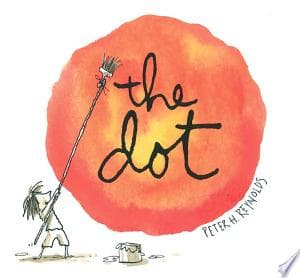
- The Dot
Peter Reynolds
4.3 (35k) average on GoodreadsReynolds' The Dot centers on individual creativity, self-discovery, and empowerment through a single character's artistic journey. In contrast, The Man in the Moon is epic in scale, establishing a universe of interconnected guardians and their collective mission to protect childhood innocence and dreams. Joyce's narrative is less about individual growth and more about the origins and collective responsibility of magical protectors.
- Harry Potter and the Sorcerer's Stone
J.K. Rowling
4.5 (7M) average on GoodreadsFantasyRescued from a miserable life under the stairs, an orphaned boy discovers he's a wizard destined for a magical school, where he uncovers a dangerous secret tied to the dark wizard who murdered his parents.
- The Hunger Games
Suzanne Collins
4.3 (6.4M) average on GoodreadsFantasyIn a future where children fight to the death on live television, Katniss Everdeen volunteers for the arena, turning a death sentence into a fight for survival and a spark of rebellion.
- 1984
George Orwell
4.2 (3.1M) average on GoodreadsPoliticsIn a future where surveillance and thought control are absolute, a man's search for truth clashes with the Party, showing that hope can be a form of rebellion.
- Divergent
Veronica Roth
4.2 (2.9M) average on GoodreadsFantasyIn a society divided by virtues, a sixteen-year-old's difference from the norm starts a rebellion that threatens her world.





Enjoyed the summary?
A summary gives you the shape of the book. The book itself has the detail, the examples and the voice.
Find The Man in the Moon on AmazonAs an Amazon Associate, BookBrief earns from qualifying purchases. How we're funded