

Synopsis
Covers the whole plot, including the ending.
- Difficulty
- Medium
- Pacing
- Moderate
- Mood
- Existential, Melancholy, Philosophical, Dramatic
- Read it if
- You enjoy early works from master playwrights, are interested in existential themes and moral dilemmas, or appreciate character-driven dramas about the burden of good fortune.
- Skip it if
- You prefer light-hearted reads, are looking for a fast-paced plot with clear-cut answers, or dislike stories that delve into profound philosophical angst.
The Man Who Had All the Luck Plot Summary
Covers the whole plot, including the ending.
David Beeves's Early Life and Uncanny Luck
The story begins with David Beeves, a young man with an unusual knack for good fortune. His first big stroke of luck happens when he gets a seemingly worthless horse, which he cures of a mystery illness and turns into a top stud. This early success sets a pattern for David's life; while others struggle, he always comes out ahead. He marries Bessie, a woman from a more established family, despite his humble beginnings. His luck, however, is noticed by others, especially his father-in-law, Gus, who sees David's easy success with mixed feelings, hinting at tension in their relationship.
The Brewery Business and Gus's Misfortune
David decides to invest in a brewery. Against all odds and expert advice, it thrives under his management. His business skill, or perhaps just his luck, brings significant financial success. At the same time, Gus, David's father-in-law, faces a severe financial downturn. Gus had invested heavily in another business that failed completely, leaving him almost ruined. This sharp contrast in fortunes begins to weigh on David. He sees Gus's despair and the unfairness of their different paths, starting to question his own success and the suffering of those around him. This incident plants the first seeds of doubt and guilt in David's mind, making him feel more isolated by his good fortune.
The Death of Gus and David's Growing Unease
After his financial ruin, Gus dies in a way that suggests suicide, though it is never clearly stated. This tragedy deeply affects David, who feels a strong sense of responsibility and guilt, believing his own overwhelming luck somehow added to Gus's despair. The incident further isolates David, as he struggles to connect his charmed life with the harsh realities others face. He begins to examine every part of his life, searching for a flaw, a reason for his constant good fortune, or a justification for the suffering he sees. His wife, Bessie, tries to comfort him, but David's inner struggle grows, becoming an obsession that starts to consume him and drive a wedge between them.
The Fire and the Unblemished Reputation
A fire breaks out at David's brewery, threatening to destroy his successful business. However, through a series of fortunate events and quick action, the damage is minimal, and the brewery is saved. What's more, the incident leads to an insurance payout that actually improves his finances, further solidifying his reputation as 'the man who had all the luck.' Instead of relief, this event increases David's torment. He cannot find any personal flaw or setback that would explain his good fortune, leading him to believe he is simply a passive receiver of an indifferent universe's favors. This realization pushes him closer to a breakdown as he desperately seeks a logical explanation for his charmed life.
The Car Accident and the Unscathed David
David is in a serious car accident, a situation that would normally result in severe injury or death. Amazingly, he emerges completely unharmed, while others in the accident suffer greatly. This incident further highlights his unexplainable luck and pulls him deeper into his existential crisis. He cannot understand why he is always spared, why fate seems to protect him while others are vulnerable. The accident becomes more proof in his mind that he is not truly in control, but merely an object of some larger, random force. He feels increasingly cut off from humanity, unable to relate to others' struggles.
The Search for a Flaw
At his breaking point, David starts an intense internal search for a flaw in his character, a hidden sin, or a past mistake that could explain his unending good fortune. He believes that if he can find a reason for his luck, he can understand his place in the universe and perhaps break the cycle. He tells Bessie about his worries, but she struggles to grasp the depth of his despair, seeing only his success. David's search for imperfection becomes an obsession, making him question his own morality and worth. He feels undeserving of his blessings, convinced there must be an underlying, perhaps evil, reason for his unique existence.
Confronting the Arbitrariness of Existence
David's journey brings him to the chilling idea that his luck might not be a blessing from a kind God, but rather a sign of a godless, random universe. He grapples with the terrifying thought that there is no inherent justice, no cosmic balance, and that his life is simply a random series of fortunate events. This conclusion threatens his sanity, as he longs for meaning and order. He talks about these deep philosophical questions with anyone who will listen, seeking agreement or disagreement, but finds only confusion from his peers. This deep dread becomes the main conflict of his later life.
The Breakdown and Bessie's Intervention
David's obsession with his luck and the random nature of existence leads him to a deep mental and emotional breakdown. He becomes withdrawn, paranoid, and unstable, pushing away those around him, including Bessie. His once-charming personality is replaced by a haunted, tormented manner. Bessie, seeing his quick decline, finally confronts him, urging him to get help and find peace. She tries to make him see the good parts of his life and appreciate what he has, rather than despairing over what he sees as a curse. Her help marks a turning point, forcing David to face how his obsession affects his loved ones.
A Glimmer of Self-Acceptance
After Bessie's heartfelt plea and his own exhaustion from the constant inner struggle, David slowly begins to accept his unique situation. He realizes that fighting his luck or searching for a reason for it is destroying him and his relationships. While he may never fully understand the 'why' behind his good fortune, he starts to understand that he must live with it, not against it. This acceptance is not a happy discovery, but a tired, fragile peace, a recognition that some mysteries may remain unsolved. He begins to re-engage with life, though with a new seriousness.
The Final Act of Living
In the story's end, David Beeves continues to live his life, still experiencing unusual luck in his efforts. However, his view has completely changed. He no longer sees his luck as purely a blessing or a curse, but as an unchanging part of his existence. He has learned to carry the weight of his good fortune with deep empathy for others and a quiet understanding of the universe's indifference. He is a man forever changed, marked by his journey to the edge of madness and back. He now lives with a deeper, more complex appreciation for life's intricacies, luck, and human suffering, having navigated his existential crisis to find a fragile, hard-won peace.
The Man Who Had All the Luck Characters
David Beeves
Protagonist
The man whose life is inexplicably blessed with continuous good fortune.
David Beeves is a seemingly ordinary man from humble beginnings who possesses an extraordinary and inexplicable knack for good luck. Every venture he undertakes, every obstacle he faces, seems to resolve itself in his favor, often to the detriment of those around him. Initially content, his ceaseless good fortune eventually becomes a profound psychological burden, leading him to an intense existential crisis. He is driven by a desperate need to find a reason or a flaw to explain his charmed life, convinced that such an imbalance must hide a deeper, perhaps malevolent, truth. His intelligence is overshadowed by his torment, as he struggles to reconcile his personal experience with the suffering he witnesses.
Relationships: Bessie (Wife, his anchor and eventual catalyst for his self-acceptance.); Gus (Father-in-law, whose misfortune starkly contrasts David's luck, intensifying David's guilt.)
Bessie Beeves
Supporting
David's loving and pragmatic wife, who struggles to understand his torment.
Bessie is David's devoted wife, a pragmatic and grounded woman who initially delights in her husband's success. She comes from a more established family than David, and her love for him is genuine. As David's luck begins to manifest as an existential crisis, Bessie finds herself increasingly bewildered and frustrated by his despair. She cannot comprehend why good fortune would be a source of such torment. Despite her difficulty understanding his philosophical struggles, she remains a steadfast presence, eventually confronting him and acting as a crucial catalyst for his eventual, albeit fragile, acceptance of his unique circumstances.
Relationships: David Beeves (Husband, whom she loves deeply but struggles to understand his internal conflict.); Gus (Father, whose financial ruin and death contribute to David's crisis.)
Gus
Supporting
David's father-in-law, whose tragic misfortune highlights David's luck.
Gus is David's father-in-law, a man who experiences significant financial and personal misfortune. His life serves as a stark contrast to David's charmed existence. Gus's business ventures fail, leading to ruin and ultimately his death, possibly by suicide. He initially observes David's luck with a mixture of admiration and a hint of envy, but his own tragic fate becomes a major catalyst for David's existential torment. Gus represents the 'unlucky' side of humanity, providing David with a tangible example of the arbitrary suffering that fuels his crisis of faith and understanding.
Relationships: David Beeves (Son-in-law, whose luck indirectly contributes to Gus's despair.); Bessie (Daughter, whom he loves.)
Amos
Supporting
A local elder who offers David some philosophical perspective.
Amos is an older, perhaps wiser, figure in the community whom David occasionally consults or confides in. He represents a more traditional or perhaps fatalistic view of life and destiny. While he doesn't fully grasp the depth of David's existential crisis, he offers a grounded, if somewhat simplistic, perspective on luck and human nature. His presence provides a sounding board for David's anxieties and highlights the profound isolation David feels in his unique situation, as even those with a broader worldview struggle to comprehend his particular torment. Amos is a minor character, but his interactions with David underscore the philosophical dimensions of the story.
Relationships: David Beeves (Confidant, offering limited, traditional advice.)
The Veterinarian
Mentioned
The expert who couldn't cure David's horse, highlighting David's innate luck.
The Veterinarian is mentioned early in the story when David acquires the sickly horse. He represents conventional expertise and medical knowledge. His inability to cure the horse, contrasted with David's seemingly effortless success in restoring the animal to health, establishes the initial premise of David's uncanny luck. The veterinarian's failure underscores the almost magical quality of David's good fortune, setting the stage for the extraordinary events that follow. He is not a direct character but serves as a narrative device to emphasize David's unique gift.
The Man Who Had All the Luck Themes
The Burden of Good Fortune
The main theme looks at how continuous, unearned good luck can become a psychological burden instead of a gift. David Beeves's endless success, instead of bringing happiness, sends him into an existential crisis. He feels undeserving and alone, believing his luck points to a random, perhaps cruel, universe. This shows when he mourns Gus's death, feeling his own good fortune added to his father-in-law's despair, or when surviving a car accident unharmed leaves him more troubled than relieved. The theme suggests that true happiness requires a sense of earned achievement and a balance between fortune and struggle.
“What have I done to deserve this? Why am I always spared?”
The Arbitrariness of Existence
The novel explores the idea that life is not run by a fair or logical order, but by random chance. David's journey is a desperate search for meaning and fairness in a world where his own experience goes against any sense of justice. He cannot find a 'reason' for his luck, leading him to conclude that the universe might be godless and uncaring. This is clear in the contrast between his successful brewery and Gus's failed business, or David's miraculous survival in accidents while others suffer. The lack of a clear pattern or moral explanation for his fate pushes him to the edge of madness, forcing him to face the unsettling possibility of a meaningless existence.
“There must be a balance. There must be a reason.”
Guilt and Isolation
David's constant good luck creates deep guilt and isolation. He feels undeserving of his blessings, especially when he sees the suffering and bad luck of those around him, such as Gus's financial ruin and death. This guilt separates him from others, as he struggles to relate to their problems while he easily succeeds. His inability to find a flaw or a reason for his luck makes him feel fundamentally different, an anomaly. This isolation is especially clear in his relationship with Bessie, who loves him but cannot fully understand his deep inner torment, further highlighting his lonely burden.
“I feel as if I'm being watched, judged, but for what?”
The Search for Meaning and Justice
At its core, the novel is David Beeves's painful quest to understand his place in the universe and to find a sense of justice or order. He desperately seeks a logical explanation for his unique fate, believing that if he can discover the 'why' behind his luck, he can ease his torment. This search appears in his constant self-reflection, his philosophical talks, and his desperate wish to find a flaw within himself. His journey shows the human need for meaning and the distress that comes when life's events seem to defy any logical explanation, pushing him to question the very nature of existence and morality.
“If there is no reason, then what is there?”
Plot Devices & Literary Techniques
Contrasting Fortunes
The juxtaposition of David's immense luck with the misfortune of others.
This device is central to the story, highlighting David's unique condition by placing him in direct contrast with characters like his father-in-law, Gus. While David's brewery prospers, Gus's business fails, leading to his ruin and death. This stark comparison not only emphasizes the extent of David's 'luck' but also acts as a primary catalyst for his existential torment. It forces David and the reader to question the fairness and logic of the universe, as the suffering of others is magnified by David's effortless success, fueling his guilt and search for meaning.
Existential Monologue/Internal Conflict
David's prolonged internal struggle and questioning of his existence.
A significant portion of the narrative is dedicated to David's internal thoughts, his agonizing self-reflection, and his philosophical debates with himself and, occasionally, with others. This device allows the reader direct access to David's escalating torment as he grapples with the arbitrariness of his luck and the perceived injustice of the world. It vividly portrays his descent into near-madness, emphasizing the psychological burden of his good fortune. This internal conflict is the engine of the plot, driving David's actions and his ultimate, fragile acceptance.
Symbolic Accidents and Escapes
Events where David miraculously avoids harm while others are affected.
The story employs specific incidents, such as the brewery fire and the car accident, where David miraculously emerges unscathed or even benefits, while others experience loss or injury. These events are not merely plot points; they are symbolic representations of David's uncanny luck and serve to intensify his psychological crisis. Each escape reinforces his belief that he is an anomaly, a recipient of an indifferent universe's capricious favors, further isolating him and fueling his desperate search for a logical explanation or a flaw within himself. They are concrete manifestations of the abstract 'luck' that torments him.
The Man Who Had All the Luck Quotes
“It was as though the world had opened up and shown him its secret, and the secret was that there was no secret, only himself standing there, wondering.”
“A man doesn't want to live, he wants to prove he can live.”
“The trouble with luck is that it runs out. And when it runs out, you're the last to know.”
“He had always been surprised by the ease with which things came to him, as if the world were a friendly dog wagging its tail at his approach.”
“It wasn't that he was smarter, or stronger, or more deserving. It was simply that things happened for him.”
“A man who has all the luck is a man who has no luck at all, because he has nothing to fight for.”
“Every man has his own private hell, and sometimes, it's paved with good intentions and easy victories.”
“He felt like a man in a dream, where everything was familiar but nothing was quite real.”
“The greatest burden a man can carry is the weight of an unearned triumph.”
“It was impossible for him to fail, and that was his greatest failure.”
“He wanted to earn his life, not just have it handed to him.”
“The world was a stage, and he was merely a player, but he hadn't memorized his lines.”
“Sometimes, the only way to find out what you're made of is to be broken.”
“His luck was a kind of blindness, preventing him from seeing the struggles of others, or even his own potential for struggle.”
“He yearned for a challenge, a true obstacle that would test him, prove him worthy.”
Quiz
10 questions on the plot and the characters. Each answer comes with a short explanation.
Question 1
What is the central paradox David Beeves faces in 'The Man Who Had All the Luck'?
- His constant failures lead to unexpected success.
- His unwavering good fortune highlights the misfortunes of others.
- He wants to fail but always succeeds, making him unhappy.
- He struggles to find luck despite his best efforts.
Show answer
B. His unwavering good fortune highlights the misfortunes of others. David Beeves's good fortune doesn't bring him peace; instead, it serves to reveal the tragedies of those around him in greater relief, leading to his existential doubts.
Question 2
What era is 'The Man Who Had All the Luck' infused with, according to the description?
- The Roaring Twenties
- The post-World War II boom
- The Depression era
- The Progressive Era
Show answer
C. The Depression era The description explicitly states the drama is 'infused with the moral malaise of the Depression era.'
Question 3
What does David Beeves believe his good fortune provides evidence of?
- His own superior intelligence and hard work.
- A capricious god or a godless, arbitrary universe.
- The inherent fairness and justice of the world.
- His family's ancestral blessings.
Show answer
B. A capricious god or a godless, arbitrary universe. David's good fortune offers him 'what David believes to be evidence of a capricious god or, worse, a godless, arbitrary universe,' leading to his existential crisis.
Question 4
How does David Beeves's journey toward fulfillment transform?
- It becomes a triumphant affirmation of his destiny.
- It evolves into a quest for greater material wealth.
- It turns into a nightmare of existential doubts.
- It shifts from personal to community-focused goals.
Show answer
C. It turns into a nightmare of existential doubts. The text states that 'David’s journey toward fulfillment becomes a nightmare of existential doubts,' as he grapples with the meaning of his luck.
Question 5
What is David's primary struggle during his 'nightmare of existential doubts'?
- To accumulate more luck and avoid misfortune.
- A desperate grasp for reason in a seemingly arbitrary cosmos.
- To escape the attention his good luck brings.
- To prove to others that his luck is deserved.
Show answer
B. A desperate grasp for reason in a seemingly arbitrary cosmos. His struggle is described as 'a desperate grasp for reason in a cosmos seemingly devoid of any,' highlighting his search for meaning beyond his inexplicable good fortune.
Question 6
What is the ultimate consequence of David Beeves's struggle with his luck and existential doubts?
- He achieves spiritual enlightenment.
- He becomes a reclusive hermit.
- It takes him to the brink of madness.
- He starts to share his luck with others.
Show answer
C. It takes him to the brink of madness. The text explicitly states his struggle 'will take him to the brink of madness,' emphasizing the severe psychological toll of his experience.
Question 7
Before being appreciated, for how long was 'The Man Who Had All the Luck' not recognized for its true significance?
- Less than ten years
- About twenty-five years
- More than fifty years
- Over a century
Show answer
C. More than fifty years The description notes, 'It took more than fifty years for The Man Who Had All the Luck to be appreciated for what it truly is.'
Question 8
What specific works are mentioned as masterpieces that Arthur Miller went on to write after 'The Man Who Had All the Luck'?
- Our Town and The Glass Menagerie
- A Streetcar Named Desire and Cat on a Hot Tin Roof
- Death of a Salesman and The Crucible
- Long Day's Journey into Night and Ah, Wilderness!
Show answer
C. Death of a Salesman and The Crucible The text explicitly cites 'Death of a Salesman and The Crucible' as the masterpieces that followed, highlighting the significance of 'The Man Who Had All the Luck' as an early work of genius.
Question 9
The drama is described as 'parable-like.' What does this suggest about the nature of the story?
- It is a highly realistic depiction of everyday life.
- It is primarily a historical account of the Depression era.
- It conveys a moral or spiritual lesson through a symbolic narrative.
- It features fantastical elements and magical realism.
Show answer
C. It conveys a moral or spiritual lesson through a symbolic narrative. A parable is a simple story used to illustrate a moral or spiritual lesson. Describing the drama as 'parable-like' suggests its deeper, symbolic meaning regarding luck, fate, and human existence.
Question 10
What specific aspect of the Penguin Classics edition is highlighted in the description?
- It includes a foreword by Arthur Miller himself.
- It features original illustrations by a renowned artist.
- It includes an introduction by Christopher Bigsby.
- It is the first-ever paperback edition of the book.
Show answer
C. It includes an introduction by Christopher Bigsby. The description specifically states, 'This Penguin Classics edition includes an introduction by Christopher Bigsby,' a common feature of the series to provide scholarly context.
The Man Who Had All the Luck FAQ
What is the central premise of 'The Man Who Had All the Luck'?
The novel follows David Beeves, a man who experiences an unbroken string of good fortune in both his personal life and business ventures. This constant luck, however, becomes a source of profound existential dread and moral questioning for him, as he struggles to reconcile his own ease with the tragedies befalling those he cares about.
Who is David Beeves, and what drives his internal conflict?
David Beeves is the protagonist, a seemingly ordinary man who, through no special effort, finds success and avoids disaster. His internal conflict stems from his inability to find a rational explanation for his persistent good luck, which he perceives as either a cruel joke from a capricious god or evidence of a meaningless, arbitrary universe.
How does the Depression era influence the novel's themes?
The moral malaise and economic instability of the Depression era serve as a stark backdrop, highlighting David's inexplicable good fortune against a landscape of widespread suffering. This contrast intensifies his guilt and fuels his search for meaning, as others struggle while he prospers effortlessly.
What role do the 'tragedies of those around him' play in David's journey?
The misfortunes of characters like his brother-in-law, Gus, or the struggles of his friends, serve as a constant counterpoint to David's own luck. These events force David to confront the unfairness of life and question the very nature of justice and divine intervention, pushing him to the brink of madness.
How does the book explore the concept of a 'capricious god' or a 'godless, arbitrary universe'?
David interprets his unending luck and the contrasting suffering of others as evidence of either a deity who plays favorites without reason or a universe devoid of any guiding principle or justice. This philosophical debate within his mind is central to his existential crisis, as he desperately seeks order where he perceives only chaos.
Are there specific instances of David's luck that are particularly striking?
One notable instance is David's successful foray into breeding cattle, where he consistently avoids common pitfalls and diseases that devastate other farmers. Another is his uncanny ability to make profitable business decisions without seemingly taking any significant risks, often benefiting from others' misfortunes.
What is the significance of David's relationship with his brother-in-law, Gus?
Gus represents the antithesis of David's luck, often experiencing setbacks and failures despite his hard work. Gus's struggles and eventual despair deeply affect David, serving as a constant reminder of the arbitrary nature of fortune and intensifying David's guilt and existential torment.
How does the novel foreshadow Arthur Miller's later works like 'Death of a Salesman'?
'The Man Who Had All the Luck' introduces Miller's preoccupation with the American Dream, the individual's struggle against fate, and the psychological toll of societal pressures. David's internal torment and his search for meaning in a seemingly indifferent world echo Willy Loman's disillusionment and tragic pursuit of success.
Does David ever attempt to 'break' his luck, and what are the consequences?
Yes, David does, at one point, make a deliberate decision that he believes will lead to failure, hoping to prove that his luck isn't absolute or that he has some control. However, even this attempt backfires, resulting in another unexpected success, further cementing his despair and belief in his inescapable fate.
How does David's constant good fortune affect his mental state and relationships?
David's persistent luck isolates him, leading to profound paranoia and guilt. He becomes increasingly withdrawn, struggling to connect genuinely with others who perceive him as effortlessly successful. His internal turmoil pushes him to the brink of madness, as he grapples with the injustice of his own existence.
What psychological impact does 'survivor's guilt' have on David?
David experiences a severe form of survivor's guilt, feeling undeserving of his good fortune while others, especially those close to him, suffer. This guilt manifests as a deep-seated anxiety and a desperate need to find a moral or logical explanation for the arbitrary distribution of luck and suffering.
How does the novel explore the concept of free will versus determinism through David's experiences?
David's journey is a battle between his desire for free will and the overwhelming evidence of a predetermined, lucky path. He feels trapped by his good fortune, believing his choices are inconsequential against an unseen force guiding his destiny, leading to a crisis of agency and self-worth.
In what ways does David's 'nightmare of existential doubts' manifest?
David's doubts manifest as obsessive rumination, a desperate search for patterns or explanations for his luck, and a growing paranoia that his good fortune is merely a prelude to a catastrophic downfall. He struggles with insomnia, loses his appetite, and experiences emotional detachment, all symptoms of his profound existential crisis.
Is the ending of the novel ultimately pessimistic or does David find some form of peace?
The ending is complex; while David doesn't find a definitive answer to his existential questions, he reaches a form of uneasy acceptance or a fragile truce with his fate. He doesn't necessarily find peace in understanding, but rather a weary resignation to the inexplicable nature of his luck, allowing him to continue living, albeit with a profound sense of the arbitrary.
How does the book challenge traditional notions of success and happiness?
The novel subverts the idea that success automatically equates to happiness. David's story demonstrates that unearned or inexplicable success can be a source of profound torment, highlighting that true fulfillment often comes from overcoming challenges or finding meaning, rather than simply avoiding misfortune.
What is the significance of the title, 'The Man Who Had All the Luck'?
The title is ironic, as David's 'luck' is presented not as a blessing but as a curse that isolates him and drives him to madness. It highlights the central paradox of the story: what appears to be enviable fortune is, in fact, the source of his deepest suffering and existential despair.
Can the novel be read as a critique of the American Dream?
Yes, it can be interpreted as a critique, suggesting that the pursuit of material success and the expectation of prosperity, especially when unearned, can lead to moral decay and psychological collapse. David's experience questions the value of a dream achieved without struggle or meaning, highlighting its potential emptiness.
How does Arthur Miller use symbolism in the novel to convey his themes?
Miller uses the prosperity of David's cattle farm as a symbol of his unnatural, effortless success, contrasting it with the barrenness or struggles of others. The constant, clear skies over David's ventures, while others face storms, symbolize the unfairness of his luck and the capricious nature of the universe.
About the author
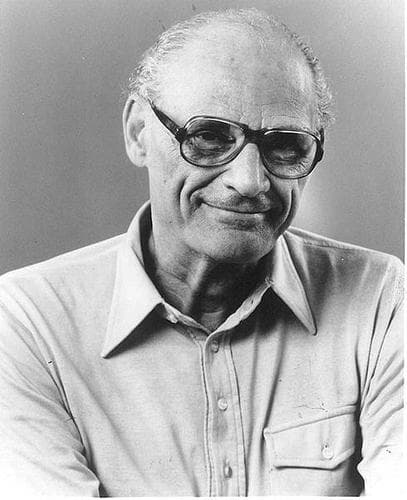
Arthur Asher Miller was an American playwright, essayist and screenwriter in the 20th-century American theater. Among his most popular plays are All My Sons (1947), Death of a Salesman (1949), The Crucible (1953), and A View from the Bridge (1955). He wrote several screenplays and was most noted for his work on The Misfits (1961). The drama Death of a Salesman is considered one of the best American plays of the 20th century.
Similar books
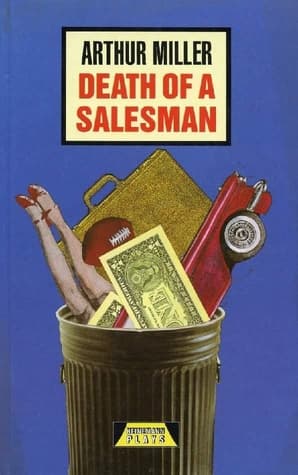
- Death of a Salesman
Arthur Miller
3.5 (186k) average on GoodreadsFictionExplores the American Dream, disillusionment, and the struggles of a common man with a similar dramatic intensity and moral questioning.
- The Stranger
Albert Camus
4.1 (3k) average on GoodreadsFantasyDelves into themes of absurdity, existentialism, and the individual's struggle to find meaning in a seemingly indifferent universe.
- The Great Gatsby
F. Scott Fitzgerald
3.9 (3.8M) average on GoodreadsHistorical FictionWhile both explore the American Dream and its psychological toll, Miller's novel focuses on the burden of unearned good fortune, whereas Gatsby deals with the pursuit of an idealized past through ill-gotten gains. Fitzgerald's prose is more lyrical and symbolic, offering a broader societal critique alongside individual tragedy, which Miller's novel, despite its insights, doesn't fully achieve.
- The Grapes of Wrath
John Steinbeck
4.0 (750k) average on GoodreadsHistorical FictionSteinbeck's novel masterfully intertwines individual struggles with a panoramic view of economic hardship and social injustice, depicting ordinary people battling overwhelming forces. Miller's 'The Man Who Had All the Luck,' in contrast, focuses more narrowly on an individual's internal struggle with good fortune, making its social commentary less expansive and its impact perhaps less immediate than Steinbeck's epic.
- Nineteen Eighty-Four
George Orwell
4.2 (5.5M) average on GoodreadsFictionWinston Smith dreams of truth and rebellion in a world where Big Brother watches all, but he confronts the terrifying power of a regime that controls not just actions, but thoughts.
- The Frozen River
Ariel Lawhon
4.4 (600k) average on GoodreadsFictionIn 1789 Maine, a heroic midwife's diary helps her expose a murder and get justice in a town that wants to silence her.





Enjoyed the summary?
A summary gives you the shape of the book. The book itself has the detail, the examples and the voice.
Find The Man Who Had All the Luck on AmazonAs an Amazon Associate, BookBrief earns from qualifying purchases. How we're funded